⚡ Key Facts
- Grid Vulnerability: According to the Federal Emergency Management Agency (FEMA), high-rise buildings often lose water pressure within hours of a power grid failure because municipal pumps cannot push water above the 5th or 6th floor.
- Fire Risks: The National Fire Protection Association (NFPA) reports an estimated 14,500 structure fires in high-rise buildings annually in the United States, making rapid evacuation protocols critical for apartment dwellers.
- Storage Requirements: The Centers for Disease Control and Prevention (CDC) recommends storing at least one gallon of water per person per day for a minimum of three days—a significant spatial challenge for small apartments.
- Planning Deficits: FEMA surveys indicate that nearly 60% of American adults have not practiced what to do in a disaster, a metric that is historically higher among transient urban renter populations.
- Seismic and Weather Threats: The United States Geological Survey (USGS) and NOAA warn that urban areas face compounded risks during natural disasters due to high population density, aging infrastructure, and heavy reliance on centralized utilities.
Imagine looking out the window of your 15th-floor apartment. The sprawling city below, usually a vibrant grid of lights and motion, is completely dark. The hum of the refrigerator has stopped, the digital thermostat is blank, and when you turn the kitchen faucet, only a hollow gasp of air comes out. In a sprawling suburban home, this scenario is daunting. In a high-rise apartment, it is an immediate, complex logistical crisis. Urban environments offer incredible convenience, but that convenience is entirely dependent on a fragile, interconnected web of municipal services. When those services fail, the illusion of total security shatters. See supply calculator for a step-by-step checklist. See Family and Community Resilience (Spanish) for additional options. See Family and Community Resilience (Spanish) for additional options.
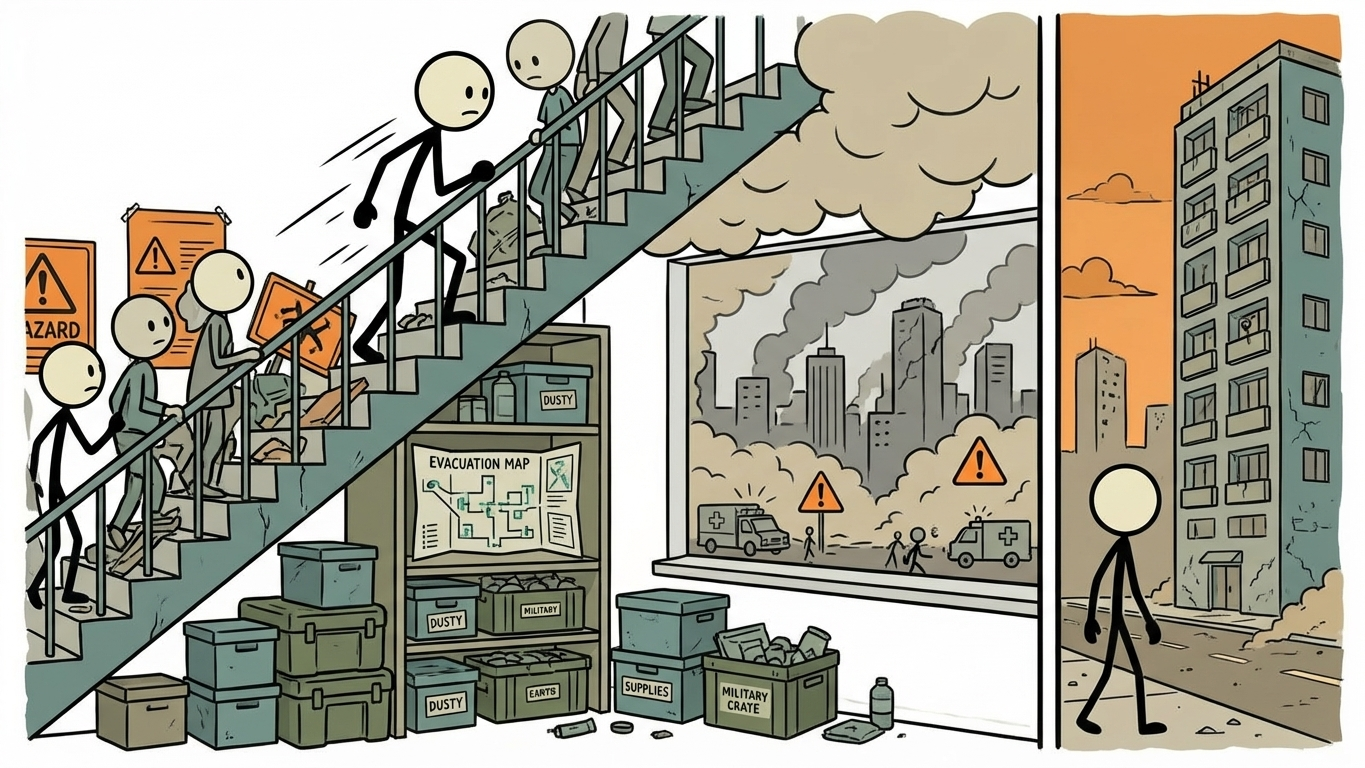
Historically, the survivalist community has focused on rural homesteads, underground bunkers, and sprawling properties with ample storage. But the reality is that the majority of the population lives in densely packed metropolitan areas. This demographic shift has given rise to the necessity of apartment prepping. Preparing in a city requires a fundamental shift in strategy. You cannot bury a shipping container, install a 500-gallon propane tank, or rely on a private well. You must work within the constraints of square footage, building codes, lease agreements, and shared walls. See emergency food storage guide for a step-by-step checklist.
However, urban preparedness is not about living in fear; it is about cultivating independence in a dependent environment. By taking calculated, space-efficient steps, you can transform even a 500-square-foot studio into a resilient safe haven. This guide will walk you through the precise strategies required to thrive during an urban crisis, from mastering small space emergency storage to navigating the physical realities of high-rise evacuations. See survival scenarios library for a step-by-step checklist.
The Unique Landscape of Urban Preparedness
To build an effective apartment emergency plan, you must first understand the unique vulnerabilities of the urban landscape. Cities are marvels of modern engineering, but they operate on a "just-in-time" delivery system. Grocery stores typically only hold about three days' worth of inventory. Water is pumped electronically. Waste is removed continuously. When a disruption occurs—whether from a severe winter storm, a cyberattack on the grid, or a natural disaster—these systems bottleneck rapidly. See Protocol Survival app for a step-by-step checklist.
FEMA repeatedly emphasizes the concept of "community resilience," noting that densely populated areas can recover faster if individual households are prepared to sustain themselves for the first 72 to 96 hours. In an apartment, your primary threats are not just the disaster itself, but the secondary effects of density. If the power goes out, the elevators stop. If the water stops, sanitation becomes a biological hazard. If a fire breaks out, you are sharing an evacuation route with hundreds of panicked neighbors. See go-bag essentials guide for a step-by-step checklist.
The core philosophy of urban preparedness is efficiency. Every piece of gear you own must earn its keep. Every gallon of water must be stored strategically. You are not preparing for the end of the world; you are preparing to comfortably bridge the gap between a systemic failure and the restoration of order. See family emergency plan for a step-by-step checklist.
Mastering Small Space Emergency Storage
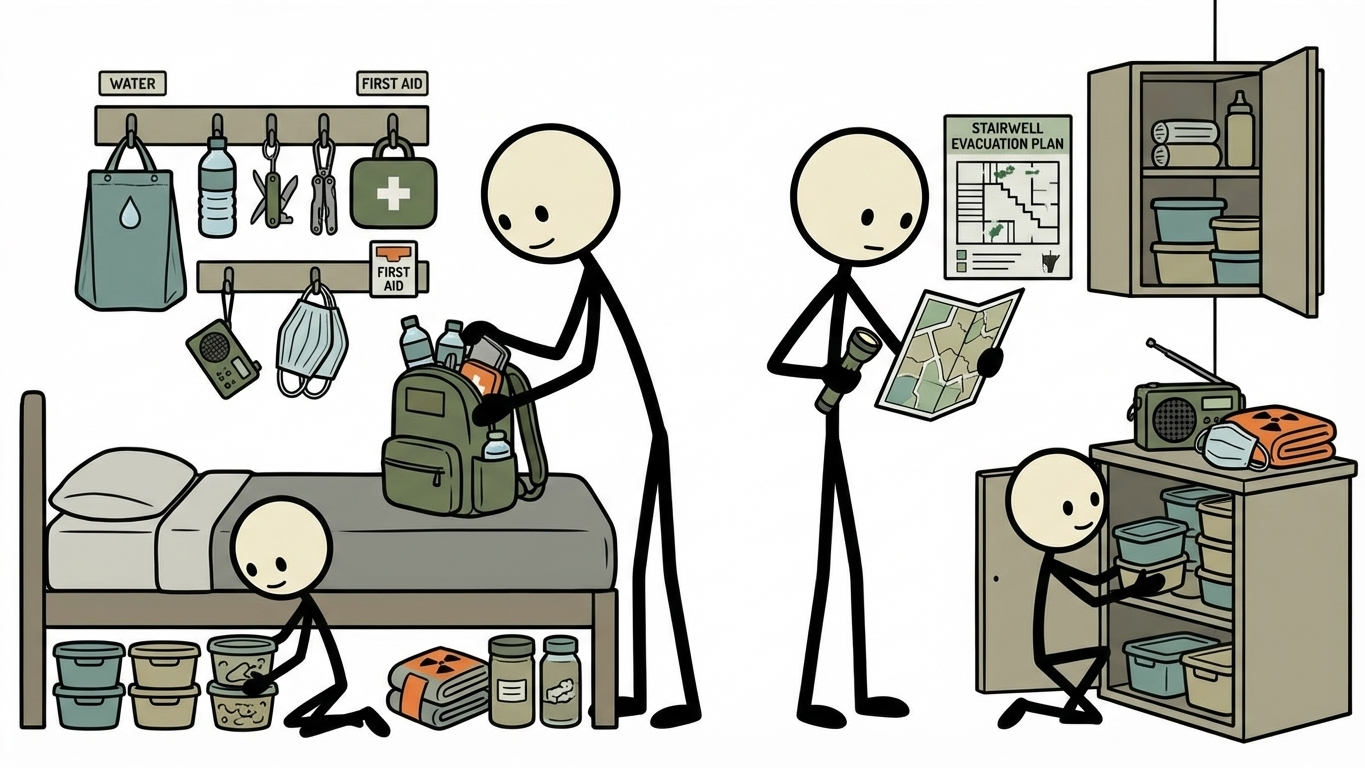
The most common objection to apartment prepping is a perceived lack of space. When your home barely has enough closet space for your winter coats, finding room for a month's worth of food and survival gear seems impossible. However, small space emergency storage is entirely achievable if you change how you view your living area. You must stop thinking in terms of floor space and start thinking in terms of cubic volume.
The "Hidden in Plain Sight" Method
In a small apartment, your furniture must serve dual purposes. The space beneath your bed is prime real estate. By utilizing bed risers, you can elevate your mattress frame by a few inches, creating enough clearance to slide flat, heavy-duty storage bins underneath. These bins are perfect for storing canned goods, first aid supplies, and heavy tactical gear that you do not need daily access to.
Similarly, consider upgrading your furniture to pieces with built-in storage. Storage ottomans, hollow coffee tables, and sofas with hidden compartments can hold a surprising amount of freeze-dried food or emergency blankets. When your prepping supplies are integrated into your decor, you avoid the cluttered, chaotic look that makes small apartments feel claustrophobic.
Exploiting Vertical and Unconventional Spaces
Look up. Most apartments have at least a foot of unused space between the top of the kitchen cabinets and the ceiling. This is an excellent location for lightweight, bulky items like paper towels, toilet paper, and medical kits. Over-the-door organizers, typically used for shoes, can be hung on the inside of pantry or closet doors to hold flashlights, batteries, water filters, and tools.
Do not ignore the dead space in your closets. By installing a high shelf just below the ceiling, you can store seasonal Go-Bag Builders out of the way. Even the space behind your sofa, if pulled forward by just six inches, can conceal a row of stackable water bricks or a slim profile folding solar panel. Efficiency is about reclaiming the inches you previously ignored.
The Water Dilemma: Hydration Without a Basement
Water is the most critical survival resource, yet it is the hardest to store in an apartment. It is heavy—weighing roughly 8.34 pounds per gallon—and it is bulky. The CDC advises storing one gallon per person per day. For a family of three preparing for a two-week disruption, that is 42 Water Calculator, weighing nearly 350 pounds. You cannot simply stack 50-gallon drums in a high-rise living room due to space constraints and floor load limits.
Bathtub Storage and Stackable Solutions
The most effective solution for sudden emergencies is a bathtub water bladder, commonly known by brand names like the WaterBOB. This is a heavy-duty, food-grade plastic liner that sits in your bathtub. When a storm or blackout is forecasted, you attach it to the faucet and fill it. It can hold up to 100 gallons of clean, sealed drinking water, utilizing a space that is already built to support massive weight. Once the crisis passes, you simply drain it and throw the liner away.
For long-term, everyday storage, avoid flimsy gallon jugs from the grocery store. They are notorious for degrading and leaking, which can cause severe water damage to the apartment below you—a quick way to face eviction. Instead, invest in high-quality, stackable water bricks. These rigid, BPA-free containers hold 3.5 gallons each and interlock like building blocks. They can be stacked securely in the bottom of a closet or under a sturdy desk.
Urban Water Filtration
Because you cannot store endless amounts of water, you must be able to treat what you can scavenge. In an urban environment, if the tap water runs brown due to a boil-water advisory, you need a way to make it safe. Keep a high-quality gravity water filter (like a Berkey or a Sawyer Squeeze system) in your apartment.
Additionally, stock unscented household bleach or water purification tablets. The Red Cross advises that if water is cloudy, it should be filtered through a clean cloth and then treated. Having the ability to filter and purify tap water or rainwater collected on a balcony drastically reduces the physical amount of water you need to store inside your small space.
City Blackout Preparedness: When the High-Rise Goes Dark
City blackout preparedness requires a specific mindset. In a rural area, a blackout means firing up the gas generator in the yard. In an apartment, a gas generator is a lethal hazard. Operating a combustion engine indoors or on a balcony will quickly lead to carbon monoxide poisoning, a leading cause of death following winter storms and hurricanes.
Portable Power and Lighting
The modern solution to urban power outages is the lithium-iron-phosphate (LiFePO4) portable power station. These silent, emission-free battery banks can be charged via a wall outlet during normal times. When the grid fails, a mid-sized power station can keep your phones charged, run a CPAP machine, power a laptop, and even run a small 12-volt refrigerator for days.
Pair your power station with portable solar panels. Even if you don't have a balcony, placing a foldable solar panel in a south-facing window can trickle-charge your battery bank, providing an infinite loop of basic communication power. For lighting, avoid candles. The NFPA warns that candles are a leading cause of residential fires during blackouts. Instead, rely on LED lanterns, headlamps, and battery-operated push lights strategically placed in hallways and bathrooms.
Climate Control in a Concrete Box
Apartments are heavily reliant on HVAC systems. In the summer, a glass-walled high-rise can become an oven within hours of an outage. In the winter, it becomes an icebox. For extreme heat, battery-operated fans and cooling towels are essential. You can also hang reflective Mylar blankets over your windows to bounce the sun's radiant heat back outside.
For winter outages, designate one small room (usually the bedroom) as your micro-climate. Close the doors, lay rolled-up towels at the base to block drafts, and set up a tent inside the room if necessary. Body heat will warm the small space. If you choose to use an indoor-safe propane heater, such as a Mr. Heater Buddy, it is absolutely critical that you also have a battery-operated carbon monoxide detector running nearby, and that you crack a window for ventilation.
Safe Indoor Cooking
When the electric stove is dead, you still need to boil water and heat food. Standard camping stoves that use green propane canisters are generally safe for brief indoor use if there is adequate ventilation. However, butane catering stoves are often preferred for apartment prepping because they are highly stable, burn clean, and are designed for indoor use in the restaurant industry.
Never use a charcoal grill or a standard outdoor gas grill inside your apartment or on a covered balcony. The risk of fire and carbon monoxide poisoning is simply too high. Focus your emergency pantry on foods that require minimal cooking time—like instant rice, freeze-dried meals, and canned soups—to conserve your limited emergency fuel supply.
Sanitation: The Unspoken Urban Challenge
Perhaps the most overlooked aspect of an apartment emergency plan is sanitation. In a high-rise, water is pumped up to the rooftop tanks using electricity. When the power grid fails, gravity takes over. The water in the pipes will drain quickly, and soon, your toilet will no longer flush. Without a backyard to dig a latrine, biological waste becomes an immediate and severe problem.
Do not use your limited supply of drinking water to flush a toilet. Instead, prepare a twin-bucket emergency toilet system. Purchase two heavy-duty 5-gallon buckets and a snap-on toilet seat. Line the buckets with heavy-duty contractor garbage bags.
Designate one bucket for liquid waste and one for solid waste. For the solid waste bucket, you must have a supply of carbon-based cover material—such as sawdust, kitty litter, or specialized waste-gelling powders (often sold as "wag bags"). Covering the waste after each use eliminates odors and begins the desiccation process. Store these sealed bags on a balcony or in a designated, well-ventilated area until municipal trash services resume.
Formulating Your Apartment Emergency Plan
Gear and supplies are useless without a cohesive strategy. An apartment emergency plan must account for the unique variables of your specific building. You need to know where the emergency exits are, how the building's fire suppression system works, and what the property management's protocol is during a disaster.
Communication When Cell Towers Fail
During a major urban crisis, cell phone towers are often overwhelmed by call volume or lose their backup battery power. You cannot rely on a simple phone call to coordinate with your family. Your emergency plan must include predetermined out-of-state contacts. It is often easier to route a text message to an out-of-state area code than to call across a jammed local network.
Establish a physical meeting point. If an evacuation is ordered while you are at work and your spouse is at home, where do you meet? Choose a primary location near your apartment, and a secondary location well outside the immediate city center. Keep a printed map of the city in your apartment; if the GPS on your phone dies, you will need to navigate urban streets the old-fashioned way.
The Renter’s Bug-In vs. Bug-Out Protocol
The fundamental question in any disaster is whether to "bug in" (stay put) or "bug out" (evacuate). In an apartment, bugging in is usually the safest initial choice for weather events, localized blackouts, or civil unrest. Your apartment is a fortress of sorts; it has heavy doors, elevation, and shelter from the elements.
However, you must have a strict threshold for when to evacuate. If there is a fire, a structural compromise, or a prolonged grid failure that threatens your physical health (like a week-long freeze), you must leave. Your plan should clearly define these trigger points so that you are not paralyzed by indecision when the time comes to act.
Evacuation Planning and Stairwell Realities
If the decision is made to evacuate a high-rise, you are about to face one of the most grueling physical and psychological challenges of urban survival. family emergency planning in a high-density building revolves entirely around the stairwells. Elevators are death traps during fires and will likely be disabled during power outages.
The Physics and Psychology of the Stairwell
Descending twenty, thirty, or forty flights of stairs is physically exhausting. It places immense strain on the knees and calves. Now, imagine doing it in pitch black, surrounded by panicked neighbors, while carrying a heavy backpack. The NFPA mandates that high-rise stairwells have fire-rated doors and emergency lighting, but backup batteries for lighting only last about 90 minutes.
You must keep a dedicated pair of sturdy walking shoes and a high-lumen headlamp right next to your bed. A headlamp is vastly superior to a flashlight because it leaves both hands free to grip the handrails, carry a child, or manage a pet carrier. In a smoke-filled stairwell, visibility may drop to zero. Practice walking down your building's stairs on a normal Tuesday evening. Count the flights. Note the locations of the fire doors. Familiarity breeds calm during chaos.
Building the Urban Bug-Out Bag
Because you are evacuating on foot, your bug-out bag must be meticulously curated. You cannot carry an 80-pound military rucksack down 30 flights of stairs and then hike five miles across a city. The urban bug-out bag should weigh no more than 15-20% of your body weight.
Focus on urban-specific tools. Include an N95 or P100 respirator mask to protect against concrete dust, smoke, and debris. Pack a silcock key—a small, cross-shaped tool that allows you to open commercial water spigots found on the sides of urban commercial buildings. Include a pry bar for opening jammed doors, cash in small denominations (credit card machines won't work in a blackout), and a localized physical map. Your goal is swift, unencumbered movement away from the danger zone.
Mitigating Specific Urban Risks
Living in a city means accepting a higher baseline of risk regarding human-driven events. While rural preppers focus heavily on wildlife and isolation, urban preparedness must account for high population density, civil unrest, and the rapid spread of airborne illnesses.
High-Density Health and Fire Risks
In an apartment building, you share an HVAC system, hallways, and elevators with hundreds of people. During a pandemic or a biological event, this density is a massive liability. The CDC recommends improving indoor air quality as a primary defense. Keep a supply of high-grade HEPA filters and N95 masks. Have plastic sheeting and duct tape available to seal off air vents and door frames if a chemical spill or severe smoke event occurs outside.
Fire is the most statistically probable disaster you will face. Your neighbor's careless cooking can become your emergency in minutes. Ensure you have multiple fire extinguishers in your apartment—one in the kitchen, and one near the bedroom door. Check the pressure gauges monthly. Do not rely solely on the building's sprinkler system, as these can fail or be shut off for maintenance.
Renter-Friendly Security Upgrades
During a prolonged crisis, such as a multi-day blackout or civil unrest, the thin veneer of societal order can fray. Securing an apartment is tricky because you usually cannot drill heavy deadbolts into the doorframes or install iron bars on the windows without violating your lease.
Fortunately, there are highly effective, renter-friendly security upgrades. Heavy-duty door security bars can be wedged under the door knob to prevent the door from being kicked in. Portable door locks and flip-action door jammers can be installed from the inside without tools. For ground-floor apartments or those accessible via fire escapes, apply shatter-resistant security film to the glass. It won't stop a determined intruder indefinitely, but it will delay them and create a massive amount of noise, which is often enough of a deterrent.
Ultimately, emergency preparedness for apartments is an exercise in adaptability. It requires you to look at your limited square footage not as a restriction, but as a puzzle to be optimized. By implementing space-efficient storage, understanding the realities of high-rise infrastructure, and having a definitive evacuation plan, you strip away the vulnerability of city living. You transition from being reliant on the fragile municipal grid to becoming a self-sufficient anchor in your community. Start small, assess your space, build your supplies methodically, and take pride in knowing that no matter what happens outside your windows, your apartment is ready.
Master apartment-specific prepping through our emergency preparedness guide. Learn community preparedness from our community preparedness guide. Build compact kits with our go-bag builder. Calculate apartment supplies with our supply calculator. Get apartment-focused training through our preparedness courses.
Frequently Asked Questions
What is the first step to prepare for this scenario?
Start with a realistic risk assessment for your location, then build a simple written plan your whole household can follow.
How much should beginners spend initially?
Begin with high-impact basics and a phased budget. Small consistent upgrades beat expensive one-time purchases.
How often should plans and gear be reviewed?
Audit every 6 to 12 months and after every real incident to capture lessons learned.
What should go in every emergency kit?
Water, food, first aid, lighting, communication, documents, and essential medications.
How do I get family buy-in for preparedness?
Keep it practical, avoid fear language, and run short drills that show clear everyday value.
Sources & Further Reading
Related resource: Emergency Preparedness Guide.