⚡ Key Facts
- Rapid Escalation: According to the Department of Homeland Security (DHS), civil disturbances can escalate from peaceful gatherings to volatile situations in a matter of minutes, making early detection crucial.
- Crowd Dynamics: The Centers for Disease Control and Prevention (CDC) notes that during large-scale urban unrest, the majority of severe injuries stem from crowd crush, panic, and trampling rather than direct physical violence.
- Preparation Standard: FEMA and Ready.gov strongly advise households to maintain a minimum of 72 hours of food, water, and emergency supplies to safely shelter in place during localized emergencies.
- Fire Risks: The American Red Cross highlights that secondary hazards, such as localized fires and delayed emergency response times, are among the most significant threats to residential areas during periods of severe unrest.
- Communication Failures: During large gatherings, local cellular networks frequently experience "capacity overload," making text messages and out-of-state emergency contacts more reliable than local voice calls.
There is a profound difference between paranoia and preparedness. In modern urban environments, the landscape can shift rapidly. A peaceful demonstration, a controversial legal verdict, a sudden political upheaval, or a severe localized crisis can transform a familiar city street into an unpredictable environment. Acknowledging this reality does not require you to live in fear; rather, it invites you to take proactive, sensible steps to ensure the safety of your household. See the go-bag essentials guide for a practical checklist.
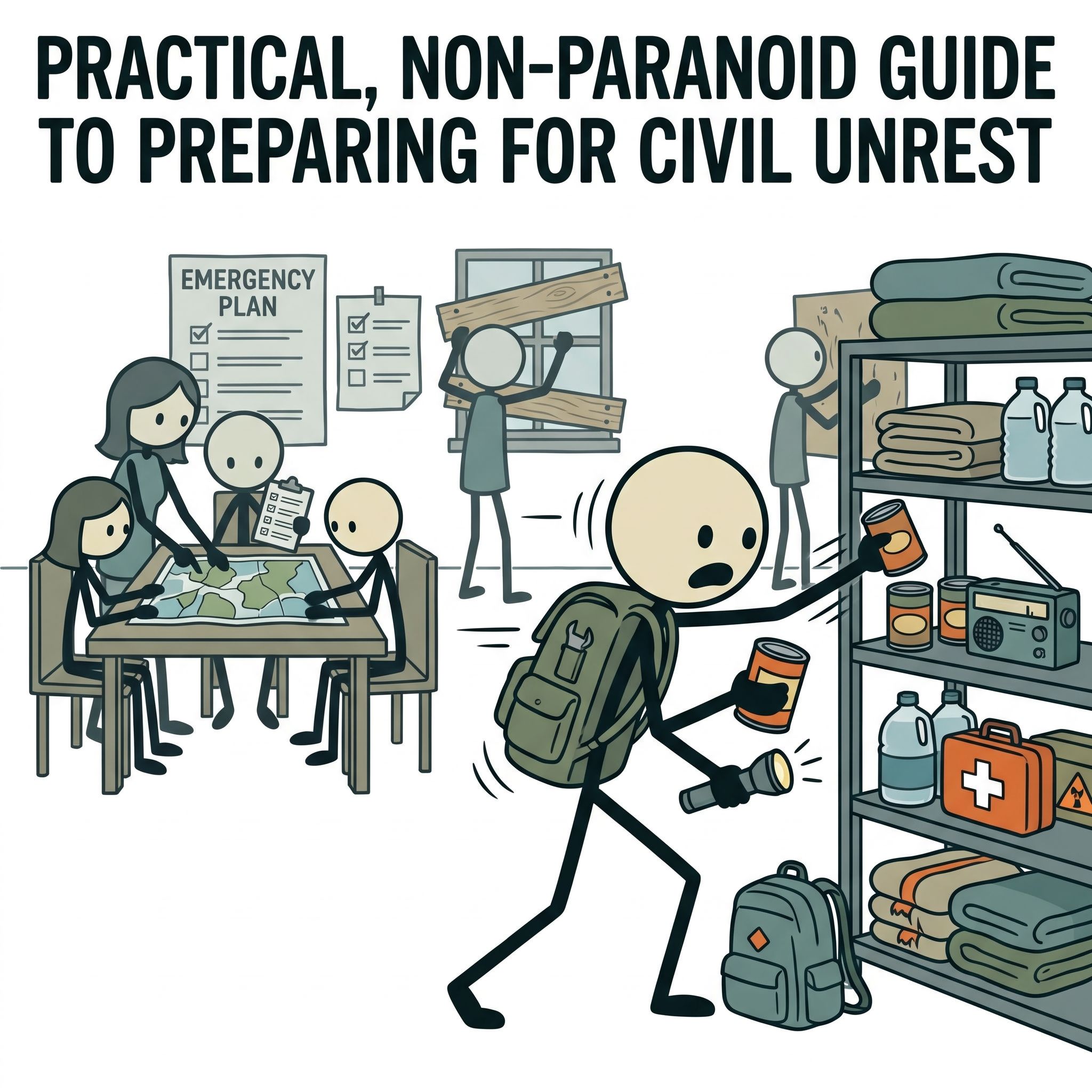
Approaching civil unrest preparedness with a calm, analytical mindset is the ultimate antidote to anxiety. Just as you keep a fire extinguisher in your kitchen without constantly fearing a house fire, developing a comprehensive strategy for urban disturbances is simply a matter of responsible modern living. The goal is not to prepare for an apocalyptic collapse, but to navigate temporary periods of instability with confidence, strategic avoidance, and a secure sanctuary. See the go-bag builder tool for a practical checklist.
When municipal resources are stretched thin and emergency response times are delayed, your immediate safety becomes your personal responsibility. This comprehensive guide will walk you through the practical steps of anticipating unrest, avoiding dangerous areas, hardening your home, and establishing robust communication protocols. By implementing these strategies, you are building a resilient foundation that allows you and your family to weather any storm. See the supply calculator for a practical checklist.
Recognizing the Early Warning Signs
The most effective strategy for surviving any crisis is not being there when it happens. True civil unrest preparedness begins long before a crowd gathers. It relies on a concept known as "situational awareness" and the diligent monitoring of open-source intelligence (OSINT). By paying attention to the right indicators, you can give yourself a crucial head start. See the water planning calculator for a practical checklist.
Monitoring Local and National Triggers
Unrest rarely materializes out of thin air. It is typically preceded by specific catalyst events. Pay close attention to high-profile court cases, controversial legislative decisions, localized incidents of police-community tension, or severe economic disruptions. When these events dominate the news cycle, the probability of public demonstrations increases significantly. See the survival scenarios library for a practical checklist.
Do not rely solely on national news broadcasts, as they often report on events after they have already escalated. Instead, tune into local community boards, city-specific subreddits, localized Twitter (X) feeds, and neighborhood apps like Nextdoor. Grassroots organizers and local activists often broadcast their gathering locations and times publicly to maximize turnout. Knowing where and when a gathering is scheduled allows you to adjust your daily routines accordingly.
Observing Environmental Shifts
If you are already out in the city, early normalcy bias will manifest in your immediate environment. Pay attention to sudden changes in the baseline behavior of a neighborhood. Are local businesses suddenly closing early or boarding up windows? Is there a sudden, heavy influx of law enforcement vehicles or officers donning riot gear? These are clear, authoritative indicators that the authorities anticipate a significant disruption.
Additionally, listen to the auditory landscape of the city. A peaceful protest has a rhythmic, organized sound—usually chants led by a megaphone. When the sound shifts to chaotic shouting, the breaking of glass, or the deployment of sirens and low-flying helicopters, the situation is degrading. Recognizing these environmental shifts is your cue to immediately leave the area.
The Art of Avoidance: Navigating Away from Danger
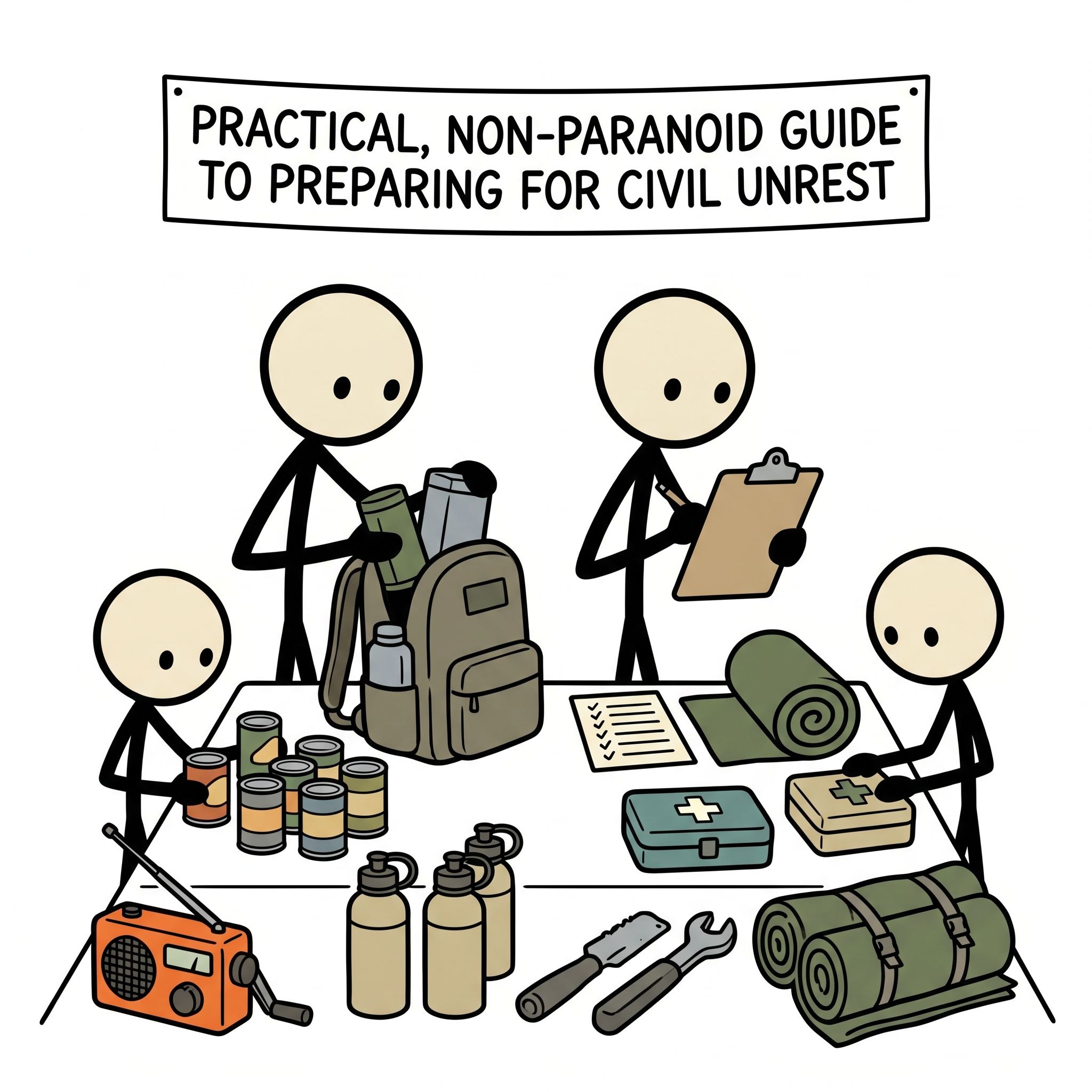
If you find yourself in the vicinity of a developing situation, your primary objective is safe, swift extraction. Protest safety emergency prep dictates that engaging, spectating, or arguing with participants is never a viable option. Your ego must take a backseat to your safety.
Pedestrian Avoidance Tactics
If you are on foot when a crowd begins to swell, do not attempt to push through the center of the mass. Move laterally. Work your way to the perimeter of the crowd and slip into side streets, alleys, or open commercial buildings if necessary. Maintain a calm, neutral demeanor. Running can incite panic or draw unwanted attention from both agitators and law enforcement.
Keep your hands out of your pockets and visible. This non-threatening posture communicates to everyone around you that you are a bystander, not a participant. If you must cross a path taken by a protest, do so well ahead of the vanguard or wait until the entire procession has passed. Never try to cut through a moving march.
Vehicle Avoidance and Safety
Being trapped in a vehicle during urban unrest is a highly vulnerable position. If you are driving and see a large crowd blocking the roadway ahead, do not attempt to slowly inch your way through them. This often escalates tensions and can lead to your vehicle being surrounded or attacked. Instead, immediately look for a safe opportunity to turn around, take a side street, or pull into a secure parking garage.
If your vehicle is suddenly surrounded and you cannot move, remain calm. Roll up all windows, lock the doors, and keep your engine running. Do not honk your horn aggressively or rev your engine, as this will be interpreted as a threat. Avoid making eye contact with agitators. If the vehicle is attacked and you are in imminent danger of physical harm, you must prioritize your life over the vehicle, but driving through a crowd should only be a desperate, absolute last resort to save your life, as it carries severe legal and physical consequences.
Mapping Primary and Secondary Routes
A core component of your daily routine should involve route planning. Whether you are commuting to work, picking up children from school, or running errands, always know at least three ways to get home. Identify potential "choke points" on your routes—bridges, tunnels, major intersections, and public squares—as these are the most likely areas to be blocked during a protest.
Keep a physical, updated map of your city in your vehicle or everyday carry bag. During major civic events, navigation apps like Google Maps or Waze may route you directly into a newly formed traffic jam caused by a protest, or cell service may drop entirely. A physical map ensures you can navigate around blocked arteries without relying on digital infrastructure.
Home Hardening: Securing Your Sanctuary
When the streets become unpredictable, your home must serve as a secure, impenetrable refuge. Protecting home during riots is not about turning your house into a military bunker; it is about implementing layers of deterrence that make your property an unappealing target for opportunistic vandals. Most property damage during civil unrest is crimes of opportunity. By increasing the effort required to breach your home, you encourage bad actors to move along.
Securing the Perimeter
The first layer of riot preparedness home defense begins at your property line. Evaluate your landscaping and exterior lighting. Opportunistic criminals prefer the cover of darkness. Install bright, motion-sensor LED lights around the perimeter of your home, focusing on all entry points, driveways, and dark alleys.
Next, remove potential projectiles from your yard. During severe unrest, everyday objects can be weaponized. Secure patio furniture, potted plants, garden hoses, tools, and decorative rocks. If you have a fence, ensure the gates are locked with heavy-duty padlocks. The goal is to create a clean, well-lit perimeter that offers no cover and no ammunition to a mob.
Fortifying Doors and Windows
The physical shell of your home is your most critical line of defense. Standard residential doors are notoriously weak, often failing at the strike plate when kicked. Upgrade all exterior doors to solid-core wood or metal. Replace the standard half-inch screws in your door hinges and strike plates with three-inch or four-inch heavy-duty screws. This simple, inexpensive upgrade anchors the door directly into the framing studs, exponentially increasing its resistance to forced entry.
Windows are inherently vulnerable. While installing permanent security bars is an option, it may not be practical or aesthetically pleasing for everyone. A highly effective, non-intrusive alternative is security window film. This transparent, shatter-resistant mylar film adheres to the inside of your windows. While it will not prevent the glass from breaking if struck with a brick, it holds the shattered glass firmly in place, preventing an attacker from reaching through and unlocking the window.
Additionally, invest in heavy blackout curtains. If a disturbance is occurring outside, you do not want the interior of your home visible. Light discipline is crucial. Drawing blackout curtains prevents outsiders from seeing your valuables, tracking your movements, or knowing how many people are inside.
Fire Mitigation Strategies
The American Red Cross and FEMA emphasize that secondary fires are a massive threat during urban disturbances. Emergency services may be blocked from reaching your neighborhood, meaning you must be prepared to handle small fires yourself.
Ensure you have multiple, high-capacity ABC-rated fire extinguishers strategically placed throughout your home—specifically near entryways, the kitchen, and the garage. Clear your gutters of dry leaves and debris, which can easily ignite if a stray incendiary device lands on your roof. Keep a garden hose attached to an outdoor spigot, and consider storing a few large buckets of water inside if you anticipate water lines being disrupted.
Developing an Urban Unrest Emergency Plan
Hardware and security upgrades are only as effective as the strategy behind them. A robust urban unrest family emergency plan dictates how your family will react, where they will go, and how they will survive if municipal services are temporarily suspended. This plan must be discussed and practiced before a crisis occurs.
The "Bug-In" Strategy
In the vast majority of civil unrest scenarios, the safest course of action is to "bug in" or shelter in place. Fleeing into a chaotic city environment is incredibly dangerous. FEMA recommends that every household maintain a minimum of 72 hours of essential supplies, but for genuine peace of mind, a two-week supply is highly advisable.
Your bug-in kit should include:
- Water: One gallon per person, per day, for both drinking and basic sanitation.
- Food: Non-perishable, calorie-dense foods that require no cooking or refrigeration (canned goods, protein bars, freeze-dried meals).
- First Aid: A comprehensive trauma kit. Because emergency medical services (EMS) may be delayed, your kit must include tourniquets, hemostatic dressings (like QuikClot), pressure bandages, burn gel, and standard medications.
- Sanitation: Heavy-duty trash bags, wet wipes, hand sanitizer, and a five-gallon bucket to serve as an emergency toilet if water services are shut off.
- Power: High-capacity power banks for charging mobile devices, extra batteries, and reliable LED flashlights or headlamps. Avoid using candles, as they present a severe fire hazard.
The "Bug-Out" Triggers
While sheltering in place is usually best, you must establish strict criteria for when it is time to evacuate—your "bug-out" triggers. You should never wait until the last possible second to leave. If you decide to evacuate, do so before the unrest reaches your immediate neighborhood.
Clear triggers for evacuation might include: a rapidly spreading fire in your immediate block that threatens your property; a complete breakdown of local law enforcement resulting in widespread, unchecked residential looting; or a direct, targeted threat to your specific home. If these triggers are met, you must have pre-packed "go-bag essentials guides" for every family member, containing essential documents, cash, medications, and basic survival gear. Know your evacuation routes and have a predetermined safe destination, such as a friend or family member's home outside the city limits.
Communication Plans and Rally Points
During localized emergencies, information is your most valuable asset. However, communication infrastructure is highly vulnerable during large-scale urban events. Cell phone towers routinely become overloaded when thousands of people in a concentrated area attempt to live-stream, call, and text simultaneously. You must have a resilient communication strategy.
Establishing a Family Protocol
The Department of Homeland Security’s Ready.gov initiative strongly advises families to establish an out-of-state emergency contact. When local networks are congested, a long-distance call is often easier to connect because it routes through different, less burdened switching networks. If family members are separated during a crisis, they should not try to call each other endlessly. Instead, everyone should check in with the designated out-of-state contact, who can then relay messages and coordinate locations.
Furthermore, prioritize text messages over voice calls. Text messages require significantly less bandwidth and will often sit in a queue, continually attempting to send until a brief window of network availability opens up.
Designating Rally Points
If communication networks fail completely and family members are separated, you must have pre-established physical rally points. These are locations where your family knows to meet if they cannot return home.
Establish three tiers of rally points:
- Primary: A location immediately outside your home (e.g., the neighbor's driveway) in case of a sudden house fire.
- Secondary: A location within your neighborhood, but safely away from your street (e.g., a local elementary school or community center).
- Tertiary: A location completely outside your immediate urban zone, to be used if the entire neighborhood becomes unsafe or inaccessible.
Ensure every family member, including children, understands these locations and knows how to navigate to them without relying on a smartphone.
De-escalation and Personal Safety Strategies
Despite your best efforts at avoidance, you may inadvertently find yourself face-to-face with an agitated crowd or hostile individuals. In these high-stress moments, your ability to manage your own psychology and de-escalate the situation is critical to your survival.
Mastering Body Language and Verbal De-escalation
Aggression is often fueled by perceived threats or a desire for dominance. Your goal is to remove yourself from the equation by becoming as uninteresting and non-threatening as possible. If confronted, manage your body language. Keep your hands open, visible, and at waist level. Avoid crossing your arms, puffing out your chest, or clenching your fists.
Maintain a neutral facial expression. Avoid prolonged, aggressive eye contact, but do not look at the ground in submission, as this can invite victimization. Look at the person's chest or chin. If spoken to, use a calm, steady voice. Do not argue, do not debate politics, and do not attempt to reason with a mob mentality. Use simple, non-confrontational phrases like, "I'm just trying to get home," or "I don't want any trouble." Agree with them if necessary, apologize for being in their way, and continuously move toward safety.
Surviving Crowd Crush and Chemical Irritants
If you are swallowed by a dense, moving crowd, the physical dynamics of the mass become your biggest threat. The CDC warns that crowd crush can generate enough force to bend steel; human ribs offer little resistance. If caught in a dense crowd, keep your hands up by your chest, like a boxer protecting their ribs. This creates a small pocket of space allowing your lungs to expand so you can breathe.
Do not fight the flow of the crowd. Move with the current, but gradually angle your way diagonally toward the edges. If you drop an item, leave it. Bending down in a moving crowd is a fatal mistake, as you risk being trampled.
In the event that law enforcement deploys chemical irritants like tear gas (CS gas) or pepper spray (OC spray) to disperse a crowd, do not panic. Panic leads to hyperventilation, which causes you to inhale more of the irritant. Close your eyes as much as possible, hold your breath, and walk briskly away from the deployment zone—usually moving upwind. Do not rub your eyes, as this grinds the chemicals into your corneas. Once you are in a safe, well-ventilated area, flush your eyes continuously with clean, cool water for at least 15 minutes. Remove your contaminated clothing as soon as possible and seal it in a plastic bag.
Empowerment Through Preparation
Navigating the complexities of modern urban environments requires a blend of vigilance, strategic planning, and emotional control. Preparing for civil unrest is not an exercise in fear; it is a declaration of independence and self-reliance. By understanding the early warning signs, practicing situational awareness, hardening your home, and establishing clear emergency and communication plans, you strip away the anxiety of the unknown.
You cannot control the actions of a crowd, the decisions of local authorities, or the volatility of the news cycle. However, you have absolute control over your level of preparedness. By taking these practical, non-paranoid steps today, you ensure that when the streets become chaotic, your home remains a sanctuary, and your family remains safe, secure, and resilient in the face of any challenge.
Frequently Asked Questions
What are the best early warning signs of escalating civil unrest?
Monitor local news and social media for protest announcements, traffic and transit disruption notices, and emergency management alerts. Police scanner apps provide real-time field activity. The best strategy is avoiding affected areas entirely.
Should I shelter in place or leave my home during civil unrest?
In most cases, staying home is safer than driving through active unrest. Civil unrest is typically localized. If your neighborhood is directly in an affected zone and you have somewhere safe to go with a clear route, leaving early before peak activity is the better choice.
What should I not do during civil unrest?
Do not post your location or preparedness activities on social media. Do not approach protest areas out of curiosity. Avoid confrontation of any kind. Do not drive through groups of people. Do not call 911 for non-emergencies that tie up response capacity.
Sources & Further Reading
- FEMA Community Resilience
- FBI Civil Unrest Resources
- Red Cross Emergency Preparedness
- CISA Protective Security Resources
Related resource: Family & Community Resilience Course.
Related resource: Community Emergency Preparedness Guide.