⚡ Key Facts
- Vulnerability is increasing: The Cybersecurity and Infrastructure Security Agency (CISA) consistently warns that nation-state actors possess the capability to disrupt U.S. critical infrastructure, including the electrical grid.
- Cascading failures: A successful cyberattack on the power grid could disable municipal water treatment plants within 24 to 48 hours, making independent water storage critical.
- Prolonged recovery: Unlike localized storm damage, cyber-intrusions that damage physical components (like large power transformers) can result in a long-term power outage lasting weeks or even months.
- Water requirements: The Centers for Disease Control and Prevention (CDC) mandates storing a minimum of 1 gallon of water per person per day for drinking and basic sanitation.
- Generator safety: According to the Consumer Product Safety Commission (CPSC), carbon monoxide poisoning from portable generators spikes during mass outages; generators must always be operated at least 20 feet from the home.
Modern life is entirely dependent on the continuous flow of electricity. From the moment you wake up to the time you go to sleep, the national power grid silently facilitates your Water Calculator, food preservation, communication, and climate control. But what happens when the lights go out—not because of a passing hurricane or a localized blown transformer, but due to malicious code? The threat of a cyberattack on the power grid is no longer the plot of a science fiction novel; it is a recognized national security vulnerability. Security experts and government agencies alike acknowledge that our increasingly digitized infrastructure presents a prime target for adversarial disruption.
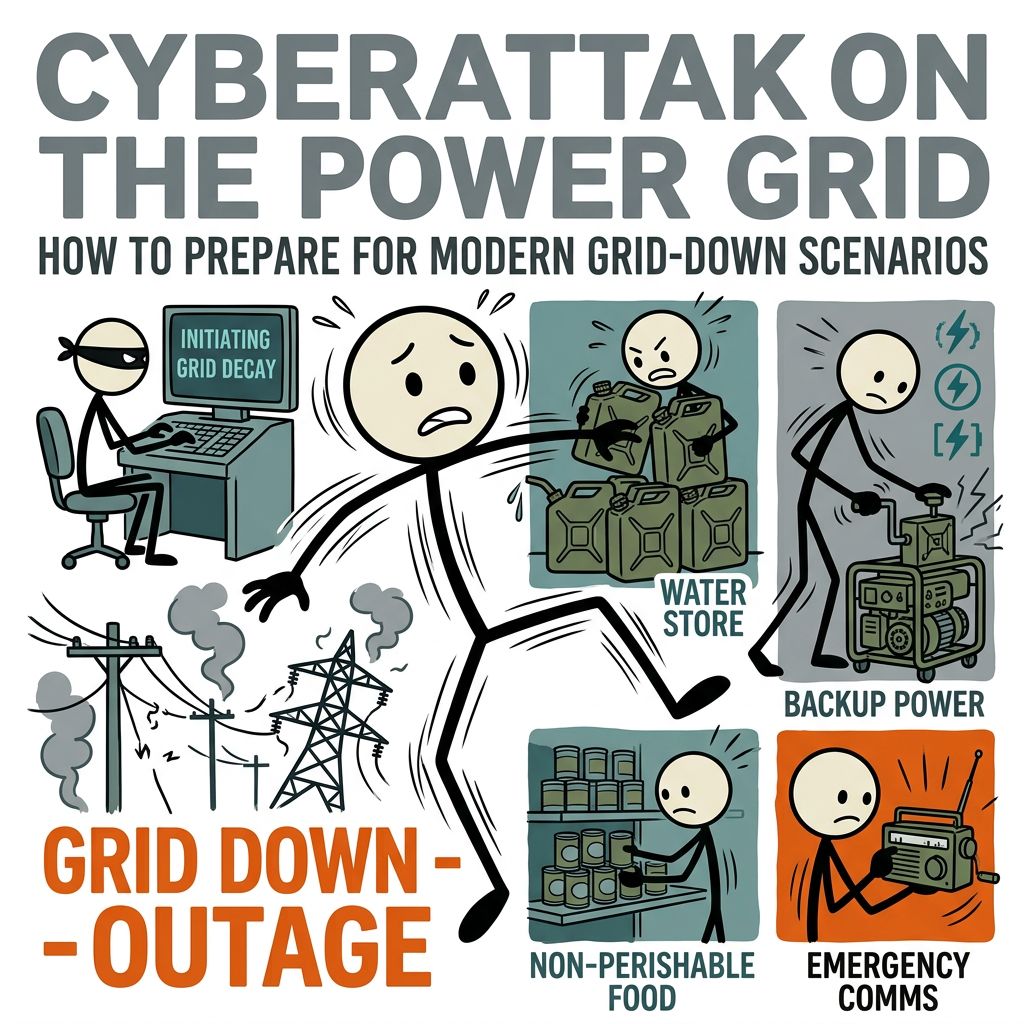
Facing a sudden, widespread blackout can feel incredibly daunting. Without the grid, the normal rhythms of society grind to an abrupt halt. Gas stations cannot pump fuel, grocery store registers fall silent, and municipal water pressure slowly drops to nothing. However, this reality does not have to be a source of paralyzing fear. Preparedness is the ultimate antidote to panic. By taking proactive steps today, you can insulate your household from the chaos of a sudden infrastructure collapse. See our emergency preparedness guide for practical next steps. For a quick definition, see grid down.
This comprehensive guide is designed to provide you with authoritative, actionable strategies for grid-down survival. By relying on data and protocols from leading emergency management agencies, we will walk you through exactly how to secure your home, manage your resources, and protect your family. A prolonged outage will test your resilience, but with the right mindset and proper power grid failure prep, you can transform a potential crisis into a manageable challenge. See our Supply Calculator for practical next steps. For a quick definition, see EMP.
Understanding the Threat of a Cyberattack on the Power Grid
To prepare effectively, it is vital to understand the nature of the threat. The national power grid is not a single, unified machine. It is a highly complex, interconnected network of power plants, transmission lines, and distribution centers. Historically, these systems were operated manually. Today, they are managed by Industrial Control Systems (ICS) and Supervisory Control and Data Acquisition (SCADA) networks. While digitalization has made the grid highly efficient, it has also connected physical machinery to the digital world. See our survival scenarios for practical next steps.
A cyberattack on the power grid occurs when malicious actors infiltrate these networks. Hackers can manipulate software to open circuit breakers, shut down generators, or even cause physical damage to critical hardware. In 2015, a cyberattack on Ukraine’s power grid left nearly a quarter-million people in the dark, proving that such attacks are entirely possible. The U.S. Department of Energy (DOE) and CISA continually monitor these threats, noting that adversarial nations are actively probing utility networks for vulnerabilities. See our family emergency planning guide for practical next steps.
What makes a cyber-induced blackout uniquely dangerous is the potential duration. If malicious code causes a massive generator or a High-Voltage Power Transformer (HVPT) to physically destroy itself, the recovery timeline shifts dramatically. These massive transformers are often custom-built, weigh hundreds of tons, and can take up to a year to manufacture and deliver. Consequently, what begins as a digital intrusion can quickly manifest as a long-term power outage, requiring citizens to sustain themselves for weeks rather than days.
The First 72 Hours: Immediate Grid-Down Survival Actions
When the power suddenly drops, your immediate actions dictate your long-term success. The first 72 hours of a blackout are characterized by widespread confusion. Most people will assume the power will return shortly. As someone practicing active grid-down survival, you must assume the worst and hope for the best. Your priority is to secure your home, assess your communication lines, and preserve your existing resources.
The moment the lights go out, safely unplug all major appliances and sensitive electronics. When the grid is eventually restored, or if it experiences erratic surges during the attack, the resulting voltage spikes can permanently destroy refrigerators, HVAC systems, and computers. Leave a single lamp switched on so you will immediately know if the power is restored.
Information and Communication
In a cyberattack scenario, cellular networks may fail quickly. Cell towers are equipped with battery backups and generators, but these typically only last for 24 to 48 hours. Once their fuel is depleted, mobile communication will vanish. Establish your situational awareness immediately. Use a battery-operated or hand-crank NOAA weather radio to listen for Emergency Alert System (EAS) broadcasts. Official channels will provide crucial updates regarding the nature of the outage and potential emergency declarations.
Preserving Food and Water
According to the Federal Emergency Management Agency (FEMA), a closed refrigerator will keep food cold for about four hours. A full freezer will hold its temperature for approximately 48 hours (or 24 hours if half full). Keep these doors firmly shut. Every time you open the fridge, you drastically reduce the lifespan of your perishable food. If you have advance warning of grid instability, freeze containers of water to act as supplemental ice blocks.
Simultaneously, you must address your water supply. If your home relies on a municipal water system, a grid failure means the pumps at the water tower will eventually stop. While there is still pressure in your pipes, fill your bathtubs, sinks, and any available food-safe containers. A device like a WaterBOB—a heavy-duty plastic bladder that fits into your bathtub—can safely store up to 100 gallons of drinking water, buying your family vital time.
Securing Your Blackout Emergency Supplies
A resilient household is built on the foundation of a well-stocked pantry. When a cyberattack disables the grid, supply chains will freeze. Grocery stores operate on "just-in-time" delivery models, meaning they only hold about three days' worth of inventory. Once a long-term power outage becomes evident, store shelves will be stripped bare in hours. Your blackout emergency supplies must be procured long before the crisis occurs.
Water: The Ultimate Priority
Humans can survive weeks without food, but only days without water. The CDC explicitly advises storing at least one gallon of water per person, per day. Half of this is for drinking, and the other half is for basic hygiene and food preparation. For a two-week baseline of preparedness, a family of four requires a minimum of 56 gallons of stored water. Store this water in cool, dark environments using food-grade, BPA-free containers.
Because a long-term power outage may outlast your stored supply, you must have the means to purify scavenged water. Include multiple filtration and purification methods in your blackout emergency supplies:
- Mechanical Filters: High-capacity gravity water filters (like Berkey or LifeStraw Family systems) can remove 99.9% of waterborne bacteria and protozoa without electricity.
- Chemical Purification: Stock up on water purification tablets (chlorine dioxide) or unscented household liquid bleach. The CDC recommends using 8 drops of 6% bleach per gallon of clear water, letting it sit for 30 minutes before consuming.
- Boiling: If you have a reliable off-grid heat source, bringing water to a rolling boil for one minute (or three minutes at high altitudes) will effectively kill pathogens.
Food Resilience and Off-Grid Cooking
Your emergency emergency food storage guide should focus on non-perishable, nutrient-dense items that require minimal water and cooking. FEMA recommends building a supply of canned meats, fruits, vegetables, dry cereals, peanut butter, and protein bars. Dehydrated and freeze-dried emergency food buckets are also excellent investments, offering a shelf life of up to 25 years. When building your pantry, remember to stock a manual can opener—a frequently forgotten but critical tool.
Cooking without grid power requires strict adherence to safety protocols. Never use outdoor grills, camp stoves, or propane heaters indoors. The carbon monoxide generated by these devices is odorless, colorless, and deadly. Safe off-grid cooking methods include:
- Portable Butane/Propane Stoves: Excellent for boiling water quickly, but must be used in well-ventilated outdoor areas.
- Solar Ovens: These utilize reflective panels to harness the sun's energy, allowing you to bake or boil water without using precious combustible fuel.
- Chafing Fuel (Sterno): Safe for indoor use to warm up small meals, though they do not generate enough heat to boil large pots of water.
Medical Preparedness and First Aid
During a severe cyberattack on the power grid, emergency medical services (EMS) will be overwhelmed. Dispatch centers may lose communication, and hospitals will be operating on backup generators, prioritizing only the most critical trauma cases. You must become your family's first responder for minor injuries and illnesses.
The American Red Cross advises maintaining a comprehensive first aid kit that goes beyond basic bandages. Your medical blackout emergency supplies should include trauma dressings, tourniquets, antiseptics, burn gels, and a thermometer. Just as importantly, you need the knowledge to use these items. Taking a certified first aid and CPR course is one of the most vital steps in your power grid failure prep.
Prescription medications present a unique challenge during a grid failure. Pharmacies will be closed or unable to process electronic prescriptions. Aim to keep at least a 30-day backup supply of all essential daily medications. If anyone in your household relies on medical equipment that requires electricity—such as a CPAP machine, oxygen concentrator, or refrigerated medications like insulin—you must have a dedicated backup power plan specifically for these devices.
Alternative Power and Lighting Strategies
While the goal of grid-down survival is to learn to live without the grid, having localized, alternative power drastically improves your quality of life. The psychological comfort of having light during the dark hours of a long-term power outage cannot be overstated. Relying solely on candles is a massive fire hazard; instead, transition to safer, more sustainable lighting options.
Stock up on LED headlamps, battery-powered lanterns, and tactical flashlights. Headlamps are particularly valuable as they keep your hands free for cooking, cleaning, or providing first aid. Ensure you have a deep reserve of alkaline and rechargeable batteries. Solar-powered inflatable lanterns are also an excellent, lightweight option that can charge on your windowsill during the day and illuminate a room at night.
Portable Power Stations and Solar Integration
For charging critical devices like cell phones, medical equipment, and rechargeable radios, lithium-ion portable power stations are invaluable. Unlike gas generators, these "solar generators" are completely silent, emit no fumes, and are safe to use indoors. When paired with portable solar panels, you create a closed-loop energy system that can provide modest, sustainable power indefinitely.
Fuel-Powered Generators
If you choose to utilize a gas, propane, or dual-fuel inverter generator, strict safety rules apply. FEMA and the CPSC are adamant: generators must never be operated inside a home, garage, basement, or enclosed porch. They must be placed at least 20 feet away from the house, with the exhaust directed away from windows and doors. Always install battery-operated carbon monoxide detectors on every level of your home.
Fuel storage is another critical consideration. Gasoline degrades over time. If you are storing fuel for a generator, use high-quality, approved containers and treat the fuel with a stabilizer. Rotate your fuel supply every six to twelve months by emptying it into your vehicle and refilling the containers with fresh gas.
Temperature Control: Surviving Extreme Weather Without the Grid
A cyberattack on the power grid will not politely wait for mild weather. Losing your HVAC system during the dead of winter or the peak of summer transforms a blackout from an inconvenience into a life-threatening emergency. Your power grid failure prep must account for extreme temperature fluctuations.
Winter Survival Strategies
If the grid fails during a freeze, your home will lose its heat rapidly. The goal is not to heat the entire house, but to heat the people. Establish a "micro-environment." Choose one small, well-insulated room—preferably on the south side of the house to catch daytime solar heat—and have the entire family sleep there. Close off all other doors and hang heavy blankets over the windows to trap body heat.
Invest in extreme-weather sleeping bags rated for sub-zero temperatures. Dress in layers, prioritizing moisture-wicking base layers and insulating fleece or wool. Avoid cotton, as it retains moisture and will make you colder. If you have a wood-burning fireplace or stove, ensure the chimney is inspected and cleaned annually, and maintain a robust supply of seasoned firewood.
Summer Survival Strategies
Surviving a long-term power outage during a heatwave requires avoiding heat stroke and extreme dehydration. The CDC warns that older adults, children, and those with chronic medical conditions are highly vulnerable to extreme heat. Without air conditioning, you must rely on passive cooling techniques.
Block out the sun during the hottest parts of the day by drawing blackout curtains or taping reflective emergency blankets to sun-facing windows. Open windows at night to allow cooler air to circulate, and close them in the morning to trap the cooler air indoors. Stay on the lowest level of your home, as heat rises. Most importantly, increase your water intake significantly, and recognize the early signs of heat exhaustion: heavy sweating, weakness, cold and clammy skin, and nausea.
Long-Term Power Outage: Hygiene and Sanitation
One of the most overlooked aspects of grid-down survival is sanitation. If the power grid is disabled by a cyberattack, municipal sewage lift stations may fail, causing sewage to back up into homes. Even if the sewer lines remain clear, you will eventually run out of water to flush your toilets. Poor sanitation inevitably leads to the spread of diarrheal diseases, which can be fatal in a grid-down scenario.
Managing Human Waste
When the toilets stop working, you must implement a safe alternative. The "twin-bucket" system is a proven emergency sanitation method. You will need two heavy-duty 5-gallon buckets: one designated for urine and the other for solid waste. Mixing the two creates a terrible odor and breeds bacteria faster. Equip the solid waste bucket with heavy-duty contractor trash bags. After each use, cover the waste with a layer of carbon-rich material—such as sawdust, peat moss, or kitty litter—to dry it out and mask the smell.
Seal the bags tightly when full and store them outside in a secure, covered location away from your living space and water supply. Never attempt to flush toilets if you suspect the sewer lines are backed up, as this will introduce raw sewage into your home.
Personal Hygiene
Maintaining personal cleanliness is vital for morale and infection control. With limited water, daily showers are impossible. Instead, rely on sponge baths using a minimal amount of water and antibacterial soap. Stock up on unscented baby wipes; they are incredibly effective for personal hygiene when water must be conserved for drinking.
Keep a robust supply of hand sanitizer, heavy-duty trash bags, paper towels, and feminine hygiene products in your blackout emergency supplies. The CDC emphasizes that rigorous handwashing—or the use of an alcohol-based hand sanitizer containing at least 60% alcohol—is the single most effective way to prevent the transmission of disease in a post-disaster environment.
Security and Community Resilience
As a long-term power outage drags on, societal stress will increase. Supply shortages and lack of information can lead to desperate behavior. Securing your home and protecting your family is a fundamental component of power grid failure prep. However, true security is rarely achieved in total isolation.
Home Security Fundamentals
Without electricity, your electronic alarm systems and outdoor floodlights will be useless. Rely on physical security measures. Ensure all exterior doors have heavy-duty deadbolts and reinforced strike plates. Keep your blackout emergency supplies out of sight; advertising that you have abundant food, water, and power makes your home a target. Practice operational security (OPSEC) by cooking indoors when possible to hide the smell of food, and blocking out your windows at night so the glow of your lanterns does not attract unwanted attention.
Building a Resilient Community
While you must be prepared to be self-reliant, the most successful grid-down survival strategies involve community cooperation. In the aftermath of a cyberattack on the power grid, your neighbors are your most valuable asset. A coordinated neighborhood can pool resources, share specific skills (such as medical training or mechanical expertise), and provide a unified security presence.
Get to know your neighbors before a crisis occurs. Establish a neighborhood watch and discuss emergency protocols. When the grid fails, check on the elderly or vulnerable individuals on your street. A community that works together to share information, barter goods, and maintain order is infinitely more secure than a single family trying to survive alone behind locked doors.
The Psychological Aspect of Grid-Down Survival
Finally, do not underestimate the psychological toll of a prolonged blackout. The sudden loss of the internet, social media, and digital entertainment, combined with the stress of survival, can lead to anxiety and depression. Mental resilience is just as important as physical preparedness.
Keep morale high by maintaining a routine. Assign daily chores to every family member to provide a sense of purpose. Include comfort items in your blackout emergency supplies, such as board games, physical books, playing cards, and favorite non-perishable treats. Honest, calm communication with your family about the situation will mitigate fear and foster a team-oriented survival mindset.
A cyberattack on the power grid is a severe threat that requires serious preparation. By acknowledging the vulnerability of our infrastructure, you take the first vital step toward true independence. Stocking adequate water, building a resilient food pantry, securing alternative power, and mastering off-grid sanitation are actionable steps you can take today. Preparedness is not about living in fear; it is about taking control of your circumstances. Equip yourself with the right supplies, educate your family on these survival strategies, and face the future with the quiet confidence that comes from being truly prepared.
Frequently Asked Questions
How long could a power outage from a cyberattack last?
A cyberattack on the power grid could cause outages lasting anywhere from a few hours to several weeks, depending on the severity of the attack and the time required to repair or replace damaged physical infrastructure.
What are the most essential supplies to have during a grid-down scenario?
Essential supplies include a minimum two-week supply of non-perishable food, one gallon of water per person per day, a first aid kit, battery-powered or hand-crank radios, flashlights, extra batteries, and backup power sources like solar chargers.
How can I protect my electronics from power surges related to grid attacks?
Unplug sensitive electronics and appliances when not in use, and use high-quality surge protectors. In the event of a known grid fluctuation, disconnect devices immediately to prevent damage from sudden power spikes.
Will my cell phone still work during a major power grid cyberattack?
Cell service may work initially, but cell towers rely on backup generators that typically only last 24 to 48 hours. Once their fuel is depleted, cellular networks will likely fail, making alternative communication methods necessary.
How should I handle sanitation if the water supply is affected by a power outage?
If water treatment facilities lose power, tap water may become unsafe or stop flowing. Store emergency water, keep heavy-duty trash bags and buckets for human waste, and have plenty of hand sanitizer and hygiene wipes available.
Sources & Further Reading
- https://www.ready.gov/power-outages
- https://www.fema.gov/emergency-managers/risk-management
- https://www.redcross.org/get-help/how-to-prepare-for-emergencies/types-of-emergencies/power-outage.html
- https://www.cdc.gov/foodsafety/food-safety-during-a-power-outage.html
- https://www.energy.gov/ceser/securing-energy-infrastructure