- Capacity vs. Weight: The EcoFlow DELTA 2 offers 1024Wh of heavy-duty capacity (expandable to 3kWh) at 27 lbs, while the BLUETTI Elite 30 V2 prioritizes rapid deployment at 9.4 lbs with 288Wh.
- Battery Chemistry: Both units utilize advanced LiFePO4 (LFP) chemistry, offering over 3,000 lifecycles, making them safe for indoor use without toxic fumes.
- Solar Recharge Integration: The DELTA 2 accepts up to 500W of solar input for rapid off-grid replenishment, while the Elite 30 V2 is designed for smaller, highly portable PV panels.
- Stealth Operations: Unlike loud gas generators, both solar generators operate silently, preventing you from attracting unwanted attention during a localized blackout or civil emergency.
Introduction: The Battle for Off-Grid Power
When the grid goes down, your survival plan is only as good as your backup power source. Traditional gas-powered generators have long been the prepper standard, but they carry massive liabilities: they are loud, emit toxic fumes, require volatile fuel storage, and act as a beacon to everyone in your neighborhood that you have resources. Portable power stations (often called solar generators) have revolutionized emergency preparedness by offering silent, indoor-safe, and renewable power.
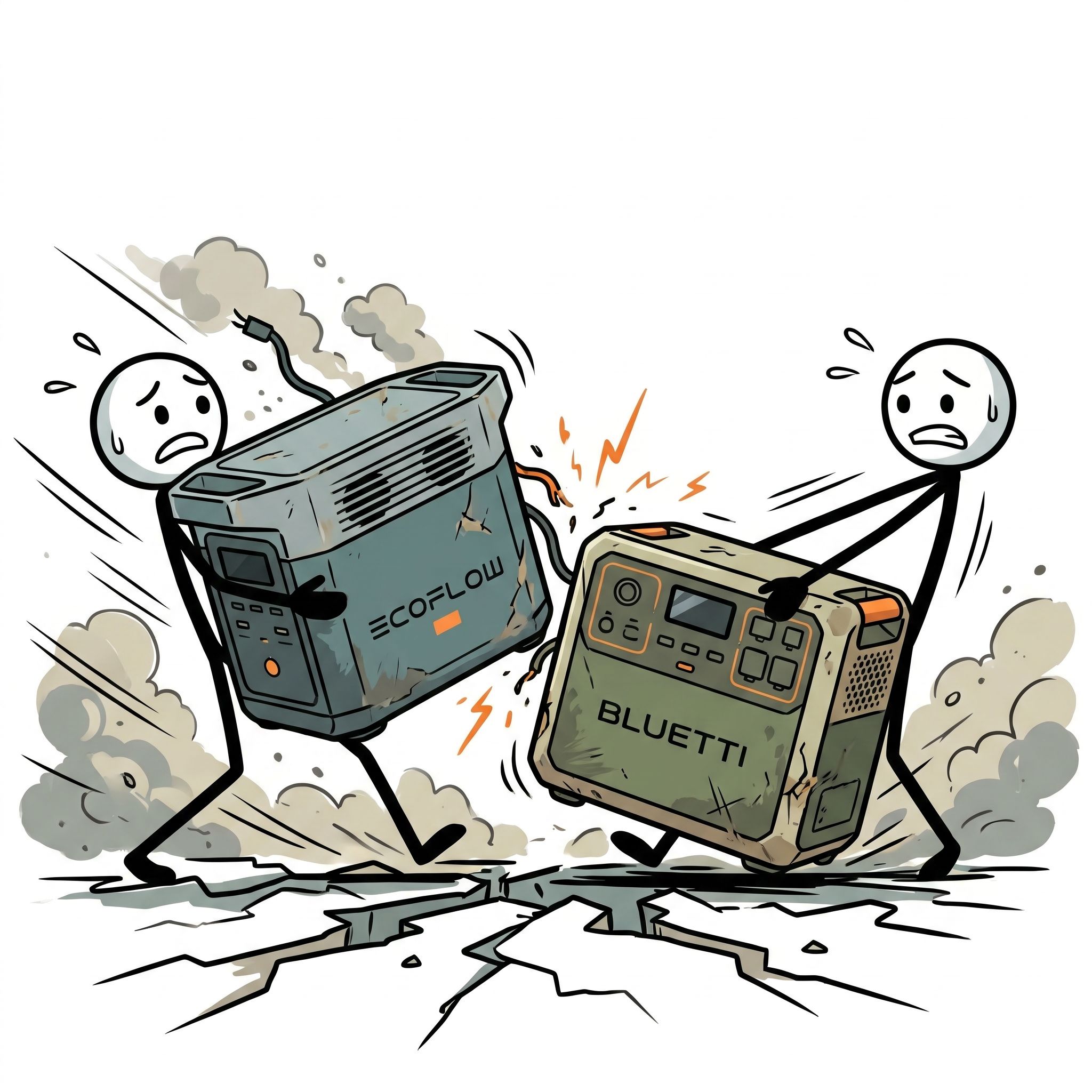
In this head-to-head comparison, we pit two industry giants against each other: the EcoFlow DELTA 2 and the BLUETTI Elite 30 V2. While both brands are highly respected in the survival community, they serve vastly different roles in an family emergency plan. We will break down their specs, survival utility, and help you decide which belongs in your bug-out vehicle or home shelter.
EcoFlow DELTA 2: The Heavy-Duty Survival Workhorse
The EcoFlow DELTA 2 is engineered for scenario-based survival where running large appliances is non-negotiable. Boasting a robust 1024Wh LiFePO4 battery and a continuous 1800W AC output, this unit is built to keep your critical infrastructure alive during extended grid failures.
One of the DELTA 2's greatest strengths is its expandable capacity. If a localized disaster turns into a multi-week grid-down scenario, you can chain extra batteries to expand the capacity up to 3kWh. With 15 output ports and the ability to power 90% of home appliances, it can keep a full-sized refrigerator running, power medical equipment, or run water pumps. Furthermore, its 500W solar input capacity allows you to harness maximum green energy during the day, ensuring you remain completely self-sufficient when fuel lines dry up.
BLUETTI Elite 30 V2: The Ultimate Bug-Out Companion
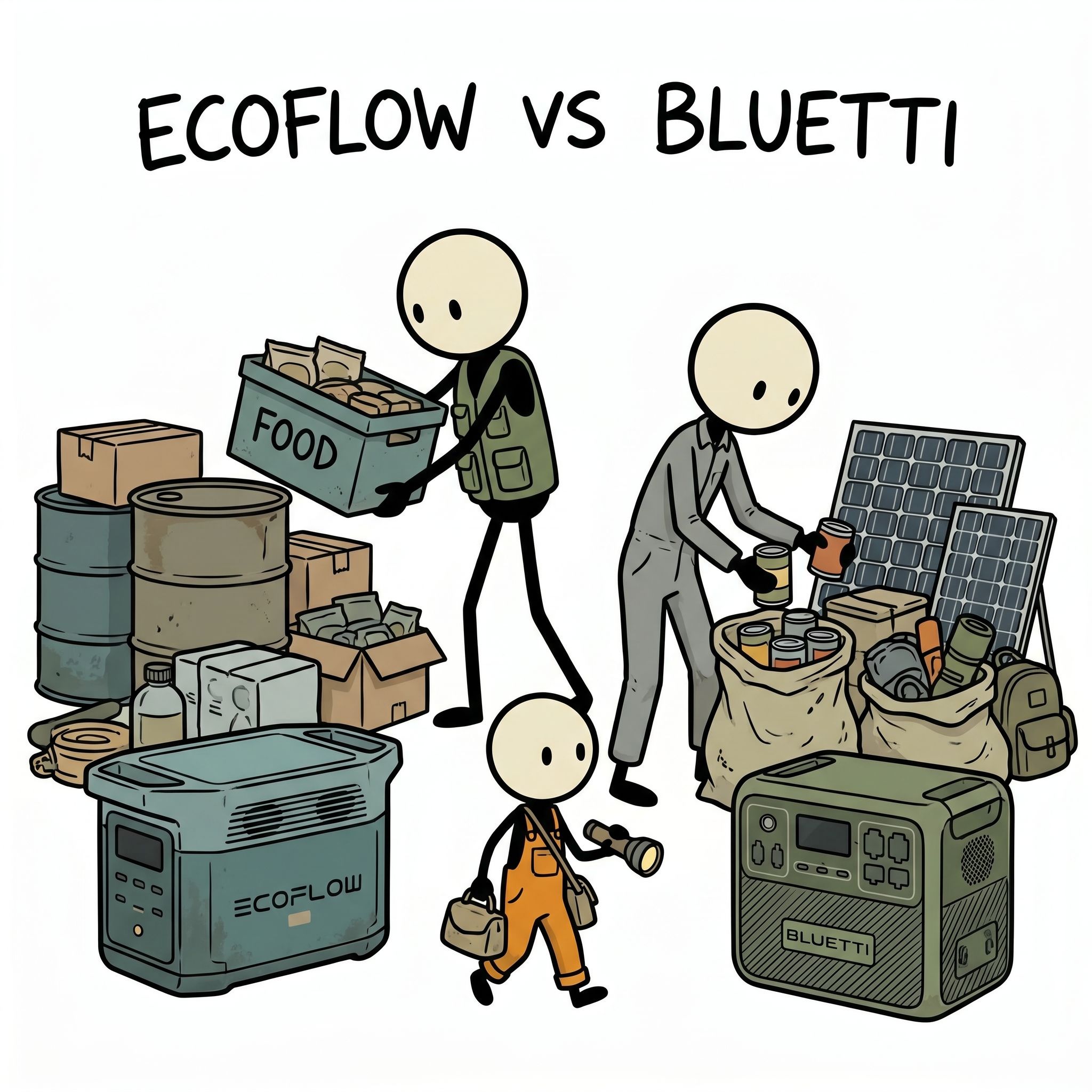
If your emergency plan involves rapid evacuation or maintaining a lightweight footprint, the BLUETTI Elite 30 V2 is a masterpiece of compact engineering. Weighing in at a mere 9.4 lbs, this 288Wh unit can be grabbed in a single hand alongside your bug-out bag during a sudden wildfire or hurricane evacuation.
Do not let its small size fool you. BLUETTI has packed this unit with a 600W continuous inverter that features a "Power Lifting" mode capable of handling surges up to 1500W. This means it can temporarily run high-draw heating elements, water kettles, or tools that would instantly trip other small power stations. Additionally, its ultra-low standby power consumption (just 4.5W) ensures that when stored in your closet or vehicle trunk, it won't slowly bleed its charge, leaving you stranded when you need it most. It also features a lightning-fast 10ms UPS switchover, making it an excellent immediate backup for CPAP machines and emergency communications gear.
Head-to-Head: Prepper Evaluation Metrics
1. Capacity and Expandability
In a long-term Survival Scenarios, capacity is your currency. The EcoFlow DELTA 2 dominates this category with 1024Wh of baseline storage. More importantly, its ability to expand up to 3000Wh with dedicated extra batteries means it can transition from a short-term blackout solution to a long-term off-grid power hub. The BLUETTI Elite 30 V2, with its fixed 288Wh capacity, is strictly for short-term tactical use, communications, and keeping small devices charged.
2. Power Output and Appliance Compatibility
The DELTA 2's 1800W continuous output (2700W surge) allows you to run heavy-draw appliances like microwaves, refrigerators, and power tools. The BLUETTI Elite 30 V2 outputs 600W continuously, but its 1500W Power Lifting mode is a massive bonus, allowing it to run resistive loads like hot plates or small space heaters in a pinch. However, for true appliance compatibility, the EcoFlow is the clear choice.
3. Portability and Bug-Out Readiness
This is where BLUETTI shines. At 9.4 lbs, the Elite 30 V2 can be carried by elderly family members, packed into a vehicle footwell, or even strapped to a heavy-duty pack frame. The EcoFlow DELTA 2, while portable compared to gas generators, weighs around 27 lbs. It is a "bug-in" or vehicle-dependent unit that you will not want to carry on foot for any distance.
4. Recharging Speed and Solar Integration
Both brands have perfected rapid charging, which is critical when you only have a brief window of grid power or sunlight. The BLUETTI charges to 80% in 45 minutes on wall power, while the EcoFlow takes 50 minutes. However, when the grid is completely dead, solar input is what keeps you alive. The EcoFlow DELTA 2 accepts up to 500W of solar input, allowing you to fully recharge the unit in under 3 hours of prime sunlight. The BLUETTI Elite 30 V2 is limited to smaller solar inputs, making it slower to harvest large amounts of energy quickly.
The Verdict: Which Belongs in Your Emergency Plan?
Your choice between EcoFlow and BLUETTI should be dictated by your primary survival strategy:
- Choose the EcoFlow DELTA 2 if: Your primary goal is "sheltering in place" or backing up your home. It has the capacity, raw power output, and expandability required to keep food cold, run medical devices, and maintain a semi-normal quality of life during extended grid failures. It is the ultimate anchor for a household emergency kit.
- Choose the BLUETTI Elite 30 V2 if: You prioritize mobility, rapid evacuation, or need a dedicated backup for a CPAP machine or communication station. Its lightweight design, fast UPS switchover, and highly efficient standby mode make it the perfect tactical power station for mobile operations and bug-out bags.
Frequently Asked Questions
Can I run a full-sized refrigerator on these power stations?
The EcoFlow DELTA 2 can easily run a standard residential refrigerator (which typically draws 100W to 400W) for several hours, and much longer if paired with solar panels. The BLUETTI Elite 30 V2, with its 288Wh capacity and 600W continuous output, is not recommended for full-sized refrigerators but can run small 12V car fridges or cooling fans.
What is the lifespan of LiFePO4 batteries in storage?
Both EcoFlow and BLUETTI use LiFePO4 (LFP) chemistry, which is highly stable and retains charge well. In storage, they should be checked and topped off to about 60-80% every 3 to 6 months. LFP batteries are rated for over 3,000 charge cycles before dropping to 80% capacity, meaning they can last over a decade with regular emergency use.
Why is standby power consumption important for preppers?
Standby power consumption, or "vampire draw," is the energy a power station uses just by being turned on. In a survival scenario, every watt counts. The BLUETTI Elite 30 V2 features an upgraded UltraCell system that cuts standby draw to just 4.5W, making it highly efficient for long-term monitoring or intermittent use.
Can these units be charged with third-party solar panels?
Yes. Both brands support standard MC4 solar connectors, allowing you to use third-party solar panels as long as the open-circuit voltage (Voc) and amperage of the panels fall within the specific input limits of the power station.
Is a 10ms UPS speed necessary for emergency preparedness?
A 10ms Uninterruptible Power Supply (UPS) transfer speed, featured in the BLUETTI Elite 30 V2, is fast enough to prevent sensitive electronics like desktop computers, routers, and CPAP machines from shutting down during a sudden grid failure. It is highly valuable if you rely on continuous medical equipment or emergency communications.