⚡ Key Facts
- Disproportionate Impact: According to the Federal Emergency Management Agency (FEMA), individuals aged 65 and older represent a disproportionately high percentage of casualties during extreme weather events, often due to mobility and chronic health challenges.
- Critical Medication Windows: The Centers for Disease Control and Prevention (CDC) reports that over 85% of older adults have at least one chronic health condition, making continuous access to prescription medication the single most critical factor in survival during prolonged disruptions.
- Power Dependence: Thousands of seniors rely on electrically powered medical devices, such as oxygen concentrators and home dialysis machines, making immediate backup power planning a life-or-death necessity.
- Cognitive Vulnerability: The Alzheimer's Association notes that sudden changes in environment, loud noises, and high-stress situations can trigger severe confusion, anxiety, and wandering behaviors in seniors with cognitive decline.
- Early Action Advantage: The American Red Cross emphasizes that evacuating just 24 to 48 hours before an anticipated disaster drastically reduces physical stress and complications for medically fragile older adults.
When a natural disaster strikes, the difference between a safe outcome and a tragedy often comes down to minutes of preparation. For caregivers of aging parents, the stakes are incredibly high. Whether it is a rapidly moving wildfire, a Category 4 hurricane, a sudden earthquake, or a severe winter power outage, older adults face unique physiological, cognitive, and logistical challenges that standard emergency plans simply do not address. As a caregiver, you are not just a helper; you are the tactical coordinator, advocate, and lifeline for your elderly parents. This guide provides a comprehensive, step-by-step roadmap to building an airtight emergency plan, assembling a specialized kit, and executing a safe evacuation, ensuring your loved ones are protected when every second counts.
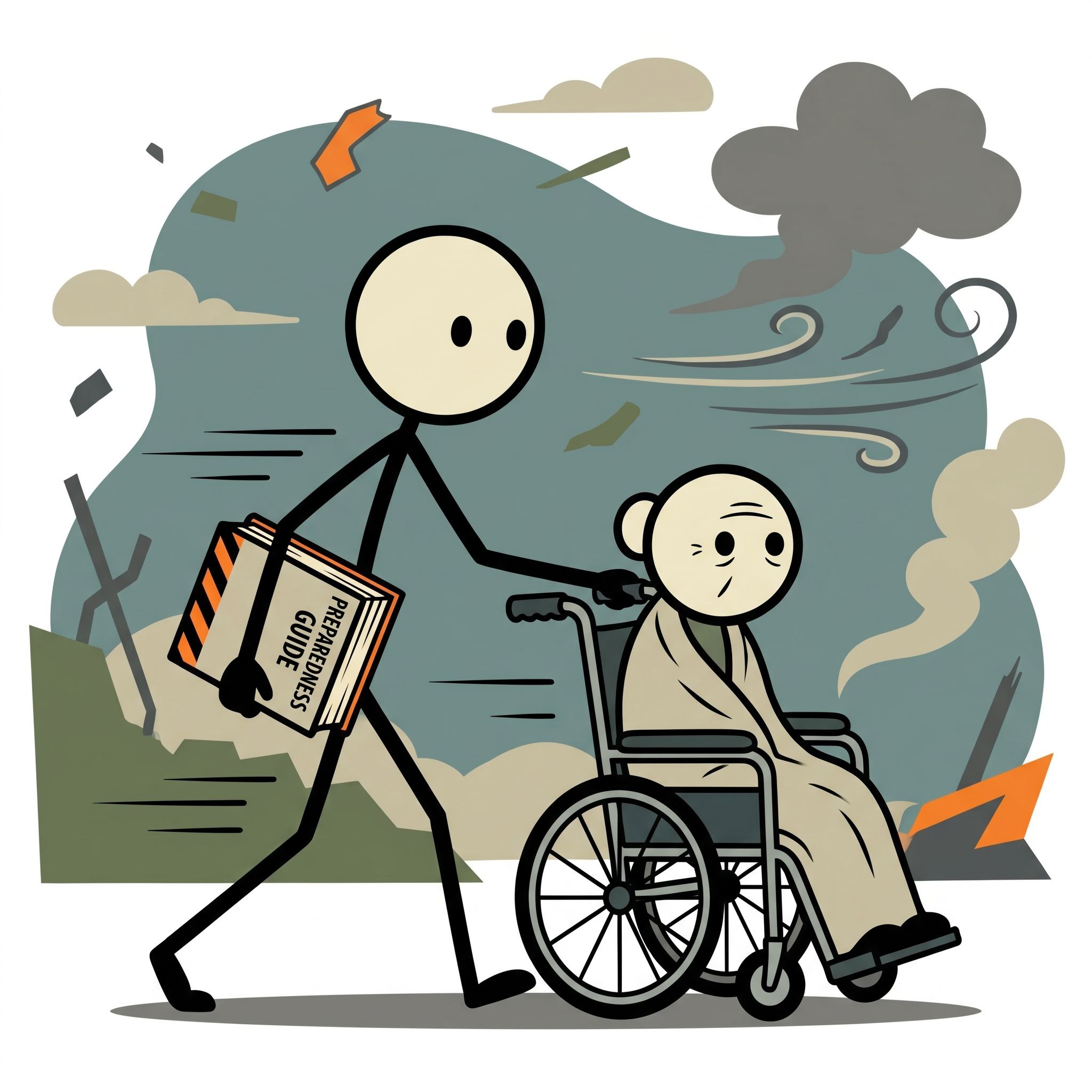
The Unique Vulnerabilities of Older Adults in Emergencies
To build an effective strategy, we must first understand why standard disaster advice falls short for the elderly. Aging bodies do not respond to stress, temperature extremes, or physical exertion the same way younger bodies do. Understanding these physiological and psychological shifts is the foundation of comprehensive elderly disaster preparedness.
Physiological and Mobility Limitations
During a crisis, physical mobility is currency. Conditions such as arthritis, osteoporosis, Parkinson’s disease, or the aftermath of a stroke can severely limit a senior's ability to move quickly, navigate debris, or stand in long lines. Furthermore, older adults are highly susceptible to rapid dehydration and temperature-related illnesses. The body's ability to regulate temperature declines with age, meaning extreme heat or freezing cold during power outages can quickly become fatal. According to the National Oceanic and Atmospheric Administration (NOAA), heatwaves are particularly lethal for seniors living without functioning air conditioning.
Cognitive and Sensory Declines
Sensory impairments are common but frequently overlooked in emergency planning. A senior who cannot hear a high-pitched smoke detector, a siren, or a broadcasted evacuation order is at immediate risk. Visual impairments make navigating darkened, debris-strewn hallways during a power outage treacherous, dramatically increasing the risk of falls. For parents dealing with dementia or Alzheimer’s disease, the loss of routine, chaotic environments, and loud noises can cause extreme agitation, paranoia, and a tendency to wander, making evacuation efforts significantly more complex.
Medical and Supply Chain Dependencies
Most seniors do not have the luxury of going "off-grid" for a few days without health consequences. Many rely on a delicate regime of daily medications, specialized diets, and electrically powered medical equipment. When supply chains break down, pharmacies close, and power grids fail, a senior's health can deteriorate in a matter of hours. This reality forms the core of why a specialized caregiver disaster guide is necessary: we must plan to bring the medical support system with us, or secure a reliable backup.
Phase 1: Designing a Robust Emergency Plan for Seniors
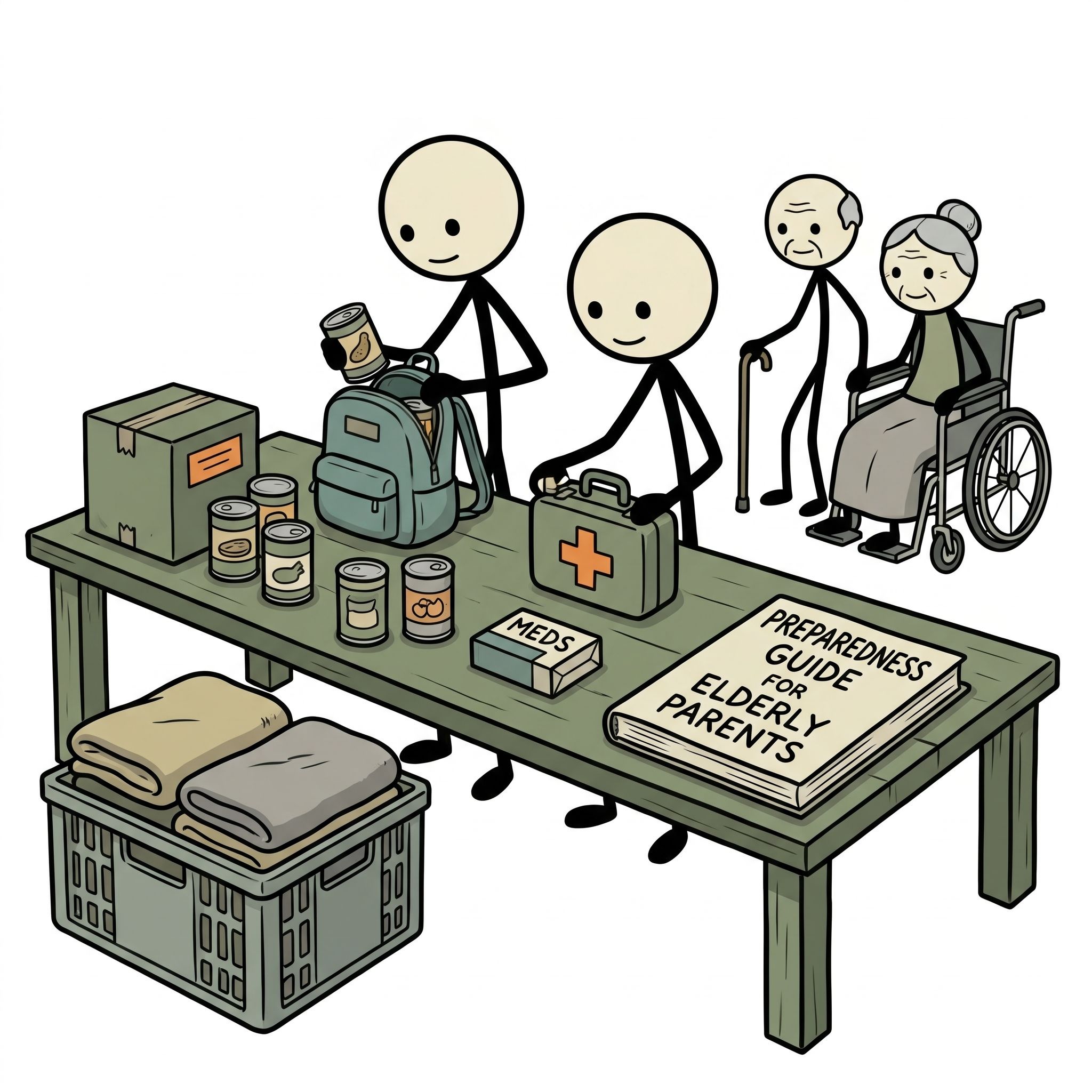
A resilient plan is not a vague agreement to "meet at the car if something happens." It is a written, practiced, and redundant strategy that accounts for communication failures, physical limitations, and medical needs. When creating an emergency plan for seniors, you must build a network of support that extends beyond yourself.
Building a Personal Support Network
As a caregiver, you may not always be physically present when a disaster occurs. You might be at work, stuck in traffic, or blocked by emergency road closures. Therefore, you must establish a localized "care circle" of trusted individuals who can step in immediately.
- Identify Local Contacts: Choose at least three people—such as neighbors, nearby relatives, or building managers—who live close to your parents and have permission to enter their home in an emergency.
- Distribute Keys and Codes: Provide these trusted contacts with spare keys, lockbox codes, and keycard access, alongside a basic understanding of your parent's physical needs.
- Define Specific Roles: Assign clear tasks. For example, Neighbor A is responsible for physically checking on your parents, while Neighbor B is tasked with checking their utility shut-offs.
- Share the Plan: Ensure every member of the support network has a copy of your written emergency plan, complete with medical contacts and evacuation destinations.
Establishing Redundant Communication Protocols
During major disasters, cell towers often become overloaded or fail entirely. Relying solely on standard cell phone calls is a critical vulnerability. Establish a multi-tiered communication system to keep everyone connected.
First, designate an out-of-state contact to act as your family's central communications hub. During localized disasters, long-distance phone lines often remain open even when local networks are jammed. Instruct all family members and caregivers to check in with this out-of-state contact to report their safety and location.
Second, teach your parents and local network to use text messaging rather than voice calls. Text messages require significantly less bandwidth and are far more likely to get through a congested cellular network. Finally, invest in a low-cost, battery-powered or hand-crank NOAA Weather Radio. This ensures your parents have access to real-time emergency broadcasts from the National Weather Service, even if the internet and cell service are completely down.
The Vital Medical Portfolio
In a medical crisis or rapid evacuation, you cannot rely on memory to recall complex medication names, dosages, or medical histories. You must compile a physical, waterproof "Medical Portfolio" that can be grabbed in seconds. This portfolio should contain:
- Complete Medication List: The exact name, dosage, frequency, and prescribing doctor for every medication your parent takes.
- Doctor and Pharmacy Contacts: Names, phone numbers, and clinic addresses for all primary care physicians, specialists, and preferred pharmacies.
- Medical History Summary: A brief, one-page summary of major diagnoses, past surgeries, allergies (especially to medications or latex), and blood types.
- Insurance and Legal Documents: Copies of health insurance cards, Medicare/Medicaid cards, photo IDs, Power of Attorney (POA) documents, and Living Wills or Do Not Resuscitate (DNR) orders.
- Digital Backups: Scan all of these documents and store them on a secure, password-protected USB thumb drive placed in your emergency kit, or upload them to an encrypted cloud storage folder accessible from your smartphone.
Phase 2: Assembling the Ultimate Senior Emergency Kit
A standard, off-the-shelf disaster kit is insufficient for the needs of an aging adult. To ensure comfort, health, and survival, you must curate a highly customized senior emergency kit. This kit should be divided into two parts: a "go-bag essentials guide" for rapid evacuations and a "Shelter-in-Place Kit" for surviving long-term power outages at home.
The 14-Day Medication and Medical Supply Strategy
While standard emergency kits recommend a 3-day supply of medications, real-world disasters demonstrate that pharmacy supply chains can take weeks to recover. Aim for a minimum of a 7-to-14-day supply of all critical medications.
To achieve this, talk to your parent's physicians about obtaining "emergency use" prescriptions or request early refills through your insurance provider to build a safety buffer. Check expiration dates every six months (coinciding with daylight saving time changes) and rotate the backup stock into their daily routine to prevent medications from expiring. For medications that require refrigeration, such as insulin or certain eye drops, pack a specialized, insulated medication cooling pouch (like a Frio wallet) alongside reusable gel ice packs stored in your freezer, ready to be grabbed at a moment's notice.
Mobility and Sensory Backups
If your parent relies on assistive devices, your emergency kit must accommodate them. A loss of mobility or sensory input during a disaster increases vulnerability and anxiety exponentially.
- Mobility Spares: Pack extra cane tips, a spare manual wheelchair tire pump, and any specialized wrenches or tools needed to adjust wheelchairs or walkers. If they use a motorized wheelchair, identify manual backup options or secure a portable power inverter.
- Sensory Supplies: Include at least two spare sets of eyeglasses (even older prescriptions are better than nothing) with protective cases. Pack a generous supply of hearing aid batteries, keeping them in their original packaging to prevent discharge.
- Writing Materials: Keep a pad of paper and thick black markers handy. If hearing aids are lost or damaged in a chaotic environment, written communication becomes your primary tool.
Sanitation, Hygiene, and Comfort Items
Disaster shelters and temporary accommodations often lack the specialized hygiene products required by older adults. Maintain a dedicated supply of incontinence briefs, pads, and barrier creams, planning for at least a 7-day supply. Pack a generous quantity of unscented wet wipes, waterless shampoo, and hand sanitizer to maintain hygiene when running water is unavailable.
Additionally, do not underestimate the power of comfort items for emotional stability. Pack a familiar, soft fleece blanket, a set of comfortable, easy-to-wear clothing, and low-stress entertainment options such as large-print puzzle books, a deck of cards, or a small, battery-operated reading light. For parents with cognitive impairments, include a cherished family photo album or a familiar, comforting object to help ground them during stressful transitions.
Phase 3: Executing a Flawless Elderly Evacuation Plan
Evacuation is physically taxing and emotionally jarring for older adults. A successful elderly family emergency plan relies on one golden rule: evacuate early. Waiting until an official evacuation order becomes mandatory exposes your parents to heavy traffic, extreme weather, and high-stress scenarios that can trigger physical collapse or cognitive panic.
Determining the Trigger Points
Do not wait for emergency sirens to decide whether to leave. Establish clear, objective "trigger points" based on NOAA weather advisories or local emergency management updates. For example, if your parent relies on oxygen and a major hurricane is projected to make landfall within 100 miles, your trigger point should be to evacuate 48 hours before landfall—well before high winds begin or evacuation routes become congested. If a wildfire is burning within a designated radius of your parent's home, initiate evacuation immediately rather than waiting for pre-evacuation warnings to upgrade.
Logistics, Transport, and Specialized Registries
Transporting a frail senior requires careful logistical planning. Ensure your personal vehicle is kept in excellent mechanical condition, with the fuel tank never dropping below half a charge or half a tank. If your parent requires a wheelchair-accessible vehicle, you must arrange this transport well in advance, as commercial paratransit services will be overwhelmed once a disaster is imminent.
Contact your local emergency management agency, health department, or fire station today to register your parents on the local "Special Needs Registry" or "Vulnerable Populations Registry." These databases allow local emergency services to map out vulnerable individuals who require specialized transport or medical assistance during a community-wide evacuation. However, treat this registry as a secondary safety net, not your primary evacuation plan.
Choosing the Right Destination
Standard emergency shelters should be your absolute last resort. They are frequently noisy, crowded, lack private restroom facilities, and are rarely equipped to handle seniors with advanced medical needs or cognitive decline. Instead, prioritize alternative destinations in your planning:
| Destination Type | Pros | Cons / Planning Requirements |
|---|---|---|
| Family/Friends Out of Area | Familiar, quiet, low-stress, private space. | Requires pre-arranged travel; may not have specialized medical setups. |
| ADA-Compliant Hotels | Private bathroom, climate control, reliable power. | Must book immediately upon establishing trigger points; expensive during peak crises. |
| Specialized Medical Shelters | Continuous medical monitoring, backup power for devices. | Requires pre-registration through local health departments; limited space. |
| Assisted Living Partner Facilities | Professional staff, seamless care continuity. | Only available if your parent is already enrolled in a facility with reciprocal agreements. |
Phase 4: Sheltering in Place Safely
There are scenarios where evacuating is either impossible due to sudden-onset events like earthquakes, or unnecessary based on local emergency guidance. In these cases, you must transform your parent's home into a self-sustaining sanctuary that can withstand utility outages and isolation.
Managing Power Outages and Life-Sustaining Equipment
A power outage is not just an inconvenience for a senior on oxygen therapy, mechanical ventilation, or home dialysis; it is an immediate emergency. To mitigate this risk, register your parents with their utility provider’s "Life Support" or "Critical Care" program. This designation prioritizes their address for rapid power restoration during outages, though it does not guarantee immediate power.
To secure a reliable energy source, invest in a high-capacity portable power station (solar generator) rather than a traditional gas generator. Solar generators are safe to operate indoors, produce no deadly carbon monoxide fumes, run silently, and can power medical devices, CPAP machines, and small refrigerators for critical medications. Ensure you have the correct adapters and have tested the run-time of the battery station with your parent’s specific medical equipment beforehand.
Ensuring Thermal Safety and Climate Control
As noted by the CDC, older adults are highly vulnerable to hypothermia in winter and hyperthermia in summer. If sheltering in place during extreme cold, seal off unused rooms to conserve heat, dress your parents in layers of wool or synthetic thermal wear (avoid cotton, which retains moisture and chills the body), and use safe, indoor-rated propane heaters or hot water bottles. Conversely, during extreme heatwaves without air conditioning, utilize battery-powered fans, apply cool, damp cloths to their neck and wrists, and ensure they drink water regularly, even if they do not express thirst, as the sensation of thirst naturally diminishes with age.
Phase 5: Caring for Cognitive and Emotional Needs
A disaster is a psychological assault. The stress of sirens, flashing lights, disrupted routines, and parental anxiety can cause severe emotional distress. For seniors experiencing cognitive decline, this distress can manifest as extreme confusion, combativeness, or attempts to flee.
Mitigating Stress and Preventing Wandering
Your emotional state directly influences your parent's behavior. Speak in calm, low, reassuring tones, even if you are feeling rushed or anxious. Maintain their daily routine as closely as possible—serving meals, administering medications, and encouraging sleep at their usual times, even within a temporary shelter environment.
To prevent wandering, which is highly common during chaotic evacuations, ensure your parent wears a comfortable, waterproof ID bracelet at all times. This bracelet should list their name, your contact information, and a note indicating if they have dementia or are non-verbal. Consider placing a small, lightweight GPS tracking device (such as an Apple AirTag or a specialized medical GPS tracker) in their pocket, shoe, or on a wristband to ensure you can locate them immediately if you are separated.
Psychological First Aid for Seniors
Older adults may experience a profound sense of grief or loss during a disaster, particularly if they are forced to leave behind their home, pets, or cherished belongings. Practice active listening, validate their fears, and avoid dismissing their concerns. Whenever safe, involve them in small, manageable tasks—such as holding a flashlight, packing a small bag of personal items, or organizing plastic utensils. Giving them a sense of agency and purpose helps combat feelings of helplessness and keeps them focused on positive, constructive actions.
Phase 6: Post-Disaster Care and Re-entry
The danger does not end when the storm passes. The period immediately following a disaster is when many injuries and health complications occur, as families attempt to clean up and return to normal routines.
Safe Re-entry Protocols
Never bring an elderly parent back into a home that has not been thoroughly inspected and cleared of hazards. Before your parent enters the home, conduct a comprehensive safety sweep:
- Check for Structural Integrity: Look for cracked walls, sagging ceilings, or damaged roofing that could collapse.
- Inspect Utilities: Ensure there are no gas leaks, exposed electrical wiring, or water line damage. If you smell gas, turn off the main valve immediately and leave the premises.
- Address Mold and Moisture: If the home experienced flooding, mold can develop within 24 to 48 hours, posing a severe respiratory threat to seniors with asthma, COPD, or weakened immune systems.
- Remove Fall Hazards: Clear away all debris, mud, wet carpets, and loose rugs from walkways, both inside and outside the home.
Monitoring for Delayed Health Impacts
The physical and emotional toll of a disaster can have a delayed effect on older adults. In the weeks following an event, monitor your parent closely for any subtle changes in health or behavior. Watch for signs of deep physical exhaustion, respiratory distress from dust or mold, increased confusion, or symptoms of post-traumatic stress, such as insomnia, withdrawal, or severe anxiety. Schedule a follow-up appointment with their primary care physician as soon as clinics reopen to ensure their chronic conditions remain stable and their medication regimen is uninterrupted.
Preparedness is an Act of Love
Preparing for the unexpected is not about living in fear; it is about taking control of a chaotic world to protect the people who spent their lives protecting you. By taking the time today to build a dedicated support network, assemble a specialized medical emergency kit, and establish clear evacuation triggers, you are replacing panic with precision. Do not wait for the next storm warning to begin this process. Download the necessary templates, talk to your parent’s doctors, coordinate with your local care circle, and build your emergency plan today. Your foresight and preparation are the greatest gifts of security you can offer your parents when they need it most.
Frequently Asked Questions
How much medication should I keep on hand for an elderly parent in an emergency kit?
Keep at least a 7-to-14-day supply of all prescription medications, along with a list of dosages, doctor contact information, and copies of medical insurance cards.
What essential documents should be included in an elderly parent's emergency grab-and-go bag?
Include copies of photo IDs, Medicare/Medicaid cards, medical history, a list of allergies, emergency contacts, and legal documents such as a power of attorney or living will.
How can I ensure my elderly parent's medical devices work during a power outage?
Register life-support equipment with your local utility company for priority power restoration, keep fully charged backup batteries, and have a portable generator or power station on hand.
What is a personal support network, and why does an elderly parent need one?
It is a group of at least three trusted neighbors, friends, or family members who have spare keys and know how to operate necessary medical equipment to assist your parent if you cannot reach them.
How should I prepare for evacuating an elderly parent with mobility issues?
Keep mobility aids like canes or wheelchairs near the exit, map out wheelchair-accessible evacuation routes, and pre-arrange specialized transportation with local emergency services.