⚡ Key Facts
- According to the Centers for Disease Control and Prevention (CDC), up to 1 in 4 adults in the United States lives with some type of disability, highlighting the massive need for inclusive disaster planning.
- Data from the Department of Health and Human Services (HHS) emPOWER program shows that over 2.5 million Medicare beneficiaries rely on electricity-dependent medical equipment to live independently.
- The Federal Emergency Management Agency (FEMA) notes that individuals with access and functional needs are disproportionately impacted by natural disasters due to systemic gaps in standard evacuation protocols.
- While 80% of Americans live in counties that have been hit by a weather-related disaster, the American Red Cross reports that only a fraction of households with disabled members have a specialized, accessible family emergency plan.
- A special needs registry emergency system can help local first responders anticipate the needs of vulnerable populations, though enrollment is strictly voluntary and varies widely by municipality.
When a natural disaster strikes, the margin for error shrinks dramatically. For the average person, a sudden power outage or a mandatory evacuation order is a highly stressful disruption. For individuals living with disabilities, however, these same events can instantly become life-threatening crises if proper preparations are not in place. Disasters do not discriminate, but a lack of proactive planning certainly does. The standard emergency advice—like "grab your bag and run"—often completely ignores the realities of those who rely on mobility aids, life-sustaining medical equipment, or specialized communication tools.
Fortunately, vulnerability is not an inevitable outcome of disability. By taking a proactive, highly customized approach to emergency preparedness disabilities can be accommodated, and risks can be drastically minimized. Planning ahead empowers individuals, caregivers, and support networks to face the unpredictable with confidence and resilience. This comprehensive guide will walk you through the essential steps to secure your safety, from building an accessible evacuation plan to securing backup power for critical medical devices.
Redefining Access and Functional Needs Preparedness
In the realm of emergency management, the term "special needs" has largely been replaced by "access and functional needs." This shift, championed by FEMA’s Office of Disability Integration and Coordination, is more than just semantics. It represents a fundamental change in how we approach disaster readiness. Access and functional needs preparedness focuses on the specific, practical requirements an individual has to maintain their health, safety, and independence during a crisis.
Standard emergency plans often assume a baseline of physical mobility, sensory capability, and cognitive processing that does not apply to everyone. An effective disability disaster planning strategy must be built on the "Social Model" of preparedness. This model assumes that the environment and the disaster response systems are the barriers, rather than the individual's disability. By identifying these barriers ahead of time, you can engineer solutions to bypass them.
It is critical to remember that you are the ultimate expert on your own needs. First responders and emergency managers train extensively, but they cannot know the intimate details of your daily life. Your preparedness strategy must be an extension of your daily routine, adapted for Survival Scenarios scenarios. Taking ownership of your access and functional needs preparedness ensures that you are never entirely reliant on external systems that may be overwhelmed during a catastrophic event.
Designing an Accessible Evacuation Plan
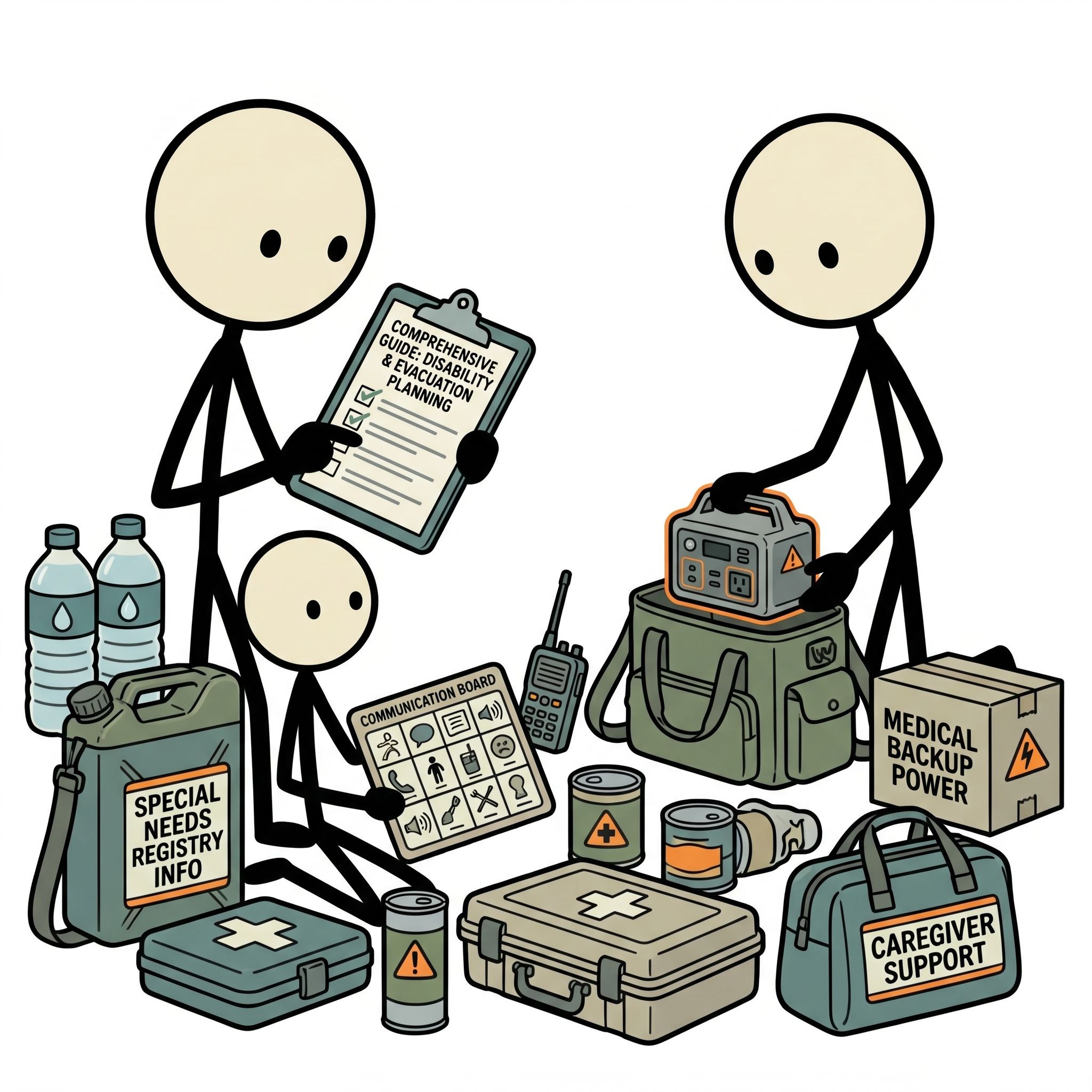
Evacuating during a disaster is chaotic, with blocked roads, disrupted public transit, and unpredictable hazards. For individuals with mobility impairments, designing an accessible evacuation plan is the most critical step in disaster readiness. You cannot simply assume that standard evacuation routes or public shelters will be able to accommodate wheelchairs, walkers, or specialized medical beds without prior verification.
Mapping Accessible Routes
Your accessible evacuation plan must include multiple exit routes from your home, your workplace, and your neighborhood. Start by assessing your immediate environment. If you live in an apartment building and rely on an elevator, a power outage will trap you unless you have a designated evacuation chair and a trained support network to assist you down the stairs. Identify all ADA-compliant ramps, curb cuts, and ground-level exits in your vicinity.
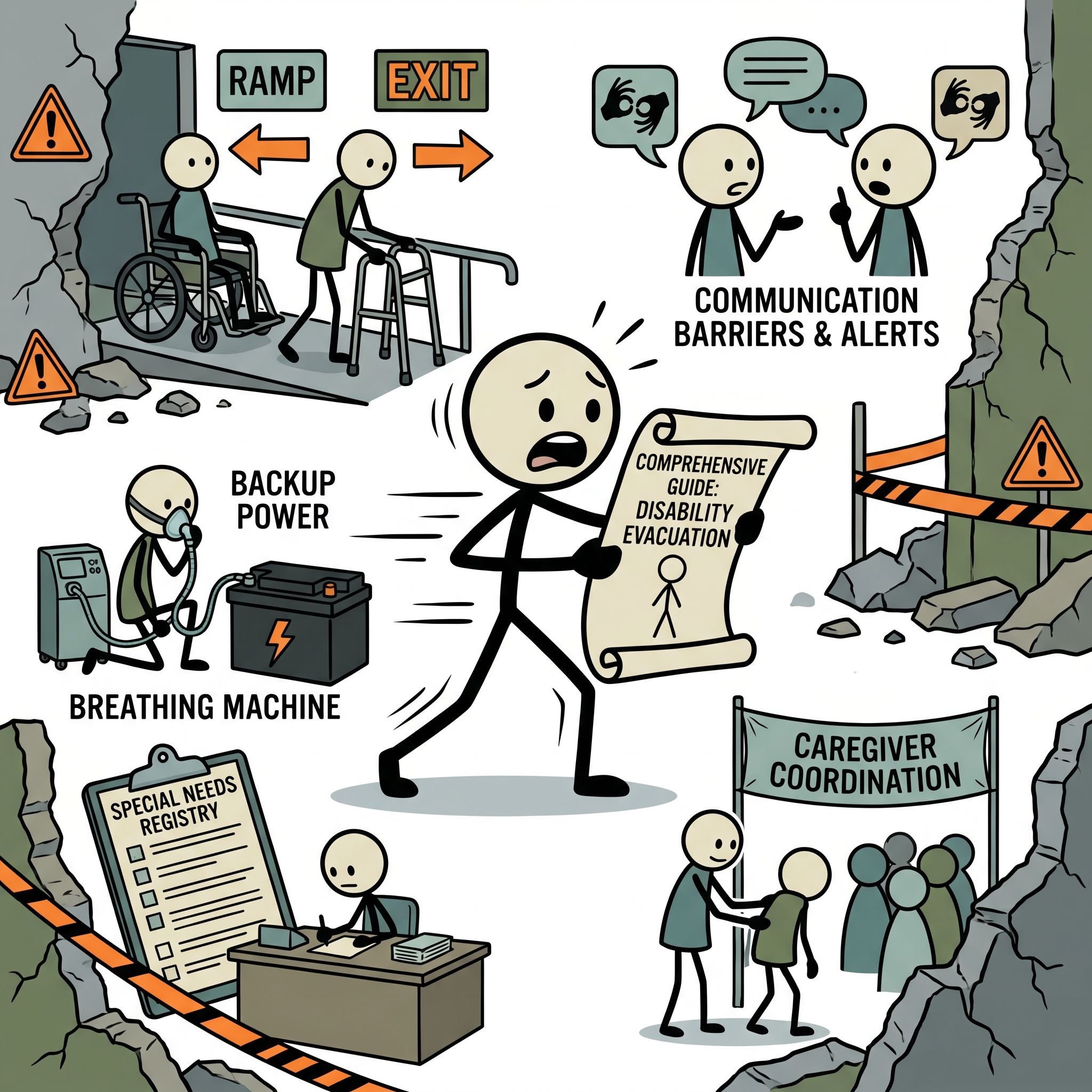
When mapping neighborhood evacuation routes, consider the terrain. Heavy rains or earthquake debris can render sidewalks impassable for a wheelchair user. The United States Geological Survey (USGS) recommends that wheelchair users map out "clear zones" free of overhead hazards where they can safely "Lock, Cover, and Hold On" during an earthquake. Always have a primary route and at least two alternative routes, physically testing them with your mobility devices to ensure they are truly accessible.
Securing Accessible Transportation
Transportation is frequently the weakest link in an accessible evacuation plan. If you rely on a Wheelchair Accessible Vehicle (WAV) or paratransit services, you must understand that public services will likely be suspended or severely delayed during a mandatory evacuation. You cannot rely solely on municipal transit authorities when a hurricane or wildfire is approaching.
To mitigate this, build a network of private transportation options. Identify friends, family members, or neighbors who have vehicles capable of transporting you and your mobility equipment. Discuss your plan with them well in advance, ensuring they know how to properly load, secure, and transport your specific type of wheelchair or scooter. If you own a WAV, always keep the gas tank at least half full, as gas stations may lose power or run dry during an emergency.
Navigating Public Shelters
The American Red Cross strives to make all its emergency shelters ADA-compliant, but the reality of rapid-deployment disaster shelters is that physical barriers sometimes remain. Before a disaster strikes, contact your local emergency management agency to identify which specific shelters in your county are pre-vetted for accessibility. Ask specific questions: Do they have accessible cots? Are there backup generators for medical equipment? Are the restrooms fully accessible?
When you arrive at a shelter, immediately notify the shelter manager of your specific access and functional needs. Advocate for yourself clearly. If you have an invisible disability, such as a severe sensory processing disorder or autism, request a quiet space away from the main shelter floor. The more information you provide to shelter staff, the better they can accommodate your requirements.
Overcoming Communication Barriers in a Crisis
Information is a lifeline during a disaster. Evacuation orders, weather updates, and emergency instructions are frequently broadcast over mediums that are inaccessible to individuals with sensory or cognitive disabilities. Effective disability disaster planning requires establishing redundant, accessible channels for receiving and transmitting critical information.
Strategies for the Deaf and Hard of Hearing
Standard sirens, radio broadcasts, and loudspeakers are useless if you cannot hear them. Individuals who are deaf or hard of hearing must rely on visual and tactile alert systems. The National Oceanic and Atmospheric Administration (NOAA) offers specialized Weather Radios equipped with text displays, flashing strobe lights, and bed-shaker attachments. These devices are absolute necessities for receiving nighttime tornado or tsunami warnings.
Additionally, sign up for local text-based emergency alert systems. Ensure your smartphone is set to receive Wireless Emergency Alerts (WEAs) with the vibration feature maximized. Keep extra hearing aid batteries or a portable power bank for rechargeable hearing aids in your emergency go-bag essentials guide. When interacting with first responders, carry pre-printed communication cards that clearly state, "I am Deaf/Hard of Hearing. Please write down instructions or use gestures."
Strategies for the Blind and Low Vision
For individuals who are blind or have low vision, a disaster can instantly alter the familiar layout of their environment. Debris, floodwaters, or structural damage can make previously memorized routes dangerous. Keep an extra white cane in your emergency kit, even if you typically rely on a guide dog, as your dog may become injured or disoriented during the chaos. See water calculator for practical steps.
To receive emergency information, ensure you have a battery-operated NOAA Weather Radio with a clear audio broadcast. Utilize smartphone accessibility features, such as screen readers (VoiceOver or TalkBack), to access emergency management websites and social media updates. Mark your emergency supplies with high-visibility tape or braille labels so you can locate and identify them quickly in the dark or during a power outage.
Cognitive and Developmental Disabilities
Disasters are highly traumatic, and the sensory overload of sirens, flashing lights, and crowds can be overwhelming for individuals with cognitive or developmental disabilities, such as autism or Down syndrome. Preparation must focus on reducing anxiety and ensuring clear communication. The CDC recommends creating a customized communication board featuring pictograms or photos to help individuals express their needs when verbal communication becomes difficult.
Familiarity breeds comfort. Practice evacuation drills regularly, making them a routine rather than a scary event. Include comfort items in the emergency go-bag, such as noise-canceling headphones, weighted blankets, or favorite sensory toys, to help self-regulate in a noisy shelter environment. Caregivers should also carry a brief, written summary of the individual's diagnosis, calming strategies, and triggers to share with first responders if necessary. See go-bag builder for practical steps.
Powering Survival: Medical Equipment and Backup Power
For millions of Americans, electricity is not a luxury; it is a vital component of their life support system. Power outages caused by hurricanes, winter storms, or grid failures pose an immediate, life-threatening risk to those relying on ventilators, oxygen concentrators, CPAP machines, dialysis equipment, and power wheelchairs. Securing a reliable source of backup power is arguably the most critical component of emergency preparedness disabilities planning.
Assessing Your Power Needs
Before purchasing a backup power system, you must conduct a thorough energy audit of your critical medical devices. Check the manufacturer's label on each piece of equipment to find its wattage requirement. If the label only lists amps and volts, you can calculate the wattage by multiplying the two numbers (Amps x Volts = Watts).
Once you know the wattage, determine how many hours a day the device must run. Multiply the wattage by the hours of use to calculate the total Watt-hours (Wh) required per day. Always factor in a "surge" or "starting" wattage, as devices with motors (like oxygen concentrators) require a brief spike in power to turn on. Add a 20% buffer to your final calculation to ensure your backup system is never pushed to its absolute limit.
Choosing the Right Backup Solution
There are two primary categories of backup power: gas-powered generators and portable lithium-ion power stations. Gas generators provide massive amounts of continuous power, but they come with severe limitations. They are noisy, require a steady supply of fuel, and emit deadly carbon monoxide. They must never be operated indoors, in garages, or near open windows, making them difficult to manage for individuals with limited mobility or those living in apartments. See supply calculator for practical steps.
Portable solar generators (lithium-ion power stations) are often the superior choice for access and functional needs preparedness. Brands like EcoFlow, Jackery, or Bluetti offer silent, emission-free power that can be safely kept directly beside a bed or medical device. They can be recharged via wall outlets before a storm, or via portable solar panels during an extended grid failure. While they may not power an entire house, a high-capacity power station can keep a CPAP machine or a small medical fridge running for several days.
Medication Refrigeration and Priority Restoration
Many critical medications, such as insulin, certain liquid antibiotics, and biologic injections, require strict temperature control. If the power goes out, a standard refrigerator will only hold its temperature for about four hours if the doors remain closed. Invest in specialized medical coolers equipped with high-performance ice packs, or purchase a small, 12-volt portable refrigerator that can be plugged into a portable power station or a vehicle's cigarette lighter.
Additionally, you must register your life-sustaining medical equipment with your local utility company. Most utility providers maintain a "Medical Baseline" or priority power restoration list. While this does not guarantee your power will never go out, it ensures that your residence is prioritized when crews begin repairing the grid. It also requires the utility company to provide you with advanced warning of planned rolling blackouts, giving you time to charge your backup batteries.
Leveraging a Special Needs Registry Emergency System
When emergency management agencies are planning resource allocation for a disaster, they rely heavily on data. They need to know where vulnerable populations are located to dispatch high-water rescue vehicles, accessible transit, and wellness checks. This is where a special needs registry emergency system becomes an invaluable tool in your preparedness arsenal.
What is a Special Needs Registry?
A special needs registry is a voluntary database managed by local or state government agencies—typically the Office of Emergency Management (OEM) or the local police department. By enrolling in the registry, you provide first responders with critical information about your specific disabilities, medical conditions, mobility limitations, and life-support equipment. If a disaster strikes, dispatchers can flag your address in their system.
Enrollment processes vary by county. Some require a simple online form, while others require a signature from your primary care physician verifying your medical needs. The information is kept strictly confidential under HIPAA and is only accessed during an active emergency. If you require specialized evacuation assistance, such as a stretcher transport or an ambulance, being on this registry is often the only way local authorities will know to send appropriate resources.
The Limitations of Registries
While enrolling in a special needs registry emergency database is highly recommended, it is vital to understand its limitations. A registry is a planning tool, not a guarantee of immediate rescue. During a catastrophic event, such as a massive hurricane or a widespread wildfire, emergency services will be stretched incredibly thin. 911 systems may be overwhelmed, and roads may be impassable.
You must never use a registry as a substitute for a personal accessible evacuation plan. FEMA and local agencies explicitly state that individuals must still prepare to be self-sufficient for at least 72 to 96 hours. View the registry as an added layer of security—a safety net that informs first responders of your presence, but not a replacement for your own proactive disability disaster planning, backup power, and personal support network.
Caregiver Coordination and Building a Support Network
No one should face a disaster alone, and for individuals with access and functional needs, isolation is one of the greatest risk factors. A robust, well-coordinated personal support network is the backbone of any effective emergency plan. Whether you rely on professional caregivers, family members, or neighbors, coordination is key to surviving a crisis safely.
The "Rule of Three" for Support Networks
The American Red Cross recommends building a personal support network consisting of at least three trusted individuals for every environment you frequent (home, work, and school). Why three? Because during a disaster, your primary caregiver might be out of town, stuck at work, or unable to reach you due to blocked roads. Having multiple backups ensures that someone will always be available to assist you.
When building your network, choose people who are physically capable of assisting with your specific needs. Sit down with them and thoroughly review your accessible evacuation plan. Give them spare keys to your home, and ensure they know exactly where your emergency go-bag and medical supplies are stored. Establish a communication protocol—decide exactly how you will contact each other if cellular networks fail, such as using a shared out-of-state emergency contact person.
Cross-Training and Documentation
If you rely on complex medical equipment, a specialized mobility device, or specific physical transfer techniques, your entire support network must be cross-trained. Do not assume a neighbor knows how to operate the manual release on a power wheelchair or how to safely transfer you from a bed to a chair. Have your primary caregiver demonstrate these techniques, and require your backup network to practice them hands-on.
Caregivers should also help create a comprehensive "Emergency Information Binder." This waterproof binder should contain copies of all vital documents, including health insurance cards, a list of current medications with precise dosages, equipment serial numbers and vendor contact information, and a detailed care plan. If you are separated from your primary caregiver and must rely on shelter staff or first responders, this binder will speak for you and ensure your continuity of care.
Customizing the Emergency Go-Bag
Every household should have a 72-hour emergency go-bag, but standard checklists fall woefully short for those with disabilities. Your emergency kit must be meticulously customized to sustain your specific health and mobility needs when you are forced away from the controlled environment of your home. Building a disability-specific kit requires foresight and attention to detail.
Essential Additions for Functional Needs
Start with medications. The CDC advises keeping at least a 7 to 14-day supply of all prescription medications in your go-bag. Work with your doctor and insurance company to get an emergency override for early refills. Store medications in a waterproof container, clearly labeled with the drug name, dosage, and prescribing physician's contact info. If you use catheters, feeding tubes, or ostomy supplies, pack a two-week reserve, as these highly specialized items are rarely available at public emergency shelters.
Mobility device users must pack a specialized repair kit. Include heavy-duty tire patch kits, a portable manual air pump, extra inner tubes, and the specific Allen wrenches or tools needed to tighten the hardware on your wheelchair or walker. If you use a power wheelchair, pack a lightweight manual backup wheelchair if possible, or at minimum, a set of heavy-duty work gloves to protect your hands if you must manually propel your chair over rough, debris-covered terrain.
Service Animal Preparedness
If you rely on a service animal, their survival is inextricably linked to yours. Under the Americans with Disabilities Act (ADA), service animals are legally permitted to accompany you into all emergency shelters, ambulances, and specialized transit vehicles. However, you must be prepared to care for them entirely on your own. Shelters will not provide food or supplies for your animal.
Create a dedicated go-bag for your service animal. It should include a two-week supply of their specific food, a collapsible silicone water bowl, extra bottled water, and a backup leash and harness. Crucially, pack a waterproof folder containing their vaccination records (especially rabies), their veterinary medical history, and proof of their service animal training. While ADA guidelines state that proof of certification is not legally required for entry, having official documentation on hand can quickly resolve disputes with stressed, uninformed shelter volunteers during the chaos of an evacuation.
Empowering Yourself Through Preparation
Navigating the complexities of emergency preparedness disabilities planning can initially feel overwhelming. The list of potential hazards and necessary accommodations is long, but every single step you take today builds a fortress of resilience for tomorrow. Disaster readiness is not about living in fear; it is about taking control of the variables you can manage. By designing an accessible evacuation plan, securing backup power, enrolling in a special needs registry emergency system, and cross-training your caregivers, you strip away the vulnerability that disasters seek to exploit. You are the architect of your own safety. Start small, build your network, customize your supplies, and face the future with the unshakeable confidence that comes from being truly prepared.
Frequently Asked Questions
What is a Special Needs Registry and should I sign up?
A Special Needs Registry is a county-level database of residents who may need assistance during evacuations. Registration alerts emergency responders to prioritize your address. Contact your county emergency management office — most allow online registration.
How do I backup power for medical equipment like CPAP or oxygen concentrators?
A 100-200Wh portable power station runs most CPAPs for 2-4 nights. Oxygen concentrators draw 150-600 watts and require a larger 1000Wh+ station or generator. Contact your equipment provider for manufacturer-specific emergency guidance.
What accommodations are required at public emergency shelters?
Under the Americans with Disabilities Act, public emergency shelters must be accessible. However, compliance varies. Call ahead to confirm accessibility, bring your own adaptive equipment if possible, and ask about the access coordinator.
Sources & Further Reading
- FEMA Access and Functional Needs
- Ready.gov People with Disabilities
- ADA National Network Emergency Preparedness