⚡ Key Facts
- Disproportionate Risk: According to the Centers for Disease Control and Prevention (CDC), older adults are disproportionately impacted by natural disasters, accounting for over 70% of fatalities during Hurricane Katrina and the 2018 Camp Fire.
- Medical Reliance: The Federal Emergency Management Agency (FEMA) reports that power outages pose a severe, immediate threat to the growing number of seniors who rely on electricity-dependent medical equipment like oxygen concentrators and CPAP machines.
- Supply Shortfalls: The American Red Cross recommends a minimum 30-day supply of essential prescription medications for older adults, yet studies show less than 40% of seniors maintain this emergency stockpile.
- Isolation Dangers: Over 14 million older adults live alone in the United States. During a crisis, social isolation is one of the leading predictors of delayed rescue and poor disaster recovery outcomes.
- Preparedness Gap: Despite the rise in "aging in place," local emergency management agencies note that fewer than half of elderly residents are registered in their municipal Special Needs or Functional Needs registries.
When a natural disaster or sudden crisis strikes, the margin for error is incredibly thin. For older adults, that margin is often complicated by factors that younger generations rarely have to consider. A sudden evacuation order or a prolonged power outage can instantly transform a manageable daily routine into a life-threatening scenario. These realities are not meant to induce fear, but rather to highlight a critical truth: emergency preparedness for seniors requires a highly specialized, proactive approach. See supply calculator for a practical walkthrough.
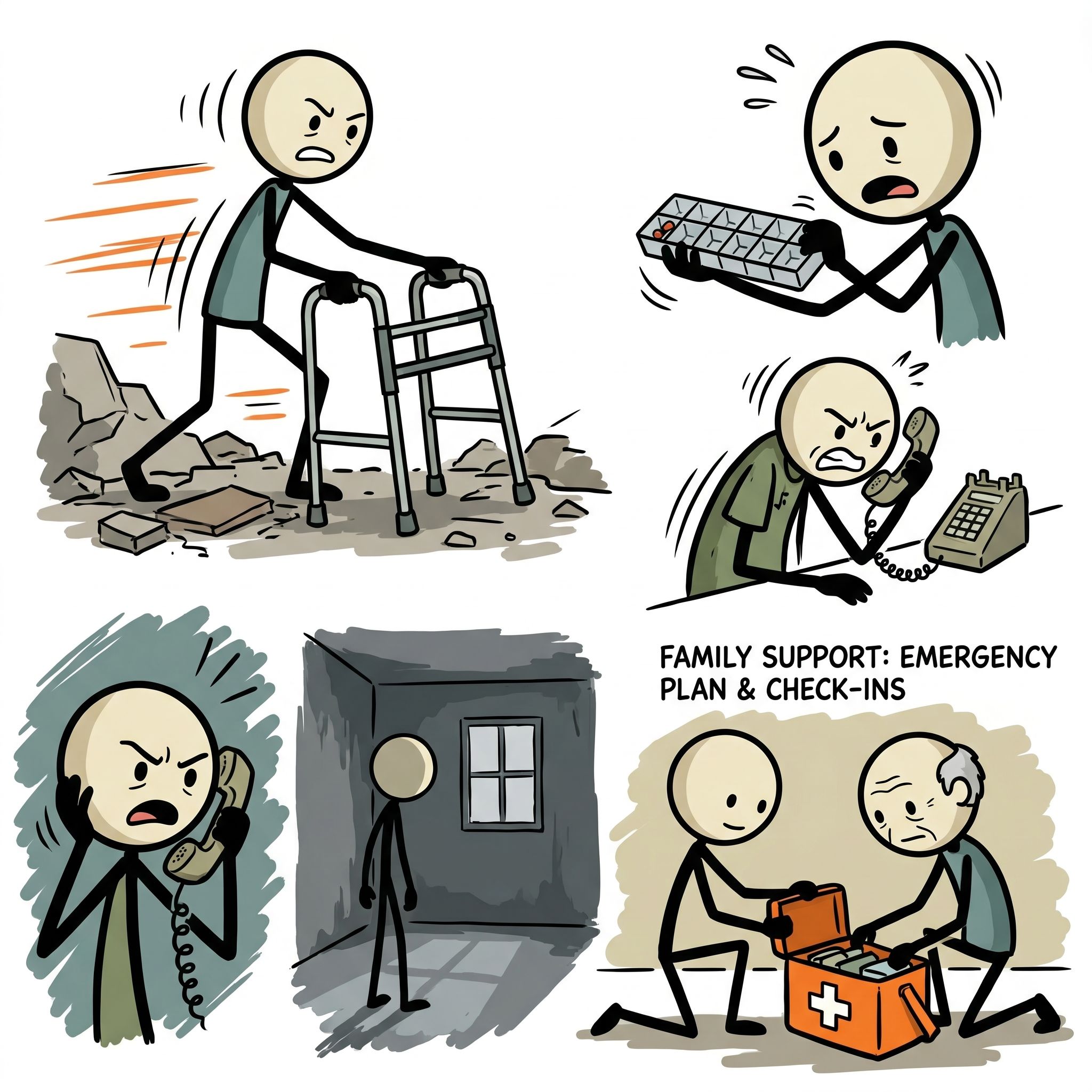
As the population ages, more individuals are choosing to remain in their own homes. This movement offers incredible benefits for mental health, comfort, and sustained independence. However, true independence requires acknowledging vulnerabilities and planning for the unexpected. Effective aging in place emergency prep is the ultimate insurance policy for maintaining that hard-earned autonomy. See survival scenarios for a practical walkthrough.
By addressing mobility hurdles, securing medical lifelines, bridging technology gaps, and building robust support networks, we can dramatically shift the narrative. Older adults do not have to be helpless victims in a disaster. With the right strategies, a well-thought-out older adults family emergency plan, and the support of family and community, seniors can weather any storm with resilience and confidence.
The Unique Landscape of Elderly Disaster Preparedness
Disaster preparedness is not a one-size-fits-all endeavor. The strategies that work for a healthy thirty-something will likely fail an eighty-year-old managing arthritis and a heart condition. Understanding the unique physiological and environmental challenges faced by older adults is the first step in building a resilient strategy.
The Federal Emergency Management Agency (FEMA) emphasizes that disaster planning must account for functional needs. This includes changes in vision, hearing, cognitive function, and physical mobility. An evacuation order that gives residents thirty minutes to pack and leave is a vastly different challenge for someone who requires a walker or a wheelchair.
Furthermore, older adults are often more susceptible to extreme temperatures. The CDC notes that seniors are at a much higher risk for hypothermia and heatstroke due to decreased metabolic rates and the side effects of certain medications. Therefore, elderly disaster preparedness must heavily emphasize climate control, hydration, and immediate access to shelter.
The "Aging in Place" Preparedness Mandate
Aging in place is a beautiful concept, but it fundamentally shifts the burden of emergency readiness onto the homeowner. When you reside in an assisted living facility, the administration is legally required to have an evacuation and backup power plan. When you live alone, you are your own emergency manager.
Robust aging in place emergency prep requires a thorough audit of the home environment. Are there tripping hazards that would become lethal in the dark? Is the home located in an evacuation zone? Answering these questions before a crisis is the foundation of a solid survival strategy.
Overcoming Mobility Limitations During a Crisis
Mobility limitations are often the most immediate and terrifying hurdle during an evacuation. When an earthquake strikes or floodwaters rise, the ability to move quickly is compromised. Planning for these physical limitations requires foresight and mechanical assistance.
The United States Geological Survey (USGS) advises that during an earthquake, individuals who use wheelchairs should lock their wheels, cover their heads, and remain in place rather than trying to transfer to the floor. This specific, tailored advice highlights why general emergency guidelines often fail older adults.
Evacuation Strategies for Wheelchairs and Walkers
If evacuation is necessary, having a clear, practiced route is vital. Homes should have ramps installed at primary exits, and these ramps must be kept clear of debris, snow, and ice year-round. Older adults using mobility aids should also have heavy-duty gloves in their emergency kits to protect their hands while navigating debris-filled areas in a manual wheelchair.
Transportation is another critical factor. Standard emergency transport may not accommodate specialized electric wheelchairs. It is crucial to identify local transportation services that have wheelchair-accessible vans and to register with your county’s Special Needs Registry. Local emergency management agencies use these registries to prioritize rescues for residents who cannot self-evacuate.
Securing the Home Environment
For those who must shelter in place, the home must be a safe haven, not a hazard zone. Power outages plunge homes into darkness, turning ordinary furniture into dangerous obstacles. Installing battery-operated, motion-sensor lights along hallways, bathrooms, and primary exits is a simple but life-saving step.
Additionally, secure heavy furniture, bookcases, and televisions to the wall studs. For seniors with balance issues, navigating a home after an earthquake or during a severe storm is dangerous enough without the added risk of falling objects. Clear all primary walking paths of loose rugs and electrical cords.
Mastering Medication Management and Medical Needs
For many older adults, daily medications are quite literally the difference between life and death. A disruption in the supply chain of insulin, heart medication, or blood thinners can turn a manageable disaster into a fatal medical emergency. The older adults emergency plan must prioritize health logistics above almost all else.
The American Red Cross strongly advocates for a minimum 30-day supply of all prescription medications. While insurance companies and Medicare sometimes restrict early refills, many states have laws that force insurers to grant emergency refills when an official disaster declaration is imminent. Speak with your pharmacist about how to legally build a backup stockpile.
Creating a Lifesaving Medical Dossier
In the chaos of an evacuation, remembering dosages and medical histories is incredibly difficult. Every senior must have a comprehensive medical dossier stored in a waterproof, fireproof bag. This document is a critical component of emergency preparedness for seniors.
This dossier should include:
- A complete list of all medications, including exact dosages and the time of day they are taken.
- The names, phone numbers, and addresses of all primary care physicians and specialists.
- Copies of Medicare, Medicaid, and supplemental health insurance cards.
- A detailed medical history, including known allergies, past surgeries, and chronic conditions.
- Copies of advance directives, living wills, and Medical Power of Attorney documents.
Power Outages and Medical Equipment
The reliance on electricity-dependent medical equipment is a growing concern in emergency management. Oxygen concentrators, CPAP machines, home dialysis equipment, and motorized wheelchairs all become useless during a grid failure. FEMA advises that anyone relying on these devices must have an immediate backup power plan.
Gas-powered generators are effective but can be dangerous for seniors to operate due to carbon monoxide risks and the physical effort required to start them. Instead, consider high-capacity, lithium-ion portable power stations (solar generators). These units can safely run inside the home, require no maintenance, and can keep a CPAP or oxygen concentrator running for days when paired with portable solar panels.
For medications that require refrigeration, such as certain types of insulin, power outages pose a spoilage risk. Keep specialized medical cooling wallets or insulated coolers with chemical gel packs ready to deploy. Never use dry ice for medication, as it can freeze and destroy the active ingredients.
Building the Ultimate Senior Citizen Emergency Kit
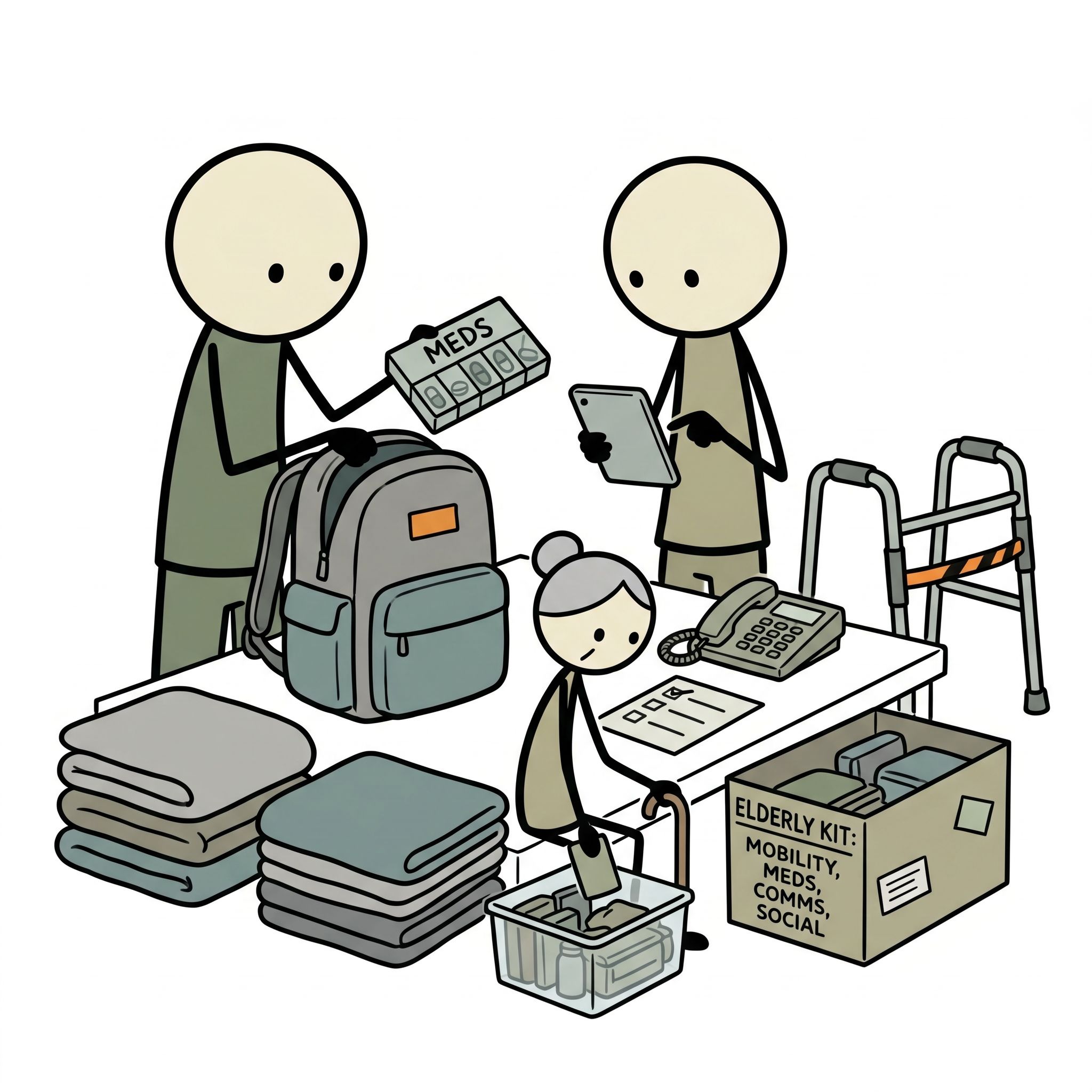
The standard survival kit checklist is a great starting point, but it often lacks the specific items required by older adults. A true senior citizen emergency kit must focus heavily on medical comfort, sensory aids, and lightweight portability. If a kit is too heavy for a senior to lift, it is entirely useless.
Instead of heavy backpacks, older adults should use rolling duffel bags or sturdy suitcases with wheels for their evacuation kits. This allows for the transport of heavier items like water and canned goods without straining the back or shoulders. The bag should be stored in an easily accessible location, ideally near the primary exit or the bed.
Core Essentials Tailored for Older Adults
When assembling the kit, focus on items that bridge the gap between daily comfort and emergency survival. Hydration is particularly critical, as seniors are more prone to rapid dehydration and may not feel thirsty until it is too late.
A specialized senior citizen emergency kit should include:
- Sensory Aids: An extra pair of prescription eyeglasses, a magnifying glass, and backup hearing aids with an ample supply of the correct batteries.
- Dental and Hygiene: Dentures, denture cleanser, adhesive cream, and adult incontinence products (which are rarely available in emergency shelters).
- Dietary Needs: Lightweight, easy-to-open, nutrient-dense foods. Avoid items that require a can opener if arthritis is an issue; opt for pull-tab cans or soft emergency ration bars.
- Comfort Items: A warm, lightweight fleece blanket, chemical hand warmers, and a change of comfortable, loose-fitting clothing with sturdy, velcro-closure walking shoes.
- Hydration: Smaller, 16-ounce water bottles rather than heavy gallon jugs, which are difficult for arthritic hands to pour.
Go-Bags vs. Stay-at-Home Kits
It is important to differentiate between a "go-bag essentials guide" (for evacuations) and a "Stay-at-Home Kit" (for sheltering in place). The Go-Bag should contain enough supplies for 72 hours and focus strictly on lightweight mobility. The Stay-at-Home Kit should be much larger, containing up to two weeks of food, water, and household supplies.
For the Stay-at-Home Kit, focus on bulk Water Calculator, extra pet food for companion animals, and off-grid cooking solutions that are safe for indoor use, such as chemical heating packs for warming meals. Never assume that municipal water will remain safe to drink; always have a reliable water filtration pitcher or tablets on hand.
Bridging the Technology Barrier in Disaster Alerts
Modern emergency management relies heavily on digital communication. Wireless Emergency Alerts (WEA), county text messages, and smartphone apps are the primary methods for broadcasting evacuation orders. However, this shift to digital can inadvertently exclude older adults who may not be comfortable with modern technology.
Bridging this technology gap is a vital aspect of emergency preparedness for seniors. If an older adult does not receive the evacuation warning, all the physical preparation in the world will not help them. We must implement redundant, multi-channel alert systems in their homes.
Low-Tech Solutions for High-Stakes Situations
The most reliable, low-tech early warning system is a National Oceanic and Atmospheric Administration (NOAA) Weather Radio. These devices do not rely on cellular towers or internet connections. They broadcast continuous weather information directly from the nearest National Weather Service office.
For seniors, purchase a NOAA radio with a loud alarm, a strobe light (for the hard of hearing), and a battery backup. Program the radio to the specific county using the S.A.M.E. (Specific Area Message Encoding) code, so it only alarms for local, immediate threats. This prevents the senior from being awakened by irrelevant alerts from neighboring regions.
Simplifying Modern Alert Systems
While low-tech solutions are great, smartphones remain powerful survival tools if configured correctly. Family members should take the time to simplify the older adult's mobile device. Remove unnecessary apps from the home screen and ensure the phone's operating system is set to allow emergency push notifications.
Set up the "Medical ID" feature on their smartphone, which allows first responders to access critical health information and emergency contacts directly from the lock screen without needing a passcode. Additionally, teach elderly relatives how to send a simple text message. During a disaster, voice networks are often jammed, but a text message requires very little bandwidth and is more likely to go through.
Combating Social Isolation Risks During Disasters
One of the most insidious threats to older adults during a crisis is not the wind, the water, or the fire—it is social isolation. The CDC highlights that seniors living alone are at a significantly higher risk of injury and death during extreme weather events. When you are isolated, a minor fall or a depleted oxygen tank becomes a fatal event.
Disasters severely disrupt normal routines. The mail carrier stops coming, the grocery delivery is canceled, and neighbors evacuate. For an older adult living alone, this sudden severing of community ties can lead to panic, depression, and a lack of access to critical information.
The Danger of Going Unnoticed
During a severe heatwave or a prolonged winter freeze, isolation turns deadly. Older adults may not realize their home has reached dangerous temperatures, or they may be unable to leave to seek a cooling or warming center. This is why the older adults emergency plan must include a human element.
We cannot rely solely on first responders to check on every single resident during a wide-scale catastrophe. Emergency services will be stretched to their absolute limits, prioritizing acute medical emergencies and active rescues. The community must step up to fill this gap.
Building a Local Support Network
Proactive networking is essential. Seniors, or their advocates, should build a localized "Buddy System." Identify at least three people—a neighbor, a nearby relative, and a friend from a local faith-based or community organization—who agree to check in on the older adult immediately following a disaster.
Share a copy of the emergency plan, a spare house key (or the code to a lockbox), and the location of the senior citizen emergency kit with this trusted network. Furthermore, encourage older adults to participate in neighborhood watch programs or local Community Emergency Response Team (CERT) initiatives. Being known in the community is one of the most effective survival strategies.
How Family Members Can Support Elderly Relatives
For adult children and family members, worrying about an aging parent during a storm is a terrifying experience. However, worry is not a strategy. Family members play a pivotal role in facilitating elderly disaster preparedness. Taking a hands-on approach can ensure that your loved ones are safe, equipped, and confident.
Many seniors are fiercely independent and may resist discussions about their vulnerabilities. They may view emergency planning as an admission of frailty. It is crucial to frame the conversation around empowerment and proactive control. Explain that preparing now ensures they can maintain their independence and stay in their home safely, no matter what happens.
Initiating the Conversation and the "Hazard Hunt"
Start by having an open, non-confrontational dialogue about the specific natural disaster risks in their area. Use historical examples, like a recent winter storm or hurricane, to ground the conversation in reality. Ask them what their plan would be if the power went out for a week.
Next, conduct a collaborative "Home Hazard Hunt." Walk through the home together and identify potential dangers. Check the expiration dates on the fire extinguishers, test the smoke and carbon monoxide detectors, and ensure that all exits are easily navigable. This is also the perfect time to help them assemble or update their emergency kit, ensuring the bags are not too heavy for them to maneuver.
Collaborative Planning and Practice
Draft a tangible, written communication plan. Establish an out-of-state contact for everyone to call if local lines are down. Because long-distance phone lines often remain functional when local circuits are overloaded, having a central point of contact in another state is a proven emergency communication tactic.
Finally, practice the plan. An evacuation route looks different on paper than it does in reality. Walk the primary and secondary escape routes together. Have them practice unlocking their front door manually if they rely on an electronic keypad that might fail during a power outage. Practice loading the emergency kit into the vehicle or the accessible transport van. Muscle memory is a powerful tool when panic sets in.
Empowering the Golden Years Through Preparedness
Emergency preparedness for seniors does not have to be an overwhelming or fearful task. It is an act of taking control over the unpredictable. By acknowledging physical limitations, securing medical necessities, adapting technology, and leaning on community support, older adults can build an incredibly robust defense against the unexpected. Whether they are weathering a minor power outage or evacuating from a major hurricane, a comprehensive plan ensures that their golden years remain safe, secure, and independent. Take the time today to assess, prepare, and communicate—because true resilience has no age limit.
Frequently Asked Questions
Why are seniors more vulnerable in emergencies?
Older adults often have chronic health conditions, take multiple medications, may have mobility limitations, and are more susceptible to extreme temperatures. Social isolation is also a major factor — many seniors live alone with no immediate support network during a crisis.
What should be in an elderly person's emergency kit?
Include all prescription medications with a 30-day buffer, medical device backup power (hearing aids, CPAP, mobility scooter chargers), a medical information card with diagnoses and doctor contacts, comfortable walking shoes, and all insurance cards and IDs.
Should seniors register with local emergency services?
Yes — most counties maintain a Special Needs Registry for residents requiring assistance during evacuations. Registration ensures emergency responders know to check on you and may provide priority evacuation assistance. Contact your local emergency management office to register.
Sources & Further Reading
- FEMA Disability and Access Needs
- Red Cross Senior Preparedness
- CDC Older Adult Emergency Prep
- AARP Disaster Preparedness