⚡ Key Facts
- The 1-Ounce Rule: Under normal conditions, dogs require approximately 1 ounce (30 ml) of water per pound of body weight daily, while cats require about 0.67 to 1 ounce per pound.
- Thermal Multiplier: According to NOAA and veterinary consensus, ambient temperatures above 85°F (29°C) can double or triple a pet's daily water loss due to panting and respiratory evaporation.
- The Iodine Hazard: While iodine-based purification tablets are common in human survival kits, they are highly toxic to cats and can disrupt thyroid function in dogs; alternative purification methods are mandatory.
- The Dehydration Danger Zone: The American Veterinary Medical Association (AVMA) warns that a 10% loss of body water can cause severe systemic illness in domestic pets, and a 15% loss is frequently fatal.
- The Sanitation Overhead: CDC guidelines emphasize that dirty pet bowls quickly harbor pathogenic bacteria like Salmonella and E. coli, requiring an additional 8 to 16 ounces of water per day solely for sanitation.
When preparing for emergencies, we naturally focus on securing resources for our human family members. We stack cases of bottled water, purchase high-capacity gravity filters, and calculate daily consumption down to the fluid ounce. Yet, our animal companions rely entirely on our foresight for their survival. During a natural disaster—be it a hurricane, wildfire, grid failure, or prolonged drought—municipal water supplies are often the first utility to fail or become contaminated. To ensure your household is truly resilient, you must treat your pets not as afterthoughts, but as distinct biological entities with highly specific hydration, sanitation, and medical needs. Understanding how to calculate and store emergency water for pets is a foundational pillar of comprehensive emergency preparedness.
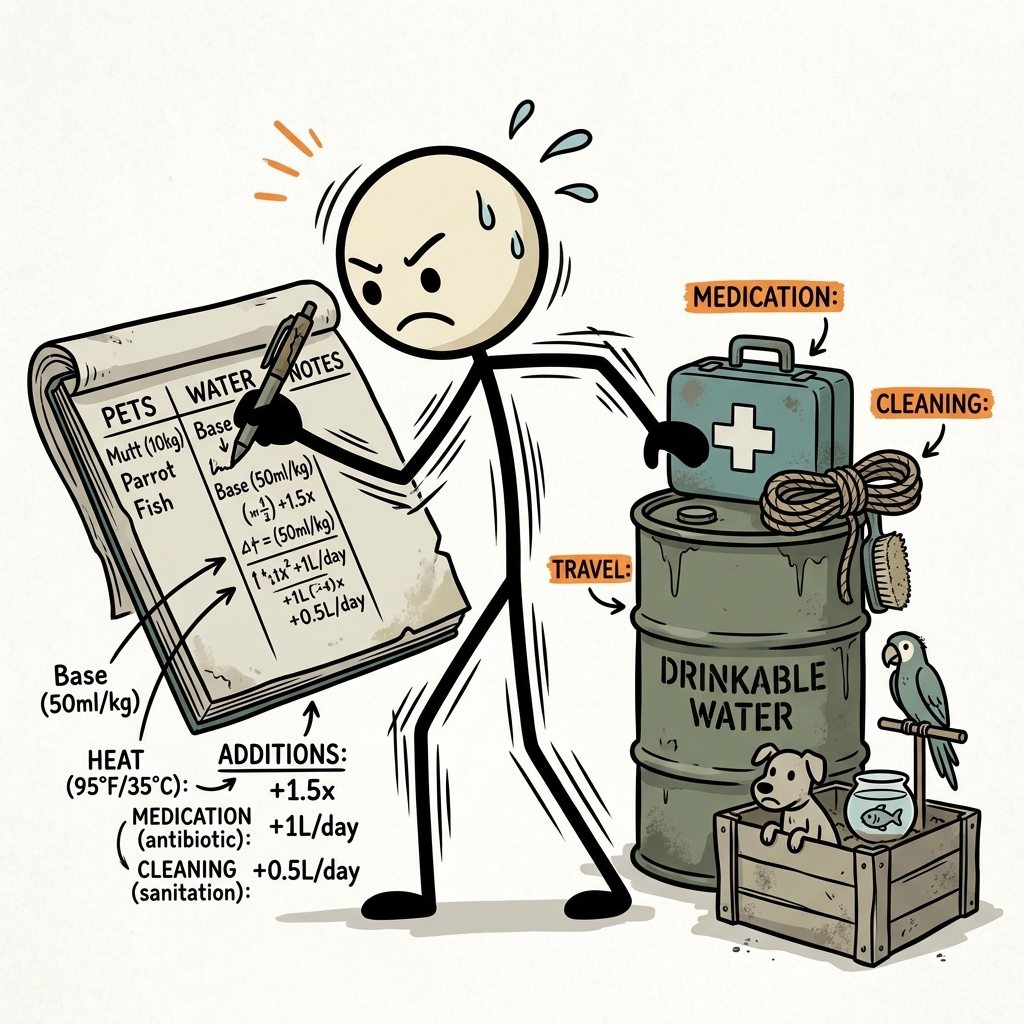
The Physiological Baseline: Calculating Daily Drinking Water by Species
Water is the primary solvent in the animal body, facilitating nutrient transport, cellular waste removal, joint lubrication, and internal temperature regulation. When designing an emergency water plan, you cannot rely on guesswork. A supply that is "close enough" can quickly lead to acute renal failure or fatal heatstroke in a crisis. To establish a reliable baseline, you must calculate the daily drinking requirements for each specific pet in your household based on their biological weight and species-specific physiology.
Dogs: The Weight-Based Calculation
The baseline water requirement for domestic dogs is relatively straightforward but scales linearly with body mass. Under temperate, low-stress conditions, a dog requires approximately 1 ounce (30 milliliters) of water per pound of body weight per day. If you use the metric system, this translates to roughly 60 to 70 milliliters of water per kilogram of body weight daily.
Let us look at three distinct examples to see how this baseline scales:
- Small Toy Breed (e.g., a 10-pound Chihuahua): Requires 10 ounces (approx. 300 ml) of water per day.
- Medium Breed (e.g., a 50-pound Australian Shepherd): Requires 50 ounces (approx. 1.5 liters) of water per day.
- Large Breed (e.g., a 100-pound Mastiff): Requires 100 ounces (approx. 3 liters) of water per day.
This baseline assumes the animal is resting in a climate-controlled environment and consuming a standard dry kibble diet. Any deviation from these conditions will require you to apply multipliers, which we will detail further in this guide.
Cats: Moisture Content and the Dry Food Spike
Feline physiology is unique. Domestic cats descended from desert-dwelling ancestors (the African wildcat), meaning they have a highly efficient renal system designed to concentrate urine and conserve water. Consequently, cats have a lower natural thirst drive than dogs. A cat typically requires 0.67 to 1 ounce of water per pound of body weight daily (approx. 45 to 60 ml per kilogram).
However, a cat's hydration level is profoundly influenced by their diet. If your cat eats canned wet food, they are already consuming a significant portion of their daily water requirement through their meals, as wet food is typically 70% to 80% water. If your emergency pantry consists primarily of dry cat kibble (which contains only about 10% moisture), your cat's direct drinking water intake must increase dramatically to compensate. For a 10-pound cat on a dry food diet, you must budget a full 10 ounces of drinking water per day to prevent urinary tract crystallization and kidney stress.
Small Mammals: High Metabolic Rates
Small pocket pets—such as rabbits, guinea pigs, hamsters, and rats—have incredibly high metabolic rates relative to their body mass. They lose moisture rapidly through respiration and waste elimination. Rabbits, in particular, are notorious water consumers; a four-pound rabbit can easily drink as much water daily as a twenty-pound dog.
- Rabbits: Require 50 to 150 ml of water per kilogram of body weight daily (approx. 1.5 to 4.5 ounces per pound). A standard 5-pound rabbit needs up to 10 ounces of water daily.
- Guinea Pigs: Require approximately 100 ml of water per kilogram daily (approx. 3 ounces per day for an average-sized guinea pig).
- Hamsters and Gerbils: Require 5 to 10 ml of water per 100 grams of body weight (approx. 1 to 2 tablespoons per day).
Because these animals are highly sensitive to dehydration, their water delivery systems (such as gravity-fed drip bottles) must be kept clean and functional, with ample backup water stored specifically for their needs.
Birds and Reptiles: Unique Hydration Profiles
Avian and reptilian species have vastly different physiological mechanisms for handling water. Birds lose moisture through respiration and excreting uric acid. On average, a companion bird will consume 10% to 20% of its body weight in water daily. A small cockatiel weighing 100 grams will require about 10 to 20 ml of water per day, whereas a large macaw weighing 1,000 grams (1 kg) will require up to 200 ml (approx. 7 ounces) daily.
Reptiles present a different challenge. While many desert-dwelling reptiles (like bearded dragons) extract much of their moisture from fresh greens and insects, they still require water for soaking to facilitate healthy skin shedding and prevent renal impaction. Semi-aquatic or tropical reptiles (like red-eared sliders or green iguanas) require clean water reservoirs not just for drinking, but to maintain environmental humidity. When planning emergency water for pets, budget at least 16 to 32 ounces of water per day for misting, soaking, and humidity maintenance for reptiles, in addition to their direct drinking needs.
---Environmental and Situational Multipliers
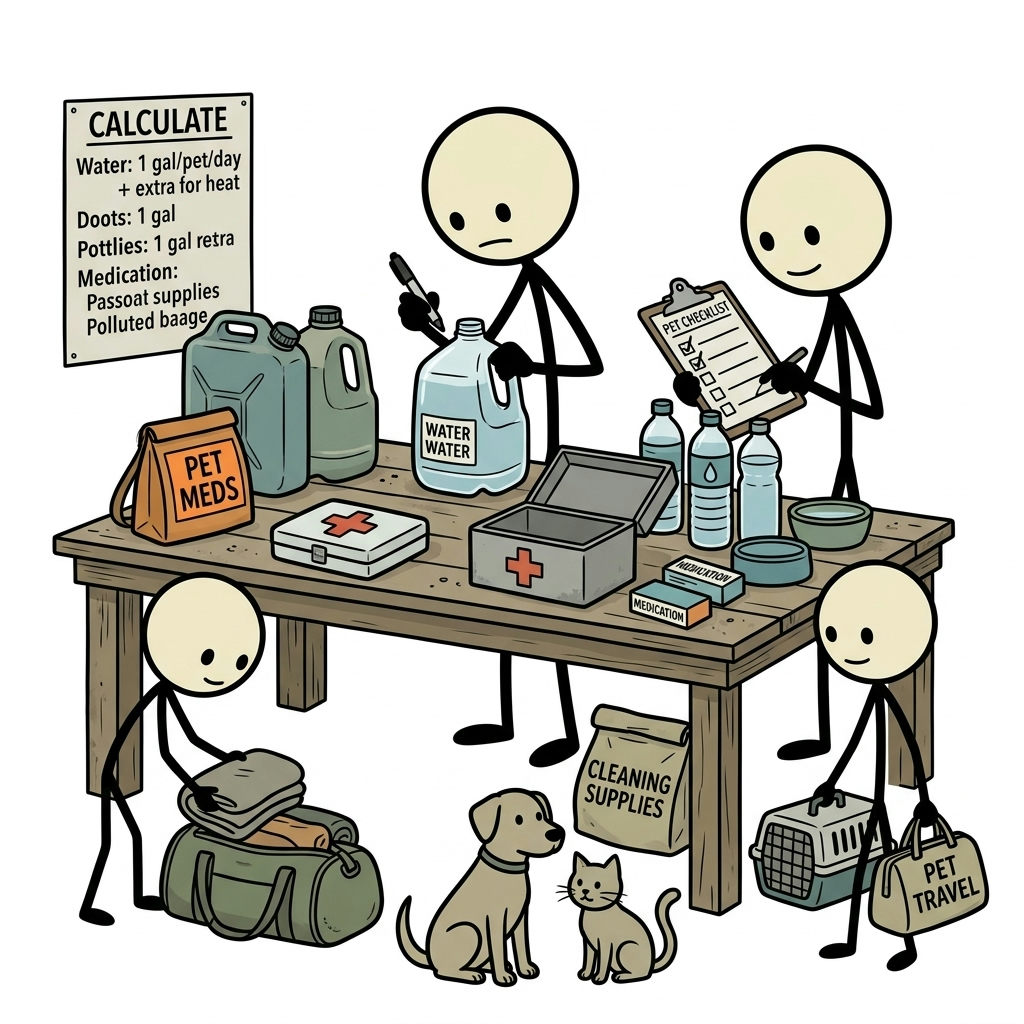
A baseline calculation is only accurate in a perfect, climate-controlled environment. In a real-world emergency, environments are rarely stable. Power outages disable air conditioning, evacuation forces pets into vehicles, and stress levels skyrocket. To prevent your emergency water for pets emergency preparedness plan from failing under pressure, you must apply situational multipliers to your baseline calculations.
The Heat and Humidity Factor (NOAA Heat Index)
Dogs and cats do not sweat through their skin like humans do; they rely primarily on panting (respiratory evaporation) and sweating through their paw pads to dissipate excess body heat. Panting works by passing warm air over the moist surfaces of the tongue, mouth, and lungs, evaporating water and cooling the blood vessels beneath. This process is highly effective but consumes massive amounts of internal water.
According to data from the National Oceanic and Atmospheric Administration (NOAA), when the heat index rises above 85°F (29°C), the rate of respiratory water loss in domestic pets increases exponentially. In high-heat scenarios, you must apply a 1.5x to 2.0x multiplier to your pet's baseline water calculation.
For example, during a summer power outage, a 60-pound dog that normally drinks 60 ounces of water per day will require between 90 and 120 ounces (nearly a full gallon) of water daily to maintain osmotic balance and prevent heat exhaustion.
Travel, Crating, and Stress-Induced Panting
Evacuation is a high-stress event for any animal. When pets are placed in travel crates, loaded into vehicles, or exposed to unfamiliar environments, their bodies release cortisol and adrenaline. This physiological stress response raises their heart rate, body temperature, and respiration rate.
A stressed pet will pant continuously, even in a cool, air-conditioned vehicle. Furthermore, travel crates restrict movement, and water bowls inside crates are highly prone to spilling due to vehicle vibrations and sudden stops. When traveling or evacuating with pets, apply a 1.25x stress and spillage multiplier to your daily calculations to account for kinetic water loss and elevated respiratory rates.
Medical Multipliers: Chronic Illness and Medications
If your pet suffers from a chronic health condition or takes daily medications, their metabolic water demands may be significantly higher than a healthy animal's. You must consult your veterinarian to identify if your pet falls into one of these high-demand categories:
- Renal Insufficiency (Kidney Disease): Animals with compromised kidneys lose the ability to concentrate urine. They must drink large volumes of water to flush metabolic toxins from their bloodstream. Restricting water to a pet with kidney disease, even for a few hours, can trigger acute, life-threatening uremic poisoning.
- Diabetes Mellitus and Cushing's Disease: These endocrine disorders cause polydipsia (excessive thirst) and polyuria (excessive urination). Affected pets often require double their normal baseline water intake.
- Diuretic Medications (e.g., Furosemide/Lasix): Commonly prescribed for congestive heart failure, diuretics force the body to excrete excess fluid. Pets on these medications must have unrestricted access to clean drinking water to prevent rapid dehydration.
For any pet with these medical profiles, apply a minimum 2.0x medical multiplier to their daily water allocation in your family emergency planning.
---Beyond Drinking: Sanitation, Cleaning, and Food Prep
A common failure point in emergency water planning is assuming that drinking water is the only liquid resource your pet will require. In a survival situation, poor sanitation can be just as deadly as a lack of water. Pathogens thrive in standing water and dirty vessels, and dietary changes can cause gastrointestinal distress that requires water to manage.
Preventing Pathogen Buildup (CDC Guidelines)
The Centers for Disease Control and Prevention (CDC) warns that pet food and water dishes can become breeding grounds for dangerous bacteria, including Salmonella, Listeria, and Escherichia coli. These pathogens pose a dual threat: they can make your pet severely ill (causing vomiting and diarrhea, which further accelerates dehydration) and can be transmitted to human family members through contact.
In an emergency, municipal sanitation services may be offline, making hygiene paramount. You must allocate water to wash your pet's bowls daily.
To sanitize a pet bowl with minimal water, use a three-step method: scrape away food debris, wipe with a damp soapy sponge, and rinse with a light stream of purified water or wipe with a diluted bleach solution (1/3 teaspoon of unscented household bleach per gallon of water) and allow to air dry. Budget an additional 8 to 16 ounces of water per pet per day specifically for bowl sanitation and hygiene.
Dehydrated and Freeze-Dried Food Reconstitution
Many emergency preparedness experts recommend storing freeze-dried or dehydrated pet foods because of their exceptionally long shelf life, light weight, and ease of transport in a Go-Bag Builder. However, these foods are completely devoid of moisture. To make them digestible and palatable, you must reconstitute them with clean, warm water.
If your emergency pet emergency food storage guide consists of dehydrated diets, read the manufacturer's instructions carefully to determine the exact volume of water required per serving. Typically, you will need to add 1 part water to 2 parts dry food by volume. This water must be factored into your storage calculations as an addition to, not a subtraction from, your pet's daily drinking water allocation.
Grooming and Decontamination
During a flood, hurricane, or hazardous material spill, your pet's coat may become contaminated with toxic chemicals, sewage, brackish water, or fuel oil. Because animals groom themselves by licking their fur, any topical contaminant will quickly be ingested, leading to acute poisoning.
You must have enough water on hand to perform an emergency washdown of your pet if they are exposed to hazardous environments. While a full bath is a luxury in a Survival Scenarios, a targeted rinse of the paws, underbelly, and face is a necessity. Budget a reserve of 1 to 2 gallons of utility-grade water (which does not need to be sterile drinking water, but must be clean and free of toxins) for emergency pet decontamination.
---Water Storage, Rotation, and Treatment for Pets
Now that you know how to calculate your pet's precise water needs, you must store and maintain that supply. Storing water incorrectly can lead to bacterial contamination or chemical leaching, rendering the supply unsafe for both humans and animals.
Approved Storage Containers
Always store emergency water in food-grade, BPA-free plastic containers. Look for the recycling triangle with a "2" (High-Density Polyethylene, or HDPE) or "5" (Polypropylene, or PP) on the bottom of the container. Avoid recycling old milk jugs or juice containers; the plastic is highly biodegradable and thin, making it prone to breaking down, leaking, and harboring residual sugars that foster bacterial growth.
For long-term storage, use rigid, stackable water bricks or 5-gallon water cans (such as military-style Jerry cans). Ensure they are stored in a cool, dark, and dry environment away from direct sunlight and chemical vapors (like gasoline or pesticides in a garage), which can permeate plastic containers over time.
Rotation Schedules
Water does not technically "expire," but stored water can develop a flat taste and, if not packaged in sterile conditions, can support algae and bacterial growth over time.
- Commercially Sealed Water: If you store commercially bottled water, observe the manufacturer's expiration date, typically 1 to 2 years from packaging. Rotate these cases into your household's daily use and replace them regularly.
- Self-Tapped Water: If you fill your own food-grade containers from a municipal tap, treat the water with 2 drops of unscented 8.25% household liquid chlorine bleach per gallon to inhibit bacterial growth. This water should be drained, rinsed, and refilled every 6 months.
Water Purification: The Pet-Specific Safety Warning
If your stored emergency water runs out, you will need to harvest and purify water from natural sources (such as streams, lakes, or rainwater harvesting systems). While many human water purification techniques are perfectly safe for pets, there is one critical exception you must remember: Iodine.
Many emergency preparedness kits contain iodine-based water purification tablets (tetraglycine hydroperiodide). While humans can tolerate short-term iodine consumption, iodine is highly toxic to cats and can cause severe thyroid dysfunction, iodine toxicosis, and systemic illness. It can also cause thyroid disruptions in dogs, especially those with pre-existing conditions.
To safely purify water for pets, utilize one of the following veterinary-approved methods:
- Boiling: Bring water to a rolling boil for at least 1 full minute (3 minutes at elevations above 6,500 feet/2,000 meters). This is the most reliable method for killing vegetative bacteria, viruses, and protozoa (like Giardia and Cryptosporidium). Let the water cool completely before offering it to your pet.
- Filtration: Use a high-quality hollow-fiber membrane filter (such as a Sawyer Squeeze, Lifestraw, or gravity filter) rated to at least 0.1 microns to physically remove bacteria and protozoa.
- Chlorine Bleach: If boiling is not possible, use unscented household liquid chlorine bleach (containing 5% to 9% sodium hypochlorite). Add 2 drops of bleach per quart (or 8 drops per gallon) of clear water. Stir well and let it sit for at least 30 minutes before allowing your pet to drink. If the water is cloudy, double the dosage.
The Step-by-Step Calculation Worksheet
To make this process as simple and actionable as possible, use the following calculation worksheet to determine your exact household pet Water Calculator requirements. We will calculate for a 14-day emergency supply, which is the standard recommended by emergency preparedness experts for self-sufficiency during major disasters.
Step 1: Calculate Baseline Drinking Water
For each pet, multiply their weight by their species baseline requirement.
Dog Baseline:   [Weight in lbs] x 1.0 oz = ______ oz per day
Cat Baseline:   [Weight in lbs] x 0.8 oz = ______ oz per day
Other Pet:     [Species Requirement]    = ______ oz per day

Total Baseline Drinking Water: ____________ oz per day
Step 2: Apply Environmental and Situational Multipliers
Select the highest multiplier that applies to your emergency plan (e.g., if you live in a hot climate, use the Heat Multiplier. If your pet has kidney disease, use the Medical Multiplier).
- Standard/Temperate Climate: 1.0
- Travel/Stress Buffer: 1.25
- High Heat/Humidity (>85°F): 1.5 to 2.0
- Chronic Illness/Medical Need: 2.0
[Total Baseline Drinking Water] x [Multiplier] = ______ Adjusted Drinking Water oz per day
Step 3: Add Sanitation, Food Prep, and Waste Margins
Add the daily water required for cleaning bowls, rehydrating food, and compensating for accidental spills.
- Sanitation Allocation: 8 to 16 oz per pet per day
- Food Prep Allocation (if using dry/dehydrated food): ______ oz per day
- Spill/Waste Margin (especially for travel crates): 4 oz per pet per day
[Adjusted Drinking Water] + [Sanitation] + [Food Prep] + [Spill Margin] = ______ Total Daily Pet Water Requirement (oz)
Step 4: Convert to Gallons and Calculate for 14 Days
Convert your total daily ounces to gallons (1 gallon = 128 fluid ounces) and multiply by 14 days to find your final storage target.
[Total Daily Requirement in oz] / 128 = ______ Daily Gallons

[Daily Gallons] x 14 Days = ____________ Total Gallons to Store for Your Pets
Example Calculation: The Two-Pet Household
Let's run a realistic scenario. Imagine a household with a 50-pound Labrador mix and a 10-pound indoor cat. They live in an area prone to summer hurricanes and power outages (high heat), and they feed their cat dry kibble.
- Dog Baseline: 50 lbs x 1.0 oz = 50 oz/day.
- Cat Baseline: 10 lbs x 1.0 oz (high-end due to dry food diet) = 10 oz/day.
- Combined Baseline: 60 oz/day.
- Apply Heat Multiplier (1.5x): 60 oz x 1.5 = 90 oz/day.
- Add Sanitation and Waste: 16 oz (bowl cleaning) + 8 oz (spill margins) = 24 oz/day.
- Total Daily Requirement: 90 oz + 24 oz = 114 oz/day.
- Convert to Gallons: 114 oz / 128 = 0.89 gallons per day.
- Calculate for 14 Days: 0.89 gallons x 14 days = 12.46 gallons.
In this scenario, storing three 5-gallon water cans specifically for the pets will ensure they remain safe, hydrated, and healthy through a major two-week grid down scenario.
---Emergency Water for Pets Checklist
Use this comprehensive emergency water for pets checklist to ensure your physical gear, storage, and planning align with professional survival standards.
| Category | Item / Action Item | Completed |
|---|---|---|
| Storage | Calculate 14-day water reserve using the species-specific weight formulas. | ⬜ |
| Storage | Store water in food-grade, BPA-free #2 (HDPE) or #5 (PP) plastic containers. | ⬜ |
| Storage | Label pet-specific water storage containers with fill dates and rotate every 6 months. | ⬜ |
| Gear | Pack collapsible silicone bowls (lightweight, easy to sanitize, and spill-resistant). | ⬜ |
| Gear | Include a dedicated syringe or pet dropper for force-hydrating a stressed or ill animal. | ⬜ |
| Gear | Pack drip-style water bottles for small mammals or crated pets to prevent travel spills. | ⬜ |
| Purification | Verify your emergency kit has a filtration or purification system that does NOT rely on iodine. | ⬜ |
| Purification | Pack unscented household liquid chlorine bleach (5%-9%) and a medicine dropper for water treatment. | ⬜ |
| Sanitation | Pack biodegradable dish soap and a designated sponge for cleaning pet bowls. | ⬜ |
| First Aid | Include unflavored pediatric electrolyte solution (Pedialyte) to assist with rehydrating a sick pet. | ⬜ |
Recognizing and Treating Dehydration in Pets
Even with meticulous planning, emergencies can disrupt our routines, and pets may still experience mild to moderate dehydration. Because our pets cannot tell us when they are feeling ill, you must actively monitor them for the physical warning signs of dehydration.
The Skin Turgor Test
The skin turgor test is the quickest and most reliable field method for checking your pet's hydration level. Gently pinch a fold of skin on the back of your pet's neck or between their shoulder blades (the scruff), pull it upward slightly, and then release it.
- In a Hydrated Pet: The skin will immediately snap back into place in less than a second.
- In a Dehydrated Pet: The skin will remain tented or return to its normal position slowly. The slower the skin returns, the more severe the dehydration.
Capillary Refill Time and Gum Assessment
Lift your pet's lip to inspect their gums. Healthy gums should be moist, slick, and pink. If your pet is dehydrated, their gums will feel dry, tacky, or sticky to the touch.
Next, perform a capillary refill test. Press your index finger firmly against the pink gum tissue until it turns white, then release. In a healthy animal, the pink color should return in 1 to 2 seconds. If it takes longer than 2 seconds for the capillaries to refill with blood, your pet's circulation is compromised, indicating moderate to severe dehydration or shock.
Other Symptoms to Watch For
Keep a close watch on your pet's behavior and physical appearance during a crisis. The following symptoms indicate a pet that is struggling to maintain hydration:
- Lethargy, depression, or general weakness.
- Sunken, dull-looking eyes.
- Dry, panting mouth with thick, ropey saliva.
- Loss of appetite and refusal to eat dry food.
- Infrequent urination or dark, highly concentrated urine with a strong odor.
Field Treatment for Dehydration
If your pet shows signs of mild dehydration, you must act quickly to stabilize them before their condition worsens.
First, move them to a cool, shaded environment immediately. Offer small amounts of clean, fresh water every few minutes. Do not allow a severely dehydrated animal to gulp large volumes of water rapidly, as this can trigger vomiting, which will cause further fluid loss.
You can also offer unflavored pediatric electrolyte solutions (like Pedialyte) diluted 50/50 with clean water, or low-sodium chicken broth to encourage them to drink and help restore osmotic balance. If your pet is lethargic, refuses to drink, or has sticky gums, you must seek veterinary care immediately. In a major disaster, emergency veterinary clinics or animal rescue shelters may be established; keep their contact info on hand as part of your emergency water for pets checklist.
---Securing Peace of Mind for Your Entire Pack
True emergency preparedness is defined by our ability to protect those who cannot protect themselves. Our pets bring immense comfort, loyalty, and joy to our lives, especially during times of crisis. By taking the time today to calculate their precise hydration needs, account for environmental variables, and establish a robust, properly stored water reserve, you are ensuring that your entire family—two-legged and four-legged alike—can weather any storm together. Do not leave your pet's survival to chance or last-minute improvisation. Integrate these calculations into your household emergency plan, secure your storage containers, and rest easy knowing that you are
Start with the immediate safety steps, the supplies and records your household needs, a communication plan, and a regular review schedule. Follow local official guidance during an active emergency. Review them at least twice a year and whenever your household, medication, location, or local risks change. Replace expired supplies and practice key steps. Use local emergency management alerts and established public-health or emergency-management agencies. A blog guide should support, not replace, official real-time instructions.Frequently Asked Questions
What should a emergency water for pets plan include?
How often should I review emergency water for pets preparations?
Where can I find reliable emergency guidance?
Sources & Further Reading