⚡ Key Facts
- The Deadliest Weather: According to the National Oceanic and Atmospheric Administration (NOAA), extreme heat kills more Americans annually than hurricanes, tornadoes, and floods combined.
- The Heat Dome Effect: A heat dome traps high-pressure atmospheric air, acting like a lid on a boiling pot. This phenomenon can raise local temperatures by 10 to 20 degrees above average and stall over a region for weeks.
- Fan Limitations: The Centers for Disease Control and Prevention (CDC) warns that when the heat index exceeds 99°F, electric fans alone will not prevent heat-related illness and can actually accelerate dehydration.
- Rapid Escalation: Heat stroke can cause permanent neurological damage or death within 10 to 15 minutes if core body temperatures reach 106°F or higher without immediate intervention.
- Vulnerability Gap: FEMA data indicates that power outages during extreme heat events disproportionately affect the elderly and urban populations, making proactive, off-grid cooling strategies essential for survival.
In the summer of 2021, the Pacific Northwest—a region historically accustomed to mild summers and largely unequipped with residential air conditioning—was paralyzed by an unprecedented thermal anomaly. Temperatures shattered all-time records, buckling roads, melting power lines, and tragically claiming hundreds of lives. This event was a stark reminder that extreme heat is no longer just a discomfort; it is a profound, life-threatening emergency. As global temperatures rise and atmospheric patterns shift, the frequency, duration, and intensity of these prolonged heat events are escalating. However, surviving a relentless heat wave does not require panic. It requires preparation, physiological awareness, and actionable strategies. By understanding how to manage your environment and your body, you can transform a potentially deadly crisis into a manageable, albeit uncomfortable, situation. Learn more in the go-bag essentials guide.
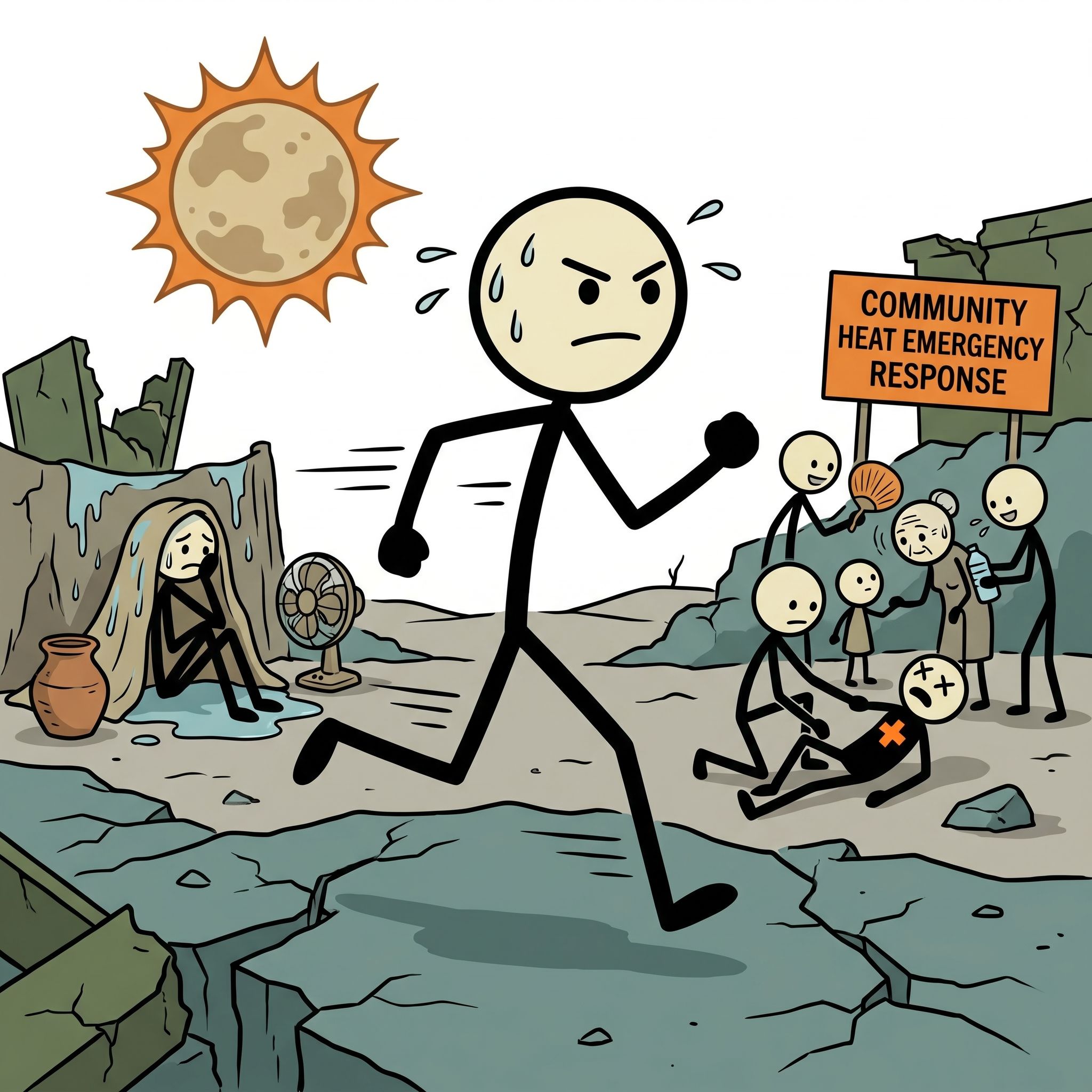
Understanding the Threat: Heat Waves vs. Heat Domes
To effectively implement extreme heat survival strategies, it is crucial to understand the specific meteorological phenomena you are facing. A standard heat wave is generally defined as a period of abnormally and uncomfortably hot and unusually humid weather, typically lasting two or more days. While dangerous, standard heat waves eventually break as weather fronts move through the area. Learn more in the go-bag builder.
A heat dome, however, is a much more severe and stagnant threat. According to NOAA, a heat dome occurs when strong, high-pressure atmospheric conditions combine with influences from La Niña, trapping hot ocean air like a lid on a slow cooker. As the high-pressure system pushes the air downward, the air compresses and heats up further. This downward force also prevents clouds from forming, allowing the sun to bake the earth relentlessly. Learn more in the supply calculator.
The resulting heat dome emergency can linger for weeks, creating a compounding crisis. Buildings absorb and retain thermal energy day after day, meaning indoor temperatures continue to rise even at night. Furthermore, the immense strain on the electrical grid from millions of air conditioners often leads to rolling blackouts or catastrophic grid failures. This makes relying solely on mechanical cooling a dangerous gamble. Learn more in the survival scenarios library.
The Danger of the Wet-Bulb Temperature
When assessing heat threats, the standard thermometer reading only tells half the story. The National Weather Service utilizes the Heat Index to measure how hot it actually feels when relative humidity is factored in. However, the most critical metric for human survival is the "wet-bulb temperature." Learn more in the Protocol Survival app plans.
The human body cools itself primarily through the evaporation of sweat. When humidity reaches extreme levels, sweat can no longer evaporate into the saturated air. If the wet-bulb temperature reaches 95°F (35°C), the human body loses its ability to cool itself entirely. Even a perfectly healthy adult resting in the shade with unlimited drinking water will face fatal consequences within hours under these conditions. Understanding this limit underscores why heat wave preparedness must include active cooling methods, not just passive hydration.
Heat Wave Preparedness: Fortifying Your Home
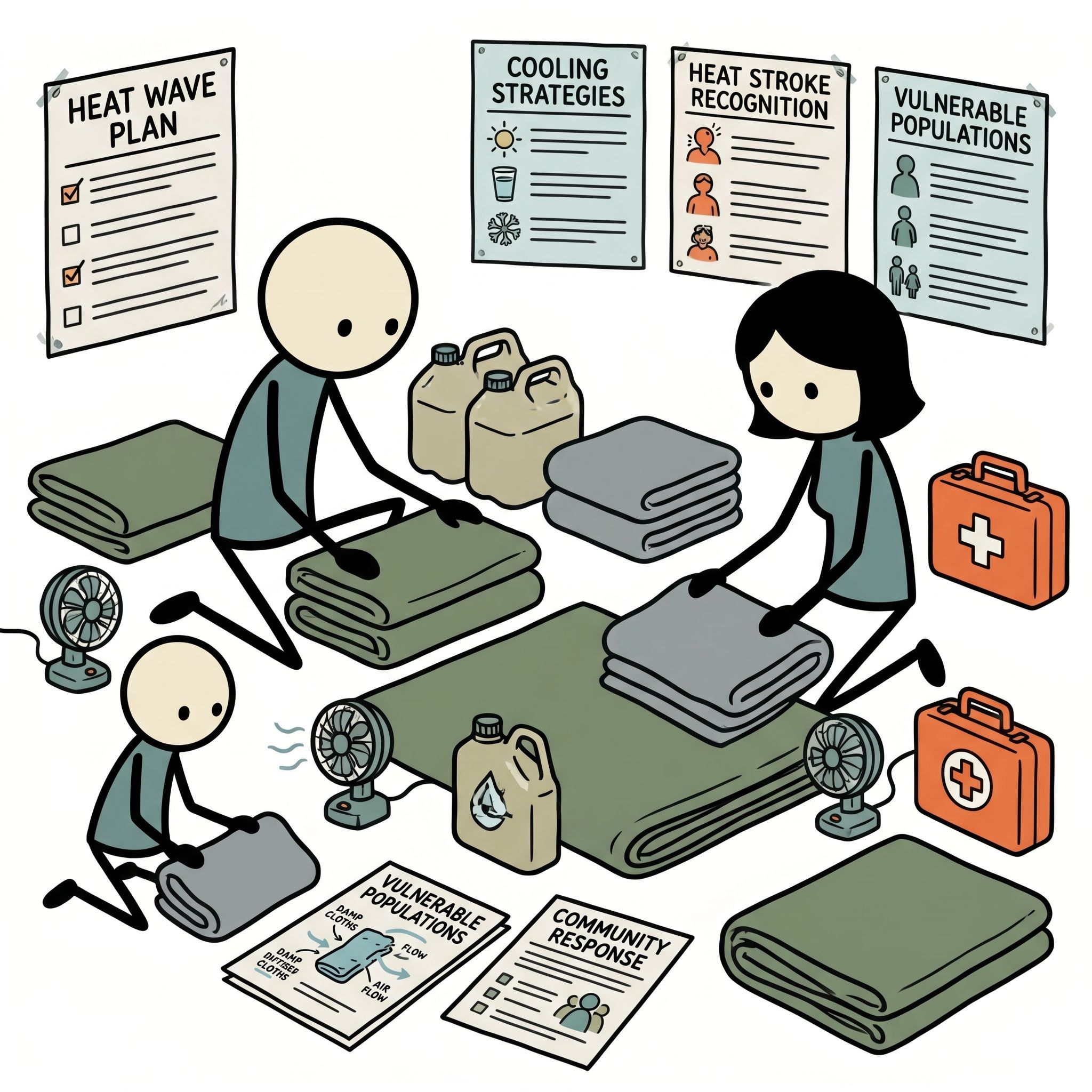
True resilience begins long before the temperature spikes. Heat wave preparedness is about auditing your living space and creating a thermal fortress that can repel solar radiation and retain cool air. Your home’s envelope—its roof, walls, windows, and doors—is your first line of defense.
Deflecting Solar Radiation
The majority of unwanted heat enters your home through the windows. Once sunlight passes through glass and hits your floors or furniture, it converts to thermal energy, creating a greenhouse effect. To prevent this, you must stop the light before it enters, or reflect it immediately upon entry.
- Reflective Window Films: Applying static-cling reflective films to south- and west-facing windows can bounce up to 70% of solar heat away from your home.
- Blackout Curtains and Thermal Blinds: Invest in heavy, white-backed blackout curtains. The white backing reflects sunlight outward, while the thick material provides an insulating barrier against conductive heat.
- Exterior Shading: If possible, install exterior awnings, bamboo shades, or exterior rolling shutters. Stopping the sun before it hits the glass is vastly more effective than managing it from the inside.
Insulation and Air Sealing
Insulation is not just for winter; it is equally vital for extreme heat survival. A well-insulated attic prevents the radiant heat of your roof (which can exceed 150°F) from baking your living spaces. Ensure your attic has adequate ventilation to allow trapped super-heated air to escape.
Additionally, audit your home for air leaks. Weatherstrip your doors, caulk your windows, and seal gaps around plumbing fixtures. If the power grid fails and you are relying on the trapped cool air inside your home, every draft represents a leak in your life raft.
Stockpiling for the Heat
Your emergency kit must be tailored for high temperatures. While standard disaster kits prioritize warmth and calories, a heat emergency kit must prioritize hydration, electrolytes, and off-grid cooling.
- Water Reserves: FEMA recommends a minimum of one gallon of Water Calculator, per day. During extreme heat, this should be doubled to account for increased consumption and evaporative cooling needs.
- Electrolyte Replenishment: Stock up on oral rehydration salts (ORS), electrolyte powders, or sports drinks. Sweating depletes sodium, potassium, and magnesium, which must be replaced to prevent cramping and cardiac stress.
- Battery-Operated Fans and Power Banks: High-capacity lithium-ion power banks paired with USB-powered fans are essential for generating personal airflow when the grid goes down.
- Cooling Towels and Instant Ice Packs: Chemical cold packs that activate when squeezed can be lifesavers for rapid body cooling during a medical emergency.
Surviving Heat Without AC: Active and Passive Cooling
When the power grid fails during a heat dome, or if you simply do not have air conditioning, your survival depends on your ability to manipulate your environment and your physiology. Surviving heat without AC is an active, ongoing process that requires discipline and situational awareness.
Mastering Ventilation and the "Stack Effect"
You must become a master of airflow. The golden rule of off-grid cooling is to seal your home tightly during the day and open it strategically at night. From roughly 10:00 AM to 8:00 PM, windows should be closed, locked, and covered. You are trying to trap the cooler night air inside for as long as possible.
Once the outside temperature drops below the inside temperature, open the house. To maximize cooling, utilize the "stack effect" (also known as the chimney effect). Hot air rises, and cool air sinks. Open windows on the lowest level of your home on the side facing the prevailing wind. Then, open windows on the highest level of your home on the opposite side. Place a box fan pointing *outward* in the upper windows. This actively exhausts the trapped hot air, creating a vacuum that pulls cooler, fresh air in through the lower windows.
Evaporative Cooling Techniques
Before modern air conditioning, humans relied on the physics of evaporation to survive extreme climates. When water turns from a liquid to a gas, it absorbs a massive amount of heat energy from its surroundings. You can harness this principle in your home.
- The Egyptian Method: Soak a heavy cotton sheet in water, wring it out so it is damp but not dripping, and use it as a blanket while you sleep. As the water evaporates, it rapidly cools your skin. Pointing a small battery-operated fan at the sheet will supercharge this effect.
- DIY Swamp Coolers: If you live in a dry climate (low humidity), you can build a rudimentary evaporative cooler. Place a bowl of ice or frozen water bottles directly in front of a battery-powered fan. As the air blows over the ice, it cools down and picks up a slight mist, dropping the ambient temperature in a small, localized area.
- Wet Clothing and Bandanas: Keep a rotation of wet cotton bandanas or cooling towels in your refrigerator or cooler. Drape them over your neck, forehead, or wrists to provide continuous evaporative relief.
Cooling the Body's Core
When ambient temperatures are dangerously high, you must focus on cooling your body directly rather than trying to cool the room. The human circulatory system can be used as a radiator to dump excess heat.
Apply cold water, ice packs, or wet cloths to your body's "pulse points." These are areas where major blood vessels run close to the surface of the skin. The most effective pulse points for rapid cooling are the sides of the neck (carotid arteries), the armpits, the groin, the wrists, and the insides of the elbows and knees. Cooling the blood in these areas allows the chilled blood to circulate back to your core, lowering your overall hypothermia.
Taking a cool (not freezing) shower or bath is another highly effective method. If water is scarce, use a spray bottle filled with water to frequently mist your skin, allowing a fan to blow across you to simulate sweating.
Creating a "Cool Room"
Do not attempt to cool your entire house without power. Instead, designate one central room as your family's "cool room." This room should ideally be on the ground floor or in a basement, as heat rises. It should have minimal windows, preferably facing north or east to avoid the brutal afternoon sun.
Move mattresses, essential supplies, and your family into this single room. Close the doors to all other rooms to prevent the cooler air from dissipating into the hot zones of the house. Spend the hottest hours of the day resting in this room, minimizing physical exertion.
Heat Stroke Prevention: Recognizing the Danger Zones
Extreme heat survival requires vigilant monitoring of your physical condition and the condition of those around you. Heat-related illnesses exist on a spectrum, escalating from mild discomfort to a life-threatening medical emergency. Knowing how to identify and treat these conditions is non-negotiable.
Stage 1: Heat Cramps
Heat cramps are the earliest sign that the body is struggling to cope with the temperature. They are characterized by heavy sweating and painful, involuntary muscle spasms, typically in the legs, arms, or abdomen. These cramps are caused by the rapid loss of water and sodium through sweat.
Treatment: Stop all physical activity and move to a cooler environment. Drink water or a sports drink containing electrolytes. Do not return to strenuous activity for several hours after the cramps subside, as this can trigger heat exhaustion. Gently stretch and massage the cramping muscles.
Stage 2: Heat Exhaustion
If heat cramps are ignored, the condition progresses to heat exhaustion. This occurs when the body has lost an excessive amount of water and salt, and its internal cooling mechanisms are beginning to fail. Heat exhaustion is serious and requires immediate intervention to prevent heat stroke.
Symptoms of Heat Exhaustion (per the CDC):
- Heavy, profuse sweating.
- Cold, pale, and clammy skin.
- A fast, weak pulse.
- Nausea, vomiting, or severe loss of appetite.
- Muscle weakness or profound fatigue.
- Dizziness, lightheadedness, or fainting.
- Headache.
Treatment: Immediate cooling is required. Move the person to a cooler place, preferably air-conditioned. Loosen or remove excess clothing. Apply cool, wet cloths to the body or have the person take a cool bath. Offer sips of water or electrolyte fluids—do not let them gulp the liquid rapidly, as this can induce vomiting. If symptoms worsen, or if the person begins vomiting repeatedly, seek immediate medical attention.
Stage 3: Heat Stroke
Heat stroke is a catastrophic failure of the body's thermoregulatory system. The body can no longer sweat, and the core temperature rapidly spikes to 103°F (39.4°C) or higher. Heat stroke prevention is the ultimate goal of all cooling strategies, because once heat stroke sets in, brain damage and death can occur within minutes. This is a severe medical emergency.
Symptoms of Heat Stroke:
- High body temperature (103°F or higher).
- Hot, red, dry, or damp skin (sweating has often stopped entirely).
- A fast, strong, bounding pulse.
- Throbbing headache.
- Dizziness, nausea, and confusion.
- Altered mental state, slurred speech, or agitation.
- Loss of consciousness or seizures.
Treatment: Call 911 immediately. Heat stroke cannot be treated at home with simple rest. While waiting for emergency responders, you must aggressively cool the victim. Move them to the shade or an air-conditioned room. Do not give them fluids to drink, as their altered mental state makes choking highly likely. Use any means necessary to lower their body temperature: immerse them in a tub of cold water or an ice bath if possible, spray them with a garden hose, sponge them with cold water, and place ice packs on their neck, armpits, and groin.
Protecting Vulnerable Populations
A heat dome emergency does not impact everyone equally. Certain demographics are physiologically less capable of regulating their body temperature, making them highly susceptible to heat-related illnesses. Protecting these vulnerable populations must be a priority in your survival plan.
Older Adults
According to the CDC, older adults (aged 65 and older) are more prone to heat stress for several reasons. As we age, our bodies do not adjust as well to sudden changes in temperature. Furthermore, older adults are more likely to have chronic medical conditions that disrupt normal body responses to heat, and they are more likely to take prescription medications that impair the body's ability to regulate its temperature or sweat.
Medications such as diuretics (water pills), beta-blockers, antihistamines, and certain psychiatric drugs can severely inhibit sweating and increase the risk of dehydration. If you or a loved one takes these medications, consult a physician before the summer season to understand the specific heat-related risks.
Infants and Young Children
Children have a larger surface area relative to their body mass, meaning they absorb heat from their environment faster than adults. They also sweat less and produce more metabolic heat during activity. Infants cannot communicate their discomfort or access water on their own, making them entirely reliant on caregivers.
Never, under any circumstances, leave a child in a parked car. The greenhouse effect inside a vehicle can raise the interior temperature by 20 degrees in just 10 minutes, even with the windows cracked. Keep children indoors during the peak heat hours (11:00 AM to 4:00 PM) and enforce frequent hydration breaks.
Pregnant Women
Pregnancy places significant strain on the cardiovascular system. The body is already working overtime to pump blood to the fetus, leaving less blood available to circulate to the skin for cooling. Pregnant women are at a higher risk for heat exhaustion, dehydration, and fainting. Extreme heat exposure has also been linked by the CDC to adverse birth outcomes, including premature birth and low birth weight. Pregnant individuals must prioritize staying in air-conditioned environments and maintaining aggressive hydration.
Pets and Livestock
Animals suffer in the heat just as much as humans, but they have fewer mechanisms to cool down. Dogs and cats do not sweat through their skin; they regulate their temperature primarily through panting and releasing heat through their paw pads.
- The Asphalt Test: Before walking a dog, place the back of your hand on the pavement for seven seconds. If it is too hot for your hand, it will severely burn your dog's paws. Walk pets only in the early morning or late evening.
- Hydration and Shade: Ensure outdoor animals have constant access to deep shade and multiple bowls of fresh, cool water. Add ice cubes to their water bowls throughout the day.
- Cooling Mats: Provide cooling gel mats or damp towels for pets to lie on indoors. Never shave a double-coated dog down to the skin, as their coat actually provides insulation against the heat and protects them from sunburn.
Community Heat Emergency Response
Surviving a prolonged heat wave is rarely a solo endeavor. When temperatures reach catastrophic levels and the power grid falters, community resilience becomes your greatest asset. The concept of "social infrastructure"—the networks of neighbors, community centers, and local organizations—is just as critical as physical infrastructure.
The Buddy System and Wellness Checks
Isolation is one of the deadliest factors during a heat dome. Statistics from previous deadly heat waves, such as the 1995 Chicago heat wave, show that those who lived alone and lacked social ties were at the highest risk of mortality. Establish a neighborhood buddy system before the heat hits.
Identify the elderly, disabled, or isolated individuals on your street. Commit to checking on them at least twice a day during a heat wave. When conducting a wellness check, do not just ask how they are feeling; visually assess them. Look for signs of confusion, lethargy, or a dangerously hot living environment. Ensure they have access to water and fans, and offer to help them relocate to a cooling center if their home becomes unsafe.
Utilizing Cooling Centers
During extreme heat events, the American Red Cross, FEMA, and local municipal governments will often open designated cooling centers. These are heavily air-conditioned public spaces—such as libraries, community centers, schools, or gymnasiums—equipped with backup generators to ensure continuous power.
Know the locations of your nearest cooling centers in advance. If your home's temperature exceeds 90°F and you cannot cool down, do not wait for heat exhaustion to set in. Relocate to a cooling center during the peak heat hours. Even spending just two to three hours in an air-conditioned environment can reset your body's core temperature and significantly reduce the risk of heat stroke for the rest of the day.
Mitigating the Urban Heat Island Effect
If you live in a city, you are facing a compounded threat known as the Urban Heat Island (UHI) effect. Concrete, asphalt, and densely packed buildings absorb and retain massive amounts of solar radiation during the day, releasing it slowly at night. This prevents urban areas from cooling down, keeping nighttime temperatures up to 15 degrees higher than surrounding rural areas.
While you cannot pave over the city, communities can take collective action to mitigate this effect over time. Planting shade trees, establishing community green spaces, and advocating for "cool roofs" (roofs painted with reflective white coatings) can drastically lower neighborhood temperatures. In the short term, community members can coordinate to spray down hot pavement with hoses in the late afternoon to trigger evaporative cooling in tight urban spaces.
Community Emergency Response Teams (CERT)
Consider joining or organizing a local Community Emergency Response Team (CERT). These FEMA-sponsored programs train volunteers in basic disaster response skills, including fire safety, light search and rescue, and disaster medical operations. During a heat dome emergency, CERT members are often activated to distribute water, staff cooling centers, and conduct organized wellness checks across vulnerable neighborhoods, serving as a critical force multiplier for overwhelmed first responders.
Empowering Your Heat Survival Strategy
The rise of extended heat waves and suffocating heat domes represents a formidable challenge, but it is a challenge that can be met with preparation, knowledge, and decisive action. By respecting the sheer power of extreme temperatures and understanding the physiological limits of the human body, you strip away the fear and replace it with a tactical advantage. Fortifying your home, mastering off-grid cooling techniques, recognizing the early warning signs of heat illness, and building a resilient community network are all within your control. You do not have to be a victim of the changing climate. With the right strategies in place, you can protect yourself, safeguard your family, and stand as a pillar of strength and survival in your community when the mercury rises.
Frequently Asked Questions
At what temperature does heat become life-threatening?
Core body temperature above 104°F (40°C) is heat stroke — a medical emergency. Ambient temperatures above 90°F combined with high humidity create dangerous conditions, especially for seniors, children, and those with heart or kidney conditions.
How do I cool down without air conditioning during a heat wave?
Use a wet towel on your neck and wrists, close curtains on sun-facing windows during the day, open windows at night when temps drop, move to the lowest floor (heat rises), and use battery-operated fans strategically to create airflow.
What is the difference between heat exhaustion and heat stroke?
Heat exhaustion includes heavy sweating, weakness, and nausea — treat by moving to shade and rehydrating. Heat stroke is when sweating stops, skin is hot and dry, and the person may be confused — this is a life-threatening emergency requiring immediate cooling and medical help.