Key Facts: Goal Zero vs Jackery
- Battery Chemistry: Both units utilize advanced LiFePO4 cells, offering over 4,000 charge cycles for a lifespan exceeding 10 years.
- Recharge Times: The Goal Zero Yeti 300 features hyper-fast AC charging, going from 0% to 100% in just 50 minutes, while the Jackery Explorer 300 takes around 2 to 3 hours.
- Environmental Protection: Goal Zero boasts an IPX4 water and dust resistance rating, making it far more resilient in stormy outdoor Survival Scenarioss.
- Weight and Portability: Jackery is the clear winner for mobile survival, weighing only 7.5 pounds compared to Goal Zero's heavier frame.
The Role of 300Wh Power Stations in Disaster Preparedness
When preparing for emergencies, power is security. While massive home-backup batteries are great for running heavy appliances, compact 300Wh-class portable power stations serve a different, equally vital role. They are the ideal size for grab-and-go emergency kits, communication hubs, and powering critical medical devices like CPAP machines during short-term blackouts.
A reliable 300Wh power station can keep your smartphones, emergency radios, and flashlights charged for days. In this head-to-head comparison, we look at two of the industry's leading compact generators - the Goal Zero Yeti 300 and the Jackery Explorer 300 - to determine which one belongs in your emergency preparedness arsenal.
Goal Zero Yeti 300: Built for the Storm
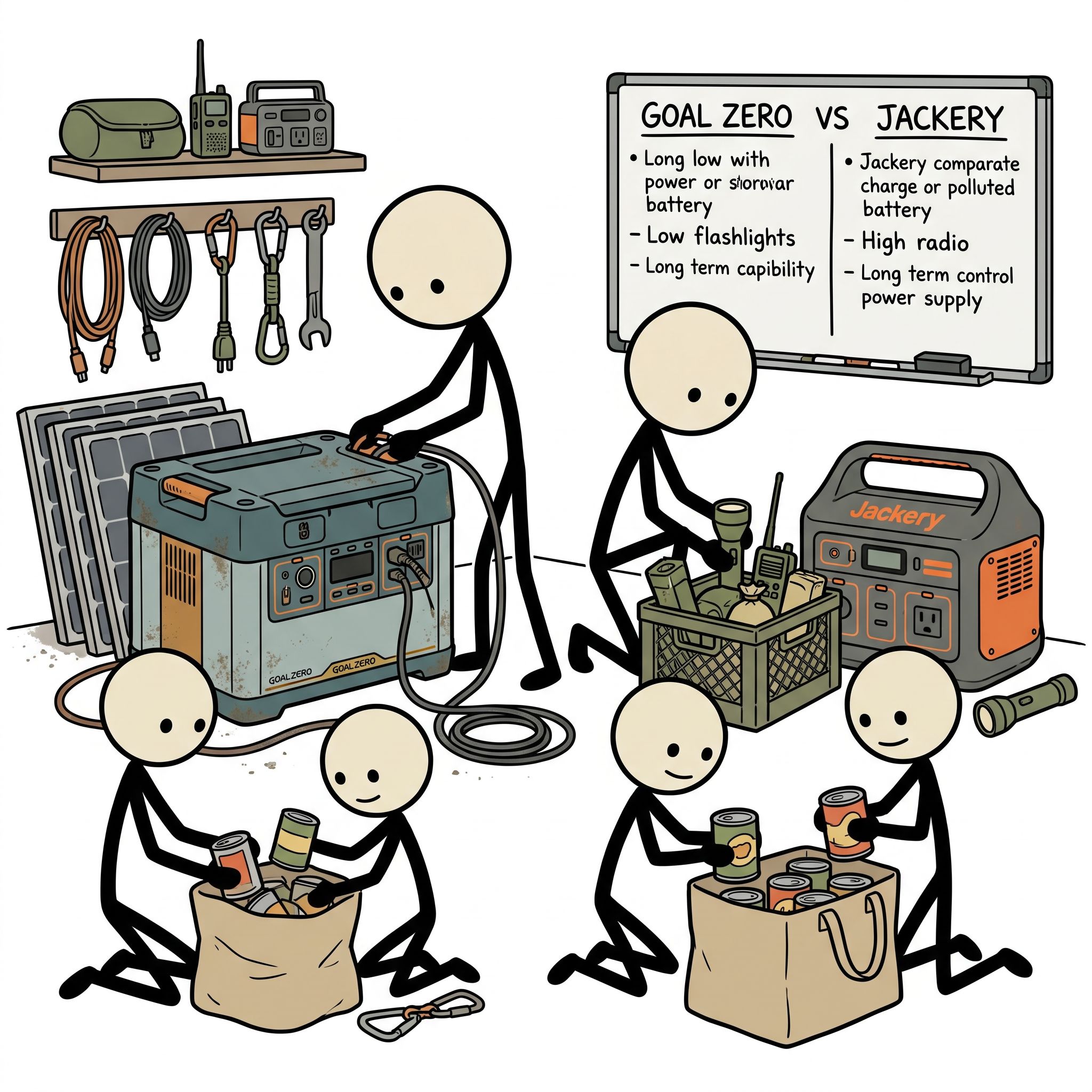
Goal Zero has long been a trusted name in off-grid power, and the Yeti 300 represents a major evolutionary step forward for their compact line. Built with rugged durability at its core, this unit is specifically designed to handle the harsh conditions that often accompany natural disasters.
The standout feature of the Yeti 300 is its IPX4 water and dust resistance rating. During a hurricane, flood, or severe storm, moisture is the enemy of electronics. The Yeti 300 is built to withstand splashes and light rain, giving you peace of mind when operating in less-than-ideal emergency shelters. Furthermore, its ultra-fast charging capability allows you to charge the unit from 0% to 100% in just 50 minutes from a standard wall outlet - an invaluable feature when you only have a short window of grid power before a storm hits.
With a slightly higher continuous AC output of 350W (and a 600W surge), it can handle small power tools, air pumps, and emergency lights with ease. It also complies with strict UL2743 safety standards, ensuring the internal battery management system protects against short circuits, overcharging, and thermal runaways.
Buying Option: You can check the current price and availability of the Goal Zero Yeti 300 on Amazon.
Jackery Explorer 300: The Lightweight Bug-Out Companion
Jackery is synonymous with user-friendly, portable solar power. The Jackery Explorer 300 is a legendary compact unit that has earned a stellar reputation for its balance of capacity, output, and sheer portability.
Weighing in at an incredibly light 7.5 pounds, the Explorer 300 is designed for high mobility. If you need to evacuate your home quickly and carry your gear on foot or pack it into a crowded vehicle, every pound counts. The integrated carry handle makes it effortless to transport, and its compact footprint fits easily into any bug-out bag setup.
The Explorer 300 offers exceptional versatility with its port selection. It features two AC outlets (compared to Goal Zero's single outlet) and a powerful 100W USB-C Power Delivery port, allowing you to charge up to six devices simultaneously. This makes it an excellent choice for keeping an entire family's communication devices online during a prolonged blackout. When paired with Jackery's highly efficient solar panels, it transitions seamlessly into a reliable solar generator, reaching an 80% charge in under 3 hours of direct sunlight.
Buying Option: You can check the current price and availability of the Jackery Explorer 300 on Amazon.
Head-to-Head Preparedness Analysis
1. Rapid Deployment and Charging Speed
In emergency preparedness, time is a luxury you rarely have. If a severe weather warning is issued, you may only have an hour or two to secure your home and charge your backup batteries. The Goal Zero Yeti 300 is the undisputed champion here, utilizing advanced high-speed charging to top off the battery in just 50 minutes. The Jackery Explorer 300, while efficient, takes significantly longer to charge from a standard wall outlet.
2. Environmental Resilience
Disasters are rarely clean and dry. Whether you are dealing with a leaking roof during a storm or dusty conditions in an outdoor emergency camp, your gear needs to survive the elements. The Goal Zero Yeti 300 features an IPX4 water-resistance rating and is built to withstand extreme temperatures. The Jackery Explorer 300 lacks an official IP rating, meaning it must be kept strictly dry and protected from dust and debris at all times.
3. Portability and Bug-Out Suitability
If your family emergency plan involves evacuation, weight is a critical factor. At 7.5 pounds, the Jackery Explorer 300 is nearly half the weight of the Goal Zero Yeti 300 (which weighs approximately 13.7 pounds). For elderly family members, long-distance foot evacuations, or tight packing spaces, the Jackery is much easier to manage.
4. Device Connectivity
During a power outage, you may need to power multiple devices at once - such as an emergency radio, a tablet for emergency broadcasts, two cell phones, and a flashlight. The Jackery Explorer 300 features two AC outlets and a 100W USB-C port, making it highly versatile for multi-device families. The Goal Zero Yeti 300 is more limited in its physical AC port selection, though it still offers robust DC and USB options.
The Verdict: Which Should You Buy?
Both of these power stations are exceptional tools, but they serve slightly different emergency roles:
- Choose the Goal Zero Yeti 300 if your primary concern is rugged survivalism, extreme weather, and the ability to charge your battery incredibly fast before the grid goes down. Its IPX4 rating and 50-minute recharge time make it a highly resilient tactical choice.
- Choose the Jackery Explorer 300 if you need a lightweight, highly portable power source for bug-out bags, mobile evacuations, or if you need to power multiple AC devices simultaneously on a budget.
Frequently Asked Questions
Can these power stations run a full-sized refrigerator during a blackout?
No. Both the Goal Zero Yeti 300 and Jackery Explorer 300 are compact power stations with roughly 300Wh capacity and 300W-350W AC output limits. They are designed for communication devices, laptops, medical equipment like CPAPs, and emergency lighting. To run a full-sized refrigerator, you would need a larger unit with at least 1000Wh to 2000Wh capacity.
How long can I store these units before the battery drains?
Thanks to their modern LiFePO4 battery chemistry, both units hold their charge exceptionally well. However, for emergency preparedness, it is recommended to check and top off your power stations every 3 to 6 months to ensure they are at 100% capacity when a disaster strikes.

Are these power stations safe to use indoors?
Yes, absolutely. Unlike gas-powered generators, portable solar generators do not emit toxic fumes, carbon monoxide, or noise. They are completely safe to operate inside a closed home, tent, or emergency shelter.
Can I charge these units with solar panels during an outage?
Yes, both the Goal Zero Yeti 300 and the Jackery Explorer 300 are solar-ready. You can connect compatible portable solar panels to recharge them off-grid. This makes them sustainable, long-term power solutions during extended grid failures.
What is the benefit of LiFePO4 battery chemistry?
LiFePO4 (Lithium Iron Phosphate) is a highly stable battery chemistry that offers a significantly longer lifespan than traditional lithium-ion batteries. Both of these units provide over 4,000 charge cycles, meaning they can be used daily for over a decade before their capacity drops to around 70-80% of their original state.