⚡ Key Facts
- Supply Chain Vulnerability: According to the United States Department of Agriculture (USDA), the average American meal travels over 1,500 miles from farm to plate, highlighting the fragility of modern logistics.
- Water Requirements: The U.S. Geological Survey (USGS) notes that the average American uses 80-100 gallons of water daily, making localized water catchment a critical priority for off-grid resilience.
- Biointensive Yields: Studies show that biointensive gardening methods can produce up to up to 2 to 6 times more food per square foot compared to traditional commercial farming.
- Disaster Frequency: The National Oceanic and Atmospheric Administration (NOAA) reports a steady increase in billion-dollar weather disasters, reinforcing the Federal Emergency Management Agency (FEMA) recommendation to build long-term household resilience.
- Caloric Efficiency: Micro-livestock like rabbits can produce up to six times more meat on the same amount of feed and water as a cow, making them ideal for small-scale survival systems.
Picture the grocery store shelves in your neighborhood during the first 48 hours of a localized emergency. Whether triggered by a severe weather event, a cyberattack on regional logistics, or a sudden supply chain bottleneck, those shelves empty with alarming speed. The Federal Emergency Management Agency (FEMA) consistently urges citizens to maintain personal reserves, yet a static stockpile is only a temporary bridge. True resilience requires a sustainable, renewable source of nourishment. You do not need a sprawling fifty-acre ranch in the wilderness to achieve this level of security. By adopting the principles of backyard homesteading for preppers, you can transform even a modest suburban lot into a powerful engine of self-reliance.
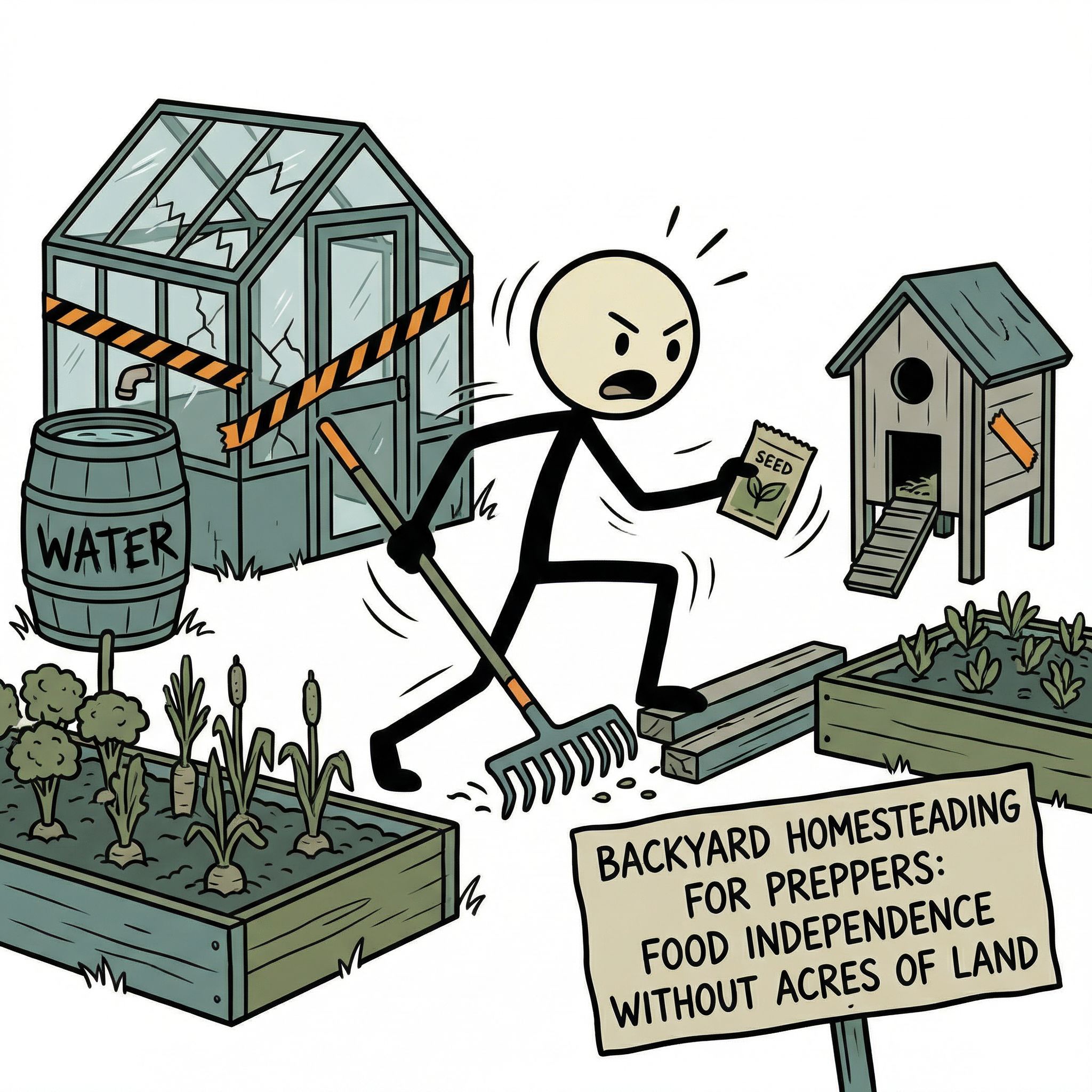
The myth that survival requires massive acreage has discouraged countless individuals from taking control of their emergency food storage guide. In reality, massive farms require massive resources, heavy machinery, and complex supply lines for fertilizer and fuel. Small space food independence flips this paradigm entirely. It relies on hyper-efficiency, closed-loop ecosystems, and intelligent design to produce a staggering amount of calories and nutrition in a fraction of the space. By systematically turning your lawn into a productive micro-farm, you insulate your family from the unpredictable shocks of the modern world.
This comprehensive guide will walk you through the actionable strategies needed to build a self-sufficient backyard. We will explore how to design an optimized layout, cultivate high-calorie crops, manage water independently, and raise micro-livestock. Preparedness is not about hoarding out of fear; it is about building systems that empower you to thrive regardless of external circumstances. Let us break down the exact steps to turn your property into a resilient, food-producing sanctuary.
Designing Your Micro Homesteading Layout
The foundation of a productive property is intelligent design. When space is at a premium, you cannot afford to waste a single square foot. A well-planned micro homesteading layout borrows heavily from permaculture principles, which focus on working with nature rather than against it. The goal is to minimize your labor while maximizing your yield by placing the elements of your homestead in optimal relation to one another.
Before planting a single seed or building a single coop, you must conduct a thorough site audit. Observe your property over several days to map out sunlight patterns, noting which areas receive full sun (six or more hours) and which are shaded by structures or trees. Identify the natural flow of water during a rainstorm, marking areas that pool or drain quickly. Understanding these microclimates is essential for placing your garden beds, water catchments, and livestock enclosures exactly where they will perform best.
The Zone System for Preppers
Permaculture utilizes a "zone" system to organize a homestead based on frequency of use. For a small suburban or urban lot, this concept is easily adapted to ensure maximum efficiency.
- Zone 1 (Immediate Proximity): This is the area closest to your back door. It should house elements that require daily attention, such as your culinary herb garden, delicate salad greens, and seedling nurseries.
- Zone 2 (The Main Production Area): Just beyond Zone 1, this area holds your primary calorie-producing garden beds, composting systems, and small livestock like quail or rabbits. You will visit this area once or twice a day.
- Zone 3 (Perennials and Low-Maintenance Crops): The perimeter of your yard is ideal for fruit trees, berry bushes, and staple crops like potatoes or winter squash that require less frequent tending.
Maximizing Vertical Space
When you cannot build outward, you must build upward. Vertical gardening is a cornerstone of small space food independence. Trellises, cattle panels, and vertical planters allow you to grow vining crops like beans, cucumbers, peas, and certain varieties of squash well above the ground. This not only frees up valuable soil space for root vegetables but also improves air circulation around your plants, reducing the risk of fungal diseases.
Consider utilizing the exterior walls of your home or garage, south-facing fences, and even sturdy pergolas. By training plants to grow vertically, a standard 4x8 foot raised bed can effectively double or triple its productive square footage. Arching cattle panels between two raised beds creates a walk-through tunnel of food, providing shade for cooler-weather crops below while maximizing sun exposure for the vining plants above.
Mastering Urban Survival Gardening
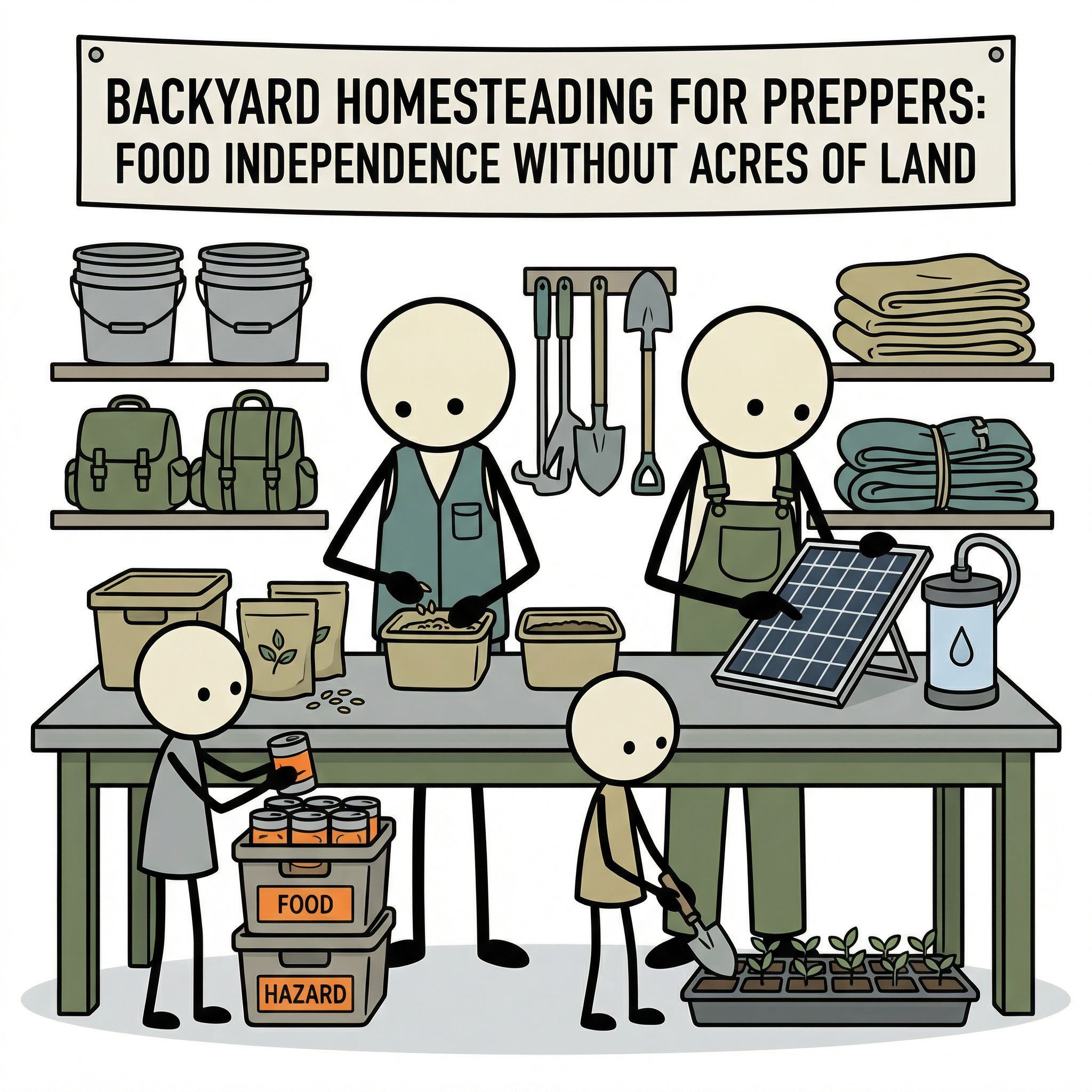
Traditional gardening often focuses on aesthetics or a few seasonal vegetables for fresh eating. Urban survival gardening, however, is a different discipline altogether. It is driven by the need to produce maximum calories, vital nutrients, and medicinal herbs within a constrained footprint. To achieve this, preppers must adopt high-intensity planting methods and focus ruthlessly on soil health.
Focusing on Caloric Density
In a Survival Scenarioss, a massive harvest of lettuce will not sustain your family. You must prioritize crops that offer high caloric density and long-term storability. Root vegetables and legumes are the heavy lifters of the survival garden. Potatoes, sweet potatoes, turnips, and carrots provide vital carbohydrates and can be stored for months in a cool, dark environment.
Dry beans (like pinto, black, or navy beans) are equally critical. They are relatively easy to grow, require minimal water once established, and provide a crucial source of plant-based protein. Additionally, winter squashes such as butternut or acorn squash offer high yields, dense nutrition, and naturally thick skins that allow them to be stored at room temperature well into the winter months without the need for electricity.
Biointensive and Square Foot Gardening
To squeeze every ounce of production out of your land, utilize biointensive and square foot gardening techniques. Instead of planting in traditional long rows with wide, wasted paths between them, plant in grid patterns within raised beds. This method drastically reduces weed competition because the dense canopy of crop leaves shades the soil. It also conserves soil moisture, reducing your overall water requirements.
Succession planting is another critical strategy. Never leave a bed empty during the growing season. As soon as a spring crop like radishes or peas is harvested, immediately amend the soil and plant a summer crop like bush beans. When the beans finish, follow up with a fall planting of kale or spinach. This continuous rotation ensures that your self-sufficient backyard is producing food from the last frost of spring to the first hard freeze of winter.
Building Bulletproof Soil
Your garden is only as resilient as your soil. Chemical fertilizers represent a fragile supply chain dependency; if the stores close, your garden could fail. Therefore, establishing a robust composting system is non-negotiable. By recycling kitchen scraps, yard waste, and animal manure, you create a closed-loop system that continuously regenerates your soil's fertility.
Incorporate vermiculture (worm composting) for highly concentrated, nutrient-dense worm castings. Furthermore, utilize cover crops like clover or winter rye during the off-season. These crops prevent soil erosion, fix nitrogen from the atmosphere into the soil, and provide organic matter when chopped and dropped in the spring. Healthy, living soil retains water better and produces plants that are naturally more resistant to pests and diseases.
Secure Your Water: The Lifeblood of the Homestead
Water is the most critical resource in any emergency. The USGS reports that Americans consume vast amounts of water daily, a luxury that evaporates the moment municipal pumps fail. Without a reliable water source, your garden will wither, your livestock will perish, and your family will be at risk. Achieving true independence means severing your reliance on the municipal tap.
Rainwater Catchment Systems
The roof of your home is a massive, untapped watershed. For every inch of rain that falls on a 1,000-square-foot roof, you can harvest approximately 600 gallons of water. Installing a rainwater catchment system is a primary step in backyard homesteading for preppers. Begin with standard 55-gallon rain barrels at your downspouts, but plan to scale up to 275-gallon Intermediate Bulk Containers (IBC totes) if your space and local regulations permit.
Ensure your catchment system includes a "first-flush diverter." This simple device captures the first few gallons of rain—which often contain bird droppings, roof grit, and pollutants—and diverts them away from your main storage tank. Paint your storage tanks black or cover them to prevent sunlight penetration, which will stop algae growth in your Water Calculator.
Greywater Recycling and Water Conservation
In a prolonged grid-down scenario, you cannot afford to use water only once. Greywater recycling involves capturing gently used water from bathroom sinks, showers, and washing machines to irrigate your Zone 3 trees and shrubs. (Never use greywater on root vegetables or leafy greens intended for raw consumption to avoid pathogen exposure).
Inside the garden, employ heavy mulching. Applying a thick layer of straw, wood chips, or shredded leaves over your garden beds dramatically reduces evaporation, keeping the soil moist even during prolonged dry spells. Consider installing a low-pressure drip irrigation system connected to your rain barrels. Drip irrigation delivers water directly to the base of the plant, eliminating the waste associated with overhead sprinklers and reducing fungal diseases on plant foliage.
Protein Production in Tight Quarters
While beans and potatoes provide excellent calories, securing a localized source of complete protein and essential fats is vital for long-term health. Large livestock like cattle or pigs are entirely impractical for a suburban lot. However, micro-livestock are perfectly suited for small spaces, offering excellent feed-to-meat conversion ratios and valuable manure for your compost systems.
The Power of Poultry: Chickens and Quail
Backyard chickens are often the gateway to homesteading. A small flock of four to six hens can provide a steady supply of eggs, which are nutritional powerhouses. Chickens also act as a biological pest control system, eagerly consuming ticks, grubs, and beetles, while their nitrogen-rich manure is a fantastic fertilizer once properly aged.
If local zoning laws or Homeowner Association (HOA) rules prohibit chickens, Coturnix quail are a stealthy and highly efficient alternative. Quail are exceptionally quiet, require a fraction of the space of chickens, and mature incredibly fast. A female Coturnix quail can begin laying eggs in just six to eight weeks. Because they can be kept in stacked cages in a garage or shed, they are the ultimate protein source for urban survival gardening.
Meat Rabbits: The Ultimate Survival Livestock
For sustainable meat production in a small footprint, rabbits are unparalleled. They are silent, making them excellent for operational security (OPSEC) in a suburban setting. Furthermore, rabbits are incredibly prolific. A single breeding trio (two does and one buck) can produce hundreds of pounds of meat in a single year.
Rabbits thrive on a diet that can be heavily supplemented by your property. They can eat grass, weeds, garden trimmings, and specific tree leaves (like willow or mulberry), reducing your reliance on commercial feed bags. Unlike chicken manure, which is "hot" and must be composted before use, rabbit manure is a "cold" fertilizer. It is packed with nitrogen and phosphorus and can be applied directly to your garden beds without burning your plants.
Extending the Harvest: Preservation and Storage
Producing food is only half the battle; preserving it safely without reliance on the modern electrical grid is the other. In a true crisis, your refrigerator and deep freezer will become useless insulated boxes within 48 hours. A self-sufficient backyard system must include robust, low-tech methods for food preservation to ensure your summer abundance sustains you through the lean winter months.
Safe Canning Practices
Canning is a time-tested method for creating shelf-stable food, but it must be done with strict adherence to safety protocols. The Centers for Disease Control and Prevention (CDC) warns that improper canning can lead to botulism, a deadly neurotoxin. Always follow the most current guidelines published by the USDA or the National Center for Home Food Preservation.
High-acid foods, such as fruits, jams, and tomatoes (with added lemon juice), can be safely processed in a boiling water bath canner. However, low-acid foods—which include all meats, poultry, and unpickled vegetables like green beans and carrots—must be processed in a pressure canner. A high-quality pressure canner is one of the most vital pieces of equipment a prepper can own, allowing you to safely store your backyard harvests and micro-livestock meats at room temperature for years.
Dehydration and Fermentation
Dehydration removes the moisture that bacteria and mold need to survive, drastically reducing the weight and volume of your food. While electric dehydrators are convenient, learning to use solar dehydrators or the ambient heat of a wood stove is critical for grid-down scenarios. Dried herbs, fruits, and vegetables can be stored in airtight containers or Mylar bags with oxygen absorbers for incredible longevity.
Fermentation is another low-energy preservation method that actually enhances the nutritional profile of your food. By utilizing salt and the naturally occurring lactobacillus bacteria on vegetables, you can create sauerkraut, kimchi, and traditional pickles. Fermented foods are rich in probiotics, which support gut health and immune function—critical components of medical preparedness during an emergency.
Root Cellaring in Modern Homes
You do not need a 19th-century stone basement to utilize the principles of root cellaring. The goal is to find a cool, dark, and moderately humid environment to store root crops, apples, and winter squash. In a suburban home, this might be an unheated closet, a crawlspace, or an insulated corner of the garage.
For true off-grid storage, consider burying a galvanized trash can or a modified chest freezer in the ground below the frost line. Layer your root vegetables (like carrots and beets) in damp sand or sawdust within the container. The earth acts as a natural insulator, keeping the food cool in the summer and preventing it from freezing in the winter, effectively creating a micro-root cellar in your backyard.
Closing the Loop: Building a Resilient Ecosystem
The ultimate goal of backyard homesteading for preppers is to create a closed-loop system—an ecosystem where the waste of one process becomes the fuel for another. The less you have to bring onto your property from the outside world, the more secure your family will be when supply lines fracture.
Integrating Energy and Waste
Your self-sufficient backyard should aim to manage its own waste streams. Composting human waste is a taboo subject in modern society, but in a prolonged grid-down scenario where municipal water and sewage fail, it becomes an immediate biological necessity. Understanding how to build and safely manage a dry composting toilet system or a sawdust bucket system prevents sanitation crises and disease outbreaks (like cholera or dysentery) which historically follow major disasters.
Integrate small-scale solar power to run critical, low-draw equipment. A modest solar generator setup with a few portable panels can power a well pump, run a small chest freezer, charge communication radios, and power the heat lamps needed for brooding chicks or quail. By decoupling your vital survival systems from the fragile national power grid, you drastically reduce your vulnerability.
Fostering Pollinators and Beneficial Insects
Your garden will not produce calories if the flowers are not pollinated. With global insect populations facing severe pressures, you must intentionally attract and protect pollinators. Dedicate small patches of your Zone 1 or Zone 3 areas to native wildflowers. Herbs like borage, comfrey, and yarrow are exceptional at drawing in bees and butterflies.
Furthermore, cultivate an environment that attracts predatory insects. Ladybugs, lacewings, and praying mantises are the foot soldiers of your garden's defense system. By providing habitat for these beneficial insects, you eliminate the need for chemical pesticides, ensuring your food remains clean, organic, and truly self-sustaining.
Stealth and Security in the Suburbs
A highly productive homestead can unfortunately become a target during a severe, prolonged crisis. Operational security (OPSEC) is a necessary consideration for the urban or suburban prepper. You want your property to look well-kept, but not like a fully stocked grocery store to the casual observer.
Utilize defensive landscaping to your advantage. Plant dense, thorny bushes like blackberries, raspberries, or barberry along your perimeter fences or beneath ground-floor windows. These provide an edible yield while acting as a formidable physical barrier. Additionally, practice "foodscaping" in your front yard by mixing edible plants seamlessly with ornamental ones. Swiss chard, kale, and bush beans can easily blend into traditional flower beds, hiding your emergency food storage guide in plain sight.
Keep your micro-livestock out of view from the street and manage their waste diligently to avoid odors that could attract unwanted attention from neighbors or predators. A quiet, visually unassuming exterior protects the vital life-support systems operating in your backyard.
Achieving food independence is not an overnight event; it is a gradual accumulation of skills, infrastructure, and ecological understanding. By adopting these small-scale homesteading strategies, you actively rebel against a culture of dependency. You do not need hundreds of acres to secure your family's future. With intelligent planning, relentless efficiency, and a willingness to work with the land, your backyard can become a fortress of self-reliance. Start today—plant the seeds, build the soil, and take the first definitive step toward true operational independence.
Frequently Asked Questions
How much space is needed to start a backyard homestead?
You can start a backyard homestead with as little as 100 square feet by utilizing vertical gardening, container planting, and raised beds to maximize crop yield in small spaces.
What are the best crops to grow for survival and calorie density?
Potatoes, beans, winter squash, and corn are excellent survival crops because they are calorie-dense, relatively easy to grow, and have a long shelf life when properly stored.
Can I raise livestock in a small suburban backyard?
Yes, small livestock like chickens, quail, and rabbits require minimal space and provide a steady source of protein, provided they comply with your local zoning ordinances.
How can I secure water for my garden during an emergency?
Rainwater harvesting systems using roof gutters and food-grade rain barrels are highly effective for collecting off-grid water, though you should verify local rainwater collection regulations.
What is the most efficient way to preserve a backyard harvest?
Pressure canning, water bath canning, dehydrating, and root cellaring are the most efficient off-grid methods to preserve food long-term without relying on electricity.