⚡ Key Facts
- Spike in Exploitation: According to the Federal Trade Commission (FTC), reports of identity theft and consumer fraud consistently spike in ZIP codes declared federal disaster areas within 180 days of an extreme weather event.
- FEMA Impersonation: The National Center for Disaster Fraud (NCDF) processes tens of thousands of complaints annually, with a significant portion involving criminals using stolen Social Security numbers to claim fraudulent FEMA disaster assistance grants.
- Unprepared Populations: A Federal Emergency Management Agency (FEMA) survey reveals that nearly 60% of Americans do not have an active family emergency plan that includes the protection of critical financial and identification records.
- Mail Theft Vulnerability: The U.S. Postal Inspection Service reports that physical mail theft rises by over 40% in disaster-struck zones due to damaged mailboxes, evacuated homes, and disrupted delivery routes.
When a natural disaster strikes—whether it is a Category 5 hurricane, a fast-moving wildfire, or a catastrophic earthquake—the immediate focus is instinctively on physical survival. We secure our families, pack our emergency kits, and evacuate to safety. However, in the chaotic days and weeks that follow, a secondary, silent crisis often unfolds. While emergency services work to restore infrastructure, opportunistic criminals move into devastated neighborhoods and digital spaces to exploit the confusion. From looting damaged homes for physical documents to launching sophisticated phishing campaigns targeting desperate survivors, bad actors view natural disasters as prime opportunities for identity theft and financial fraud. Protecting your personal sovereignty requires a proactive, dual-strategy approach that safeguards both your physical documents and your digital footprint.
The Anatomy of Post-Disaster Exploitation
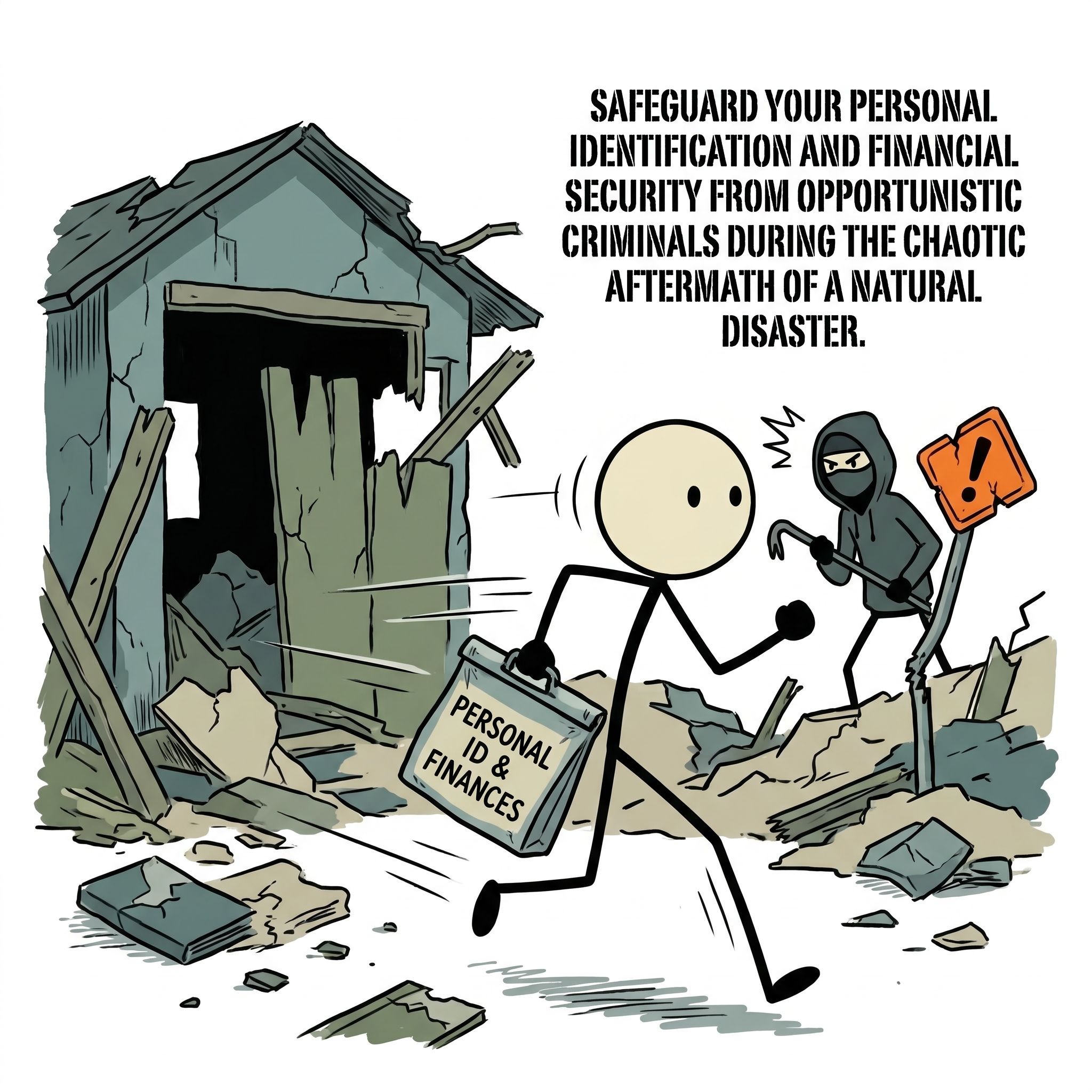
To effectively defend your financial and personal identity, you must first understand how criminals operate in the wake of a disaster. Chaos breeds vulnerability. When homes are damaged or abandoned, physical security is compromised. Filing cabinets, mailboxes, and home safes may be exposed to the elements or to looters. A single lost birth certificate, tax return, or utility bill left in the debris can provide a thief with enough information to establish a fraudulent identity, open lines of credit, or redirect your mail.
Simultaneously, the digital landscape becomes highly treacherous. In the rush to apply for aid, communicate with loved ones, and file insurance claims, survivors often lower their digital defenses. They connect to unsecured public Wi-Fi networks at evacuation shelters, click on urgent links in unsolicited emails promising immediate relief funds, and share sensitive personal information over the phone to unverified callers claiming to represent government agencies. This combination of physical displacement and digital urgency creates a high-yield environment for disaster identity theft.
The Threat of Relief Fraud
One of the most insidious forms of post-disaster crime is relief fraud. Bad actors monitor federal disaster declarations through agencies like the Federal Emergency Management Agency (FEMA) and the National Oceanic and Atmospheric Administration (NOAA). Armed with personally identifiable information (PII) harvested from data breaches or physical debris, these criminals quickly file for disaster assistance grants under the names of actual victims. When the real survivors attempt to apply for critical emergency funds, they are shocked to find their applications denied because a claim has already been processed and paid out to a fraudulent bank account. To prevent identity theft in emergencies, you must secure your data before the recovery phase even begins.
Phase 1: Pre-Disaster Hardening (Emergency Document Protection)
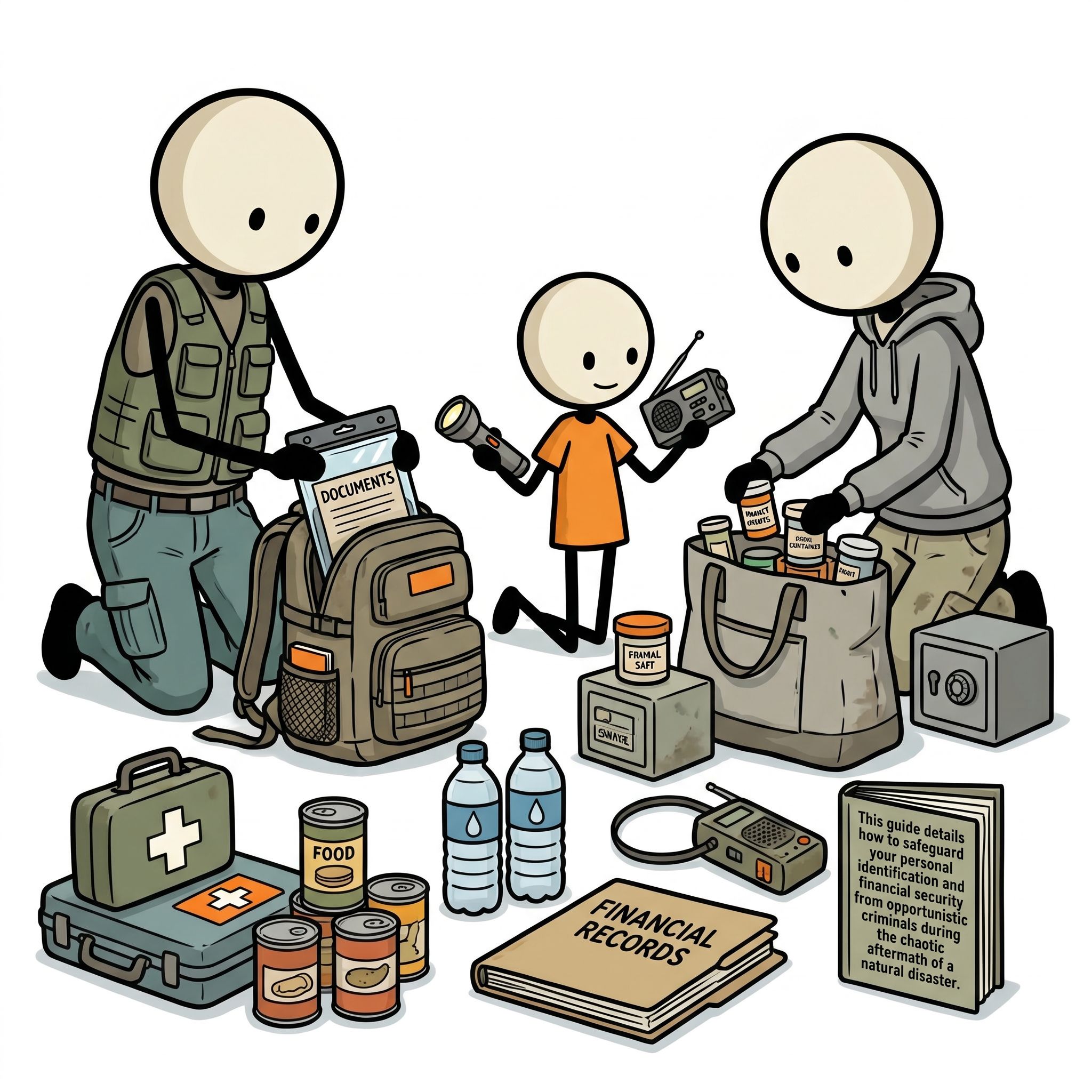
The foundation of identity preservation is laid long before the first storm warning is issued. Implementing a robust system for emergency document protection ensures that even if your home is physically compromised, your financial and legal identity remains secure and accessible to you alone.
Creating the "Go-Binder"
A physical "Go-Binder" is a highly organized, portable, and secure repository for your family’s most critical documents. This binder should be constructed from heavy-duty, water-resistant, and fire-resistant materials. Inside, documents should be organized in individual, waterproof plastic sleeves. If you must evacuate, this binder is grabbed immediately alongside your go-bag essentials guide.
Your Go-Binder must contain the following original documents or certified copies:
- Identity Credentials: Birth certificates, marriage certificates, social security cards, passports, military discharge papers (DD-214), and green cards.
- Financial Records: A list of active bank accounts, credit card numbers with customer service phone numbers, recent tax returns (first two pages), and stock or bond certificates.
- Property and Legal Documents: Home deeds, vehicle titles, active rental agreements, wills, trusts, and powers of attorney.
- Insurance Policies: Declarations pages for homeowners, renters, auto, life, and flood insurance policies, including policy numbers and claims contact information.
- Medical Information: Immunization records, lists of active prescriptions, health insurance cards, and copies of critical medical histories.
The Digital Vault Strategy
Physical documents are vulnerable to absolute destruction. Therefore, a redundant, encrypted digital backup is non-negotiable to secure personal documents. Simply taking photos of your documents and saving them to your phone's camera roll is not secure; if your phone is lost, stolen, or hacked, your entire life is laid bare.
To build a secure digital vault, follow these steps:
- High-Resolution Scanning: Scan all documents in your Go-Binder. Ensure the scans are clear, legible, and saved in PDF format.
- Local Encrypted Storage: Save these files onto a high-speed, durable USB flash drive or external hard drive. Encrypt the drive using robust, industry-standard software such as BitLocker (Windows), FileVault (Mac), or VeraCrypt (open-source). Protect the drive with a strong, complex passphrase.
- Secure Cloud Redundancy: Upload the encrypted files to a secure, end-to-end encrypted cloud storage provider (such as Proton Drive, Tresorit, or a highly secured OneDrive/Google Drive folder protected by hardware-token multi-factor authentication). Do not use easily guessable passwords or reuse passwords across accounts.
- Off-Site Physical Backup: Consider keeping a duplicate encrypted USB drive in a secure, off-site location, such as a safe deposit box in a bank located outside of your immediate flood or wildfire zone.
Phase 2: Immediate Aftermath (Securing the Ruins and Evacuation Sites)
The hours and days immediately following a disaster are characterized by high stress and compromised environments. Whether you are staying in an emergency shelter, a hotel, or returning to a damaged home, specific operational security measures must be taken to protect identity after natural disaster events.
Defending Your Damaged Property
If your home has suffered structural damage and you are forced to evacuate, your physical records may be exposed. If it is safe to do so—and only after local authorities (such as the structural engineers or fire department) have declared the structure safe to enter—return to your property to salvage and secure any remaining personal documents.
Search for mail, financial statements, tax records, and personal electronics. If you cannot locate your social security card or birth certificates in the debris, assume they are compromised and begin monitoring procedures immediately. Never leave sensitive documents in an abandoned, unsecured home where contractors, utility workers, or looters may have access.
Shelter and Evacuation Cyber Security
Evacuation shelters, hotels, and community centers are hotbeds for digital exploitation. Bad actors often set up rogue Wi-Fi access points with names like "Shelter_Guest_Wi-Fi" or "Red_Cross_Free_Internet." Once you connect to these networks, the operator can intercept your data, capturing login credentials, bank details, and personal communications.
| Digital Action | The Risk | The Safe Protocol |
|---|---|---|
| Connecting to Shelter Wi-Fi | Data interception, credential theft via man-in-the-middle attacks. | Use cellular data networks (hotspots) or route all traffic through a reputable, paid Virtual Private Network (VPN). |
| Charging Devices at Public Stations | "Juice Jacking" — malware installation or data extraction via modified USB ports. | Use your own AC wall charger and cable, or utilize a "USB data blocker" dongle that prevents data transfer. |
| Accessing Financial Portals | Shoulder surfing, session hijacking on public networks. | Avoid logging into bank accounts or insurance portals in crowded, public spaces. Use biometric logins where possible. |
| Sharing Updates on Social Media | Revealing your location, showing your home is empty, inviting physical theft. | Keep privacy settings strict. Do not post photos showing street signs, specific shelter locations, or damaged, empty homes. |
Securing Your Incoming Mail
Disasters disrupt mail delivery. A mailbox overflowing with bank statements, insurance payouts, and government correspondence is a goldmine for identity thieves. If you are displaced, immediately contact the United States Postal Service (USPS) to manage your mail flow. You can request a temporary "Hold Mail" service, which keeps your mail secure at your local post office for up to 30 days, or set up a temporary change of address to forward your mail to a secure location, such as a P.O. Box or a trusted relative's home outside the disaster area.
Phase 3: Navigating Relief and Insurance Claims Safely
The process of rebuilding your life requires interacting with insurance adjusters, FEMA representatives, and charitable organizations. Unfortunately, fraudsters frequently masquerade as these recovery agents to extract your sensitive information.
Verifying Government and Insurance Representatives
Legitimate FEMA representatives and insurance adjusters will always carry official, laminated photo identification badges. They will never ask you for money to apply for aid, inspect your home, or speed up your claim. FEMA services are entirely free.
Be highly suspicious of unsolicited phone calls, text messages, or visits from individuals claiming to be disaster recovery officials. If someone contacts you claiming to represent FEMA or your insurance company and asks for your Social Security number, bank routing number, or policy details, do not provide it. Instead, hang up and call the official, verified customer service number listed on the agency's legitimate website (such as FEMA.gov) or your insurance card to verify the inquiry.
Filing Claims Promptly
One of the most effective ways to combat disaster-related identity theft is to file your insurance and FEMA claims as quickly as possible. By submitting your applications early, you block criminals from using your stolen information to file fraudulent claims first. If you discover that a claim has already been filed in your name, contact the FEMA Disaster Fraud Hotline immediately at 866-720-5721, and report the incident to the National Center for Disaster Fraud.
Phase 4: Establishing Long-Term Financial Defenses
Once the immediate physical danger has passed, you must transition to long-term financial defense. The effects of identity theft can surface months or even years after a disaster occurs. Implementing systemic blocks on your credit and monitoring your financial accounts will prevent long-term damage.
The Power of the Credit Freeze
A credit freeze (also known as a security freeze) is the single most effective tool available to prevent unauthorized accounts from being opened in your name. When your credit is frozen, credit reporting agencies cannot release your credit report to new lenders. If an identity thief attempts to open a new credit card, auto loan, or mortgage using your stolen information, the lender will deny the application instantly because they cannot access your credit score.
Freezing your credit is free and does not affect your current credit score, credit card usage, or your ability to apply for federal disaster assistance. You must contact each of the three major credit bureaus individually to establish a freeze:
- Equifax: 1-800-685-1111 or online at Equifax.com
- Experian: 1-888-397-3742 or online at Experian.com
- TransUnion: 1-888-909-8872 or online at TransUnion.com
Keep the PINs or passwords generated during the freeze creation process in your digital vault. You will need them to temporarily lift or permanently remove the freeze when you legitimately apply for a new loan, utility service, or credit card in the future.
Placing an Initial Fraud Alert
If you suspect your personal documents have been lost, exposed, or stolen during a disaster, but you are not ready to commit to a full credit freeze, you should immediately place a fraud alert on your credit file. A fraud alert warns potential creditors that you may be a victim of identity theft, requiring them to take extra steps to verify your identity before granting credit.
Unlike a credit freeze, you only need to contact one of the three major bureaus to place a fraud alert; the bureau you contact is legally required to notify the other two. An initial fraud alert is free and lasts for one year. If you become a confirmed victim of identity theft and file an official report, you can upgrade this to an extended fraud alert, which lasts for seven years.
Active Account Monitoring
During recovery, review your bank statements, credit card transactions, and insurance communications weekly. Look for small, unauthorized charges, which thieves often use to test if a card is active before making larger purchases. Utilize free services like AnnualCreditReport.com to pull your credit reports and inspect them for unfamiliar accounts, inquiries, or addresses.
Additionally, watch for "explanation of benefits" (EOB) statements from your health insurance provider that detail medical services you never received. Medical identity theft is a rapidly growing sector of post-disaster fraud, where criminals use your health insurance information to receive medical care or obtain prescription drugs, potentially corrupting your critical medical records.
Recognizing and Evading Post-Disaster Scams
Identity theft and financial fraud often present themselves in the guise of helpfulness. Criminals exploit the goodwill of the public and the desperation of survivors through highly targeted scams.
Contractor Fraud
Following widespread property damage, fly-by-night contractors often descend on impacted areas. These individuals may knock on your door offering immediate debris removal, roof patching, or structural repairs. They frequently demand large upfront deposits, cash payments, or ask you to sign over your insurance rights via an "Assignment of Benefits" contract.
To protect your finances and personal security, adhere to the following contractor verification protocols:
- Verify Licensing and Insurance: Demand to see the contractor’s state license, general liability insurance, and workers' compensation coverage. Verify these credentials directly with your state's licensing board online.
- Obtain Multiple Written Estimates: Never agree to work on the spot. Get detailed, written estimates that outline the scope of work, materials to be used, timelines, and payment schedules.
- Avoid Cash Payments: Never pay in cash or pay the full amount upfront. Establish a payment schedule tied to the completion of specific, inspected phases of the project. Pay using a credit card or check, which provides a paper trail and fraud protection.
- Beware of the "FEMA Certified" Label: FEMA does not certify, endorse, or recommend specific private contractors. Any contractor claiming to be "FEMA approved" is committing fraud.
Charity Scams
If you are fortunate enough to have escaped a disaster unaffected, your desire to help those in need can be weaponized against you. Fraudulent charities spring up overnight following major disasters, using names that sound remarkably similar to well-known, legitimate organizations.
Before donating a single dollar, research the organization through independent charity watchdogs such as Charity Navigator, GuideStar, or the Better Business Bureau’s Wise Giving Alliance. Legitimate charities will gladly accept credit card payments through secure online portals and will not pressure you into making immediate donations via wire transfers, gift cards, or cryptocurrency.
A Blueprint for Post-Disaster Action
If you find yourself in the immediate aftermath of a disaster and suspect your identity has been compromised, quick action can mitigate the damage. Follow this structured protocol to regain control:
- File an Identity Theft Report: Go to the FTC's dedicated portal at IdentityTheft.gov. This site will guide you through creating a recovery plan and generate an official FTC Identity Theft Report, which is vital when disputing fraudulent accounts with creditors and credit bureaus.
- Contact the Police: File a report with your local police department regarding the lost or stolen documents. Keep a copy of the police report, as many financial institutions require it to close fraudulent accounts.
- Notify Your Financial Institutions: Call the fraud departments of your banks and credit card issuers. Close any accounts that have been compromised or opened fraudulently, and open new accounts protected by fresh, unique passwords and hardware-token multi-factor authentication.
- Contact the IRS: If your Social Security number has been exposed, file IRS Form 14039 (Identity Theft Affidavit) to prevent tax identity theft, where criminals file fraudulent tax returns to steal your refund. The IRS will issue you an Identity Protection PIN (IP PIN) that must be used to file your taxes moving forward.
- Replace Vital Documents: Systematically replace your lost credentials. Begin with your driver's license or state ID, as you will need this identification to replace other documents like your Social Security card, passport, and birth certificate.
True resilience is measured not just by your ability to survive the physical elements of a natural disaster, but by your capacity to preserve your personal sovereignty and financial stability in the complex recovery phase that follows. By implementing rigorous emergency document protection protocols, maintaining high digital hygiene during evacuations, and proactively securing your credit, you build an impenetrable defense against opportunistic criminals. Prepare today, secure your legacy, and ensure that when the storm clears, your identity remains entirely your own.
Frequently Asked Questions
Why does identity theft risk increase after a natural disaster?
Disasters create chaos, leaving physical documents exposed in damaged homes, disrupting secure communications, and creating opportunities for scammers posing as government officials or charity workers.
How can I protect my personal documents before an evacuation?
Keep physical copies of critical documents in a waterproof, fireproof portable grab-and-go bag, and back up digital copies on an encrypted, password-protected flash drive or secure cloud storage.
How do I verify if a disaster relief offer is legitimate?
Always apply for federal aid directly through DisasterAssistance.gov or by calling FEMA's official helpline. Never provide personal information to unsolicited callers, texters, or door-to-door solicitors.
What steps should I take if my identity is stolen during a disaster?
Report the theft immediately at IdentityTheft.gov, contact your financial institutions to freeze compromised accounts, and place a free fraud alert on your credit files with Equifax, Experian, and TransUnion.
Can I temporarily freeze my credit to prevent post-disaster fraud?
Yes. You can contact the three major credit bureaus individually to place a free security freeze on your credit reports, which stops identity thieves from opening new accounts in your name.