⚡ Key Facts
- Empowerment Overcomes Fear: According to the Federal Emergency Management Agency (FEMA), children who are involved in family disaster planning experience significantly less anxiety during actual emergencies because they understand the protocols.
- The Two-Minute Warning: The American Red Cross states that families have as little as two minutes to safely escape a burning home, making muscle memory and practiced evacuation routes critical for young children.
- The Preparedness Gap: Data from Save the Children reveals that while 99% of parents believe it is important to have an emergency plan, more than half do not have a basic family communication strategy in place.
- Psychological Resilience: The Centers for Disease Control and Prevention (CDC) notes that teaching kids survival skills in a calm, controlled environment builds long-term psychological resilience and mitigates post-traumatic stress following a crisis.
Imagine the piercing shriek of a smoke detector shattering the silence at two in the morning. In that disorienting chaos, your brain relies entirely on instinct and training. Now, imagine that same scenario through the eyes of a child. Without prior preparation, their default response is often to hide—under a bed, in a closet, or beneath their blankets. As parents, our deepest instinct is to shield our children from the terrifying realities of the world. We want to protect them from the very thought of house fires, earthquakes, or severe weather. See family emergency planning guide for a practical walkthrough. See emergency preparedness guide for a practical walkthrough. See water calculator tool for a practical walkthrough. See supply calculator for a practical walkthrough. See survival scenarios library for a practical walkthrough. See Spanish emergency scenarios for additional options. See French emergency scenarios for additional options.
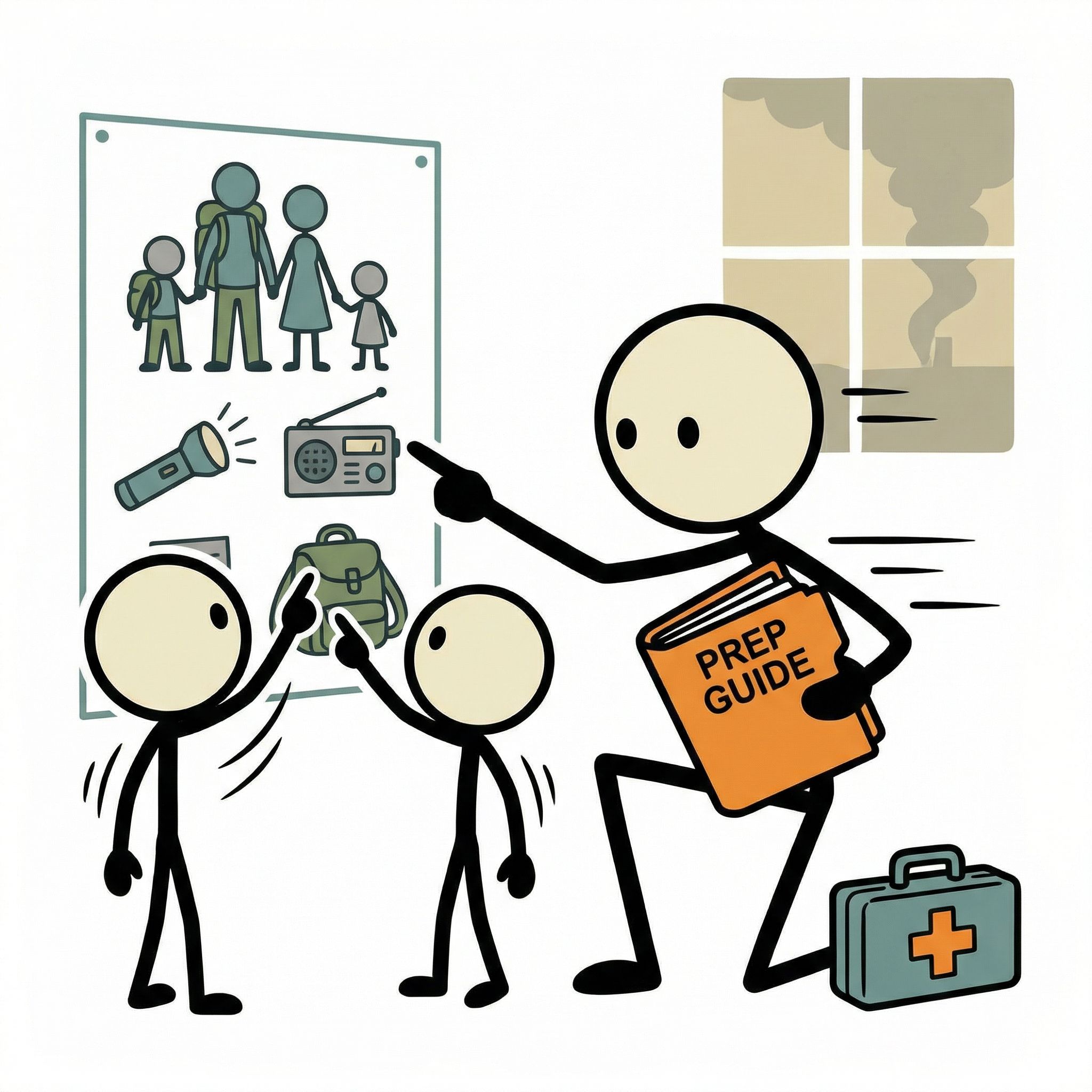
However, shielding them from the conversation does not shield them from the event. Avoidance breeds vulnerability, while education breeds resilience. The challenge lies in striking the delicate balance between preparation and paranoia. How do you prepare a seven-year-old for a natural disaster without giving them nightmares? How do you teach a teenager to shut off a gas valve without making them feel like the weight of the world is on their shoulders?
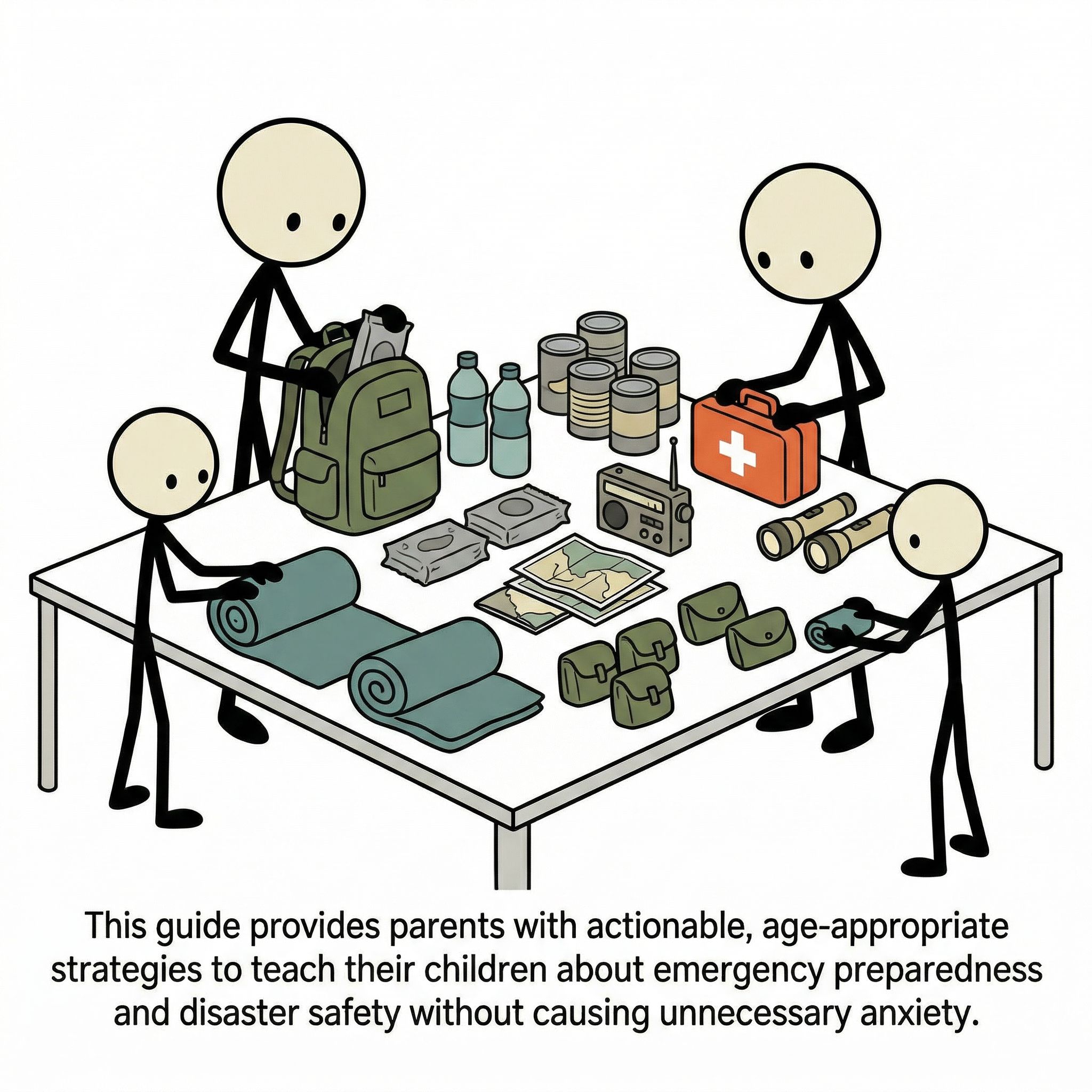
This comprehensive guide provides actionable, developmentally appropriate strategies for talking to kids about disasters. By transforming scary scenarios into empowering family projects, you can equip your children with the life-saving knowledge they need, ensuring that if the unthinkable happens, they won't freeze—they will act.
The Psychology of Preparedness: Why Kids Need to Know
Children are incredibly perceptive. Even if you turn off the evening news, they absorb the stress of their environments. They hear whispers about approaching hurricanes, see the smoke from distant wildfires, and participate in active shooter drills at school. When parents avoid discussing these topics, children are left to fill in the blanks with their imaginations—which are often much worse than reality.
Child emergency preparedness is rooted in the psychological concept of self-efficacy: the belief in one's own ability to succeed in specific situations. When children lack self-efficacy during a crisis, they experience a traumatic loss of control. By introducing safety concepts early and calmly, you transition your child from a helpless bystander to an active participant in their own safety.
The CDC emphasizes that resilience is not an innate trait; it is a learned behavior. When you normalize emergency planning, you strip away the taboo and the terror. You teach your children that while we cannot control the weather or the earth, we have absolute control over how we prepare and respond.
The Golden Rule: Preparedness, Not Paranoia
Before diving into the logistics of go-bag essentials guides and evacuation routes, parents must master their own delivery. Children regulate their emotions by mirroring the adults around them. If you approach family disaster planning with frantic urgency or underlying anxiety, your children will internalize that fear. If you approach it like a routine household chore—akin to changing the oil in the car or replacing smoke detector batteries—they will view it as a normal part of life.
When talking to kids about disasters, adhere to the following communication principles:
- Focus on the Helpers: Borrowing from the timeless wisdom of Fred Rogers, always point out the helpers. Explain that firefighters, police officers, paramedics, and neighbors are all part of a massive team dedicated to keeping them safe.
- Emphasize the Positive Outcome: Frame every drill and conversation around safety, not danger. Instead of saying, "We need to practice this so we don't burn in a fire," say, "We practice our escape route so we can get outside quickly and safely."
- Follow Their Lead: Answer the question they are asking, nothing more. If a five-year-old asks where the rain comes from during a storm, they don't need a lecture on hurricane storm surges. Keep answers honest, brief, and directly related to their inquiry.
- Never Use Fear as a Motivator: Avoid Survival Scenarios scenario storytelling. Fear may force compliance in the short term, but it causes panic and cognitive paralysis during an actual emergency.
Age-Appropriate Disaster Safety: A Developmental Breakdown
A one-size-fits-all approach to preparedness will either overwhelm a toddler or bore a teenager. Age-appropriate disaster safety requires tailoring your vocabulary, expectations, and training methods to your child's cognitive development.
Toddlers and Preschoolers (Ages 3 to 5)
At this age, children cannot grasp complex concepts like natural disasters or long-term consequences. Their world is immediate and concrete. Preparedness for preschoolers should feel exactly like play.
Key Strategies:
- The Game of Hide-and-Seek: Use games to teach them where safe spots are. During a mock "earthquake drill," make a game out of seeing who can drop under the sturdy dining room table the fastest.
- Recognizing the Alarm: The sound of a smoke detector is terrifyingly loud. Warn your child before you test it. Let them press the button so they understand where the noise comes from. Teach them that the loud beep is just the house's way of saying, "Time to go outside!"
- Identifying Helpers: Teach them what emergency responders look like. Explain that firefighters in full turnout gear and masks might look like monsters or aliens, but they are just helpers wearing special armor to stay safe.
- Memorization: Help them memorize their first and last name, and begin working on memorizing a parent's phone number through a catchy song or rhyme.
School-Aged Children (Ages 6 to 11)
Children in elementary school have a growing understanding of cause and effect. They are learning about weather and geography in school, making this the perfect age to introduce the "why" behind your family disaster planning. They thrive on having specific jobs and responsibilities.
Key Strategies:
- The Junior Planner: Give them a clipboard and a piece of paper. Have them draw a map of the house and use a red crayon to draw two ways out of every room. This gives them ownership of the family emergency plan.
- Building the Kit: Involve them in creating their own emergency kits. Let them pick out which non-perishable snacks to include and which comfort item (like a small stuffed animal or book) they want to pack.
- Roleplaying Scenarios: Present "What If" scenarios during dinner or car rides. "What if the fire alarm goes off and there is smoke in the hallway?" Guide them to the correct answer (staying low, feeling the door with the back of their hand).
- Communication Mastery: By this age, children must know their full address, their parents' full names, and at least two emergency contact phone numbers by heart.
Pre-Teens and Teenagers (Ages 12 to 18)
Teenagers are physically capable and cognitively ready to handle complex survival concepts. At this stage, teaching kids survival skills shifts from basic safety to active leadership. Teenagers should be viewed as co-captains in your family's emergency response team.
Key Strategies:
- First Aid Certification: Enroll them in a Red Cross CPR and basic first aid course. Knowing how to stop bleeding, treat a burn, or perform CPR gives teenagers a massive boost in confidence and self-efficacy.
- Utility Management: Teach teenagers where the main water, gas, and electrical shut-offs are located in your home. Show them how to safely use a wrench to turn off the gas valve in the event of an earthquake (emphasizing that they should only do this if they smell gas).
- The Out-of-Town Contact: Explain the logistics of communication networks during a disaster. Teach them why local cellular towers might be jammed and why texting an out-of-state relative is more reliable than calling across town.
- Situational Awareness: Discuss how to identify exits in public spaces like movie theaters or shopping malls. Teach them to trust their gut instincts if a situation feels unsafe.
Building Your Family Disaster Planning Strategy
A plan that lives only in your head is not a plan; it is an intention. To truly protect your family, your protocols must be documented, discussed, and practiced. According to FEMA's Ready.gov campaign, a robust family disaster plan revolves around communication and physical meeting points.
Establishing Meeting Protocols
During a crisis, families are often separated at work, school, or running errands. You must establish concrete meeting locations that every member of the family knows by heart.
- Meeting Spot 1 (Immediate Vicinity): This is for sudden household emergencies like a fire. It should be a safe distance from the home, such as the neighbor's mailbox or a specific tree across the street. Never choose a location that requires crossing a busy street if you have young children.
- Meeting Spot 2 (Neighborhood/Town): If you cannot return home due to an evacuation order or localized disaster, where will you go? This could be a local school, a community center, or a designated relative's house within your town.
- Meeting Spot 3 (Regional Evacuation): If the entire town must evacuate (e.g., due to a hurricane or wildfire), establish a regional meeting point, such as a family friend's home in a neighboring county or state.
Creating a Communications Plan
When local infrastructure fails, panic sets in quickly if parents and children cannot reach each other. Create physical, waterproof emergency contact cards for every child's backpack. These cards should include:
- Parents' cell phone numbers and work numbers.
- The number of a trusted local neighbor.
- The number of an out-of-state relative. (During localized disasters, long-distance lines often remain open while local switches are overloaded).
- Important medical information, such as severe allergies or required medications.
Teach your children that text messages require far less bandwidth than voice calls. A text might slip through a congested network when a phone call will not.
Teaching Kids Survival Skills Without the Scare
Survival skills for children shouldn't conjure images of wilderness foraging or doomsday prepping. Practical, everyday survival skills are about situational awareness, immediate response, and knowing how to summon help.
Skill 1: The 911 Roleplay
Many children know the number 911, but few know what actually happens when they call. The unknown can cause them to freeze. Demystify the process through roleplay.
Sit back-to-back with your child and pretend to be the dispatcher. Walk them through the exact questions they will be asked:
- "911, what is your emergency?" (Teach them to state the problem clearly: "My house is on fire" or "My dad fell and won't wake up.")
- "What is your address?" (Reinforce the importance of knowing their street number and city).
- "Are you safe right now?" (Teach them to prioritize their own safety first).
Crucially, teach them that they should never hang up until the dispatcher tells them it is okay to do so. Explain that the dispatcher is a friend who will stay on the phone to keep them company until the helpers arrive.
Skill 2: Basic First Aid for Little Hands
You don't need to be a teenager to learn basic first aid. Even young children can learn how to apply pressure to a scrape or where the family first aid kit is kept. For school-aged children, download the American Red Cross First Aid app. It features gamified quizzes and simple videos that teach basic wound care, how to treat a bee sting, and how to recognize if someone needs an adult's help immediately.
Skill 3: Situational Awareness
Situational awareness is the foundation of personal safety. Turn it into a habit rather than a chore. When you enter a restaurant, casually ask your child, "Hey, if we had to leave here quickly, where are the doors?" Play the "Observation Game" while walking through a parking lot, asking them to point out moving cars or potential hazards. This trains their brain to subconsciously scan their environment without feeling anxious.
Making it Tangible: Building Go-Bags Together
One of the most effective ways to ease disaster-related anxiety is to give children a sense of physical preparedness. A "Go-Bag" or "Go-Bag Builder" provides a tangible safety net. When children help pack their own bags, they know exactly what resources they have at their disposal.
FEMA recommends that every family member have a kit capable of sustaining them for 72 hours. For children, this kit must balance survival necessities with psychological comfort.
What to Include in a Child's Go-Bag:
- Hydration and Nutrition: Small water pouches (which are lighter than heavy bottles) and high-calorie, kid-friendly snacks like granola bars, fruit leathers, and crackers.
- Light and Warmth: A personal headlamp or small flashlight (with extra batteries) and an emergency Mylar blanket. Darkness is a primary source of fear for children; controlling their own light source is incredibly empowering.
- Hygiene and Safety: A travel-sized toothbrush, toothpaste, wet wipes, and a basic whistle. Teach them that if they are ever trapped or lost, blowing the whistle is much louder and uses less energy than screaming.
- The Psychological Anchor: This is arguably the most important item. A familiar comfort item—a small plush toy, a favorite book, a deck of cards, or a family photo—provides crucial emotional grounding during the chaotic aftermath of a disaster.
Make the packing process a scavenger hunt. Check the bags every six months (coordinating with daylight saving time is a helpful mnemonic) to cycle out expiring food and ensure clothes still fit your growing child.
Talking to Kids About Disasters: Specific Scenarios
Different regions face different threats. Your family disaster planning should prioritize the emergencies most likely to occur in your geographical area. Here is how to approach specific scenarios using age-appropriate disaster safety language.
House Fires
The United States Fire Administration (USFA) notes that fires spread faster today than ever before due to synthetic building materials. Children must understand the absolute urgency of a fire alarm.
- The Rule: "Get out and stay out."
- The Action: Teach them to roll out of bed and stay low to the ground where the air is cleaner. Teach them to feel the back of their bedroom door with the back of their hand; if it is hot, use the secondary exit (usually a window).
- The Drill: Practice your fire escape plan twice a year, at least once at night. Time the drill to see if the family can gather at the meeting spot in under two minutes.
Earthquakes
Earthquakes happen without warning, making the immediate reaction critical. The United States Geological Survey (USGS) strongly advocates for the "Drop, Cover, and Hold On" protocol.
- The Rule: "Drop, Cover, and Hold On."
- The Action: Teach kids to drop to their hands and knees (preventing the earthquake from knocking them down). They should cover their head and neck with one arm, crawl under a sturdy desk or table, and hold onto the table leg with their other hand so it doesn't shift away from them.
- The Conversation: Explain that the earth is made of puzzle pieces that sometimes rub together. It might be loud and shaky, but their job is just to stay under their "turtle shell" (the table) until the shaking stops.
Severe Weather (Tornadoes and Hurricanes)
Unlike earthquakes, severe weather often comes with a warning. The National Oceanic and Atmospheric Administration (NOAA) emphasizes the importance of knowing the difference between a "Watch" (conditions are right, be prepared) and a "Warning" (the event is happening, take action).
- Tornadoes: Teach kids to move to the lowest, most interior room of the house, away from windows. Keep a bicycle helmet in their go-bag to protect their head from flying debris.
- Hurricanes: Because hurricanes involve days of warning, focus the conversation on preparation. Involve kids in securing the yard, filling up water jugs, and gathering flashlights. Explain that the wind will howl and the rain will be loud, but the house is built to protect them.
Answering the Tough Questions
When you start talking to kids about disasters, they will inevitably ask difficult, sometimes heartbreaking questions. Your response dictates whether they feel secure or terrified.
"Will we die?"
Never dismiss their fear with a flippant "No, of course not." Validate their feelings, but pivot to empowerment. Say, "It is very normal to feel scared about that. But that is exactly why we practice our safety plans. Because we know exactly what to do, we are going to be very safe."
"What if you aren't with me?"
This is a primary fear for children regarding school hours. Explain that their teachers have been specially trained to be their helpers when parents aren't there. Remind them of the emergency contact cards in their backpack, assuring them that no matter what, you will always know how to find them.
"What about our pets?"
Children bond deeply with animals. Assure them that pets are part of the family plan. Assign an older child the responsibility of grabbing the dog's leash or the cat's carrier during an evacuation. Knowing the pet is accounted for drastically reduces a child's panic.
Building a Culture of Resilience
Teaching kids survival skills and age-appropriate disaster safety is not a one-time conversation; it is an ongoing dialogue. It is about weaving preparedness into the fabric of your family's daily life. When you check the smoke detectors, have your kids help. When you go camping, teach them how to safely build and extinguish a fire. When a storm rolls in, let them be the ones to turn on the NOAA weather radio.
By transforming emergency preparedness from a source of anxiety into a shared family responsibility, you are giving your children a profound gift. You are replacing the paralyzing fear of the unknown with the quiet confidence of the prepared. Disasters are a reality of the world we live in, but with thoughtful, empowering planning, your children will know exactly how to weather the storm, look for the helpers, and emerge safely on the other side.
Frequently Asked Questions
At what age should I start talking to my kids about emergency preparedness?
You can start as early as preschool (ages 3-4) by teaching them basic concepts like their full name, address, and how to dial 911 in an emergency.
How do I explain natural disasters without scaring my child?
Focus on the facts and the safety plan rather than the danger. Use simple, reassuring language and emphasize that adults are there to keep them safe.
Should children have their own emergency go-bags?
Yes, giving children their own lightweight go-bag with comfort items, a change of clothes, and kid-friendly snacks gives them a sense of control and security.
How often should we practice our family emergency plan?
Practice your family emergency plan and evacuation routes at least twice a year to build muscle memory and reduce panic during an actual event.
What is the best way to limit a child's exposure to disaster news?
Keep news broadcasts off when children are in the room, as repetitive alarming images can increase anxiety. Discuss events with them directly instead.
Sources & Further Reading
- https://www.ready.gov/helping-children-cope
- https://www.fema.gov/emergency-managers/individuals-communities/youth-preparedness
- https://www.redcross.org/get-help/how-to-prepare-for-emergencies/teaching-kids-about-emergency-preparedness.html
- https://www.cdc.gov/childrenindisasters/helping-children-cope.html
- https://www.nctsn.org/what-is-child-trauma/trauma-types/disasters
Parents can also build calmer crisis leadership with the Survival Psychology course, which teaches practical stress control for family emergencies.
Related resource: Scenario Deep Dives Course.
Related resource: Family Emergency Planning Guide.