⚡ Key Facts
- Hurricane-Force Winds: Severe Nor'easters can produce wind gusts exceeding 74 mph, equivalent to a Category 1 hurricane, causing widespread structural damage and coastal flooding (NOAA).
- The Weight of Ice: Just a 1/4 inch of ice accumulation can add up to 500 pounds of weight to a single span of utility lines, while a 1/2 inch can snap thick tree branches and cause catastrophic power grid failures (FEMA).
- Carbon Monoxide Danger: According to the CDC, carbon monoxide poisoning cases spike by over 300% during and immediately after major winter storms, primarily due to the improper indoor use of portable generators and alternative heating sources.
- Hypothermia Thresholds: Medical data from the American Red Cross indicates that hypothermia can set in at temperatures as high as 40°F (4°C) if an individual is wet, damp, or exposed to continuous wind chill.
- Economic and Infrastructure Impact: The National Centers for Environmental Information (NCEI) notes that major Northeast winter storms regularly rank among the costliest natural disasters in the United States, occasionally exceeding $1 billion in localized infrastructure damage.
Imagine the power grid failing at 2:00 AM during a howling January Nor'easter. Outside, the wind screams at 60 miles per hour, ice-laden branches snap like toothpicks across power lines, and the temperature inside your home begins a steady, unforgiving drop toward freezing. For millions of residents from Maine down to the Mid-Atlantic, this is not a hypothetical Survival Scenarios—it is an annual winter reality. Surviving these extreme events requires more than just a trip to the grocery store for bread and milk; it demands a systematic, battle-tested approach to emergency preparedness. This comprehensive guide provides actionable survival strategies and family emergency planning advice for Northeast residents facing severe Nor'easters, destructive ice storms, and prolonged freezing temperatures.
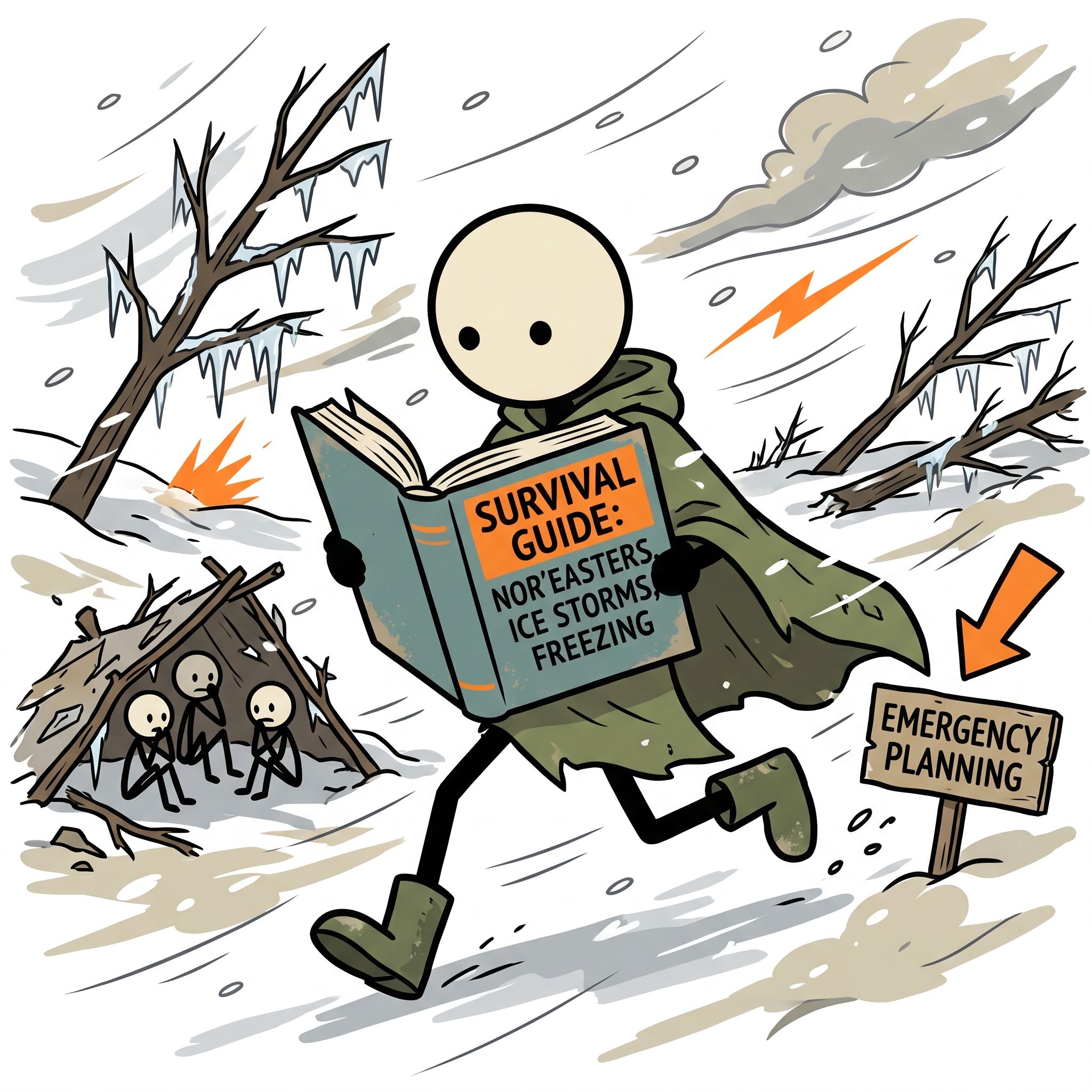
Understanding the Threat: Nor'easters, Ice Storms, and Deep Freezes
To prepare effectively, you must understand the specific meteorological forces at play in the Northeast. The region's unique geography—where warm, moist air from the Gulf Stream collides with freezing Arctic air masses from Canada—creates a breeding ground for highly volatile winter weather systems. Knowing how these storms behave is the first step in formulating a successful defense plan.
The Mechanics of a Nor'easter
A Nor'easter is a macro-scale storm that tracks along the East Coast of the United States and Atlantic Canada. Named after the direction of the prevailing winds (from the northeast), these storms are characterized by rapid intensification, a process meteorologists call "bombogenesis" or a "weather bomb" when central pressure drops at least 24 millibars in 24 hours. According to the National Weather Service (NWS), Nor'easters can produce heavy snowfall, torrential rains, coastal storm surges, and sustained winds that rival tropical cyclones. These conditions can paralyze entire transit corridors and isolate communities for days.
The Insidious Danger of Ice Storms
While heavy snow is visually dramatic, ice storms are often far more destructive to local infrastructure. Ice storms occur when a warm layer of air aloft melts falling snow, which then refreezes upon contact with sub-freezing surfaces on the ground, a phenomenon known as freezing rain. The resulting glaze of ice is incredibly heavy and slick. FEMA warns that even a minor ice storm can cause catastrophic damage to the electrical grid, as the combined weight of ice and wind brings down utility poles, high-voltage transmission lines, and mature trees.
The Polar Vortex and Prolonged Freezes
Occasionally, the polar vortex—a large area of low pressure and cold air surrounding the Earth's poles—weakens and sends pieces of ultra-cold Arctic air southward into the Northeast. When this occurs, temperatures can drop below zero and remain there for a week or longer. Knowing how to survive an extended freeze is critical during these periods, as prolonged sub-freezing temperatures put extreme stress on municipal water systems, residential plumbing, and heating infrastructure, even in the absence of falling precipitation.
Phase 1: Fortifying Your Home Before the First Snowflake
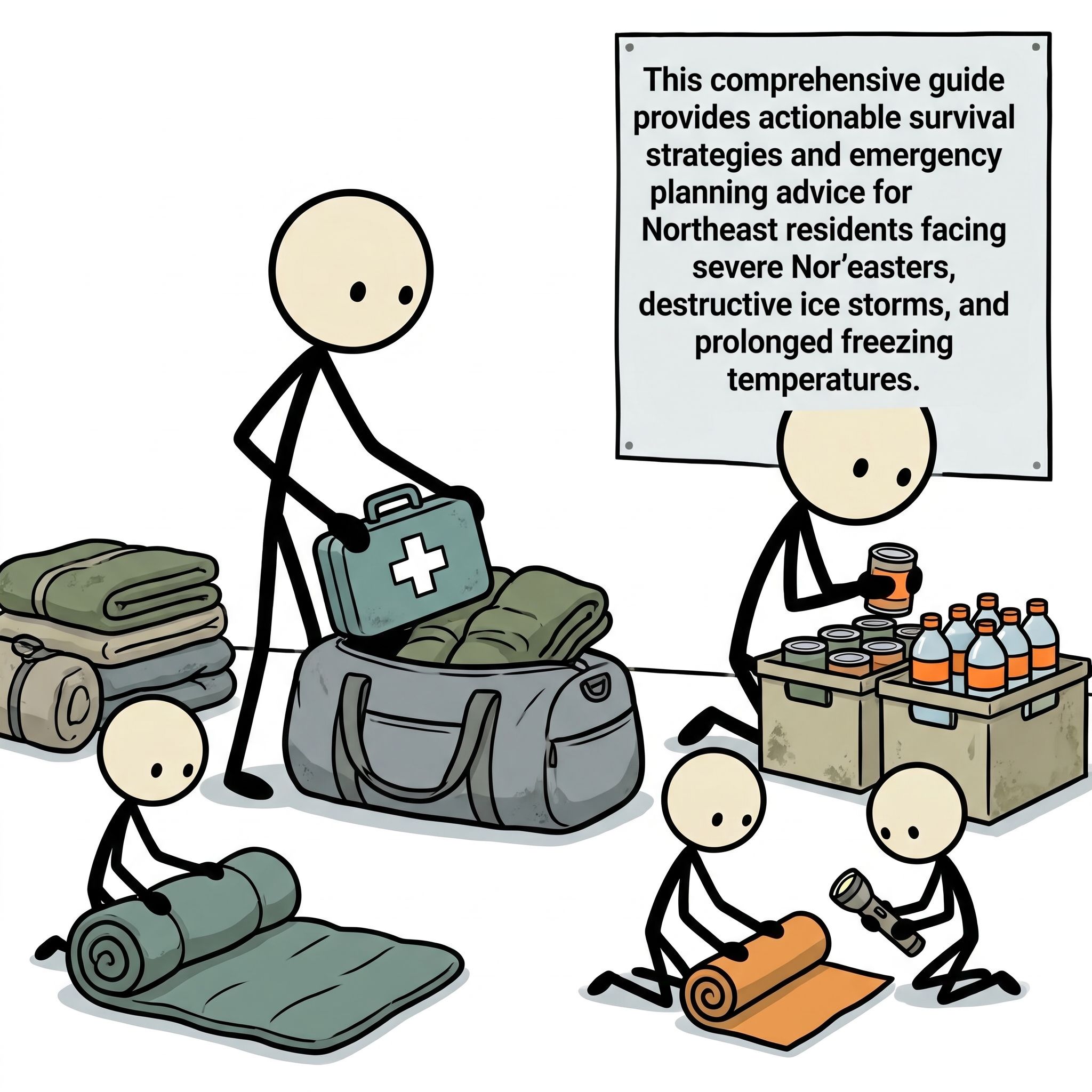
True resilience begins months before winter storm warnings are issued. Active mitigation and structural reinforcement are the most effective ways to prevent property damage and ensure your home remains a safe haven when utility services fail. Implement these structural upgrades during the mild autumn months to secure your living space.
Insulating and Sealing the Thermal Envelope
Your home's thermal envelope is its primary defense against extreme cold. Inspect your attic, crawlspaces, and exterior walls to ensure insulation levels meet or exceed the R-values recommended by the Department of Energy for Northeast climate zones. Seal any air leaks around doors, windows, cable penetrations, and outdoor faucets using high-grade silicone caulk and heavy-duty weatherstripping. For older windows, applying a temporary plastic window insulation kit can reduce heat loss by up to 50%, keeping precious warmth inside during a prolonged power outage.
Plumbing Protection Tactics
Burst pipes are among the most expensive and disruptive consequences of an extended freeze. When water freezes, it expands by approximately 9%, generating internal pressures of up to 40,000 psi inside copper or PEX pipes. To prevent this, wrap all exposed water pipes in unheated areas—such as basements, attics, and crawlspaces—with molded foam pipe insulation or electric heat tape. Locate your home's main water shutoff valve and ensure it is fully operational; if a pipe does burst, turning this valve off immediately can save you tens of thousands of dollars in water damage.
Heating System Maintenance and Redundancy
Never wait for a blizzard to test your heating systems. Have a licensed HVAC technician service your furnace or boiler annually to ensure it is operating at peak efficiency. If you rely on a fireplace or wood-burning stove, have the chimney professionally swept and inspected to prevent dangerous chimney fires. Additionally, secure a secondary, non-electric heating source, such as a direct-vent propane wall heater or an indoor-safe portable propane heater (e.g., a certified "Buddy" heater). Always store fuel for these backup systems in approved containers outside your main living areas.
Phase 2: Assembling Your Winter Power Outage Gear
When a severe Nor'easter strikes, utility restoration times can stretch from hours to weeks. Having a highly organized, easily accessible cache of winter power outage gear is essential for maintaining safety, communication, and basic life support when the grid goes dark. Your emergency kit should be tailored specifically for low-temperature survival.
Core Life-Support Supplies: Water and Food
While standard emergency kits recommend a three-day supply of food and water, Northeast winter storm preparedness demands a minimum of seven to ten days of self-sufficiency. Store at least one gallon of Water Calculator per day, keeping a portion of this supply in food-grade plastic containers that can tolerate slight freezing without cracking. Focus your emergency food storage guide on nutrient-dense, shelf-stable items that require no cooking or water addition, such as:
- Canned meats, fish, stews, and hearty soups
- High-calorie energy bars, nuts, dried fruits, and seeds
- Nut butters and whole-grain crackers
- Ready-to-eat meals (MREs) with self-heating elements
- Infant formula and specialized pet food, if applicable
Emergency Heating and Lighting Systems
When the lights go out, a dark house can quickly become disorienting and hazardous. Avoid using open-flame candles, which present a severe fire risk in drafty winter conditions. Instead, rely on modern LED technology for your primary illumination. Equipping your household with the right gear can make a massive difference in safety and comfort:
| Gear Category | Essential Items | Operational Purpose |
|---|---|---|
| Primary Lighting | LED Headlamps & Lanterns | Hands-free illumination and safe room-wide lighting. |
| Power & Comms | NOAA Weather Radio & Power Banks | Real-time emergency broadcasts and device charging. |
| Auxiliary Heat | Indoor-Safe Propane Heaters | Targeted warmth for a single, sealed room. |
| Safety Monitoring | Battery-Operated CO Detectors | Detecting silent, odorless carbon monoxide gas. |
Cold-Weather Clothing and Sleep Systems
To survive an extended freeze without indoor heating, you must understand the science of personal insulation. Cotton is your enemy in cold weather; it absorbs moisture and loses its insulating properties. Instead, dress in layers of wool, fleece, or synthetic performance fabrics. Your base layer should wick moisture away from your skin, the middle layer should trap body heat, and the outer layer should shield you from drafts. For sleeping, invest in high-quality sleeping bags rated for sub-zero temperatures, and place insulated sleeping pads or thick wool blankets underneath your bedding to prevent the cold floor from leaching your body heat.
Phase 3: Tactical Survival During an Active Outage
Once the storm hits and the power fails, your preparation must transition into active, tactical execution. The decisions you make in the first few hours of a blackout will determine your comfort and safety over the subsequent days. Follow these strategic protocols to manage your resources and protect your household.
Micro-Climate Creation: Conserving Interior Heat
Do not attempt to heat your entire house if the power is out; doing so wastes fuel and is highly inefficient. Instead, select a single, centrally located room to serve as your "warm room." Ideally, this room should have few windows, be insulated from exterior walls, and have a door that can be closed. Seal off all other rooms by hanging heavy blankets, sleeping bags, or plastic sheeting over doorways and archways. Place rolled-up towels at the base of doors to stop drafts. By concentrating your family and pets in this micro-climate, your combined body heat alone can raise the room's temperature by several degrees.
Safe Backup Power and Generator Operations
Portable generators are invaluable tools during a winter power outage, but they can be deadly if operated incorrectly. According to safety guidelines from the Consumer Product Safety Commission (CPSC), you must never operate a generator inside a home, garage, basement, crawlspace, or shed—even if the doors and windows are open. Keep the generator at least 20 feet away from your home, with the engine exhaust directed away from all windows, doors, and vents. Protect the unit from direct snow and rain with a manufacturer-approved generator tent, and always use heavy-duty, outdoor-rated extension cords designed for cold weather.
Safe Food Preservation and Cooking Protocols
Protecting your food supply while maintaining safe cooking practices is a delicate balance during a blackout. Keep your refrigerator and freezer doors closed as much as possible to preserve the cold air. A closed refrigerator will keep food safe for up to 4 hours, while a full, closed freezer can maintain its temperature for up to 48 hours. If the outdoor temperature is below 40°F, you can use the outdoors or an unheated porch as a temporary cooler, but ensure your food is stored in secure, wildlife-proof containers. When cooking, never use outdoor charcoal grills, camp stoves, or propane burners inside the house, as they release lethal levels of carbon monoxide; instead, use a well-ventilated fireplace, a wood stove, or a dedicated outdoor cooking setup.
Mitigating Carbon Monoxide and Fire Hazards
The risk of residential fires and carbon monoxide (CO) poisoning increases dramatically during severe winter storms. Carbon monoxide is an odorless, colorless, and tasteless gas that can cause brain damage or death in minutes. Ensure you have battery-operated CO detectors installed on every level of your home, particularly near sleeping areas, and test them monthly. If a CO alarm sounds, immediately evacuate the building, call 911 from a safe location, and do not re-enter until emergency responders have cleared the structure. Keep a multi-class (Class A-B-C) fire extinguisher in your warm room and ensure everyone in your household knows how to operate it using the P.A.S.S. technique (Pull, Aim, Squeeze, Sweep).
Phase 4: Navigating the Elements: Vehicle Preparedness and Outdoor Safety
While staying indoors is always the safest option during a severe winter storm, circumstances may arise where you must travel or work outdoors. Understanding how to navigate the physical hazards of snow, ice, and extreme cold can prevent life-threatening accidents.
Vehicle Upgrades and Winter Car Kits
If you must travel during a winter storm, your vehicle must be properly equipped to handle hazardous road conditions. Ensure your car has high-quality snow tires or all-weather tires with adequate tread depth. Keep your fuel tank at least half full throughout the winter months to prevent fuel lines from freezing and to ensure you have enough fuel to run the engine for heat if you become stranded. Every vehicle should carry a dedicated winter car kit containing:
- A compact snow shovel and a heavy-duty ice scraper
- Traction aids such as sand, kitty litter, or traction mats
- Jumper cables or a portable lithium-ion jump starter
- Flares, reflective triangles, and a high-visibility vest
- Warm blankets, extra hats and gloves, and hand warmers
- A first aid kit, bottled water, and high-energy snacks
What to Do if Stranded in a Vehicle
If your vehicle becomes stuck or stranded in heavy snow, the most important rule is to stay with your vehicle. Walking in a blizzard is highly dangerous; blowing snow can reduce visibility to near zero, and wind chill can cause rapid disorientation and hypothermia. Run your engine for approximately 10 minutes every hour to keep the cabin warm, but first, ensure that the exhaust pipe is completely clear of snow and ice to prevent deadly carbon monoxide from backing up into the vehicle. Keep a dome light on at night to make your vehicle visible to rescue crews, and crack a window slightly on the downwind side to provide fresh air.
The Physical Toll of Snow Removal
Shoveling heavy, wet snow is an intense cardiovascular workout that places immense strain on the heart. Cold temperatures constrict blood vessels, increasing blood pressure and heart rate, which can trigger cardiac events in vulnerable individuals. To minimize these risks, warm up your muscles before shoveling, use a lightweight, ergonomically designed shovel, and push the snow rather than lifting it whenever possible. Take frequent breaks, stay hydrated, and never attempt to clear heavy snow if you have a history of heart disease or are not accustomed to vigorous physical exercise.
Phase 5: Post-Storm Recovery and Hazard Assessment
The danger of a winter storm does not end when the snow stops falling. The recovery phase presents its own set of unique hazards, from structural damage to hidden electrical threats. Approaching post-storm cleanup with caution and a systematic plan is vital for ensuring your long-term safety.
Thawing Frozen Pipes Safely
If you turn on a faucet and only a trickle of water emerges after a hard freeze, you likely have a frozen pipe. It is critical to thaw the pipe slowly and safely to prevent it from bursting. Keep the faucet open; as you treat the frozen pipe and the ice plug begins to melt, water will flow through the frozen area, helping to melt the remaining ice. Use a hand-held hair dryer, an electric heating pad, or space heaters to apply heat to the frozen section of the pipe. Never use an open flame, such as a blowtorch or propane heater, to thaw a pipe, as this can easily ignite surrounding structural materials or cause the water inside the pipe to boil and explode.
Identifying Structural Damage and Ice Dams
Inspect your home's exterior for structural damage once weather conditions permit. Look for bowing rooflines, cracked rafters, or heavy accumulations of snow on flat roofs, which may require professional snow removal to prevent a collapse. Additionally, watch for the formation of ice dams—thick ridges of solid ice that build up along the eaves of your roof. Ice dams prevent melting snow from draining off the roof, causing water to back up under the shingles and leak into your ceilings and walls. Use a specialized roof rake to safely remove snow from the lower edges of your roof while standing firmly on the ground.
Community Resilience and Checking on Neighbors
True emergency preparedness extends beyond the walls of your own home. After securing your household, check on neighbors, particularly the elderly, disabled, or those living alone. They may be struggling to maintain heat, clear snow, or access essential medical supplies. Sharing resources, assisting with snow removal, and offering a warm space can strengthen community resilience and save lives during a prolonged regional emergency.
An Empowered Path Through the Winter Elements
Surviving a severe Northeast winter storm is not a matter of luck; it is the direct result of methodical planning, proper gear acquisition, and calm, tactical execution. By understanding the unique mechanics of Nor'easters and ice storms, fortifying your home's infrastructure, assembling a comprehensive winter power outage kit, and executing safe survival strategies during a freeze, you can transform a potentially life-threatening emergency into a manageable inconvenience. Winter will always bring its worst to the Northeast, but with the right preparation, you can face the cold with confidence, self-reliance, and peace of mind.
Frequently Asked Questions
What is the difference between a winter storm watch and a winter storm warning?
A winter storm watch indicates that severe winter weather is possible within 24 to 48 hours. A winter storm warning means severe winter conditions are imminent or occurring, and you should take immediate protective action.
How do I prevent water pipes from freezing and bursting during an extended freeze?
Keep your thermostat set to a consistent temperature day and night, open cabinet doors beneath sinks to allow warm air to circulate, and let faucets drip slowly to keep water moving through vulnerable pipes.
What are the essential items for a vehicle winter emergency kit?
Your vehicle kit should include blankets, a shovel, windshield scraper, jumper cables, flashlight, first aid kit, non-perishable snacks, water, and sand or cat litter for tire traction.
How can I safely operate a portable generator if the power goes out?
Only operate generators outdoors, positioned at least 20 feet away from windows, doors, and vents to prevent carbon monoxide poisoning. Never run a generator inside a home, garage, or basement.
What is the safest way to heat my home if I lose electricity?
Use a wood-burning fireplace or stove if properly vented. Never use a gas oven, range, outdoor grill, or camp stove indoors for heating, as they create extreme carbon monoxide and fire hazards.