⚡ Key Facts
- According to the National Oceanic and Atmospheric Administration (NOAA), severe weather events causing prolonged power outages have doubled over the past two decades.
- The Centers for Disease Control and Prevention (CDC) reports that carbon monoxide poisoning spikes significantly during winter power outages due to the improper indoor use of outdoor cooking equipment.
- FEMA recommends households maintain at least a three-day supply of non-perishable food, but emphasizes that access to hot meals drastically improves morale and helps maintain core body temperature during winter crises.
- The American Red Cross advises that every comprehensive emergency kit should include manual can openers and alternative, fuel-efficient cooking methods that do not rely on the municipal power grid.
Imagine a severe winter storm howling outside, taking the municipal power grid down with it. The lights go out, the electric stove becomes useless, and the temperature inside your home slowly begins to drop. While having a stockpile of protein bars and crackers is a baseline necessity for survival, the psychological and physiological benefits of a hot meal cannot be overstated. A warm bowl of soup or a hot cup of coffee can stabilize core body temperatures, provide a profound sense of normalcy, and keep your family’s morale high during a stressful event. See the emergency preparedness guide.
Unfortunately, many households are entirely dependent on electricity or municipal natural gas lines to prepare their food. When these systems fail, standard meal preparation grinds to a halt. This makes mastering off-grid cooking an absolute necessity for any serious preparedness plan. Transitioning from a modern kitchen to emergency cooking methods requires specific knowledge, the right gear, and a strict adherence to safety protocols. See the food storage guide.
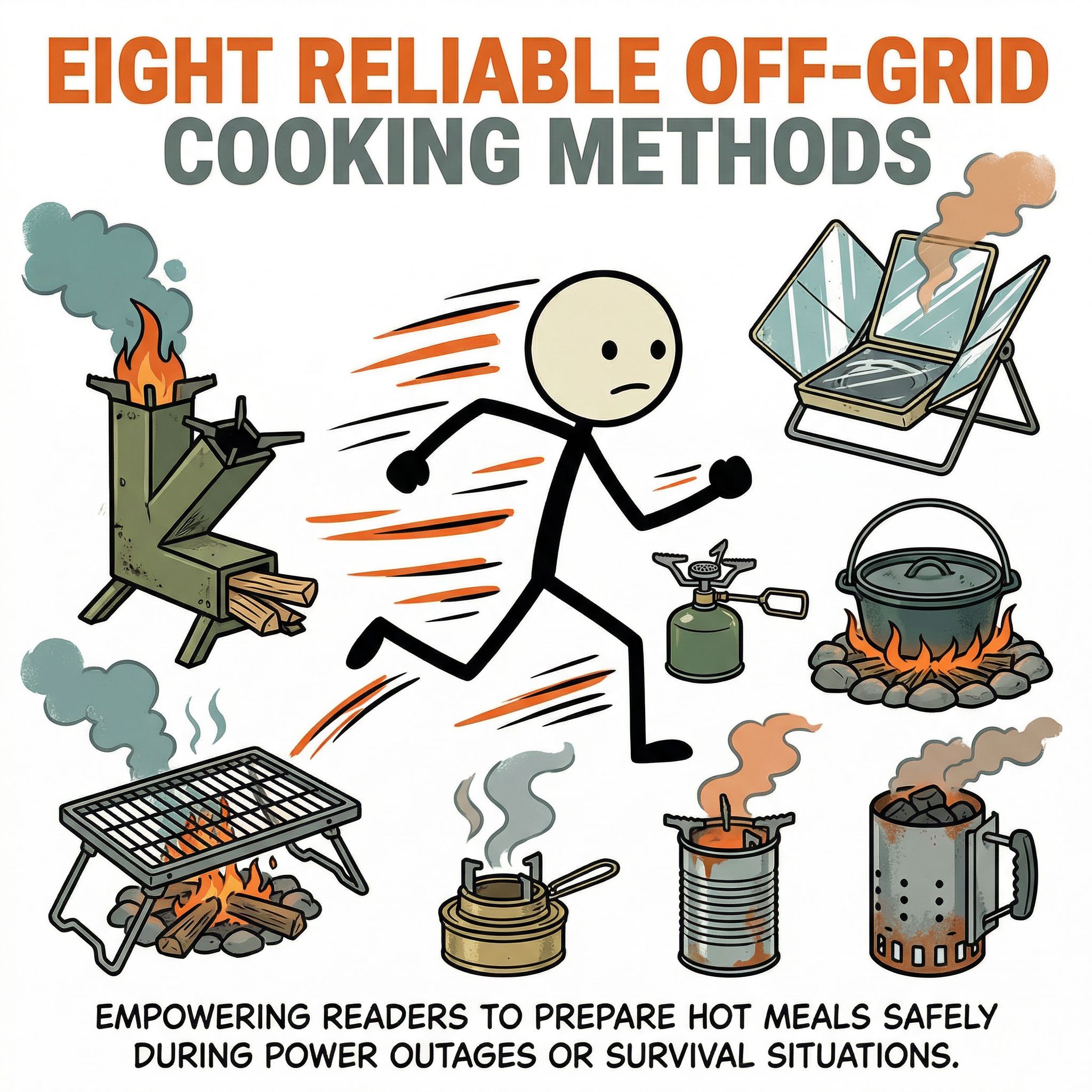
This comprehensive guide explores eight reliable methods for cooking without electricity. By understanding the mechanics, fuel requirements, and safety considerations of each approach, you will be fully empowered to execute grid-down food prep safely and efficiently. Whether you are facing a localized blackout or a prolonged regional emergency, these proven strategies will ensure your family remains fed, warm, and resilient. See the water calculator.
The Critical Importance of Safety and Ventilation
Before examining specific survival cooking gear, we must address the most critical aspect of emergency food preparation: safety. During a crisis, the desire for a hot meal can sometimes overshadow basic safety protocols, leading to tragic outcomes. The CDC consistently warns that carbon monoxide (CO) poisoning is a leading cause of injury and death following severe weather events and power outages. See the supply calculator.
Carbon monoxide is an odorless, colorless gas produced by the incomplete combustion of fuels like propane, charcoal, wood, and butane. When these fuels are burned in enclosed spaces—such as a kitchen, garage, or tent—CO levels can rapidly reach lethal concentrations. Never use outdoor grills, camp stoves, or open flames indoors unless the equipment is explicitly rated for indoor use and you have established adequate cross-ventilation. See the disaster scenarios.
Additionally, fire hazards are exponentially higher when cooking without electricity. Without the controlled environment of a modern kitchen, errant sparks or knocked-over stoves can quickly ignite nearby combustibles. Always operate emergency stoves on flat, stable, and non-flammable surfaces. Keep a fire extinguisher rated for grease and electrical fires (Class B and C) within arm's reach at all times. See the Protocol Survival plans.
Method 1: Portable Propane and Butane Camp Stoves
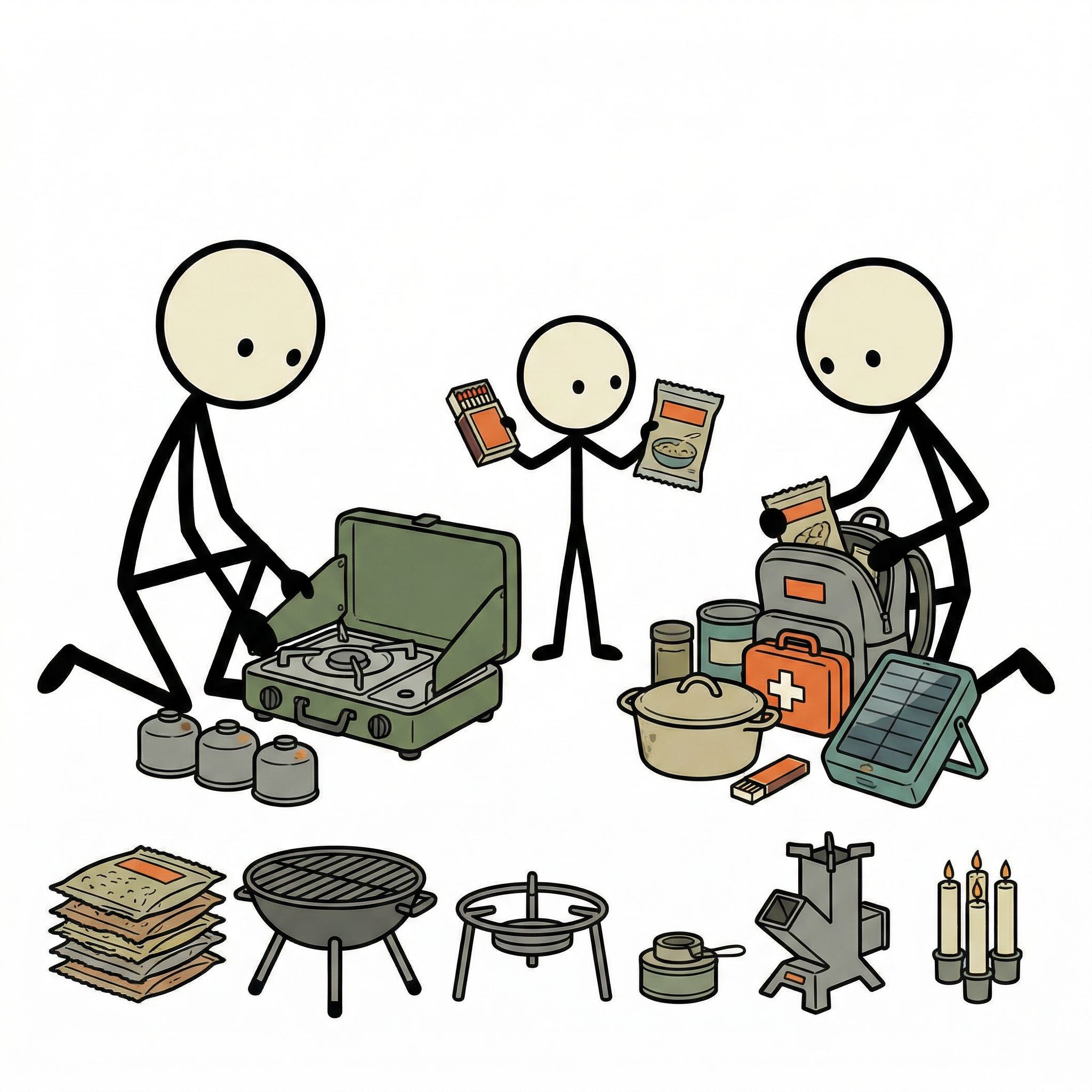
Portable gas stoves are arguably the most popular and accessible tools for off-grid cooking. Commonly used by campers and tailgaters, these stoves run on pressurized canisters of propane or butane. They are incredibly user-friendly, offering instant ignition and precise temperature control, much like your standard kitchen stovetop.
Propane stoves, such as the classic two-burner camping models, are rugged and perform exceptionally well in cold weather. Propane has an indefinite shelf life if the canisters are stored properly and kept free of rust. This makes it an ideal fuel for long-term grid-down food prep. A standard 1-pound green propane cylinder will typically provide up to two hours of cooking time on a single burner set to high.
Butane stoves, often found in single-burner, low-profile designs, are highly portable and excellent for boiling water quickly. However, butane does not vaporize well in freezing temperatures, making it less reliable for outdoor winter emergencies. Both propane and butane stoves produce carbon monoxide and must be used outdoors or in highly ventilated, semi-open spaces like a well-ventilated patio.
Method 2: Solar Ovens and Cookers
When it comes to cooking without electricity and without the need to stockpile fuel, solar cookers are unmatched. These devices harness the sun's ultraviolet rays, converting them into infrared heat to cook food. Because they require zero combustible fuel, solar ovens are incredibly safe, produce no carbon monoxide, and have zero ongoing operational costs.
There are several types of solar cookers, but box ovens and parabolic cookers are the most common. Box ovens use reflective panels to direct sunlight into an insulated chamber, easily reaching temperatures between 250°F and 350°F. They work much like a traditional slow cooker, making them perfect for baking bread, roasting meats, or simmering stews over several hours.
Parabolic cookers use a curved, dish-like surface to focus sunlight onto a single focal point. These can generate intense heat—often exceeding 500°F—allowing you to fry eggs or boil water in minutes. The primary limitation of solar cooking is its reliance on the weather. They require clear, sunny skies and are ineffective at night or during heavy overcast conditions, meaning they should be part of a broader, multi-method strategy.
Method 3: Biomass Rocket Stoves
If you find yourself without stored fuel or clear skies, a biomass rocket stove is an exceptional piece of survival cooking gear. Rocket stoves feature an ingenious "J" or "L" shaped combustion chamber. This design creates a powerful draft that draws oxygen into the fire, resulting in a highly efficient, intensely hot, and nearly smokeless burn.
The greatest advantage of a rocket stove is its fuel source. You do not need to stockpile propane or charcoal; instead, you can fuel it with twigs, pinecones, dry leaves, and small branches gathered from your yard. Because the combustion is so efficient, you can boil a quart of water using just a handful of dry twigs. This makes it a highly sustainable option for long-term off-grid cooking.
When using a rocket stove, constant attention is required. The small fuel chamber means you must continuously feed twigs into the stove to maintain the heat. While they are incredibly efficient, they are strictly for outdoor use. Many commercially available rocket stoves are compact, lightweight, and easily fit into a Go-Bag Builder or emergency vehicle kit.
Method 4: Dutch Ovens and Charcoal Grills
For heavy-duty, high-capacity grid-down food prep, cast iron Dutch ovens paired with charcoal briquettes offer incredible versatility. A cast iron Dutch oven with a flanged lid and legs can be used to bake, roast, fry, and boil. It is the ultimate survival cooking vessel, capable of outlasting generations if properly seasoned and maintained.
Charcoal provides a consistent, measurable heat source. Experienced outdoor cooks use a simple formula to achieve specific baking temperatures: taking the diameter of the Dutch oven (e.g., 12 inches), placing that number minus three in coals underneath (9 coals), and that number plus three on top (15 coals) yields an internal temperature of roughly 350°F. This precise control allows you to bake bread or casseroles just as you would in an electric oven.
However, charcoal is strictly an outdoor fuel. The United States Geological Survey (USGS) and local fire departments routinely warn that burning charcoal produces massive amounts of lethal carbon monoxide. Furthermore, charcoal is bulky to store and must be kept absolutely dry. If briquettes absorb ambient moisture, they will crumble and become incredibly difficult to light.
Method 5: Alcohol Stoves
Alcohol stoves have long been a staple in the backpacking community, but they are equally valuable for emergency preparedness. These small, lightweight stoves burn denatured alcohol, marine stove fuel, or even high-proof grain alcohol. They are mechanically simple, usually consisting of a small metal cup with jets that vaporize the alcohol as it heats up.
One of the main benefits of alcohol stoves is how cleanly they burn. Denatured alcohol produces very little soot, keeping your survival cooking gear clean and easy to maintain. The fuel is also easy to store, relatively inexpensive, and does not carry the same explosive risks as pressurized gas canisters. They are excellent for boiling water for freeze-dried meals or making coffee.
The downside to alcohol stoves is their heat output. They do not produce as many BTUs as propane or white gas, meaning it takes longer to boil water, especially in cold or windy conditions. The flame is also nearly invisible in daylight, which poses a unique burn hazard. Always use a windscreen to maximize efficiency and exercise extreme caution when refilling the stove.
Method 6: Canned Heat and Folding Stoves
Canned heat, widely recognized by the brand name Sterno, is a gelled alcohol fuel commonly used in the catering industry for chafing dishes. In a Survival Scenarios, canned heat is one of the few emergency cooking methods that can be used safely indoors, provided there is adequate ventilation. The gel formulation prevents spills, making it a very stable and safe fuel source.
To maximize the effectiveness of canned heat, it is best paired with a folding metal stove. These inexpensive, collapsible stoves elevate your pot to the optimal height above the flame and provide a stable cooking surface. Because canned heat has a relatively low heat output, it is best utilized for heating pre-cooked canned foods, making soup, or slowly bringing small amounts of water to a boil.
While not suitable for cooking raw meats or preparing large family meals from scratch, canned heat is an essential component of a short-term emergency kit. The cans have an impressive shelf life, are easy to stack and store, and provide a reliable backup when outdoor weather conditions are too severe to use other methods.
Method 7: Thermal Cookers (Retained Heat Cooking)
Thermal cooking is a highly efficient, often overlooked method for grid-down food prep. A thermal cooker works on the principle of retained heat, functioning much like a high-tech vacuum thermos. It consists of an inner stainless steel cooking pot and an outer, heavily insulated container.
To use a thermal cooker, you simply place your ingredients (such as rice, beans, stews, or soups) into the inner pot and bring it to a rolling boil on a propane, rocket, or alcohol stove. Once the food boils for a few minutes, you remove the inner pot from the heat source and immediately place it into the insulated outer container. The trapped thermal energy continues to cook the food over the next several hours without requiring any additional fuel.
This method saves an enormous amount of fuel, making it invaluable during prolonged power outages where resources are scarce. It also frees you from having to actively monitor a stove. You can start a meal in the morning, seal it in the thermal cooker, and have a piping hot, perfectly cooked dinner ready by evening. It is the off-grid equivalent of a slow cooker.
Method 8: Open Fire and Campfire Cooking
When all modern conveniences fail, humanity’s oldest cooking method remains highly effective. Cooking over an open wood fire requires practice, patience, and a solid understanding of fire management. A common mistake is attempting to cook directly over roaring, leaping flames, which will quickly scorch the outside of your food while leaving the inside raw.
The secret to successful campfire cooking is establishing a strong bed of glowing hardwood coals. Hardwoods like oak, hickory, and maple burn slower and hotter than softwoods like pine, producing long-lasting coals ideal for cooking. By moving coals to one side of your fire pit, you can create distinct temperature zones—a hot zone for boiling and searing, and a cooler zone for simmering.
If you are cooking over an open fire, having the right survival cooking gear is essential. A heavy-duty steel grill grate, a cast iron skillet, and a tripod for hanging pots will make the process significantly easier. Always ensure your fire is built in a safe, cleared area, away from overhanging branches, and have a bucket of dirt or water nearby to extinguish the flames completely when finished.
Integrating Water Purification into Your Cooking Routine
During a severe disaster, the power grid failure is often accompanied by disruptions to the municipal Water Calculator. Boil water advisories are frequently issued by local authorities following hurricanes, floods, and winter storms. Therefore, your emergency cooking methods must seamlessly double as your water purification system.
The CDC states that bringing water to a rolling boil for one full minute (or three minutes at elevations above 6,500 feet) will kill all disease-causing pathogens, including bacteria, viruses, and protozoa. When evaluating your off-grid cooking setup, ensure you have a vessel large enough to boil substantial amounts of water efficiently.
Methods that produce high, rapid heat—such as propane stoves and rocket stoves—are best suited for water purification. Conversely, solar ovens and canned heat may struggle to achieve a rapid, rolling boil in a timely manner. Always prioritize fuel conservation when boiling water, utilizing lids to trap heat and reduce the time required to reach a boil.
Essential Survival Cooking Gear and Accessories
Having the right heat source is only half the battle; possessing the appropriate cookware and accessories is equally important for successful cooking without electricity. Modern kitchenware, particularly thin aluminum pots or pans with Teflon coatings, are often ill-suited for the intense, uneven heat of campfires or rocket stoves. Teflon can degrade and release toxic fumes if overheated over an uncontrolled flame.
Cast iron and carbon steel are the gold standards for survival cooking gear. They distribute heat evenly, can withstand direct contact with open flames and coals, and are virtually indestructible. Enameled cast iron is also excellent, though it requires slightly more care to prevent chipping. In addition to durable pots and pans, ensure your emergency kitchen includes heavy-duty silicone or leather heat-resistant gloves, as pot handles will become dangerously hot.
Other vital tools include manual can openers, long-handled metal tongs, a digital meat thermometer to ensure safe internal cooking temperatures, and a French press or percolator for making coffee. Do not forget sanitation supplies; stockpiling heavy-duty paper plates and biodegradable utensils can save precious purified water that would otherwise be wasted on washing dishes.
Fuel Storage Guidelines and Shelf Life
The reliability of your emergency cooking methods is directly tied to the quality and quantity of your stored fuel. Different fuels have drastically different shelf lives and storage requirements. Proper storage is not just a matter of efficiency; it is a critical safety issue governed by local fire codes and safety organizations like the National Fire Protection Association (NFPA).
Propane and butane canisters should be stored outdoors in a well-ventilated, shaded area, such as a detached shed. They must never be stored in living spaces, basements, or attached garages, as a leaking valve can allow explosive gas to pool in enclosed areas. Propane has an indefinite shelf life, making it an excellent long-term investment.
Charcoal and wood must be kept elevated off the ground and protected from moisture. Store charcoal in airtight, watertight containers to prevent it from absorbing ambient humidity. Liquid fuels, such as denatured alcohol, should be kept in their original, clearly labeled containers, stored in a cool, dark place away from any potential ignition sources. Always rotate your fuel supplies, using the oldest stock first to ensure maximum efficacy during a crisis.
Building Your Grid-Down Pantry Strategy
Your off-grid cooking methods must align perfectly with the types of food you have stockpiled. A highly efficient stove is of little use if your pantry is full of foods that require hours of boiling, thereby draining your fuel reserves. Grid-down food prep requires a strategic approach to emergency food storage guide.
Focus on stockpiling foods that cook quickly or only require the addition of boiling water. Freeze-dried meals, instant rice, couscous, and quick oats are excellent choices because they require minimal fuel to prepare. Canned goods are also invaluable; they are already fully cooked during the canning process and only require gentle heating before consumption.
If you do store bulk dry goods that require long cooking times—such as dried pinto beans or whole grain wheat—you must ensure you have a low-resource way to cook them. This is where combining methods becomes crucial. You might use a rocket stove to bring a pot of soaked beans to a boil, and then transfer that pot into a thermal cooker to finish the process without burning through your wood or propane supply.
Empowering Your Household for the Unexpected
Mastering off-grid cooking is one of the most practical, empowering steps you can take in your preparedness journey. It transforms a frightening power outage from a potential crisis into a manageable inconvenience. By diversifying your emergency cooking methods—pairing the rapid convenience of a propane stove with the sustainable longevity of a solar oven or rocket stove—you build a resilient system capable of handling any scenario.
Do not wait until the grid goes down to test your survival cooking gear. Practice using your solar cooker on a sunny weekend, teach your family how to safely light the propane stove, and try baking a loaf of bread in a Dutch oven over charcoal. Familiarity breeds confidence. By taking the time to learn and practice these eight reliable methods today, you ensure that no matter what the weather or the power grid does, you will always be able to provide a warm, comforting, and safe meal for your family.
Frequently Asked Questions
Is it safe to use a camp stove or charcoal grill indoors?
No. Camp stoves, charcoal grills, and gas generators produce odorless carbon monoxide gas, which can be deadly if used inside a home, garage, or enclosed space.
What is the safest off-grid cooking method for indoor use?
Canned heat (like Sterno) and specific indoor-rated butane stoves are generally safe for temporary indoor emergency cooking, provided there is adequate ventilation.
How does a solar oven work?
A solar oven uses reflective materials to concentrate sunlight into an enclosed chamber, converting solar energy into heat to cook food without requiring any combustible fuel.
Can I cook over a backyard fire pit during a power outage?
Yes, provided you follow local fire regulations, clear the area of flammable debris, and keep a fire extinguisher or large water source nearby.
How long can I store emergency fuel canisters like propane or butane?
Propane and butane canisters have a virtually indefinite shelf life if stored properly in a dry, well-ventilated area away from extreme heat, moisture, and direct sunlight.