⚡ Key Facts
- Heightened Vulnerability: The Centers for Disease Control and Prevention (CDC) classifies pregnant women as a highly vulnerable population during disasters due to compromised immune systems and increased physiological demands.
- Hydration Imperative: While FEMA recommends one gallon of water per person per day, pregnant women require a minimum of 1.5 to 2 gallons daily to maintain increased blood volume and amniotic fluid levels.
- Heat Risks: According to the American College of Obstetricians and Gynecologists (ACOG), prolonged exposure to extreme heat during pregnancy significantly increases the risk of dehydration, preterm labor, and low birth weight.
- Preparedness Gap: Red Cross surveys indicate that fewer than 20% of expectant mothers have a contingency plan for giving birth outside of a hospital setting during a widespread emergency.
- Medical Continuity: Disasters frequently disrupt local healthcare infrastructure; maintaining physical copies of prenatal records can prevent life-threatening medication errors or delayed care during evacuations.
Imagine a Category 4 hurricane bearing down on your coastal town, or a sudden, wind-whipped wildfire triggering immediate evacuation orders in your neighborhood. Now, imagine facing that chaotic, high-stress scenario while eight months pregnant. Disasters do not wait for your due date, and the standard advice of simply "grabbing your go-bag essentials guide and leaving" becomes infinitely more complex when you are carrying a child. The physical, emotional, and logistical demands of pregnancy require an entirely specialized approach to survival and safety.
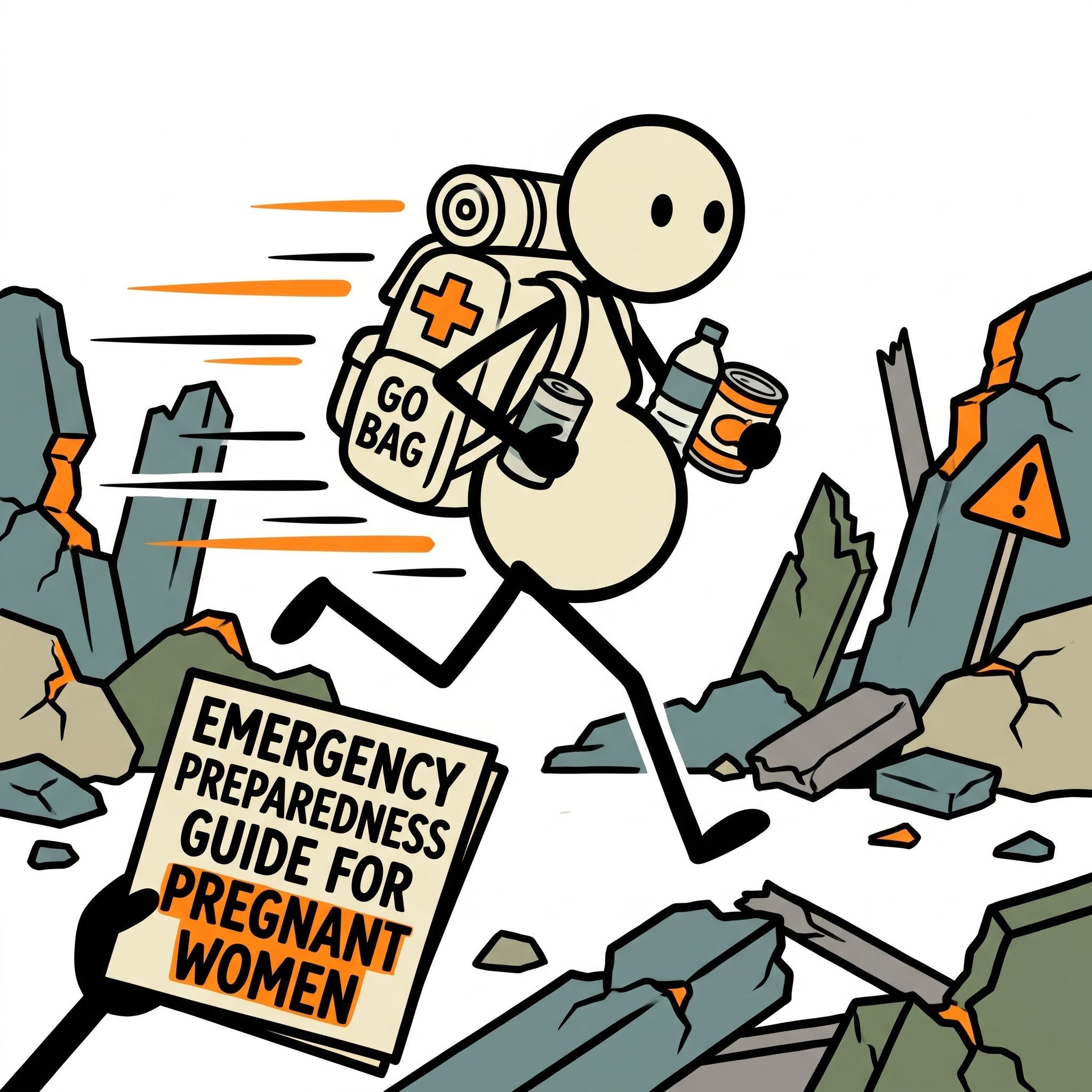
When you are expecting, you are no longer just preparing for yourself. You are actively sustaining another life, which means your baseline needs for water, nutrition, temperature regulation, and medical care are drastically elevated. Unfortunately, standard disaster protocols rarely address the unique physiological changes that occur over the course of nine months. A comprehensive approach to pregnancy emergency preparedness is not about giving into fear; it is about taking control. By anticipating the unique challenges of your changing body, you can build a resilient safety net that protects both you and your baby. See 72-hour emergency kit guide for a deeper checklist.
This guide provides an authoritative, step-by-step roadmap to prepping while pregnant. From navigating trimester-specific mobility issues to building an emergency birth plan and transforming your standard hospital bag into a fully functional survival kit, this is your blueprint for empowering yourself and your growing family against the unexpected. See family emergency plan template for a deeper checklist.
The Foundation of Prepping While Pregnant
Pregnancy is essentially an endurance event. Your body is working overtime, increasing its blood volume by up to 50%, elevating your resting heart rate, and shifting your center of gravity. These physiological changes directly impact how you respond to physical stress, environmental hazards, and sudden evacuations. A robust pregnant women disaster plan must account for these biological realities. See water storage calculator for a deeper checklist.
First and foremost, your baseline requirements for survival are altered. The Federal Emergency Management Agency (FEMA) standard of one gallon of water per person, per day is insufficient for an expectant mother. Dehydration in pregnancy can lead to decreased amniotic fluid, Braxton Hicks contractions, and even trigger premature labor. You must plan for at least 1.5 to 2 Water Calculator daily, accounting for drinking, hygiene, and the potential need to mix infant formula if you deliver during the crisis.
Furthermore, your caloric needs increase, particularly in the second and third trimesters. Standard emergency rations, which are often heavily processed and loaded with sodium, can exacerbate pregnancy-induced hypertension or swelling. Your emergency emergency food storage guide should focus on nutrient-dense, low-sodium options like unsalted nuts, freeze-dried fruits, protein pouches, and whole-grain crackers. Understanding these foundational shifts is the first step in adapting your survival strategy.
Trimester-Specific Evacuation and Survival Considerations
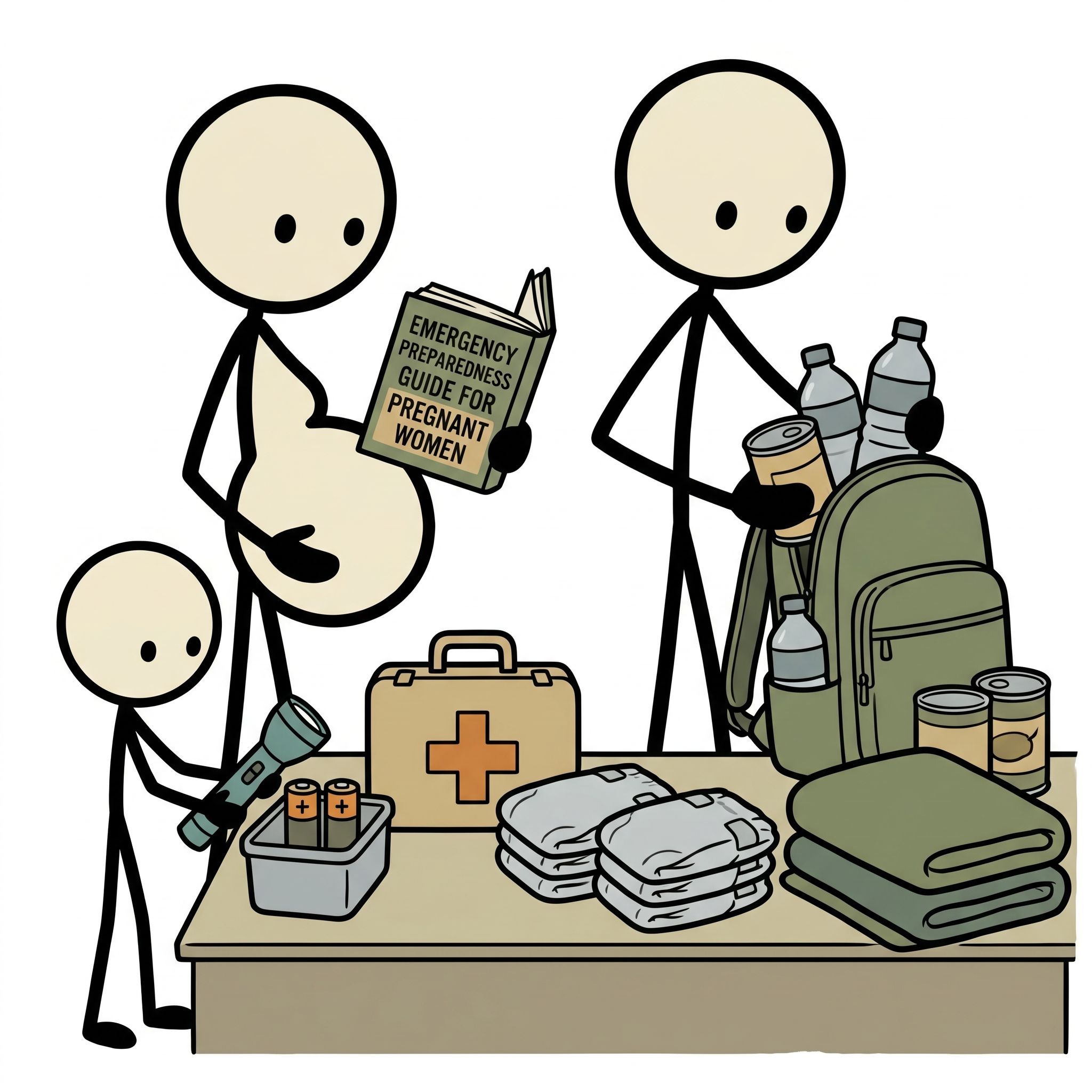
A disaster plan that works at eight weeks pregnant will likely fail at thirty-eight weeks. Your body’s capabilities, limitations, and medical needs shift dramatically as your baby grows. Tailoring your pregnancy emergency preparedness strategy to your specific trimester ensures you are never caught off guard by your own physical limitations. See power outage response scenario for a deeper checklist.
The First Trimester: Managing Nausea and Fatigue
The first trimester is often characterized by extreme fatigue, hormonal fluctuations, and debilitating morning sickness. During a disaster, the stress and adrenaline can exacerbate these symptoms. If you are forced to evacuate or shelter in place without power, managing nausea becomes a critical survival priority, as severe vomiting can lead to rapid, dangerous dehydration. See preparedness pricing plans for a deeper checklist.
Your emergency kit during this phase must include anti-nausea supplies. Stock up on ginger candies, vitamin B6 supplements, electrolyte powders to mix into your water, and any prescription antiemetics provided by your doctor. Because fatigue is so profound during these early weeks, your family emergency plan should prioritize leaving early. Do not wait for mandatory evacuation orders; the physical toll of sitting in gridlocked traffic or scrambling at the last minute is a risk you cannot afford.
The Second Trimester: Mobility and Nutrition
Often referred to as the "golden trimester," the second trimester usually brings a return of energy and a decrease in nausea. However, this is also when your center of gravity begins to shift noticeably, and your caloric needs increase to support rapid fetal growth. Your ligaments loosen due to the hormone relaxin, making you more susceptible to sprains and falls—a serious hazard when navigating debris-filled streets or uneven terrain in the dark.
During this phase, your preparedness focus should shift to physical support and nutrition. Ensure your go-bag includes a high-quality maternity support belt to ease back pain during long periods of standing or walking. Pack sturdy, slip-resistant footwear that accommodates swelling feet. Additionally, increase the amount of high-protein, iron-rich snacks in your emergency kit to prevent anemia and keep your energy levels stable during high-stress situations.
The Third Trimester: Imminent Labor and Physical Limitations
By the third trimester, your mobility is significantly compromised, your lung capacity is reduced as the baby presses against your diaphragm, and the possibility of going into labor is a daily reality. The sheer physical exhaustion of carrying a full-term baby makes rapid evacuation incredibly difficult.
If a disaster strikes late in your pregnancy, early evacuation is not just recommended; it is mandatory. Sheltering in place without power or running water is highly dangerous when you are weeks away from delivery. Your emergency supplies must now include postpartum recovery items, adult incontinence underwear (useful for when your water breaks or for postpartum bleeding), and a complete emergency birth kit. You must also plan for comfortable sleeping arrangements; a standard thin camping mat will not suffice. Pack a thick, self-inflating mattress pad and a supportive pregnancy pillow to ensure you can actually rest if forced into a community shelter.
Prenatal Care Continuity During a Disaster
One of the most overlooked aspects of prenatal emergency prep is the continuity of your medical care. When a hurricane, earthquake, or wildfire devastates a region, local clinics may close, hospitals may run on backup generators with limited staff, and cellular networks may go down. If you are forced to evacuate to a different city or state, the new medical professionals treating you will have zero knowledge of your pregnancy history.
Building a Comprehensive Medical Binder
Do not rely on digital patient portals. If the power grid fails, you will not be able to pull up your latest ultrasound on your smartphone. You must create a physical, waterproof medical binder that travels with you everywhere. According to ACOG guidelines, having immediate access to your medical history can prevent catastrophic errors in emergency triage.
Your medical binder should include:
- Proof of Identity and Insurance: Copies of your ID, health insurance cards, and emergency contact numbers.
- Complete Prenatal Records: Ask your OB-GYN or midwife for a printed copy of your chart at every single appointment. This should include your estimated due date, parity (previous births), and baseline blood pressure readings.
- Lab Results: Crucial documents include your blood type and Rh factor, Group B Strep (GBS) status, glucose screening results, and recent iron levels.
- Ultrasound Reports: Copies of your 20-week anatomy scan and any subsequent growth scans, noting the position of the placenta (e.g., ensuring you do not have placenta previa, which requires a C-section).
- Care Provider Contact Info: Direct phone numbers for your clinic, your doctor’s answering service, and the labor and delivery triage desk at your planned hospital.
Identifying Alternative Care Facilities
If your primary hospital is damaged or inaccessible, where will you go? As part of your pregnant women disaster plan, map out at least three alternative hospitals with labor and delivery wards within a 50- to 100-mile radius. Print out physical maps with highlighted routes, as GPS navigation may fail if cell towers are destroyed. If you are planning a home birth, discuss a disaster contingency plan with your midwife, including a designated meetup location if your home becomes unsafe.
Medication and Supplement Backup Strategies
Supply chain disruptions are a common consequence of large-scale disasters. Pharmacies may be looted, flooded, or simply unable to receive deliveries. For a pregnant woman, a disruption in essential supplements or prescription medications can have immediate, severe consequences for fetal development and maternal health.
Essential Vitamins and OTC Medications
At a minimum, you should maintain a 30- to 60-day backup supply of your prenatal vitamins. Folic acid, iron, and calcium are critical for your baby's neural and skeletal development, and missing these for weeks on end is not an option. Keep these stored in a cool, dark place inside your emergency kit.
Additionally, stock up on pregnancy-safe over-the-counter (OTC) medications. Standard disaster kits often contain ibuprofen (Advil) or aspirin, which are generally contraindicated during pregnancy, especially in the third trimester. Ensure your customized kit is stocked with acetaminophen (Tylenol) for pain and fever reduction, calcium carbonate (Tums) for severe heartburn, and pregnancy-safe antihistamines and antidiarrheals approved by your doctor.
Managing Prescription Dependencies
If you have a high-risk pregnancy condition, medication management becomes a matter of life and death. Conditions like gestational diabetes, pregnancy-induced hypertension, or thyroid disorders require strict medication adherence.
If you are on insulin for gestational diabetes, you face the added challenge of temperature control. Insulin must be kept cool to remain effective. Invest in evaporative cooling wallets (like Frio packs) that only require water to activate and can keep insulin at safe temperatures for days without electricity or ice. Work with your doctor to get 90-day prescriptions filled in advance, and always rotate your stock so your emergency supply does not expire.
Emergency Birth Plan Contingencies
The thought of giving birth without medical assistance during a disaster is terrifying, which is exactly why you must plan for it. An emergency birth plan is not about turning you or your partner into an obstetrician; it is about harm reduction, infection control, and knowing how to manage the physiological process of birth if help cannot reach you.
If roads are blocked by floodwaters or debris, or if local hospitals are completely overwhelmed with mass casualties, you may have to shelter in place and deliver at home. The World Health Organization (WHO) emphasizes that the most critical factor in an unassisted emergency birth is cleanliness to prevent maternal and neonatal sepsis.
Assembling an Emergency Birth Kit
Do not rely on your standard first aid kit. You need to build a dedicated, sterile emergency birth kit stored in a waterproof container. This kit should include:
- Sterile Gloves: Multiple pairs for whoever is assisting the birth.
- Absorbent Underpads (Chux Pads): To create a clean birthing surface and manage fluids.
- Sterile Scissors or Scalpel: Strictly for cutting the umbilical cord. (Do not use household scissors unless boiled and sterilized).
- Umbilical Cord Clamps: Or sterile shoelaces/heavy thread to tie off the cord.
- Bulb Syringe: To clear amniotic fluid or mucus from the baby’s nose and mouth immediately after birth.
- Clean Towels and Receiving Blankets: For drying and warming the baby instantly to prevent hypothermia.
- Maternity Pads and Mesh Underwear: For managing heavy postpartum bleeding.
- Large Trash Bags: For disposing of soiled items and the placenta.
- Peri Bottle: For postpartum hygiene when running water is unavailable.
Training and Mental Preparation
Your emergency birth plan must involve your partner or designated support person. Print out a step-by-step emergency childbirth guide from a reputable source (like the Hesperian Health Guides or military survival manuals) and keep it in your kit. The key principles to remember are: let the mother’s body do the work, catch the baby, dry the baby immediately and place them skin-to-skin to regulate their temperature, and wait for the placenta to deliver naturally without pulling on the cord.
Stress and fear can stall labor. By having the supplies and the knowledge on hand, you significantly reduce the panic of the situation, allowing your body to progress through labor more safely.
The Hospital Bag as Your Go-Bag
Every pregnancy blog tells you what to pack in a hospital bag: cute matching robes, a Bluetooth speaker, and a going-home outfit for the baby. But a standard hospital bag assumes you are traveling to a fully functioning, climate-controlled medical facility with running water, electricity, and a cafeteria. In a Survival Scenarios, your hospital bag must double as a survival go-bag.
You must merge the comforts of postpartum recovery with the harsh realities of survival. This hybrid bag should be packed by week 30 of your pregnancy and kept near your front door or in your vehicle.
Upgrading the Standard Hospital Bag
To transform your hospital bag into a functional disaster go-bag, you must add critical survival elements that support both maternal recovery and infant safety in austere environments:
- Water Filtration: If the hospital loses water pressure or you are stranded, you need clean water. Pack a portable water filter (like a LifeStraw or Sawyer Squeeze) and water purification tablets.
- Off-Grid Power: Your phone is your lifeline. Pack high-capacity power banks, extra charging cables, and a hand-crank emergency NOAA weather radio that features a USB charging port.
- Illumination: Hospitals lose power, and backup generators prioritize life-support machines, not overhead lighting in triage. Pack headlamps with extra batteries. If you have to deliver in a dark shelter, a headlamp allows your partner to keep their hands free.
- Infant Survival Basics: Do not assume the hospital or shelter will have diapers. Pack a sleeve of newborn diapers, two packs of unscented baby wipes, diaper rash cream, and several layers of infant clothing. If you plan to formula feed, pack ready-to-feed formula bottles, as mixing powdered formula requires sterile water which may be scarce.
- Personal Protective Equipment (PPE): Pack N95 masks. Disasters kick up dangerous particulate matter, and hospitals during emergencies are breeding grounds for airborne pathogens. Protecting your compromised immune system is paramount.
- High-Calorie Sustenance: Pack calorie-dense survival bars, electrolyte gels, and lactation-supporting snacks (like oatmeal bars) to keep your energy up during a prolonged, stressful labor.
Heat Limitations and Environmental Hazards
When discussing prepping while pregnant, environmental exposure is one of the most immediate threats. Pregnancy naturally raises your basal body temperature, and the increased blood flow to your skin makes you feel warmer. Consequently, your ability to regulate your core temperature is significantly compromised, making you highly susceptible to heat exhaustion and heatstroke.
The Dangers of Extreme Heat
According to the National Oceanic and Atmospheric Administration (NOAA) and the CDC, extreme heat is one of the deadliest weather-related hazards. For pregnant women, the risks are magnified. Prolonged exposure to high temperatures can cause maternal hyperthermia, which is linked to neural tube defects in the first trimester and an increased risk of preterm premature rupture of membranes (PPROM) and early labor in the third trimester.
If the power grid fails during a summer hurricane or heatwave, you must have a proactive cooling strategy. Air conditioning will not be an option. Your survival kit should include:
- Cooling Towels: Microfiber towels that drop in temperature when wet and snapped. Drape these over your neck and wrists to cool the blood traveling to your core.
- Battery-Operated Fans: Pack portable, rechargeable fans with heavy-duty clips that can attach to a cot or chair, along with a solar charger to keep them running.
- Electrolyte Multipliers: Sweating depletes vital minerals. Drinking plain water is not enough; you must replace sodium, potassium, and magnesium to prevent severe muscle cramping and cardiovascular strain.
Air Quality and Wildfire Smoke
Heat is often accompanied by wildfires. The United States Geological Survey (USGS) and the Environmental Protection Agency (EPA) warn that the fine particulate matter (PM2.5) in wildfire smoke is small enough to cross the placental barrier. Exposure to severe smoke has been linked to low birth weight and respiratory issues for the baby.
If you live in a wildfire-prone area, your pregnant women disaster plan must include strict air quality protocols. Keep a supply of well-fitting N95 or P100 particulate respirators. Standard surgical masks or cloth masks do absolutely nothing to filter out dangerous smoke particles. If forced to evacuate through smoke, keep your vehicle's air conditioning on the "recirculate" setting to prevent pulling toxic air into the cabin.
Empowering Your Preparedness Journey
Navigating a disaster is daunting for anyone, but facing an emergency while carrying a child requires an extraordinary level of foresight and resilience. However, you are not helpless. Your body is currently performing one of the most incredible, demanding feats of human biology, proving that you are inherently strong and capable. By acknowledging your shifting physical limits and systematically addressing your unique needs—from securing your prenatal records to building a comprehensive emergency birth kit—you strip away the fear of the unknown.
Pregnancy emergency preparedness is the ultimate act of maternal protection. You are building a shield around your growing family before the storm even forms. Take this guide, tackle one section at a time, and communicate your plans clearly with your partner and support network. When you are thoroughly prepared, you replace panic with purpose, ensuring that no matter what the environment throws your way, you are ready to survive, adapt, and safely welcome your new baby into the world.
Frequently Asked Questions
What specific supplies should pregnant women include in their emergency kit?
All prenatal vitamins with 30-day backup, prescription medications including iron supplements, any anti-nausea medications, maternity support belt for comfort during evacuation, comfortable maternity clothing, a printed copy of prenatal records and blood type, and additional water (hydration needs are higher in pregnancy).
What are the emergency warning signs during pregnancy I must know?
Seek immediate care for: vaginal bleeding, severe abdominal pain or cramping, sudden severe headache with vision changes (pre-eclampsia), significantly reduced fetal movement (third trimester), water breaking, fever above 100.4°F, or any sign of labor before 37 weeks.
How should the birth plan change to account for emergencies?
Discuss a 'Disaster Birth Plan' with your OB. After 36 weeks, have your hospital bag packed as your go-bag. Include medical records in the bag. Identify the nearest hospital to any location you might be — work, family, or vacation destinations.
Review our medical preparedness guide for pregnancy. Plan with family emergency planning resources. Develop emergency preparedness strategies. Calculate needs with our supply calculator and explore our courses.
Sources & Further Reading
- ACOG American College of Obstetricians Disaster Prep
- CDC Pregnancy and Emergencies
- March of Dimes Emergency Preparedness