⚡ Key Facts
- Consistent Action Over Panic: According to the Federal Emergency Management Agency (FEMA), while roughly 50% of Americans have basic preparedness plans, long-term maintenance drastically drops due to psychological fatigue and overwhelm.
- The Cost of Doomscrolling: The American Psychological Association (APA) reports that constant consumption of negative news cycles significantly increases stress in over 70% of adults, a primary catalyst for prepper burnout.
- Stress Impairs Readiness: Data from the Centers for Disease Control and Prevention (CDC) highlights that chronic stress and anxiety impair cognitive function, directly degrading the critical decision-making skills required during an actual emergency.
- Sustainable Pacing Works: The American Red Cross emphasizes that incremental preparedness—taking small, manageable steps over time—yields much higher long-term retention and readiness than sudden, fear-driven crash courses.
- Rising Need for Resilience: With the National Oceanic and Atmospheric Administration (NOAA) tracking a steady increase in billion-dollar weather and climate disasters, maintaining a sustainable, burnout-free approach to readiness is more vital than ever.
Imagine waking up, grabbing your phone, and instantly being hit with a barrage of alerts. A new geopolitical conflict has escalated, a severe weather front is tearing across the coast, and supply chain disruptions are threatening local grocery shelves. For the modern survivalist, this constant influx of global crises is the new normal. However, carrying the weight of the world on your shoulders is a fast track to exhaustion. When the very act of preparing for disasters becomes a disaster for your wellbeing, you have hit the wall of preparedness fatigue. See free Spanish course for additional options. See free French course for additional options. For a quick definition, see prepper.
Emergency readiness is fundamentally about securing peace of mind, protecting your loved ones, and building independence. Yet, when driven by anxiety rather than strategy, it can morph into a relentless, exhausting chore. You might find yourself endlessly rotating canned goods you don’t even like, obsessively refreshing disaster tracking apps, or feeling a persistent, nagging guilt that you simply aren't "ready enough." This phenomenon is not a personal failure; it is a natural human response to an overwhelming environment.
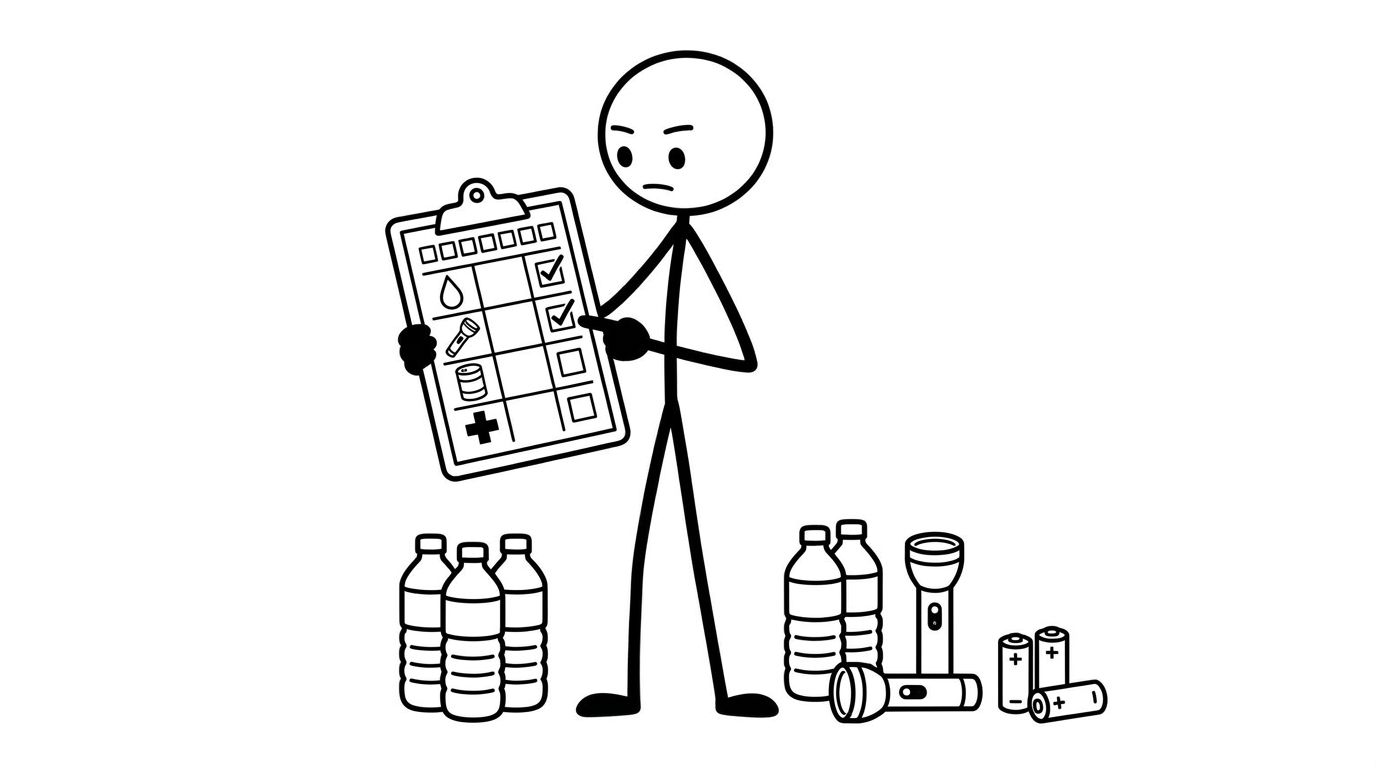
Overcoming this exhaustion requires a fundamental shift in how we approach our survival motivation. It requires us to step back, assess our strategies, and prioritize prepping mental health just as highly as we prioritize our physical stockpiles. True resilience is a marathon, not a sprint. This comprehensive guide will provide you with practical, data-backed strategies to overcome burnout, sustainably maintain your readiness, and reclaim the empowering nature of emergency preparedness.
Understanding the Psychology of Preparedness Fatigue
To effectively combat preparedness fatigue, we must first understand its psychological roots. The human brain is evolutionarily wired to respond to acute, immediate threats—a predator in the brush, a sudden fire, a physical confrontation. It is not, however, designed to process a relentless, 24/7 stream of potential, abstract, and global catastrophes.
When we constantly expose ourselves to Survival Scenarios scenarios, our bodies remain in a prolonged state of fight-or-flight. The CDC notes that prolonged exposure to stress hormones like cortisol can lead to physical exhaustion, sleep disturbances, and emotional numbness. In the context of survivalism, this manifests as a complete loss of motivation to continue building or maintaining your family emergency plans.
The Difference Between Readiness and Obsession
Healthy emergency readiness is characterized by logical risk assessment and proportional action. It involves looking at data from agencies like the United States Geological Survey (USGS) to understand local earthquake risks, or NOAA to track hurricane seasons, and taking systematic steps to mitigate those specific, localized threats. It is proactive, measured, and ultimately calming.
Obsession, on the other hand, is reactive. It is driven by the fear of the unknown and the uncontrollable. When you cross the line from readiness into obsession, the goalposts constantly move. No amount of stored water, medical supplies, or tactical gear ever feels like enough. Recognizing this shift is the first crucial step in protecting your prepping mental health.
Identifying the Warning Signs of Prepper Burnout
Prepper burnout rarely happens overnight. It creeps in slowly, often disguised as dedication or vigilance. Because survivalists pride themselves on being hyper-aware, it can be difficult to admit when that awareness has become toxic. Look for these subtle and overt warning signs.
Financial Strain and Impulse Buying
One of the most tangible signs of burnout is financial recklessness driven by panic. If you find yourself prioritizing the purchase of high-end tactical gear or bulk freeze-dried food over paying your mortgage, utilities, or investing in your retirement, your priorities have become skewed. Emergency readiness should stabilize your life, not put you in debt.
Information Paralysis and Doomscrolling
Are you spending hours on social media or fringe forums analyzing every potential societal collapse scenario? This is known as doomscrolling. When you consume so much conflicting and terrifying information that you become paralyzed and unable to take practical action, you are experiencing information fatigue. Your survival motivation gets buried under an avalanche of data.
Neglecting Daily Life and Relationships
If your focus on future disasters is causing you to neglect your present reality, burnout has taken hold. This might look like skipping family events to reorganize your Go-Bag Builders, alienating friends by constantly talking about worst-case scenarios, or letting your physical health slide because you are too stressed to exercise. A robust preparedness plan should integrate seamlessly into a normal, healthy life.
Strategic Pacing: The Antidote to Overwhelm
The most effective way to maintain emergency readiness without burning out is to adopt a strategy of deliberate pacing. You cannot prepare for every conceivable disaster by next Tuesday. Accepting this limitation is incredibly freeing. By breaking your preparedness goals down into micro-tasks, you build a sustainable routine.
The Red Cross Incremental Approach
The American Red Cross advocates for an incremental approach to building emergency kits. Instead of dropping hundreds of dollars at once, they suggest adding one or two items to your grocery cart each week. An extra gallon of water here, a few cans of beans there, a spare flashlight next month. Over the course of a year, you will have built a comprehensive supply without feeling a financial or psychological pinch.
Implementing the "Rule of Threes" for Projects
To prevent task overload, limit yourself to the "Rule of Threes" for your preparedness projects. Focus on only three goals at any given time. For example: this quarter, your three goals might be rotating your Water Calculator, updating your first aid kit, and scanning important documents to a secure USB drive. Until those three are done, you do not allow yourself to worry about EMP hardening or building a solar generator.
Seasonal Prepping Routines
Align your emergency readiness tasks with the changing seasons. This creates a natural, predictable rhythm that prevents year-round anxiety. In the spring, focus on severe weather preparations, gardening, and checking your home's exterior. In the fall, pivot to winterizing your home, checking heating supplies, and updating your vehicle's emergency kit. This cyclical approach ensures nothing is forgotten, but nothing is rushed.
Curating a Healthy Information Diet
In the digital age, information is both a weapon and a vulnerability. For preppers, staying informed is critical, but the source and volume of that information dictate your prepping mental health. Sensationalized news and clickbait survival channels are designed to trigger your amygdala and keep you watching out of fear. You must take control of your information diet.
Relying on Authoritative Sources
Cut out the middlemen of panic. Instead of relying on social media algorithms for your threat assessments, go directly to the source. Bookmark the National Hurricane Center, monitor USGS earthquake maps, and download the official FEMA app for localized alerts. These agencies provide raw, actionable data without the terrifying background music and clickbait headlines.
Setting Hard Boundaries on News Consumption
Establish strict time limits for consuming news and survival content. For instance, allow yourself 20 minutes in the morning and 20 minutes in the evening to check global events and local weather. Outside of those windows, disconnect. Turn off push notifications for news apps. If a truly life-threatening emergency occurs, the Emergency Alert System (EAS) or NOAA Weather Radio will notify you. You do not need to refresh a feed constantly.
The Practice of "Information Fasting"
If you are actively experiencing severe preparedness fatigue, consider an information fast. Take a 48-hour or even week-long break from all news, survival blogs, and disaster podcasts. Use this time to focus entirely on the present moment—your family, your hobbies, your career. You will quickly realize that the world continues to spin, and your baseline emergency readiness is more than sufficient to handle a few days offline.
Fostering Prepping Mental Health and Resilience
Survival is not just about gear; it is heavily reliant on psychological fortitude. FEMA recognizes this in their disaster response protocols, heavily emphasizing Psychological First Aid. A mind that is calm, centered, and adaptable is far more valuable in a crisis than a basement full of MREs managed by someone on the verge of a nervous breakdown.
Building Stress Tolerance
You can actively train your nervous system to handle stress better. Engage in activities that safely push you out of your comfort zone. This could be taking a cold shower, practicing high-intensity interval training, or learning complex new skills like wilderness navigation. By voluntarily subjecting yourself to manageable stress, you build the psychological calluses needed to remain calm during unexpected emergencies.
The Power of Mindfulness and Grounding
When the anxiety of global crises begins to spiral, grounding techniques can pull you back to reality. The CDC recommends simple mindfulness practices to combat chronic stress. The "5-4-3-2-1" technique is highly effective: acknowledge five things you can see, four you can touch, three you can hear, two you can smell, and one you can taste. This instantly interrupts the cycle of catastrophic thinking and anchors you in your immediate, safe environment.
Accepting the Limits of Control
A core tenet of prepping mental health is the radical acceptance of what you can and cannot control. You cannot control the trajectory of a hurricane, the decisions of foreign governments, or the fragility of the global supply chain. You can only control your personal emergency readiness, your physical health, and your emotional response. Focus 100% of your energy on your sphere of influence, and practice letting go of the rest.
Reframing Your Survival Motivation
Why did you start prepping in the first place? For most people, the initial survival motivation was rooted in love and responsibility. You wanted to protect your spouse, your children, and your community. Over time, fear can hijack that motivation. To overcome burnout, you must consciously reclaim your "why."
Prepping for Life, Not Just for Doomsday
Shift your focus from catastrophic, end-of-the-world scenarios to practical, everyday resilience. The skills and supplies you gather should enhance your life right now. Learning to cook from scratch, growing a vegetable garden, mastering first aid, and becoming financially debt-free are all core tenets of emergency readiness. However, they are also incredibly rewarding lifestyle choices that bring immediate joy and satisfaction, regardless of whether a disaster ever strikes.
Celebrating Small Victories
Burnout thrives on the feeling that you are never doing enough. Combat this by actively celebrating your small wins. Did you successfully rotate your pantry this month? That is a victory. Did you finally map out a secondary evacuation route? Celebrate it. Recognize that every small step makes you exponentially more prepared than the average citizen. Give yourself permission to feel proud of your progress.
Community Connection over Isolation
The "lone wolf" survivalist is a dangerous and exhausting myth. Humans are social creatures, and throughout history, survival has always been a communal effort. Trying to learn every skill, stockpile every resource, and stand guard alone is a mathematical impossibility and a guaranteed recipe for prepper burnout.
Joining Formal Volunteer Networks
One of the best ways to alleviate preparedness fatigue is to connect with like-minded individuals in a structured environment. FEMA’s Community Emergency Response Team (CERT) program is an excellent avenue. CERT trains volunteers in basic disaster response skills, such as fire safety, light search and rescue, and disaster medical operations. By joining, you gain invaluable skills, build a local network, and channel your survival motivation into positive community action.
Building Mutual Assistance Groups (MAGs)
If formal government programs aren't your preference, focus on building a Mutual Assistance Group (MAG) with trusted friends, family, or neighbors. The goal is to share the burden of readiness. Perhaps you are an expert in water purification, while your neighbor is a former paramedic, and another friend is a master mechanic. By pooling your knowledge and resources, you drastically reduce the pressure on yourself to be the master of everything.
Mentorship and Teaching
Sometimes, the best way to reignite your own passion is to share it with others. Offer to help a friend put together their first basic bug-out bag, or teach your children basic first aid and fire-starting skills. Teaching reinforces your own knowledge and reminds you of how far you have come. It transforms emergency readiness from an isolated burden into a shared, empowering experience.
Auditing and Organizing: Finding Peace in What You Have
A disorganized stockpile is a constant source of subconscious stress. If you don't know what you have, you will inevitably worry that you don't have enough, leading to panic buying and further burnout. Taking the time to audit and organize your supplies is a therapeutic process that directly supports your prepping mental health.
The Therapeutic Power of Inventory
Dedicate a weekend to pulling out all your supplies. Group them logically: water, food, medical, tactical, power, and shelter. Create a simple spreadsheet or use a notebook to log expiration dates and quantities. The simple act of seeing your preparations neatly organized and quantified provides a massive psychological boost. It replaces vague anxiety with concrete data.
Decluttering the "Just in Case" Gear
During your audit, be ruthless about decluttering. Many preppers fall into the trap of hoarding useless items "just in case." If you have gear that is broken, outdated, or that you realistically do not know how to use, get rid of it. Sell it, donate it, or throw it away. Streamlining your equipment reduces mental clutter and ensures that in a real emergency, you are only reaching for reliable, familiar tools.
Physical Health as a Pillar of Mental Resilience
You cannot separate your physical health from your mental health. If your body is exhausted, poorly nourished, and out of shape, your mind will be far more susceptible to stress and preparedness fatigue. Physical fitness is the most foundational, yet often most neglected, aspect of emergency readiness.
Functional Fitness Over Gym Aesthetics
You don't need to be a bodybuilder to survive a crisis, but you do need functional fitness. Can you walk five miles with a 30-pound backpack? Can you lift debris, carry a child, or sprint short distances without injury? Incorporate walking, rucking, basic strength training, and flexibility routines into your weekly schedule. As your physical stamina increases, you will naturally find that your mental anxiety decreases.
Nutrition and Sleep Hygiene
Never underestimate the power of sleep and proper nutrition in combating burnout. The CDC emphasizes that chronic sleep deprivation severely limits emotional regulation and problem-solving abilities. Treat your sleep schedule as a critical component of your survival plan. Similarly, ensure you are eating a balanced diet and staying hydrated. A well-rested, well-fueled body is naturally resistant to the psychological wear and tear of global crises.
Maintaining the Long-Term Vision
As you navigate the complexities of modern survivalism, remember that preparedness is a dynamic, lifelong journey. There will be seasons where you are highly active and focused, and seasons where you need to step back and put it on autopilot. Both phases are valid and necessary.
Setting a "Maintenance Mode" Baseline
Determine what your "maintenance mode" looks like. This is the absolute minimum baseline of readiness you need to feel secure when life gets busy or you feel burnout approaching. It might simply mean keeping your gas tank half full, having two weeks of food and water in the pantry, and keeping a basic first aid kit in the car. When fatigue hits, drop back to this baseline without guilt. You can always ramp up your efforts later when your energy returns.
The Ultimate Goal: A Resilient Life
The ultimate goal of all this effort is not to survive a dystopian future; it is to thrive in the present while being resilient against the unexpected. True emergency readiness should act as a shock absorber for life's bumps, not as a heavy anchor that drags you down. By managing your information intake, pacing your projects, connecting with your community, and prioritizing your mental health, you build a foundation that cannot be easily shaken.
Overcoming preparedness fatigue is about taking back control. It is about recognizing that while the world may be chaotic and unpredictable, your response to it does not have to be. By implementing these practical, sustainable strategies, you can maintain a high level of emergency readiness, protect your mental well-being, and face whatever the future holds with quiet confidence, strength, and an empowered mindset.
Frequently Asked Questions
What is preparedness fatigue?
Preparedness fatigue is the mental and emotional exhaustion that occurs from constantly anticipating and preparing for emergencies, often leading to a decline in readiness efforts.
How can I overcome preparedness fatigue?
You can overcome fatigue by breaking preparedness tasks into smaller, manageable steps, integrating them into daily routines, and taking breaks from the 24/7 news cycle.
How often should I review my emergency plan to avoid burnout?
Reviewing and updating your emergency plan twice a year, such as during daylight saving time changes, is sufficient to stay ready without causing burnout.
What is a low-effort way to maintain my emergency supplies?
Automate your readiness by setting up recurring deliveries for non-perishable food and water, and scheduling automated calendar reminders to check expiration dates and batteries.
Why is community support important for emergency preparedness?
Sharing responsibilities, resources, and knowledge with neighbors or a local preparedness group reduces the individual burden and provides essential emotional support.
Sources & Further Reading
For a step-by-step system to stay calm and consistent, use the Survival Psychology course as your weekly training plan.
Related resource: Catastrophe Survival 101 Course.