Key Takeaways:
- Preparedness is practical insurance, not a fear-based scenario; it is about keeping your family safe and comfortable during routine disruptions.
- A step-by-step, 6-week approach prevents overwhelm and keeps costs low by integrating supplies into your normal grocery runs.
- Water is your highest priority, requiring one gallon per person and pet per day for at least three days.
- Adapting your plan for small apartments, children, and pets ensures no family member is left vulnerable when systems temporarily fail.
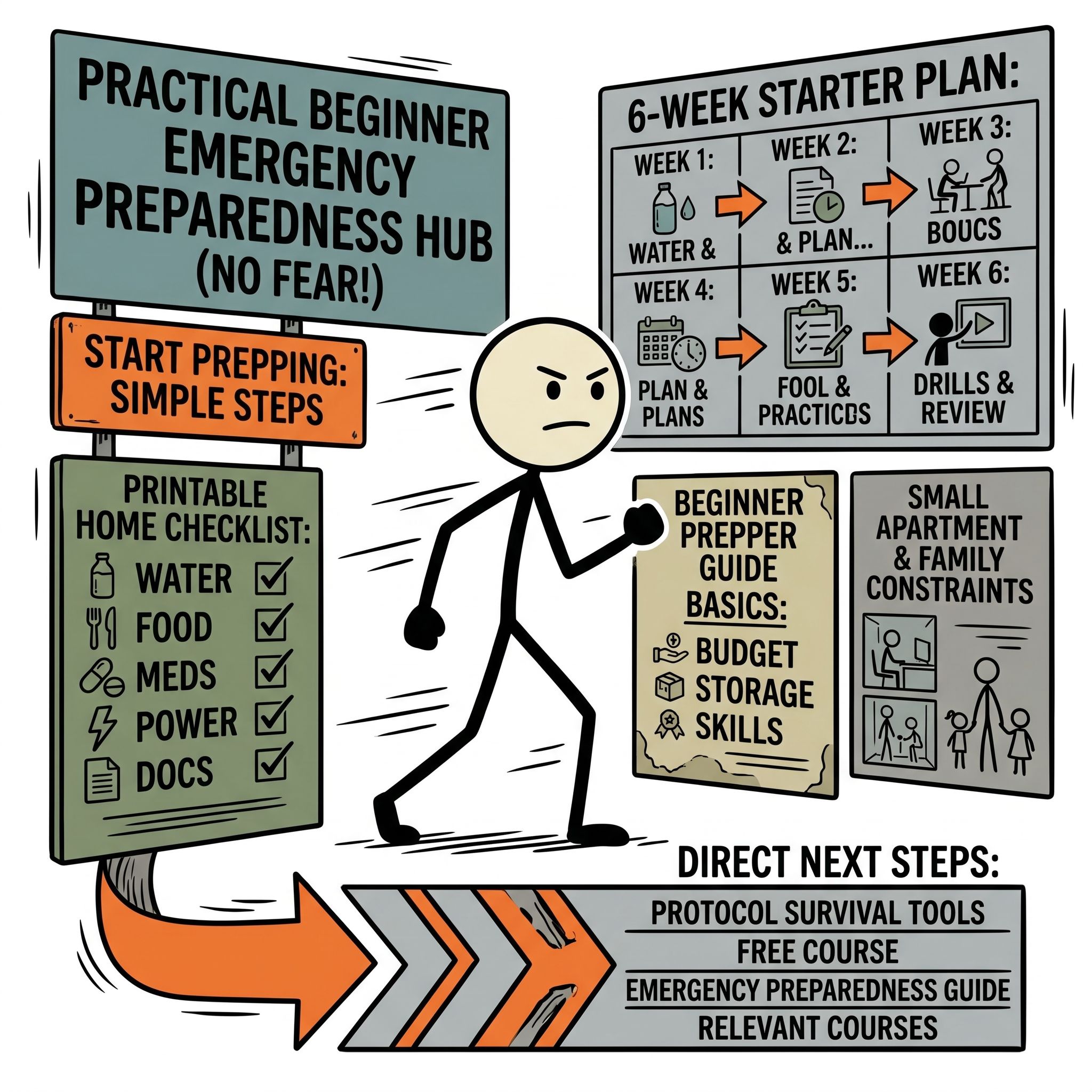
When you hear the word "prepper," what comes to mind? For many, it conjures up images of underground bunkers, military-grade gear, and anxious individuals waiting for the end of the world. But the reality of modern preparedness is far more ordinary, practical, and positive. Real preparedness is not about hiding from the world; it is about building a stable foundation so your family can navigate life's unexpected bumps with confidence and calm.
Think of emergency preparedness as a form of insurance. You do not buy car insurance because you plan on getting into an accident today; you buy it so that a sudden fender-bender does not ruin your financial stability. Similarly, building a basic home emergency checklist is simply a way to ensure that a sudden power outage, a severe winter storm, or a broken water main is a minor inconvenience rather than a household crisis.
This guide is designed specifically for normal families. Whether you live in a suburban home with a basement or a compact two-bedroom city apartment, you can build a resilient household without spending a fortune or filling your living space with clutter. We will walk you through the fundamentals of how to start prepping, break down a manageable 6-week starter plan, and provide a print-friendly checklist to keep you organized along the way.
How to Start Prepping (Without the Panic)
The biggest obstacle for most families when looking into emergency preparedness is the sheer volume of information - and the alarmist tone that often accompanies it. It is easy to feel overwhelmed by lists of tactical gear, complex water filtration systems, and survivalist jargon. The secret to successful prepping is to start small, focus on the most likely scenarios, and build your supplies gradually.
To begin, we must shift our focus away from extreme, low-probability catastrophes and toward high-probability, localized events. These include:
- Severe Weather: Thunderstorms, blizzards, hurricanes, or heatwaves that keep you indoors or knock out power.
- Utility Failures: Water main breaks, localized blackouts, or internet outages that disrupt daily routines.
- Personal Emergencies: Sudden illness, minor home accidents, or unexpected financial strains.
By preparing for these common disruptions, you naturally build the resilience needed for larger, more complex emergencies. You do not need a bunker; you simply need a well-organized closet and a clear plan of action. To help you map out your family's specific needs, we recommend using our emergency supply calculator, which customizes resource estimates based on your household size.
As you begin this journey, remember that preparedness is a process, not a single purchase. You do not need to buy everything this weekend. In fact, rushing out to buy random gear often leads to wasted money on items you do not know how to use. Take a deep breath, involve your family in a positive way, and focus on steady, weekly progress.
Beginner Prepper Guide Basics
Every solid preparedness plan rests on a few core pillars: water, food, warmth, communication, and health. Understanding these basics allows you to make smart decisions rather than just buying pre-packaged kits that may not suit your family's actual needs. This beginner prepper guide focuses on practical, everyday items that serve multiple purposes.
Water: The Ultimate Priority
Humans can survive for weeks without food, but only a few days without water. In any emergency, clean water is your most critical asset. The standard rule of thumb is one gallon of water per person, per day. This covers half a gallon for drinking and half a gallon for basic hygiene and food preparation. Do not forget to calculate the same amount for your pets.
For a basic three-day supply, a family of four needs 12 gallons of water. Storing commercial, factory-sealed water bottles or jugs is the easiest and safest way to start. Store them in a cool, dark place, and rotate them out once a year to keep them fresh.
Food: Simple, Shelf-Stable, and Familiar
When stocking food for emergencies, avoid the temptation to buy expensive, long-term survival meals or military-style MREs (Meals, Ready-to-Eat) right away. Instead, build a "working pantry" of shelf-stable foods that your family already eats. This includes canned soups, beans, pasta, rice, peanut butter, and canned fruits or vegetables.
This approach has two major benefits: it is highly budget-friendly, and it provides comfort. During a stressful power outage, your children will feel much better eating a familiar bowl of mac and cheese or canned chicken soup than a freeze-dried meal they have never seen before. Simply buy one or two extra items during your weekly grocery trips, place the newest items at the back of the shelf, and use the older ones first.
Warmth, Light, and Power
When the grid goes down, your home can quickly become dark and cold. Flashlights and headlamps are far safer than candles, which pose a significant fire hazard. Ensure you have a reliable way to charge your cell phones, such as a portable power bank. A simple, hand-crank emergency radio is also invaluable for receiving local weather updates and emergency broadcasts without relying on cellular networks or the internet.
Health, Hygiene, and First Aid
A basic first aid kit is essential, but you should also stock a surplus of daily prescription medications, over-the-counter pain relievers, and basic hygiene products. If the water supply is disrupted, hand sanitizer, wet wipes, and heavy-duty garbage bags will help maintain sanitary conditions in your home, preventing illness.
To dive deeper into these core concepts and learn how to integrate them into your daily life, explore our complete emergency preparedness guide, which offers a detailed roadmap for building long-term household resilience.
6-Week Starter Plan
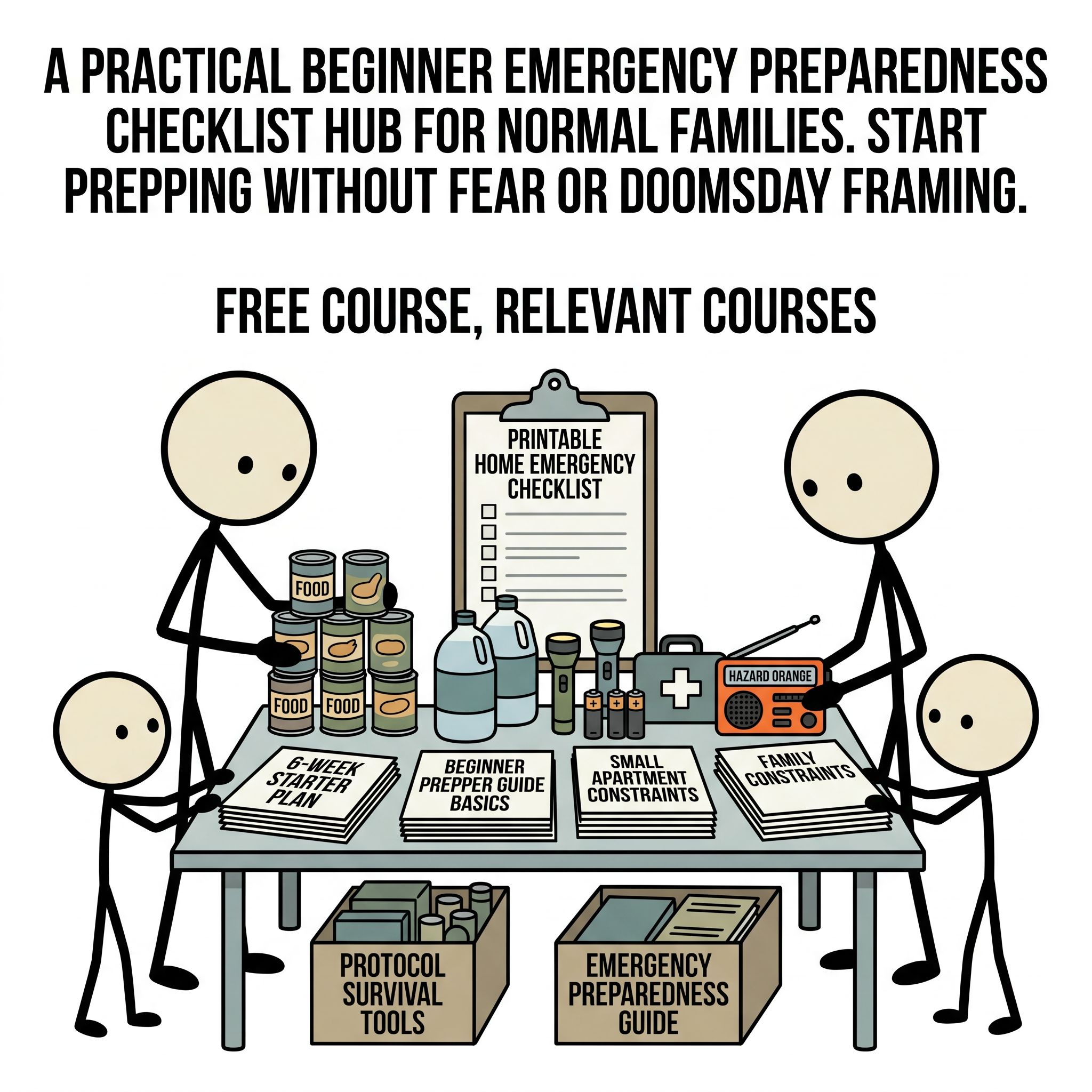
To make the process of building your home emergency checklist entirely manageable, we have broken it down into a simple, step-by-step 6-week starter plan. By focusing on just one category of preparedness each week, you can build a comprehensive emergency kit without breaking the bank or feeling overwhelmed.
Week 1: Water Security
Your goal this week is to secure a three-day supply of drinking water for your household. Purchase commercial water jugs or bottles to meet the one-gallon-per-person-per-day standard. If you have a family of three and one dog, aim for 12 gallons of water. Store these containers in a cool, dark location, such as the bottom of a closet, a pantry, or under a bed. Additionally, buy a simple, inexpensive water filter pitcher or a pack of water purification tablets for your portable kit.
Week 2: Food and Kitchen Basics
This week, focus on shelf-stable foods. Look at your pantry and identify meals your family enjoys that do not require refrigeration or cooking. Stock up on canned meats, beans, vegetables, peanut butter, crackers, and dried fruit. Crucially, make sure you have a manual can opener. A pantry full of canned food is useless if your electric can opener does not have power. If you plan to cook during an outage, consider purchasing a small, inexpensive camp stove and a couple of canisters of fuel, ensuring you only use it in a well-ventilated outdoor space.
Week 3: Light, Power, and Communication
When the power goes out, communication and visibility are your lifelines. This week, acquire at least two high-quality LED flashlights or headlamps (headlamps are excellent because they keep your hands free). Stock up on the appropriate batteries. Purchase a portable USB power bank to keep your mobile phones charged, and charge it fully. Finally, obtain an emergency weather radio - preferably one that can be powered by batteries, solar, or a hand crank - so you can stay informed of local conditions if cell towers go offline.
Week 4: First Aid and Medical Supplies
A good medical setup is about more than just bandages. This week, purchase a well-stocked family first aid kit or build your own. Include adhesive bandages of various sizes, sterile gauze pads, antiseptic wipes, medical tape, tweezers, and scissors. Stock up on a two-week supply of essential prescription medications and common over-the-counter remedies like ibuprofen, antihistamines, and anti-diarrheal medication. To build the confidence needed to use these tools effectively under pressure, consider enrolling in our specialized course on Medical Emergencies and Field First Aid.
Week 5: Documents, Cash, and Home Safety
Physical and digital security are vital during disruptions. Gather copies of important family documents - birth certificates, insurance policies, passports, and medical records - and store them in a waterproof, fireproof portable folder. Additionally, put aside a small amount of cash in small bills ($1, $5, $10, and $20). If power grids are down, credit card readers and ATMs will not work, making cash the only way to buy fuel or supplies. Finally, locate your home's main utility shutoffs (water, gas, and electricity) and ensure you have the tools and knowledge required to turn them off in an emergency.
Week 6: Evacuation Planning and Practice
In some situations, staying home is not the safest option. This week, design a simple evacuation plan. Identify two exit routes from your home and designate a meeting spot just outside your neighborhood in case you are separated. Put together a "Go Bag" for each family member containing a change of clothes, basic toiletries, a copy of important documents, and a small water bottle. Most importantly, run a quick, low-stress drill with your family. Practice walking your exit routes and locating your emergency supplies so everyone knows exactly what to do.
Managing Constraints: Small Apartments, Kids, and Pets
Preparedness is not a one-size-fits-all endeavor. A suburban family with a large garage has different options than a young couple living in a third-floor city apartment. However, space constraints should never prevent you from being prepared. It simply requires a bit of creativity and organization.
Prepping in Small Spaces
If you live in a small apartment, space is at a premium. To store your emergency preparedness checklist items without cluttering your home, look for underutilized spaces. The gap beneath your bed is perfect for storing flat cases of bottled water or slim plastic storage bins filled with canned goods. The top shelves of closets, the space behind hanging clothes, or even a decorative storage ottoman in the living room can house emergency supplies discreetly.
Focus on multi-use items to save space. For example, a single high-quality multi-tool can replace a bulky toolbox. Concentrated hygiene products, like multi-purpose biodegradable soap, take up far less room than multiple specialized cleaners. Remember, you do not need to store months of supplies; a solid, well-organized 3-to-7-day setup is highly effective and fits easily into almost any apartment.
Preparing with Children
When preparing with children, the goal is to build confidence rather than anxiety. Frame preparedness as a fun, cooperative family project - like camping at home. Involve your children in choosing the shelf-stable snacks for your emergency pantry, and let them pick out a small toy, book, or deck of cards to keep in their personal Go Bag.
Practice emergency drills as games. For example, you can have a "flashlight night" where you turn off all the lights in the house and practice navigating to the living room using only headlamps. This demystifies the experience of a power outage, turning a potentially scary event into a familiar adventure. For a deeper look at how to foster a resilient, cooperative household environment, check out our course on Family and Community Resilience.
Caring for Your Pets
Our pets rely on us entirely for their safety. When building your emergency supplies, ensure you have a dedicated pet kit. This should include at least a three-day supply of their regular food, extra water, a spare leash or harness, a familiar toy or blanket to reduce stress, and copies of their vaccination records. Keep a sturdy pet carrier near your exit route so you can quickly secure your pet if you need to evacuate your home in a hurry.
Print-Friendly Checklist
Use this comprehensive, print-friendly checklist to track your progress. You can print this page directly from your browser to keep a physical copy with your emergency supplies.
1. Water & Hydration
- 1 gallon of water per person per day (3-day minimum, 14-day ideal)
- 1 gallon of water per pet per day
- Portable water filter or purification tablets
- Unscented liquid household bleach (for water disinfection if needed)
2. Food & Kitchen Supplies
- 3-to-14 day supply of non-perishable, shelf-stable foods
- Manual can opener
- Paper plates, plastic utensils, and paper towels
- Small camp stove with extra fuel (for outdoor use only)
- Garbage bags and plastic ties for sanitation
3. Light, Power, & Communication
- LED flashlights and headlamps for every family member
- Extra batteries (store in original packaging)
- Portable USB power banks (kept fully charged)
- Emergency hand-crank or battery-powered AM/FM/NOAA weather radio
- Physical list of emergency contacts written on paper
4. First Aid, Hygiene, & Medical
- Comprehensive first aid kit (bandages, gauze, antiseptic, tweezers)
- 14-day supply of critical prescription medications
- Over-the-counter medications (pain relievers, allergy meds, antacids)
- Hand sanitizer, wet wipes, and liquid soap
- Feminine hygiene products and infant supplies (if applicable)
5. Documents, Cash, & Safety
- Waterproof, fireproof folder with copies of vital documents
- Emergency cash in small bills ($100 to $300 recommended)
- Multi-tool or basic toolset (including wrench for utility shutoffs)
- Working smoke detectors and carbon monoxide alarms in the home
- ABC-rated fire extinguisher
6. Family Comfort & Pet Needs
- Warm blankets or sleeping bags for each person
- One complete change of seasonal clothing and sturdy shoes
- Deck of cards, books, or small board games for entertainment
- Pet food, extra water, leash, and pet carrier
- Comfort items for children (stuffed animal, favorite snack)
Next Steps on Your Preparedness Journey
Congratulations! By reading this guide and understanding these basic principles, you have already taken the most important step: moving from passive awareness to active readiness. Preparedness is not a destination; it is a continuous, empowering habit that grows stronger over time.
As you begin checking items off your list, we encourage you to take advantage of the structured resources we offer at Protocol Survival. If you want a comprehensive, step-by-step education that covers everything from basic home safety to advanced emergency coordination, sign up for our free preparedness course. This course is designed to fit into a busy schedule, delivering practical, bite-sized lessons directly to your inbox.
For those looking for a deep, structured dive into managing larger disruptions with absolute confidence, our flagship course, Catastrophe Survival 101, provides professional-grade training tailored for everyday citizens. You will learn how to assess local risks, manage resources under pressure, and lead your family safely through any challenge.
Remember, you do not need to do everything today. Pick one small task - whether it is buying three extra gallons of water during your next grocery run or printing out our checklist - and start there. Every small action you take today makes your family safer, calmer, and more resilient tomorrow.
Frequently Asked Questions
What is the best way to start prepping as a beginner?
Start with likely household disruptions: water, food, medicines, light, communication, documents, and a family contact plan. Build one week at a time instead of buying random gear.
What should be on a home emergency checklist?
A basic home emergency checklist should include water, shelf-stable food, first aid, medications, flashlights, batteries, radio, hygiene supplies, documents, cash, chargers, and a written family plan.
How much water should a family store?
A common baseline is at least one gallon per person per day for several days, but climate, medical needs, pets, and cooking change the number. Use a calculator to personalize it.
Do beginners need expensive survival gear?
No. Most families get more value from water storage, food rotation, medicine planning, contact cards, lighting, and practice than from specialized gear bought too early.
How long should a starter preparedness plan take?
A 6-week starter plan is realistic for most households: one focus per week, small purchases, and simple family routines that can be maintained.