⚡ Key Facts
- Vulnerable Demographic: According to FEMA, older adults are disproportionately affected by natural disasters, accounting for up to 50% of fatalities in major events like Hurricane Katrina and Superstorm Sandy despite making up less than 15% of the population.
- Income Constraints: Over 15 million older adults in the United States are economically insecure, living at or below 250% of the federal poverty level, making traditional "survival gear" financially out of reach.
- Critical Hydration: The CDC warns that seniors are more susceptible to dehydration during emergencies due to age-related decreases in thirst sensation and body water composition.
- Medication Gap: The American Red Cross recommends a minimum 7-to-14-day supply of critical prescription medications, yet insurance restrictions often limit refills to a strict 30-day cycle.
- Free Life-Saving Registries: Most municipal emergency management offices maintain free, confidential "Functional Needs Registries" to prioritize seniors during evacuations and power outages.
When a severe storm knocks out the power grid, or a natural disaster disrupts local supply chains, the immediate safety of your household depends entirely on what you have on hand. For millions of older adults, the standard advice to "buy a pre-made three-month emergency kit" or "invest in a whole-home standby generator" is not just unrealistic—it is financially impossible. Living on a fixed Social Security income means every dollar is already allocated to housing, utilities, healthcare, and fresh groceries. However, true prepping has very little to do with high-priced tactical gear or expensive freeze-dried survival meals. By focusing on strategic, incremental planning, resourcefulness, and community integration, senior disaster preparedness can be achieved effectively and affordably, ensuring safety and peace of mind without straining a limited budget.
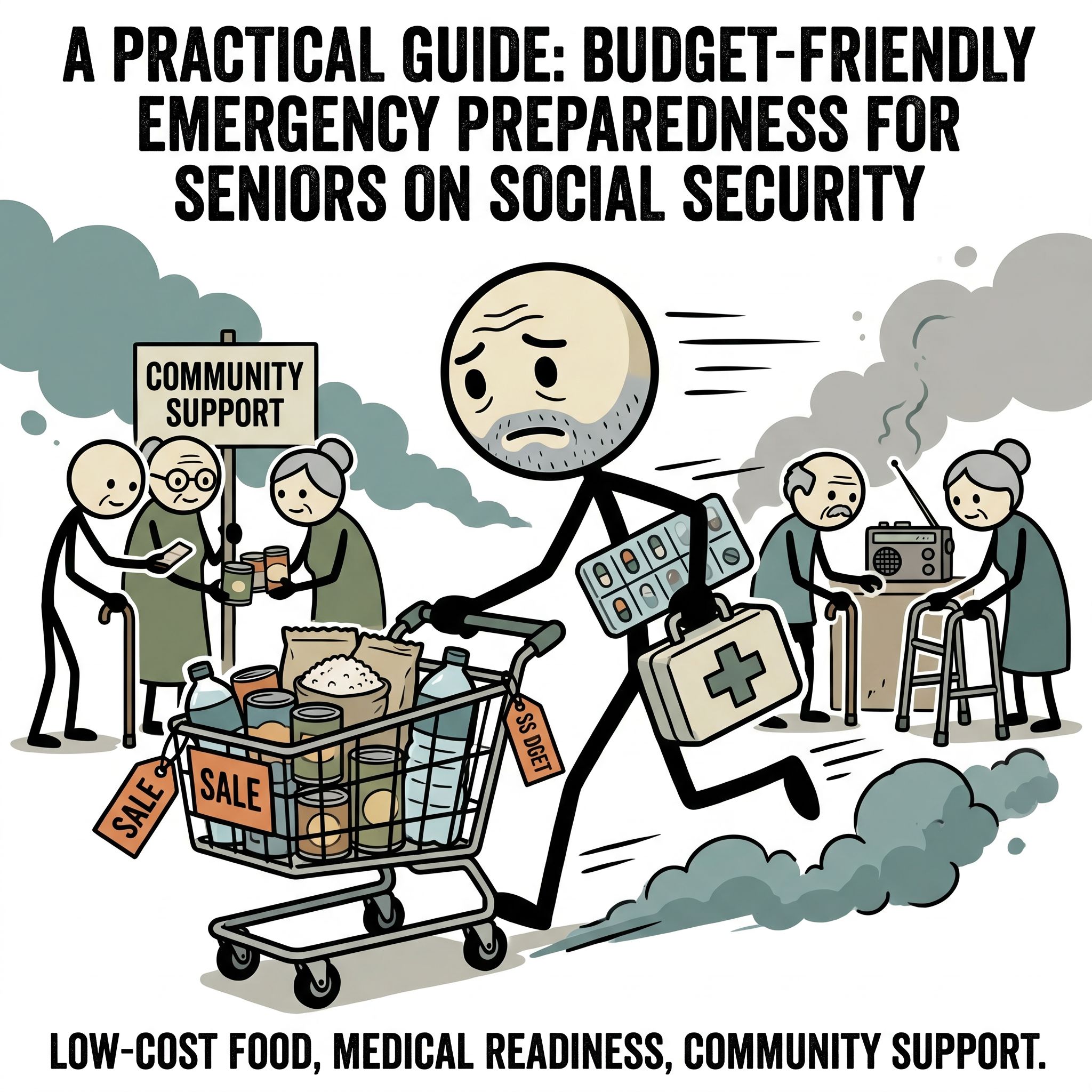
Redefining Preparedness: The Power of Incrementalism
The modern emergency preparedness landscape is often dominated by marketing that suggests you must spend thousands of dollars to be safe. This creates a dangerous barrier to entry, causing many seniors to feel that if they cannot afford the best gear, they cannot prepare at all. This is a myth. Effective emergency preparedness for seniors is built on small, deliberate choices made over time. By breaking down your preparation into manageable weekly tasks, you can build a robust safety net without disrupting your monthly budget.
To successfully master prepping on a fixed income, you must transition from a consumer mindset to a strategic mindset. This means identifying resources you already own, repurposing everyday household items, and allocating small amounts of money—even just $3 to $5 a week—toward targeted emergency supplies. Over the course of a year, a $5 weekly investment yields $260 worth of highly customized, life-saving supplies that match your specific dietary and medical needs far better than any generic, store-bought survival kit ever could.
The Micro-Budget Strategy: The $5-a-Week Rule
The easiest way to start prepping on a fixed income is to implement the $5-a-week rule. When you do your regular grocery shopping, dedicate a maximum of five dollars specifically to emergency preparedness. This small amount is enough to purchase several high-value, long-shelf-life items that will form the backbone of your supply. Here is an example of how you can build a diverse inventory over a single month for just $20:
- Week 1 ($4.50): Three 1-gallon jugs of store-brand purified drinking water.
- Week 2 ($4.80): Four cans of protein-rich black beans or pinto beans (store brand).
- Week 3 ($5.00): Two 1-pound bags of white rice and one container of iodized salt.
- Week 4 ($4.75): Three cans of chunk light tuna in water or oil.
By repeating this cycle and varying your purchases, you will steadily build a reliable stockpile. Because you are buying these items alongside your regular groceries, you avoid the shock of a single, large expense while gradually establishing a safety net that protects you against inflation and sudden supply chain disruptions.
Building a Cheap Emergency Food Supply: Nutrition on a Budget
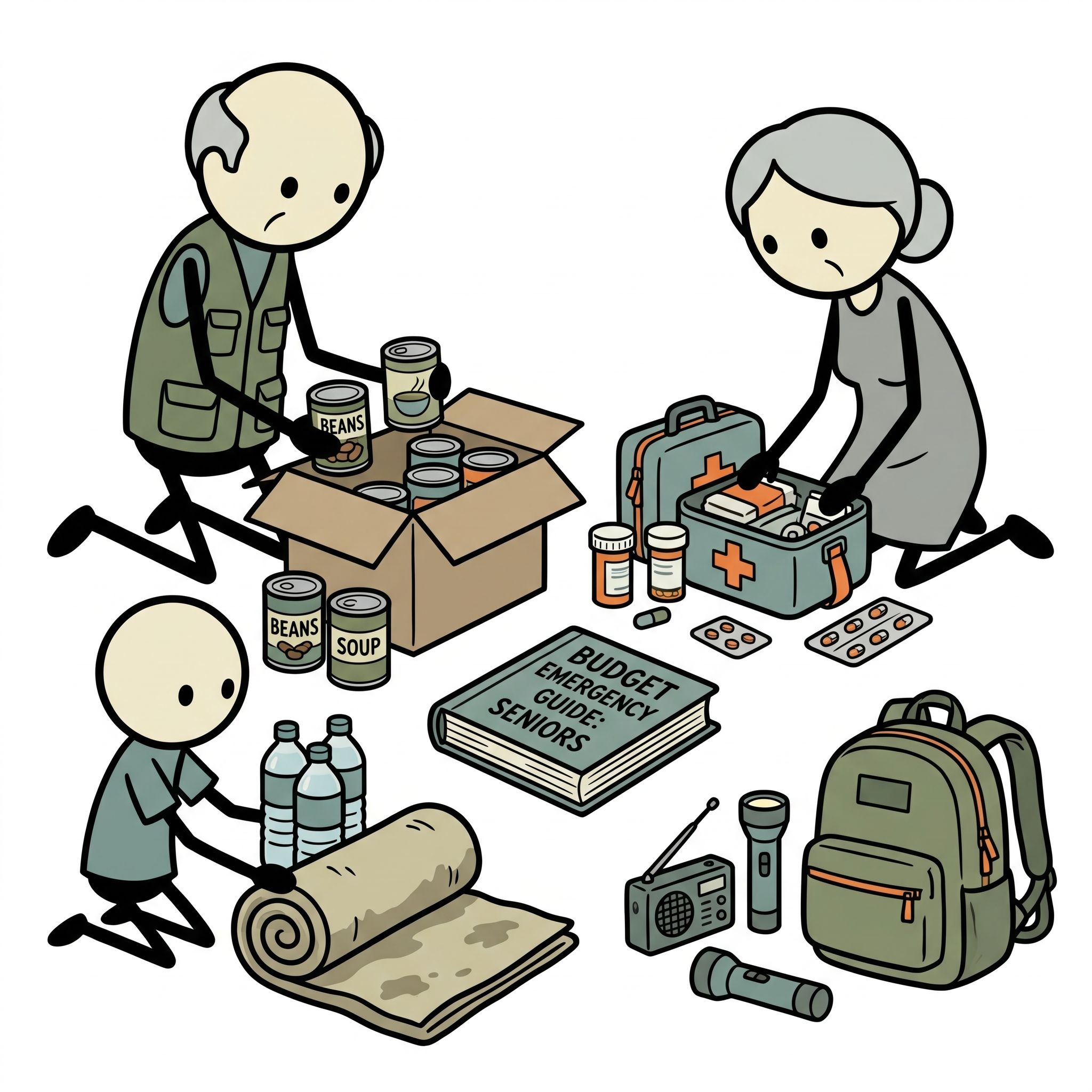
When assembling a cheap emergency emergency food storage guide, the primary goals are caloric density, shelf-life, ease of preparation, and nutritional value. Many commercial "survival foods" are packed with sodium, artificial preservatives, and chemical flavorings that can exacerbate underlying health conditions common in older adults, such as hypertension, kidney disease, or cardiovascular issues. Building your own supply allows you to control your nutritional intake while keeping costs to a bare minimum.
Focus your purchasing on dry goods and canned items that require little to no cooking. During a power outage, your ability to heat food may be limited, and using up precious water to boil dried pasta or beans can deplete your hydration reserves. Opt for canned goods that can be eaten cold straight from the container if necessary. Canned vegetables, fruits, and proteins are already cooked during the canning process, making them safe, convenient, and highly nutritious emergency options.
High-Yield, Low-Cost Emergency Foods
To maximize your budget prepping tips, focus on purchasing items that offer the highest nutritional and caloric return for every dollar spent. The table below highlights the best budget-friendly foods for a senior emergency pantry:
| Food Item | Nutritional Benefit | Average Cost | Shelf Life (Unopened) |
|---|---|---|---|
| White Rice (Dry) | High carbohydrates, easy digestion | $0.80 - $1.20 per lb | 25+ years (if sealed airtight) |
| Canned Beans | Protein, dietary fiber, iron | $0.70 - $0.90 per can | 2 - 5 years |
| Rolled Oats | Soluble fiber, sustained energy | $1.50 - $2.00 per tub | 1 - 2 years |
| Canned Tuna/Salmon | Lean protein, Omega-3 fatty acids | $1.00 - $1.80 per can | 3 - 5 years |
| Peanut Butter | Healthy fats, high calorie density | $1.50 - $2.50 per jar | 1 - 2 years |
| Canned Sweet Potatoes | Vitamin A, potassium, complex carbs | $1.20 - $1.80 per can | 3 - 5 years |
Addressing Physical Limitations in the Pantry
A cheap emergency food supply is only useful if you can physically access it during a crisis. Many older adults suffer from osteoarthritis, rheumatoid arthritis, or general loss of hand strength, making traditional cans difficult to open. When shopping, prioritize cans with built-in pull-tabs whenever possible, even if they cost a few cents more. If pull-tab options are unavailable, do not rely on a cheap, flimsy manual can opener that could slip and cause injury. Instead, invest in a high-quality, ergonomic, soft-grip manual can opener, or keep a battery-operated, hand-held opener in your emergency kit with a spare set of fresh batteries nearby.
Additionally, avoid storing your emergency food supply on high shelves that require a step stool to reach, or on the very bottom floor shelves where you must bend down deeply. Store your emergency pantry at waist-to-chest height in a cool, dry, dark closet or pantry. This minimizes the risk of falls or muscle strains when retrieving items during a stressful, low-light emergency situation.
The "Rotate What You Eat" (FIFO) Method
To ensure your hard-earned money does not go to waste, practice the First-In, First-Out (FIFO) method of inventory management. When you purchase new emergency food items, place them at the back of your pantry shelf, and bring the older items to the front to be consumed during your regular meals. This constant rotation ensures that your emergency supply remains fresh, and it prevents you from having to throw away expired food that represents wasted financial resources. Make it a habit to write the expiration date in large, bold black marker on the top of every can or box, making it easy to read at a glance without having to search for tiny, faint factory stamps.
Water Security: Low-Cost Storage and Purification
Water is the single most critical element of survival. While a human can survive for multiple weeks without food, dehydration can become life-threatening in just three days, particularly for seniors. The Federal Emergency Management Agency (FEMA) and the American Red Cross recommend storing a minimum of one gallon of water per person, per day, for a minimum of three days (ideally two weeks). One gallon is allocated as a half-gallon for drinking and a half-gallon for basic sanitation and food preparation.
Purchasing pre-bottled water is convenient, but it can quickly become expensive and physically heavy to transport from the grocery store to your home. Fortunately, safe water storage can be accomplished for pennies using containers you already own, provided you follow strict sanitation guidelines.
Safe DIY Water Storage Protocols
You can safely store water in clean, food-grade plastic containers, such as empty two-liter soda bottles or heavy-duty juice pitchers. Avoid using milk jugs or cardboard juice cartons; these containers are biodegradable, degrade rapidly over time, and can harbor microscopic food proteins and bacteria even after thorough washing, which will contaminate your stored water.
To safely prepare your own water storage containers, follow this step-by-step protocol recommended by the CDC:
- Wash the container thoroughly with warm, soapy water and rinse it completely.
- Sanitize the container by swirling a solution of 1 teaspoon of unscented liquid household chlorine bleach mixed into 1 quart of clean water throughout the bottle, ensuring it touches all interior surfaces.
- Rinse the sanitized container thoroughly with clean, safe water.
- Fill the container to the top with tap water. If your water comes from a municipal source treated with chlorine, you do not need to add anything else. If you use well water or untreated water, add two drops of regular, unscented 6% household bleach per gallon of water.
- Tighten the cap securely, label the bottle with the date of preparation using a permanent marker, and store it in a cool, dark location away from direct sunlight and chemical products like gasoline or pesticides.
To maintain maximum safety, empty, rinse, and refill your DIY water storage containers every six months.
Affordable Filtration Options
If you must evacuate or if your stored Water Calculator runs dry, you will need a reliable way to purify water from alternative sources, such as rainwater collection barrels or local freshwater bodies. Avoid expensive, complex gravity-fed filtration systems that cost hundreds of dollars. Instead, opt for a highly portable, budget-friendly personal water filter, such as the Sawyer Products Mini Water Filtration System or the LifeStraw. These units typically cost between $15 and $25, fit easily in a drawer or go-bag essentials guide, and are capable of filtering up to 100,000 gallons of water, removing 99.9999% of bacteria and protozoa without requiring electricity, batteries, or replacement parts.
Medical Readiness: Navigating Prescriptions and Assistive Devices
For many older adults, medical readiness is the most critical and challenging component of emergency preparedness. Managing chronic conditions like diabetes, COPD, heart disease, or mobility limitations requires continuous access to medications, specialized medical equipment, and electricity. When a disaster strikes, pharmacies may close, deliveries may stop, and power outages can disable life-sustaining medical machinery.
Securing your medical needs on a tight budget requires proactive communication with your healthcare team, careful documentation, and strategic utilization of free public resources.
Securing an Emergency Supply of Medications
The CDC and the American Red Cross advise maintaining a 7-to-14-day emergency supply of all critical prescription medications. However, insurance providers, Medicare, and Medicaid often enforce strict refill schedules that prevent you from obtaining extra medication in advance. To build a legal, safe, and low-cost medication buffer, employ the following strategies:
- Request a "Vacation Override": Once or twice a year, inform your insurance provider and pharmacist that you will be traveling and require a "vacation override" refill. This allows you to obtain an extra 30-day supply early, which you can set aside specifically for your emergency kit.
- Transition to 90-Day Mail-Order Prescriptions: Many insurance plans offer deep discounts and allow 90-day refills if you use their preferred mail-order pharmacy. This naturally provides you with a larger buffer of medication at home compared to a standard 30-day retail pharmacy cycle.
- Utilize Low-Cost Generic Programs: If your medication is highly affordable in its generic form, ask your physician to write a separate, out-of-pocket prescription for a 30-day supply. Retailers like Walmart, Costco, or online pharmacies like Mark Cuban Cost Plus Drugs often sell common generic medications for as little as $4 to $10 without using insurance, allowing you to bypass strict insurance refill timelines legally and cheaply.
Always store your emergency medication supply in its original labeled container so emergency medical personnel can easily identify your dosages and prescribing physicians. Regularly check expiration dates and rotate your emergency meds into your daily routine to keep the stockpile fresh.
The "Grab-and-Go" Medical Binder
In a rapid evacuation scenario, you may not have time to search for paperwork. Create a dedicated, waterproof "Grab-and-Go" medical binder. You do not need expensive scanning equipment or professional organization services; a simple $2 plastic binder with clear plastic sheet protectors from a dollar store is highly effective. In this binder, keep physical copies of the following documents:
- A complete, up-to-date list of all prescription medications, exact dosages, and daily schedules.
- Contact information for all of your primary care physicians, specialists, and preferred pharmacies.
- Photocopies of your health insurance cards, Medicare/Medicaid cards, and photo identification.
- A brief summary of your medical history, including allergies, major surgeries, and chronic diagnoses.
- Copies of your advanced healthcare directives, living wills, and power of attorney documents.
Keep this binder in a highly visible, easily accessible location near your front door, such as on a coat rack or inside your emergency go-bag, so you can grab it instantly if you must leave your home.
Powering Medical Devices During Outages
If you rely on life-support or medical equipment that requires electricity—such as an oxygen concentrator, nebulizer, CPAP machine, or power wheelchair—a power outage is a life-threatening emergency. To prepare for this scenario without spending thousands on a backup generator, take these vital, cost-free steps:
- Register with Your Utility Provider: Contact your electricity and water utility companies immediately and ask to be placed on their "Critical Care" or "Life-Support" priority restoration list. While this does not guarantee immediate power restoration, it alerts the utility company to your medical vulnerability, prioritizing your neighborhood during repairs and ensuring you receive advanced warning of planned rolling blackouts.
- Establish a Backup Location: Identify a local facility that has guaranteed backup power, such as a nearby hospital, 24-hour fire station, senior center, or a friend’s home in a different utility grid. Establish a clear plan for how you will transport yourself and your equipment to this location if your home loses power for an extended period.
- Inquire About Free Battery Programs: Some non-profit organizations, local health departments, and the Area Agency on Aging offer grants or loaner programs that provide free portable power stations (solar generators) to qualifying low-income seniors who rely on electrical medical devices.
Low-Cost Solutions for Power, Light, and Communication
When the power grid fails, maintaining communication, illumination, and temperature control is essential for preventing isolation, panic, and physical injury. Seniors are at a significantly higher risk for falls in dark environments, making reliable, safe emergency lighting a top priority. Fortunately, modern LED technology has made high-quality, energy-efficient lighting and communication devices highly affordable.
Safe, Cheap Emergency Lighting
Never rely on open-flame candles for emergency lighting. According to the National Fire Protection Association (NFPA), candles are a leading cause of home fires, and the risk of accidental tipping is significantly higher for seniors with mobility challenges, tremors, or cognitive decline. Instead, utilize safe, affordable LED alternatives:
- LED Headlamps: A basic LED headlamp can be purchased online or at hardware stores for under $10. Headlamps are superior to traditional flashlights because they keep your hands completely free, allowing you to safely navigate your home using a cane, walker, or wheelchair.
- LED Puck Lights and Motion-Sensor Nightlights: Battery-operated LED puck lights can be adhered to walls along hallways, staircases, and bathrooms using cheap double-sided tape. Many of these units feature motion sensors that automatically illuminate your path during a power outage, drastically reducing the risk of nighttime falls.
- Solar-Powered Garden Lights: Buy a pack of cheap solar-powered outdoor stake lights from a dollar store or home improvement center. During the day, keep them outside in the sun to charge. At night, bring them indoors and place them in clean jars or cups around your living spaces. They provide a soft, safe, continuous glow all night for free, and can be recharged outside again the next day.
Staying Informed: NOAA Weather Radios
During a major disaster, cellular networks can quickly become overloaded or fail entirely, rendering smartphones useless for receiving emergency alerts. A battery-operated or hand-crank NOAA Weather Radio is an indispensable, life-saving tool that keeps you connected to real-time broadcasts from the National Weather Service (NWS). High-quality, basic NOAA radios can be purchased for $15 to $25. Look for models that feature multiple power options, including battery power, a solar panel, and a manual hand-crank, ensuring you can operate the radio indefinitely even if you run out of fresh batteries.
Temperature Regulation on a Budget
Older adults are highly susceptible to extreme temperatures due to age-related changes in circulation, sweat gland efficiency, and the effects of certain medications. Hypothermia in the winter and heat stroke in the summer are silent killers that can be managed using low-cost, low-tech solutions.
- In Extreme Cold: If your heating system fails during winter, close off unused rooms to concentrate your body heat in a single, small room. Seal drafty windows and doors using cheap plastic wrap, heavy blankets, or rolled-up towels placed along door cracks. Layer your clothing, prioritizing wool or synthetic thermal fabrics over cotton, which traps moisture and cools the body. Wrap yourself in a cheap, highly efficient Mylar space blanket (which costs less than $2 and reflects up to 90% of your body heat back to you).
- In Extreme Heat: If your air conditioning fails during a summer heatwave, cover windows that receive direct sunlight with cardboard wrapped in aluminum foil (shiny side facing out) to reflect solar heat away from your home. Keep a small, battery-operated personal fan and a spray bottle filled with water nearby; misting your skin while sitting in front of a battery-powered fan provides highly effective evaporative cooling. Soak a bandana or washcloth in cool water and drape it around your neck to help lower your core body temperature quickly.
The Ultimate Free Resource: Community and Mutual Aid
The single most powerful, cost-free resource in any emergency is not a piece of gear, a food cache, or a water filter—it is your local community. True resilience is built on social connections and mutual aid. For seniors living on a fixed income, building a robust personal support network and integrating into local municipal safety nets is the most effective way to guarantee safety during a crisis.
Creating a Personal Support Network
The American Red Cross strongly advises establishing a personal support network of at least three trusted individuals—such as immediate neighbors, nearby family members, or friends from your local place of worship or community center—who agree to check on you immediately following a disaster. When building this network, implement these key steps:
- Provide a spare key to at least one highly trusted member of your support network so they can enter your home to assist you if you are unable to answer the door.
- Show your network members exactly where you store your emergency "Grab-and-Go" medical binder and emergency supplies.
- If you rely on specialized medical equipment or have cognitive or mobility limitations, instruct your network members on how to safely operate your equipment or assist you in transferring to a wheelchair or vehicle.
- Establish a simple, non-verbal communication signal. For example, agree that if a specific colored card (like a bright green sheet of paper) is taped to your front window, it means "I am okay," while a red card or its absence means "I need immediate assistance."
Registering for Local Emergency Registries
Most municipal and county emergency management agencies maintain a confidential "Special Needs Registry" or "Vulnerable Population Registry." These databases are designed specifically for individuals who require extra assistance during evacuations, have physical or cognitive disabilities, or rely on life-sustaining medical equipment. Registering is completely free and can typically be completed online or by calling your local non-emergency government services number (such as 2-1-1 or 3-1-1). During a natural disaster, emergency management personnel utilize these registries to prioritize welfare checks, target rescue operations, and coordinate specialized transport to accessible emergency shelters.
Leveraging Local Services and Programs
Do not hesitate to reach out to established local support organizations that specialize in assisting older adults. Many of these groups offer free resources, education, and direct assistance that can significantly bolster your emergency preparedness:
- Area Agency on Aging (AAA): This federally mandated, locally operated network offers a wealth of free resources, including family emergency planning guides tailored to your specific county, assistance with securing medical supplies, and access to local safety programs.
- Meals on Wheels: In addition to providing daily nutritional support, Meals on Wheels volunteers often conduct regular safety checks and can distribute emergency food packs and weather-related supplies to homebound seniors.
- Local Fire Departments: Many municipal fire departments offer free home safety inspections, during which they will check your smoke detectors, help you plan emergency escape routes, and sometimes install free smoke and carbon monoxide alarms.
An Empowered Path Forward
Emergency preparedness is not a luxury reserved exclusively for those with disposable income. It is a fundamental safety measure that is entirely achievable through careful planning, resourcefulness, and community collaboration. By embracing the power of incrementalism, building a cheap emergency food supply over time, securing your water storage safely, proactively managing your medical needs, and fostering strong local connections, you can build an incredibly resilient safety net. You do not need to spend a fortune to protect yourself; by taking small, deliberate, budget-friendly steps starting today, you can ensure that you are fully prepared, self-reliant, and safe, no matter what challenges the future may hold.
Frequently Asked Questions
How can seniors on a fixed income build an emergency food supply?
Build your supply gradually by purchasing one or two extra low-cost canned items (like beans, tuna, or vegetables) during regular grocery trips, and utilize local food pantries to supplement your staples.
What is the most cost-effective way for seniors to secure backup medications?
Ask your doctor for 90-day prescriptions to lower per-unit costs, request emergency refills during open-refill windows, and research co-pay assistance programs or generic alternatives.
What essential items should go into a budget-friendly senior emergency kit?
Focus on free or low-cost essentials: copies of medical records, a written list of prescriptions and doctors, extra eyeglasses, a whistle, bottled water, and a multi-day supply of shelf-stable food.
How can seniors prepare for power outages without buying an expensive generator?
Invest in inexpensive solar-powered or hand-crank flashlights, keep cheap portable power banks charged for your phone, and pre-identify local designated cooling or heating shelters.
Are there free community resources to help seniors prepare for disasters?
Yes, your local Area Agency on Aging (AAA) and local emergency management office often provide free emergency planning guides, registry services for vulnerable individuals, and utility assistance programs.