⚡ Key Facts
- Over 44 million US households are renter-occupied, meaning nearly a third of the country faces unique logistical challenges during a disaster.
- FEMA reports that 60% of Americans have not practiced what to do in a disaster, a vulnerability that is magnified in multi-family dwellings.
- The American Red Cross responds to a home fire every 65 seconds, with apartment fires posing a significantly higher risk due to shared walls and ventilation systems.
- Less than half of all renters (roughly 41%) carry renter's insurance, leaving the majority financially unprotected against property loss from floods, fires, or severe weather.
- The CDC warns that carbon monoxide poisoning spikes during power outages, making traditional backup power solutions like gas generators lethal for apartment dwellers.
Imagine the power grid fails during a brutal winter storm, plunging your ten-story apartment building into darkness. The elevators are dead, the shared heating system is offline, and because you rent, you cannot simply wire a backup generator to the breaker box or install a wood-burning stove. For millions of renters, standard survival advice falls flat when it meets the reality of lease agreements, security deposits, and landlord dependencies. You cannot drill into the foundation, you do not control the main water shutoff, and your emergency storage space might be limited to a single hall closet. See the go-bag essentials guide. See the go-bag builder. See the supply calculator. See the water calculator. See the survival scenarios. See the Protocol Survival plans.
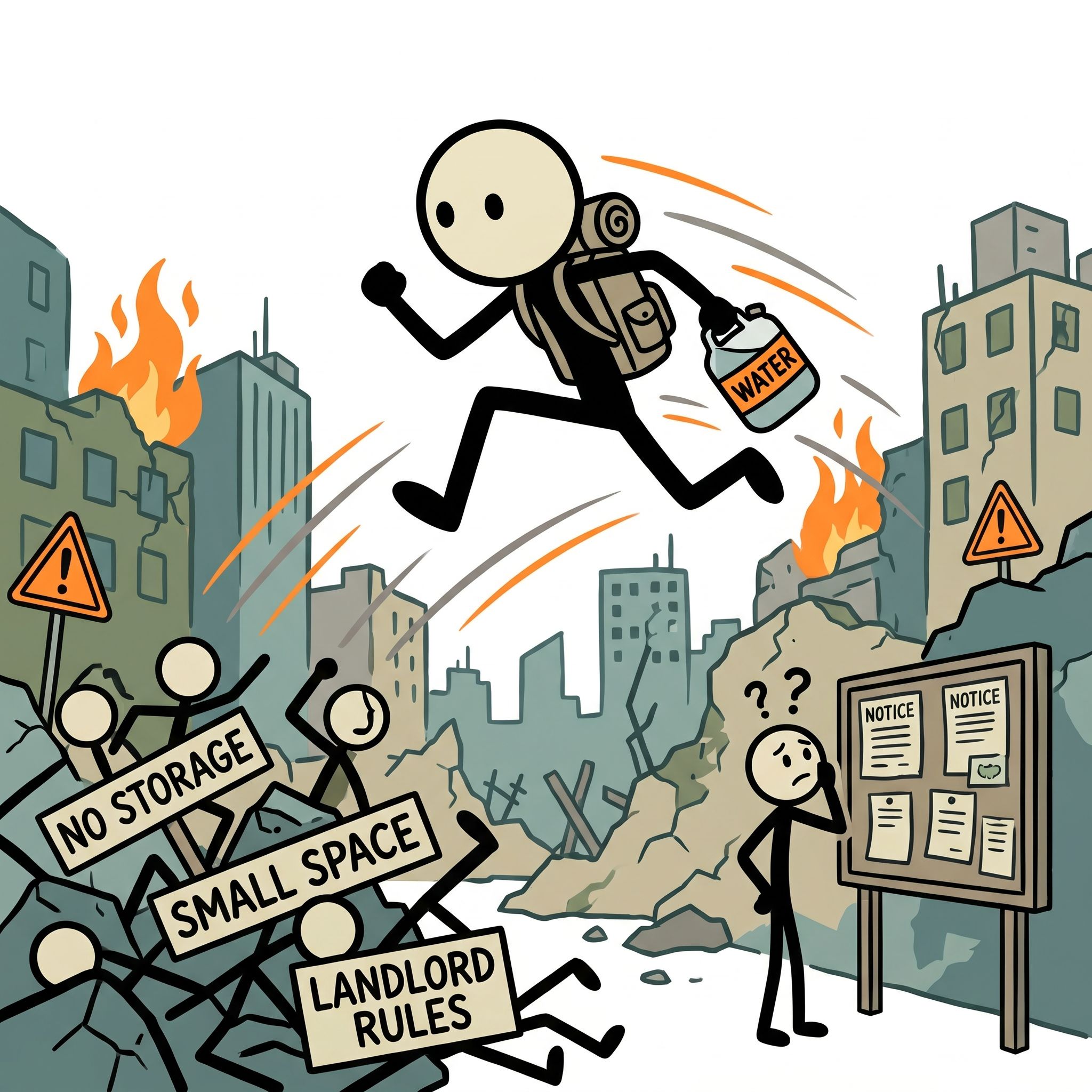
However, renting does not mean you are helpless in the face of a crisis. In fact, the constraints of renting can force you to become a more adaptable, resourceful, and mobile prepper. Renter emergency preparedness is not about building an underground bunker; it is about maximizing the space you have, understanding the systems you share, and outsmarting the limitations of your lease.
Whether you live in a high-rise condominium, a split-level duplex, or a basement studio, you can build a robust layer of personal resilience. By focusing on portable solutions, non-destructive modifications, and strategic planning, you can weather power outages, supply chain disruptions, and natural disasters just as effectively as any homeowner. It is time to take control of your safety and build a comprehensive preparedness strategy designed specifically for the modern renter.
Understanding Your Unique Vulnerabilities as a Renter
Before you can stockpile supplies or map out evacuation routes, you must first understand the specific risks associated with your rental property. Homeowners generally have total control over their property's infrastructure, but renters are inherently tied to shared systems. If a pipe bursts in the unit above you, your living room floods; if a neighbor falls asleep with a lit cigarette, your entire building is at risk.
This interconnectedness requires a different approach to risk assessment. You must evaluate not only the structural integrity of your own unit but also the potential cascading failures of the building as a whole. The Federal Emergency Management Agency (FEMA) emphasizes that community resilience begins with understanding your immediate environment. For renters, this means knowing exactly how your building operates when the grid goes down.
Shared Infrastructure and Landlord Dependencies
In most apartment complexes, critical utilities like water, heating, and sometimes even electricity are managed by central systems. When a severe weather event strikes, you are entirely dependent on property management to facilitate repairs or coordinate with municipal services. If the building's main water pump requires electricity to push water to the upper floors, a localized blackout instantly becomes a water crisis for everyone above the second story.
Furthermore, lease agreements often contain strict clauses prohibiting the storage of hazardous materials, the use of certain heating elements, or the installation of permanent fixtures. This means traditional preparedness mainstays—like storing dozens of gallons of gasoline or installing heavy-duty security doors—are simply not options. You must pivot to solutions that are lease-compliant, discreet, and highly effective.
Creating a Bulletproof Tenant Disaster Plan
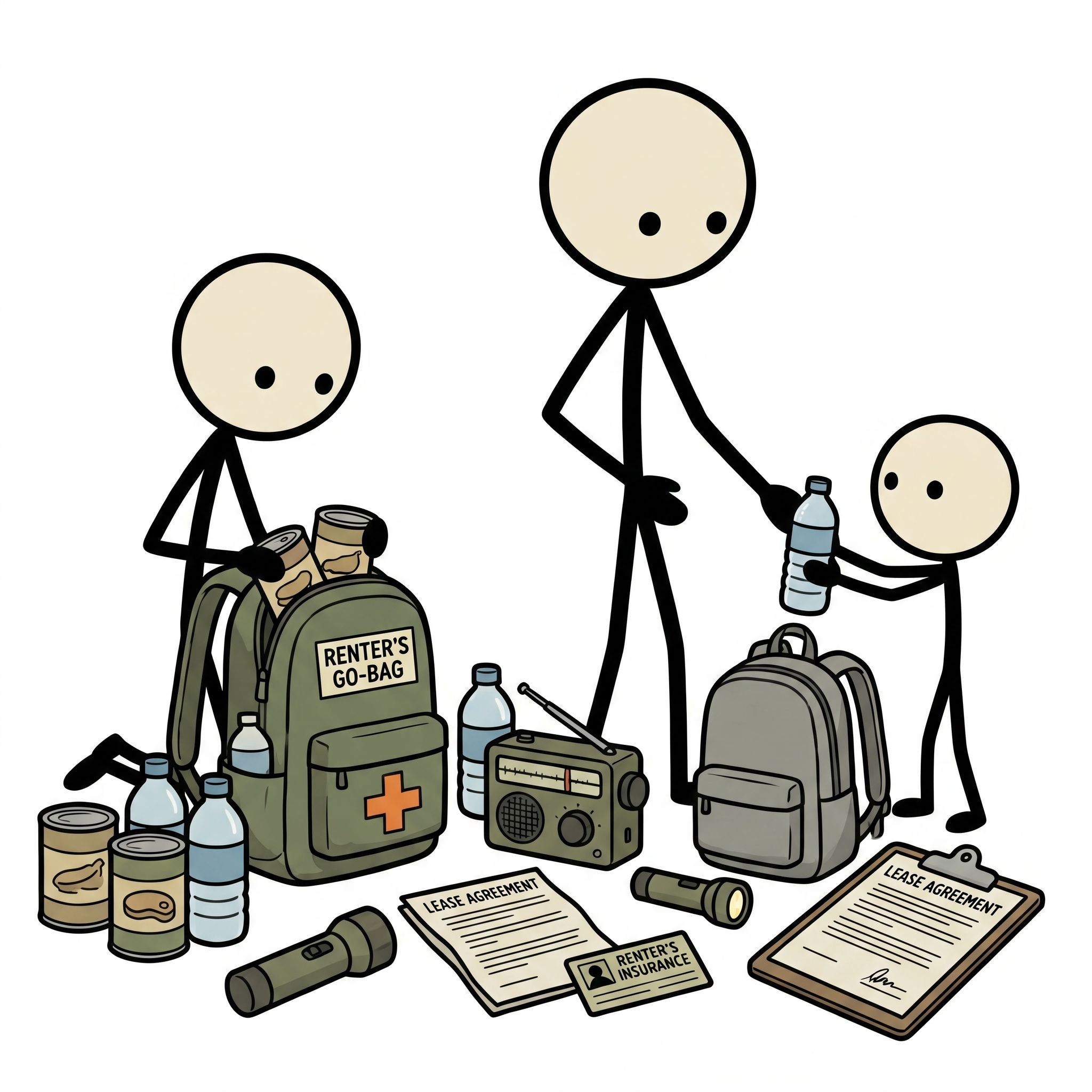
A solid tenant disaster plan is the foundation of your survival strategy. Because you do not own the building, your primary focus should be on personal safety, rapid evacuation, and self-sufficiency within the confines of your unit. This plan must account for the specific layout of your building, the location of emergency exits, and the protocols established by your landlord or property management company.
Start by acquiring a physical copy of your building's floor plan and emergency procedures. Many larger complexes have designated evacuation routes and assembly points, but these are rarely communicated effectively to tenants. Take the time to walk the stairwells, locate the fire extinguishers on your floor, and identify the manual pull stations for the fire alarm system.
Mapping Evacuation Routes
If you live above the ground floor, you must plan for vertical evacuation without the use of elevators. During fires, earthquakes, or severe power outages, elevators are death traps. Practice walking down the emergency stairwells with your family or roommates, noting any potential tripping hazards or poorly lit areas. If you live in a high-rise, consider the physical stamina required to carry a heavy go-bag essentials guide essentials guide down twenty flights of stairs.
You should establish at least two primary evacuation routes from your apartment unit to the street level. In the event that one stairwell is blocked by smoke or debris, you must instinctively know how to navigate to the secondary exit. The National Fire Protection Association (NFPA) recommends practicing these escape routes in the dark, as power failures are highly likely during an active emergency.
Communication and Rendezvous Points
When disaster strikes a densely populated apartment building, chaos often ensues in the hallways and lobbies. Your tenant disaster plan must include a predetermined rendezvous point outside the hazard zone. Choose a specific location—like a nearby park bench, a local coffee shop, or a distinct street corner—where your household will meet if you are separated during an evacuation.
Additionally, establish a communication protocol with your landlord or building superintendent. Save their emergency contact numbers in your phone and keep a written copy in your emergency kit. Understand their policies for emergency maintenance requests and clarify how they intend to communicate building-wide updates (e.g., text alerts, email blasts, or physical notices posted in the lobby) during an ongoing crisis.
Mastering Emergency Prep Without Home Modifications
One of the most frustrating aspects of renting is the inability to permanently alter your living space. You cannot bolt a heavy gun safe to the floor, install permanent storm shutters, or wire a transfer switch into the electrical panel. However, emergency prep without home modifications is entirely possible if you leverage modern, temporary, and non-destructive technologies.
The goal is to secure your environment and protect your supplies without forfeiting your security deposit. By utilizing heavy-duty adhesives, tension-based systems, and freestanding equipment, you can achieve a level of preparedness that rivals permanent installations. The United States Geological Survey (USGS) notes that securing heavy furniture is one of the most critical steps in earthquake preparedness, and thankfully, this can be done without drilling massive holes in your landlord's walls.
Securing Furniture and Breakables
If you live in a seismically active area, falling furniture is a massive threat. Instead of using traditional lag bolts to secure bookcases and armoires, look for renter-friendly earthquake straps that utilize industrial-strength adhesive pads. These pads bond securely to painted drywall and furniture but can be removed cleanly with a specialized solvent or heat gun when your lease is up.
For smaller items, such as tabletop water dispensers, emergency radios, or heavy decorative pieces, use museum putty or micro-crystalline wax. These compounds hold items firmly in place during aggressive shaking but peel off without leaving a residue. By strategically placing heavy items on lower shelves and securing the rest with adhesives, you drastically reduce the risk of blunt force injuries during a seismic event.
Temporary Weatherproofing and Insulation
Renters are often stuck with drafty windows and poorly insulated walls, which become a severe liability during winter power outages. Since you cannot rip out the drywall to add fiberglass insulation, you must rely on temporary thermal barriers. Heavy thermal blackout curtains are an excellent investment; they trap heat inside during the winter and block out scorching sunlight during summer heatwaves.
To further seal your unit, utilize removable weather stripping and draft dodgers at the base of your doors. For windows, shrink-to-fit plastic insulation kits provide a surprisingly effective barrier against freezing drafts. These kits use double-sided tape that is generally safe for window frames and can be peeled away in the spring, keeping your apartment's microclimate stable without permanently altering the fixtures.
Water Storage Strategies in Tight Spaces
Water is the most critical element of any survival plan, yet it poses the biggest logistical hurdle for apartment emergency prep. Water is incredibly heavy—weighing roughly 8.3 pounds per gallon—and takes up a massive amount of physical space. FEMA and the CDC recommend storing at least one gallon of water per person, per day, for a minimum of three days, though a two-week supply is vastly superior.
For a family of four, a two-week supply equates to 112 gallons of water. Storing this in a small apartment requires extreme creativity and a careful understanding of structural weight limits. You cannot simply stack a massive 100-gallon water barrel in the corner of a third-floor living room, as the concentrated weight could damage the flooring or violate building codes.
Distributing the Weight
The key to apartment Water Calculator is distribution. Instead of relying on large, centralized barrels, utilize smaller, stackable containers like water bricks or 5-gallon jerry cans. These can be slid under beds, tucked behind sofas, or stacked at the bottom of bedroom closets. By spreading the weight across multiple floor joists, you eliminate the risk of structural damage while maximizing unused square footage.
Make sure to store water containers away from direct sunlight and harsh chemicals. If you are keeping water in a utility closet near cleaning supplies, ensure the containers are made of high-density polyethylene (HDPE) to prevent chemical leaching. Always date your water containers and rotate them every six months to ensure freshness.
Emergency Bathtub Storage
If you have advanced warning of an incoming hurricane or severe winter storm, your apartment's bathtub becomes your greatest asset. Products like the WaterBOB or similar heavy-duty plastic bladders can be placed in the tub and attached to the faucet. Within minutes, you can safely store up to 100 gallons of drinking water before the municipal supply is compromised.
These bladders keep the water completely sealed off from soap scum, dirt, and airborne contaminants. Once the emergency has passed, the water can be drained, and the bladder disposed of. This is arguably the most efficient, space-saving Water Calculator method available for renters, requiring zero storage space until the moment it is actually needed.
Filtration for Questionable Sources
In a prolonged grid-down scenario, your stored water will eventually run out. Renters cannot install elaborate under-sink reverse osmosis systems, so portable filtration is mandatory. Keep high-quality gravity water filters, such as a Berkey system or a Sawyer Squeeze, in your emergency kit.
If you live near a natural water source or need to harvest rainwater from your apartment balcony, these portable filters will remove 99.99% of bacteria and protozoa. Even if the city issues a "boil water advisory" and you have no means to boil water due to a power outage, a reliable micro-filtration system ensures your family stays hydrated without risking waterborne illnesses.
Food Storage and Safe Indoor Cooking
The concept of renting and prepping often clashes when it comes to food storage and cooking. While homeowners might have deep freezers and outdoor propane grills, renters must build a emergency food storage guide that requires minimal space, long shelf life, and, most importantly, safe indoor preparation methods. A freezer full of meat is useless to a renter on the fifth floor when the power goes out for a week.
Your apartment pantry should be heavily weighted toward shelf-stable, calorie-dense foods that require little to no cooking. Canned goods, peanut butter, protein bars, jerkies, and freeze-dried meals are ideal. Utilize over-the-door shoe organizers to hold small canned goods, or install tension-rod shelving inside existing cabinets to double your vertical storage space.
The Lethal Danger of Carbon Monoxide
When the power goes out, the desperation to cook hot food or stay warm can lead to fatal mistakes. The CDC continually warns that carbon monoxide (CO) poisoning is a leading cause of accidental death following natural disasters. You must never, under any circumstances, use a charcoal grill, a camping stove, or a gas oven to heat your apartment.
Carbon monoxide is an odorless, colorless gas that builds up rapidly in the enclosed spaces of an apartment. Even leaving a window cracked is not sufficient ventilation for a camping stove. If you are going to cook indoors during an outage, you must use methods that do not produce deadly off-gassing.
Renter-Safe Cooking Alternatives
For safe indoor food preparation, rely on chemical heating methods or small-scale, contained fuels (if your lease permits). Flameless ration heaters (FRHs), commonly used in military MREs, require only a splash of water to generate enough heat to warm a meal. They produce no carbon monoxide and are completely safe for indoor use.
If you have an outdoor balcony and your lease allows it, a small butane or propane camping stove can be used strictly outside. However, for indoor boiling of water, canned heat products like Sterno are generally safe when used in a well-ventilated room, though they take significantly longer to boil water. Ultimately, prioritizing a "no-cook" emergency menu is the safest and most practical route for apartment dwellers.
Navigating Power Outages and Shared Systems
Losing electricity in an apartment building triggers a domino effect of failures. Electronic key fobs stop working, electric heating systems shut down, and the lack of lighting in windowless hallways creates immediate safety hazards. Because traditional gas-powered generators are strictly forbidden indoors due to noise, fire risk, and carbon monoxide, renters must look to modern battery technology.
Your goal is to maintain a baseline of electrical power to keep communication devices charged, run small medical equipment (like CPAP machines), and provide safe illumination. Fortunately, recent advancements in lithium-iron-phosphate (LiFePO4) batteries have revolutionized off-grid power for apartment dwellers.
Portable Power Stations
A portable power station is the ultimate renter-friendly generator. These devices store massive amounts of electricity, operate silently, and emit zero fumes, making them perfectly safe to run right next to your bed. A mid-sized unit (around 500Wh to 1000Wh) can charge a smartphone dozens of times, run a laptop for a week, or power a small 12-volt refrigerator.
To recharge these stations during a prolonged blackout, invest in portable, foldable solar panels. If you have a south-facing window or a balcony, you can drape the panels outside to catch the sun and slowly trickle-charge your power station. It will not run a full-sized air conditioner, but it will provide the critical energy needed to keep you connected to emergency broadcasts.
Safe Lighting Solutions
The American Red Cross strongly advises against using candles during a power outage. In the cramped, highly flammable environment of an apartment building, a knocked-over candle can easily start a catastrophic fire that spreads to neighboring units. You must eliminate open flames from your emergency lighting plan.
Instead, stock up on battery-powered LED lanterns, tactical flashlights, and headlamps. Headlamps are particularly valuable for renters, as they keep your hands free to navigate dark stairwells, carry supplies, or administer first aid. Place small, battery-operated tap lights in your bathroom and kitchen so you are never caught stumbling in pitch darkness.
Managing Climate Control
When the shared HVAC system dies, your apartment will rapidly adapt to the outside temperature. In the winter, you must focus on heating the person, not the room. Layering high-quality merino wool clothing, using sub-zero sleeping bags, and employing chemical hand warmers will keep your core temperature stable.
You can also create an indoor micro-climate. Pitching a small camping tent over your bed traps your body heat in a confined space, raising the ambient temperature inside the tent by several degrees. In extreme heat, focus on hydration, use battery-powered fans to circulate air, and apply cooling towels to your neck and wrists to prevent heatstroke.
Security and Community Resilience
In a severe crisis, the veneer of civil society can thin rapidly. Apartment buildings present unique security challenges because hundreds of strangers live in close proximity, separated only by hollow-core doors and drywall. While you cannot install steel security doors or permanent window bars, there are highly effective, non-permanent ways to fortify your rental unit.
Physical security starts at your front door. Since you likely cannot change the deadbolt without landlord permission, utilize secondary locking mechanisms when you are inside the unit. Heavy-duty door wedges, portable travel locks, and security bars that brace against the doorknob and the floor provide massive resistance against forced entry without requiring a single screw.
Window Security and Privacy
If you live on the ground floor or have windows accessible via a fire escape, window security is paramount. Since you cannot install permanent grates, consider applying a shatter-resistant security film to the glass. This clear, adhesive film holds the glass pane together if someone attempts to smash it, significantly delaying entry and creating enough noise to alert you.
Privacy is equally important during a grid-down scenario. If your apartment is the only one on the block with bright LED lights shining through the windows, you inadvertently become a target for desperate individuals. Ensure your blackout curtains are tightly drawn at night to maintain a low profile and conceal your operational capability.
The Power of the Renter Community
One of the most overlooked aspects of renter emergency preparedness is the people living around you. In a localized disaster, your neighbors are your immediate first responders. Building a sense of community resilience can mean the difference between life and death, especially if emergency services are overwhelmed.
You do not need to reveal the extent of your emergency stockpile, but you should casually network with your neighbors. Knowing who in your building is a nurse, who has a master key, or who might need physical assistance during an evacuation (like an elderly neighbor) allows you to pool resources and skills. A united floor of tenants is exponentially safer than an isolated individual.
Financial Preparedness and Documentation
Physical survival is the immediate priority, but financial survival dictates how quickly you can rebuild your life after the dust settles. Renters are incredibly vulnerable to total property loss because the landlord's insurance only covers the physical building, not the personal belongings inside the units. If a fire guts your apartment, your landlord rebuilds the structure, but you are left with nothing.
Financial preparedness is a cornerstone of any comprehensive disaster plan. You must take proactive steps to shield your assets, document your possessions, and ensure you have the capital necessary to relocate if your rental becomes uninhabitable.
The Necessity of Renter's Insurance
It is a staggering statistic that less than half of all renters carry renter's insurance. For roughly the cost of a few cups of coffee a month, renter's insurance provides tens of thousands of dollars in coverage for your personal property. It also typically includes "loss of use" coverage, which pays for your hotel and living expenses if you are forced to evacuate due to a covered disaster.
Review your policy carefully. Standard renter's insurance often excludes flood and earthquake damage. If you live in a flood plain or a seismic zone, you must purchase specific, separate riders to ensure you are fully protected. Do not wait until a hurricane is named to buy a policy, as insurance companies frequently place moratoriums on new policies when a storm is imminent.
Documenting Your Belongings
If you ever need to file an insurance claim, the burden of proof is on you. Trying to remember every item you owned after a catastrophic loss is nearly impossible. Take an afternoon to conduct a comprehensive video walkthrough of your apartment. Open every closet, pull out every drawer, and clearly film your electronics, furniture, and valuables.
Store this video, along with digital copies of your lease agreement, identification, and critical medical records, on an encrypted USB drive. Keep this drive in your evacuation go-bag, and upload a backup copy to a secure cloud server. If your apartment building burns down, this documentation will be the key to expediting your insurance claim and getting your life back on track.
The Evacuation Go-Bag
Because renters are subject to the decisions of property managers and local fire marshals, you may be ordered to evacuate your building with zero notice. Your tenant disaster plan must include a fully stocked go-bag (or Go-Bag Builder) stationed right by your front door. This bag should contain three days' worth of clothing, travel-sized toiletries, physical cash in small denominations, backup batteries, and crucial documents.
When the fire alarm rings at 2:00 AM, you do not have time to pack. You grab the bag, grab your family, and head for the stairs. Your go-bag ensures that even if you are locked out of your apartment for days, you have the immediate resources necessary to secure a hotel room, buy food, and navigate the initial shock of the emergency.
Embracing the Adaptable Mindset
The challenges of renting—shared walls, restrictive leases, and limited space—do not disqualify you from being deeply and effectively prepared. In many ways, the constraints of apartment living force you to build a leaner, smarter, and more mobile survival strategy. By focusing on portable power, non-destructive security modifications, and creative storage solutions, you bypass the limitations of your environment.
True resilience is not found in the deed to a house; it is built through knowledge, planning, and adaptability. You have the power to secure your unit, protect your loved ones, and weather the storm, no matter whose name is on the lease. Take inventory of your space today, implement these renter-friendly strategies, and step confidently into a safer, more prepared future.
Frequently Asked Questions
What can renters do to prepare that doesn't require home modifications?
Focus on portable, self-contained solutions: portable power stations, quality Go-Bag Builders, 72-hour water and emergency food storage guide in your unit, portable water filters, battery-powered radios and lights, and pre-planned evacuation routes from your building.
Should renters get renters insurance?
Absolutely. Renters insurance typically costs $15-30/month and covers your belongings in case of fire, theft, water damage, and many natural disasters. Standard policies exclude floods and earthquakes — consider riders if you're in a high-risk area.
What are the biggest emergency risks unique to renters?
High-rise buildings present longer evacuation times, shared utilities mean disruptions are outside your control, and you depend on your landlord to fix structural vulnerabilities. You may also face displacement if the building is condemned after a disaster.
Sources & Further Reading
- FEMA Build A Kit
- Red Cross Emergency Preparedness
- HUD Renter Resources