⚡ Key Facts
- Over 10 million households in the United States are headed by a single parent, according to the U.S. Census Bureau, representing a massive demographic with unique emergency planning needs.
- FEMA reports that nearly 60% of American adults do not have a basic emergency operations plan, a vulnerability that is magnified in single-income, single-caregiver households.
- The American Red Cross emphasizes that single parents must designate at least two trusted emergency contacts—one local and one out-of-state—to facilitate school reunification if local cellular networks fail.
- CDC guidelines highlight that children are highly susceptible to disaster-related psychological trauma, making the emotional regulation of the sole present caregiver a critical survival tool.
- Financial resilience is a primary barrier; however, FEMA notes that effective preparedness relies more on free, pre-established communication and evacuation plans than on expensive survival gear.
It is 2:00 AM, and the shrill blare of a weather alert jolts you awake. The power is already out, the wind is howling against the glass, and from down the hall, you hear the anxious voice of your child calling your name. You look around the dark room, and the reality of your situation settles in: there is no one else to tap on the shoulder. There is no partner to split the duties with, no backup adult to wrangle the kids while you pack the car, and no one to bounce a critical, split-second decision off of. The buck stops entirely with you. For millions of solo caregivers, this scenario represents the ultimate test of a single parent emergency plan. See go-bag essentials checklist for details.
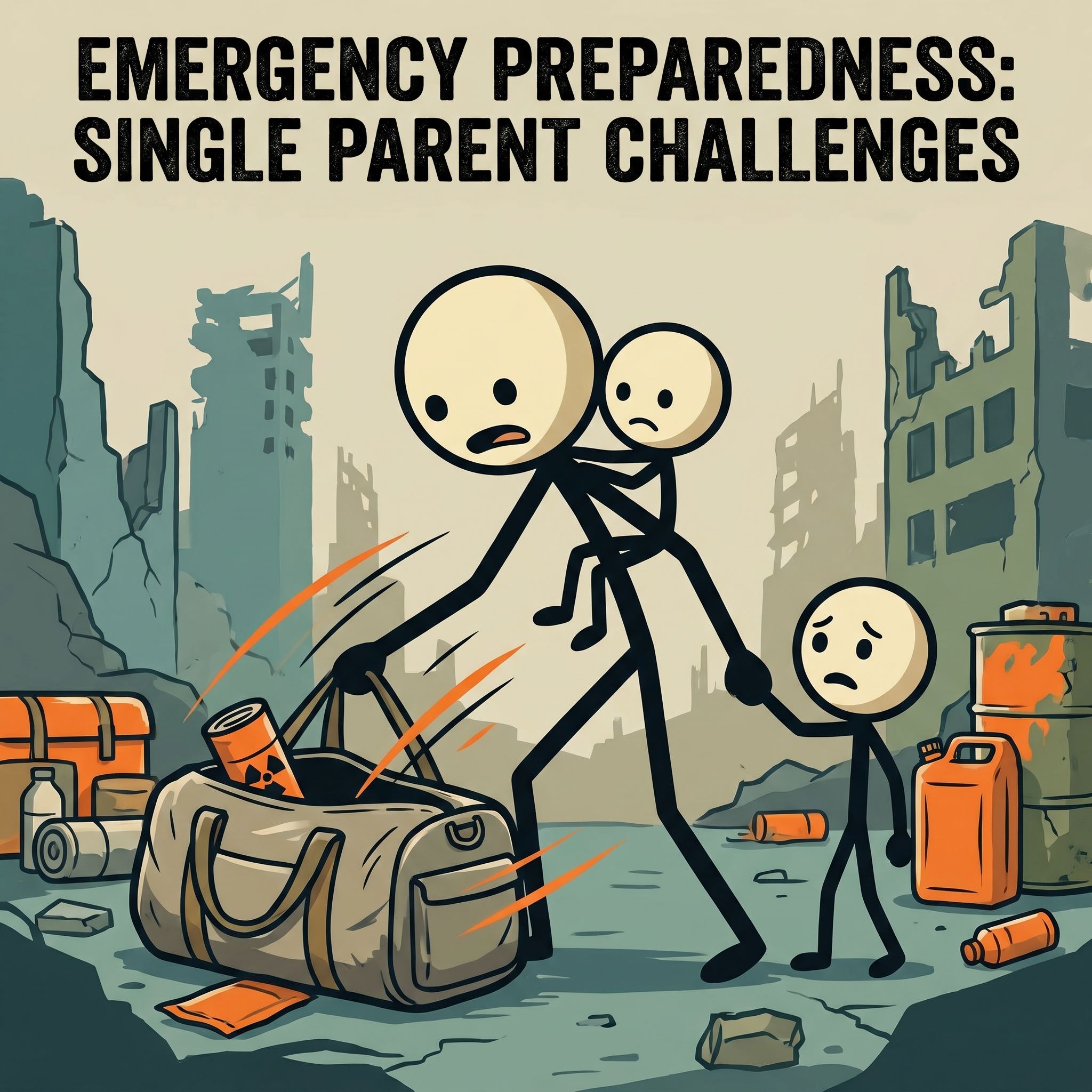
Parenting on your own is already an exercise in elite logistics, crisis management, and endurance. You already do the work of two people every single day. Disaster preparedness is simply an extension of the fierce protection and management you already provide for your family. However, traditional survival guides often assume a two-parent household where labor can be divided. They assume one adult can monitor the NOAA weather radio while the other boards up windows or manages the children. See family emergency plan framework for details.
When you are the sole provider and protector, the blueprint must change. You face highly specific challenges: the crushing weight of solo decision-making, the physical limitations of being the only adult during an evacuation, the bureaucratic nightmare of school reunification, and the very real financial constraints of prepping on a single income. This comprehensive guide addresses those exact hurdles, providing you with an authoritative, actionable framework for solo parent disaster prep. You do not need to be afraid of the unknown; you simply need to be prepared for it. See water calculator for details.
The Weight of Solo Decision-Making
In a crisis, the human brain goes through a process known as the OODA loop: Observe, Orient, Decide, Act. In a two-parent household, the "Orient" and "Decide" phases are often collaborative. Spouses can validate each other's concerns, share the mental load, and confidently agree to evacuate or shelter in place. When executing an emergency plan with kids alone, you bear the entire cognitive burden. This can quickly lead to decision fatigue or, worse, analysis paralysis. See supply calculator for details.
To combat the overwhelming nature of solo decision-making, you must remove the need to make complex choices during the actual emergency. You do this by making those decisions right now, in a calm, controlled environment. By establishing rigid "If/Then" parameters for your family, you transition from a state of anxious deliberation to a state of immediate execution. See survival scenarios for details.
Creating Your "If/Then" Decision Matrix
A decision matrix is a pre-written set of rules that dictates your actions based on specific triggers. According to FEMA, having a predetermined threshold for evacuation significantly reduces the time it takes to get to safety. Sit down with a notebook and outline the most likely disasters in your specific region—whether that is a hurricane, wildfire, tornado, or winter storm. See Protocol Survival app for details.
Next, establish your absolute triggers. For example: "IF a Level 3 hurricane is projected to hit our county, THEN we evacuate 48 hours before landfall, regardless of what the neighbors are doing." Or, "IF a wildfire is reported within ten miles of our subdivision, THEN the car is packed and the kids are in their shoes." By writing these rules down, you eliminate the second-guessing that plagues solo caregivers. When the trigger occurs, the decision is already made. You simply execute the plan.
Information Gathering Without Overload
When you are the only adult, you cannot afford to spend hours doom-scrolling social media for updates. You need high-fidelity information delivered directly to you. Invest in a dedicated, battery-operated NOAA weather radio with Specific Area Message Encoding (SAME) technology. This device will only alert you when your specific county is under threat, filtering out the noise.
Additionally, sign up for your local county's emergency text alert system. Ensure you have the FEMA app downloaded on your smartphone, which provides real-time alerts from the National Weather Service. By curating your information sources, you protect your mental bandwidth, allowing you to focus entirely on the physical safety of your children.
Operating Without a Backup Adult
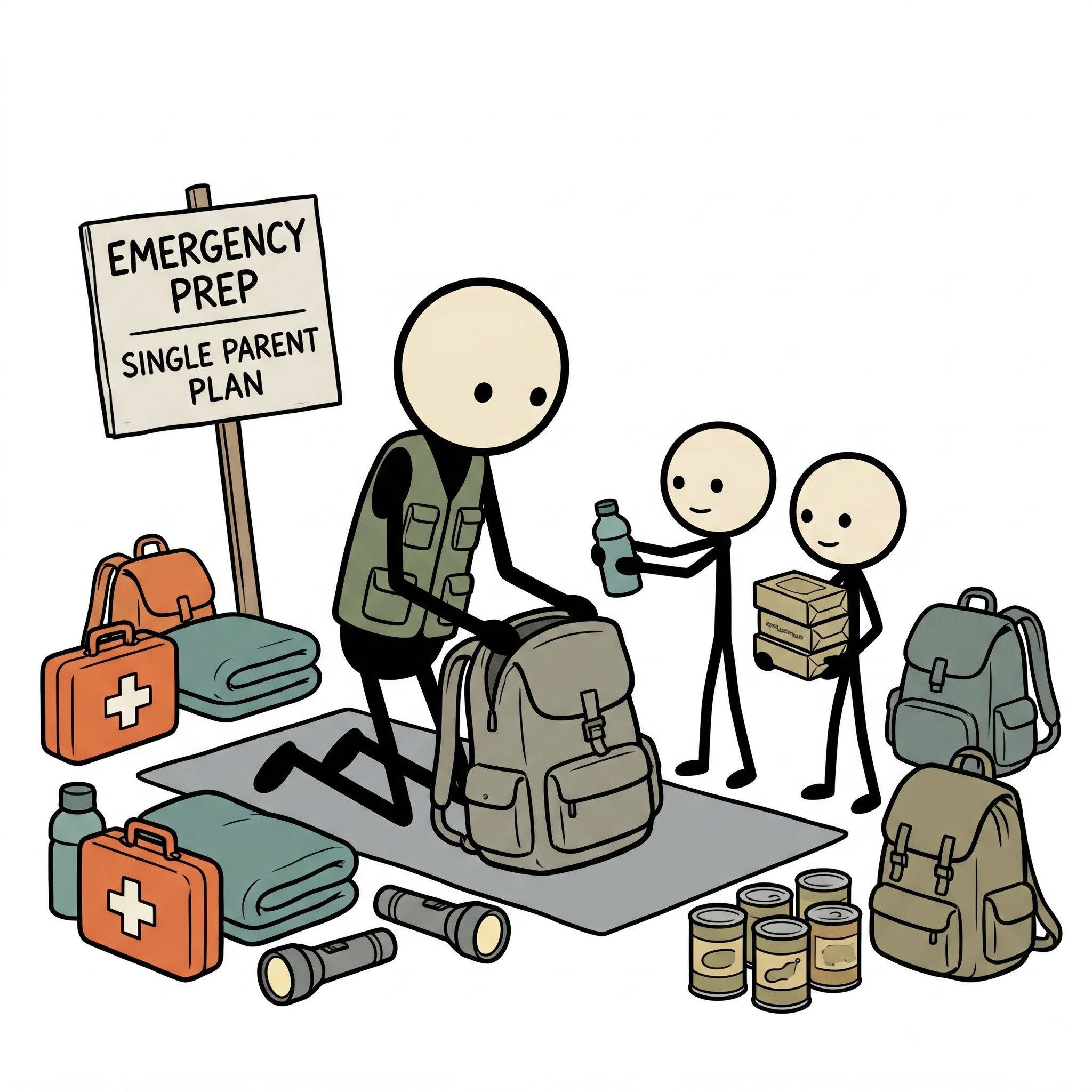
The physical logistics of managing a disaster without a second capable adult are daunting. If you have a baby and a toddler, simply carrying them to the car leaves you with no hands to carry a 72-hour survival kit. Furthermore, a common concern in single mom emergency preparedness is the vulnerability associated with physical security and the division of labor. You cannot be in two places at once.
The solution to lacking a backup adult inside the home is to aggressively build a reliable support network outside the home. You must construct a "village" of mutual aid before the sirens sound. Isolation is a single parent's greatest vulnerability in a disaster, and community is the ultimate antidote.
Building Your Emergency "Prep Pod"
The American Red Cross strongly advises individuals living alone or single parents to form a network of at least three trusted people who will check on them during a crisis. Look to your immediate surroundings. Identify neighbors, local friends, or fellow parents from your child's school who are reliable and level-headed. Approach them and propose a mutual aid agreement.
Your agreement should be simple but explicit. For instance, if a severe winter storm knocks out the power, you agree to pool resources. Perhaps you have a portable gas stove, and they have a cord of firewood and a fireplace. Agree that in the event of a sudden evacuation, you will caravan together. Knowing that another adult is looking out for your vehicle on the highway provides an immense psychological relief.
What Happens If You Get Hurt?
This is the scenario that keeps solo parents awake at night: what if you are incapacitated? If you fall and break an ankle during an earthquake, who takes over? You must cross-train your children to the absolute limits of their age and maturity. Even very young children can be taught life-saving protocols.
Teach children as young as four how to unlock your smartphone, dial 911, and put the phone on speaker. Practice this using a deactivated cell phone. Ensure your children know their full legal names, your full legal name, and their home address. For older children, enroll them in a basic first aid and CPR course. Keep a clearly labeled, highly visible first aid kit in a central location, and ensure your kids know exactly what to do if you are unable to direct them.
Childcare and Logistics During an Evacuation
Evacuating is stressful for anyone, but evacuating alone with frightened children requires a masterful level of crowd control. You are simultaneously the driver, the navigator, the mechanic, the chef, and the therapist. Keeping your children emotionally regulated while you navigate gridlocked traffic or hazardous roads is a monumental task.
The key to a successful evacuation is proactive organization. Your vehicle must be pre-staged to serve as a mobile command center and a temporary home. You cannot afford to pack the car while your children are crying in the hallway; the car must be ready to receive them at a moment's notice.
Staging the Evacuation Vehicle
Keep your vehicle’s gas tank at least half-full at all times. This is a non-negotiable rule for prepping for single parent household success. During a widespread evacuation, gas stations will run out of fuel or lose power to their pumps. Having a half-tank guarantees you a head start.
Store a dedicated vehicle emergency kit in your trunk. This should include jumper cables, tire sealant, a first aid kit, high-calorie protein bars, and bottled water. Inside the cabin of the car, organize a "childcare station." Have a small bin accessible from the driver's seat containing wet wipes, trash bags, a change of clothes for each child, and non-perishable snacks. If you are stuck in traffic for twelve hours, you need to be able to reach these items without pulling over.
The Psychological Go-Bag
The CDC emphasizes that children process trauma differently than adults. Their sense of safety is entirely dependent on your reactions and the presence of familiar routines. While you pack a physical go-bag essentials guide with flashlights and water, you must also pack a psychological go-bag for your kids to keep them occupied and grounded during transit.
Create a dedicated backpack for each child that they only see during emergencies or drills. Fill it with a new coloring book, crayons, a small puzzle, a favorite non-perishable treat, and a comforting item like a small stuffed animal. Do not include electronics that require internet or rapid battery draining. When you hand them this special bag in the car, it acts as a powerful distraction, buying you the quiet time you need to focus on navigating to safety.
The Nightmare Scenario: School and Daycare Reunification
Disasters rarely wait for the family to be gathered safely around the dinner table. There is a high statistical probability that an earthquake, flash flood, or localized threat will occur on a Tuesday afternoon while you are at work and your children are at school or daycare. For a single parent, this separation is agonizing.
You cannot rely on the assumption that you will simply drive to the school and pick them up. Roads may be impassable, and communication networks may be entirely down. You must have a meticulous, pre-verified reunification plan that aligns perfectly with the school's emergency operations.
Understanding the School's EOP
Every accredited school and daycare is required by law to have an Emergency Operations Plan (EOP). However, very few parents actually read it. Schedule a brief meeting or phone call with your child’s principal or daycare director. You need to ask specific, pointed questions about their procedures.
Ask them: "If the building is unsafe, what is your primary and secondary off-site evacuation location?" Ask them: "How will you communicate with parents if the local cellular towers are down?" Ask them: "What is your protocol for releasing children if I cannot physically get there?" Knowing these answers prevents you from driving blindly to a school building that has already been evacuated to a secondary site miles away.
Navigating Custody Agreements During Disasters
For many single parents, custody agreements and non-custodial parents add a layer of legal and logistical complexity to emergency planning. In a chaotic disaster environment, schools will default to their official release forms. If a non-custodial parent, a stepparent, or a trusted neighbor is not explicitly listed on the emergency release form, the school will legally refuse to hand over your child.
Review your child’s emergency release forms at the start of every single semester. Ensure that your trusted "Prep Pod" members are listed as authorized pickups. If there are legal protection orders or custody stipulations regarding the other parent, ensure the school administration has the most up-to-date, legally binding paperwork on file. In a crisis, administrative staff will not have the time to verify verbal claims; the paperwork must be bulletproof.
The Out-of-State Contact Strategy
During a localized disaster, local cell phone towers become instantly overwhelmed by thousands of people trying to call their loved ones. However, long-distance lines often remain open. The American Red Cross recommends that every family designate an out-of-state emergency contact.
Choose a relative or close friend who lives several states away. Memorize their phone number and ensure your children memorize it, or have it written on a laminated card inside their backpacks. If a disaster strikes while you are separated, you and your child's school administration can both call the out-of-state contact to relay messages and confirm safety. This central communication hub is vital when local texts will not go through.
Financial Constraints: Prepping on a Single Income
One of the most persistent myths in the survival community is that preparedness requires thousands of dollars in tactical gear, freeze-dried food pallets, and off-grid solar generators. When you are managing a household on a single income, this financial barrier can feel insurmountable. The reality is that the most critical aspects of disaster readiness cost absolutely nothing.
Situational awareness, physical fitness, a well-rehearsed evacuation plan, and community networking are all free. When it comes to acquiring physical supplies, the strategy must shift from bulk purchasing to gradual, systematic accumulation. You can build a highly effective emergency stockpile without jeopardizing your monthly grocery budget.
The "Prep a Week" Strategy
Do not attempt to buy a complete 72-hour kit all at once. Instead, adopt the "Prep a Week" strategy. Allocate an extra $5 to $10 during your weekly grocery run specifically for emergency supplies. Week one: buy two extra gallons of distilled water and store them under the bed. Week two: purchase an extra jar of peanut butter and a box of protein bars. Week three: pick up a basic first aid kit from the pharmacy aisle.
Over the course of a few months, this micro-budgeting approach will yield a robust emergency pantry. Focus strictly on shelf-stable foods that your children already eat and enjoy. A disaster is not the time to introduce your toddler to freeze-dried beef stroganoff. Stick to familiar comfort foods that require no cooking and minimal water to prepare.
Dollar Store Prepping and Upcycling
Many essential emergency supplies can be found at local dollar stores. You can stock up on flashlights, batteries, manual can openers, matches, heavy-duty trash bags, and hygiene supplies for a fraction of the cost of sporting goods stores. While you shouldn't buy life-saving medical gear at a discount store, basic organizational and sanitary supplies are perfectly adequate.
Furthermore, upcycle items you already own. Empty, thoroughly washed two-liter soda bottles are excellent for storing tap water for sanitation purposes (like flushing toilets). Old backpacks can be repurposed into go-bags. By being resourceful, you stretch your single-income budget while still achieving a high state of readiness.
Protecting Your Financial Documents
Following a disaster, the road to recovery is paved with paperwork. FEMA assistance, insurance claims, and emergency housing all require proof of identity and residence. If your home is destroyed and your documents are lost, proving your identity as a single parent can delay critical financial aid by weeks.
Purchase a fireproof and waterproof document bag. Inside, place physical copies of your driver’s license, passports, birth certificates, social security cards, custody agreements, health insurance cards, and the deed or lease to your home. Additionally, scan all of these documents and save them to a secure, encrypted cloud storage service. If you have to evacuate with nothing but the clothes on your back, having digital access to your life's paperwork will vastly accelerate your financial recovery.
Empowering Your Kids: Turning Dependents into Teammates
The instinct of every parent is to shield their children from the frightening realities of the world. However, keeping your children in the dark about emergency preparedness does not protect them; it makes them vulnerable. When children do not know what is happening during a crisis, their imaginations will invent scenarios far worse than reality.
By involving your children in the planning process, you demystify disasters. You replace their fear with a sense of agency and purpose. In a single-parent household, you need your kids to be active teammates, not passive dependents. Assigning them age-appropriate roles ensures they are focused on a task rather than panicking.
Roles for Toddlers and Preschoolers (Ages 3-5)
At this age, children cannot take on complex responsibilities, but they can follow simple, rehearsed commands. Their primary job is to be cooperative. Turn emergency drills into a game. Play "Simon Says" with emergency actions: "Simon says put on your hard-soled shoes! Simon says grab your comfort backpack!"
Their designated emergency role should be managing their own psychological go-bag. Tell them, "Your very important job is to hold onto your special backpack and stay right next to my leg." Giving them ownership of a small, manageable task keeps them anchored to you during the chaos of an evacuation.
Roles for Elementary Age (Ages 6-11)
Children in this age bracket are highly capable of taking on logistical tasks, which takes a massive burden off your shoulders. Assign them specific duties to execute the moment an emergency is declared. One child can be the "Pet Master," responsible for leashing the family dog or securing the cat in its carrier. Another child can be the "Shoe Captain," ensuring everyone has close-toed shoes and jackets.
Walk them through the house and teach them how to identify hazards. Show them where the emergency flashlights are kept and make it their responsibility to check the batteries on the first of every month. By making them an official part of the safety team, you build their confidence and situational awareness.
Roles for Teenagers (Ages 12+)
Teenagers in a single-parent household must be treated as junior adults during a crisis. They should be fully cross-trained in all of your emergency protocols. Teach your teenagers how to safely shut off the main water valve, the gas line, and the electrical breaker box. Ensure they know how to use a fire extinguisher using the PASS method (Pull, Aim, Squeeze, Sweep).
Your teens should also be certified in first aid and CPR. Have frank, adult conversations with them about the decision matrix. Say to them, "If I am hurt, or if I am not here, this is the plan you will execute to keep yourself and your younger siblings safe." While it is a heavy conversation, it is a necessary one. A trained teenager is an invaluable asset who can literally save the family.
Practicing the Plan: The Importance of Drills
A plan that exists only on paper is merely a suggestion. Under the extreme stress of a real disaster, fine motor skills degrade, and memory recall becomes spotty. The only way to ensure your single parent emergency plan works is to practice it until it becomes muscle memory.
Conduct family emergency plan drills at least twice a year. Practice evacuating the house in the dark using only flashlights. Time how long it takes to get everyone, including pets, into the car. Practice your communication protocols by having the kids call the out-of-state emergency contact. After every drill, hold a brief family debriefing. Ask the kids what went well and what felt confusing. Adjust your plan based on these real-world test runs.
As a single parent, you are the ultimate architect of your family's safety. The challenges you face—solo decision-making, logistical hurdles, and financial limits—are significant, but they are not insurmountable. By leaning heavily into pre-planning, building a robust community network, and empowering your children to act as a cohesive team, you neutralize the vulnerabilities of parenting alone. You already possess the resilience, the grit, and the fierce dedication required to navigate life's daily storms. By taking these methodical steps today, you ensure that when a real disaster strikes, you won't just be reacting to the chaos—you will be leading your family safely through it.
A practical family emergency plan helps turn this advice into responsibilities everyone can rehearse before a disruption.
Use the household supply calculator to size food, water, and consumables to the people who will actually depend on them.
For a time-critical departure, the go-bag builder keeps the essential loadout separate from heavier backup gear.
Working through relevant emergency scenarios reveals where a plan needs a backup power, transport, or communication decision.
The structured preparedness courses provide a useful way to practice the same decisions instead of leaving them as a one-time checklist.
Frequently Asked Questions
What is the most important emergency prep step for single parents?
Build your support network first. Identify at least two trusted adults who can help in an emergency — a neighbor, family member, or close friend — and create a mutual aid agreement before any disaster.
How do I plan for school reunification as a single parent?
Know your school's reunification protocol and the designated reunification site. Designate at least two authorized adults who can pick up your children if you can't reach the school. Update the school's emergency contact list annually.
What legal documents should single parents keep in their emergency kit?
Include custody agreements, birth certificates, passports, medical authorization forms allowing another adult to consent to your child's emergency medical care, insurance cards, and a power of attorney for a trusted person.
Sources & Further Reading
- FEMA Family Emergency Plan
- Red Cross Emergency Preparedness for Families
- CDC Family Preparedness