⚡ Key Facts
- According to the Federal Emergency Management Agency (FEMA), the average urban grocery store relies on a "just-in-time" supply chain and holds only a three-day supply of food on its shelves.
- The Centers for Disease Control and Prevention (CDC) warns that high-rise apartment buildings can lose water pressure immediately during a localized power grid failure.
- Data from the National Oceanic and Atmospheric Administration (NOAA) indicates that weather-related power outages have doubled over the past two decades, heavily impacting dense urban grids.
- During a mass urban evacuation, the United States Geological Survey (USGS) notes that average traffic speeds can plummet to under 5 miles per hour, turning highways into parking lots.
- With over 80% of the U.S. population residing in urban areas, the American Red Cross emphasizes that community cooperation is the single highest predictor of survival and recovery during a city-wide disaster.
Gridlock: The Evacuation Dilemma and SHTF City Planning
Identifying and Navigating Urban Chokepoints
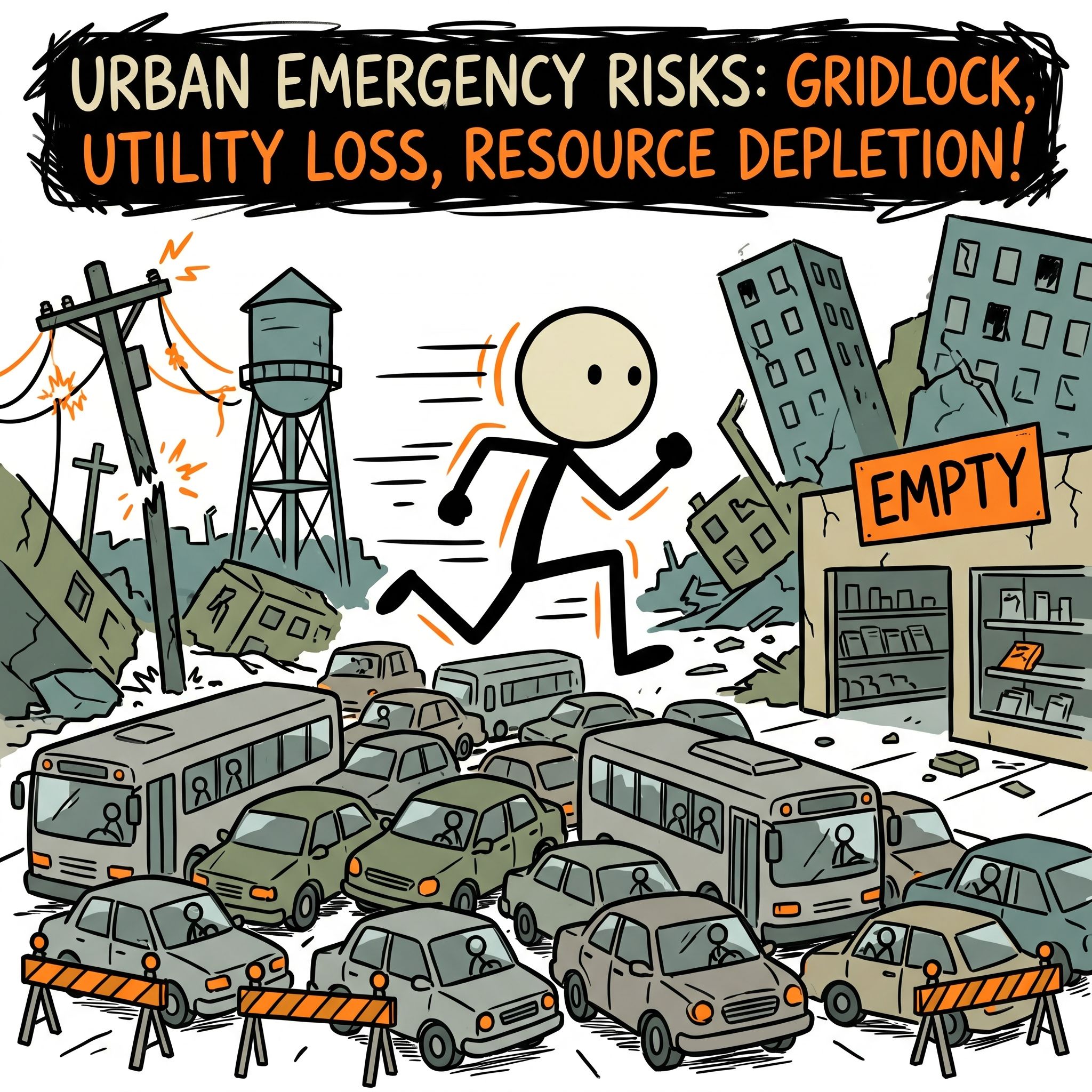
Every city has architectural bottlenecks. If you live in a city surrounded by water, bridges and tunnels are your primary chokepoints. If you live in a valley or a basin, mountain passes or narrow highways serve the same restrictive function. Take the time to physically map out your city using physical, topographical maps—do not rely solely on GPS, which can fail or lose signal during a major crisis. Identify at least three distinct routes from your home to your workplace, and from your home to a safe location outside the city limits. Crucially, identify pedestrian-only routes. Abandoned railway lines, park trails, and alleyways can provide rapid foot-travel alternatives when major thoroughfares are blocked. Keeping a folding bicycle or an electric scooter in your apartment or trunk can increase your evacuation speed by 400% compared to walking, allowing you to bypass stalled vehicular traffic entirely.The Case for Bugging In
Because evacuation is incredibly risky in a dense metropolis, the cornerstone of urban emergency prepping is often the decision to "bug in." Bugging in means sheltering in place within your home, relying on your pre-positioned supplies, and waiting out the initial chaos of a disaster. FEMA strongly recommends sheltering in place for the vast majority of localized emergencies, including severe weather events, chemical spills, and civil unrest. Bugging in removes you from the unpredictability of the streets and keeps you close to your resources. However, bugging in is only a viable strategy if your apartment is adequately prepared to function off the grid. You must have the supplies necessary to sustain yourself without running water, electricity, or gas for a minimum of two weeks. If your building's structural integrity is compromised, or if a fire threatens your block, you must be prepared to transition instantly from bugging in to bugging out.The Achilles' Heel of High-Rises: Utility Dependence
Water Sourcing When the Taps Run Dry
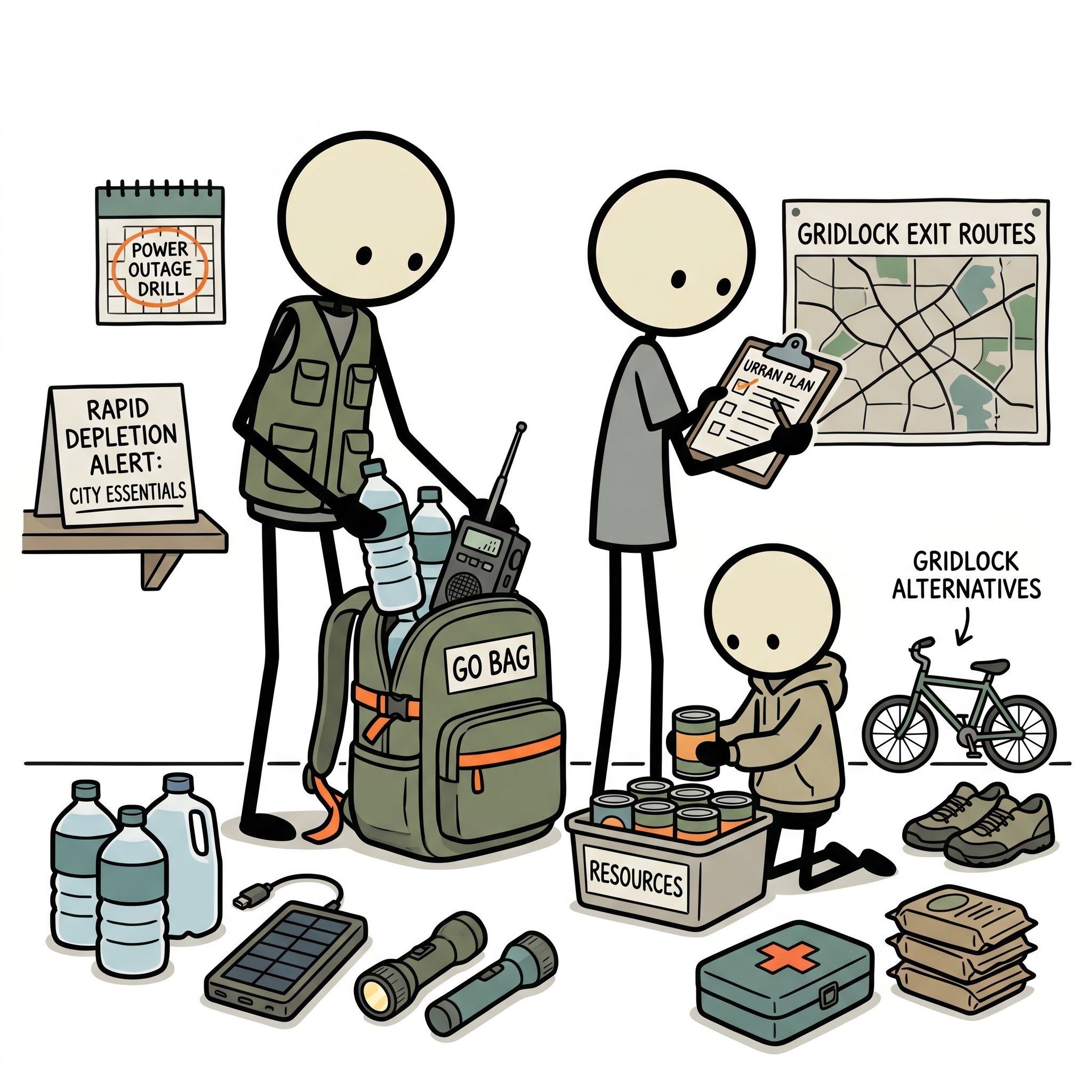
Water is your most critical priority. The CDC recommends storing at least one gallon of water per person, per day, for a minimum of three days—though a two-week supply is highly advisable for urbanites. In a small apartment, storing 14 to 28 gallons of water can seem daunting, but it is entirely possible with smart space management. Utilize the dead space in your apartment. Slide flat, stackable water containers under your bed, or line the floor of your closets with sturdy water bricks. If you have advance warning of a storm or a potential grid failure, utilize a bathtub water storage bag. These heavy-duty bladders can hold up to 100 gallons of potable water, keeping it safe from soap residue and debris. You must also prepare to source and purify water if your stored supplies run out. A vital addition to your apartment survival kit is a four-way sillcock key. This small, inexpensive metal tool allows you to open the tamper-proof commercial water spigots found on the exterior of commercial buildings, strip malls, and apartment complexes. Pair this with a high-quality gravity water filter to ensure any scavenged water is safe for consumption.Off-Grid Power in a Concrete Box
You cannot safely run a gas generator inside an apartment or on a balcony due to the lethal risk of carbon monoxide poisoning. Instead, urban dwellers must rely on safe, silent, and fume-free power alternatives. Invest in a high-capacity portable power station (often called a solar generator). These lithium-ion battery banks can power medical devices, charge communication tools, and even run a small refrigerator or fan for several hours. Pair the power station with foldable solar panels that can be draped over a south-facing balcony railing or hung in a large window. For lighting, prioritize hands-free illumination. Headlamps are essential for navigating dark stairwells or performing tasks in your apartment. Stock up on solar-charged inflatable lanterns, which are lightweight, space-saving, and provide excellent ambient light to keep morale high during a blackout. Avoid candles whenever possible, as the risk of an uncontainable fire in a high-density building is a catastrophic urban preparedness threat.The Sanitation Challenge
Sanitation is the most overlooked aspect of urban emergency prepping. If the water stops flowing, your toilet stops flushing. Within 48 hours, the inability to manage human waste can lead to severe hygiene issues and the rapid spread of diseases like cholera and dysentery. Do not flush your toilet if the municipal water is shut off, as this can cause sewage to back up into your bathtub or sinks. Instead, implement a twin-bucket sanitation system. Use two heavy-duty 5-gallon buckets—one for liquid waste and one for solid waste. Line the solid waste bucket with heavy-duty contractor bags. After each use, cover the waste with a layer of carbon-rich material, such as sawdust, kitty litter, or shredded newspaper, to neutralize odors and absorb moisture. Double-bag the waste securely and store it on a balcony or in a designated, well-ventilated area until municipal trash services resume or a safe disposal site is established by emergency services.The 72-Hour Myth: Rapid Resource Depletion
There is a persistent myth that you only need 72 hours' worth of supplies to survive a disaster. While a 72-hour kit is an excellent starting point, it is woefully inadequate for a major urban crisis. Cities operate on a "just-in-time" supply chain, meaning grocery stores and pharmacies only stock enough inventory to meet normal, daily demand. When a crisis is imminent, panic buying empties store shelves in a matter of hours. If supply trucks cannot enter the city due to gridlock, damaged infrastructure, or severe weather, those shelves will remain empty for weeks. You cannot rely on the grocery store down the street to sustain you during a systemic failure. To insulate yourself from rapid resource depletion, you must take proactive steps to secure your own supply chain. This requires building a robust, space-efficient stockpile of food, medical supplies, and everyday necessities within the confines of your living space.Building an Unobtrusive Food Stockpile
Creating a deep pantry in an apartment requires prioritizing caloric density and shelf life over volume. You do not have the space for massive buckets of bulk grains, so you must be strategic about what you store. Focus on foods that require little to no cooking, as your ability to boil water or heat meals may be severely limited. Canned proteins (chicken, tuna, beans), peanut butter, protein bars, and freeze-dried meals are excellent choices. Freeze-dried foods are particularly advantageous for apartment dwellers because they have a 25-year shelf life and take up very little physical space. Practice the "store what you eat, eat what you store" philosophy. Rotate your stock regularly by consuming the older items and replacing them with fresh purchases. This ensures your food supply never expires and prevents you from wasting money. Utilize over-the-door organizers, under-bed storage boxes, and the top shelves of closets to keep your stockpile organized and out of the way. In addition to food, ensure you have a 30-day supply of any critical prescription medications. Work with your doctor to get an emergency advance on your prescriptions. Keep a well-stocked first aid kit that includes trauma supplies, over-the-counter pain relievers, antacids, and allergy medications, as emergency medical services (EMS) will likely be overwhelmed or entirely unavailable.Crafting the Ultimate Apartment Survival Kit
An apartment survival kit differs significantly from a traditional wilderness bug-out bag. While a wilderness kit focuses on building shelter and hunting, an urban kit must focus on navigating concrete landscapes, bypassing architectural obstacles, and protecting yourself from environmental hazards specific to cities. Your gear must be highly modular, lightweight, and capable of addressing the unique dangers of a metropolis. Fire, structural collapse, and airborne debris are significantly higher risks in a city than in a rural environment.Essential Gear for Confined Spaces
Every urban resident should have a comprehensive emergency kit readily accessible near their primary exit. This kit should contain the tools necessary to either secure your apartment or facilitate a rapid, safe evacuation down multiple flights of stairs. **Air Quality and Breathing Protection:** During a high-rise fire, a building collapse, or a chemical event, the air can quickly become toxic. Smoke inhalation is the leading cause of death in urban fires. Equip your apartment survival kit with N95 or P100 particulate respirators to filter out concrete dust and debris. More importantly, invest in a certified fire escape smoke hood for every member of your household. These hoods provide up to 15 minutes of filtered, breathable air, giving you the critical time needed to navigate a smoke-filled stairwell. **Urban Navigation and Access Tools:** As mentioned earlier, a four-way sillcock key is mandatory for urban water scavenging. Additionally, carry a high-quality multi-tool, heavy-duty leather work gloves to protect your hands from shattered glass and twisted metal, and a compact pry bar. A pry bar can be essential for forcing open jammed doors or clearing debris if a building's structure shifts during an earthquake or explosion. **Fire Suppression:** When the grid fails, people turn to candles and camp stoves, drastically increasing the risk of urban fires. Furthermore, if the municipal water pressure drops, the building's sprinkler systems may fail. Keep multiple ABC-rated fire extinguishers in your apartment—specifically in the kitchen and near the exit. Supplement these with fire blankets, which can quickly smother a small cooking fire without creating a toxic, messy cloud of chemical retardant in a small, unventilated space. **Emergency Communications:** Cellular networks will inevitably become congested or fail entirely during a major disaster. A battery-powered or hand-crank NOAA weather radio is vital for receiving official emergency broadcasts and evacuation orders. For two-way communication, consider investing in a set of GMRS (General Mobile Radio Service) walkie-talkies to stay in contact with family members or neighbors within your building.The Human Element: Security and Community in a Crisis
A common trope in survival media is the "lone wolf"—the heavily armed individual who barricades their door and fights off the rest of the world. In reality, this is a fast track to failure, particularly in an urban environment. The density of a city means you are surrounded by thousands of people. Viewing all of them solely as threats is not only exhausting, but it also deprives you of your most valuable survival resource: community. The American Red Cross and FEMA both cite community cohesion as one of the most critical factors in disaster recovery. Neighbors who work together can pool resources, share critical skills, and provide mutual security. A building where residents know each other and check on the elderly and vulnerable will fare exponentially better than a building full of isolated, distrustful individuals.Building a Network of Resilience
You do not need to broadcast your entire SHTF city planning strategy to everyone on your floor, but you should make an effort to know your immediate neighbors. Learn who might have medical training, who is mechanically inclined, and who might need extra help evacuating down the stairs. Consider joining your local Community Emergency Response Team (CERT). CERT programs are sponsored by FEMA and provide free training in basic disaster response skills, such as fire safety, light search and rescue, and disaster medical operations. Joining CERT not only equips you with life-saving skills but also connects you with a network of like-minded, preparedness-oriented individuals in your specific neighborhood. While community is vital, basic security measures cannot be ignored. Ensure your apartment door has a high-quality deadbolt and a reinforced strike plate. If the power is out, the electronic key fobs that secure the main lobby of your building will likely fail, either locking residents out or failing open and allowing anyone to enter. Have a plan to secure your specific floor or hallway, and work with your neighbors to establish a basic watch schedule if civil unrest becomes a localized threat. Keep a low profile, utilize blackout curtains to hide emergency lighting at night, and avoid cooking highly aromatic foods that might draw unwanted attention to your stockpile.Thriving in the Concrete Jungle
Urban living presents a unique set of vulnerabilities, from the immediate threat of gridlock to the silent dangers of utility dependence and rapid resource depletion. However, the density and complexity of a city do not have to be a death trap. By acknowledging these urban preparedness threats and taking proactive, measured steps to mitigate them, you transform yourself from a helpless bystander into a capable, resilient survivor. Your city survival guide is not just about hoarding supplies; it is about cultivating adaptability. Whether you are building a space-efficient apartment survival kit, mapping out pedestrian evacuation routes, or simply getting to know the people on your floor, every small step you take today buys you critical time and options tomorrow. The systems that power the concrete jungle may be fragile, but with the right mindset, strategic planning, and a commitment to self-reliance, your ability to weather the storm will be unbreakable.Frequently Asked Questions
What is the most overlooked emergency threat in urban areas?
Extended power outages are highly overlooked, as they quickly disrupt water pumping, sanitation systems, heating, cooling, and electronic payment methods in dense cities. For a deeper walkthrough, see urban emergen You should store at least one gallon per person per day for a minimum of three days, though a two-week supply is recommended for severe urban infrastructure disruptions. For a deeper walkthrough, see evacuation routes High-density living relies on municipal water pressure and sewage treatment; without power, toilets cannot flush and waste accumulates rapidly, significantly increasing disease risk. For a deeper walkthrough, see water and food storage ben Urban grocery stores operate on just-in-time inventory systems and can be completely depleted of essential goods within 24 to 72 hours of a major emergency. For a deeper walkthrough, see scenario-based drills. The Urban Grid-Down Protocol course turns those city-specific risks into practical drills for comms, navigation, and security when services fail. Sheltering in place is usually safer initially, as urban evacuation routes quickly become gridlocked. However, you should have a designated evacuation route if your building becomes unsafe. For a deeper walkthrough, see family communication protocols. For a quick definition, see bug in. For a quick definition, see shelter in place. Urban grocery stores operate on just-in-time inventory systems and can be completely depleted of essential goods within 24 to 72 hours of a major emergency.
Should I plan to evacuate or shelter in place during a city emergency?
Sheltering in place is usually safer initially, as urban evacuation routes quickly become gridlocked. However, you should have a designated evacuation route if your building becomes unsafe.