⚡ Key Facts
- Rapid Dehydration Risk: According to the World Health Organization (WHO), infants are at a significantly higher risk for rapid dehydration than adults; a baby can become severely dehydrated in less than 24 hours during a diarrheal or high-heat crisis. For the practical checklist side, use the community emergency preparedness guide.
- Thermoregulation Vulnerability: The American Academy of Pediatrics (AAP) notes that infants lose body heat up to four times faster than adults and are highly susceptible to hypothermia even in moderate temperatures (60°F to 65°F) without proper insulation.
- Formula Safety Standards: The Centers for Disease Control and Prevention (CDC) warns that using contaminated water to mix infant formula during a power outage or flood is a primary cause of waterborne illness in infants during disasters.
- FEMA Water Allocations: While FEMA recommends 1 gallon of Water Calculator per day for adults, a nursing mother or formula-fed infant requires an additional 0.5 to 1 gallon per day specifically dedicated to hydration, formula reconstitution, and sanitation.
When a sudden disaster strikes—whether a hurricane, an earthquake, or a prolonged power grid failure—the baseline of safety we provide for our children is instantly challenged. For parents of infants, the stakes are incomparably high. A standard adult survival kit containing freeze-dried meals, water purification tablets, and heavy-duty tools does nothing to address the delicate, highly specific biological needs of a baby. In the critical first 72 hours of an emergency, your infant relies entirely on your foresight to replicate a clean, warm, and nourishing environment. By taking a systematic approach to emergency preparedness for babies, you can transform what would otherwise be a chaotic crisis into a structured, manageable response that keeps your child safe, calm, and healthy.
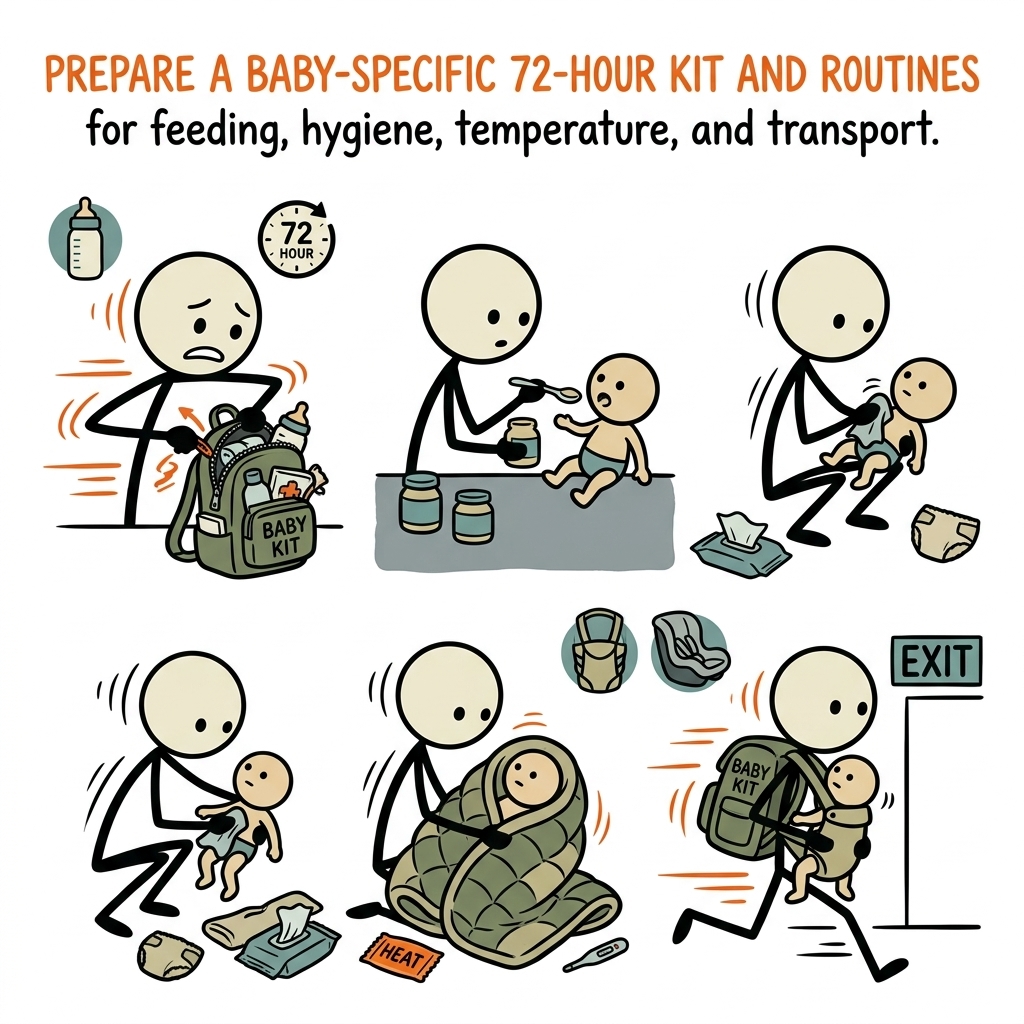
The Physiology of Vulnerability: Why Babies Need Specialized Prep
To build an effective survival strategy, we must first understand why infants cannot be treated like small adults. A baby’s physiological systems are immature and highly sensitive to environmental disruptions. Their surface-area-to-mass ratio is much larger than an adult's, meaning they lose heat rapidly in cold weather and absorb heat quickly in hot environments. Because their kidneys are not yet fully developed, they cannot conserve water as efficiently as older children or adults, making them incredibly vulnerable to dehydration from heat, dry air, or gastrointestinal illness.
Furthermore, an infant’s immune system is still developing. Pathogens that might cause mild stomach upset in an adult can lead to life-threatening infections in a baby. This is why sanitization and hygiene are not just matters of comfort; they are critical medical priorities. When executing emergency preparedness for babies, emergency preparedness protocols must prioritize clean water, sterile feeding equipment, and absolute barrier protection against external contaminants. Understanding these physiological realities shifts our focus from simple survival to rigorous biological protection.
The 72-Hour Emergency Preparedness for Babies Checklist
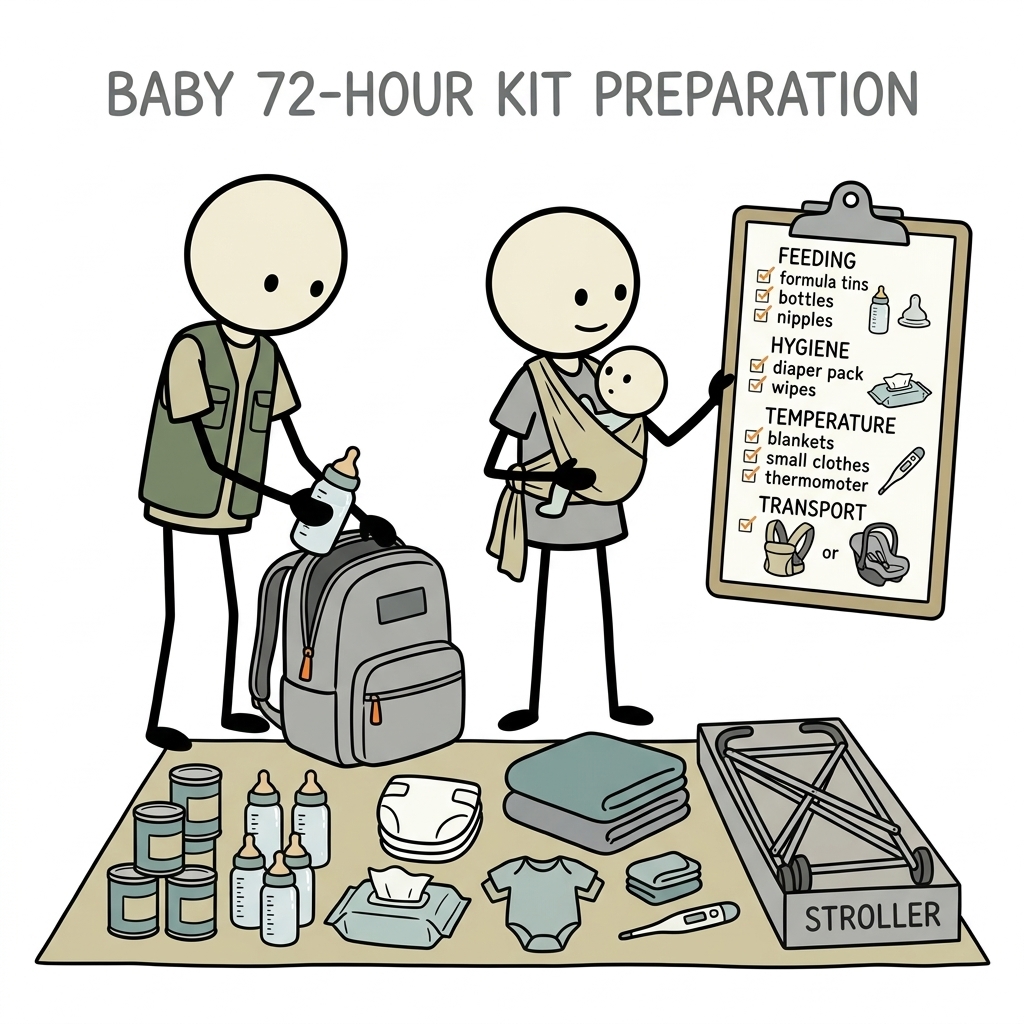
A specialized Go-Bag Builder or "go-bag essentials guide" for your infant should be packed, sealed in waterproof dry bags, and kept in an easily accessible location near your primary exit. This kit must be independent of your adult survival gear so that it can be grabbed in a single motion or handed off to another caregiver if families are separated.
To simplify your planning, we have compiled a comprehensive emergency preparedness for babies checklist that covers all essential categories for a 72-hour period. Ensure you review and rotate these items every three to six months to account for your baby’s rapid growth and the expiration dates of consumables.
Nutrition and Hydration Supplies
- Ready-to-Feed (RTF) Liquid Formula: Pack a 3-day supply of pre-sterilized, single-serving liquid formula. Do not rely on powdered formula for your mobile kit, as it requires clean water and sterile mixing vessels, which may not be available.
- Disposable Nipples and Collar Rings: Stock individually wrapped, sterile disposable nipples that attach directly to your RTF formula bottles. This eliminates the need to wash and sanitize bottles in the field.
- Bottles with Disposable Liners: If you must use powdered formula, pack bottles that utilize sterile, single-use drop-in liners. This minimizes the amount of water needed for washing.
- Purified Water: Pack an extra 3 gallons of commercially sealed water specifically designated for your infant (separate from adult rations). This is used for mixing powder (if necessary), washing utensils, and keeping a breastfeeding mother hydrated.
- Pediatric Electrolyte Solutions: Include 2 to 3 small bottles of unflavored oral rehydration solutions (such as Pedialyte) to combat sudden dehydration from stress or illness.
Hygiene, Sanitation, and Waste Management
- Diapers (Heavy-Duty and Waterproof): Pack a minimum of 24 to 30 high-absorbency diapers. This assumes an average of 8 diaper changes per day. Pack one size larger than your baby currently wears to accommodate growth spurts.
- Unscented, Sensitive-Skin Baby Wipes: Pack 3 full-sized, unopened packs of wipes. Wipes are not only for diapering; they will serve as your primary tool for bathing the baby and cleaning your own hands before handling feeding equipment.
- Zinc Oxide Diaper Rash Cream: A high-concentration barrier cream (40% zinc oxide) is essential. Stress, changes in diet, and infrequent diaper changes in a disaster can cause severe, painful diaper rashes that can quickly become infected.
- Scented Disposal Bags: Pack a roll of dog waste bags or small, scented trash bags to seal soiled diapers and wipes before placing them in your main waste container.
- No-Rinse Baby Wash and Microfiber Cloths: For keeping skin folds clean without requiring a full bath.
Medical and First-Aid Essentials
- Infant Acetaminophen/Ibuprofen: Include liquid pain and fever reducers, complete with multiple oral dosing syringes. Ensure you have a clear, laminated dosage chart based on your baby's current weight, not just age.
- Nasal Aspirator and Saline Drops: A bulb syringe or suction device (like a NoseFrida) paired with sterile saline drops is critical for clearing congested airways, as babies are obligate nasal breathers and cannot feed easily with a stuffed nose.
- Pediatric Thermometer: A high-quality, digital rectal or temporal thermometer. Monitoring for fever is vital when medical help is delayed.
- Prescription Medications: A minimum 7-day supply of any daily medications, kept in a waterproof container with copies of the prescriptions.
- Basic Wound Care: Antiseptic wipes, sterile gauze pads, medical tape, and baby-safe adhesive bandages.
Clothing and Thermal Protection
- Layered Clothing (6 Complete Outfits): Pack flame-resistant, breathable layers. Include 3 short-sleeved onesies, 3 long-sleeved sleep-and-plays with footies, and plenty of socks. Avoid cotton for outer layers if you are in a cold, damp climate; choose fleece or merino wool instead.
- Wide-Brimmed Sun Hat and Warm Fleece Beanie: Protects against both extreme heat/sunburn and rapid heat loss through the head in cold weather.
- Swaddle Blankets (Muslin and Fleece): Pack 2 lightweight muslin swaddles (which double as sunscreens, towels, or nursing covers) and 1 thick fleece blanket.
- Waterproof Outerwear: A windproof, water-resistant baby bunting or rain suit to protect against elements during transport.
Feeding Routines Under Duress: Safe Lactation and Formula Prep
In a disaster, maintaining your baby's feeding schedule is your primary defense against shock, dehydration, and distress. However, environmental contamination and high stress levels can severely disrupt normal routines. You must establish distinct protocols for both breastfeeding and formula feeding before an emergency occurs.
Supporting the Breastfeeding Mother
If you are breastfeeding, your body is the safest, most sterile food source available for your baby. Breastmilk requires no clean water, electricity, or sterilization equipment, making it the gold standard for disaster feeding. However, stress, fatigue, and dehydration can temporarily suppress the let-down reflex or make lactation feel incredibly difficult.
To protect your milk supply during a crisis:
- Prioritize Maternal Hydration: The nursing mother must drink at least 3 to 4 liters of clean water daily. If water is scarce, prioritize the mother's hydration above all other family members, as her body will convert that water into life-saving milk for the infant.
- Create a Low-Stress Micro-Environment: In a crowded shelter or chaotic environment, use a nursing cover, a draped swaddle blanket, or a small pop-up privacy tent to block out visual stimuli. This helps lower cortisol levels, allowing oxytocin to flow and facilitate milk let-down.
- Avoid Unnecessary Supplementation: Unless medically necessary, avoid giving formula if you are breast-feeding, as this can signal your body to produce less milk, complicating long-term Survival Scenarioss.
Safe Formula Preparation and Sanitization
If your baby is formula-fed, you must operate under the assumption that all local municipal tap water is contaminated with pathogens or chemicals. The CDC and the FDA emphasize that powdered infant formula is not sterile and can contain low levels of harmful bacteria, which can multiply rapidly if mixed with warm, unboiled water.
To safely manage formula feeding in a disaster, implement the following protocol:
- Use Ready-to-Feed Formula First: For the first 72 hours, rely exclusively on single-serve Ready-to-Feed liquid formula. Since it requires no water to mix, you eliminate the risk of waterborne contamination entirely. Open a fresh bottle, attach a sterile disposable nipple, feed the baby, and discard any leftovers within one hour.
- The Safe Powder Method (If RTF is Unavailable): If you must use powdered formula, you must use commercially bottled water or water that has been brought to a rolling boil for at least one full minute and cooled to room temperature. Never use water purified only by camping filters or chemical purification tablets (like iodine), as these may not kill all viral pathogens or neutralize chemical contaminants.
- The "No-Wash" Bottle System: Cleaning bottles in a disaster zone without running hot water and soap is incredibly difficult and dangerous. Instead, use bottles with pre-sterilized, disposable plastic liners. After feeding, discard the liner and wipe down the collar and nipple with medical-grade sanitizing wipes, or boil the nipples in a small pot of water over a camp stove for 5 minutes.
Hygiene and Sanitation: Preventing Infection in High-Stress Environments
In a prolonged emergency, sanitation systems often collapse. Without running water, flushing toilets, or trash collection, the risk of fecal-oral contamination rises exponentially. Because infants explore their world by putting their hands and objects in their mouths, keeping their immediate environment clean is a continuous battle.
Diapering and Waste Disposal Protocols
When normal trash services are suspended, dirty diapers can quickly become a biohazard. Designate a specific "dirty zone" in your shelter or campsite, far away from your sleeping and feeding areas.
Follow this strict diapering routine to prevent the spread of illness:
- Sanitize Your Hands First: Before touching your diaper supplies or your baby, clean your hands thoroughly with an alcohol-based hand sanitizer (containing at least 60% alcohol) or a sanitizing wipe.
- Use a Clean Barrier: Never lay your baby directly on a public floor, ground, or shelter cot. Use a dedicated, waterproof, wipeable changing pad. If you do not have one, use a clean plastic trash bag as a temporary barrier, discarding or sanitizing it after use.
- Apply Generous Barrier Cream: Do not wait for a diaper rash to appear. Apply a thick layer of zinc oxide cream during every diaper change. This acts as a physical shield against moisture and bacteria, which is crucial if you cannot change diapers as frequently as you do at home.
- Double-Bag Waste: Place the dirty diaper, used wipes, and your disposable gloves (if used) into a small scented plastic bag. Tie it tightly, then place that bag into a larger, heavy-duty trash can or a designated waste bucket with a tight-fitting lid.
Waterless Bathing Techniques
You should not give your baby a traditional bath during a disaster unless they have been exposed to hazardous chemicals, as wet skin can lead to rapid chilling and hypothermia. Instead, perform daily spot-cleaning using unscented, sensitive-skin baby wipes. Focus on areas where moisture and bacteria collect: the neck folds, behind the ears, the armpits, the groin, and between the fingers and toes. Immediately dry any damp areas with a clean microfiber cloth to prevent fungal growth.
Thermal Regulation: Keeping Your Baby Safe Without HVAC
Extreme temperatures are among the most immediate threats to an infant's life during a disaster. Whether you are facing a winter power outage with freezing indoor temperatures or a summer blackout with soaring heat index levels, you must actively manage your baby’s microclimate.
Preventing Hypothermia in Cold Environments
When the heating system fails, your goal is to trap body heat without restricting your baby's breathing. Remember that infants cannot shiver to generate heat; they rely entirely on external insulation and metabolic heat production.
- The Layering Rule: Dress your baby in one more layer than you would wear to be comfortable in the same environment. Start with a moisture-wicking synthetic or merino wool base layer (avoid cotton, which holds moisture against the skin and accelerates cooling), add a warm insulating fleece layer, and finish with a windproof outer layer.
- Kangaroo Care (Skin-to-Skin Contact): If temperatures drop dangerously low, use your own body heat to keep your baby warm. Place the baby, dressed only in a diaper and a hat, directly against your bare chest. Wrap a large blanket or sleeping bag around both of you, ensuring the baby’s face remains completely clear and uncovered. Your body will naturally regulate the baby's temperature.
- Safe Sleep Practices in Shelters: Do not place loose, heavy blankets or sleeping bags inside a portable crib or on a shelter cot, as this dramatically increases the risk of Sudden Infant Death Syndrome (SIDS). Instead, use a fleece wearable blanket or sleep sack over warm footed pajamas. Ensure the sleeping surface is flat, firm, and elevated off cold concrete floors.
Preventing Hyperthermia in Hot Environments
Extreme heat is equally dangerous. Babies cannot sweat as efficiently as adults, making them prone to heat exhaustion and heat stroke. If you are sheltering in a hot, humid environment:
- Dress in Lightweight Muslin: Dress your baby in a single layer of loose, light-colored cotton or muslin clothing.
- Maximize Air Circulation: Keep the baby in the shade at all times. Use a battery-operated, clip-on fan attached to their stroller or playard to create a continuous breeze, ensuring the fan is secure and out of the baby's reach.
- Hydration Monitoring: Monitor your baby's wet diapers closely. A healthy infant should wet at least 6 diapers in a 24-hour period. Fewer wet diapers, dark urine, dry lips, or a sunken soft spot (fontanelle) on the head are critical warning signs of severe dehydration that require immediate fluid replacement.
Safe Transport and Evacuation: Mobility Protocols
When an evacuation order is issued, you must be able to move quickly, safely, and potentially on foot over uneven terrain covered in debris. Standard strollers are virtually useless in these scenarios, and carrying a heavy car seat by hand will quickly exhaust you.
Hands-Free Evacuation Tools
The single most important transport tool in your baby-specific kit is a high-quality, ergonomic baby carrier (such as a structured carrier, wrap, or mei tai). Wearing your baby on your chest or back keeps your hands completely free to carry your survival gear, navigate obstacles, hold the hands of older children, or present identification to emergency personnel.
Ensure your carrier is broken in, adjusted to your body, and that you can put it on and take it off quickly in the dark. For very young infants, front-carrying is preferred, as it allows you to continuously monitor their breathing and protect their head from airborne debris.
Vehicle and Public Transit Safety
If you are evacuating by car, your baby must be secured in a properly installed, crash-tested infant car seat. Never hold a baby in your lap while a vehicle is in motion, even in a slow-moving evacuation convoy. In an emergency, sudden stops or minor collisions can cause catastrophic injuries to an unrestrained child.
Keep a laminated card securely attached to the car seat harness containing the baby’s full name, date of birth, emergency contact numbers for family members outside the disaster area, pediatrician's contact information, and any critical medical history or allergies. If you are separated from your child during a chaotic evacuation, this simple step can save their life and expedite your reunification.
Establishing Your Routine: Practice and Maintenance
The best emergency gear is useless if you do not know how to use it under pressure. Set aside one afternoon every six months to practice your emergency routines. Try preparing a bottle of formula in a darkened room using only your headlamp. Practice putting on your baby carrier quickly while wearing a heavy winter coat. Walk through your emergency preparedness for babies checklist to ensure everything still fits, nothing has expired, and your supplies match your child's current developmental stage.
By transforming these preparation steps into regular habits, you remove the fear and uncertainty from emergency situations. You cannot control when a disaster will strike, but you can control how prepared you are to protect your baby. With a well-stocked 72-hour kit, a solid understanding of infant physiology, and practiced routines for feeding, hygiene, and transport, you can confidently navigate any crisis, keeping your family safe, secure, and resilient.
Frequently Asked Questions
What should a emergency preparedness for babies plan include?
Start with the immediate safety steps, the supplies and records your household needs, a communication plan, and a regular review schedule. Follow local official guidance during an active emergency.
How often should I review emergency preparedness for babies preparations?
Review them at least twice a year and whenever your household, medication, location, or local risks change. Replace expired supplies and practice key steps.
Where can I find reliable emergency guidance?
Use local emergency management alerts and established public-health or emergency-management agencies. A blog guide should support, not replace, official real-time instructions.