⚡ Key Facts
- 69 Million Breakdowns: According to the U.S. Department of Transportation, over 69 million vehicle breakdowns occur annually in the United States, frequently leaving motorists stranded on active highways. For the practical checklist side, use the community emergency preparedness guide.
- The Vehicle Flood Risk: FEMA reports that flooding is the most common natural disaster in the U.S., and over half of all flood-related drownings occur when a vehicle is driven into hazardous water.
- Evacuation Gridlock: Historical NOAA data reveals that highway gridlock during major evacuations, such as Hurricane Rita, can trap motorists in their vehicles for over 15 hours without access to municipal services.
- Hydration Standards: The American Red Cross recommends keeping a minimum of three days of water in your vehicle, calculated at one gallon per person per day, to survive prolonged delays or evacuations.
- Thermal Degradation: The CDC warns that cabin temperatures in parked vehicles can exceed 140°F (60°C) within an hour during summer, rapidly degrading standard medical supplies, food, and plastic water bottles.
Imagine you are heading home on a Tuesday afternoon when local authorities issue an immediate evacuation order due to a fast-moving wildfire or chemical spill. Alternatively, picture a sudden, severe winter storm that freezes a major interstate, trapping thousands of motorists in sub-zero temperatures for over 12 hours. In these scenarios, your vehicle ceases to be a mere luxury or a tool for commuting; it becomes your primary survival shelter and your only ticket to safety. Developing a comprehensive, vehicle-specific car evacuation kit is not an exercise in paranoia—it is a foundational pillar of modern emergency preparedness that ensures you and your family remain safe, warm, fed, and mobile when the unexpected occurs.
The Philosophy of Vehicle-Specific Preparedness
Most survival planning focuses heavily on the home, yet we spend a significant portion of our lives in transit. A home-based emergency kit is useless if you are trapped twenty miles away on a gridlocked highway. Conversely, trying to throw miscellaneous items into your trunk while emergency sirens wail is a recipe for omissions and panic. True car evacuation kit emergency preparedness requires a systematic approach that treats your vehicle as an independent, mobile ecosystem capable of sustaining life under adverse conditions.
Your vehicle has unique advantages and constraints compared to a home or a Go-Bag Builder. On the positive side, it can carry significantly more weight than you can wear on your back, it provides a hard-sided shelter from wind, rain, and cold, and it features its own power generation system. On the negative side, vehicles are highly vulnerable to temperature fluctuations, mechanical failure, road obstructions, and fuel depletion. Your preparation must account for these vulnerabilities while maximizing the vehicle's strengths.
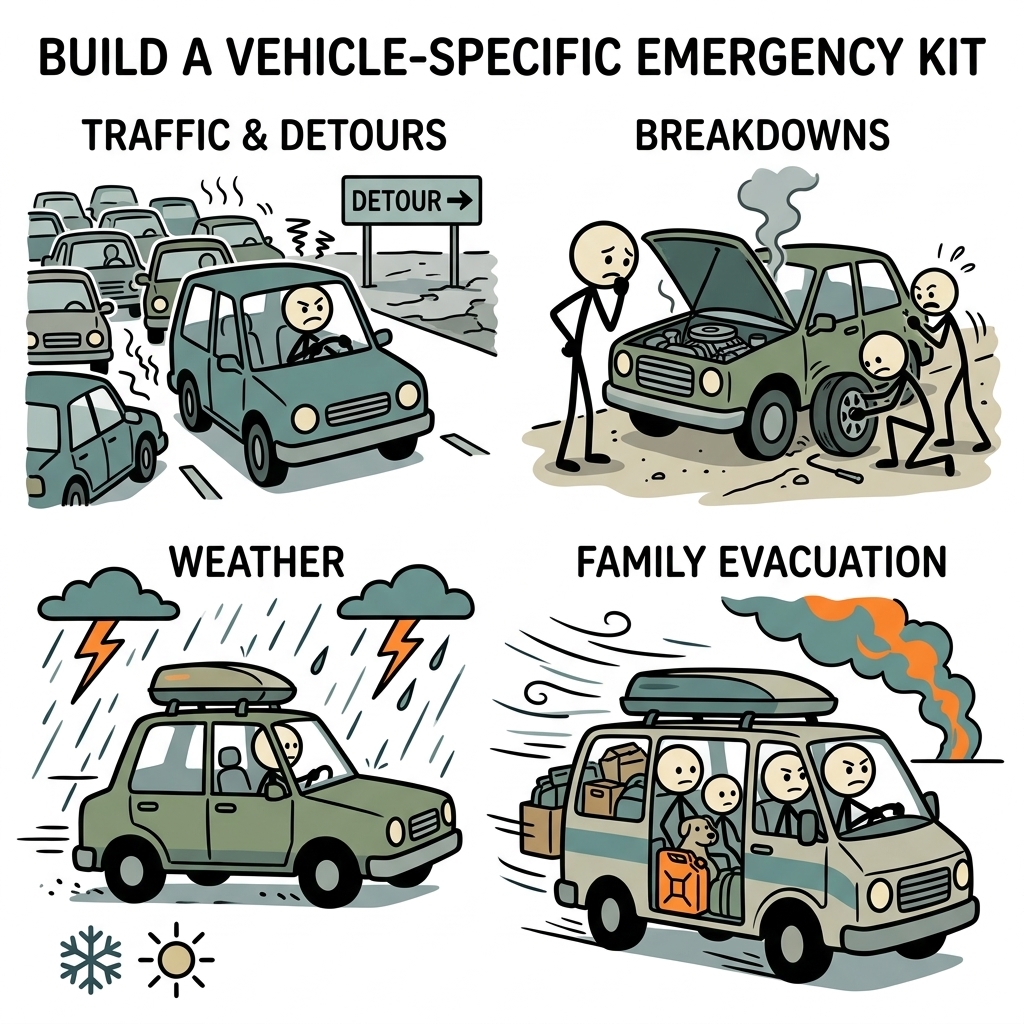
When designing your kit, you must prepare for three distinct operational scenarios:
- The Stationary Breakdown: You are stranded on the side of the road due to a flat tire, dead battery, or mechanical failure, waiting for assistance.
- The Weather/Traffic Standstill: You are trapped in your vehicle on a highway due to gridlock, a severe snowstorm, or an accident, unable to move forward or backward for hours or days.
- The Active Evacuation: You are actively driving away from a localized disaster (wildfire, hurricane, flood, industrial accident) and must navigate detours, fuel shortages, and damaged infrastructure to reach safety.
The Tiered Vehicle Preparedness System
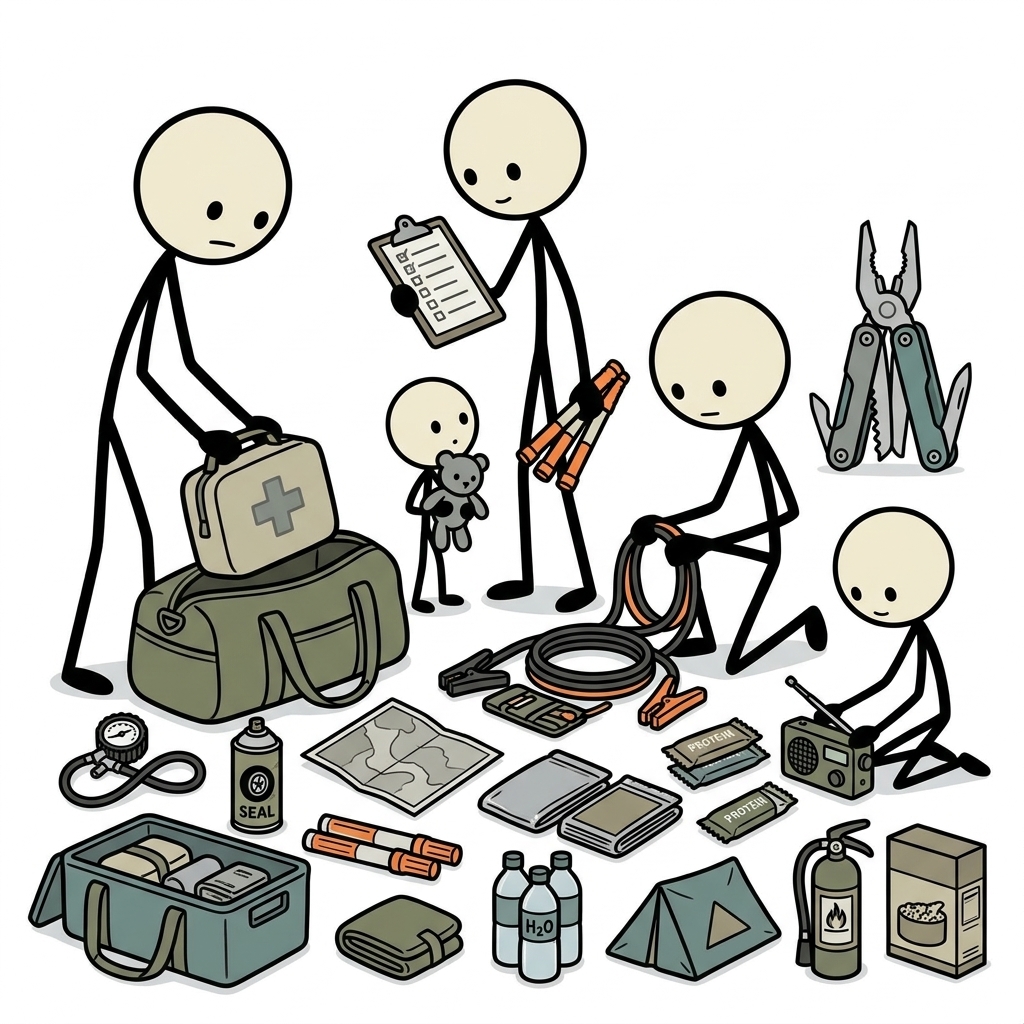
To prevent your trunk from becoming a chaotic junk drawer, you should organize your gear into a logical, tiered system. This structure ensures that critical life-saving items are immediately accessible, while bulkier, long-term survival gear is stored securely out of the way. This tiered approach forms the core of a highly functional car evacuation kit checklist.
Tier 1: The Cabin Glovebox and Console (Immediate Access)
These are the items you must be able to reach without unbuckling your seatbelt. If your vehicle is rolled over, submerged in water, or surrounded by smoke, you cannot afford to search the trunk for tools.
- Window Breaker and Seatbelt Cutter: A dedicated escape tool mounted securely within arm's reach of the driver (e.g., adhered to the center console or steering column).
- Tactical Flashlight/Headlamp: High-lumen output with a strobe function for signaling, utilizing lithium batteries that resist extreme temperatures.
- High-Output USB Charger and Cables: Heavy-duty cords to keep your primary emergency communication plan devices powered while the vehicle is running.
- Physical Notepad and Pen: For writing down emergency frequencies, coordinates, or leaving notes on your dashboard for search-and-rescue personnel.
- Personal Protection: A pair of heavy leather work gloves to protect your hands from broken glass or hot engine components during an emergency escape.
Tier 2: The Under-Seat or Behind-Seat Organizer (Rapid Deployment)
This tier consists of items needed immediately upon exiting the vehicle or during a brief roadside stop. They should be kept in the passenger cabin, tucked under seats or in seatback pockets.
- High-Visibility Safety Vest: To be worn any time you exit the vehicle on a busy highway, significantly reducing the risk of being struck by passing motorists.
- Basic First Aid Kit: A compact kit containing bandages, antiseptic wipes, burn cream, and personal medications.
- Rain Ponchos: Lightweight, bright yellow or orange ponchos to keep you dry and visible while changing a tire in a downpour.
- Offline Maps/Road Atlas: A physical map of your state and surrounding regions, as cell towers are highly vulnerable to overloading and power outages during a crisis.
Tier 3: The Trunk Cargo Box (The Core Evacuation Kit)
This is your heavy-duty survival gear, packed into a durable, weather-resistant plastic tote or a dedicated duffel bag. This cargo box remains locked in your trunk or cargo area, organized by modules to ensure rapid deployment during a major evacuation.
The Ultimate Car Evacuation Kit Checklist
To build a comprehensive car evacuation kit, you must categorize your gear into functional modules. This modular approach allows you to quickly audit, maintain, and rotate your supplies, ensuring that nothing is overlooked when you need it most.
1. Hydration and Nutrition Module
Water is your absolute highest priority. However, storing water in a vehicle presents significant challenges. Standard plastic water bottles can degrade when exposed to extreme cabin heat, leaching harmful chemicals into the water. In freezing temperatures, rigid plastic bottles can burst as the water expands.
- Emergency Water Pouches: Pack clean, pre-measured, USCG-approved emergency water pouches. These heavy-duty Mylar pouches are designed to withstand extreme temperatures ranging from -40°F to 180°F without bursting or degrading.
- Stainless Steel Single-Wall Bottle: Keep an empty, wide-mouth stainless steel bottle in your kit. Because it is single-wall (not vacuum insulated), you can use it to boil water over an open fire or portable stove if you need to purify water from natural sources.
- Water Filtration Straw: A compact filter (such as a Lifestraw or Sawyer Squeeze) to purify water from lakes, streams, or municipal sources if utility systems fail.
- Non-Perishable, High-Calorie Food: Store food that does not require cooking, water, or preparation. emergency food storage guide ration bars (such as those approved by the Coast Guard) are ideal because they are formulated to withstand extreme heat without melting and have a 5-year shelf life. Supplement these with high-protein canned meats (with pull-tabs), nuts, and dried fruits.
2. Trauma and Medical Module
A standard first aid kit is designed for minor cuts and scrapes. A true vehicle emergency kit must be equipped to handle serious traumatic injuries resulting from motor vehicle accidents, natural disasters, or severe weather.
- Tourniquet (CAT Gen 7 or similar): A windlass tourniquet is the single most critical life-saving tool for stopping massive extremity arterial bleeding. Keep it accessible and know how to use it.
- Pressure Dressings (Israeli Bandage): For treating deep puncture wounds, lacerations, or severe abrasions.
- Chest Seals: For treating open chest wounds (e.g., from flying debris or severe impacts).
- Burn Dressings: Sterile gel-soaked dressings to treat thermal burns from hot engine parts or wildfires.
- Over-the-Counter Medications: A supply of pain relievers, antihistamines, anti-diarrheal tablets, and rehydration salts.
- Prescription Reserve: If family members rely on critical medications (e.g., insulin, inhalers, heart medication), consult your physician to obtain a secure, rotated 7-day emergency supply for your kit.
3. Vehicle Recovery and Mechanical Self-Rescue Module
If your vehicle is mechanically disabled, you are vulnerable. Having the tools to perform basic repairs and self-recovery can mean the difference between escaping a disaster zone and becoming trapped in it.
- Lithium-Ion Jump Starter: Modern pocket-sized jump starters can jump-start a dead battery multiple times on a single charge without requiring a second vehicle. They also feature USB ports to charge your electronics.
- Heavy-Duty Jumper Cables: A set of 4-gauge, 12-foot cables as a reliable mechanical backup to your lithium jump starter.
- 12V Portable Air Compressor: Plugs directly into your vehicle's accessory outlet to inflate a flat tire or adjust tire pressure for traction in snow, sand, or mud.
- Tire Repair Kit (Plugs and Sealant): A basic tire plug kit and a can of pressurized tire sealant to temporarily patch punctures on the road.
- Tow Strap: A heavy-duty, non-elastic tow strap rated for at least 10,000 lbs to allow another vehicle to pull you out of a ditch or snowbank.
- Multitool and Basic Hand Tools: A high-quality multitool, adjustable wrench, slip-joint pliers, and screwdrivers for minor mechanical adjustments.
- Traction Boards/Mats: Lightweight, durable plastic traction ramps to slide under your tires if you get stuck in deep snow, mud, or loose sand.
4. Warmth, Shelter, and Environmental Protection Module
If your engine dies in the dead of winter, your vehicle's cabin will lose heat rapidly. Conversely, in the summer, you may need to seek shelter outside your vehicle to avoid heatstroke. Your kit must prepare you for both extremes.
- Mylar Space Blankets and Bivvy Sacks: These lightweight sheets reflect up to 90% of your body heat back to you. Bivvy sacks are superior because they enclose your body, preventing cold air from seeping in through the sides.
- Wool Blankets: Unlike synthetic materials, wool retains its insulating properties even when wet, making it an invaluable addition to a winter vehicle kit.
- Hand and Foot Warmers: Chemically activated heat packs that provide continuous warmth for up to 10 hours.
- Heavy-Duty Tarp and Paracord: Can be used to create an improvised shelter, block wind, or cover a broken vehicle window.
- Change of Clothes: Pack a full change of rugged, weather-appropriate clothing for every family member, including sturdy closed-toe shoes, wool socks, a warm hat, and heavy work gloves.
5. Signaling, Navigation, and Communication Module
During a large-scale emergency, cellular networks frequently collapse due to physical damage or severe traffic congestion. You must have alternative methods to receive information and signal for assistance.
- Hand-Crank NOAA Weather Radio: Allows you to receive emergency broadcasts, weather alerts, and instructions from local officials without relying on cellular networks or vehicle power.
- High-Decibel Whistle: A simple whistle can carry sound much further than the human voice, allowing you to signal search-and-rescue teams if you are trapped or off the road.
- Road Flares or LED Safety Beacons: Traditional chemical flares or modern battery-powered LED beacons alert oncoming traffic to your presence and can signal emergency personnel to your location at night.
- Signal Mirror: A simple, highly effective tool for catching the attention of aircraft or distant searchers during daylight hours.
- Compass and Physical Topographical Maps: If GPS systems fail, a basic compass and regional maps will allow you to navigate detours and backroads safely.
6. Sanitation and Personal Hygiene Module
Sanitation is often overlooked in family emergency planning, yet poor hygiene can quickly lead to illness, discomfort, and infection, particularly during multi-day standstills or evacuations.
- Heavy-Duty Trash Bags: Can be used for waste disposal, improvised ponchos, or to seal wet gear.
- Wet Wipes and Hand Sanitizer: Essential for maintaining basic hygiene when running water is unavailable.
- Portable Toilet Bags: Specially designed gel bags that fit inside a five-gallon bucket or can be used independently for sanitary waste disposal.
- Toilet Paper: Keep a roll in a waterproof zip-top bag with the cardboard core removed to save space.
- Female Hygiene Products: Multi-use items that are critical for comfort and health during prolonged emergencies.
Environmental Challenges: Managing Heat and Cold in Storage
One of the most difficult aspects of car evacuation kit emergency preparedness is managing the harsh environmental conditions inside a parked vehicle. Vehicles are thermal rollercoasters. In the summer, the greenhouse effect can drive interior temperatures past 140°F (60°C). In the winter, temperatures can drop well below freezing. These fluctuations can quickly destroy your carefully prepared supplies if you do not choose your gear wisely.
The Danger of Extreme Heat
High temperatures degrade materials rapidly. Standard alkaline batteries are prone to leaking and losing their charge when subjected to high heat. Instead, equip your flashlights and radios with Lithium (LiFePO4 or Lithium Metal) batteries, which feature a wider operating temperature range (-40°F to 140°F) and a 15-year shelf life. Furthermore, avoid storing aerosol cans (such as tire inflators or spray lubricants) in direct sunlight, as extreme heat can cause them to rupture.
Medications also lose their potency when exposed to high heat. If you must keep prescription medications in your vehicle kit, store them in a small, vacuum-insulated bottle (like a thermos). This insulation buffers the medicine against daily temperature spikes, keeping it significantly cooler than the surrounding cabin air.
The Challenge of Freezing Temperatures
Freezing temperatures present their own obstacles. Water expands as it freezes, which can rupture standard plastic bottles and soda cans, leading to a messy cleanup and ruined gear in your trunk. Always use flexible, Mylar-packaged emergency water pouches, or leave at least 10% headspace in rigid containers to allow for expansion. Additionally, keep in mind that liquid-filled items, such as hand sanitizers, wet wipes, and chemical light sticks, can freeze solid, rendering them temporarily useless until thawed.
To combat these environmental challenges, establish a strict bi-annual rotation schedule. Mark your calendar to audit your vehicle kit twice a year: once in the spring (preparing for summer heat) and once in the autumn (preparing for winter cold). During these audits, replace expired food and water, test battery levels, swap out seasonal clothing, and check the expiration dates on medical supplies.
Family and Pet Customizations
A generic checklist is an excellent starting point, but your vehicle kit must be tailored to the specific needs of your household. A car evacuation kit that works perfectly for a single commuter will fall dangerously short for a family traveling with infants, elderly relatives, or beloved pets.
Preparing for Infants and Young Children
Children require specialized supplies that cannot be easily improvised in an emergency. If you have young children, your kit must include:
- Formula and Clean Water: Store pre-measured powdered formula and extra purified water specifically for mixing.
- Diapers and Wipes: Pack a 3-day supply of diapers in the next size up from what your child currently wears, as they grow quickly.
- Comfort Items: A small, familiar toy, pacifier, or coloring book can significantly reduce a child's anxiety during a highly stressful evacuation or breakdown.
- Pediatric Medications: Liquid pain relievers, allergy medications, and dosing syringes tailored to your child's weight.
Preparing for Seniors and Vulnerable Individuals
If you care for elderly family members or individuals with mobility challenges, ensure your vehicle kit accommodates their requirements:
- Spare Mobility Aids: A collapsible cane or lightweight walker stored securely in the cargo area.
- Extra Eyeglasses and Hearing Aid Batteries: A spare pair of prescription glasses and a fresh pack of batteries for hearing aids.
- Detailed Medical Records: A physical copy of their medical history, list of prescriptions, and contact information for their primary care physicians, stored in a waterproof bag.
Preparing for Pets
During evacuations, our pets rely entirely on us for survival. FEMA and the ASPCA emphasize that if it is not safe for you to stay, it is not safe for your pets. Ensure your vehicle kit includes a dedicated pet survival module:
- Pet Food and Water: A 3-day supply of their regular dry or canned food (with a manual can opener) and extra water.
- Collapsible Bowls: Lightweight silicone bowls for food and water.
- Leash, Collar, and Harness: Keep a spare set in your trunk. During a chaotic evacuation, a secure leash is vital to prevent a panicked pet from running away.
- Pet First Aid Supplies: Self-adhering vet wrap (which doesn't stick to fur), tweezers for tick removal, and styptic powder to stop minor bleeding.
- Vaccination Records: Many emergency shelters and hotels require proof of rabies vaccination before allowing pets to enter. Keep physical copies in your waterproof document pouch.
Tactical Vehicle Operation and Self-Rescue
Having the ultimate car evacuation kit checklist complete and packed in your trunk is only half the battle. You must also know how to operate your vehicle safely and make smart decisions during a crisis. When a disaster strikes, panic can turn highways into dangerous traps.
The Half-Tank Rule
The simplest and most effective vehicle preparedness habit you can adopt is the half-tank rule. Never let your fuel gauge drop below half a tank. In a sudden evacuation, local gas stations will quickly run out of fuel, lose power, or feature lines that back up onto the highway for hours. Keeping your tank at least half full ensures you have enough fuel to clear the immediate danger zone and travel 150 to 200 miles without needing to stop.
Navigating Floodwaters
As noted by the National Weather Service and FEMA, more vehicle-related deaths occur during floods than any other weather hazard. The rule is simple: Turn Around, Don't Drown. It is incredibly easy to underestimate the depth and power of moving water. Just six inches of fast-moving water can knock an adult off their feet, and twelve inches of rushing water can easily carry away a small sedan. Two feet of water can sweep away most SUVs and trucks. If you encounter a flooded road, do not attempt to cross it; turn around and find an alternate route.
If your vehicle becomes surrounded by rising water and stalls, prepare to abandon it immediately. If the water is rising rapidly and you cannot open the doors due to water pressure, use your vehicle escape tool to shatter the side window, climb out, and move to higher ground.
Managing Highway Gridlock
If you find yourself trapped in severe highway gridlock during an evacuation or winter storm, conserve your resources. If you are stationary for long periods, turn off your engine to conserve fuel. Run the engine and heater for only 10 to 15 minutes every hour to keep the cabin warm, and ensure the vehicle's exhaust pipe is clear of snow or debris to prevent deadly carbon monoxide from entering the cabin.
Keep your doors locked and stay with your vehicle unless staying poses an immediate threat to your life (such as an approaching wildfire). Your vehicle provides shelter and makes it significantly easier for search-and-rescue teams to locate you. Walking on foot along a chaotic highway or during a blizzard is incredibly dangerous and should only be considered as an absolute last resort.
Building Your Kit: Step-by-Step Action Plan
Do not let the scope of building a vehicle survival kit overwhelm you. You do not need to purchase every item today. Use this step-by-step action plan to build your kit systematically over the next month:
- Week 1: The Essentials. Acquire a durable plastic storage tote for your trunk. Place a 3-day supply of emergency water pouches, emergency food bars, a high-quality flashlight, a window breaker/seatbelt cutter, and a basic first aid kit inside.
- Week 2: Vehicle Self-Rescue. Add a lithium-ion jump starter, jumper cables, a 12V air compressor, a high-visibility safety vest, and heavy leather work gloves to your kit.
- Week 3: Environment and Comfort. Pack emergency bivvy sacks, a wool blanket, rain ponchos, offline maps, wet wipes, and a change of rugged clothing.
- Week 4: Customizations and Audit. Add family-specific items (diapers, pet food, prescription reserves, vaccination records) and set a recurring alarm on your phone for your bi-annual kit audit and rotation.
By taking these systematic steps, you transform your vehicle from a potential liability into a highly capable mobile survival shelter. When the sirens sound, the weather turns, or the highway grinds to a halt, you can look at your dashboard with confidence, knowing that you and your family are fully prepared to face whatever lies down the road.
Frequently Asked Questions
What should a car evacuation kit plan include?
Start with the immediate safety steps, the supplies and records your household needs, a communication plan, and a regular review schedule. Follow local official guidance during an active emergency.
How often should I review car evacuation kit preparations?
Review them at least twice a year and whenever your household, medication, location, or local risks change. Replace expired supplies and practice key steps.
Where can I find reliable emergency guidance?
Use local emergency management alerts and established public-health or emergency-management agencies. A blog guide should support, not replace, official real-time instructions.