⚡ Key Facts
- Hazard Exposure: According to the Federal Emergency Management Agency (FEMA), college campuses face a unique matrix of risks, ranging from severe weather and natural disasters to localized hazards like chemical spills and active threat scenarios.
- Communication Gaps: The American Red Cross reports that while most families have a general idea of what to do in an emergency, less than 20% have a formalized, practiced communication plan—a critical vulnerability for students living states away from home.
- Campus Mandates: Under the Jeanne Clery Act, all colleges and universities participating in federal financial aid programs are legally required to have timely warning systems and emergency response plans in place.
- Psychological Impact: The Centers for Disease Control and Prevention (CDC) notes that the psychological stress of an emergency is compounded for young adults displaced from their primary support networks, making mental health preparedness just as vital as physical supplies.
- Budget Prepping: Building a robust 72-hour survival kit does not require hundreds of dollars; standard emergency management guidelines emphasize dual-use items and budget-friendly alternatives that fit perfectly into a college student's lifestyle.
Imagine this: It is 2:00 AM on a Tuesday in mid-October. You are deep into a study session for midterms when your phone erupts with a blaring emergency alert. Simultaneously, the dorm's fire alarms begin to shriek, and the hallway fills with the sound of confused, panicked voices. In that split second, the theoretical concept of a disaster becomes a jarring reality. Do you grab your laptop? Your shoes? Do you know where the secondary exit is if the main stairwell is blocked? When you are hundreds or thousands of miles away from your childhood home, the safety nets you grew up relying on are suddenly out of reach.
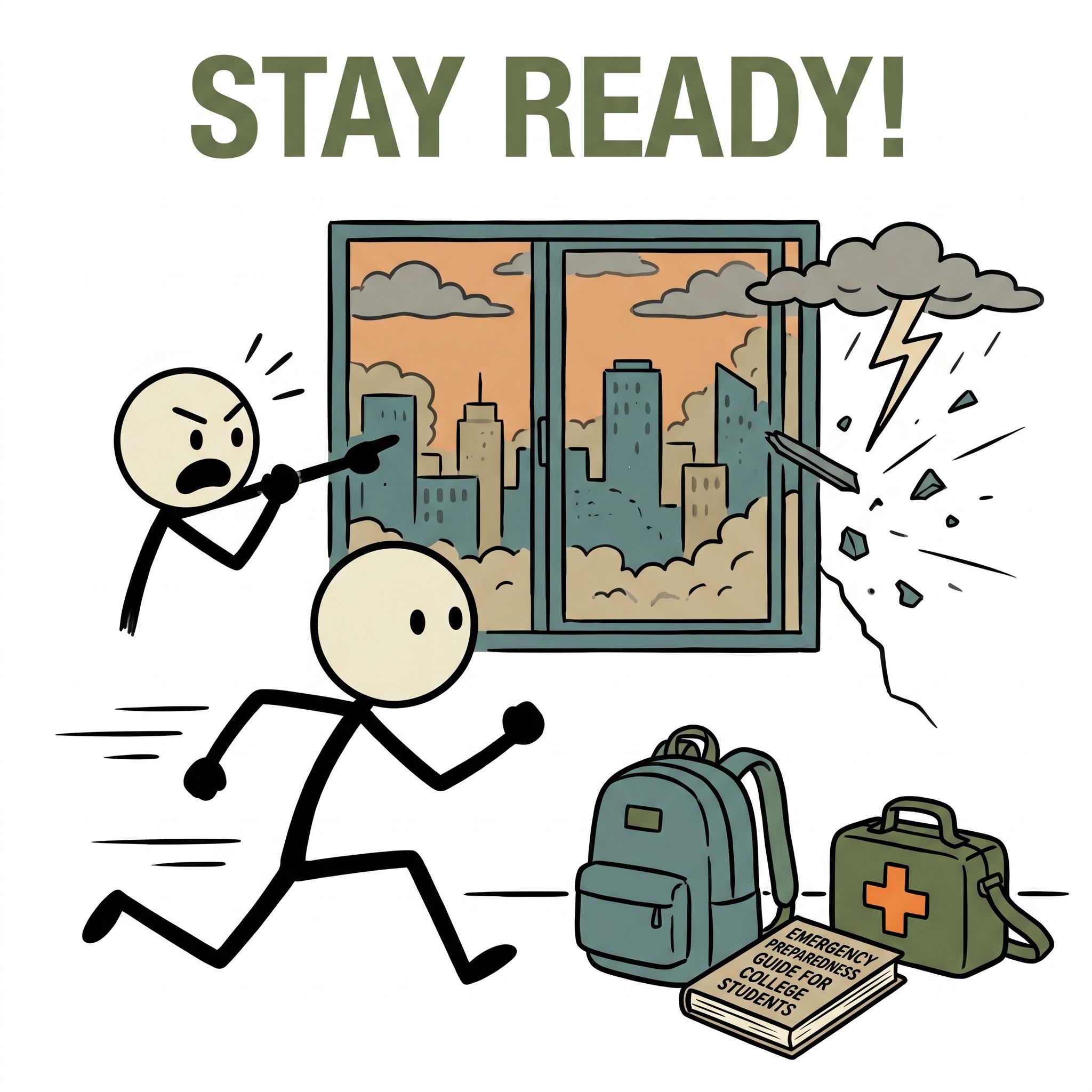
For decades, emergency readiness has been marketed toward homeowners with sprawling basements and large budgets. However, college student emergency preparedness is an entirely different discipline. It requires adapting standard survival principles to fit into micro-living spaces, navigating strict university regulations, and managing preparations on a notoriously tight student budget. You do not need an underground bunker to be safe; you need a strategic, highly adaptable plan.
This comprehensive guide will walk you through the unique landscape of campus survival. We will explore how to overcome dorm-specific prep challenges, decode your university's emergency systems, build a low-budget survival kit, and maintain a vital line of communication with your family. By taking control of your readiness today, you transform yourself from a vulnerable bystander into an empowered, resilient adult capable of handling whatever the semester throws your way.
Navigating Dorm-Specific Prep Challenges
Living in a residence hall presents a unique set of logistical hurdles. You are sharing a confined space with one or more roommates, living under a strict set of residential guidelines, and lacking control over the building's infrastructure. Prepping for college students means learning to work within these parameters rather than fighting against them.
Maximizing Micro-Spaces
Space is the ultimate premium in a college dorm. You cannot stockpile 55-gallon water barrels or massive bins of freeze-dried food. Instead, preparedness in a dorm relies on modular, hidden storage and dual-purpose items. Utilize the space beneath your bed by investing in low-profile, rolling storage bins. These are perfect for keeping emergency rations, water pouches, and first aid supplies out of sight but immediately accessible.
Vertical space is another underutilized asset. Over-the-door organizers, typically used for shoes, can be repurposed to hold flashlights, batteries, power banks, and medical supplies. When space is severely limited, prioritize items that serve multiple functions. A heavy-duty poncho, for example, can serve as rain gear, a makeshift shelter, or a ground tarp. A high-quality multi-tool replaces a drawer full of tools you do not have room for.
Working Around Fire Codes and Restrictions
University fire codes are notoriously strict, and for good reason. FEMA data indicates that thousands of fires occur in campus housing across the United States each year, primarily stemming from cooking equipment. Because of these risks, most dorms prohibit open flames, candles, hot plates, and certain types of high-wattage electronics.
This means traditional survival advice—like using a camping stove to boil water or lighting candles during a blackout—is off the table. To adapt, your emergency lighting should be entirely battery-operated or hand-cranked. LED headlamps, electric lanterns, and glow sticks are safe, compliant alternatives. For food, focus on a "no-cook" emergency pantry. Stock up on high-calorie protein bars, jerky, trail mix, and ready-to-eat meals that do not require boiling water or microwave access.
The Roommate Dynamic
You cannot effectively prepare your living space without considering the people you share it with. In an emergency, a panicked roommate can become a liability, while a prepared roommate is an asset. Have a casual but serious conversation with your roommates at the start of the semester. Discuss basic safety protocols, such as keeping the primary exit clear of clutter and knowing where the shared IFAK is located. You do not need to convert them into hardcore survivalists, but establishing a baseline of mutual awareness is critical for dorm safety.
Decoding Campus Emergency Systems
A university operates like a small city, complete with its own infrastructure, security forces, and communication networks. Understanding how this "city" communicates during a crisis is the cornerstone of campus emergency preparedness. If you are waiting for a siren to tell you what to do, you are already behind the curve.
Opting Into Campus Alert Systems
Under the federal Clery Act, universities are mandated to issue timely warnings about crimes and immediate threats to the campus community. However, the delivery method of these alerts varies. Most universities utilize a multi-tiered mass notification system that sends out text messages, emails, and automated phone calls.
Do not assume you are automatically enrolled in the text message alerts just because you are a registered student. During your first week on campus, log into your student portal and verify your emergency contact information. Ensure your mobile number is opted into the SMS alert system. Furthermore, many campus police departments have proprietary safety apps (like LiveSafe or Rave Guardian) that offer push notifications, virtual escorts, and anonymous tip reporting. Download your university's official safety app immediately.
Understanding the University Disaster Plan
Every institution has a comprehensive emergency operations plan, but the university disaster plan students see is usually a condensed, actionable version. Locate this document on your university's website—often found under the Campus Safety or Emergency Management department pages. Familiarize yourself with the terminology your school uses.
Know the difference between a "Shelter-in-Place" order (usually related to severe weather or environmental hazards where you seek an interior room away from windows) and a "Lockdown" (used during active threat scenarios where you barricade doors, turn off lights, and remain silent). Understanding these nuances beforehand prevents fatal hesitation when an alert is issued.
Mapping Evacuation Routes and Blue Light Phones
Your dorm room door likely has a fire evacuation map plastered to the back of it. Do not just glance at it—walk it. Find your primary stairwell, but more importantly, locate the secondary stairwell. In a fire or structural emergency, primary routes become choked with smoke or panicked crowds. Knowing the alternate route by muscle memory can save your life.
Additionally, familiarize yourself with the campus geography, specifically the location of emergency blue light phones. These direct-line communication towers connect instantly to campus dispatch and automatically ping your location to security personnel. If you are fleeing a threat and your cell phone is dead, these towers are your lifelines.
Building a Low-Budget Dorm Emergency Kit
One of the biggest misconceptions about preparedness is that it requires a massive financial investment. For a college student living on instant noodles and financial aid, dropping hundreds of dollars on tactical gear is out of the question. Fortunately, building a highly effective dorm emergency kit is entirely possible on a shoestring budget if you focus on the essentials prioritized by FEMA and Ready.gov.
The 72-Hour Dorm Go-Bag
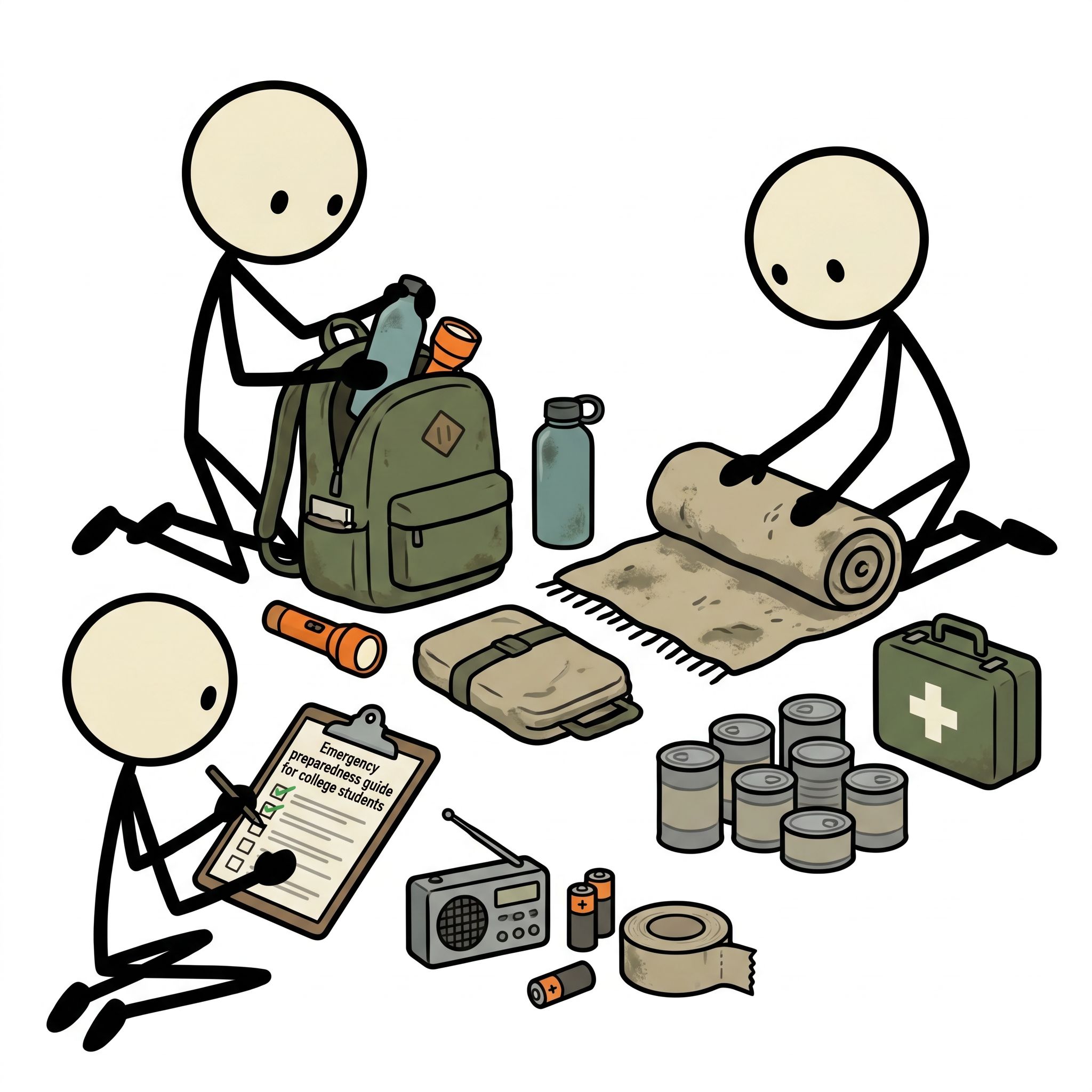
If an emergency forces you to evacuate your dorm immediately—whether due to a fire, a gas leak, or a localized threat—you need a "go-bag essentials guide" ready by the door. Use an ordinary, inconspicuous backpack. Tactical backpacks can draw unwanted attention; a standard school bag blends in perfectly. Here is what you should pack on a budget:
- Hydration: Bottled water is bulky. Instead, buy a few Coast Guard-approved emergency water pouches (which have a 5-year shelf life and withstand extreme temperature fluctuations) and a personal water filter straw, which costs less than $20 and allows you to drink safely from compromised water sources.
- Nutrition: Skip the expensive freeze-dried meals. Hit the dollar store or bulk warehouse for high-calorie, nutrient-dense items like peanut butter, trail mix, and calorie-dense survival bars. Rotate these items at the end of every semester to ensure freshness.
- Illumination and Power: A reliable LED headlamp leaves your hands free to navigate obstacles. Pair this with a high-capacity portable power bank. Your smartphone is your map, your flashlight backup, and your connection to your family; keeping it charged is a top priority.
- First Aid: You do not need a paramedic's trauma bag. A basic kit containing adhesive bandages, sterile gauze, antibiotic ointment, medical tape, pain relievers (ibuprofen/acetaminophen), and any personal prescription medications will handle 90% of minor emergency injuries.
- Important Documents: Keep a waterproof folder containing photocopies of your ID, health insurance card, emergency contacts, and a small amount of emergency cash in small denominations (ATMs and card readers fail during power outages).
The Shelter-in-Place Stash
Sometimes the safest action is to stay exactly where you are. For a shelter-in-place scenario (like a severe winter storm that shuts down campus for days), you need a stash of supplies that can sustain you inside your dorm.
Focus on water storage. Since large jugs take up too much room, consider collapsible water cubes. They fold flat when empty but can hold several gallons of tap water when a storm is forecasted. For food, keep a dedicated bin of non-perishables that you do not touch for late-night snacking. Include sanitation supplies: heavy-duty garbage bags, wet wipes, and hand sanitizer. If the municipal Water Calculator is compromised, you will not be able to flush toilets or wash your hands, making these hygiene items critical for preventing illness.
Financial Hacks for Student Preppers
To keep costs down, build your kit incrementally. Buy one or two extra items during your routine grocery runs. Utilize dollar stores for basic first aid supplies, hygiene items, and organization bins. Coordinate with your roommates to split the cost of shared shelter-in-place items, like a comprehensive first aid kit or a battery-operated NOAA weather radio.
Bridging the Gap: Communicating with Parents and Family
When a disaster strikes a college town, the first casualty is often the cellular network. Thousands of panicked students and residents simultaneously attempting to call loved ones will overload cell towers, resulting in dropped calls and network failures. For parents sitting hundreds of miles away, the inability to reach their child during a crisis is terrifying. Establishing a communication plan is a non-negotiable aspect of preparedness.
The "Text, Don't Call" Rule
FEMA and the Red Cross strongly advise texting rather than calling during a disaster. A text message requires significantly less bandwidth than a voice call. Even when cell networks are congested, a text message will continuously ping the tower until it finds a microsecond of bandwidth to slip through. Educate your parents on this protocol before an emergency happens. Agree that your first action will be to send a brief "I am safe" text, and their first action should be to wait for that text rather than flooding your phone with calls that drain your battery.
Establishing an Out-of-State Contact
During localized disasters (like a hurricane or earthquake), local communication infrastructure may be entirely destroyed or reserved for emergency responders. However, long-distance lines often remain open. Designate a trusted out-of-state relative or family friend as your central point of contact. If you cannot reach your parents locally, you call or text the out-of-state contact, and your parents do the same. This person acts as an information relay, ensuring everyone knows you are safe without relying on local networks.
Digital ICE and Medical IDs
If you are incapacitated, first responders need to know who you are and who to contact. Set up the Medical ID feature on your smartphone (available on both iOS and Android). This allows emergency personnel to access your critical medical information—such as allergies, blood type, and In Case of Emergency (ICE) contacts—directly from your lock screen without needing your passcode. Additionally, keep a physical, laminated card in your wallet with the same information, as phones can be lost, broken, or lose battery power.
Navigating Emergencies Far From Home
One of the most daunting realizations for a college student is that, in a massive regional emergency, going home might not be an option. Whether roads are closed, flights are grounded, or you simply do not own a vehicle, you must be prepared to weather the storm in your college town. This requires a deep understanding of local geography and hazards.
Identifying Local Hazards
Your hometown might be prone to blizzards, but if you moved to California for college, you need to prepare for earthquakes and wildfires. If you moved to the Gulf Coast, hurricane preparedness is paramount. Use resources like the United States Geological Survey (USGS) and the National Oceanic and Atmospheric Administration (NOAA) to research the specific environmental risks of your university's region. Tailor your emergency kit and your response plans to these specific threats.
Creating a Local Support Network
When your family is far away, your friends and local community become your surrogate family. Build a local support network. Do you have a friend who lives off-campus in a sturdy apartment? Ask if they would be willing to act as a safe haven if dorms are evacuated. Do you know someone with a car? Discuss the possibility of carpooling if a regional evacuation order is issued. Do not wait until the sirens are sounding to figure out who has transportation and who has a safe place to stay.
Evacuation vs. Sheltering in Place
Understanding when to leave and when to stay is critical. If local authorities or campus officials issue an evacuation order, do not hesitate. Grab your 72-hour Go-Bag, secure your room, and follow the designated evacuation routes. If you do not have a car, familiarize yourself with the university's emergency transportation plans. Many schools coordinate busing for students without vehicles during mandatory evacuations.
Conversely, if a shelter-in-place order is given, stay put. Fleeing into a hazardous environment (like a severe storm or an active threat scenario) is far more dangerous than remaining in a secured building. Lock your doors, stay away from windows, utilize your shelter-in-place stash, and monitor official campus alerts for the all-clear.
Mental Health Resources and Disaster Resilience
Physical survival is only one half of the preparedness equation. The psychological toll of living through an emergency—especially while isolated from your family—can be profound. The CDC emphasizes that feeling stressed, anxious, or overwhelmed during and after a disaster is a normal reaction to an abnormal situation. Acknowledging and preparing for this mental strain is a crucial component of holistic readiness.
Psychological First Aid
Just as you have a kit for physical injuries, you need strategies for psychological first aid. During an emergency, panic is your greatest enemy. Practice grounding techniques to manage acute anxiety. Box breathing (inhaling for four seconds, holding for four, exhaling for four, and holding for four) is a proven method used by first responders to lower heart rates and restore cognitive function during high-stress events. Keeping your mind clear allows you to make rational, life-saving decisions.
Coping with the Stress of Prepping
Ironically, the act of preparing can sometimes induce anxiety. Thinking about Survival Scenarios scenarios can be overwhelming. To combat this, frame your preparedness not as a reaction to fear, but as an act of empowerment. You are not packing a Go-Bag because the world is ending; you are packing it so that you can go to sleep with peace of mind, knowing you are capable of handling disruptions. Break your prep down into small, manageable tasks. Buy one item a week. Read one campus safety protocol a month. Small steps build confidence without causing burnout.
Utilizing Campus Resources
If an emergency does occur on campus, the aftermath can linger long after the physical danger has passed. Do not attempt to process trauma alone. Universities are equipped with Counseling and Psychological Services (CAPS) designed specifically to support students. Following a campus-wide emergency, these departments often set up crisis counseling centers and support groups. Utilize these resources. Seeking help is a sign of resilience, ensuring that you can recover mentally and continue your academic journey successfully.
Empowerment Through Preparation
Heading off to college is one of the most exciting transitions in a young adult's life. It is a time of newfound independence, personal growth, and academic discovery. By taking the time to understand college student emergency preparedness, you are not diminishing that excitement; you are protecting it.
Emergencies are inherently chaotic, but your response to them does not have to be. By recognizing the unique limitations of your dorm, opting into campus alert systems, building a budget-friendly survival kit, and maintaining open lines of communication with your family, you strip the fear out of the unknown. You are no longer relying on luck to keep you safe. You have the tools, the knowledge, and the mental fortitude to face disruptions head-on. Take the first step today—pack that bag, review that campus map, and text your family your communication plan. Your future self will thank you.
Frequently Asked Questions
What are the most important emergency prep items for a dorm room?
A quality headlamp with lithium batteries, a power bank (20,000mAh), a basic first aid kit, a printed list of important contacts and campus emergency numbers, a go-bag with 72-hour essentials under your bed, and copies of your important documents in a waterproof folder.
What campus emergency systems should students know about?
Know the campus emergency alert system (Rave, Everbridge, or local equivalent) and ensure your phone is enrolled. Locate the emergency assembly points for your dorm and buildings you frequent. Know where campus police are physically located.
How do students prepare for emergencies on a tight budget?
Start with free actions: enroll in campus emergency alerts, save emergency numbers in your phone, know your evacuation routes, and tell someone where you are when going out. Prioritize purchases: headlamp ($15), power bank ($25), first aid kit ($20), and a week of shelf-stable snacks ($15).
Plan with family emergency planning guides. Include family emergency binder preparation. Develop emergency preparedness strategies. Calculate needs with our supply calculator and check our courses.
Sources & Further Reading
- FEMA Campus Emergency Planning
- Ready.gov Students and Universities
- Campus Safety Magazine Emergency Prep
- Red Cross College Campus Safety