⚡ Key Facts
- Evacuation Realities: According to the ASPCA, nearly 50% of pet owners who evacuate during disasters leave their pets behind due to a lack of preparation, highlighting the critical need for pre-planned pet survival kits. For the practical checklist side, use the community emergency preparedness guide.
- Hydration Thresholds: The CDC and American Veterinary Medical Association (AVMA) state that while a healthy dog requires about 1 ounce of water per pound of body weight daily, stress and heat can double or triple this requirement. For the practical checklist side, use the neighborhood preparedness network.
- Shelf-Life Degradation: The FDA warns that once a bag of dry pet food is opened, fats begin to oxidize immediately; nutritional value degrades significantly within 6 weeks, making proper rotation cycles vital.
- Prescription Vulnerability: Over 15 million pets in the United States suffer from chronic illnesses (such as diabetes, epilepsy, or renal disease) that require daily, temperature-sensitive medications and strict therapeutic diets.
When a natural disaster strikes—whether it is a rapid-onset wildfire monitored by the USGS, a severe hurricane tracked by NOAA, or a sudden municipal water failure—our survival instincts naturally focus on securing our family's immediate needs. Yet, for those of us with pets, our survival plans are fundamentally incomplete if they do not account for our domestic animals. This is particularly true for pets that rely on specialized prescription diets, strict allergen management, or life-sustaining daily medications. A standard "can of dog food and a bowl of tap water" approach is not only insufficient; in a high-stress Survival Scenarios, it can trigger acute, life-threatening medical crises. True emergency pet food emergency preparedness requires precise mathematical calculations, rigorous rotation protocols, and specialized cold-chain logistics to ensure your companion survives the crisis alongside you.
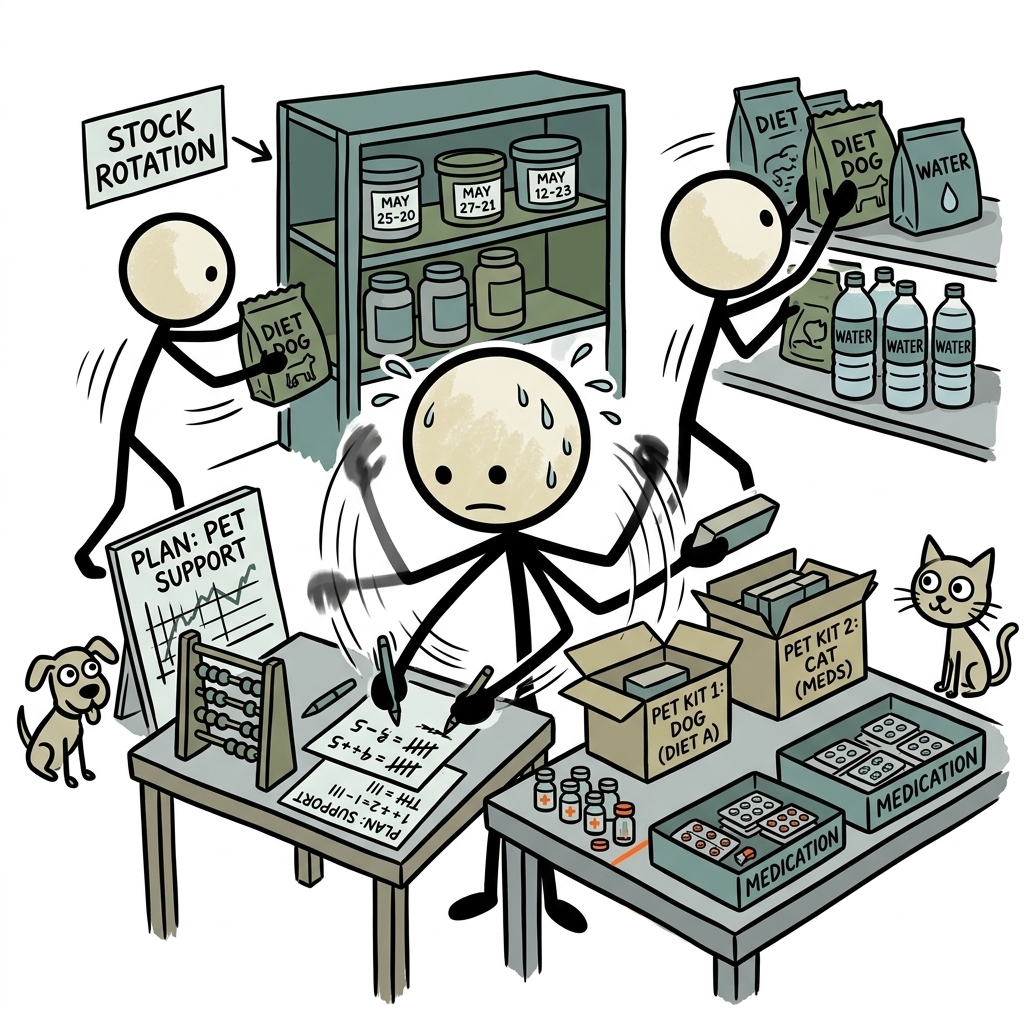
The Science of Hydration: Calculating Your Pet’s Water Needs
Water is the single most critical element in any survival kit. While humans require roughly one gallon of water per day for drinking and sanitation, calculating your pet's water requirements demands a more nuanced, weight-based approach. The Federal Emergency Management Agency (FEMA) recommends storing at least a three-day supply of water for each member of your household, including pets, but emergency preparedness experts strongly advocate for a 14-day supply to account for prolonged infrastructure collapse.
The Baseline Hydration Formula
Under normal, temperate conditions, a healthy dog requires approximately 1 ounce (30 ml) of water per pound of body weight daily. A healthy cat, possessing a biological drive adapted from desert-dwelling ancestors, requires slightly less—about 0.67 to 0.75 ounces (20 to 22 ml) per pound of body weight. However, these baselines represent ideal conditions, not the high-stress, high-temperature realities of an emergency evacuation.
To calculate your pet's true emergency water requirement, you must apply a "Stress and Environment Modifier" (SEM) of 1.5 to 2.0. Stress triggers hyperventilation (panting) in dogs, which dramatically increases respiratory water loss. In cats, stress can lead to hiding and acute refusal to drink, making wet-food moisture integration vital. Below is the formula to calculate your pet's emergency water reserve:
Daily Emergency Water (Ounces) = Weight (lbs) x Baseline (1.0 oz for dogs / 0.75 oz for cats) x Stress Modifier (1.5)Emergency Water Calculation Table
| Pet Type & Weight | Baseline Daily Need | Emergency Daily Need (1.5x Stress) | 72-Hour Evacuation Supply | 14-Day Shelter-in-Place Supply |
|---|---|---|---|---|
| Small Cat (8 lbs) | 6.0 oz (177 ml) | 9.0 oz (266 ml) | 27.0 oz (0.8 Liters) | 126.0 oz (1.0 Gallon) |
| Large Cat / Small Dog (15 lbs) | 15.0 oz (443 ml) | 22.5 oz (665 ml) | 67.5 oz (2.0 Liters) | 315.0 oz (2.46 Gallons) |
| Medium Dog (40 lbs) | 40.0 oz (1.18 Liters) | 60.0 oz (1.77 Liters) | 180.0 oz (1.4 Gallons) | 840.0 oz (6.56 Gallons) |
| Large Dog (80 lbs) | 80.0 oz (2.36 Liters) | 120.0 oz (3.54 Liters) | 360.0 oz (2.81 Gallons) | 1,680.0 oz (13.12 Gallons) |
Special Medical Adjustments
If your pet suffers from Chronic Kidney Disease (CKD), Diabetes Mellitus, or Hyperthyroidism, their bodies cannot conserve water efficiently. These pets exhibit compensatory polydipsia (excessive drinking) to flush metabolic toxins from their systems. For these animals, a stress modifier of 2.0 to 2.5 must be applied. Restricting water to a kidney-compromised pet, even for a few hours, can precipitate acute renal failure, requiring immediate veterinary hospitalization—a service that will likely be unavailable during a regional disaster.
Caloric Mathematics: Calculating Emergency Pet Food Reserves
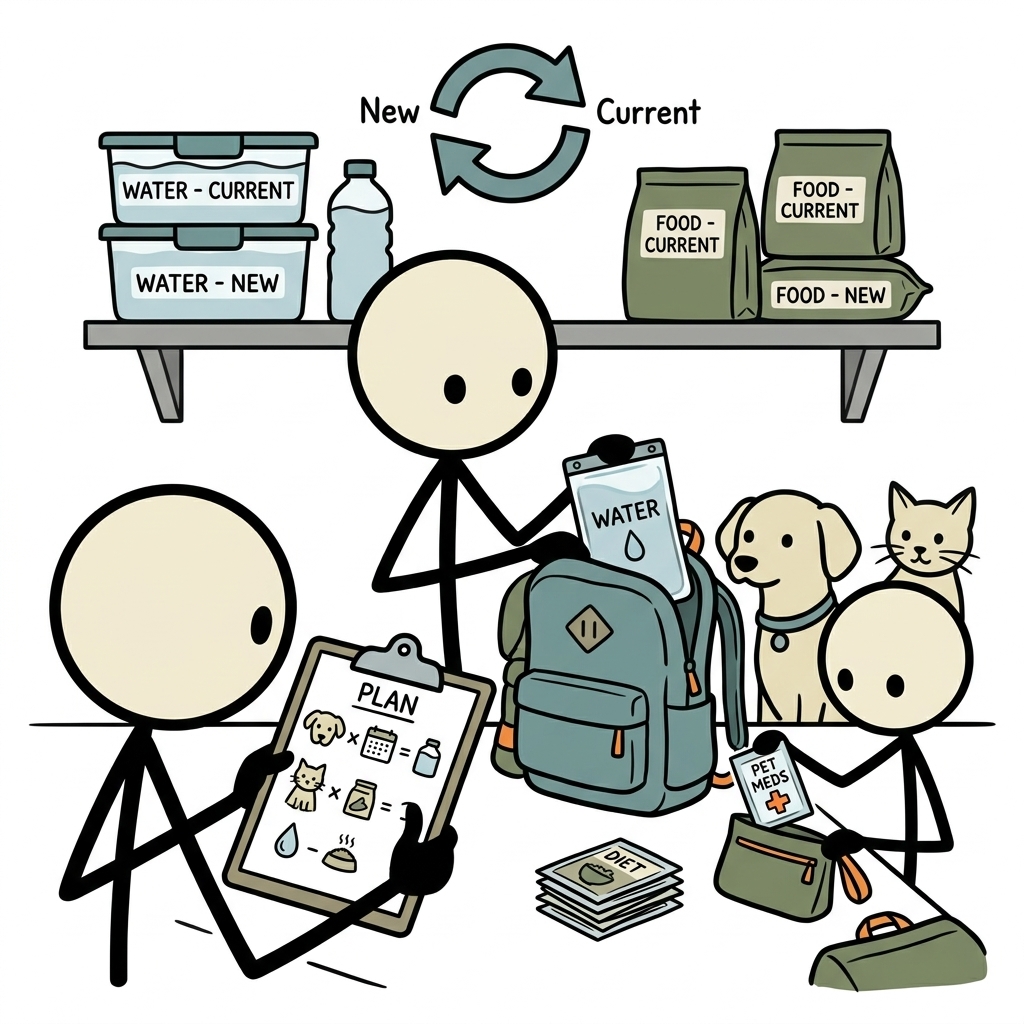
When selecting and packing emergency pet food, relying on the "number of cups" recommended on the back of the kibble bag is a recipe for failure. Kibble densities vary wildly, and stress alters metabolic rates. Instead, emergency preparedness requires calculating your pet's Resting Energy Requirement (RER) and translating that directly into kilocalories (kcal) of emergency rations.
Step 1: Calculate the Resting Energy Requirement (RER)
The RER is the energy required to maintain basic bodily functions at rest. The scientifically accepted formula used by veterinarians globally is:
RER (kcal/day) = 70 x (Body Weight in Kilograms)^0.75For a simpler, linear approximation for pets weighing between 4 lbs (2 kg) and 99 lbs (45 kg), you can use this formula:
RER (kcal/day) = (30 x Body Weight in Kilograms) + 70To convert pounds to kilograms, divide the weight in pounds by 2.2.
Step 2: Apply the Life-Stage and Stress Factor
A pet's actual daily caloric needs are typically higher than their RER. In a survival situation, fear, cold temperatures, increased physical exertion (such as walking long distances during an evacuation), and anxiety will elevate their caloric burn. Multiply the baseline RER by the appropriate factor below to determine your target daily emergency food volume:
- Neutered Adult Dog (Normal Stress): 1.6 x RER
- Intact Adult Dog / Working Dog (High Stress): 2.0 x RER to 3.0 x RER
- Neutered Adult Cat: 1.2 x RER
- Senior / Sedentary Pet: 1.0 x RER to 1.2 x RER
Once you have the total daily kcal target, look at the nutritional label of your chosen emergency pet food. Locate the "Metabolizable Energy" (ME) profile, which is typically expressed as kcal/kg, kcal/cup, or kcal/can. Divide your pet's daily kcal target by the food's kcal-per-unit metric to determine exactly how many ounces, cups, or cans are required per day. Multiply this by 14 to secure a robust two-week supply.
Navigating Special Dietary Needs in High-Stress Scenarios
In a disaster, the temptation to feed your pet whatever food is available is immense. However, if your pet is on a therapeutic or prescription diet, sudden dietary changes can be catastrophic. For instance, a dog with a history of severe pancreatitis who is fed high-fat scraps or standard emergency kibble can quickly develop life-threatening systemic inflammation. Similarly, a cat prone to urinary crystals (Feline Lower Urinary Tract Disease - FLUTD) can experience a fatal urethral blockage within 24 hours if transitioned off their specialized wet food.
Sourcing and Preserving Prescription Diets
Acquiring a surplus of prescription diets (such as Royal Canin, Hill's Prescription Diet, or Purina Pro Plan Veterinary Diets) can be challenging due to veterinary authorization rules and cost. To build your emergency pet emergency food storage guide, use these strategies:
- The "Vacation Override" Request: Ask your veterinarian for a written prescription that allows you to purchase an extra 30-day supply of food specifically for an emergency kit. Most veterinarians are highly receptive to disaster-preparedness planning.
- Wet vs. Dry Dynamics: For therapeutic diets, stock both canned and dry variants. Canned food has an exceptional shelf life (often 2 to 5 years) and provides critical hydration. However, dry kibble is lighter and easier to transport in a rapid evacuation. Ensure your emergency kit contains a 50/50 caloric split of both.
- Hypoallergenic and Monoprotein Considerations: If your pet has severe food allergies (Inflammatory Bowel Disease or cutaneous adverse food reactions), standard food pantry donations will not work. You must pack dedicated hypoallergenic formulas. Label these bags clearly with bright, waterproof tape reading: "PRESCRIPTION DIET ONLY - DO NOT FEED STANDARD FOOD."
Emergency Substitutions (The Last Resort)
If you are forced to evacuate and your supply of prescription food is lost, you must know acceptable, easily sourced alternatives. Consult your vet pre-disaster to fill out an emergency substitution matrix. For example:
- For GI-Sensitive Pets: Freeze-dried, unseasoned chicken breast and plain white rice (reconstituted with purified water).
- For Renal Patients: Low-protein, low-phosphorus ingredients like boiled egg whites and white rice (temporary use only, as this is not nutritionally complete).
- For Urinary Patients: High-moisture, grain-free wet foods that encourage hydration to prevent crystal formation.
Medication Planning, Storage, and Cold-Chain Logistics
For pets with chronic illnesses, access to medication is just as critical as access to water. Conditions like epilepsy (requiring Phenobarbital or Potassium Bromide), heart failure (requiring Pimobendan or Furosemide), and Addison's Disease (requiring daily steroids) cannot tolerate missed doses. A single missed dose of an anticonvulsant can trigger cluster seizures, which can lead to permanent neurological damage or death in a disaster zone.
The 30-Day Med Buffer and the "Rolling Stock" Method
Never let your pet's prescription medications run down to the last pill before refilling. Establish a strict policy of refilling prescriptions when you have 14 to 30 days of medication remaining. This creates a perpetual "rolling buffer." Store this buffer in your emergency kit, always using the oldest pills first to prevent expiration (more on this in the rotation section below).
Cold-Chain Logistics: Keeping Insulin and Refrigerated Meds Safe
One of the most complex challenges in emergency pet food emergency preparedness is maintaining the "cold chain" for medications like insulin (Vetsulin, Lantus, or Prozinc) during a power outage or evacuation. Insulin degrades rapidly when exposed to temperatures above 77°F (25°C) or below freezing.
To secure your pet's refrigerated medications, integrate the following gear into your survival kit:
- Evaporative Cooling Wallets (e.g., FRÍO Bags): These wallets are activated by immersion in cold water and use evaporative cooling to keep insulin at a safe temperature (between 68-79°F) for up to 45 hours, even in hot climates. They require no electricity or ice packs.
- Vacuum-Insulated Medication Thermoses: Keep a high-performance, double-walled stainless-steel thermos in your kit. In an evacuation, pack the thermos with ice cubes, place your pet's medication inside a waterproof, sealed plastic bag, and suspend it within the thermos (ensuring it does not directly touch the ice to prevent freezing).
- Phase Change Material (PCM) Packs: Unlike standard water-based blue gel packs, PCM packs are engineered to freeze and thaw at specific temperatures (such as 39°F / 4°C). They provide highly stable temperature control without the risk of accidentally freezing your pet's delicate biologics.
The FIFO (First-In, First-Out) Rotation Protocol
Emergency pet food is not a "set-it-and-forget-it" resource. Dry kibble is packed with fats and oils that oxidize over time, leading to rancidity. Rancid fats destroy fat-soluble vitamins (A, D, E, and K), can cause severe gastrointestinal distress, and may even damage liver function if consumed over a prolonged period. To prevent this, you must implement a strict First-In, First-Out (FIFO) rotation system.
Shelf-Life Realities of Pet Rations
- Unopened Dry Kibble: Generally stable for 12 to 18 months from the manufacture date if stored in a cool, dark, dry environment.
- Opened Dry Kibble: Must be consumed within 4 to 6 weeks. Never pack an opened bag of dog or cat food in an emergency kit.
- Canned Pet Food: Highly stable. Typically safe for 2 to 5 years, provided the cans are free of dents, rust, or swelling.
- Freeze-Dried or Dehydrated Pet Food: The gold standard for long-term storage. Unopened, these foods can last 5 to 25 years, depending on the packaging (Mylar bags with oxygen absorbers are ideal).
The Mylar Bag and Oxygen Absorber Fallacy
A common mistake among survivalists is repackaging commercial dry kibble into Mylar bags with oxygen absorbers. While this works beautifully for low-fat human grains like white rice and pinto beans, it is dangerous for dry pet food. Kibble contains high levels of moisture and fat. Sealing it in an oxygen-depleted environment with residual moisture can create a breeding ground for *Clostridium botulinum* (the bacteria that causes botulism), a highly lethal neurotoxin.
Instead, keep commercial kibble in its original packaging (which is specifically engineered with barrier films to prevent gas exchange) and store the entire bag inside a heavy-duty, airtight, pest-proof food-grade bucket (such as a 5-gallon bucket with a Gamma Seal lid).
Setting Up a Visual Rotation Calendar
To ensure your emergency reserves remain fresh, implement a quarterly rotation schedule. Use this simple process:
- Label every emergency food container and medication box with a bright, high-visibility sticker showing the Expiration Date.
- Set a recurring calendar reminder on your phone for the first day of every quarter (January 1, April 1, July 1, October 1).
- During your quarterly audit, check the expiration dates. Any food or medication within 6 months of expiration should be pulled from the emergency kit and integrated into your pet's daily feeding schedule. Replace it immediately with fresh stock.
The Specialized Emergency Pet Food Checklist
When assembling your evacuation gear, do not mix your pet's emergency supplies with your own. Keep a dedicated, waterproof, heavy-duty pet "go-bag essentials guide" (backpack or rolling duffel) next to your family's survival gear. Use this comprehensive emergency pet food checklist to ensure no critical components are left behind.
1. Food and Water Provisions
- [ ] 14-Day Supply of Food: Sealed in its original packaging, protected by an airtight outer container.
- [ ] 14-Day Supply of Water: Stored in durable, BPA-free containers (calculate using the formulas above).
- [ ] Collapsible Food and Water Bowls: Lightweight, food-grade silicone bowls that pack flat.
- [ ] Manual Can Opener: Essential if your canned pet food does not feature pull-tab lids.
- [ ] Graduated Measuring Cup/Scoop: To ensure precise caloric portioning during high-stress rationing.
- [ ] Spoons and Airtight Can Lids: To preserve partially consumed wet food cans.
2. Medical and Therapeutic Gear
- [ ] 30-Day Supply of Daily Medications: Kept in original prescription bottles with clear labeling.
- [ ] Cold-Chain Storage Equipment: FRÍO evaporative wallet or insulated thermos with PCM packs.
- [ ] Pill Splitter and/or Pill Pockets: To facilitate easy medication administration under stressful conditions.
- [ ] Oral Syringes: For administering liquid medications or forced hydration if a pet refuses to drink.
- [ ] Pet First Aid Kit: Including styptic powder, self-adhering vet wrap, antiseptic wipes, saline eyewash, and muzzle (even gentle pets may bite when injured or highly stressed).
3. Administrative and Identification Documents
- [ ] Waterproof Document Pouch: Containing physical copies of the following:
- Vaccination records (specifically Rabies certificates, which are legally required for emergency shelters and boarding facilities).
- Microchip registration paperwork, including the chip number and recovery service phone number.
- Detailed medical history, current prescription list, and dosage instructions.
- Veterinary contact information (primary vet, local emergency clinics, and veterinary toxic control hotlines).
- Recent, high-resolution photographs of you with your pet (to prove ownership if separated).
Proactive Veterinary Planning: The Ultimate Safeguard
No amount of calculated food or rotated medication can replace professional veterinary guidance. Before a disaster occurs, schedule a dedicated "Emergency Preparedness Consultation" with your veterinarian. During this visit, discuss the specific vulnerabilities of your pet's condition during a crisis. Ask for digital copies of their complete medical records to be emailed to you, and store these on a secure cloud drive as well as a waterproof USB drive in your Go-Bag. Additionally, research and map out at least three veterinary clinics outside your immediate geographic area along your primary and secondary evacuation routes. Knowing exactly where you can replenish specialized therapeutic diets or access veterinary care during a regional evacuation can mean the difference between a manageable crisis and a devastating loss.
Preparing for your pet's complex dietary and medical needs is not merely a logistical chore; it is a profound act of stewardship. Our domestic animals trust us completely with their safety, comfort, and survival. By taking the time today to calculate their precise water and caloric needs, secure their life-saving medications within reliable cold chains, and establish a bulletproof rotation system, you ensure that when the sirens sound or the orders to evacuate are issued, your entire family—including its most vulnerable, loyal members—is ready to face the challenge together.
Frequently Asked Questions
What should a emergency pet food plan include?
Start with the immediate safety steps, the supplies and records your household needs, a communication plan, and a regular review schedule. Follow local official guidance during an active emergency.
How often should I review emergency pet food preparations?
Review them at least twice a year and whenever your household, medication, location, or local risks change. Replace expired supplies and practice key steps.
Where can I find reliable emergency guidance?
Use local emergency management alerts and established public-health or emergency-management agencies. A blog guide should support, not replace, official real-time instructions.