⚡ Key Facts
- Space Limitations: The American Red Cross standard allocation for emergency shelter space is just 40 to 60 square feet per person—roughly the size of a king-sized mattress. For the practical checklist side, use the community emergency preparedness guide.
- Pathogen Transmission: According to the Centers for Disease Control and Prevention (CDC), crowded congregate shelters see a 40% spike in gastrointestinal and respiratory outbreaks within the first 72 hours of activation.
- Displacement Statistics: FEMA data shows that over 1 million Americans are displaced from their homes annually due to localized natural disasters, including floods, wildfires, and severe storms.
- Administrative Recovery: Research by the Federal Emergency Management Agency (FEMA) indicates that survivors with pre-packaged, digitized personal documents recover financially up to three times faster than those who lose physical records.
- Pet Accommodation: While the PETS Act of 2006 mandates that state and local family emergency plans accommodate household pets, many co-located shelters require owners to provide their own crates, food, and vaccination records.
Imagine the sudden, piercing wail of a NOAA weather radio in the dead of night, or a knock at your door by local law enforcement ordering an immediate evacuation due to a fast-moving wildfire. Within minutes, you must grab what you can and head toward the local high school gymnasium, civic center, or fairground converted into a temporary emergency shelter. While these public facilities provide invaluable protection from immediate danger, they are also loud, chaotic, brightly lit, and offer virtually zero privacy. Transitioning into a congregate shelter is a jarring experience, but having a specialized, pre-packed emergency shelter bag can mean the difference between enduring a crisis with dignity and suffering through days of preventable physical and psychological distress.
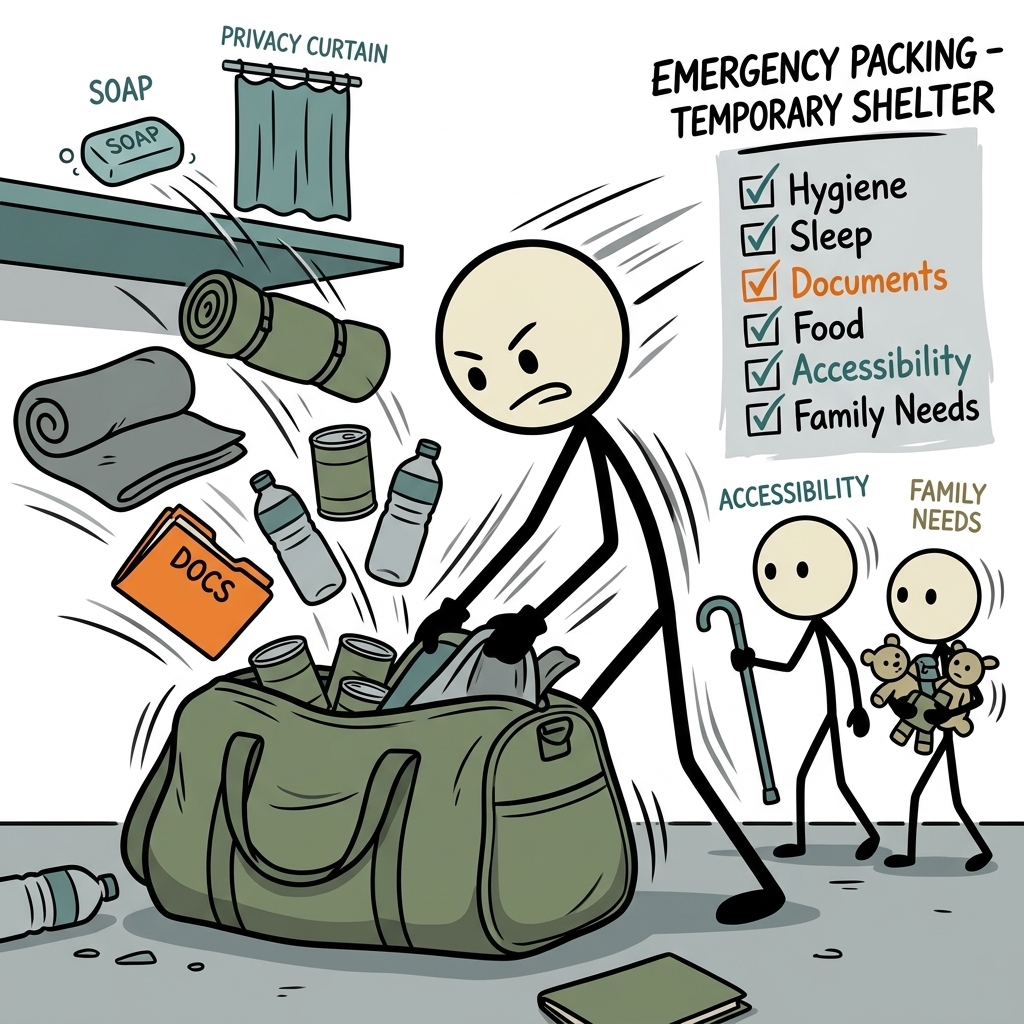
Understanding the Reality of Temporary Public Shelters
When most people think of disaster preparation, they imagine wilderness survival: water filters, survival knives, and fire starters. However, according to historical data from the Federal Emergency Management Agency (FEMA) and the American Red Cross, the vast majority of displaced survivors seek refuge in managed public shelters rather than the deep woods. In these environments, your primary challenges are not wild animals or extreme weather, but rather sleep deprivation, infectious pathogens, lack of privacy, and administrative navigation.
A standard public shelter is designed for mass processing, not personal comfort. You will likely be assigned a cot spaced mere inches from your neighbors. Fluorescent lights may remain on 24/7 for security reasons, and the ambient noise of crying children, coughing adults, and rustling gear is constant. Recognizing these environmental realities allows you to tailor your emergency shelter bag emergency preparedness strategy to focus on comfort, sanitation, and personal security in a crowded, high-stress space.
The Anatomy of a Shelter Bag vs. a Bug-Out Bag
While a traditional Go-Bag Builder is designed to help you survive in transit or in the elements, an emergency shelter bag is optimized for cohabitation. It prioritizes compact comfort items, personal hygiene, secure document storage, and tools to establish psychological boundaries. Your shelter bag should be lightweight, highly organized, and easily secured to your person or your cot to prevent loss or theft in a busy public facility.
1. Privacy and Security in a Public Space
The loss of personal privacy is one of the most psychologically taxing aspects of staying in an emergency shelter. Human beings naturally require a safe space to decompress, dress, and sleep. In a gym filled with hundreds of strangers, establishing physical and psychological boundaries is critical to maintaining your mental health and reducing cortisol levels.
Creating Visual and Auditory Boundaries
To carve out a modicum of privacy, your shelter bag should include lightweight, versatile gear that can block out your surroundings. Consider packing a lightweight, dark-colored sarong, flat sheet, or travel utility blanket along with several heavy-duty spring clamps or paracord. These can be used to drape over your cot or tie between support structures to create a temporary privacy screen. Additionally, a high-quality, contoured eye mask that blocks 100% of ambient light is indispensable for sleeping under active gymnasium lights.
Securing Your Valuables
While shelters are generally safe, theft can and does happen, particularly in the chaos of the first 48 hours of a disaster. You must keep your most critical valuables on your person at all times—even when sleeping or using the restroom. Pack a slim, RFID-blocking money belt, neck pouch, or a low-profile chest rig that can be worn under your clothing. This should hold your identification, cash, keys, and essential medications. Never leave electronics, wallets, or sensitive documents unattended on your cot.
- Low-profile waist pack: Keeps keys, cash, and phone secure while walking around the facility.
- TSA-approved cable locks: Use these to lock the zippers of your primary gear bag to prevent opportunistic theft.
- Waterproof dry bag: A small 5L dry bag allows you to take your phone, wallet, and clean underwear into the shower stall without worrying about water damage.
2. Hygiene and Sanitation: Preventing the "Shelter Flu"
Infectious disease transmission is a major concern in congregate living spaces. The CDC notes that norovirus, influenza, strep throat, and various skin infections can spread rapidly through shared restroom facilities and high-touch surfaces. When hundreds of people share a limited number of toilets and sinks, standard hygiene routines break down quickly. Your emergency shelter bag must contain a robust, self-contained sanitation kit.
Waterless Sanitation Solutions
Because running water may be compromised or access to sinks may involve long lines, your kit should rely heavily on waterless alternatives. Pack a generous supply of high-grade, alcohol-based hand sanitizer (at least 60% alcohol, as recommended by the CDC) and several packs of heavy-duty, unscented body wipes. These wipes are crucial for maintaining skin hygiene and preventing rashes when showers are unavailable. Additionally, dry shampoo and facial cleansing wipes can provide a quick psychological boost and a sense of cleanliness.
Protecting Yourself in Shared Bathrooms
Shared shower stalls and restrooms are hotbeds for fungal infections like athlete's foot, as well as bacterial pathogens. Never step foot in a shelter bathroom barefoot. Always pack a lightweight pair of rubber flip-flops or shower shoes. Your hygiene kit should also include a quick-drying microfiber towel, which dries in a fraction of the time of a standard cotton towel and resists mildew growth while packed away in your bag.
The Essential Hygiene Checklist
Ensure your hygiene kit is packed in a clear, waterproof organizer so you can find items quickly without dumping the contents onto a dirty surface:
- Travel-sized liquid soap (biodegradable) and a plastic soap case.
- Toothbrush with a protective cap, toothpaste, and dental floss.
- A compact, portable travel bidet for personal hygiene when toilet paper is scarce.
- Unscented deodorant, nail clippers, and a small hairbrush or comb.
- A 14-day supply of feminine hygiene products (menstrual cups are highly recommended for space-saving and waste reduction).
- N95 or KN95 respirators to protect against airborne pathogens and dust.
3. Sleep and Restoration: The Underappreciated Survival Tool
Sleep is not a luxury; it is a biological necessity. Prolonged sleep deprivation impairs cognitive function, compromises your immune system, and heightens emotional volatility—all of which hinder your ability to make critical decisions during an emergency. Yet, sleeping in a public shelter is notoriously difficult. To protect your sleep cycles, you must pack a specialized sleep system inside your shelter bag.
Mitigating Noise and Light Pollution
The auditory environment of a shelter can be overwhelming. To combat the constant noise, pack high-quality earplugs with a high Noise Reduction Rating (NRR) of 32 decibels or greater. Silicone putty earplugs are excellent as they mold to the shape of your ear and create an airtight seal. If you are sensitive to sudden noises, consider packing small, battery-operated white noise machines or downloading offline white noise tracks to your phone, paired with comfortable sleeping headphones.
Enhancing Physical Comfort on a Cot
FEMA-issued cots are typically rigid, narrow, and uninsulated. Sleeping directly on them can cause body aches and leave you cold, as air circulates beneath the cot. To prevent this, include a compact, inflatable sleeping pad within your emergency shelter bag checklist. Modern backpacking pads roll up to the size of a water bottle but provide several inches of cushioned support and thermal insulation. Pair this with a lightweight, compressible travel pillow and a compact fleece sleeping bag liner or a down travel quilt.
Thermal Regulation
Large public buildings are notoriously difficult to climate control. They may be freezing cold at night due to high-powered air conditioning, or stiflingly hot due to body heat. Dressing in layers is key. Pack a dedicated set of comfortable, breathable sleepwear (such as merino wool or synthetic athletic wear) that is easy to slip into and covers you fully, ensuring comfort and modesty in a mixed public space.
4. Document Preservation and Digital Redundancy
Disaster recovery begins the moment the physical danger passes, and your ability to navigate the administrative aftermath depends entirely on your documentation. FEMA, the Red Cross, and insurance companies will require proof of identity, residency, and ownership before they can distribute aid or process claims. Losing these documents can delay your recovery by months.
The Physical Document Pouch
Your shelter bag must contain a waterproof, fire-resistant document pouch. This pouch should be kept in the most secure compartment of your bag, or ideally, in your wearable chest rig. Do not rely solely on digital copies, as power grids and cellular networks may be offline for days or weeks following a major disaster. Your physical pouch should contain:
- Government-issued photo IDs (passports, driver's licenses, military IDs) for every family member.
- Original birth certificates, social security cards, and marriage certificates.
- Property deeds, vehicle titles, and active lease agreements (to prove residency).
- Insurance policy documents (homeowners, renters, auto, health) with contact numbers for claims adjusters.
- A list of critical medical history, prescriptions, and physician contact information.
- A minimum of $200–$500 in small-denomination cash (ones, fives, tens, and twenties), as power outages disable ATMs and credit card readers.
Digital Backups and Power Management
In addition to physical copies, create an encrypted digital backup of all critical documents. Store these files on a rugged, password-protected USB flash drive or a secure cloud server that you can access from any device. Take high-resolution photos of your home's exterior, interior, and high-value items before evacuating to serve as "before" evidence for insurance claims.
To keep your digital lifelines active, your shelter bag must include a robust power kit. Outlets in emergency shelters are highly coveted and often fully occupied. Pack a high-capacity power bank (20,000mAh or larger) capable of charging your smartphone multiple times. Include a multi-port USB wall charger and extra-long charging cables (6 to 10 feet) so you can reach distant outlets while remaining near your cot.
5. Food, Nutrition, and Special Dietary Needs
While emergency shelters do provide meals, they are designed for mass feeding and may not accommodate specific dietary restrictions, allergies, or nutritional needs. Furthermore, meal times in shelters can be unpredictable, and long lines are common. Having a personal supply of high-density, shelf-stable nutrition is essential for maintaining physical energy and stable blood sugar levels.
Addressing Special Dietary Restrictions
If you or a family member has celiac disease, severe food allergies, diabetes, or adheres to a strict vegetarian or vegan diet, you cannot rely on standard shelter fare. Pack a 3-to-5-day supply of specialized food that requires no cooking, refrigeration, or added water. Look for nutrient-dense, shelf-stable options such as:
- High-protein energy bars, meal replacement bars, and nut butter pouches.
- Vacuum-sealed pouches of tuna, salmon, or chicken (which are lighter and easier to open than metal cans).
- Freeze-dried fruits, unsalted nuts, and seed mixes for sustained energy.
- Individual packets of oatmeal or chia seeds that can be rehydrated with hot or cold water.
- Electrolyte replacement powder packets to add to your drinking water, helping to prevent dehydration under stress.
The Comfort Factor
Do not underestimate the psychological value of comfort food during a crisis. High-stress situations deplete your body's glycogen stores and increase cravings for familiar, comforting flavors. Pack a small selection of hard candies, herbal tea bags, instant coffee packets, or dark chocolate. These small treats can provide a profound morale boost for both adults and children when spirits are low.
6. Accessibility, Medical Needs, and Neurodiversity
Emergency preparedness is never one-size-fits-all. For individuals with physical disabilities, chronic medical conditions, or neurodivergent profiles, public shelters present unique and often overwhelming challenges. Standard shelter setups may not fully accommodate sensory sensitivities or mobility limitations, making self-advocacy and pre-packed specialized gear vital.
Prescription Medications and Medical Devices
You should never assume a shelter will have your specific medications on hand. Your emergency shelter bag must contain a minimum of a 7-to-14-day supply of all daily prescription medications in their original pharmacy bottles, which clearly display your name, dosage, and prescribing doctor. If your medications require refrigeration (such as insulin), pack a small, insulated medical cooler bag along with reusable ice packs, and notify shelter staff immediately upon arrival so they can facilitate proper storage.
If you rely on medical devices such as a CPAP machine, hearing aids, or blood glucose monitors, ensure you pack all necessary power cords, adapters, and a dedicated backup battery pack. Write down the make, model, and serial numbers of these devices, and keep a copy in your document pouch.
Supporting Neurodivergent and Sensory-Sensitive Individuals
The sensory overload of an emergency shelter—characterized by echoing voices, bright lights, and unpredictable movements—can trigger extreme distress, anxiety, or sensory meltdowns in autistic individuals, those with ADHD, or PTSD survivors. To mitigate this, design a sensory comfort kit within your shelter bag:
- Active Noise-Canceling (ANC) Headphones: These are highly effective at neutralizing background chatter and environmental drone.
- Weighted Lap Pad or Compression Vest: Provides calming deep-pressure stimulation.
- Fidget Tools and Tactile Items: Helps redirect nervous energy and maintain focus.
- Visual Schedule Cards: For children or adults who benefit from structured, predictable routines during chaotic times.
7. Family and Pet Care in Congregate Living
Evacuating with children and pets introduces a layer of complexity that requires careful planning. Children sense parental stress and can become deeply traumatized by sudden displacement, while pets can easily panic in unfamiliar, crowded environments. Your shelter bag must address the unique physical and emotional needs of these vulnerable family members.
Keeping Children Comforted and Occupied
To help children feel safe, pack a "comfort and distraction kit" specifically for them. This kit should contain small, familiar items that do not require electricity or internet access. Avoid relying solely on tablets or phones, as power resources should be conserved for emergency communication plan and emergency updates.
- A beloved stuffed animal, small security blanket, or pacifier.
- Coloring books, crayons, sticker books, and travel-sized board games.
- A deck of cards or small, quiet toys like building bricks or action figures.
- Child-friendly snacks and a familiar, leak-proof water bottle.
- A notebook and pens for older children to write or draw their feelings.
Navigating Shelter Rules for Pets
While the federal PETS Act requires emergency planners to accommodate household pets, this does not mean your pet will be allowed to sleep on your cot with you. Most shelters house pets in a separate, dedicated area of the facility, often managed by local humane societies or veterinary volunteers. To ensure your pet is accepted into these co-located shelters, you must pack a dedicated pet go-bag essentials guide.
Your pet's bag should contain their vaccination records (particularly rabies certificates, which are mandatory for entry), a sturdy collar with up-to-date ID tags, a secure leash, and a collapsible, travel-safe crate or carrier. Pack a 7-day supply of their regular food, collapsible silicone bowls, a manual can opener (if using wet food), waste bags, and any pet medications. To soothe their anxiety, include a familiar toy or a piece of your worn clothing, which carries your scent and provides comfort while they are housed in the pet section.
The Ultimate Emergency Shelter Bag Checklist
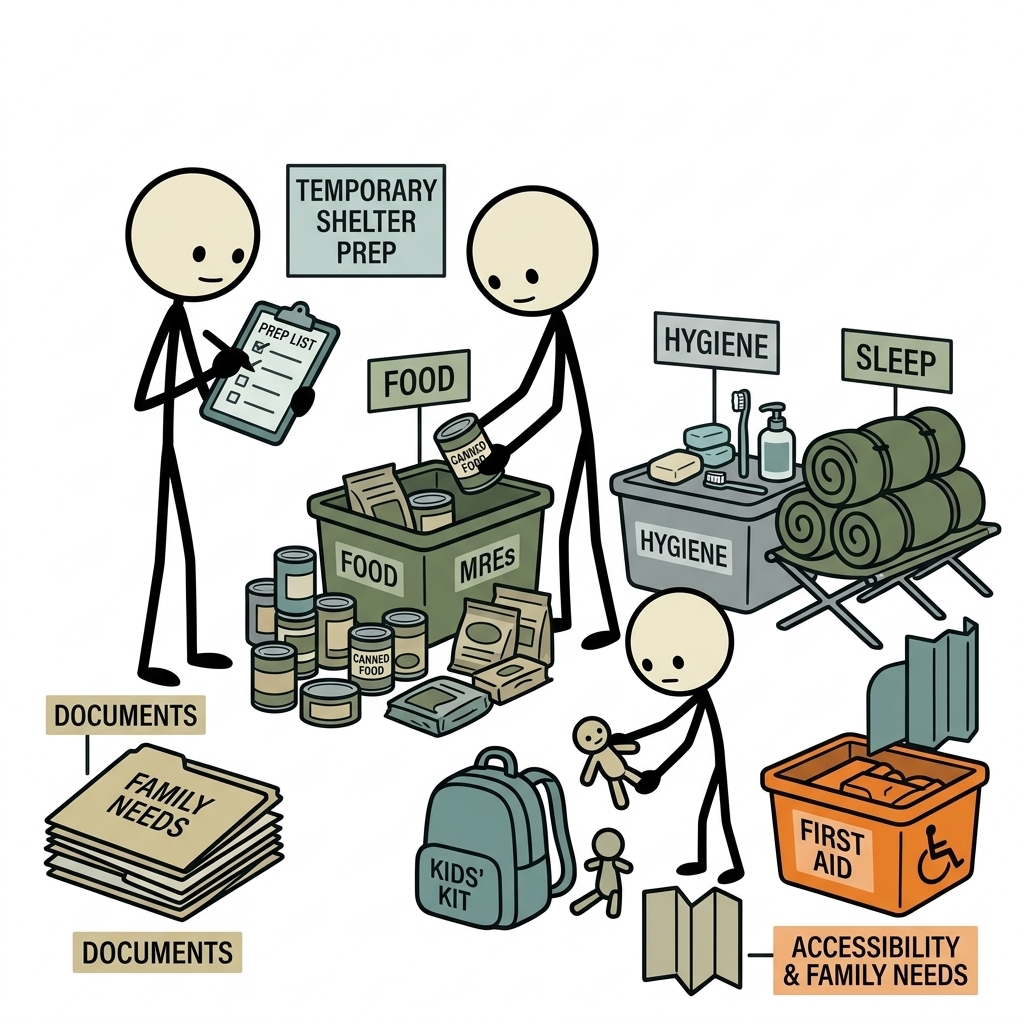
Use this comprehensive, categorized checklist to build, inspect, and maintain your emergency shelter bag checklist. Review and refresh your bag at least twice a year—ideally when the seasons change—to swap out clothing, check medication expiration dates, and update document copies.
| Category | Essential Items | Notes & Specifications |
|---|---|---|
| Privacy & Security | Eye mask, earplugs (NRR 32+), sarong/sheet, spring clamps, money belt, TSA cable locks. | Keep valuables on your person at all times, even when sleeping. |
| Hygiene & Sanitation | Body wipes, hand sanitizer, shower shoes, microfiber towel, travel bidet, toothbrush/paste, N95 masks. | Prioritize waterless sanitation to bypass long restroom lines. |
| Sleep & Comfort | Inflatable sleeping pad, travel pillow, fleece liner, change of comfortable sleepwear. | Insulate yourself from the cold air circulating beneath shelter cots. |
| Documents & Power | Waterproof document pouch, physical cash, 20,000mAh+ power bank, multi-port charger, long cables, encrypted USB. | Keep cash in small bills ($1s, $5s, $10s); power grids may be down. |
| Food & Nutrition | 3-5 day supply of non-perishable, allergen-friendly, high-density food, electrolyte packets, comfort treats. | Do not rely on shelters to accommodate food allergies or dietary restrictions. |
| Medical & Accessibility | 7-14 day prescription supply, copies of scripts, medical device chargers/batteries, sensory comfort tools. | Keep medicines in original pharmacy bottles with clear labels. |
| Family & Pets | Quiet children's toys, comfort objects, pet crate, pet food, pet vaccination records, leash, collapsible bowls. | Many shelters require proof of rabies vaccination before admitting pets. |
Embracing Preparedness with Confidence
Preparing an emergency shelter bag is not an act of fear; it is an act of profound self-respect and proactive care for your family. By taking the time to assemble these targeted resources now, you strip away the chaos and vulnerability of displacement, replacing them with control, comfort, and dignity. When disaster strikes, you will not find yourself scrambling in the dark or panicking in a crowded gymnasium. Instead, you will walk into any temporary shelter equipped with the physical tools and mental peace of mind required to navigate the crisis, protect your loved ones, and begin the journey of recovery with confidence.
Frequently Asked Questions
What should a emergency shelter bag plan include?
Start with the immediate safety steps, the supplies and records your household needs, a communication plan, and a regular review schedule. Follow local official guidance during an active emergency.
How often should I review emergency shelter bag preparations?
Review them at least twice a year and whenever your household, medication, location, or local risks change. Replace expired supplies and practice key steps.
Where can I find reliable emergency guidance?
Use local emergency management alerts and established public-health or emergency-management agencies. A blog guide should support, not replace, official real-time instructions.