⚡ Key Facts
- Cost of Damage: According to FEMA, just one inch of floodwater in a home can cause up to $25,000 in damages.
- Widespread Threat: NOAA reports that flooding is a coast-to-coast threat; all 50 states have experienced floods or flash floods in the past five years.
- Insurance Gaps: Standard homeowners and renters insurance policies do not cover flood damage. A separate National Flood Insurance Program (NFIP) or private policy is required.
- Water Physics: The National Weather Service warns that just six inches of fast-moving water can knock over an adult, and 12 inches can carry away a small car.
- Contamination Hazards: The CDC classifies most urban floodwater as "black water," meaning it is highly contaminated with raw sewage, chemical runoff, and dangerous pathogens.
Imagine waking up in the dead of night to the relentless sound of torrential rain, only to realize the street outside your window has transformed into a rushing, muddy river. The water is creeping up your driveway, and the power has just flickered out. In these critical moments, the difference between panic and purpose comes down to the preparations you made weeks, months, or even years in advance. Flooding is the most common and costly natural disaster in the United States, yet millions of Americans remain dangerously underprepared. Whether driven by tropical storms, rapid snowmelt, or overwhelmed urban drainage systems, rising water does not discriminate between a sprawling suburban estate and a first-floor apartment. family emergency plan
For a broader playbook, use our real-world emergency scenarios guide to turn these steps into a practical plan.
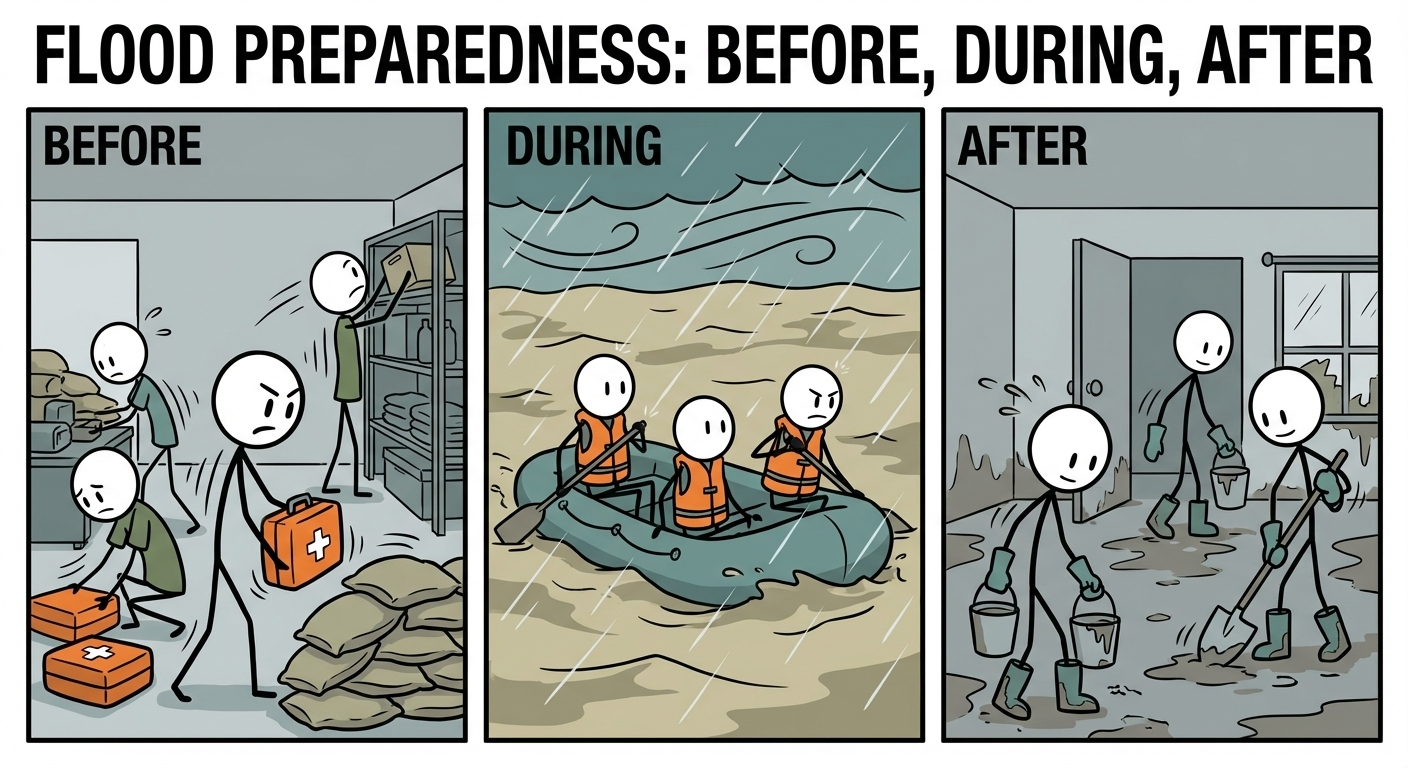
Mastering how to prepare for flooding is not about giving in to fear; it is about taking absolute control of your environment, your assets, and your family’s safety. Many people operate under the false assumption that because they do not live in a designated high-risk flood zone, they are immune to the threat. However, FEMA data reveals that more than 20% of all flood insurance claims come from properties outside of high-risk areas. The modern climate landscape is shifting, bringing heavier rainfall events that easily overwhelm aging municipal infrastructure.
This comprehensive guide breaks down the essential pillars of flood readiness for both homeowners and renters. From navigating the complex web of insurance documentation and deploying a structurally sound sandbag strategy, to identifying strict evacuation triggers and mitigating severe contamination risks, you will learn how to build an impenetrable plan. By the time you finish reading, you will possess the authoritative knowledge needed to protect your home, secure your financial future, and ensure your family navigates any deluge safely. water calculator
The Reality of Modern Flooding: Homeowners vs. Renters
Understanding your specific vulnerability is the foundational step in true flood preparedness. The risks you face, and the strategies you must employ, differ significantly depending on whether you own the property or lease it. Homeowners must look at the structural integrity of the entire building, the grading of the land, and the vulnerability of built-in systems like HVAC units and water heaters. The financial burden of a destroyed foundation or a flooded basement falls entirely on their shoulders. supply calculator
Renters, on the other hand, often suffer from a dangerous blind spot. There is a pervasive myth that a landlord’s property insurance will cover a tenant's ruined belongings in the event of a natural disaster. This is unequivocally false. A landlord’s policy covers the physical structure of the building—the drywall, the floors, the roof—but it provides zero protection for your furniture, electronics, clothing, or temporary relocation costs. Renters must take proactive, independent steps to secure their lives.
Assessing Your Geographic Risk
Before making any physical preparations, you must understand the topographical reality of your location. Begin by consulting the FEMA Flood Map Service Center to determine your official flood zone designation. However, do not let a low-risk designation lull you into complacency. Look beyond the official maps. Evaluate your immediate surroundings.
Use the Risk by ZIP tool as a quick second check on your local flood and storm exposure before you decide where to store supplies, park vehicles, or set evacuation triggers.
Are you situated at the bottom of a hill? Do the storm drains on your street frequently clog with autumn leaves or debris? Is there a nearby creek or concrete drainage canal that swells during heavy spring rains? Flash flood safety relies heavily on environmental awareness. Flash floods can develop in a matter of minutes, often bringing walls of water 10 to 20 feet high, according to the National Weather Service. Understanding the localized drainage patterns around your specific building is just as crucial as knowing your official FEMA zone. go-bag essentials
The Paperwork Shield: Securing Insurance and Vital Documents

When the water recedes, the physical cleanup begins, but the financial recovery can drag on for years if you are not properly documented. The most robust physical defenses in the world can still fail against a catastrophic weather event. Your ultimate safety net is a meticulously organized portfolio of insurance policies and digitized vital documents. This is the unglamorous, yet most vital, aspect of emergency readiness. survival scenarios
Navigating Flood Insurance
As previously stated, standard homeowners and renters insurance policies explicitly exclude flood damage. To protect your assets, you must purchase a separate flood insurance policy, typically through the National Flood Insurance Program (NFIP) or a private carrier. Homeowners should secure coverage for both the building structure and the contents within it. Renters only need to purchase contents coverage, which is highly affordable and provides a critical safety net for replacing personal property.
A crucial detail that catches many unprepared citizens off guard is the waiting period. NFIP policies require a strict 30-day waiting period from the date of purchase before the coverage goes into effect. You cannot wait until a hurricane watch is broadcast on the evening news to buy a policy. By then, it is entirely too late. Secure your coverage during the dry season, and review the policy annually to ensure your coverage limits reflect the current value of your home and possessions.
Digitizing Your Life and the "Go-Binder"
If you are forced to evacuate rapidly, you will not have time to rummage through filing cabinets for birth certificates and tax returns. You must create a comprehensive "Go-Binder" containing physical copies of vital documents, alongside a secure, encrypted digital backup. Keep the physical binder in a high-quality, fireproof, and waterproof document bag.
Your documentation kit should include copies of all insurance policies, passports, driver's licenses, social security cards, birth and marriage certificates, medical records, prescriptions, and property deeds or lease agreements. Furthermore, conduct a comprehensive home inventory. Walk through every room of your house or apartment and record a high-definition video detailing your possessions. Open closets, film the serial numbers on expensive electronics, and describe high-value items out loud. Upload this video to a secure cloud storage service. This single step will make filing a post-flood insurance claim exponentially faster and more successful.
Assembling a Comprehensive Flood Emergency Kit
When municipal infrastructure fails, you become your own first responder. Power grids can go offline, municipal water supplies can become contaminated with raw sewage, and emergency services may be stretched too thin to reach you for days. Building a robust flood emergency kit is non-negotiable. This kit must be self-contained, highly portable, and entirely waterproof.
Core Sustenance and Medical Supplies
Your kit must sustain your household for a minimum of 72 hours, though preparing for a full week is the gold standard. Start with hydration. Store at least one gallon of Water Calculator, per day, for drinking and basic sanitation. Because floodwaters compromise local reservoirs, include a portable water filtration system or water purification tablets as a backup.
Stock up on high-calorie, non-perishable food items that require no cooking or refrigeration. Canned meats, protein bars, dehydrated camping meals, and trail mix are excellent choices. Do not forget a manual can opener. Your medical kit should go beyond basic bandages. Include a 30-day supply of any essential prescription medications, a robust first aid manual, tourniquets, antiseptic wipes, antibiotic ointment, and over-the-counter medications for pain relief and gastrointestinal distress.
Tactical Gear and Waterproofing
During a flood, standard backpacks will soak through, ruining the life-saving gear inside. Store your flood emergency kit in heavy-duty PVC dry bags, similar to those used by whitewater rafters. These bags will float if dropped in water and will keep your gear bone-dry.
Equip your kit with reliable illumination and communication tools. Pack a hand-crank NOAA weather radio to receive critical updates when cellular towers go down. Include multiple waterproof LED headlamps, heavy-duty flashlights, and extra lithium batteries. A high-capacity power bank is essential for keeping your smartphone charged. Finally, include emergency Mylar thermal blankets, a loud signaling whistle, and basic tools like a multi-tool, duct tape, and a utility knife. If you have pets, ensure their food, leashes, and vaccination records are also packed in a waterproof container.
Defending the Perimeter: Effective Property Protection
While you cannot stop a rising river, you can significantly mitigate the damage it inflicts on your home. Property protection requires a combination of long-term structural improvements and rapid-deployment tactical defenses. Homeowners have more flexibility here, but renters can still employ several critical strategies to keep the water at bay.
The Science of the Sandbag Strategy
When deployed correctly, sandbags are a highly effective, low-cost barrier against shallow floodwaters. However, most people fill and stack them entirely wrong, resulting in structural failure and rapid water intrusion. A proper sandbag strategy relies on physics, friction, and precise geometry.
First, never fill a sandbag completely. Fill them only one-half to two-thirds full of heavy sand or soil. A fully stuffed bag becomes a rigid cylinder that leaves massive gaps when stacked. A half-filled bag remains malleable, allowing it to mold to the ground and the bags around it, creating a watertight seal. Do not tie the top of the bag. Instead, fold the top flap down and place the bag so the weight of the sand rests heavily on the folded flap, sealing it shut.
When stacking, clear the ground of any debris. Lay the first row tightly together. For the second row, stagger the bags like you are laying bricks, ensuring the seams of the bottom row are covered by the center of the bags on the top row. For any wall higher than two feet, you must build a pyramid shape. The base should be three times wider than the height of the wall to prevent the force of the water from tipping it over. To maximize effectiveness, drape a continuous sheet of heavy-duty polyethylene plastic over the front of the sandbag wall (the side facing the water) and anchor it under the bottom row of bags. This plastic sheeting is what actually stops the water; the sandbags simply provide the structural support to hold the plastic in place.
Structural Hardening and Interior Mitigation
Homeowners should invest in long-term mitigation strategies. Ensure your gutters and downspouts are clear and extend at least six feet away from your home's foundation. Install a sump pump with a dedicated battery backup in your basement; a primary pump is useless when the power grid fails during a storm. Consider installing check valves in your plumbing to prevent raw municipal sewage from backing up into your sinks and toilets when the sewer system is overwhelmed.
If flooding is imminent, both homeowners and renters must take rapid interior action. Elevate high-value items, electronics, and sentimental belongings to the highest floor of the residence. If you live in a single-story home, place items on top of sturdy tables or high shelving. Roll up area rugs and move them upstairs. Most importantly, locate your main utility shut-offs. If water is threatening to enter your home, turn off the main breaker switch to prevent catastrophic electrical fires and electrocution hazards. Shut off the main gas valve to prevent leaks if the home shifts off its foundation.
Knowing When to Leave: Evacuation Triggers and Strategy
The most dangerous mistake you can make during a flood is waiting too long to leave. Floodwaters rise with deceptive speed, quietly cutting off escape routes and turning familiar neighborhood streets into deadly traps. A robust flood family emergency plan removes emotion and hesitation from the equation. It relies on predetermined, objective triggers that dictate exactly when it is time to abandon the property and seek higher ground.
Defining Your Evacuation Triggers
Do not wait for a mandatory evacuation order from local authorities to make your move. By the time an official order is broadcast, traffic will be gridlocked, and escape routes may already be compromised. You must define your own personal evacuation triggers based on your geographic risk and household composition.
Trigger one should be weather-based. Understand the difference between a watch and a warning. A Flash Flood Watch means conditions are favorable for flooding; this is your trigger to load the car, secure the home, and monitor the radio. A Flash Flood Warning means flooding is actively occurring or imminent; this is your trigger to execute your evacuation plan immediately.
Trigger two should be environmental. If you observe water cresting the banks of a nearby creek, or if street-level drainage systems begin geysering water into the road, it is time to leave. Trigger three is situational. If you have elderly family members, infants, or individuals with mobility issues in your household, your evacuation trigger must be pulled much earlier. You cannot risk being trapped without power or medical assistance.
Executing the Flood Evacuation Plan
When the decision to evacuate is made, execution must be swift and methodical. Grab your waterproof Go-Binder and your flood emergency kit. Ensure everyone is wearing sturdy, closed-toe shoes and weather-appropriate clothing. Lock your doors and windows, and double-check that the main electrical breaker and gas valves are shut off.
Your evacuation route must be planned well in advance. Identify at least three different routes to your predetermined safe destination (a family member's home, a hotel, or an official shelter). Avoid routes that dip into low-lying areas, cross bridges over easily swollen rivers, or pass through known flood bottlenecks.
The golden rule of evacuation is simple: Turn Around, Don't Drown. Never, under any circumstances, attempt to drive or walk through moving floodwaters. According to the USGS, water is incredibly dense and powerful. Just six inches of fast-moving water can knock a grown adult off their feet. Twelve inches of water will float a small car, and 24 inches of rushing water will carry away most SUVs and pickup trucks. If you encounter a flooded roadway, do not attempt to gauge its depth. The road surface beneath the water may have completely washed away, leaving a massive sinkhole. Turn your vehicle around immediately and find an alternative route.
Navigating the Aftermath: Contamination Risks and Health Hazards
Surviving the rising water is only the first phase of the emergency. The aftermath of a flood presents a highly toxic, invisible landscape of biological and chemical hazards. The water that breached your home is not the clean water that falls from the sky; it is a hazardous cocktail that requires strict safety protocols to navigate safely.
The Toxic Soup of Urban Floodwaters
The CDC classifies the vast majority of floodwater as "Category 3" or "black water." When heavy rains overwhelm municipal infrastructure, sanitary sewer systems inevitably back up and overflow, mixing raw human feces and urine directly into the floodwaters. This water is teeming with dangerous pathogens, including E. coli, Salmonella, Giardia, and bacteria that cause tetanus and leptospirosis.
Beyond biological threats, floodwaters are heavily contaminated with industrial chemicals. The water sweeps through garages, gas stations, and industrial parks, picking up motor oil, gasoline, pesticides, antifreeze, and heavy metals. Furthermore, displaced wildlife poses a significant physical threat. Venomous snakes, rodents, and massive colonies of fire ants frequently seek refuge in flooded homes and floating debris.
Safe Re-entry and Cleanup Protocols
Never return to a flooded property until local authorities have officially declared the area safe. Upon your return, approach the exterior of your home with extreme caution. Look for downed power lines, structural sagging, or the smell of leaking natural gas. If you smell gas, leave immediately and contact the utility company from a safe distance.
Before entering the home, you must don appropriate Personal Protective Equipment (PPE). This includes heavy-duty rubber boots (waders), thick rubber gloves, safety goggles, and an N95 respirator mask. The moment floodwaters recede, the clock starts ticking on mold growth. According to FEMA, toxic mold can begin growing on damp drywall, insulation, and fabric within 24 to 48 hours.
Document the damage extensively before moving anything. Take hundreds of photos and videos of the water lines on the walls, the ruined furniture, and the structural damage to submit to your insurance adjuster. Once documented, the brutal work of mucking out begins. Any porous material that has been submerged in floodwater—including carpets, mattresses, stuffed animals, upholstered furniture, and drywall—must be thrown away. It is impossible to fully sanitize porous materials contaminated by black water. Wash all hard surfaces with a heavy-duty solution of hot water and bleach, and utilize industrial fans and dehumidifiers to force-dry the structural framing of the home.
Taking Control of Your Flood Readiness
The sheer power of a flood is awe-inspiring and undeniably destructive, but it does not have to dictate your fate. By taking methodical, proactive steps today, you strip the disaster of its element of surprise. Whether you are a homeowner fortifying a basement or a renter securing a digital Go-Binder and a waterproof emergency kit, every action you take builds a wall of resilience between your family and the rising tide.
Flood preparedness is a continuous lifestyle of awareness and readiness. Keep your insurance policies active, maintain the supplies in your emergency kits, practice your evacuation routes, and respect the devastating physics of moving water. When the dark clouds gather and the heavy rains begin to fall, you will not be paralyzed by panic. Instead, you will execute your plan with the calm, authoritative confidence of someone who is fully prepared to weather the storm and emerge safely on the other side.
Understand flood-specific disaster response through our natural disaster survival guide. Plan family evacuation using our family evacuation drill plan. Build evacuation kits with our go-bag builder. Calculate flood supplies with our supply calculator. Master flood response through our preparedness courses.
Frequently Asked Questions
What is the most important weather prep step?
Have redundant alerts, a shelter plan, and pre-staged supplies so you can act immediately when warnings arrive.
Should I shelter in place or evacuate?
Follow local orders and hazard type. Evacuate early when routes are still open and conditions are still manageable.
How often should I update my weather emergency kit?
Review every 6 months, rotate food and medications, and seasonally adjust clothing and shelter items. For a broader perspective on how communities handle these situations, see our real-world emergency scenarios guide.
How can I reduce panic during severe weather events?
Use checklists, assign roles, and rehearse actions. Familiar routines reduce decision fatigue under stress.
What mistakes do families make most often?
Waiting too long to act, relying on one information source, and not practicing the plan before a real event.