⚡ Key Facts
- The 72-Hour Baseline vs. True Resilience: While the Federal Emergency Management Agency (FEMA) advises a bare minimum 72-hour supply, the American Red Cross and emergency management professionals recommend maintaining at least a two-week pantry for regional disruptions and up to three months for systemic shocks.
- The Calorie Trap: The standard USDA 2,000-calorie baseline underestimates energy expenditure during emergencies; physical recovery, cold exposure, and psychological stress can drive adult requirements up to 2,500–3,200 calories per day.
- Financial Waste in Stockpiling: The USDA estimates that the average American household wastes over 30% of purchased food; panic-buying specialized "survival buckets" that your family dislikes leads to food fatigue, gastrointestinal distress, and expired discard piles.
- Atmospheric Degradation: Food quality deteriorates primarily due to five environmental vectors: temperature, moisture, oxygen, light, and pests. Controlling these factors can extend dry food shelf life from 12 months to over 25 years.
- The Water Multiplier: Dehydrated and freeze-dried supplies require an additional 0.5 to 1 gallon of potable water per person per day solely for rehydration and cooking, beyond standard FEMA sanitation and hydration minimums.
When Winter Storm Uri incapacitated the Texas electrical grid in February 2021, over 4.5 million homes lost power, and grocery store shelves across thousands of square miles were emptied within 36 hours. The event shattered a widespread modern assumption: that the grocery store functions as an infinite, on-demand warehouse. In reality, modern supply chains operate on a fragile "just-in-time" inventory model holding roughly a three-day supply of perishables. True food security is neither panic-buying random canned goods during a hurricane warning nor spending thousands of dollars on generic military-style rations that end up forgotten in an attic. Methodical, calculated emergency food planning allows you to build a dynamic, nutritionally sound, and zero-waste pantry engineered to sustain your specific household through any contingency. For the practical checklist side, use the community emergency preparedness guide.
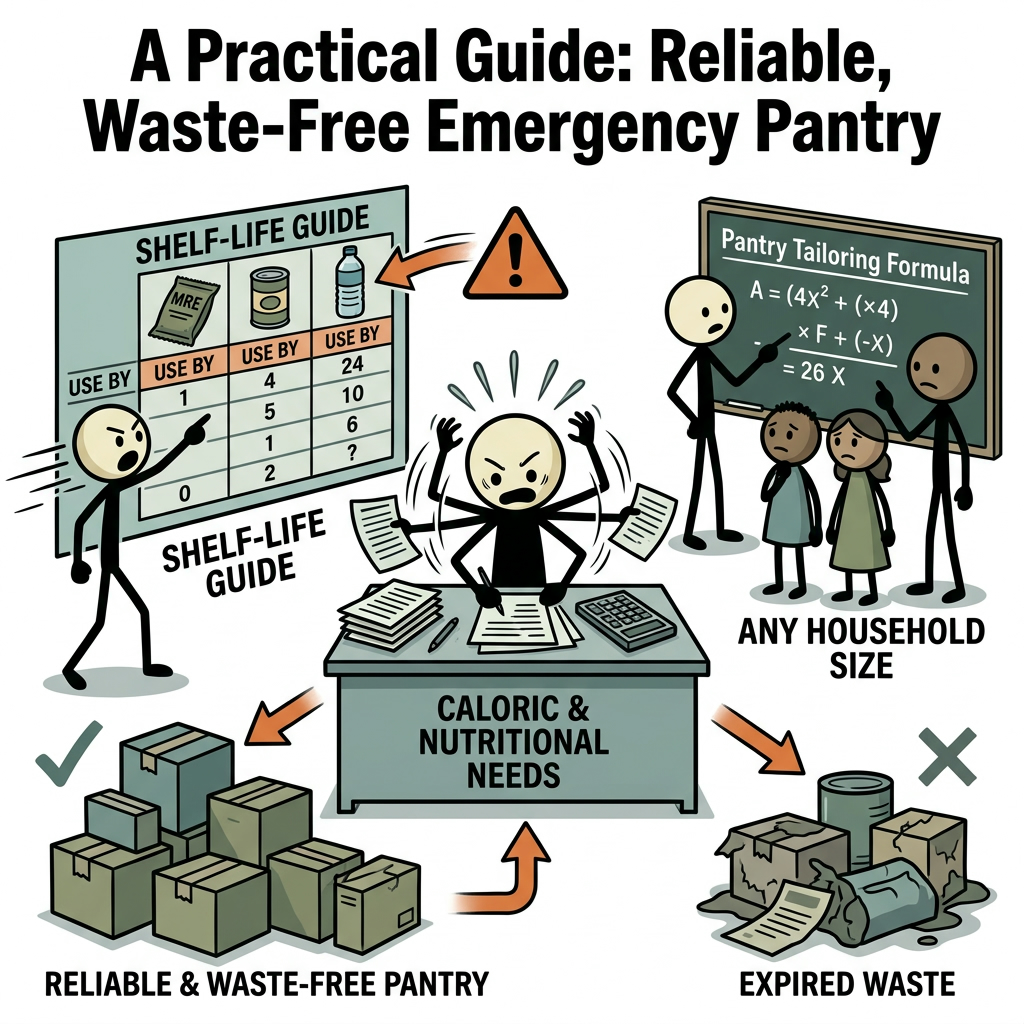
The Core Mathematics: Calculating Household Caloric Baselines
Most family emergency planners make the catastrophic mistake of calculating provisions by head count rather than metabolic reality. A blanket assumption of 2,000 calories per person per day is an administrative convenience, not a biological fact. An active 35-year-old clearing structural storm debris in sub-freezing temperatures will burn through 3,200 calories in 24 hours, while a sedentary elderly family member may require only 1,600. Failing to differentiate these baselines will cause an emergency pantry calculator to fail precisely when stability is needed most.
To establish a functional survival emergency food storage guide, you must calculate each household member’s Basal Metabolic Rate (BMR) and apply an Emergency Activity Multiplier (EAM). Under emergency conditions involving manual labor, temperature regulation without HVAC systems, and elevated cortisol, use the following baseline calculations:
- Adult Males (18–50): 2,400–2,800 kcal/day (increase to 3,200 if cold-climate or high physical exertion is anticipated).
- Adult Females (18–50): 1,800–2,200 kcal/day (increase to 2,500 for high exertion; adjust upward for pregnancy [+300 kcal] or lactation [+500 kcal]).
- Teens (13–18): 2,200–2,800 kcal/day depending on gender and growth stage.
- Children (4–12): 1,400–2,000 kcal/day.
- Toddlers (1–3): 1,000–1,400 kcal/day (focus on high nutrient density and fat).
- Seniors (65+): 1,600–2,000 kcal/day (lower total calories, higher bioavailable protein demands).
Multiply each individual's daily caloric baseline by the number of target days, then sum the total to find your family’s gross caloric reserve requirement. For a family of four (two adults, one teenager, one child) targeting a 30-day disruption: For the practical checklist side, use the neighborhood preparedness network.
(2,600 + 2,000 + 2,400 + 1,600) × 30 days = 8,600 kcal/day × 30 days = 258,000 Total Kilocalories.
This gross caloric sum serves as the foundational constraint for your food storage calculator. It shifts planning from vague volume ("how many cans do we have?") to exact, measurable energy density.
Nutritional Architecture: Balancing Macros and Micronutrients Under Stress
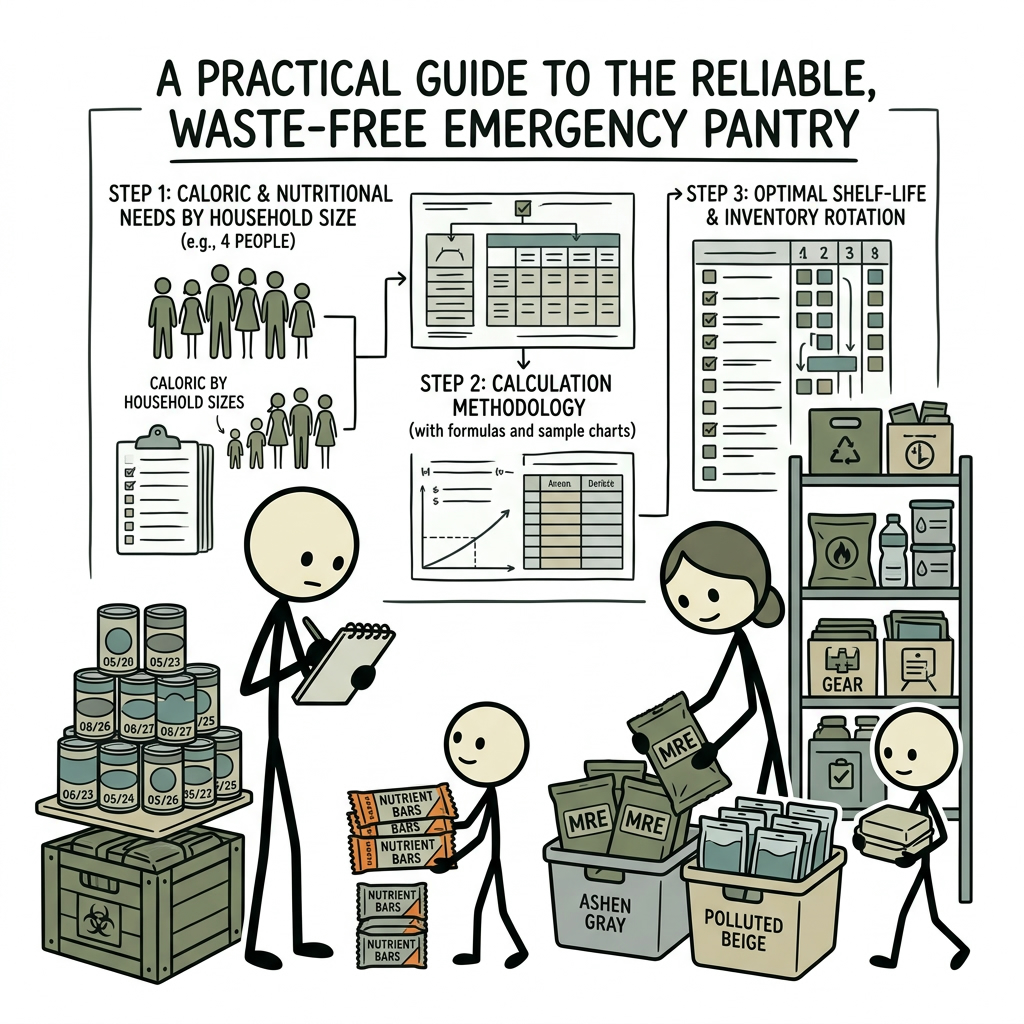
Surviving an emergency is not simply a matter of caloric volume; it is a matter of maintaining immune function, cognitive performance, and digestive health under high physiological stress. A survival food supply composed exclusively of processed white rice and refined sugar will stave off starvation, but will rapidly induce metabolic crashes, micronutrient deficiencies, and severe constipation. You must engineer your pantry with an intentional macronutrient ratio.
Macronutrient Proportions for Crisis Management
The human body processes fuel differently under extreme physical and psychological demands. Structure your emergency pantry according to the following dietary distribution:
- Complex Carbohydrates (50–55% of total calories): Carbohydrates are the primary, most readily accessible metabolic fuel for both the brain and skeletal muscles. Focus on low-glycemic, fiber-dense dry goods: rolled oats, brown rice, whole wheat, barley, and quinoa. Fiber is essential: a sudden shift to low-fiber survival rations can trigger severe gastrointestinal distress, compromising mobility and hydration.
- Proteins (15–20% of total calories): Protein prevents lean muscle catabolism, supports immune defense, and promotes satiety. Target a minimum of 0.8 to 1.2 grams of protein per kilogram of body weight per day. Diversify across shelf-stable sources: canned tuna, salmon, and chicken; dried beans, lentils, and chickpeas; powdered whole eggs; and freeze-dried meats.
- Healthy Fats (25–30% of total calories): Fat is the most calorically dense macronutrient (9 calories per gram, compared to 4 calories per gram for protein and carbs). It is critical for cellular integrity, hormone production, and the absorption of fat-soluble vitamins (A, D, E, K). Secure oils (olive, avocado, coconut), canned sardines in oil, nut butters, and whole nuts vacuum-sealed with oxygen scavengers.
Micronutrients, Electrolytes, and Gut Health
During prolonged crises, fresh produce disappears first. The Centers for Disease Control and Prevention (CDC) highlights that vitamin and mineral deficiencies directly impair physical stamina and cognitive focus. Address this gap proactively through your long-term food storage architecture.
Prioritize foods rich in Vitamin C (canned citrus, tomato paste, freeze-dried berries) to support tissue repair and prevent scurvy. Maintain zinc and B-vitamin levels via fortified nutritional yeast, canned shellfish, and whole grains to support cellular metabolism. Crucially, store supplemental electrolyte powders containing sodium, potassium, and magnesium. Under high stress, digestive distress, or extreme heat, electrolyte imbalance impairs cardiovascular stability and cognitive clarity long before caloric exhaustion sets in.
The Three-Tier Storage Framework: Eliminating Spoilage and Waste
The primary reason households abandon emergency food planning is economic inefficiency: buying hundreds of dollars worth of survival food, letting it expire past its safe margin, and throwing it in the trash five years later. To eliminate waste, implement a dynamic Three-Tier Storage Framework. This system integrates your daily eating habits directly into your disaster resilience strategy.
| Pantry Tier | Duration | Target Foods | Rotation Frequency |
|---|---|---|---|
| Tier 1: Working Pantry | 0 to 3 Months | Everyday groceries, pasta, sauces, standard canned goods, snacks | Continuous (FIFO: First-In, First-Out) |
| Tier 2: Transitional Storage | 3 to 12 Months | Commercial canned meats/veggies, vacuum-sealed grains, peanut butter | Annual or Semi-Annual audit |
| Tier 3: Long-Term Reserve | 1 to 30 Years | Hard grains (wheat berries), white rice, dried beans, freeze-dried meals | Condition checks every 3–5 years |
Tier 1: The Working Pantry (0–90 Days)
Your working pantry is simply an expanded, well-organized version of your everyday diet. It follows the core prepper tenet: store what you eat, and eat what you store. If your family eats pasta twice a week, your baseline working inventory should hold 24 boxes of pasta and 24 jars of sauce, not three boxes purchased week-to-week.
Enforce the First-In, First-Out (FIFO) method strictly. When unpacking groceries, place newly purchased items at the back of the shelf and push older inventory to the front. This zero-waste practice ensures your food storage is completely funded by normal household operating expenses, without purchasing redundant survival gear that sits untouched until it spoils.
Tier 2: Transitional Extended Storage (3–12 Months)
Transitional storage bridges the gap between commercial off-the-shelf items and deep survival supplies. These goods possess a safe, reliable shelf life of one to two years without needing industrial oxygen absorbers or specialty packaging. This tier includes canned poultry, corned beef, condensed soups, shelf-stable UHT milks, honey, molasses, and cooking fats.
Store items in a cool, dark environment. Audit this tier twice annually—traditionally scheduled during Daylight Saving Time clock adjustments. Any goods approaching six months to their stated best-by date rotate seamlessly up into Tier 1 for regular consumption and are replenished with fresh stock.
Tier 3: The Deep Archive (1–30 Years)
This is your insurance policy against long-tail catastrophic crises: severe geopolitical instability, prolonged natural disasters, or grid collapse. Tier 3 relies strictly on low-moisture (under 10%), low-fat commodities sealed inside barrier-proof packaging.
Items appropriate for Tier 3 include polished white rice, hard red and white wheat berries, dry pinto and black beans, rolled oats, dehydrated potato flakes, salt, and granulated sugar. Sealed within food-grade Mylar bags with appropriate oxygen absorbers and housed inside heavy-duty HDPE plastic buckets, these foods will retain their nutritional baseline for 20 to 30 years without spoilage.
Translating Abstract Math into Commodity Weights
How does a gross figure of 258,000 calories translate into shopping lists and physical volume? You must convert macro targets into commodity weights. Dry bulk foods have predictable, well-documented caloric values per pound.
Use the following standard benchmarks to populate your emergency pantry calculator:
- Polished White Rice: ~1,650 kcal/lb
- Hard Wheat Berries: ~1,500 kcal/lb
- Dry Pinto / Black Beans: ~1,550 kcal/lb
- Rolled Oats: ~1,700 kcal/lb
- Dry Lentils: ~1,600 kcal/lb
- Granulated Sugar / Honey: ~1,750 kcal/lb
- Vegetable / Olive Oil: ~4,000 kcal/lb (approx. 1,900 kcal per 8 oz cup)
- Powdered Whole Milk: ~2,250 kcal/lb
- Peanut Butter: ~2,650 kcal/lb
The 30-Day Family Supply Blueprint
Applying these metrics to our four-person household (258,000 total kcal target), an optimal, nutritionally sound allocation across a 30-day Tier 2 and Tier 3 supply looks like this:
- Grains (Rice, Oats, Wheat, Pasta): 80 lbs (~132,000 kcal | 51% of total)
- Legumes (Dry Beans, Lentils, Canned Chickpeas): 35 lbs (~55,000 kcal | 21% of total)
- Proteins (Canned Meats, Fish, Eggs): 25 lbs / 35 cans (~26,000 kcal | 10% of total)
- Fats (Olive Oil, Coconut Oil, Peanut Butter): 8 lbs / 1 gal oil + 4 jars PB (~29,000 kcal | 11% of total)
- Fruits & Vegetables (Canned, Freeze-Dried): 40 cans / equivalent (~16,000 kcal | 6% of total)
- Comfort & Seasonings (Salt, Spices, Sugar, Coffee, Tea): 5 lbs (~0–2% of total, vital for morale)
This layout yields balanced meals, eliminates reliance on unpalatable survival bars, and ensures that you have the right balance of fats, proteins, and carbohydrates to maintain consistent energy.
The Rehydration Reality: Integrating Water with Storage
A fatal oversight in long-term food storage planning is treating water and food supplies as separate logistical puzzles. They are intrinsically linked. If your emergency pantry contains 50 pounds of dry beans, 40 pounds of rice, and a case of freeze-dried stews, your food is utterly useless—or biologically dangerous—without the water required to cook and hydrate it.
FEMA and the CDC mandate a baseline of one gallon of Water Calculator per day for drinking and basic sanitation. However, your emergency food planning must account for the water consumed during thermal preparation and rehydration:
- Freeze-Dried Meals: Require 1 to 2 cups (8–16 oz) of boiling water per serving. A 30-day freeze-dried supply for a family of four can easily require an extra 15 to 30 gallons of pure drinking water solely for reconstitution.
- Dehydrated Raw Staples (Rice, Beans, Grains): Require substantial water volume for boiling and simmering. One pound of dry pinto beans absorbs approximately 3 to 4 cups of water during a 90-minute simmer, with additional water lost to steam evaporation.
- Metabolic Water Debt: High-protein diets increase the production of urea, requiring your kidneys to process and excrete higher amounts of fluid. If your water reserves are compromised, consuming high-protein canned meats accelerates systemic dehydration.
Always add a 25% water overhead to your total storage calculations if your food supply leans heavily on dehydrated or dry raw goods. For a 30-day plan for four people, this means augmenting your 120-gallon baseline (1 gal/person/day × 4 people × 30 days) with an additional 30 gallons dedicated exclusively to food processing and preparation.
Shelf-Life Engineering: Neutralizing the Five Spoilage Vectors
The dates stamped on supermarket packaging are overwhelmingly quality indicators ("Best If Used By"), not strict safety thresholds, according to the USDA Food Safety and Inspection Service (FSIS). Most commercially canned foods remain safe to consume indefinitely if the can remains structurally intact—free of swelling, deep dents, or rust. However, nutrient retention and flavor degrade over time.
To preserve both caloric value and biochemical viability, you must understand and systematically neutralize the five environmental vectors of degradation.
1. Temperature Control
Heat accelerates chemical decomposition. For every 18°F (10°C) increase above 50°F (10°C), the rate of nutrient loss and chemical oxidation in stored food doubles. Storing dry provisions in an uninsulated garage or attic where temperatures reach 100°F will destroy a 25-year shelf-life rating in under two years. Maintain storage temperatures between 55°F and 68°F (12°C–20°C) whenever possible.
2. Oxygen Elimination
Oxygen causes rancidity in fats, destroys essential vitamins (especially A, C, and E), and allows insect larvae to hatch. Polished grains and dry beans must be packed with oxygen absorbers (iron powder sachets that chemically bind O2). Crucial safety rule: Never place oxygen absorbers in items with a moisture content above 10% (such as soft dried fruit, jerky, or brown sugar), as this creates an anaerobic environment that can cultivate Clostridium botulinum.
3. Moisture Suppression
Moisture promotes the growth of mold, fungi, and bacterial pathogens. All dry commodities packed for Tier 3 long-term food storage must possess a moisture content below 10%. Use silica gel desiccants to extract atmospheric moisture in non-air-sealed environments, but do not combine them in the same container with oxygen absorbers, as oxygen absorbers need a tiny amount of ambient humidity to activate their iron-oxidation reaction.
4. Light Attenuation
Ultraviolet (UV) rays degrade proteins, break down vitamins, and bleach natural food colorings through photodegradation. Never store clear glass mason jars or thin polyethylene bags in direct sunlight. Use opaque food-grade HDPE buckets, #10 metal cans, or multi-layered, aluminum-laminated Mylar bags that block 100% of the light spectrum.
5. Pest Exclusion
Rodents and insects can chew through paper, cardboard, and light plastics within hours. High-density polyethylene (HDPE) buckets (minimum 50 to 90 mil thickness) with gasketed gamma-seal lids serve as physical kinetic armor against weevils, beetles, mice, and rats. Treat bulk raw grains with diatomaceous earth or freeze them for 72 hours prior to long-term packing to eradicate any dormant insect eggs.
Special Dietary Considerations: Customizing for Household Realities
A common vulnerability in pre-packaged "all-in-one" survival buckets is their complete disregard for individual metabolic and medical requirements. If a member of your family has celiac disease, relies on an insulin regimen, or requires hypoallergenic infant formula, standard survival kits represent a direct health hazard.
Tailor your emergency pantry calculator around your household's actual medical profiles:
- Infants and Toddlers: Commercial baby formula cannot be safely substituted or diluted during an emergency. Calculate daily intake meticulously and maintain a rolling minimum 60-day buffer of the exact formulation your child tolerates, accompanied by clean, distilled water reserves.
- Diabetics and Metabolic Conditions: High-glycemic rations (white rice, processed flour, survival biscuits) cause catastrophic blood glucose spikes. Replace simple carbohydrates with high-fiber grains (quinoa, steel-cut oats, buckwheat) and shelf-stable proteins (canned sardines, salmon, wild game).
- Allergies and Celiac Disease: Cross-contamination in mass-produced survival kits is common. Build your reserves out of raw single-ingredient commodities (certified gluten-free oats, pure legumes, individually sealed meats) that allow you to manage preparation environments safely.
- Companion Animals: Domestic animals experience severe physiological distress when their diets shift suddenly. Do not plan to feed your pets table scraps or your emergency grains, which cause acute gastrointestinal inflammation. Calculate dry and wet pet food reserves with the exact same caloric and water methodology applied to human members of the household.
Pantry Auditing, Maintenance, and Rotation Protocols
An emergency pantry is not a museum exhibit; it is an active logistical asset. Without structured governance, inventory management deteriorates into confusion, forgotten expiration dates, and financial loss. Implement an operational routine to maintain absolute readiness.
Every dynamic food storage system must rely on three operational tools:
- The Master Inventory Manifest: Maintain a clear, physical clipboard inside the pantry, accompanied by a digital mirror (such as a local spreadsheet or database). Track four data points for every entry: Item Name, Caloric Value per Unit, Expiration/Rotation Date, and Physical Bin/Shelf Location.
- The Visual Labeling Standard: Use a high-visibility marker to write the purchase date and expiration month/year directly on the front-facing label or can lid. Never rely on the micro-printed manufacturer stamps hidden on the bottom of tins, which rub off easily and require you to pick up every single can during an audit.
- The Bi-Annual Audit Cycle: Schedule your audits on the equinoxes or daylight saving shifts. Pull any items within 90 days of expiration from Tier 2 into the Tier 1 kitchen pantry. Use them for your regular weekly meal plans and purchase fresh items to take their place in reserve.
By folding your emergency inventory into your regular weekly kitchen routine, your emergency pantry operates at a net zero-waste baseline. You pay no surplus tax for resilience; you simply prepay your household grocery bill months in advance while protecting your family from unexpected supply chain shocks, extreme weather, and inflation.
Self-Reliance Through Calculated Preparation
Emergency preparedness is often framed through the lens of anxiety and crisis, but true resilience is grounded in deliberate calculation, quiet discipline, and clear thinking. Panic is the direct result of having no plan when external systems fail; confidence is the natural outcome of knowing your household’s caloric, nutritional, and hydration requirements are completely secure, right under your own roof. By stepping away from generic commercial checklists and taking the time to design a thoughtful, calibrated pantry, you protect your family from life's unpredictability with clarity, competence, and calm.
Frequently Asked Questions
How many calories per day should I calculate per person for an emergency pantry?
Plan for a baseline of 2,000 to 2,500 calories per day for an average adult. Adjust upward for physically demanding tasks or cold environments, and adjust downward for small children based on age-specific dietary guidelines.
How much extra water do I need to calculate for freeze-dried or dehydrated foods?
In addition to the standard one gallon of water per person per day for drinking and sanitation, budget an extra 2 to 4 cups (16 to 32 oz) of boiling water per freeze-dried or dehydrated pouch meal.
What is the rule of thumb timeline for building emergency food storage?
Start with a 72-hour emergency supply as recommended by disaster management agencies, expand to a two-week pantry of everyday shelf-stable foods, and systematically scale to a three-month to one-year supply of bulk staples.
Which bulk staples offer the best shelf life and caloric return per dollar?
White rice, dried pinto or black beans, rolled oats, hard white wheat berries, and honey offer the longest shelf life (25 to 30 years when sealed in Mylar bags with oxygen absorbers) and provide balanced carbohydrates and protein.
How do you calculate food storage for infants or special dietary restrictions?
Never rely on standard survival rations for specialized diets; calculate individual requirements separately by inventorying a minimum 14-day supply of specific infant formula, shelf-stable purees, gluten-free items, or diabetic-safe low-glycemic foods.