⚡ Key Facts
- Cellular Vulnerability: During major disasters like Hurricane Ian, the FCC reported that over 74% of cell towers in the hardest-hit areas were knocked offline due to power loss and structural damage.
- Realistic FRS Range: Despite retail packaging claiming "up to 36 miles," the realistic range of Family Radio Service (FRS) radios in urban or wooded environments is typically 0.5 to 2 miles.
- Accessible Licensing: A General Mobile Radio Service (GMRS) license requires no written test, costs $35 for a 10-year term, and legally covers your entire immediate family.
- Ham Radio Resiliency: The American Red Cross and FEMA formally integrate Amateur Radio Emergency Service (ARES) volunteers into their disaster response plans because ham radio operates entirely independent of the power grid.
- Baseline Preparedness: FEMA and the NOAA strongly recommend that every household maintain battery-powered, alternative communication devices to receive life-saving alerts and coordinate locally when infrastructure fails.
Imagine waking up to a completely silent smartphone. There are no bars, no Wi-Fi signals, and no push notifications. A severe weather event, a coordinated cyberattack, or a massive grid failure has severed your connection to the outside world. In our hyper-connected era, the sudden loss of cellular and internet infrastructure is one of the most disorienting and dangerous aspects of any crisis. When the grid goes down, your ability to coordinate with your family, gather intelligence, and call for help dictates your survivability. See family emergency plan for practical next steps. See Spanish emergency scenarios for additional options. See French emergency scenarios for additional options.
The illusion of permanent connectivity is a modern vulnerability. Cellular networks rely on a fragile web of fiber optic cables, power grids, and vulnerable towers. When disaster strikes, backup generators at cell sites typically only hold enough fuel for 24 to 48 hours. Once they run dry, the network collapses. This is why mastering off grid communication is not just a hobby for tech enthusiasts; it is a fundamental pillar of modern emergency preparedness. See realistic disaster scenarios for practical next steps. Pair this radio setup with the Urban Grid-Down Protocol course for a complete comms, navigation, and neighborhood security workflow.
Fortunately, you do not need to rely on commercial infrastructure to stay connected. By utilizing localized radio frequencies, you can build a resilient, independent communication network for your household. This guide will demystify the technology, break down the realities of radio range, and help you navigate the licensing requirements of FRS, GMRS, and amateur (ham) radio so you can confidently protect your family. See go-bag builder for practical next steps. For a quick definition, see emergency radio.
Understanding the Limits of Radio Physics
Before investing in any communication gear, it is crucial to understand how radio waves actually work. The biggest mistake new preppers make is trusting the marketing claims on radio packaging. If you buy a set of radios claiming a "36-mile range," you will be severely disappointed when they fail to reach your spouse at a grocery store two miles away. See water calculator for practical next steps.
Most handheld radios operate on Ultra High Frequency (UHF) or Very High Frequency (VHF) bands. These frequencies operate strictly on a "line-of-sight" basis. This means the radio waves travel in a straight line from the transmitting antenna to the receiving antenna. They do not bend around the curvature of the Earth, and they do not pass easily through dense obstacles. See supply calculator for practical next steps.
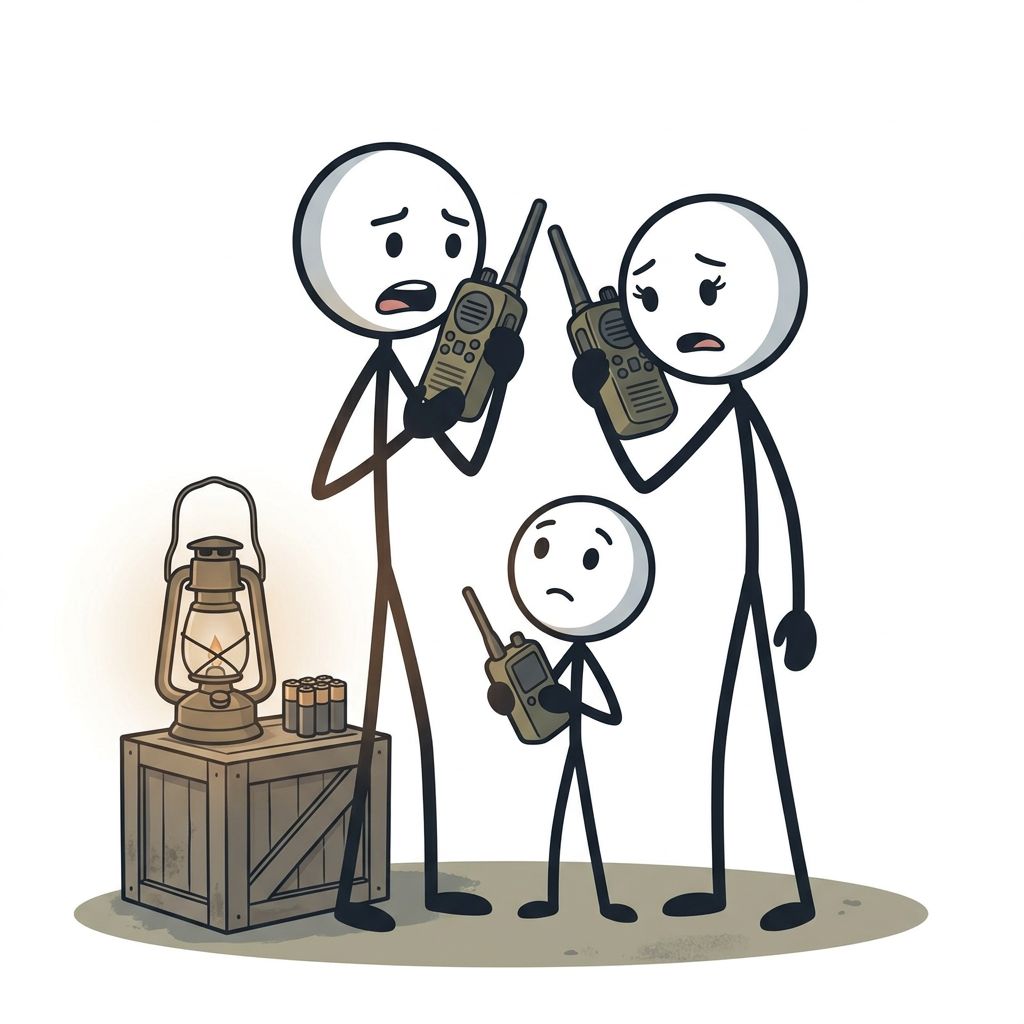
In a perfectly flat desert with absolutely no obstructions, you might achieve impressive distances. However, in the real world, radio waves are absorbed, reflected, and blocked by terrain, buildings, dense foliage, and even atmospheric conditions. A hill between you and your receiving party will completely block a UHF signal, regardless of how powerful your radio is. See Protocol Survival app for practical next steps.
To maximize your range in any off grid communication scenario, altitude is your best friend. Transmitting from the second story of your home, the top of a hill, or a rooftop will drastically improve your signal's reach. Understanding this physical limitation is the first step in building a realistic, functional comms plan.
FRS: The Foundation for Family Emergency Radios
The Family Radio Service (FRS) is the most accessible entry point into emergency communications. These are the classic "walkie-talkies" you see in sporting goods stores. FRS operates on 22 specific UHF channels designated by the Federal Communications Commission (FCC) for personal, short-distance communication.
Pros and Cons of FRS
The greatest advantage of FRS is that it is completely license-free. Anyone can buy an FRS radio, turn it on, and start transmitting legally immediately. This "plug-and-play" nature makes them the perfect family emergency plan radios. You can hand one to a child, an elderly parent, or a neighbor without worrying about legal compliance or complex programming.
However, FRS has strict FCC-mandated limitations. By law, FRS radios are limited to a maximum power output of 2 watts on channels 1-7 and 15-22, and a mere 0.5 watts on channels 8-14. Furthermore, FRS radios must have fixed, non-removable antennas. You cannot attach a larger, more efficient antenna to boost your signal.
Realistic FRS Range and Use Cases
Because of the power limits and fixed antennas, the realistic range of an FRS radio is highly localized. In a dense urban environment with concrete and steel buildings, expect a reliable range of about 0.5 to 1 mile. In suburban neighborhoods or moderately wooded areas, you might achieve 1 to 2 miles. Over open water or from mountain peak to mountain peak, you could see 5 miles or more.
Despite their limited range, FRS radios are invaluable. They are ideal for tactical, short-range coordination. If you are convoying in separate vehicles during an evacuation, patrolling your property, or coordinating tasks around a homestead, FRS is perfectly suited for the job. Every emergency kit should contain a pair of quality FRS radios as a baseline contingency.
GMRS: The Powerful Middle Ground
If you find that FRS radios lack the punch needed for your environment, the General Mobile Radio Service (GMRS) is your next logical step. When comparing frs vs gmrs, GMRS is essentially the "big brother" to FRS. Both services share the same 22 UHF channels, meaning a GMRS radio can communicate seamlessly with an FRS radio. However, GMRS offers significantly more power and flexibility.
The GMRS Advantage
While FRS is capped at 2 watts, GMRS allows for up to 50 watts of transmitting power on specific channels. More importantly, GMRS radios allow for removable antennas. Upgrading from a standard "rubber duck" antenna to a specialized, high-gain antenna—or mounting a large antenna on the roof of your house or vehicle—will exponentially increase your transmission range.
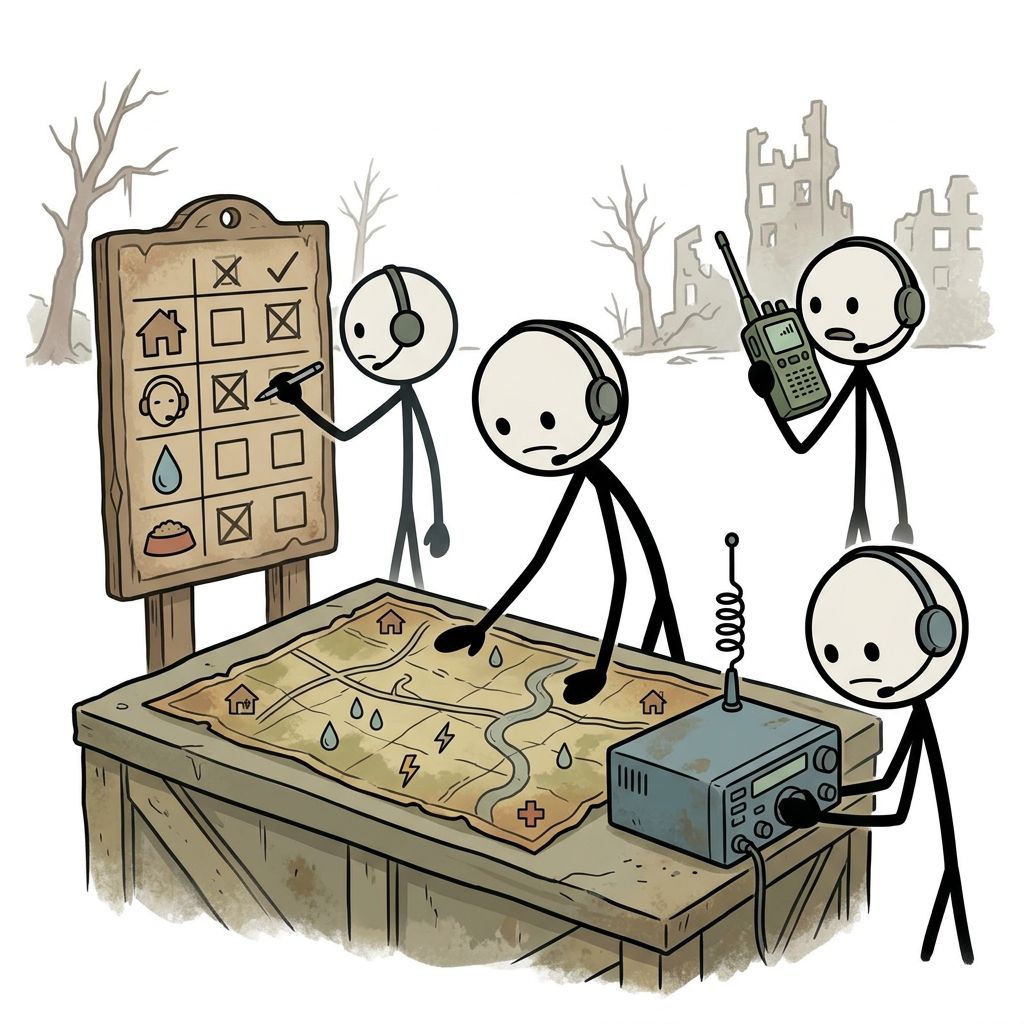
GMRS also gives you access to eight specific repeater channels. A repeater is a powerful radio station, typically placed on a high tower or mountain, that listens for your signal and simultaneously re-transmits it at a much higher wattage. Hitting a GMRS repeater can take your handheld radio's range from 2 miles to 30 or 40 miles, effectively blanketing an entire county or metropolitan area.
GMRS Licensing Basics
Unlike FRS, operating a GMRS radio requires a license from the FCC. Fortunately, the process is incredibly straightforward and designed with families in mind. There is no written examination required. You simply create an account on the FCC website, apply for the license, and pay a $35 fee.
The most powerful aspect of the GMRS license is that it covers your entire immediate family. A single $35 license is valid for 10 years and legally authorizes your spouse, children, parents, grandparents, siblings, and even in-laws to operate under your call sign. This makes GMRS one of the most cost-effective and legally compliant ways to establish a robust neighborhood or family network.
Amateur Radio (Ham): The Ultimate Off-Grid Backup
For those who want total independence and the ability to communicate across the state, the country, or even the globe, Amateur Radio (commonly known as ham radio) is the gold standard. Ham radio emergency communication is unparalleled in its versatility and resilience.
Unlike FRS and GMRS, which are restricted to specific UHF frequencies, ham radio operators have access to massive swaths of the radio spectrum. This includes VHF and UHF bands for local and regional communication, as well as High Frequency (HF) bands. HF radio waves have the unique ability to bounce off the Earth's ionosphere—a phenomenon known as "skywave" or "skip" propagation. This allows an off-grid ham operator using a wire antenna and a 12-volt battery to talk to someone on another continent without relying on a single piece of commercial infrastructure.
The Licensing Tiers
Because ham radio operators have access to such powerful frequencies and equipment, the FCC requires operators to pass a written examination to prove their technical and regulatory competency. There are three levels of amateur radio licenses in the United States:
- Technician Class: The entry-level license. The 35-question test covers basic regulations, operating procedures, and simple electronics. It grants full access to VHF and UHF bands, making it perfect for local and regional disaster communication.
- General Class: The intermediate level. Passing this 35-question test unlocks the majority of the HF bands, granting you the ability to communicate globally via skywave propagation.
- Amateur Extra Class: The highest level. It requires a difficult 50-question exam on advanced radio theory and grants access to all amateur frequencies.
Ham Radio Emergency Communication in Action
Ham radio operators are the unsung heroes of disaster response. Organizations like the Amateur Radio Emergency Service (ARES) and the Radio Amateur Civil Emergency Service (RACES) are formally recognized by FEMA, the Red Cross, and the National Weather Service. When hurricanes wipe out cell towers or wildfires destroy fiber optic lines, ham operators deploy to shelters, hospitals, and emergency operations centers to relay critical traffic.
By getting your Technician license, you can monitor local emergency nets, receive real-time updates from first responders, and call for help even when 911 systems are completely down. Having a licensed ham operator in your household elevates your preparedness from merely surviving to actively gathering intelligence and coordinating aid.
Choosing the Best Radio for Disasters
With an understanding of the available services, the next step is selecting the right hardware. There is no single "perfect" radio; the best radio for disasters depends entirely on your specific needs, your environment, and your licensing level. Radios generally fall into three categories: Handheld, Mobile, and Base Station.
Handheld Radios (HTs)
Handheld transceivers, or HTs, are battery-powered, portable units. They are the backbone of individual preparedness. HTs typically output between 2 and 8 watts of power. They are lightweight, fit easily into a Go-Bag Builder, and are perfect for tactical movement.
When selecting an HT, look for rugged construction, water resistance (IP67 rating or higher), and the ability to accept standard AA batteries via an alternate battery pack. In a prolonged grid-down scenario, proprietary lithium-ion batteries will eventually die, and the ability to swap in standard alkaline batteries is a massive tactical advantage.
Mobile Radios
Mobile radios are designed to be mounted in vehicles. They draw power directly from the car's 12-volt battery and connect to an external antenna mounted on the vehicle's roof. Because they have a robust power source, mobile radios can transmit at much higher wattages—typically 25 to 50 watts for GMRS and VHF/UHF ham radios.
A mobile radio turns your vehicle into a rolling communications hub. If you are forced to evacuate, a mobile setup ensures you can maintain contact with your convoy or reach distant repeaters as you navigate out of the danger zone.
Base Stations
A base station is a permanent setup in your home or bug-out location. It usually consists of a high-powered mobile or dedicated desktop radio connected to a large, highly elevated antenna mounted on a mast or the roof. Base stations are powered by large 12-volt battery banks, often supplemented by solar panels for true off grid communication.
Because of the antenna height and power output, a base station serves as the anchor of your communication plan. A family member remaining at the house can use the base station to reach out to handheld users miles away, coordinating supply runs or monitoring the perimeter.
Power Management Off-Grid
A radio is only a useless brick of plastic and circuitry without a reliable power source. Your off-grid communication plan must include a robust strategy for keeping your devices charged indefinitely.
For handheld radios, lithium-ion batteries hold a charge well and provide excellent power density. However, you must have a way to recharge them without the grid. Portable solar panels paired with small power banks are highly effective. Ensure your radio's charging cradle can accept a USB input, allowing you to charge it directly from a solar power bank.
For mobile and base stations, deep-cycle marine batteries or LifePO4 (Lithium Iron Phosphate) batteries are the gold standard. LifePO4 batteries are lighter, safer, and provide thousands of charge cycles. By wiring your base station battery to a solar charge controller and a 100-watt solar panel, you create a self-sustaining communication loop that can operate indefinitely, regardless of the state of the commercial power grid.
Developing Your Family Communication Plan
Owning the gear and holding the licenses is only half the battle. Without a practiced, documented plan, chaos will reign during an emergency. The military and emergency management agencies use a methodology known as PACE: Primary, Alternate, Contingency, and Emergency. You should apply this same structure to your household.
Building a PACE Plan
A PACE plan establishes a clear hierarchy of communication methods. If one fails, you seamlessly transition to the next. A standard family PACE plan might look like this:
- Primary: Cellular phones and text messaging. (Use this as long as the infrastructure is intact).
- Alternate: GMRS mobile radios using the local neighborhood repeater. (Used when cell towers fail but local repeaters are still on backup power).
- Contingency: GMRS handheld radios operating on a pre-designated simplex channel. (Used when repeaters fail; relies on direct line-of-sight communication).
- Emergency: Ham radio HF transmission or physical link-up at a pre-designated rally point. (The absolute last resort).
Standard Operating Procedures (SOPs)
Your plan must include documented Standard Operating Procedures. Everyone in your family needs a physical, waterproof card detailing exactly what to do when the grid goes down. This card should include:
Pre-Arranged Frequencies: Do not rely on memory. Write down the exact channel numbers, frequencies, and any necessary privacy tones (CTCSS/DCS) required to communicate.
Communication Windows: If everyone leaves their radios turned on constantly, the batteries will be dead within 12 hours. Establish specific "comms windows." For example, agree that everyone will turn on their radios at the top of every hour (e.g., 12:00 PM, 1:00 PM) for exactly five minutes to broadcast and listen. If no contact is made, turn the radio off to conserve power until the next window.
Brevity and Security: During a disaster, radio traffic will be heavy. Teach your family to think before they key the microphone. Messages should be short, clear, and concise. Remember that FRS, GMRS, and ham radio are public airwaves. Anyone with a scanner can hear you. Never broadcast sensitive information, such as the exact inventory of your emergency supplies or that your home is currently undefended.
Integrating Intelligence Gathering
Off grid communication is not just about talking; it is heavily reliant on listening. Gathering actionable intelligence during a crisis helps you make informed decisions about whether to bug in or evacuate.
FEMA and the CDC strongly advise every household to own a dedicated NOAA Weather Radio. These devices receive automated broadcasts from the National Weather Service, providing continuous updates on severe weather, chemical spills, and national emergencies. Many modern FRS, GMRS, and ham radios have NOAA reception built-in. Ensure you know how to access these channels and consider leaving one radio dedicated solely to monitoring these broadcasts during an active crisis.
Additionally, investing in a shortwave radio receiver allows you to listen to international news broadcasts. If a localized event is causing a media blackout in your region, shortwave broadcasts from other countries or distant states can provide the macro-level perspective you need to understand the scope of the disaster.
Practicing for the Worst
A plan on paper is useless if it has never been tested in the real world. You must practice your off grid communication protocols before an emergency strikes. Treat it as a family activity.
Run a drill on a weekend. Turn off your cell phones and have family members travel to different locations—the grocery store, a local park, or a friend's house. Attempt to make contact using your FRS or GMRS radios. This exercise will immediately reveal the dead zones in your neighborhood and teach you the physical limitations of your gear. You will quickly learn which hills block your signal and which locations provide the best line of sight.
If you are pursuing ham radio, participate in local ARES or amateur radio club "nets." A net is a scheduled on-air meeting where operators practice checking in and relaying messages. This builds "mic-fright" resilience and ensures you know exactly how to operate your radio's menus and dials under pressure.
Empowering Your Independence
The sudden loss of modern communication can induce panic in those who are unprepared. However, you are not helpless. By understanding the physics of radio waves, choosing the right services between FRS, GMRS, and amateur radio, and building a structured family PACE plan, you reclaim control over your safety. You transform yourself from a passive victim waiting for the cell towers to reboot into an active, connected, and resilient force. Equip your family, secure your licenses, practice your protocols, and step confidently into an uncertain future knowing your voice will always be heard.
Master radio communications through our emergency preparedness guide. Learn communication planning from our emergency communication plan. Build radio kits with our go-bag builder. Calculate radio supplies with our supply calculator. Get radio certification training through our preparedness courses.
Frequently Asked Questions
Which radio type is best for beginners?
FRS is easiest for immediate family use, GMRS adds range with a license, and ham offers highest flexibility with training.
Do radios work when cell towers fail?
Yes, because they use direct radio frequencies and local repeaters instead of cellular infrastructure.
How far can handheld radios actually reach?
Real-world range depends on terrain and buildings. Expect less than packaging claims in dense urban environments. For a broader perspective on how communities handle these situations, see our community emergency preparedness.
Do I need a license for emergency radio use?
FRS generally does not require one, GMRS does, and ham radio always requires licensing for normal legal operation.
How should families practice radio plans?
Set channels, call signs, and check-in times, then run short drills so everyone can use devices under stress.