⚡ Key Facts
- Critical Scarcity Allocation: While the USGS reports the average American uses 80 to 100 gallons of water daily, FEMA and the Red Cross recommend a bare minimum of 1 gallon per person, per day for drinking and basic sanitation during emergencies. For the practical checklist side, use the community emergency preparedness guide.
- Pathogen Prevention: According to the CDC, proper hand hygiene alone can reduce diarrheal disease deaths by up to 50% and respiratory infections by 16% in crisis environments.
- Grey Water Expiration: Untreated grey water becomes black water (highly contaminated sewage) within 24 hours due to rapid bacterial multiplication, making immediate reuse or chemical treatment vital.
- The "Dry" Priority: In extreme water shortages, clinical-grade alcohol-based hand sanitizers (minimum 60% alcohol) and no-rinse body washes are the primary defense lines to preserve potable water for hydration.
When a natural disaster, infrastructure failure, or prolonged drought cuts off municipal water systems, the immediate focus naturally lands on securing drinking water. However, historical data from organizations like the World Health Organization (WHO) and the Federal Emergency Management Agency (FEMA) reveals a secondary, equally lethal threat during prolonged outages: the rapid breakdown of personal sanitation. Without running water, pathogens that cause cholera, dysentery, norovirus, and skin infections proliferate rapidly. Maintaining physical cleanliness is not a matter of comfort or cosmetics; it is a critical medical barrier that keeps your immune system intact and prevents preventable diseases from overwhelming your household. This guide provides an actionable, scientifically backed blueprint for managing your hygiene when every drop of water must be accounted for.
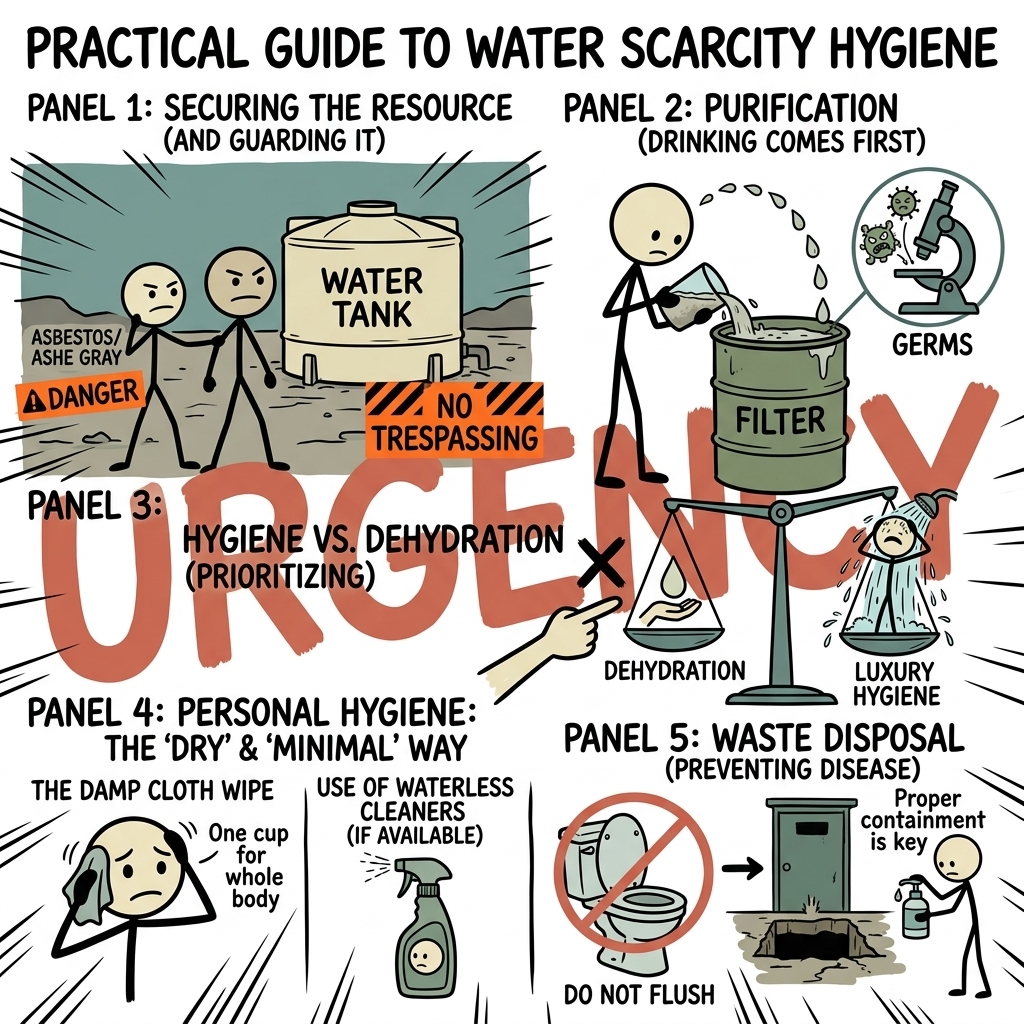
1. The Health Priority Order: What to Clean First
During a severe water shortage, you cannot afford to waste potable water on full-body washes. You must establish a strict triage system for hygiene, allocating your limited resources to the areas of the body most likely to harbor dangerous pathogens or cause systemic infection. The CDC and public health experts categorize hygiene priorities based on the prevention of fecal-oral disease transmission and localized skin infections.
Priority 1: Hand Hygiene
Your hands are the primary vectors for disease transmission. They touch contaminated surfaces, prepare food, and contact your face. Hand hygiene must never be compromised, even when municipal water is completely unavailable. If your hands are physically soiled, they must be washed with water and soap; if they are not visibly dirty, alcohol-based hand sanitizers are the preferred conservation method.
Priority 2: The Perineal and Groin Area
The groin, buttocks, and perineal regions harbor high concentrations of bacteria (including E. coli) and sweat glands. Left uncleaned, these areas quickly become breeding grounds for painful rashes, fungal infections (such as intertrigo), and urinary tract infections (UTIs), which can escalate into systemic kidney infections without antibiotic intervention.
Priority 3: Face, Eyes, and Sensory Organs
Your eyes, nose, and mouth are entry points for viral and bacterial pathogens. Keeping the face clean prevents conditions like conjunctivitis (pink eye) and secondary skin infections around the mouth and nose. This is particularly critical in dusty, ash-filled, or post-flood environments where airborne particulates are high.
Priority 4: Underarms and Skin Folds
While underarm odor is socially unpleasant, the primary health risk in these areas is intertrigo—an inflammatory condition caused by skin-on-skin friction, moisture, and warmth. This can easily become infected by bacteria or yeast, leading to open sores that drain your body's immune resources.
Priority 5: Feet and Lower Extremities
In emergency scenarios, your mobility is your lifeline. Fungal infections like athlete's foot or bacterial infections from minor cuts can quickly render you immobile. Keeping feet clean and dry is a fundamental tenet of disaster medicine.
2. Minimum Hygiene with Limited Water: The "Low-Water" Protocols
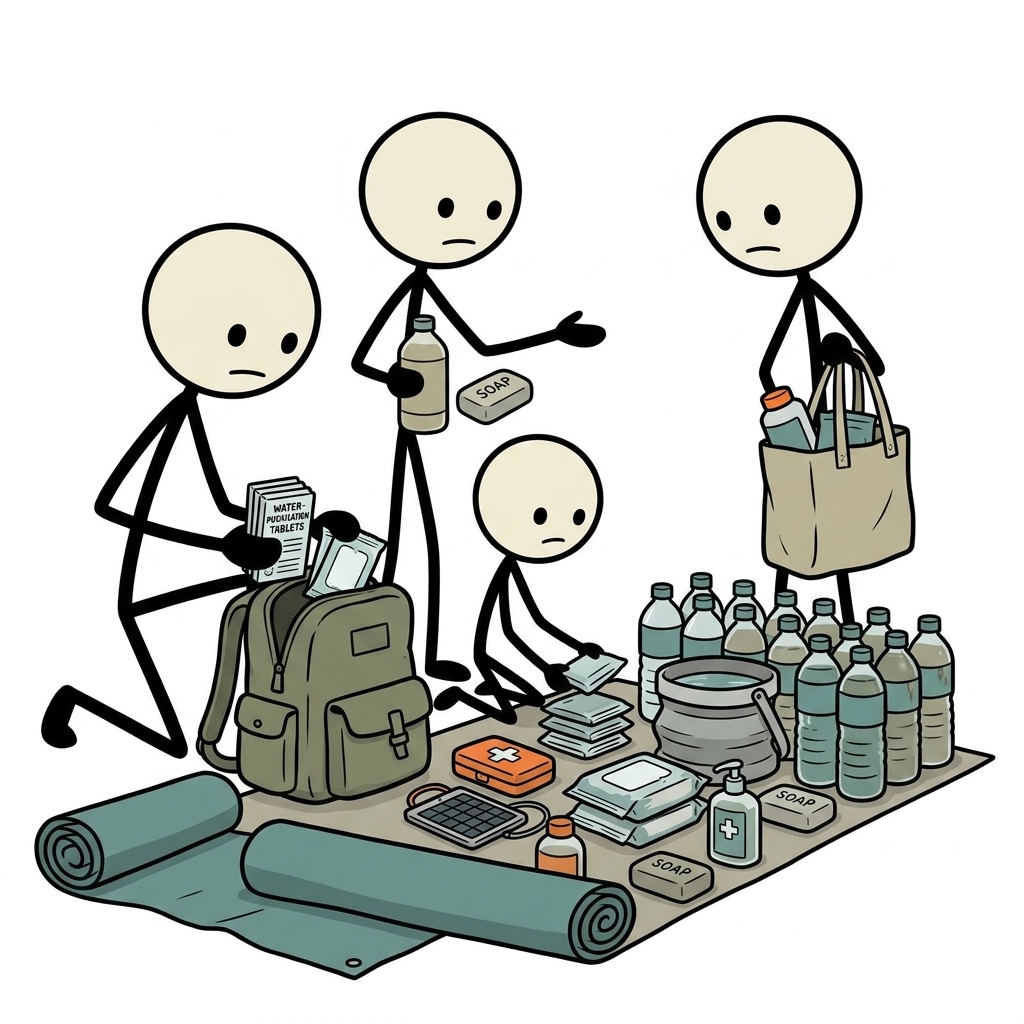
When practicing water conservation personal hygiene, the goal is to maximize the mechanical removal of dirt and pathogens while minimizing the volume of water used. Traditional running-water methods must be replaced with closed-loop, highly controlled cleaning protocols.
To execute these protocols, you should assemble a dedicated "Low-Water Hygiene Kit." This kit should be stored in a dry, accessible location and contain the following items:
| Item | Primary Purpose | Emergency Benefit |
|---|---|---|
| Spray Bottles (16 oz) | Controlled, pressurized water application | Reduces water waste by up to 80% compared to pouring. |
| No-Rinse Cleansers | Waterless body and hair washing | Preserves potable water entirely for drinking. |
| Microfiber Cloths | Mechanical scrubbing and debris removal | Highly reusable and dries faster than cotton, preventing mold. |
| Castile Soap (Liquid) | Biodegradable, multi-use surfactant | A few drops provide high-sudsing power; safe for grey water systems. |
| Alcohol-Based Sanitizer | Rapid hand antisepsis (min. 60% alcohol) | Destroys pathogens without requiring a single drop of water. |
The Two-Bottle Spray Method for Handwashing
Pouring water directly from a pitcher over your hands is highly inefficient, wasting up to 90% of the liquid as it runs off into the drain. Instead, utilize the two-bottle spray method, which requires less than two ounces of water per wash:
- Step 1: Fill Spray Bottle A with clean water and a few drops of liquid castile soap (mix thoroughly). Fill Spray Bottle B with clean, plain rinse water.
- Step 2: Spray your hands with the soapy water from Bottle A until they are damp. Rub your hands together vigorously for at least 20 seconds, ensuring you scrub between fingers, under fingernails, and up to your wrists. The mechanical friction is what lifts pathogens from the skin.
- Step 3: Use Spray Bottle B (rinse water) to spray down your hands, using your fingers to scrape off the soap residue. Mist sparingly.
- Step 4: Air-dry your hands or dry them with a clean, single-use paper towel or a designated clean microfiber cloth. Do not use a shared family towel, which rapidly redistributes bacteria.
Integrating Dry Sanitizers Safely
While alcohol-based hand sanitizers are highly effective at neutralizing viruses and bacteria, they do not remove dirt, grease, heavy metals, or certain spore-forming pathogens like Clostridioides difficile. If your hands are visibly dirty, you must use the spray-wash method first. Apply sanitizer only after visible dirt has been wiped or washed away.
3. The Art of the Emergency Sponge Bath
When a full shower is impossible, a structured sponge bath emergency protocol is the most efficient way to maintain whole-body cleanliness. A properly executed sponge bath requires less than one quart (32 ounces) of water, whereas a standard shower consumes 17 to 25 gallons.
Preparation and Setup
Gather two small basins (or clean plastic emergency food storage guide containers), two washcloths (color-coded if possible), a bar of mild soap or liquid castile soap, and a dry towel. If fuel is available, warm the water slightly; warm water opens skin pores and improves the solubility of body oils, requiring less mechanical scrubbing.
Step-by-Step Sponge Bath Protocol
- Isolate and Warm the Environment: Choose a small, draft-free room to prevent rapid body cooling. Keep your clothes dry and nearby.
- Set Up the Basins: Fill Basin A (Wash Basin) with 16 ounces of warm water and add 2–3 drops of soap. Fill Basin B (Rinse Basin) with 16 ounces of clean, soap-free water.
- Clean the Face and Neck First: Dip Washcloth 1 into the soap-free Basin B (rinse water) first to wash your eyes, face, and ears without getting soap in them. Wipe from the inner corner of the eye outward. Dry with your towel.
- Wash Upper Body (Clean-to-Dirty): Dip Washcloth 1 into Basin A (soapy water), wring it out until damp, and scrub your neck, chest, abdomen, and arms. Pay close attention to the underarms. Dip Washcloth 2 into Basin B (rinse water), wring it out, and wipe away the soap. Dry immediately.
- Wash Lower Body: Repeat the process for your legs and feet. Always wash your feet after your torso to avoid transferring soil and fungal spores upward.
- Wash the Perineal Area (Last): Using the soapy washcloth, wash your groin from front to back (especially critical for females to prevent UTIs). Rinse thoroughly with the rinse cloth. Once this step is complete, both washcloths must be laundered or sanitized before being used again.
Preventing Thermal Stress
In cold-weather emergencies, exposing wet skin to the air can induce hypothermia. To mitigate this, keep your lower body fully clothed while washing your upper body, and vice versa. Work in small, localized sections, drying each area thoroughly with a towel before moving to the next.
4. Hair and Skin Care Under Scarcity
Prolonged water shortages present unique challenges for your skin and scalp. Over-washing with harsh soaps can strip the skin of its natural lipid barrier, leading to micro-fissures, eczema, and secondary bacterial infections. Conversely, under-washing allows sebum and sweat to accumulate, causing dermatitis and fungal overgrowth.
Waterless Hair Care Solutions
Washing hair requires a significant volume of water, making it a low priority during acute crises. However, a dirty scalp can itch intensely, leading to scratching and open scalp wounds. Implement these water-saving strategies:
- Dry Shampoo and Absorbents: Commercial dry shampoos, cornstarch, arrowroot powder, or baking soda can be massaged directly into the roots of the hair. These powders absorb excess sebum and sweat. After application, brush the hair out thoroughly to remove the oil-laden powder.
- No-Rinse Shampoo Caps: Frequently used in medical and hospice care, these pre-moistened, microwaveable caps require zero water. Place the cap on the head, massage the hair through the cap for 2–3 minutes, remove, and towel-dry.
- Mechanical Brushing: Brushing your hair with a clean, boar-bristle brush helps distribute natural oils from the scalp down the hair shaft, reducing buildup at the roots and keeping the scalp healthier.
Skin Barrier Protection and Wipe Hygiene
Wet wipes (baby wipes or heavy-duty body wipes) are invaluable for hygiene without running water, but they must be used strategically. Many wipes contain alcohol or fragrances that dry out the skin over time. Choose alcohol-free, pH-balanced wipes designed for sensitive skin.
When using wipes, follow the same "clean-to-dirty" progression as the sponge bath. A single wipe can be folded in quarters to provide four clean surfaces. Never use a wipe on your face that has touched your underarms or groin. If your skin becomes dry and cracked, apply a thin layer of petroleum jelly or a barrier cream (like zinc oxide) to protect the skin from environmental pathogens.
5. Dental Hygiene Without Running Water
Oral health is directly linked to systemic health. Neglecting dental hygiene can lead to gingivitis, tooth decay, and painful abscesses within weeks. In a Survival Scenarios, a dental emergency can be debilitating, limiting your ability to consume food and causing severe pain that degrades your decision-making capacity.
The Two-Ounce Brushing Technique
You do not need running water to brush your teeth effectively. In fact, you can maintain pristine oral hygiene using less than two ounces of water per session:
- Step 1: Dampen your toothbrush bristles using a spray bottle or by dipping the tip of the brush into a small capful of water.
- Step 2: Apply a pea-sized amount of toothpaste. Brush your teeth thoroughly for two minutes. Do not use excessive toothpaste; the goal is mechanical plaque removal, and more paste requires more rinse water.
- Step 3: Spit out the excess toothpaste residue into a trash bin or a designated waste bucket. Do not rinse your mouth immediately with water; leaving a thin layer of fluoridated toothpaste on your teeth actually strengthens the enamel.
- Step 4: Pour one ounce of water into a cup, take a small sip, swish vigorously to clear the remaining debris from your mouth, and spit it out. Use the remaining half-ounce of water to rinse your toothbrush bristles, using your thumb to clear away stuck paste.
Alternative Oral Hygiene Methods
If you run out of toothpaste, you can brush with plain water or dry-brush; the physical action of the bristles is responsible for 90% of plaque removal. A pinch of baking soda can act as a mild abrasive to clean teeth and neutralize oral acids, but use it sparingly as it can be abrasive to enamel over long periods. Flossing daily becomes even more critical during water shortages, as it removes food particles that harbor anaerobic bacteria between teeth, preventing decay without requiring any water.
6. Grey Water Collection and Reuse (Safe Management)
During a water shortage, water must be used at least twice before it is discarded. Understanding the science of grey water emergency hygiene is critical to stretching your Water Calculator without introducing hazardous pathogens into your living environment.
Defining Grey Water vs. Black Water
It is vital to distinguish between different types of wastewater to prevent accidental contamination:
- Grey Water: Wastewater generated from domestic activities such as laundry, dishwashing (excluding raw meat preparation), showers, and handwashing. It contains traces of dirt, food, grease, hair, and household cleaning products. While not potable, it can be safely repurposed for specific non-potable tasks.
- Black Water: Wastewater contaminated with fecal matter, urine, toilet paper, or pathogens from raw meat prep. This includes toilet water, water used to wash cloth diapers, and kitchen sink water used to clean raw poultry or pork. Black water can never be reused and must be disposed of immediately in accordance with local sanitation guidelines.
The 24-Hour Expiration Rule
Grey water is not sterile. It contains organic matter, skin cells, and bacteria. According to the EPA and public health guidelines, untreated grey water must be used within 24 hours of collection. After 24 hours, the bacteria within the water multiply exponentially, feeding on the organic nutrients, and the liquid officially becomes black water. It will begin to smell highly offensive and pose a severe biological hazard.
How to Safely Collect Grey Water
To capture grey water efficiently, place basins inside your sinks and showers to catch runoff. When using a washing machine, redirect the discharge hose into large storage drums or buckets. Always cover your grey water storage containers with tight-fitting lids to prevent mosquitoes from breeding and to keep pets or pests from drinking the contaminated water.
Treating Grey Water for Extended Storage or Safer Reuse
If you must store grey water for longer than 24 hours, or if you want to reduce the pathogen load before using it, you can treat it chemically. The most accessible method is using standard, unscented household liquid bleach (5.25% to 8.25% sodium hypochlorite):
To treat grey water, add 1/2 teaspoon of liquid bleach per gallon of water (or approximately 1 tablespoon per 5 gallons). Stir the mixture thoroughly and let it sit for at least 30 minutes before use. This concentration will not sterilize the water completely, but it will significantly inhibit bacterial growth and prevent odors for up to 48 hours.
Approved Uses for Grey Water in an Emergency
Do not use grey water for drinking, cooking, washing dishes, or washing your hands, face, or body. Instead, restrict its use to the following tasks:
- Gravity Flushing Toilets: This is the most efficient use of grey water. Pour 1.5 to 2 gallons of grey water directly and rapidly into the toilet bowl (not the upper tank). The sheer weight of the water will trigger the siphon effect, flushing the waste down the drain without utilizing any clean municipal water.
- Sub-Surface Irrigation: If you must keep food-producing plants alive during a drought, you can apply grey water directly to the soil around the base of the plants. Never spray grey water directly onto the edible portions of plants, especially leafy greens or root vegetables.
- Initial Cleaning of Highly Soiled Items: Use grey water to scrub mud off boots, tools, or outdoor gear before doing a final rinse with a tiny amount of clean water.
7. Community and Environmental Hygiene
When an entire neighborhood preparedness network or community experiences a water shortage, collective sanitation practices become paramount. Individual efforts can be quickly undone if surrounding households fail to manage their waste properly, leading to localized vector-borne disease outbreaks.
Managing Human Waste Without Infrastructure
If the municipal sewer system is compromised along with the water supply, gravity flushing toilets may not be an option. In this scenario, you must implement dry sanitation systems immediately to prevent environmental contamination:
- The Twin-Bucket System: Set up two separate 5-gallon buckets lined with heavy-duty trash bags. Bucket 1 is designated strictly for urine; bucket 2 is for feces and toilet paper. Keeping liquid waste separate from solid waste reduces odor and makes disposal significantly more manageable.
- Carbon Cover Material: After every use of Bucket 2, cover the waste with a layer of dry carbon material such as sawdust, peat moss, shredded paper, or dry leaves. This absorbs moisture, carbon-to-nitrogen balances the waste, and prevents flies from landing on it and spreading pathogens.
- Safe Disposal: Once a bag is full, tie it securely and store it in a designated, secure outdoor area away from water sources and pests until municipal waste collection resumes or safe burial protocols can be executed.
Vector Control
Flies, mosquitoes, and rodents are attracted to standing water, grey water, and unmanaged human waste. These pests are highly efficient vectors for diseases such as West Nile Virus, typhus, and salmonellosis. Ensure all trash cans have tight-fitting lids, eliminate any standing water around your property, and keep your living quarters sealed with intact window screens.
Summary: Thriving in Dry Conditions
When the taps stop flowing, your survival depends on your ability to pivot from a mindset of abundance to one of strict, scientific conservation. By establishing a clear health priority order, mastering low-water cleaning techniques like the sponge bath and the two-bottle handwash, and safely managing grey water, you protect your household from the silent threat of infectious disease. Sanitation is your primary shield against the microscopic pathogens that thrive in chaos. Equip your household with the knowledge, tools, and discipline required to maintain hygiene standards under any conditions, ensuring that a temporary water shortage does not escalate into a medical crisis.
Frequently Asked Questions
What is grey water and how can I safely reuse it?
Grey water is used water from sinks, showers, and laundry (not toilets, which is 'black water'). Grey water can be safely reused for: toilet flushing (bucket flush), garden irrigation for non-edible plants, floor mopping, and dust suppression. Do not store grey water more than 24 hours — it develops bacterial growth. Never use grey water on root vegetables, salad greens, or food contact surfaces.
How do I maintain minimum hygiene with just 1 gallon of water per day?
Prioritize by infection risk: (1) Hand washing before food prep and after toilet use — this alone prevents most illness. (2) Wound care — keep injuries clean. (3) Genital and groin hygiene — prevents UTI and skin infections. (4) Foot care — prevents blisters and infections during evacuation. Full body hygiene is lower priority. Use baby wipes, hand sanitizer, and dry shampoo to extend water supply.
How do I do a proper sponge bath with limited water?
Heat water (even 1 liter) if possible. Work from cleanest to dirtiest areas: face → underarms → torso → groin/genitals → feet. Use a clean washcloth or microfiber cloth. Rinse cloth between areas or use separate cloths. Dry thoroughly, especially between toes and skin folds — dampness creates infection risk. This process takes 10-15 minutes and requires less than 2 liters of water.
What no-water hygiene products should I stockpile?
Baby wipes (unscented, alcohol-free) are the most versatile hygiene supply in an emergency — clean hands, face, body. Hand sanitizer (60%+ alcohol) for between-water hand cleaning. Dry shampoo. No-rinse body wash (Cleanlife or similar). Feminine hygiene wipes. Petroleum jelly for chafing and lip protection. A menstrual cup eliminates most feminine hygiene water needs.
How do I maintain dental hygiene without running water?
Keep a supply of bottled water allocated specifically for dental hygiene (small amounts — less than 1 cup per person per day). Brush teeth with minimal water. Use antiseptic mouthwash (kills bacteria without water). Dental floss requires no water. In true scarcity, dry brushing without water and flossing prevents most dental decay and gum disease even without rinsing.