⚡ Key Facts
- Disaster-Induced Cardiac Risk: According to the Centers for Disease Control and Prevention (CDC), cardiovascular events significantly spike in the days and weeks following major natural disasters due to acute stress, physical exertion, and delayed medical care.
- Medication Vulnerability: The Federal Emergency Management Agency (FEMA) reports that disruptions to the medical supply chain can last from several days to multiple weeks following a catastrophic event, making a backup medication supply a critical survival asset.
- Defibrillation Time Sensitivity: The American Red Cross emphasizes that for every minute a person in sudden cardiac arrest goes without CPR and an Automated External Defibrillator (AED), their chance of survival decreases by 7% to 10%.
- The Sodium Threat: Standard emergency food storage guide rations are notoriously high in sodium, which can trigger acute heart failure or severe hypertension in vulnerable individuals, necessitating specialized dietary disaster planning.
- EMS Delay Reality: During severe regional disasters like hurricanes or earthquakes, local 911 infrastructure can become overwhelmed or entirely disabled, forcing citizens to manage acute medical emergencies independently for hours or even days.
Imagine the immediate aftermath of a severe hurricane or a sudden, devastating earthquake. The power grid has failed, roads are rendered impassable by debris, and the comforting wail of approaching sirens is completely absent. For the average person, this scenario is incredibly daunting. But for someone living with cardiovascular disease, the stakes are exponentially higher. The sudden surge of adrenaline, the physical demands of evacuation, and the sudden severance from pharmacies and immediate medical care create a perfect storm of cardiovascular risk. However, living with a heart condition does not mean you are defenseless in the face of a disaster. It simply means your preparedness strategy requires a specialized, proactive approach. disaster scenario library
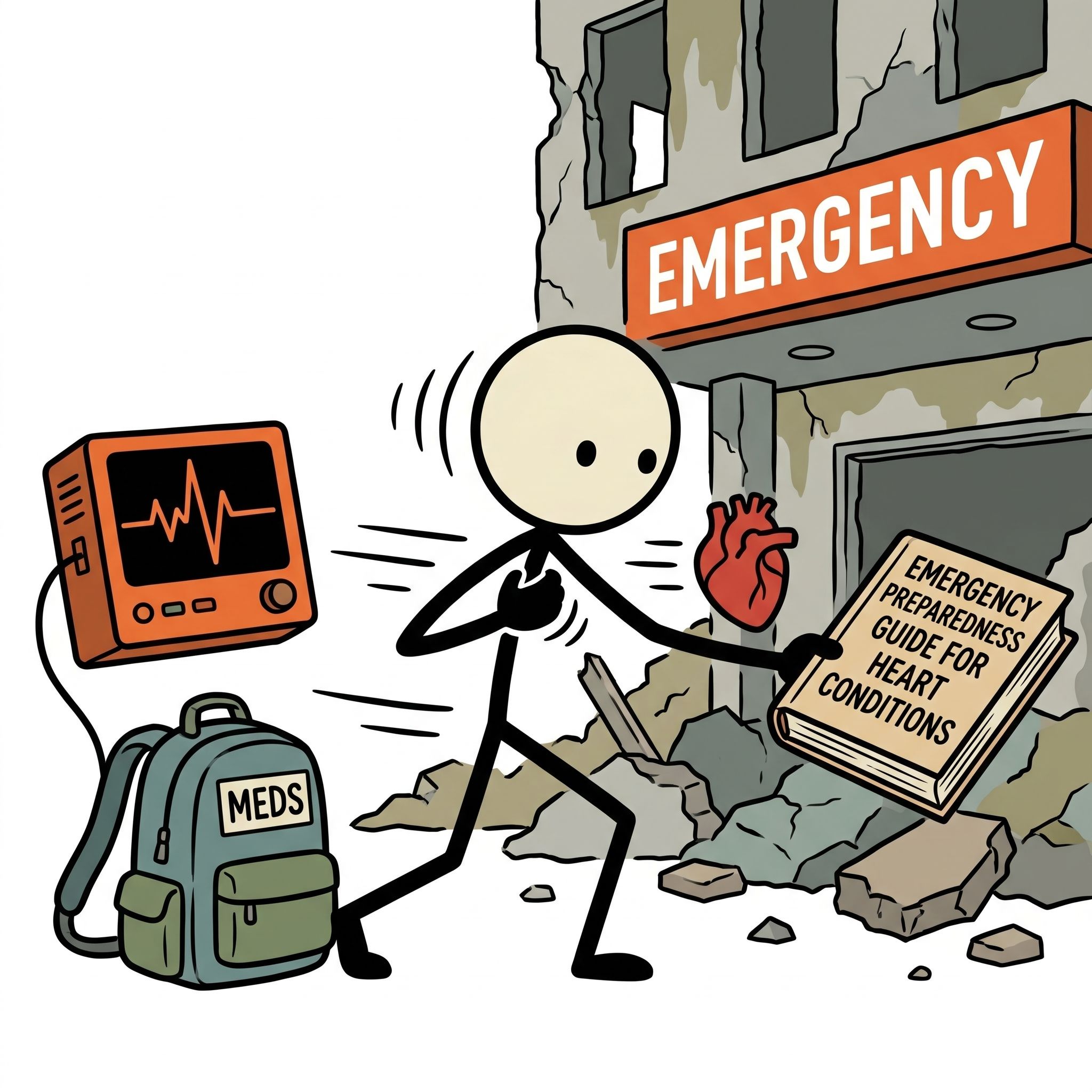
Effective heart patient emergency preparedness is about taking control of the variables you can manage before the chaos unfolds. It is about bridging the gap between the onset of a disaster and the restoration of normal medical services. By strategically stockpiling vital medications, understanding how to mitigate environmental and emotional triggers, preparing for safe evacuation, and knowing exactly how to respond to a cardiac event when paramedics are unavailable, you can dramatically shift the odds in your favor. This comprehensive guide will walk you through the essential steps of heart condition disaster planning, empowering you to face any emergency with confidence, resilience, and a clear tactical plan.
The Physiology of Disasters: Why Heart Condition Disaster Planning is Crucial
To understand why specialized preparation is necessary, it is vital to understand what happens to the human body during a crisis. When a disaster strikes, the brain's amygdala triggers a massive "fight or flight" response. The adrenal glands flood the system with epinephrine (adrenaline) and cortisol. For a healthy heart, this results in a temporary, manageable increase in heart rate and blood pressure to facilitate rapid action. For a compromised cardiovascular system, this sudden physiological spike can be dangerous.
Studies conducted in the wake of major events—such as the 1994 Northridge earthquake and Hurricane Katrina—demonstrate a sharp, measurable increase in acute myocardial infarctions (heart attacks) and sudden cardiac deaths. This is not solely due to the emotional shock. The physical demands of clearing debris, carrying heavy supplies, or evacuating on foot force the heart to work harder precisely when oxygen demand is highest. Furthermore, extreme weather conditions, such as the severe heat waves tracked by the National Oceanic and Atmospheric Administration (NOAA), force the cardiovascular system into overdrive just to regulate core body temperature.
Comprehensive heart condition disaster planning acknowledges these physiological realities. It shifts the focus from merely surviving the external elements to actively protecting the internal environment. By anticipating the unique stressors a disaster places on your heart, you can implement strategies to mitigate those risks before they escalate into medical emergencies.
Building Your Specialized Cardiac Patient Emergency Kit
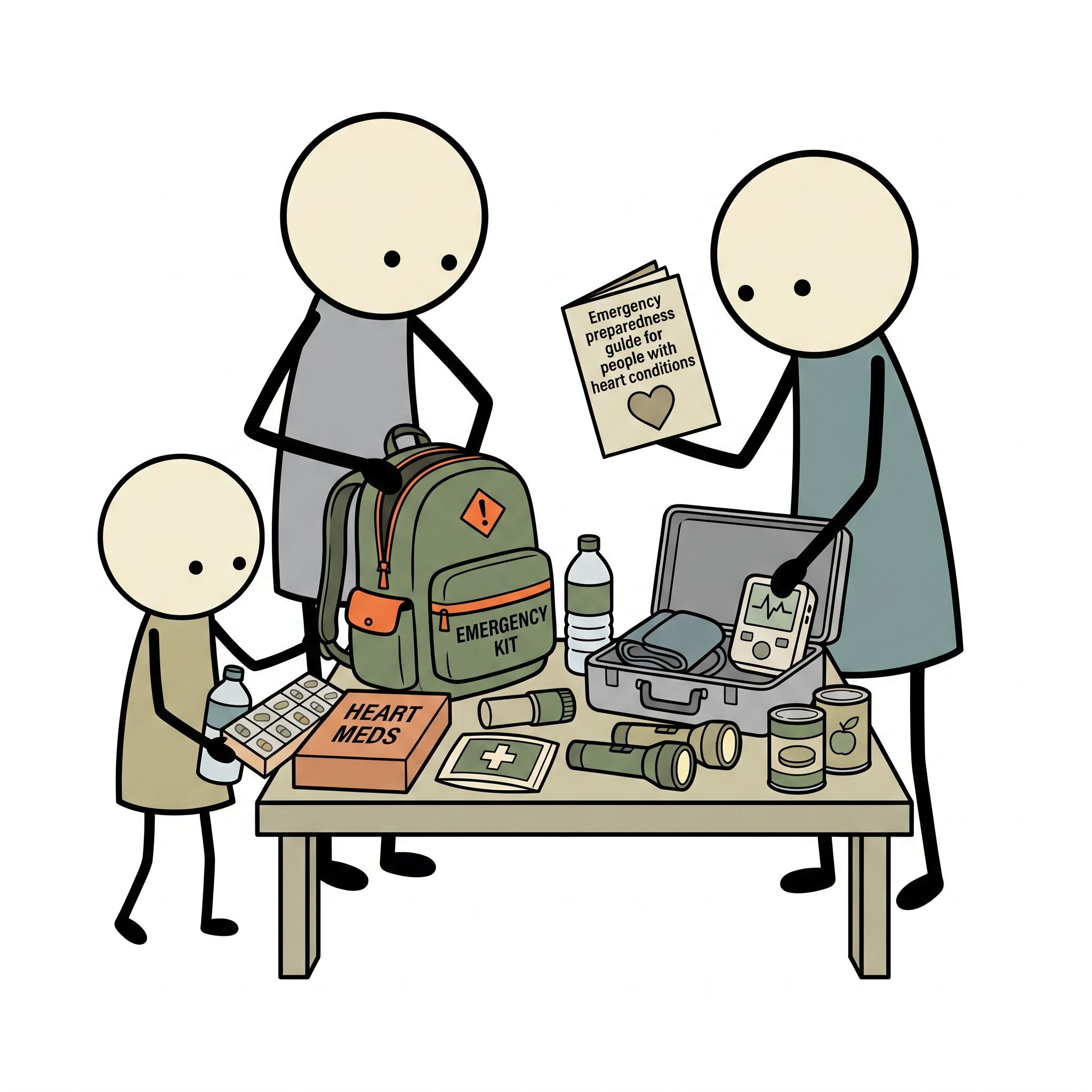
A standard emergency "go-bag essentials guide" typically contains water, generic first aid supplies, flashlights, and high-calorie rations. While these are essential, a cardiac patient emergency kit requires specific medical additions tailored to cardiovascular health. Your kit must be designed to sustain your medical baseline for a minimum of 14 days without outside intervention.
Essential Medical Diagnostic Tools
In a prolonged emergency, you become your own primary care provider. You need the ability to monitor your vital signs accurately to catch potential issues before they become critical. Your kit should include a high-quality, battery-operated blood pressure monitor. Ensure you pack multiple sets of backup batteries for this device. A sudden spike in blood pressure due to stress or missed medication requires immediate attention, and you cannot manage what you cannot measure.
Additionally, include a reliable pulse oximeter to measure blood oxygen saturation and heart rate. For patients with heart failure or arrhythmias, a portable, medical-grade scale can also be a lifesaver if sheltering in place. Sudden weight gain is often the first sign of fluid retention, signaling an impending heart failure exacerbation.
Heart-Healthy Emergency Nutrition
One of the most overlooked aspects of disaster planning for heart patients is nutrition. Standard survival foods—like canned soups, MREs (Meals Ready-to-Eat), and commercial freeze-dried meals—are heavily preserved with sodium. Consuming these can cause massive fluid retention, skyrocketing blood pressure, and severe strain on a weakened heart. emergency food storage guide
Your cardiac patient emergency kit must prioritize low-sodium, heart-healthy sustenance. Stockpile unsalted nuts, low-sodium canned vegetables and beans (ensure you have a manual can opener), dried fruits, and whole-grain crackers. If you purchase specialized freeze-dried survival food, explicitly seek out brands that offer low-sodium or medically tailored dietary options. Dehydration also thickens the blood, making the heart work harder, so your Water Calculator plan must be robust—aim for at least one gallon of water per person, per day, for a minimum of two weeks.
Navigating a Cardiac Medication Emergency
The single most critical component of your preparedness plan is ensuring an uninterrupted supply of your prescription drugs. A sudden cessation of beta-blockers, ACE inhibitors, antiarrhythmics, or blood thinners can trigger rebound hypertension, severe arrhythmias, or catastrophic clotting events. Navigating a cardiac medication emergency requires foresight and a proactive relationship with your healthcare provider. supply calculator
Building a Legal Backup Supply
Insurance companies and pharmacy benefit managers often strictly limit how early you can refill a prescription, making it difficult to build a stockpile. However, there are strategic ways to overcome this. First, have an open conversation with your cardiologist about your emergency preparedness goals. Ask your doctor to write a separate prescription for a 30-day emergency supply of your essential medications.
Many insurance companies will authorize a "vacation override" or a "disaster override" once a year, allowing you to fill a prescription early. If insurance refuses to cover the backup supply, consider paying out-of-pocket using discount pharmacy programs or generic alternatives for your emergency stash. The financial cost of a backup supply is negligible compared to the cost of a cardiac crisis during a blackout.
Proper Storage and Rotation
Medications are highly sensitive to environmental extremes. Leaving your emergency supply in the trunk of a hot car or a freezing garage will degrade the active ingredients, rendering them useless or even harmful. Store your backup medications in a cool, dry, dark place, ideally in a waterproof, insulated container within your go-bag. water needs calculator
Nitroglycerin, frequently prescribed for angina, is particularly volatile. It degrades rapidly when exposed to heat, moisture, or light, and typically expires within six months of opening the bottle. Keep nitroglycerin in its original amber glass vial and monitor its expiration date rigorously. Implement a strict rotation system for all your medications: when you pick up a new monthly refill, place it in your emergency kit and use the oldest unexpired medication from the kit for your daily use. This "first in, first out" method ensures your emergency supply is always potent.
Avoiding Cardiac Triggers During Emergencies
Disasters introduce a host of environmental and psychological triggers that can precipitate a cardiac event. Recognizing and actively avoiding these triggers is a cornerstone of heart patient emergency preparedness. You must become fiercely protective of your physical and mental bandwidth during a crisis.
Managing Environmental Extremes
According to NOAA and the CDC, extreme temperatures are highly lethal, particularly for those with compromised cardiovascular systems. During a winter power outage, the cold causes blood vessels to constrict, raising blood pressure and increasing the risk of heart attack. Conversely, during a summer blackout, extreme heat causes blood vessels to dilate, forcing the heart to pump harder to maintain blood pressure, while sweating depletes vital fluids and electrolytes.
If sheltering in place during the cold, focus on trapping body heat. Dress in multiple loose layers, wear a hat, and confine yourself to a small, easily insulated room. Never use unvented gas or charcoal heaters indoors, as carbon monoxide is deadly and deprives the heart of oxygen. During extreme heat without air conditioning, stay on the lowest floor of your home, apply cool, wet cloths to your neck and wrists, and maintain rigorous hydration. Avoid the sun entirely during peak hours.
Mitigating Psychological Stress
The psychological toll of a disaster cannot be overstated. Acute stress floods the body with cortisol, which can trigger arrhythmias and acute coronary syndromes. While you cannot eliminate the stress of a disaster, you can manage your physiological response to it.
Practice tactical breathing techniques, such as "box breathing" (inhale for four seconds, hold for four, exhale for four, hold for four). This technique stimulates the vagus nerve, which acts as a brake on the nervous system, actively lowering heart rate and blood pressure. Limit your exposure to repetitive, panic-inducing news broadcasts. Focus your mental energy entirely on executing your prepared plan, step by step. Action is the antidote to anxiety.
Managing Exertion Safely During Evacuation
Evacuation orders often require sudden, intense physical activity. Whether you are carrying supplies to a car, walking long distances to a shelter, or navigating debris-strewn streets, managing exertion is critical. The danger lies in the adrenaline surge, which can mask the early normalcy bias of physical exhaustion and cardiac strain.
The "Talk Test" and Pacing
When evacuating, you must pace yourself deliberately. Do not attempt to keep up with younger, healthier individuals if it pushes you beyond your safe limits. Utilize the "talk test": if you are exerting yourself to the point where you cannot hold a normal conversation without gasping for breath, you are working too hard. Stop immediately, sit down, and rest until your breathing normalizes.
Never ignore the subtle warning signs of cardiac distress during exertion. Symptoms like unusual fatigue, a sudden cold sweat, jaw pain, back pain, or mild chest pressure should be treated as red flags. Sit down, take your prescribed nitroglycerin if you have it, and do not resume activity until you are certain it is safe.
Optimizing Your Evacuation Gear
To minimize physical strain, optimize how you transport your emergency supplies. Instead of a heavy backpack that strains your shoulders and back, use a rolling suitcase or a heavy-duty folding wagon with all-terrain wheels. This allows you to transport a significant amount of weight—including heavy water and medications—with a fraction of the cardiovascular effort.
If you anticipate that physical evacuation will be impossible due to your heart condition, you must pre-arrange transportation. Register with your local Office of Emergency Management or community disaster registry (such as SMART911) well in advance. These registries allow local authorities to identify addresses where individuals require specialized medical evacuation assistance during a crisis.
AED Access and Power Backup for Medical Devices
Modern cardiovascular care often relies on advanced technology, from CPAP machines for sleep apnea (which heavily impacts heart health) to Left Ventricular Assist Devices (LVADs). Maintaining power to these devices is non-negotiable.
Securing Backup Power
If you rely on electrically powered medical equipment, a blackout is a life-threatening event. Invest in a robust, portable lithium-ion power station. Unlike gas generators, portable power stations can be safely operated indoors, run silently, and can power a CPAP machine or a medical refrigerator (for medications requiring cold storage) for several days. Pair this power station with portable solar panels to ensure you can recharge your battery bank during extended grid failures.
The Importance of AEDs
An Automated External Defibrillator (AED) is the only definitive treatment for sudden cardiac arrest caused by ventricular fibrillation. The American Red Cross notes that survival rates drop precipitously with every passing minute without defibrillation. In a disaster where EMS is delayed, having access to an AED can mean the difference between life and death.
If it is financially feasible, consider purchasing a home AED for your emergency kit. Modern AEDs are designed for use by individuals with no medical training; they provide clear, step-by-step voice instructions and will not deliver a shock unless the device detects a shockable rhythm. If purchasing an AED is not an option, download apps like PulsePoint, which map the locations of registered public-access AEDs in your community. Knowing exactly where the nearest AED is located at your workplace, your local grocery store, or your community shelter is a vital component of heart attack emergency preparedness.
Heart Attack Emergency Preparedness: When EMS is Delayed
The most terrifying scenario for a cardiac patient is experiencing a heart attack when the 911 system is down or paramedics are hours away due to impassable roads. In this "austere medical environment," you and your immediate family or bystanders must act as the first responders. Knowing what to do during a cardiac event without immediate EMS is the ultimate test of your preparedness. family emergency plan checklist
Recognizing the Symptoms
First, recognize that a heart attack does not always look like it does in the movies. While crushing chest pain is common, symptoms can also be subtle, especially in women, the elderly, and diabetics. Watch for unexplained shortness of breath, profound weakness, a cold sweat, nausea, lightheadedness, or pain radiating to the jaw, neck, back, or left arm. Do not dismiss these symptoms, especially in the high-stress environment of a disaster.
The Aspirin Protocol
If you suspect a heart attack is occurring and you are not allergic to aspirin or actively bleeding, the immediate administration of aspirin is critical. Aspirin inhibits platelet aggregation, helping to prevent the blood clot in the coronary artery from growing larger. The standard emergency protocol is to take 325mg of aspirin. It is highly recommended to chew four 81mg low-dose (baby) aspirins rather than swallowing one whole 325mg pill. Chewing the aspirin allows it to be absorbed directly through the mucous membranes of the mouth, entering the bloodstream much faster. Keep chewable aspirin easily accessible in your pocket and your emergency kit at all times.
Nitroglycerin and Positioning
If you have been prescribed nitroglycerin for chest pain, take it exactly as directed by your physician (typically one dose under the tongue every five minutes, up to three doses). Note that nitroglycerin lowers blood pressure; if you feel faint or dizzy, sit or lie down immediately. Never take nitroglycerin if you have taken erectile dysfunction medications within the past 48 hours, as the combination can cause a fatal drop in blood pressure.
Proper positioning is vital. The patient should not walk or exert themselves in any way. Have the person sit in the "W position"—sitting on the floor with their knees bent and their back supported against a wall. This position reduces the physical strain on the heart and prevents injury if the patient loses consciousness.
Hands-Only CPR
If the patient loses consciousness and stops breathing normally, they have entered cardiac arrest. Immediate CPR is required to manually pump oxygenated blood to the brain. The American Heart Association strongly advocates for Hands-Only CPR for untrained bystanders. Place the heel of one hand in the center of the chest, place the other hand on top, interlock your fingers, and push hard and fast—at least two inches deep and at a rate of 100 to 120 compressions per minute (to the beat of the song "Stayin' Alive"). Do not stop compressions until an AED is attached, paramedics arrive, or you are physically exhausted.
If EMS is completely unreachable, you must arrange alternative transport. This is highly risky and should only be done if absolutely necessary. If you must drive a heart attack victim to the hospital, have them sit in the passenger seat, drive as safely but expediently as possible, and be prepared to pull over and initiate CPR if they lose consciousness.
Developing Your Comprehensive Preparedness Strategy
Knowledge and supplies are only as effective as the plan that binds them together. Your heart patient emergency preparedness strategy must be clearly documented and communicated to your support network.
Medical Identification and Documentation
Always wear a medical alert bracelet or necklace detailing your specific heart condition, severe allergies, and primary medications. In a disaster, you may be found unconscious or unable to communicate; this jewelry speaks for you. Additionally, keep a waterproof, physical folder in your go-bag containing copies of your medical history, recent EKG results, a complete list of your medications with precise dosages, and the contact information for your cardiologist.
Building a Support Network
Do not face a disaster alone. Build a "buddy system" with trusted neighbors, friends, or family members who live nearby. Ensure they know about your heart condition, where your emergency kit is located, where your backup medications are stored, and how to perform CPR. Agree on a communication plan and a designated meeting spot if communication networks fail. During an emergency, having someone check on you can prevent a manageable medical issue from becoming a fatal event.
Living with a heart condition requires diligence, but it does not make you a helpless victim in waiting. By acknowledging the unique risks posed by disasters and systematically addressing them through intelligent preparation, you reclaim your power. Building a specialized cardiac kit, securing your medication supply, understanding how to manage stress and exertion, and mastering emergency medical responses transforms you from a vulnerable patient into a resilient survivor. Take action today. Talk to your cardiologist, build your kit, and establish your plan. When the sirens wail and the grid goes down, your preparation will be the ultimate shield for your heart, ensuring you have the strength and the resources to weather any storm.
Frequently Asked Questions
What cardiac medications must be stocked for emergencies?
Work with your cardiologist to maintain a 90-day supply of all cardiac medications: beta-blockers, ACE inhibitors/ARBs, statins, anticoagulants (warfarin, Xarelto — critical, never skip doses), and antiplatelet agents. Never abruptly stop beta-blockers or anticoagulants.
What are the warning signs of a heart attack and what do I do without EMS?
Classic signs: chest pressure/pain, pain radiating to left arm/jaw/back, shortness of breath, sweating, nausea. If EMS is unavailable: chew 325mg regular aspirin if not allergic, rest in a comfortable sitting position, call for help, and activate any emergency communication available.
What is a home AED and should heart patients own one?
An automated external defibrillator can restart a heart in sudden cardiac arrest. AEDs are available for home purchase ($1,000-1,500). For households with a history of cardiac arrhythmias or prior cardiac arrest, a home AED is recommended by multiple cardiology organizations.
Consult our medical preparedness guide. Review diabetes emergency planning essentials. Develop family emergency planning strategies. Calculate your needs with our supply calculator and take our courses.
Sources & Further Reading
- American Heart Association Disaster Preparedness
- ACC American College of Cardiology Patient Resources
- CDC Cardiovascular Disease Emergency Prep