⚡ Key Facts
- Water Requirements: The Centers for Disease Control and Prevention (CDC) recommends storing at least 1 gallon of water per person per day, but households with infants require additional reserves for formula mixing, bottle sanitization, and hygiene.
- Vulnerability: According to the Federal Emergency Management Agency (FEMA), nearly half of Americans lack basic emergency supplies. Households with infants face compounded risks due to a baby's inability to regulate body temperature or survive without specialized nutrition.
- Breastmilk Storage: The American Academy of Pediatrics (AAP) warns that a power outage lasting longer than 4 hours can compromise refrigerated breastmilk. Proper cooler and ice pack preparation is critical.
- Supply Duration: The American Red Cross advises maintaining a minimum 3-day supply of infant essentials for evacuation scenarios, and a 2-week supply for sheltering in place during extended grid-down events.
When the power grid fails, the floodwaters rise, or a wildfire forces an immediate evacuation, the sudden shift from normalcy to survival mode is jarring for anyone. But when you are holding a baby, the stakes are instantly magnified. Infants cannot forage, they cannot regulate their own body temperature effectively, and they cannot communicate their specific needs beyond a cry. In these critical moments, you are not just their parent; you are their absolute lifeline and their first responder. Navigating emergency preparedness babies requires a profound shift in how you view your household readiness. Use the family emergency planning framework for step-by-step planning. For a quick definition, see hypothermia.
Standard survival kits are built for adults. They are filled with freeze-dried meals, heavy-duty tools, and water filtration systems that may not remove the chemical contaminants dangerous to a newborn's developing system. A true infant-focused preparedness strategy demands specialized planning. From securing sterile hydration and maintaining safe sleep environments to managing the logistics of evacuating with a completely dependent human being, your preparations must be meticulous. Use the water calculator for step-by-step planning. For a quick definition, see dehydration.
However, this is not a reason to panic. It is a reason to plan. By systematically addressing the unique vulnerabilities of an infant, you can transform anxiety into actionable empowerment. With the right supplies, knowledge, and strategies, you can ensure that your baby remains fed, warm, safe, and healthy, regardless of what is happening outside your front door. Use the emergency food and water storage guide for step-by-step planning.
The Fundamentals of Infant Disaster Prep
Successful infant disaster prep begins with understanding that babies consume supplies at a rapid, relentless pace. An infant's metabolism and digestion operate on a 24-hour cycle that does not pause for hurricanes or earthquakes. Your planning must account for this continuous burn rate of resources. Use the medical preparedness guide for step-by-step planning.
Furthermore, emergencies disrupt the modern conveniences we rely on to keep babies safe: running water for washing bottles, electricity for warming milk, HVAC systems for climate control, and washing machines for soiled clothes. Your family emergency plan must bridge the gap between these modern conveniences and austere survival conditions. This means building redundancies into your feeding, hygiene, and medical systems. Use the survival scenarios playbook for step-by-step planning.
Shelter-in-Place vs. Evacuation
Your strategy will generally fall into two categories: sheltering in place and evacuating. Sheltering in place allows you to rely on bulk storage—Water Calculator, weeks of diapers, and large stockpiles of formula. Evacuation, however, demands mobility. You must be able to carry everything your baby needs to survive for at least 72 hours on your back or in your vehicle. Both scenarios require dedicated, distinct preparations. Explore the Protocol Survival app for deeper support and tools.
Feeding and Hydration: The Most Critical Priority
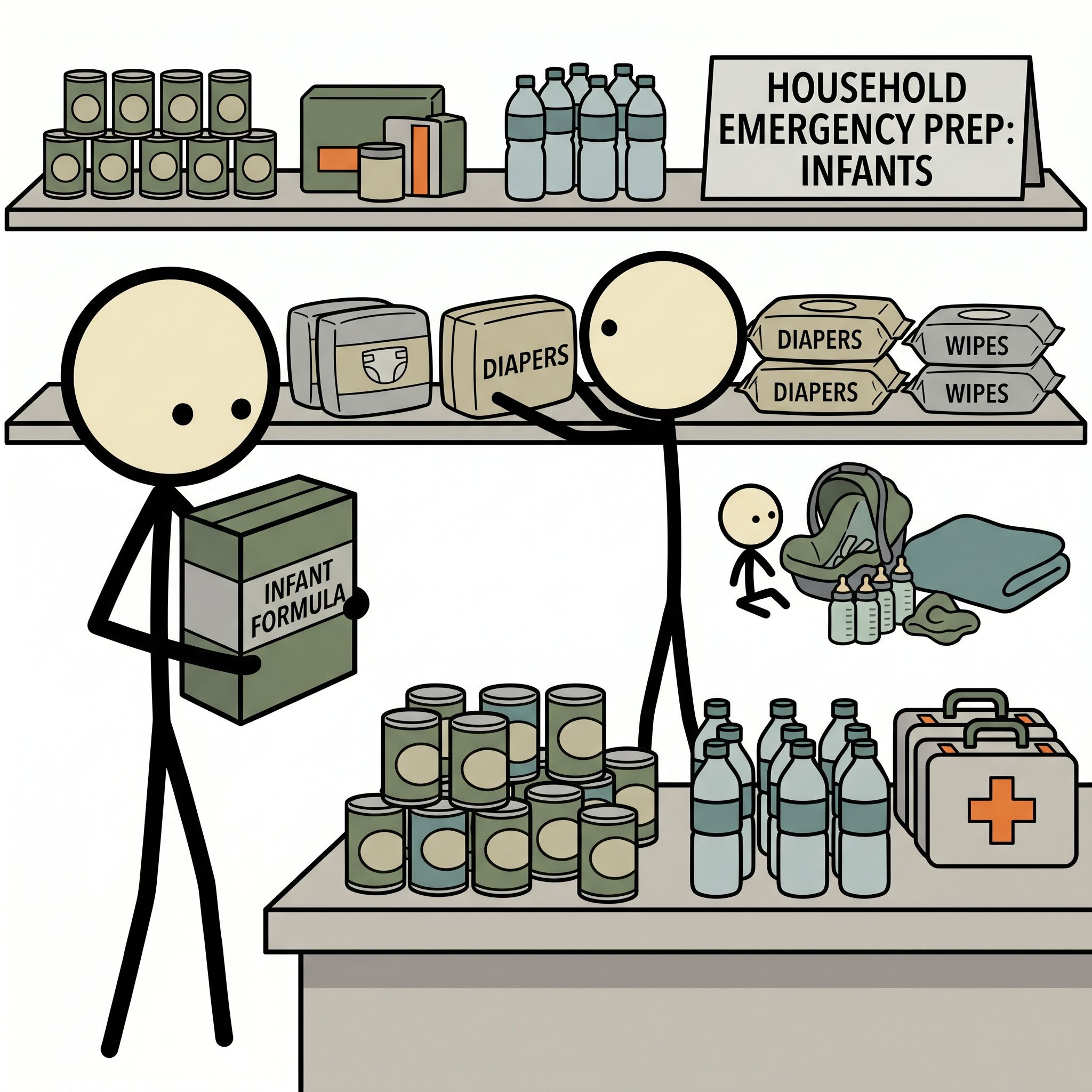
An infant's nutritional needs are non-negotiable. Dehydration and malnutrition can become life-threatening for a baby in a matter of hours, far faster than for an adult. How you feed your baby dictates exactly how you must prepare.
Breastfeeding in an Emergency
In a Survival Scenarios, direct breastfeeding is universally recognized by the AAP and the CDC as the safest, most reliable method of infant feeding. It requires no clean water, no bottles to sanitize, and no electricity to warm. It also provides vital antibodies that protect babies against the specific pathogens that often proliferate during disasters.
However, maternal stress, dehydration, and exhaustion can negatively impact milk supply. If you are a nursing mother, your emergency kit must include extra water and high-calorie, nutrient-dense foods specifically for you. You cannot feed your baby if your own body is depleted. Aim for an additional 500 calories and at least an extra half-gallon of water per day in your personal emergency rations.
Prepping with Infant Formula
If your baby is formula-fed, or if you combo-feed, your logistical requirements are significantly higher. Prepping with infant formula requires careful attention to sanitation and expiration dates. The gold standard for emergency preparedness is Ready-to-Feed (RTF) formula. RTF formula is sterile, requires no mixing, and eliminates the need for safe drinking water. While it is more expensive and takes up more space than powdered formula, you should strive to keep a minimum 3-to-5 day supply of RTF formula in your emergency kit.
If you must rely on powdered formula, you face the dual challenge of sourcing safe water and sanitizing bottles without grid power. Consider the following protocols:
- Water Safety: Never use floodwater or untreated tap water during a boil-water advisory to mix infant formula. The CDC mandates that water used for powdered formula during an emergency must be brought to a rolling boil for 1 minute (or 3 minutes at elevations above 6,500 feet) and then allowed to cool.
- Bottled Water: Stockpile commercially bottled water specifically designated for baby formula. Keep at least two weeks' worth of water dedicated solely to your baby's consumption.
- Sanitization: Without running hot water, washing bottles becomes a vector for bacteria. Stock up on disposable, single-use bottle liners and disposable nipples if possible. If using standard bottles, you must have a dedicated camp stove and extra fuel to boil water for sanitizing bottles and nipples after every use.
- Rotation: Formula expires. Utilize a "first in, first out" rotation system in your pantry to ensure your emergency stash is always fresh.
Managing Stored Breastmilk
For parents relying on pumped breastmilk, a power outage is a race against the clock. According to the CDC, breastmilk remains safe at room temperature for up to 4 hours. In a refrigerator, it is safe for 4 days, and in a freezer, it can last 6 to 12 months. When the power goes out, keep refrigerator and freezer doors closed. A full standalone freezer will hold its temperature for about 48 hours; a half-full freezer will last about 24 hours.
If you anticipate a prolonged outage, transfer frozen milk to an insulated cooler packed tightly with ice or dry ice. If breastmilk still contains ice crystals, it can safely be refrozen once power is restored. If it has completely thawed but still feels cold to the touch, it must be used within 24 hours or discarded.
Diapering and Sanitation: Preventing Disease
In a grid-down scenario, municipal water treatment facilities often fail, and garbage collection ceases. Maintaining strict hygiene is vital to prevent bacterial infections, diaper rash, and the spread of gastrointestinal illnesses.
The Diaper Stockpile
Newborns can go through 10 to 12 diapers a day. Older infants average 6 to 8. To meet the Red Cross recommendation of a two-week shelter-in-place supply, you need roughly 150 diapers on hand at all times. Because babies grow quickly, always stockpile diapers in the next size up; a slightly large diaper can be tightened, but a diaper that is too small is useless.
To save space in your emergency bins, remove diapers from their bulky cardboard packaging and vacuum-seal them in plastic bags. This not only compresses them but also protects them from floodwaters and humidity.
Cloth vs. Disposable in Emergencies
While cloth diapers are excellent for everyday sustainability, they are a massive liability in a disaster. Washing cloth diapers requires gallons of clean, hot water and harsh detergents—resources you will not have during a crisis. Always rely on disposable diapers for your emergency kits.
Wipes, Creams, and Waste Management
Baby wipes are the ultimate multi-purpose hygiene tool in an emergency. Stockpile them heavily. You will use them not just for diaper changes, but for wiping down the baby's face, cleaning your own hands, and basic field hygiene when showers are unavailable.
- Diaper Rash Prevention: In austere conditions, babies may sit in soiled diapers longer than usual. A severe diaper rash can lead to open sores and staph infections. Keep ample supplies of zinc oxide-based barrier creams. Apply it preemptively during emergencies.
- Waste Disposal: Accumulating soiled diapers in a home without air conditioning or garbage service is a biohazard. Stockpile heavy-duty, odor-blocking trash bags (like contractor bags) and smaller disposable diaper sacks. Store soiled diapers outside your immediate living space but protected from wildlife.
- Hand Hygiene: Diarrheal diseases are a leading cause of infant mortality in disaster zones globally. You must sanitize your hands after every diaper change. Keep large pump bottles of alcohol-based hand sanitizer (at least 60% alcohol) next to your emergency diaper station.
The Newborn Emergency Kit: Health and Medical Needs
When roads are blocked and 911 lines are overwhelmed, you are your baby's pediatrician for minor ailments. A standard family first aid kit is insufficient for an infant. You must build a dedicated newborn emergency kit tailored to their specific physiological needs.
Essential Infant Medications
Never give an infant adult medications, and never administer fever reducers to a baby under 3 months old without consulting a doctor (in a true emergency where communication is severed, rely on your prior pediatric training or a comprehensive infant first aid manual). Your kit should include:
- Infant Acetaminophen and Ibuprofen: Check expiration dates every six months. Note that Ibuprofen is only for babies 6 months and older.
- Oral Rehydration Salts (ORS): Pedialyte powder packets are crucial. If a baby contracts a stomach bug during a disaster, dehydration can set in rapidly. ORS helps replace lost electrolytes.
- Saline Drops and Suction Bulb: Babies are obligate nose breathers. If they get a respiratory infection and cannot clear their nasal passages, they cannot eat or sleep effectively. A mechanical aspirator (like a NoseFrida) and sterile saline drops are essential.
- Prescription Medications: If your baby requires specialized medication (e.g., reflux meds, asthma inhalers, or specialized hypoallergenic formula like Nutramigen), fight to keep a 30-day backup supply. Insurance companies often grant emergency overrides during declared disasters.
First Aid and Assessment Tools
Include a high-quality digital rectal thermometer. Rectal temperatures are the only truly accurate measurement for infants under 6 months. Pack extra button-cell batteries for the thermometer. Additionally, include infant-sized bandages, sterile gauze, medical tape, and a mild antiseptic like hydrogen peroxide or iodine (use with extreme caution and dilution on infant skin).
Familiarize yourself with the signs of infant distress. According to the AAP, signs of severe dehydration include no wet diapers for 6-8 hours, a sunken fontanelle (the soft spot on the head), crying without tears, and extreme lethargy. Knowing these signs allows you to triage your baby's condition accurately.
Temperature Regulation: Fighting the Elements
Babies have a high surface-area-to-mass ratio, meaning they lose body heat much faster than adults. They also lack the ability to shiver effectively to generate heat, and their sweat glands are not fully developed, making them highly susceptible to both hypothermia and hyperthermia. When the HVAC system goes down, temperature regulation becomes an active, round-the-clock job.
Cold Weather Survival
During a winter grid failure, the temperature inside a home can plummet to freezing in a matter of hours. The rule of thumb for dressing an infant in cold weather is to put them in one more layer than you are wearing to be comfortable.
- Layering: Start with a moisture-wicking base layer (avoid pure cotton if possible, as it traps cold sweat). Add an insulating layer like fleece, and top with a wearable blanket or sleep sack.
- Head and Extremities: A baby loses a massive amount of heat through their head. Keep a warm, well-fitting infant beanie on them at all times in a cold house. Use mittens and thick socks.
- Body Heat: Your body is a 98.6-degree furnace. In extreme cold, skin-to-skin contact is the most effective way to warm a hypothermic infant. Place the baby on your bare chest and wrap a heavy blanket around both of you, ensuring the baby's face remains uncovered.
Hot Weather Survival
Summer power outages, especially in regions prone to high humidity, are incredibly dangerous. The National Oceanic and Atmospheric Administration (NOAA) heat index is a crucial metric; when the heat index rises above 90°F, infants are at severe risk of heat exhaustion.
To keep a baby cool without air conditioning, strip them down to just a diaper. Keep them in the lowest level of your home, as heat rises. Drape cool, damp washcloths over their legs and arms, and use battery-operated clip-on fans to create evaporative cooling. Most importantly, increase their fluid intake. If breastfeeding, nurse more frequently; if formula-feeding, offer smaller, more frequent bottles to maintain hydration.
Safe Sleeping in Emergencies
Disasters cause immense physical and emotional exhaustion. When parents are sleep-deprived and stressed, the risk of Sudden Infant Death Syndrome (SIDS) and accidental suffocation spikes. Maintaining a safe sleep environment is paramount, even when your home is in chaos or you are sleeping in a high school gymnasium serving as a Red Cross shelter.
Maintaining AAP Guidelines
The AAP's safe sleep guidelines—alone, on their back, on a firm, flat surface, with no loose bedding—do not vanish during a hurricane. While it may be tempting to pull a crying, stressed baby into your sleeping bag or onto an air mattress to comfort them, this is incredibly dangerous. Adult mattresses, couches, and sleeping bags pose severe suffocation hazards to infants.
Portable Sleep Solutions
Your emergency prep must include a dedicated, portable safe-sleep space. A travel bassinet or a lightweight Pack 'n Play is ideal. If you are sheltering in place, simply use their standard crib, provided the room is a safe temperature and free from falling hazards (like shattered windows or unsecured bookshelves during an earthquake).
If you must evacuate and cannot bring a portable crib, you must improvise safely. A firm, clean blanket laid directly on the floor is vastly safer than an adult bed. You can also use a clean, empty laundry basket lined with a firm, tightly fitted towel at the bottom, ensuring there are no soft sides the baby could roll into. Always prioritize a firm surface and the absence of loose fabrics.
Evacuation with a Newborn: The Baby Go Bag
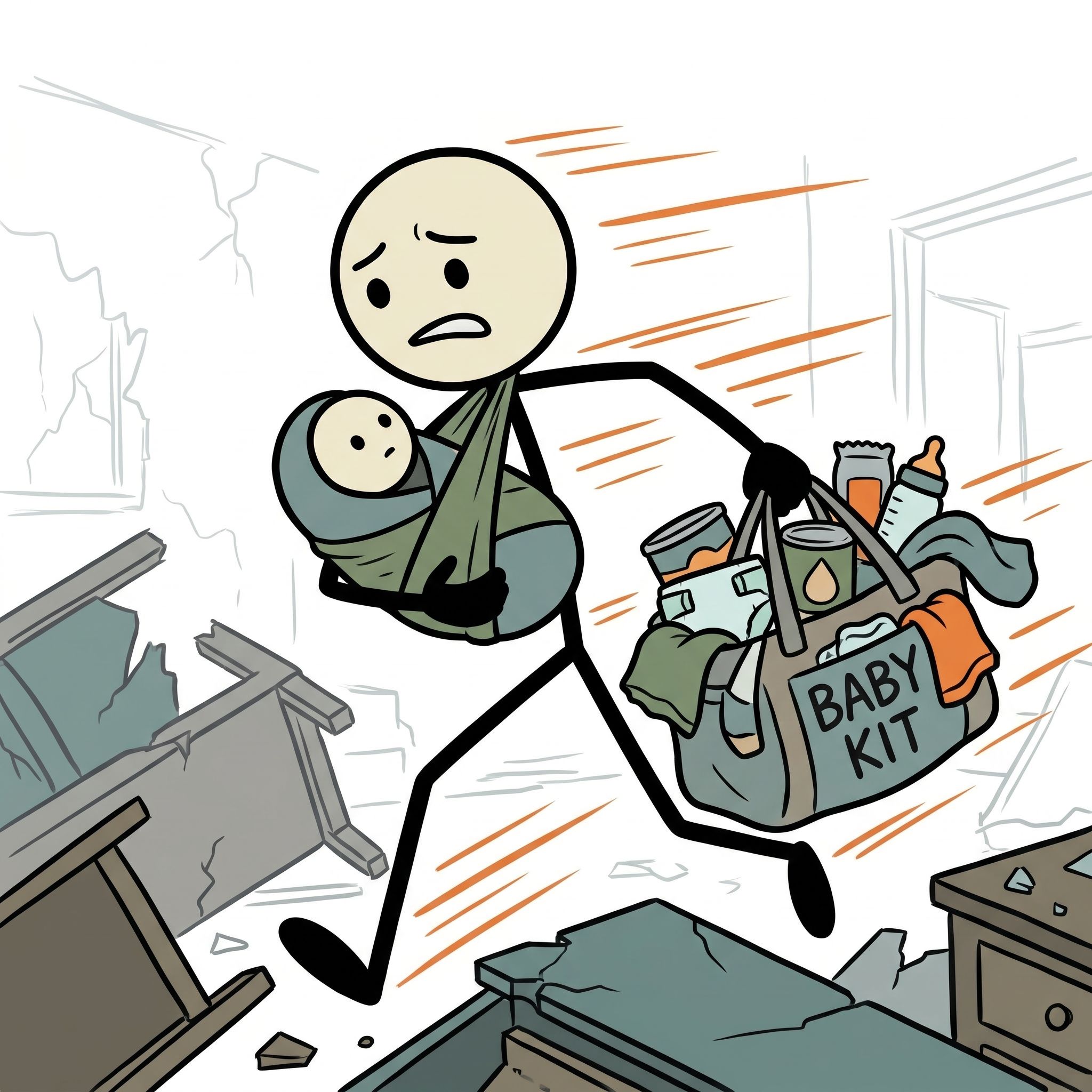
When the order comes to evacuate, you may only have minutes to leave. You cannot be running around your house gathering pacifiers and diapers while a wildfire approaches. You need a dedicated, pre-packed bag. Your baby go-bag essentials guide essentials must be stored near your primary exit or permanently in your vehicle's trunk.
Building the Baby Go Bag
Use a rugged, hands-free backpack rather than a traditional over-the-shoulder diaper bag. In an evacuation, you need your hands free to open doors, clear debris, or hold onto older children. Pack the following:
- Hydration and Nutrition: 3 days of Ready-to-Feed formula, sterile bottles, and at least 3 gallons of dedicated infant water (stored next to the bag). If nursing, pack high-energy lactation snacks and water for the mother.
- Hygiene: 30-40 diapers (vacuum-sealed), 2 large packs of wipes, diaper rash cream, disposable changing pads, and heavy-duty ziplock bags for soiled items.
- Clothing: 3 complete changes of weather-appropriate clothes, ranging from lightweight onesies to heavy fleece layers. Include a warm hat and a sun hat.
- Medical: Your complete newborn emergency kit (thermometer, meds, suction bulb) as detailed earlier.
- Comfort Items: Emergencies are terrifying for babies, who feed off their parents' stress. Pack 2-3 extra pacifiers (in a sterile container) and a familiar comfort item, like a small, lightweight swaddle blanket or a specific teething toy.
Mobility: Carriers vs. Strollers
Do not rely on a stroller for emergency evacuations. Strollers cannot navigate over earthquake debris, through floodwaters, or easily up the stairs of an evacuation shelter. A high-quality, ergonomic baby carrier (like an Ergobaby or BabyBjörn) is an absolute necessity for infant disaster prep. Babywearing keeps the infant securely attached to you, regulates their body temperature through your body heat, keeps your hands free, and provides immense psychological comfort to the baby amid chaos.
Car Seats and Documentation
Ensure your infant's car seat is always properly installed and that the vehicle has at least a half tank of gas at all times. If you must evacuate in a neighbor's car or a rescue vehicle, you must take your car seat with you.
Finally, do not forget documentation. Store physical copies of your baby's birth certificate, social security card, immunization records, and pediatric medical history in a waterproof sleeve inside the go bag. In the aftermath of a disaster, proving guardianship and accessing specialized medical care or government assistance will require these documents.
Embracing the Responsibility
Preparing for a disaster with an infant can feel overwhelming. The sheer volume of supplies required for such a tiny person is daunting, and the scenarios you must imagine are inherently stressful. However, anxiety is simply energy without a plan. By taking systematic steps today—stockpiling the right formula, vacuum-sealing diapers, assembling a medical kit, and packing a rugged go bag—you are building a fortress of safety around your child.
You are your baby's ultimate protector. Disasters strip away the illusion of modern convenience, leaving only your readiness and your resolve. With a comprehensive infant preparedness plan in place, you can face the unknown with confidence, knowing that no matter what the crisis brings, your baby will remain safe, nourished, and secure in your arms.
Frequently Asked Questions
How much formula should I stockpile for emergencies?
Stock a minimum 2-week supply of formula, rotating it to stay fresh. For breastfeeding parents, stockpile a manual breast pump and storage bags. Keep formula in its original sealed container away from heat and humidity.
How do I keep a baby warm during a power outage?
Skin-to-skin contact is the most effective way to warm an infant — hold them against your chest under clothing. Layer baby in one more layer than adults. Use blankets in a safe sleep configuration. Avoid electric blankets and heating pads.
What is the biggest emergency risk unique to infants?
Temperature dysregulation — infants can't regulate their own body temperature and are at high risk from both hypothermia and heat stroke. Dehydration from formula unavailability or inadequate feeding during stress is the second major risk.
Sources & Further Reading
- AAP American Academy of Pediatrics Disaster Preparedness
- CDC Infant Health Emergency Prep
- Ready.gov Families with Children
Related resource: Natural Disaster Survival Guide.