⚡ Key Facts
- Evacuation Delays: According to the Federal Emergency Management Agency (FEMA), the logistical challenge of moving large animals is one of the leading reasons families delay evacuation, dramatically increasing the risk of human and animal casualties.
- Water Requirements: The United States Department of Agriculture (USDA) notes that a single horse or cow requires 12 to 20 gallons of water per day, creating a massive hydration hurdle during prolonged power outages.
- Training Impact: The American Veterinary Medical Association (AVMA) reports that practicing trailer loading before a crisis can reduce emergency loading times by up to 80%, minimizing panic for both livestock and handlers.
- Weather Threats: National Oceanic and Atmospheric Administration (NOAA) data indicates that extreme weather events affecting rural and agricultural zones have increased significantly over the past decade, making proactive planning essential.
- Identification Success: Without proper emergency identification, up to 80% of displaced livestock are never reunited with their owners following major regional disasters like floods or wildfires.
Imagine a wildfire cresting the ridge line, or floodwaters rising steadily after days of unprecedented rainfall. The authorities have just issued an evacuation warning. For a family with a dog or a cat, leaving is a matter of grabbing a go-bag essentials guide and loading the car. For a family managing horses, cattle, sheep, alpacas, or goats, the next few hours present a monumental logistical mountain. When lives are on the line, hoping for the best is not a strategy. True resilience comes from proactive, meticulous planning. go-bag essentials checklist
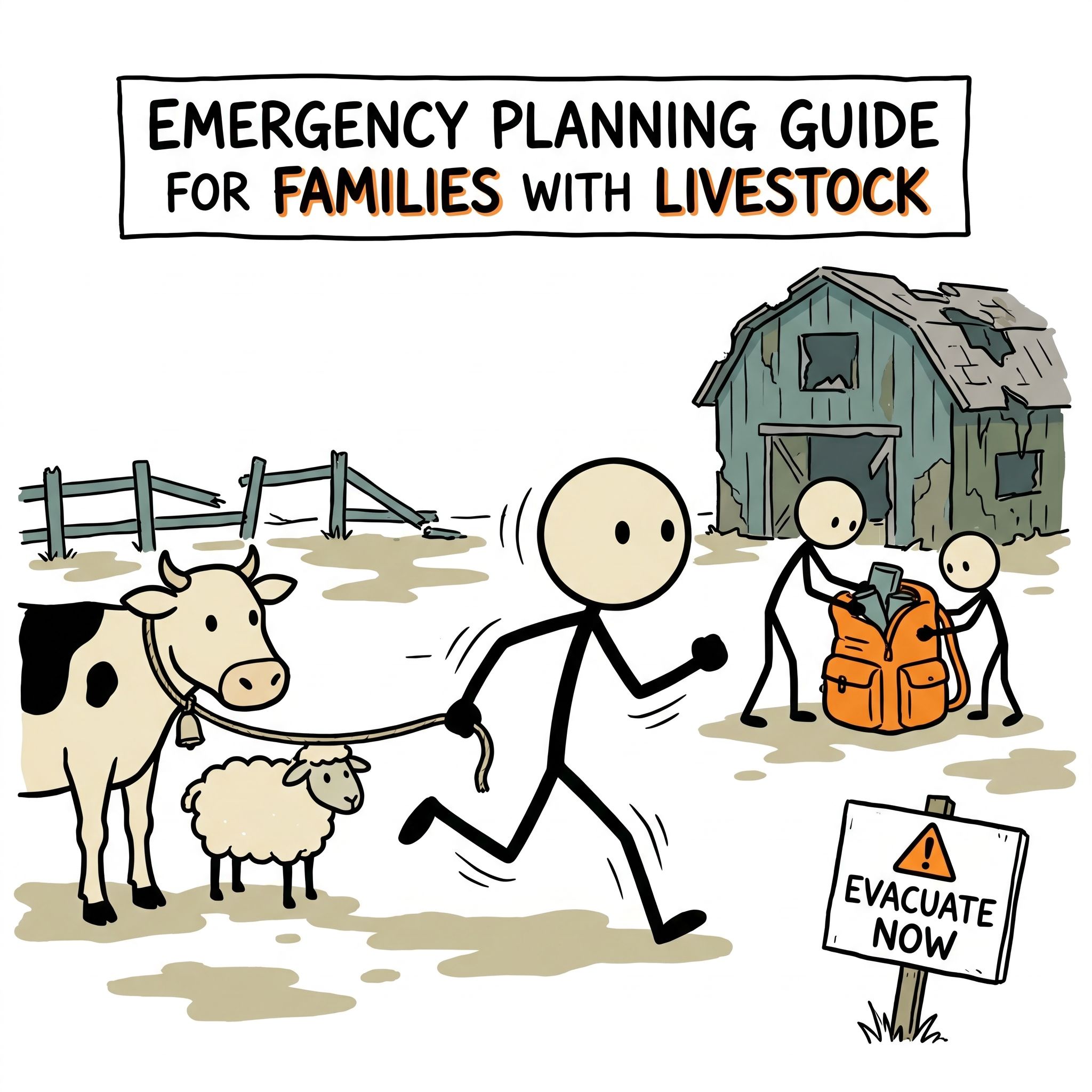
Farm animals disaster planning requires a completely different mindset than standard residential preparedness. You are dealing with creatures driven by strong flight instincts, massive physical weight, and complex transportation requirements. Furthermore, you are battling the clock. Moving a herd of large animals takes time, specialized equipment, and clear-headed coordination. supply calculator
For nuclear emergencies specifically, see our nuclear fallout first 24 hours guide - the actions you take in the first hour are critical.
The good news is that you are entirely capable of securing your family and your livestock. By developing a comprehensive agricultural family emergency plan right now, you strip away the panic of the unknown. This guide will walk you through the exact steps required to execute a flawless evacuation, establish robust shelter-in-place protocols, build out your medical supplies, and coordinate with the agencies designed to help you succeed. water storage calculator
Developing Your Agricultural Emergency Plan
An effective agricultural emergency plan is the foundation of your farm’s survival. It is a written, practiced, and easily accessible document that outlines exactly what needs to happen, who is responsible for doing it, and when the trigger to act should be pulled. The AVMA stresses that the most critical element of any large animal plan is the "decision timeline." survival scenarios library
Establishing Evacuation Triggers
The single most dangerous mistake livestock owners make is waiting for a mandatory evacuation order. Hauling a loaded stock trailer is inherently hazardous; attempting to do so in 40-mph winds, blinding wildfire smoke, or over flooded roadways is life-threatening. Your plan must include early evacuation triggers. If a warning is issued for your area, or if a fire is within a predetermined mileage radius, that is your cue to move the animals. family emergency planning guide
Mapping Primary and Secondary Routes
Disasters rarely leave your preferred travel routes intact. Floods wash out rural bridges, and wildfires jump across major highways. Using topographical maps and local county resources, identify at least three distinct evacuation routes from your property. Physically drive these routes with your empty trailer to check for low-hanging branches, weight-restricted bridges, and tight turns that could become impassable bottlenecks during a high-stress event. Protocol Survival app plans
The "Buddy System" for Rural Properties
No farm is an island. Establish a mutual aid agreement with a farm located at least 20 to 30 miles away, preferably in a different geographical risk zone. If your property is threatened, you evacuate your animals to their pastures; if they are threatened, they come to you. This guarantees you have a safe, pre-vetted destination that isn't a crowded public fairground.
Mastering Evacuation Logistics for Large Animals
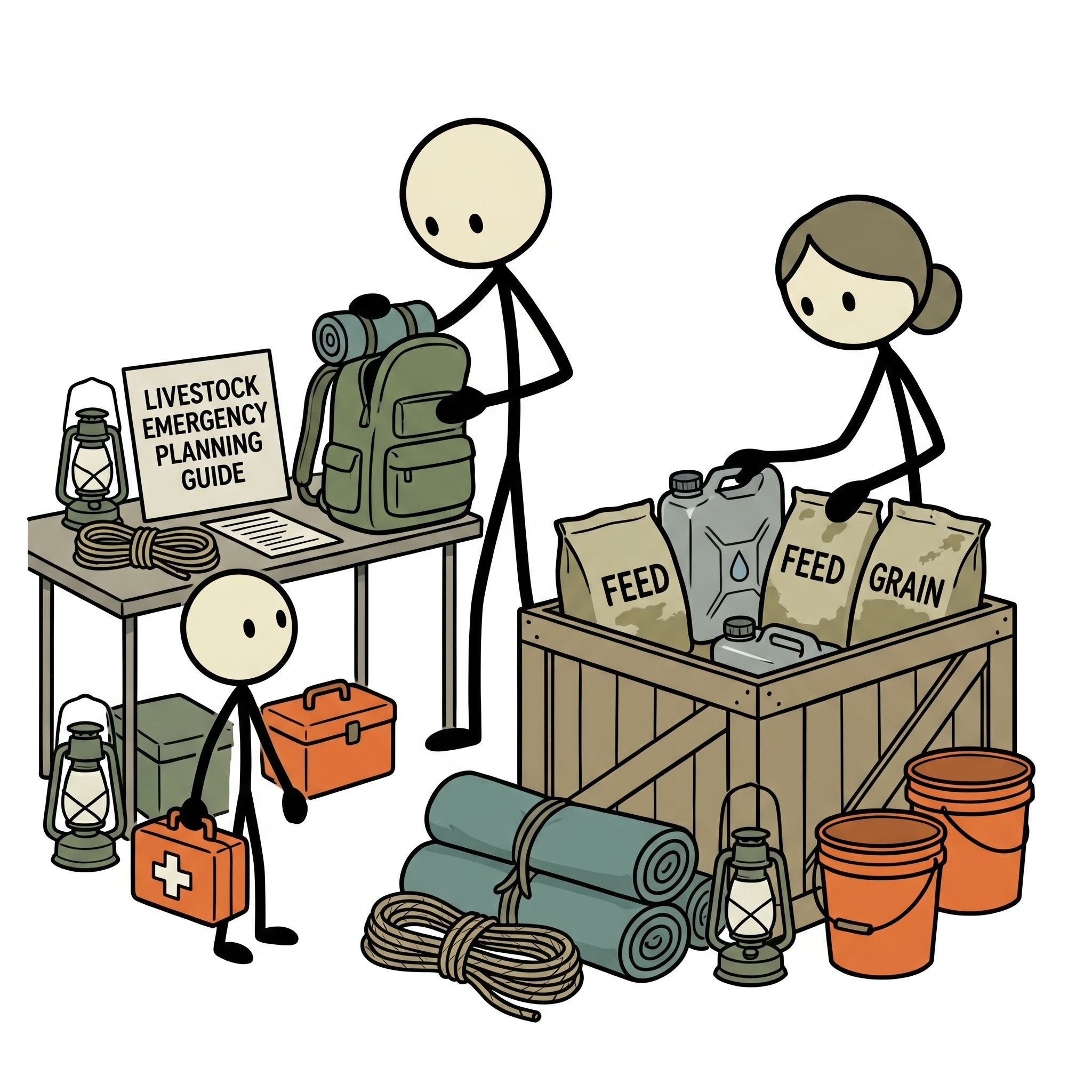
When it comes to evacuating horses livestock, and cattle, transportation is the ultimate bottleneck. You cannot simply put a 1,200-pound animal in the backseat of a sedan. Your evacuation logistics must be ironclad long before the sky turns dark.
Trailer Capacity and Maintenance
Do you have enough trailer space to move all your animals in a single trip? If not, you must either partner with neighbors who have extra trailer capacity or accept that you will need to make multiple trips—which requires leaving even earlier. Your trailer must be kept in a constant state of readiness. Check the floorboards for rot every quarter, maintain proper tire pressure (including the spare), and ensure all braking systems and running lights are fully operational.
Desensitization and Loading Practice
Animals can smell fear, and they are highly sensitive to changes in barometric pressure and the smell of smoke. A horse that normally loads into a trailer in ten seconds may suddenly refuse to step foot inside during a raging storm. Desensitization training is a vital component of livestock emergency preparedness. Practice loading your animals at night, in the rain, and using flashlights. Make the trailer a place of comfort by routinely feeding them inside it.
Handling Difficult Loaders During a Crisis
Even with practice, some animals will panic. Your plan should dictate a strict time limit for loading. If an animal refuses to load after 15 minutes, you must make the agonizing but necessary decision to leave them behind to save the rest of the herd and your family. Having a clear, pre-determined time limit prevents you from becoming trapped by your own stubbornness while disaster closes in.
Shelter-in-Place Requirements and Strategies
There will be scenarios where evacuation is simply impossible. Roads may be blocked by fallen trees, or a fast-moving disaster may cut off your escape routes. When you are forced to shelter in place, your strategy shifts from transportation to environmental management.
To Confine or Not to Confine?
The decision to leave animals in a barn or turn them out into a pasture depends entirely on the nature of the disaster. FEMA guidelines suggest that during high-wind events like tornadoes or hurricanes, sturdy barns can provide protection from flying debris. However, during wildfires or floods, confining animals to a barn is a death sentence. If a barn catches fire, trapped animals will perish. For fires and floods, turning livestock out into large, pre-cleared pastures allows them to use their natural instincts to find high ground or flee the flames.
Creating Defensible Space
If you live in a wildfire zone, defensible space is your primary shield. The United States Fire Administration (USFA) recommends clearing all brush, dead wood, and combustible materials within a minimum of 30 to 100 feet of your barns and pastures. Ensure that the materials used for your fencing (like metal T-posts and wire) will withstand fire better than wooden posts, which can burn and allow panicked livestock to escape onto roadways.
Managing Pasture Hazards
Before a storm hits, survey your pastures. Remove any loose equipment, tractors, or debris that could become airborne projectiles in high winds. If you are expecting severe winter weather or blizzards, ensure animals have access to a three-sided run-in shed that faces away from the prevailing wind, allowing them to escape the brunt of the freezing temperatures.
Feed and Water Backup Systems
When the power grid fails, the well pumps stop working. Without municipal water or a functioning well, hydrating large animals becomes a critical emergency. The CDC emphasizes that contaminated floodwaters are toxic to livestock, making clean Water Calculator a top priority.
Calculating Emergency Water Needs
You must store an absolute minimum of 72 hours of water for your animals, though a 7-day supply is vastly superior. Use the USDA baseline of 12 to 20 gallons per day for adult horses and cattle, 2 to 3 gallons for sheep and goats, and 5 gallons for pigs. If you have five horses, you need approximately 300 gallons of water just to survive a three-day outage. During extreme heat or stress, these requirements will increase.
Water Storage Solutions
Standard water troughs are not enough. Invest in IBC (Intermediate Bulk Container) totes, which hold 275 gallons of water and can be moved with a tractor or pallet jack. Keep these filled and treat them with a livestock-safe water preserver to prevent algae growth. Additionally, invest in a dual-fuel generator specifically sized to run your farm's well pump, ensuring you can pull water from the ground even during extended blackouts.
Feed Management and Forage Reserves
Livestock, particularly horses, have highly sensitive digestive systems. Sudden changes in feed can trigger fatal colic. Always keep a minimum of a two-week supply of your animals' specific hay and grain stored in a dry, rodent-proof, and flood-safe location. If you must evacuate, take enough of this familiar feed to last at least three days at your destination, giving you time to source local, comparable forage.
Large Animal Emergency Vet Supplies
In the aftermath of a disaster, veterinary clinics will be overwhelmed, and roads may be impassable. You become the first responder for your herd. Building a comprehensive kit of large animal emergency vet supplies is non-negotiable. Store these supplies in a waterproof, highly visible, and easily transportable heavy-duty toolbox.
Wound Care and Bandaging
Disasters result in lacerations, punctures, and crush injuries. Your kit must include bulk supplies, as large animals require significant amounts of bandaging. Stock up on:
- Chlorhexidine solution and Betadine for wound flushing and disinfection.
- Multiple rolls of cohesive bandages (Vetrap), sterile gauze squares (4x4s), and non-stick Telfa pads.
- Cotton roll or standing wraps for leg injuries.
- Silver sulfadiazine cream for burn treatment, essential in wildfire zones.
- A high-quality, battery-operated headlamp to allow for hands-free treatment in the dark.
Medications and Triage Tools
Work directly with your regular veterinarian to stock prescription medications for emergency use. Explain that you are building a disaster kit, and most large animal vets will gladly prescribe essential emergency drugs.
- Pain and Inflammation: Banamine (flunixin meglumine) and Bute (phenylbutazone) to manage pain and reduce fever.
- Sedatives: Acepromazine or Dormosedan gel to calm panicked animals during trailer loading or medical treatment.
- Ophthalmic Ointment: To treat eye injuries caused by flying dust, debris, or smoke.
- Electrolytes: Paste or powder to encourage drinking and prevent dehydration.
Rescue Equipment
Medical emergencies often require physical extrication. Your vet kit should sit alongside a rescue bag containing heavy-duty wire cutters (capable of snapping high-tensile fencing), bolt cutters, a sharp rescue knife, thick leather gloves, and a twitch for restraining horses safely. Always keep an extra set of sturdy leather halters and lead ropes in this kit, as nylon halters can melt into an animal's skin during a fire.
Identification and Documentation
If fences come down or you are forced to release your animals to save their lives, proving ownership after the disaster is incredibly difficult. The chaos of recovery efforts means that unidentified animals are often relocated to holding facilities and eventually auctioned or adopted out. Robust identification is a cornerstone of farm animals disaster planning.
Physical Identification Methods
Do not rely on a single method of identification. Implement a layered approach:
- Microchipping: The most permanent and reliable method. Ensure your contact information is up to date in the national registry.
- Livestock Markers: Keep livestock marking crayons (grease pens) in your emergency kit. In an evacuation, write your phone number in large numbers directly on the flanks of horses and cattle.
- Luggage Tags: Braid heavy-duty, waterproof luggage tags containing your contact info into the manes or tails of horses.
- Fetlock Bands: Use brightly colored, breakaway ID bands on the lower legs of livestock.
- Hoof Etching: Use a permanent marker or light etching tool to write your phone number on the hooves.
Digital and Physical Documentation
Create a waterproof binder containing all essential documentation for every animal on your property. This should include proof of ownership (bill of sale or registration papers), current Coggins test results for horses, vaccination records, and clear, recent photographs of the animal from both sides, highlighting any distinct markings or scars.
Keep a physical copy of this binder in your evacuation go-bag, and store digital copies in a cloud-based storage system so they can be accessed from a smartphone anywhere in the world. When crossing state lines or entering public fairgrounds during an evacuation, health officials will demand to see these records to prevent disease outbreaks.
Coordinating with Agricultural Emergency Services
You do not have to shoulder the burden of livestock emergency preparedness entirely on your own. There is a robust network of state and federal agencies dedicated to agricultural resilience. Integrating your personal plan with these local resources multiplies your chances of a successful outcome.
County Animal Response Teams (CART)
Most rural counties operate a CART or a State Animal Response Team (SART). These volunteer-driven organizations are trained specifically in large animal rescue, emergency sheltering, and disaster response. Contact your local emergency management agency today to find out how your local CART operates. Find out where their designated emergency livestock shelters are located, and ask what documentation they require for entry.
Local Extension Offices and the USDA
Your local university agricultural extension office is an invaluable resource. They provide region-specific advice on hazard mitigation, from flood plain mapping to drought management. Furthermore, the USDA’s Farm Service Agency (FSA) offers disaster assistance programs that can help cover the costs of lost feed, fencing repairs, and livestock mortality following a declared disaster. Register your farm or premises with the state; obtaining a Premises Identification Number (PIN) ensures that emergency responders know livestock are present on your property.
Building a Local Farm Network
Formal agencies are crucial, but your most immediate help will come from your neighbors. Build a communication network—such as a WhatsApp group or a phone tree—with the other livestock owners in your valley or county road. Share resources, coordinate trailer space, and keep each other informed about road closures and hazard movements. A united agricultural community is infinitely more resilient than an isolated farm.
Maintaining the Mindset of Readiness
Emergency planning is not a one-time event; it is an ongoing lifestyle. As your herd grows, as animals age, and as your property evolves, your plan must adapt. Schedule a twice-yearly review of your agricultural emergency plan. Use the transition of the seasons—spring and fall—as a reminder to restock your large animal emergency vet supplies, rotate your stored feed and water, and practice trailer loading with your animals.
Taking responsibility for the lives of large animals is a profound commitment. By acknowledging the unique threats in your region and systematically addressing the logistics of evacuation, shelter, and medical care, you are honoring that commitment. You are replacing fear with actionable strategy. When the storm clouds gather or the smoke rises, you will not be paralyzed by panic. You will simply execute the plan, ensuring the safety of your family, your property, and the animals that depend on you.
Frequently Asked Questions
How do I evacuate horses or large livestock?
You need a trailer (rent or borrow in advance — after a disaster is declared, trailers disappear fast), a loading practice routine so animals load under stress, halters and leads for each animal, and a destination that accepts large animals. Identify at least two large animal evacuation destinations on your routes before any emergency.
How much emergency feed should I store for livestock?
Store a minimum 2-week supply of your regular feed for each animal. For hay-fed animals: 1 horse needs ~25 lbs/day = 350 lbs minimum for 2 weeks. Store feed properly sealed against moisture and pests.
What do I do if I cannot evacuate my livestock?
If evacuation is truly impossible: turn animals loose rather than leaving them confined (confined animals cannot escape rising water or fire). Identify them with paint markings and your phone number. Remove halters which can catch on debris. Confining them in a building that could flood or burn is the worst outcome.
Develop family emergency planning for livestock. Learn seed saving for food security. Prepare for natural disaster survival scenarios. Calculate needs with our supply calculator and browse our courses.
Sources & Further Reading
- USDA Animal Emergency Management
- FEMA Animal Emergency Preparedness
- HSUS Large Animal Emergency Rescue
- AVMA Disaster Preparedness for Livestock
Related resource: Survival Psychology Course.