⚡ Key Facts
- Chemistry Matters: Standard alkaline batteries lose 2% to 3% of their capacity annually, whereas primary lithium batteries retain up to 90% of their charge after 15 to 20 years in storage.
- The Condensation Threat: Storing batteries in the refrigerator or freezer can cause internal condensation and micro-shorting, contrary to popular urban legends.
- Parasitic Drain: Tactical gear left with batteries installed can completely drain them within months due to microscopic, continuous power draws from electronic switches.
- Storage Temperature: The Federal Emergency Management Agency (FEMA) recommends keeping emergency power supplies in a cool, dry place between 50°F and 70°F (10°C to 21°C).
- Corrosion Cleanup: Battery leakage is highly alkaline (potassium hydroxide) and must be neutralized with a mild household acid like vinegar or lemon juice, not baking soda.
Imagine a worst-case scenario: a severe winter storm, much like the 2021 Texas power grid failure documented by the Federal Emergency Management Agency (FEMA), has knocked out regional power grids for an indefinite period. You retreat to your emergency command center, reach for your tactical shortwave radio or high-lumen emergency flashlight, and press the power button. Nothing happens. You unscrew the battery cap, only to find a crusty, white, corrosive mess of potassium hydroxide that has permanently destroyed your critical electronics. In a survival situation, your gear is only as reliable as the power source feeding it. Understanding how to store batteries and manage emergency battery storage is not merely a household chore—it is a foundational pillar of operational readiness.
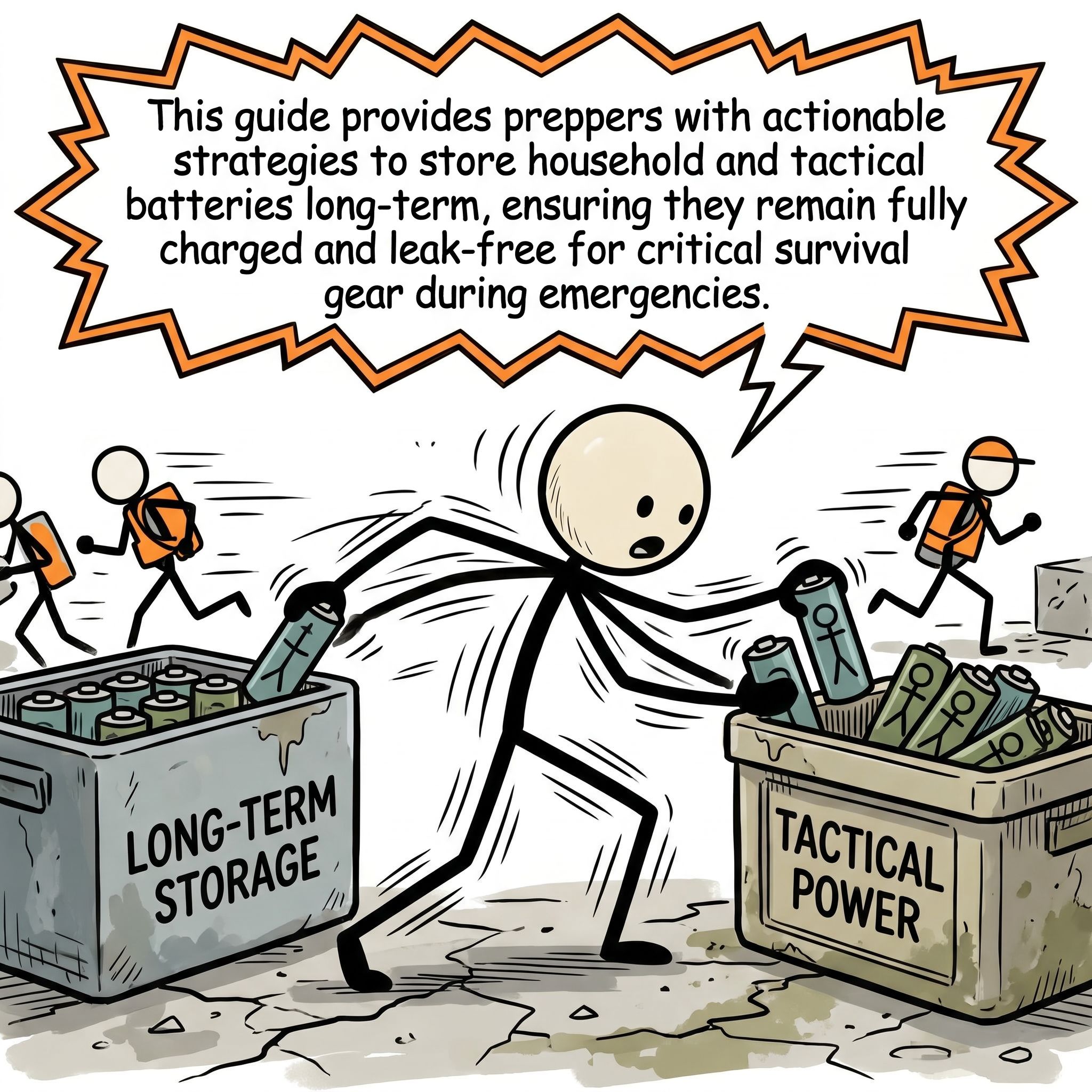
The Science of Power: Understanding Battery Chemistries
To implement an effective long-term battery storage strategy, you must first understand that not all batteries are created equal. Different chemical compositions dictate how a battery performs under stress, how long it retains its charge, and how susceptible it is to environmental degradation. For preppers, standardizing your inventory based on chemistry is the first step toward building a resilient power reserve.
Alkaline Batteries (Zinc-Manganese Dioxide)
Alkaline batteries are the most common household cells, found in everything from television remotes to basic emergency lanterns. They are inexpensive and widely available, but they are the least reliable option for long-term battery storage. The electrolyte inside an alkaline battery is potassium hydroxide, an alkaline substance that can leak when the battery discharges and generates hydrogen gas, putting pressure on the outer steel casing. The average alkaline battery shelf life is 5 to 10 years, but their high susceptibility to temperature fluctuations makes them a risky choice for critical survival gear.
Primary Lithium Batteries (Lithium-Metal)
For critical, life-saving equipment, primary (non-rechargeable) lithium batteries—such as CR123A or AA Lithium (L91)—are the gold standard. These cells boast an exceptional battery shelf life of 15 to 20 years and can operate in extreme temperature ranges from -40°F to 140°F. Because they do not contain a liquid acid electrolyte, they are virtually immune to the leakage issues that plague alkaline cells. They are ideal for tactical flashlights, weapon-mounted lights, night vision devices, and emergency medical equipment.
Nickel-Metal Hydride (NiMH) Rechargeable Batteries
NiMH batteries are the workhorses of sustainable, off-grid power systems. When paired with a solar charger, they allow you to reuse your gear indefinitely. However, standard NiMH batteries suffer from a high self-discharge rate, losing up to 1% of their charge per day at room temperature. For emergency preparedness, you must specifically source Low Self-Discharge (LSD) NiMH batteries, such as Panasonic Eneloop. LSD NiMH cells can retain up to 70% to 85% of their charge after one year of storage, making them far more reliable for emergency kits.
Lithium-Ion (Li-ion) and Lithium Iron Phosphate (LiFePO4)
These rechargeable chemistries power your high-drain tactical gear, handheld ham radios, and portable solar generators. Li-ion cells (such as 18650s) offer high energy density but require careful voltage management during storage. LiFePO4 (Lithium Iron Phosphate) is a newer, incredibly stable chemistry widely used in modern solar generators. It offers up to 3,500+ charge cycles and is highly resistant to thermal runaway, making it the safest choice for large-scale off-grid power storage.
Environmental Threats: Temperature, Humidity, and the Freezer Myth
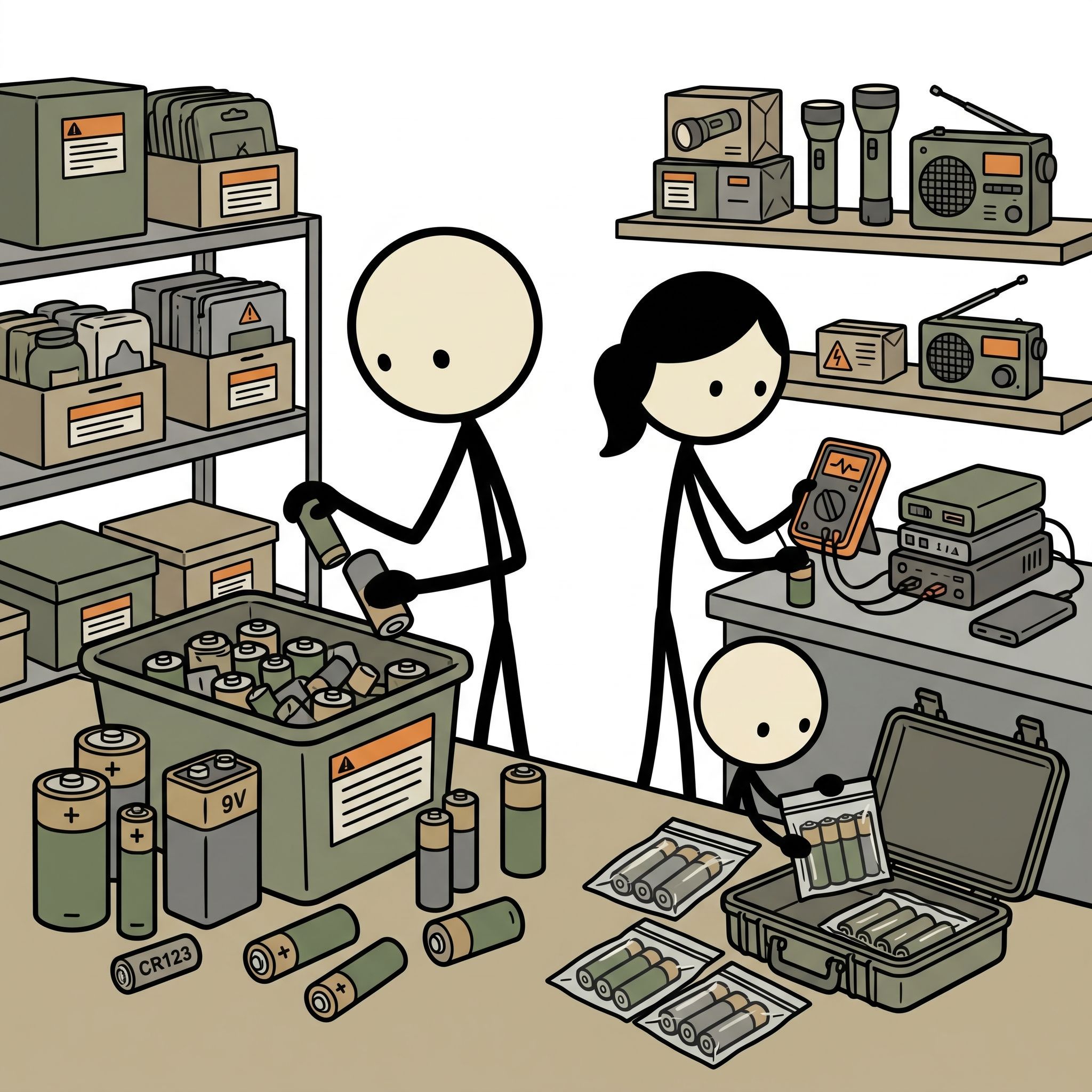
The enemies of stored energy are heat, moisture, and extreme cold. To maximize your emergency battery storage investment, you must shield your inventory from these environmental degradation factors. Understanding how to store batteries means understanding the chemistry of thermodynamics.
| Battery Chemistry | Optimal Storage Temp | Shelf Life (Years) | Self-Discharge Rate | Leakage Risk |
|---|---|---|---|---|
| Alkaline | 50°F to 70°F (10°C to 21°C) | 5–10 Years | ~2% to 3% per year | High |
| Primary Lithium (CR123A/L91) | -40°F to 140°F (-40°C to 60°C) | 15–20 Years | ~1% per year | Extremely Low |
| NiMH (Low Self-Discharge) | 32°F to 70°F (0°C to 21°C) | 3–5 Years (Rechargeable) | ~15% to 30% per year | Low |
| Lithium-Ion (18650/LiFePO4) | 50°F to 68°F (10°C to 20°C) | 3–8 Years (Rechargeable) | ~1% to 2% per month | None (Swell risk if damaged) |
Debunking the Refrigerator and Freezer Myth
For decades, well-meaning homeowners have advised storing batteries in the freezer to extend their lifespan. While it is true that cold temperatures slow down the chemical reactions that cause self-discharge, storing batteries in a refrigerator or freezer introduces a catastrophic threat: condensation. When you remove a cold battery from a cold environment into room temperature air, moisture condenses on the metallic surfaces. This moisture can cause micro-shorting across the terminals, accelerate rust, ruin packaging, and ultimately shorten the overall battery shelf life. Unless you have commercial-grade, hermetically sealed, vacuum-packed storage systems, keep your batteries out of household refrigeration units.
The Danger of Excessive Heat
Heat is the absolute worst enemy of chemical energy storage. According to the National Oceanic and Atmospheric Administration (NOAA), temperatures inside an attic, garage, or vehicle trunk can easily exceed 140°F during summer months. Prolonged exposure to temperatures above 85°F accelerates the internal chemical reactions within batteries, leading to rapid self-discharge, premature aging, and a significantly increased risk of casing rupture. Keep your emergency battery storage in a climate-controlled room, a basement, or an underground root cellar where temperatures remain stable year-round.
Managing Relative Humidity (RH)
High humidity promotes corrosion of the external steel casings and contacts of batteries. The United States Geological Survey (USGS) and other field research agencies maintain strict climate controls for their remote monitoring equipment batteries, recommending a relative humidity of 35% to 50%. To prevent battery leakage and corrosion, store your cells in airtight containers with desiccant packets (silica gel) to absorb any ambient moisture.
Step-by-Step Guide to Long-Term Battery Storage
Simply throwing your batteries into a cardboard box in your closet is a recipe for failure. To build an organized, safe, and highly reliable tactical battery bank, you must follow a disciplined, systematic protocol. Implement these steps to safeguard your gear and your home.
Step 1: Isolate the Terminals
When metallic battery terminals touch each other, or touch other conductive materials like keys, coins, or aluminum foil, they can complete a circuit. This causes a rapid discharge, generates intense heat, and can even trigger a fire.
- Use Original Packaging: Whenever possible, keep batteries in their original plastic-and-cardboard packaging, which is designed to keep terminals separated.
- Terminal Taping: For loose batteries, especially 9V batteries and high-capacity lithium-ion cells, place a small piece of non-conductive electrical tape over the positive (+) and negative (-) terminals.
- Specialized Battery Cases: Invest in dedicated, heavy-duty plastic battery organizers that feature individual slots for each battery size, ensuring they cannot shift and touch during transport or storage.
Step 2: Choose the Right Storage Container
Avoid metal containers, such as old military ammo cans, unless they are lined with a non-conductive material like heavy plastic or closed-cell foam. If a loose battery terminal contacts the metal wall of an ammo can, it can short out the entire container. Heavy-duty, gasket-sealed plastic storage boxes (such as Pelican cases or high-quality polymer utility boxes) are ideal. They protect against physical impacts, seal out moisture, and prevent the escape of corrosive gases should an old cell fail.
Step 3: Organize by Chemistry and Age (The FIFO Method)
Never mix different battery chemistries or brands in the same storage compartment. Different chemistries have varying discharge rates and can off-gas different compounds. Furthermore, implement the "First-In, First-Out" (FIFO) inventory management system. Use a permanent marker to write the purchase date on the packaging or container, and organize your storage rack so that the oldest batteries are positioned at the front to be used first, preserving your freshest stock for long-term emergencies.
How to Prevent Battery Leakage and Handle Failures
Battery leakage is not just an inconvenience; it can destroy hundreds of dollars of tactical gear and release toxic chemicals into your home. To prevent battery leakage, you must understand why it happens and how to manage it safely if a failure occurs.
Why Alkaline Batteries Leak
As an alkaline battery discharges, its internal chemical composition changes, producing hydrogen gas. If the battery is discharged too quickly, left in a device for too long, or exposed to excessive heat, this gas buildup can rupture the safety seals at the base of the steel casing. The highly corrosive electrolyte, potassium hydroxide (KOH), then leaks out. This chemical reacts with carbon dioxide in the air to form potassium carbonate, which manifests as the crusty white powder you see on corroded terminals.
Proactive Mitigation Strategies
To completely prevent battery leakage from ruining your survival loadout, adopt these strict operating procedures:
- Remove Batteries from Unused Gear: If a piece of equipment is going into storage for more than 30 days, remove the batteries. This eliminates the risk of leakage inside the device and prevents parasitic drain.
- Avoid Mixing Old and New Batteries: When replacing batteries in a device, replace all of them at once. Mixing old and new cells forces the weaker battery to over-discharge, drastically increasing the risk of a leak.
- Transition to Lithium: For high-value gear like night vision, GPS units, and high-end optics, completely phase out alkaline batteries and replace them with primary lithium cells.
Safe Cleanup and Neutralization Protocol
If you discover a leaked battery, you must handle it with care. Potassium hydroxide is a strong base that can cause chemical burns to your skin and eyes. Follow this safe cleanup protocol, which aligns with guidelines from the Centers for Disease Control and Prevention (CDC) and OSHA:
- Personal Protective Equipment (PPE): Put on nitrile gloves and protective eyewear before handling the corroded device or battery.
- Extract the Battery: Carefully remove the leaking battery using plastic tweezers or gloved hands, and place it in a sealed plastic bag for disposal.
- Neutralize the Base: Because potassium hydroxide is highly alkaline, you must neutralize it with a mild acid. Dip a cotton swab in white vinegar or lemon juice and apply it directly to the white crusty corrosion. You will see a slight fizzing reaction as the acid neutralizes the base.
- Scrub the Contacts: Use an old toothbrush or a small wire brush to gently scrub away the neutralized residue. If the metal contacts are heavily tarnished, use a pencil eraser or fine-grit sandpaper to restore the clean metal surface.
- Dry Thoroughly: Wipe the compartment clean with a damp cloth to remove any remaining acid, then let the device air-dry completely before inserting fresh batteries.
Tactical and Off-Grid Power Management
For preppers, batteries are not just for flashlights; they are the lifeblood of your communication, navigation, and defensive networks. Managing these high-value power assets requires a more advanced approach than standard household battery storage.
Maintaining Tactical Lithium-Ion Cells (18650, 21700, CR123A)
Tactical flashlights, weapon lights, and thermal optics rely heavily on high-drain rechargeable lithium-ion cells like the 18650. Unlike NiMH batteries, lithium-ion cells should never be stored long-term at 100% charge or completely empty. Storing a lithium-ion battery at full charge accelerates capacity degradation, while storing it completely empty can trip its internal low-voltage protection circuit, rendering the battery permanently unchargeable.
The sweet spot for long-term lithium-ion battery storage is between 40% and 60% of its maximum capacity (roughly 3.7V to 3.8V per cell). Check your tactical battery bank every 6 months, and use a smart charger with a dedicated "Storage Mode" to discharge or charge them back to this optimal level.
Solar Generators and LiFePO4 Battery Banks
If you rely on a solar generator (such as a Goal Zero, Bluetti, or EcoFlow unit) for off-grid power, you are likely utilizing Lithium Iron Phosphate (LiFePO4) or Lithium Nickel Manganese Cobalt Oxide (NMC) chemistry. These systems require active management to ensure they are ready to perform during a grid-down emergency:
- Avoid Continuous Float Charging: Do not leave your solar generator permanently plugged into a wall outlet at 100% capacity unless the manufacturer explicitly states it has an automated storage maintenance cycle.
- Maintain Storage Charge: Store your solar generators at approximately 50% to 80% charge. Check the battery level every 3 to 6 months and top it off as needed.
- Temperature Control: Never store these large power banks in uninsulated garages or outdoor sheds. Keep them in a temperature-controlled environment to protect their sophisticated Battery Management Systems (BMS).
The Threat of Parasitic Drain
Many modern tactical devices utilize electronic soft-switches rather than physical clicky switches. These electronic switches draw a microscopic amount of current even when the device is turned off. This phenomenon, known as parasitic drain, can completely deplete a battery inside a device over several months. To prevent this, always physically lock out your devices. On many tactical flashlights and radios, you can achieve a physical lockout by unscrewing the tail cap or battery compartment by a quarter-turn, breaking the electrical contact without fully removing the batteries.
Establishing a Battery Rotation and Maintenance Schedule
Preparedness is not a one-time event; it is an ongoing process of quality control and maintenance. To ensure your emergency battery storage is always ready to deploy, establish a quarterly or semi-annual maintenance schedule.
The Semi-Annual Battery Audit
Twice a year—coinciding with daylight saving time changes, as recommended by the American Red Cross for smoke detector maintenance—conduct a thorough audit of your battery inventory:
- Inspect for Leaks: Visually inspect all stored batteries, especially alkalines, for any signs of casing swelling, rust, or white crust.
- Test Voltage Levels: Use a digital multimeter or a dedicated battery load tester to check the health of your cells. A simple voltage reading can tell you if a battery is beginning to fail. For example, a standard 1.5V alkaline battery reading below 1.3V under load should be designated for immediate non-critical use, not long-term storage.
- Recharge Rechargeables: Bring your NiMH and Lithium-ion cells back to their optimal storage voltages. Run rechargeable cells through a full discharge/charge cycle once a year to maintain their chemical health and prevent capacity fade.
Disposal of Spent Batteries
Never throw lithium-ion, NiMH, or large quantities of alkaline batteries into your household trash. Damaged or shorted lithium batteries can cause landfill fires. Store your spent batteries in a designated, non-conductive plastic container and take them to a local hazardous household waste recycling center or a certified battery retailer for proper environmental disposal.
Securing Your Power Independence
In a prolonged Survival Scenarios, energy is currency. By mastering the science of how to store batteries, selecting the correct chemical compositions for your gear, and implementing rigorous storage protocols, you ensure that your critical tactical equipment will function flawlessly when the grid goes dark. Do not let a simple chemical failure stand between you and your family's safety. Take control of your emergency battery storage today, build a resilient off-grid power reserve, and stand prepared for whatever challenges tomorrow may bring.
Frequently Asked Questions
What is the best temperature for storing batteries long-term?
Store batteries in a cool, dry place at room temperature, ideally between 60°F and 70°F (15°C to 21°C). Avoid extreme heat and freezing temperatures, which degrade battery performance.
How do you prevent batteries from leaking during storage?
Keep batteries in their original packaging to prevent terminals from touching, store them in a dry environment, and never mix old and new batteries or different chemistry types.
Should you store batteries in the refrigerator?
No, storing modern batteries in the refrigerator is not recommended. Condensation can cause rust, damage seals, and lead to premature leakage or discharge.
How often should you rotate or replace emergency backup batteries?
Inspect and rotate emergency batteries annually. Alkaline batteries generally have a shelf life of 5 to 10 years, while lithium batteries can last 15 to 20 years.
Why should you remove batteries from devices before long-term storage?
Devices can slowly draw a tiny amount of current (parasitic drain) even when turned off. This fully depletes the battery over time, significantly increasing the risk of corrosive leakage.
Review our emergency preparedness guide. Explore solar backup systems options. Prepare for natural disaster survival scenarios. Calculate needs with our supply calculator and explore our courses.