⚡ Key Facts
- Grid Vulnerability: According to the U.S. Energy Information Administration (EIA), the average American experiences over five hours of power interruptions annually, a number that spikes dramatically during severe weather events.
- Digital Fragility: The Federal Emergency Management Agency (FEMA) explicitly recommends maintaining physical copies of vital documents and survival instructions, as cellular networks and internet infrastructure frequently fail during disasters.
- Weather Threats: Data from the National Oceanic and Atmospheric Administration (NOAA) shows a steady increase in billion-dollar weather and climate disasters, severely stressing regional power grids and communications networks.
- Medical Preparedness: The American Red Cross emphasizes that while digital first-aid applications are useful, they should never replace comprehensive, physical first-aid manuals in an emergency kit.
- Infrastructure Risks: The United States Geological Survey (USGS) warns that major seismic events, such as a rupture in the Cascadia Subduction Zone, could leave massive regions without power, water, or internet access for weeks or even months.
Imagine waking up to complete silence. The hum of the refrigerator is gone, the Wi-Fi router is dark, and your smartphone displays a dreaded "No Service" icon. In our hyper-connected modern world, we have outsourced our collective memory and problem-solving skills to the internet. When we need to fix a leaky pipe, identify a plant, or treat a wound, we simply ask a search engine. But what happens when the screen goes black? True self-reliance requires acknowledging the fragility of our digital age. Knowledge is the ultimate survival tool, but it is only useful if you can access it when the systems we rely on collapse. See go-bag essentials guide for more detail.
Building a prepper physical library is not merely a nostalgic hobby; it is a foundational pillar of comprehensive grid down preparation. Hard drives can fail, batteries degrade, and electromagnetic pulses (EMPs) or severe solar storms can render electronics useless. Paper, on the other hand, requires no power source, never needs a software update, and can be referenced by candlelight. An offline survival library is an insurance policy against the loss of human knowledge, ensuring that you and your community have the reference materials necessary to rebuild, heal, and thrive in the aftermath of a catastrophic event. See go-bag builder tool for more detail.
This comprehensive guide will walk you through the essential categories, specific types of texts, and preservation methods required to build a robust collection of emergency preparedness books. By carefully curating volumes on medical care, tactical defense, agricultural independence, and mechanical engineering, you will transform your bookshelf into a vital lifeline. See supply calculator for more detail.
The Case for Paper: Why Digital Backups Aren't Enough
Many modern preppers rely on e-readers, flash drives, and old smartphones loaded with thousands of PDF survival manuals. While digital archiving is an excellent supplementary strategy, it possesses inherent vulnerabilities that make it unsuitable as a primary backup plan. The physics of modern electronics dictate that lithium-ion batteries degrade over time, eventually losing their ability to hold a charge entirely. See water storage calculator for more detail.
Furthermore, the threat of an Electromagnetic Pulse (EMP)—whether from a high-altitude nuclear detonation or a natural geomagnetic storm like the 1859 Carrington Event—poses a severe risk to unshielded microchips. NOAA continuously monitors solar activity precisely because a massive coronal mass ejection could devastate modern power grids and fry delicate electronics. Even in localized disasters, such as hurricanes or wildfires, the simple lack of electricity to recharge a device renders digital libraries entirely inaccessible. See survival scenarios hub for more detail.
A prepper physical library eliminates these risks. Books are immune to EMPs, do not require a charging cable, and can withstand a surprising amount of environmental abuse if stored correctly. When you are in the middle of a high-stress emergency, fumbling with a dead tablet is the last thing you want to do. You need the tactile reliability of a book, where you can quickly flip to a dog-eared page or a highlighted index. See Protocol Survival app plans for more detail.
Category 1: Austere Medicine and First Aid
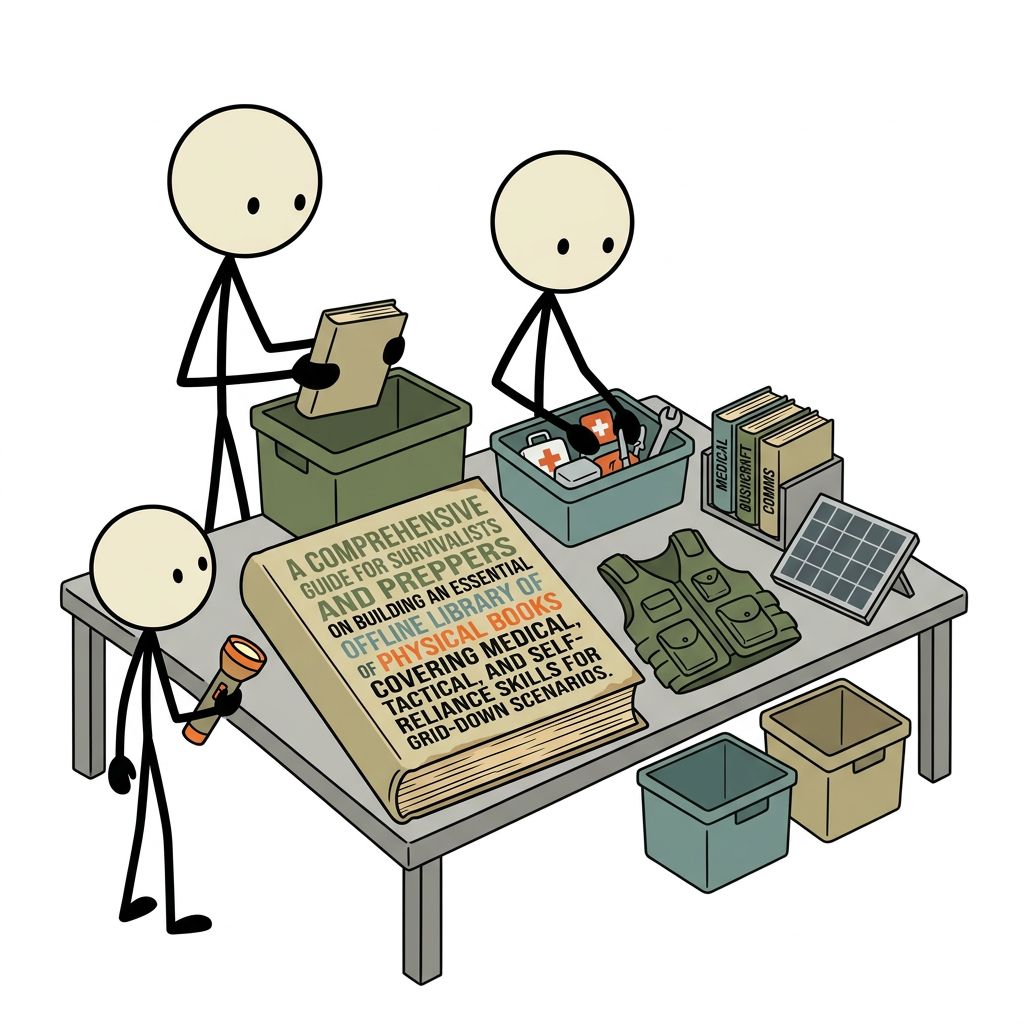
When the grid goes down, the 911 dispatch center may go down with it. The Centers for Disease Control and Prevention (CDC) warns that during severe natural disasters, emergency medical services (EMS) can be delayed by days or suspended entirely. In these scenarios, you become the first responder. Your offline survival library must contain comprehensive medical texts that go far beyond basic bandaging.
Foundational First Aid and Trauma
Start with the basics. Every home should have the official American Red Cross First Aid and CPR manual. However, standard first aid assumes that an ambulance is on the way. For grid-down scenarios, you must invest in trauma and austere medicine books. Look for tactical combat casualty care (TCCC) manuals and wilderness medicine guides. These emergency preparedness books teach you how to stabilize severe injuries, manage massive bleeding with tourniquets and hemostatic agents, and treat shock when professional help is unavailable.
Long-Term Care and Chronic Conditions
Surviving the initial disaster is only the first step; managing long-term health is equally critical. You need medical references that cover the diagnosis and treatment of common illnesses, infections, and chronic conditions. Books originally designed for developing nations or remote missionary clinics are invaluable here, as they focus on treating patients with limited resources and no advanced diagnostic equipment.
- Anatomy and Physiology: Understanding how the human body works is crucial for diagnosing internal issues. Detailed anatomical atlases are a must-have.
- Pharmacology and Drug References: A current nursing drug handbook will help you understand dosages, contraindications, and the shelf-life of salvaged medications.
- Dentistry: Dental emergencies can become life-threatening infections. Include manuals on austere dentistry, covering everything from treating abscesses to extracting teeth.
- Midwifery and Childbirth: In a prolonged grid-down situation, babies will still be born. Texts on emergency childbirth and maternal care are non-negotiable for a well-rounded library.
Botanical and Herbal Medicine
When pharmaceutical supplies run out, you must turn to nature. Herbal medicine should not be viewed as a replacement for modern antibiotics, but rather as a necessary fallback when modern medicine is inaccessible. Your survival books should include regional field guides for identifying medicinal plants, as well as comprehensive volumes on how to prepare tinctures, salves, and poultices. Ensure these books contain high-quality, full-color photographs for accurate plant identification, as a mistake in the field can be fatal.
Category 2: Water, Food, and Agricultural Independence
The average grocery store contains only about three days' worth of food, and municipal water systems require constant electrical power to maintain pressure and sanitation. FEMA guidelines stress the importance of having a robust plan for water procurement and long-term food security. Your physical library must teach you how to source, grow, and preserve sustenance indefinitely.
Water Procurement and Purification
Waterborne illnesses like cholera and dysentery are historically the biggest killers following major disasters. The CDC notes that compromised water infrastructure quickly leads to public health crises. Your library must include detailed guides on hydrology, locating groundwater, and building rainwater catchment systems. More importantly, you need texts detailing multiple methods of water purification, including slow sand filtration, chemical treatment (using bleach or iodine), and solar water disinfection (SODIS).
Agronomy and Gardening
Stockpiled food will eventually run out. To survive long-term, you must become a producer. However, growing enough calories to sustain a family is incredibly difficult and requires specific knowledge. Avoid basic hobby-gardening books; instead, seek out agricultural manuals focused on high-yield, calorie-dense crop production.
- Soil Science: Learn how to test soil pH, amend poor soil with natural fertilizers, and manage composting systems.
- Heirloom Seed Saving: You must know how to harvest and preserve seeds from your crops to plant the following year. Hybrid seeds often do not breed true.
- Pest and Disease Control: Books on organic pest management and companion planting will help you protect your crops without synthetic pesticides.
- Animal Husbandry: If you plan to keep livestock, include veterinary guides for raising chickens, rabbits, goats, or cattle. Learn about their nutritional needs, breeding cycles, and common diseases.
Foraging, Hunting, and Trapping
Supplementing your diet with wild game and native plants is a vital self-reliance skill. A crucial component of your prepper physical library should be regional foraging guides. These must be specific to your geographic area; a guide to edible plants of the Pacific Northwest is useless if you live in the American Southwest. Include books on primitive trapping, tracking, butchering, and the safe preparation of wild game to avoid parasites.
Food Preservation
Harvesting a bounty of food is useless if it rots before winter. The United States Department of Agriculture (USDA) provides excellent, scientifically backed guidelines for home canning. Your library should feature books detailing pressure canning, water bath canning, smokehouse construction, meat curing, root cellaring, and lacto-fermentation. These skills ensure that your summer harvest provides vital calories throughout the dark, cold months.
Category 3: Tactical, Security, and Defense Manuals
In a prolonged grid-down scenario, the rule of law may become localized or entirely absent. Protecting your family, your supplies, and your community requires a tactical mindset and specialized knowledge. While physical training is paramount, survival books focused on security provide the strategic foundation necessary to keep your loved ones safe.
Home Defense and Perimeter Security
Your home is your castle, and you must know how to defend it. Look for manuals written by military or law enforcement professionals that cover the principles of physical security. This includes fortifying doors and windows, establishing defensive perimeters, and understanding fatal funnels. Books on crime prevention through environmental design (CPTED) can teach you how to make your property less appealing to opportunistic looters.
Situational Awareness and Intelligence Gathering
Avoiding a conflict is always preferable to fighting one. Texts on situational awareness, tracking, and reading human behavior are vital. You must learn how to establish neighborhood watch protocols and gather local intelligence without drawing attention to yourself. Understanding camouflage, concealment, and stealth movement can also be critical if you need to navigate hostile territory.
Communications
When cellular networks fail, amateur (HAM) radio becomes the primary method of long-distance communication. The American Radio Relay League (ARRL) publishes comprehensive manuals on operating HAM radios, building improvised antennas, and understanding radio wave propagation. Having these emergency preparedness books on hand allows you to monitor emergency broadcasts, gather intelligence from other regions, and coordinate with remote allies.
Category 4: Engineering, Mechanics, and DIY Repairs
Modern society relies on a complex web of specialized tradesmen. If your roof leaks, your generator fails, or your plumbing backs up, you usually call a professional. In an emergency, you are the professional. Your offline survival library must serve as a comprehensive reference for mechanical and structural problem-solving.
Construction and Carpentry
Whether you need to repair storm damage, build a secure outhouse, or construct a permanent off-grid cabin, foundational carpentry skills are essential. Include books on framing, roofing, and structural engineering. Traditional woodworking texts that teach joinery without the use of metal nails or power tools are incredibly valuable for long-term grid down preparation.
Electrical and Off-Grid Power
If you have solar panels, wind turbines, or a fuel generator, you must know how to maintain and repair them. Books on basic electrical theory, wiring, and battery bank maintenance will help you keep your micro-grid operational. Furthermore, understanding how to safely wire a home for 12-volt DC power can allow you to utilize salvaged automotive batteries for basic lighting and communication needs.
Mechanical Repair and Metallurgy
Machines break, and spare parts will eventually become non-existent. Manuals on small engine repair are essential for keeping chainsaws, tillers, and generators running. Additionally, consider adding books on blacksmithing, welding, and metallurgy. The ability to forge basic tools, repair metal implements, and temper steel will make you an invaluable asset to any post-disaster community.
- Plumbing and Sanitation: Learn how to manage human waste safely to prevent disease outbreaks. Books on building composting toilets, managing greywater, and basic pipe repair are critical.
- Knot Tying and Rigging: A comprehensive book on knots, splices, and rope work is one of the most frequently used tools in any survivalist's kit. You need to know how to secure loads, rig pulleys, and hoist heavy objects safely.
- Textiles and Sewing: Clothing will tear, and winter gear will wear out. Manuals on heavy-duty sewing, leatherworking, and even spinning yarn or weaving can keep your family warm and protected from the elements.
Category 5: The Human Element - Psychology, Leadership, and Education
Survival is not just about physical calories and tourniquets; it is deeply psychological. The mental toll of a catastrophic event can tear families and communities apart. A truly comprehensive prepper physical library addresses the human mind and the necessity of maintaining civilization, even on a micro-scale.
Psychological Resilience and Stress Management
The abrupt transition from modern comfort to rugged survival will induce severe stress, anxiety, and grief. Books on disaster psychology, coping mechanisms, and mental health first aid are vital. Understanding how the human brain reacts to trauma can help you lead your family through the initial shock and establish a new, productive routine. Morale is a force multiplier; without it, even the best-supplied prepper will falter.
Leadership and Community Building
Lone wolves rarely survive long-term. History shows that humans survive by forming cooperative communities. Include texts on leadership, conflict resolution, and negotiation. If a grid-down scenario stretches into months or years, you will need to know how to organize a neighborhood, establish fair rules, and mediate disputes over resources. Historical accounts of pioneers and survivors can offer incredible insights into human endurance and community organization.
Education and Homeschooling
If schools close indefinitely, the responsibility of educating the next generation falls entirely on you. Your offline survival library should contain basic educational materials to ensure children continue to learn to read, write, and understand mathematics. Classic literature, history books, and encyclopedias not only provide education but also offer an essential form of escapism and entertainment when electronic screens are a thing of the past.
Organizing, Preserving, and Storing Your Library
Acquiring the right survival books is only half the battle; you must also protect them. Books are susceptible to moisture, mold, pests, and fire. FEMA recommends storing critical physical documents in waterproof, fire-resistant containers, and the same logic applies to your core reference library.
Environmental Controls
Moisture is the enemy of paper. Store your most critical emergency preparedness books in airtight, waterproof containers. Heavy-duty plastic totes with rubber gaskets work well. To combat ambient humidity, place large silica gel desiccant packs inside the containers. These packs will absorb trapped moisture and prevent the growth of mold and mildew, which can destroy a book in a matter of weeks.
Pest Prevention
Silverfish, cockroaches, and rodents love to eat paper and bookbinding glue. Ensure your storage area is clean and free of food debris. You can use natural deterrents like cedar blocks or bay leaves inside your totes, but physical barriers—like thick plastic or metal footlockers—are your best defense against determined rodents.
Indexing and Accessibility
A library of 200 books is useless if you cannot find the specific information you need while a family member is bleeding or a crop is dying. You must organize your prepper physical library logically. Group books by category (Medical, Food, Defense, Engineering). Create a physical, paper index or card catalog that lists the location of specific topics. Furthermore, take the time *now* to read these books. Highlight crucial passages, dog-ear important pages, and use sticky notes to mark life-saving diagrams. In an emergency, seconds count, and a well-annotated book is a faster tool.
Curating Your Ultimate Knowledge Vault
When selecting titles for your library, prioritize density of information over entertainment value. Look for textbooks, military field manuals (FMs), and comprehensive encyclopedias. Thrift stores, used book websites, and library sales are excellent places to build your collection affordably. Do not overlook older books; a carpentry manual from 1950 is often more useful for grid down preparation than a modern one, as it assumes the reader does not have access to pneumatic nail guns or laser levels.
Remember to diversify your knowledge base. Even if you are an expert gardener, you must have books on the subject in case you are incapacitated and someone else needs to take over the harvest. Your library is not just for you; it is a legacy of knowledge for your family and your survival group.
True resilience is built on a foundation of self-reliance, and self-reliance is impossible without knowledge. By investing the time and resources to build a comprehensive, well-protected prepper physical library, you are securing the most valuable asset in any crisis. Tools can break, food will be eaten, and supplies can be stolen, but the knowledge contained within the pages of your survival books will empower you to rebuild, adapt, and overcome whatever challenges the future may hold. Do not wait for the lights to flicker. Start building your offline survival library today, and take absolute control of your family's preparedness journey.
Related preparedness term: bowline knot.
Build your prepper library through our emergency preparedness guide. Learn fundamental survival from our bug-out bag essentials. Create your reference collection with our go-bag builder. Organize library resources with our supply calculator. Access educational resources through our preparedness courses.
Frequently Asked Questions
Why do I need a physical survival library?
Digital devices can fail during an EMP, prolonged power outage, or grid-down scenario, making physical books the only reliable source of critical survival information.
What types of books should be in a prepper's library?
Your library should cover a wide range of practical topics including first aid, foraging, water purification, homesteading, self-defense, and basic engineering.
How should I store my physical survival books?
Store them in a cool, dry place using waterproof bins or vacuum-sealed bags to protect the pages against moisture, pests, and environmental damage.