⚡ Key Facts
- Widespread Vulnerability: According to the Centers for Disease Control and Prevention (CDC), over 32 million Americans suffer from food allergies, representing a highly vulnerable demographic during regional grid-down disasters. For the practical checklist side, use the community emergency preparedness guide.
- Medical Resource Scarcity: FEMA disaster assessments indicate that during category 4 or 5 hurricanes or major seismic events, emergency medical services (EMS) response times can stretch from minutes to days, leaving individuals to manage anaphylaxis independently.
- Epinephrine Vulnerability: The FDA notes that epinephrine auto-injectors (EpiPens) must be stored between 68°F and 77°F (20°C to 25°C). Temperature extremes during power outages rapidly degrade the hormone, rendering life-saving medication less effective.
- Sanitation Misconceptions: The American Red Cross and CDC warn that alcohol-based hand sanitizers do not remove or denature food allergens; only friction, soap, and clean running water can physically remove allergenic proteins from surfaces and skin.
- Standard Ration Risks: Up to 85% of commercial, off-the-shelf survival food buckets contain at least one of the "Big 9" allergens, often utilizing soy, dairy, or wheat as cheap texturizers, fillers, and calorie-dense bases.
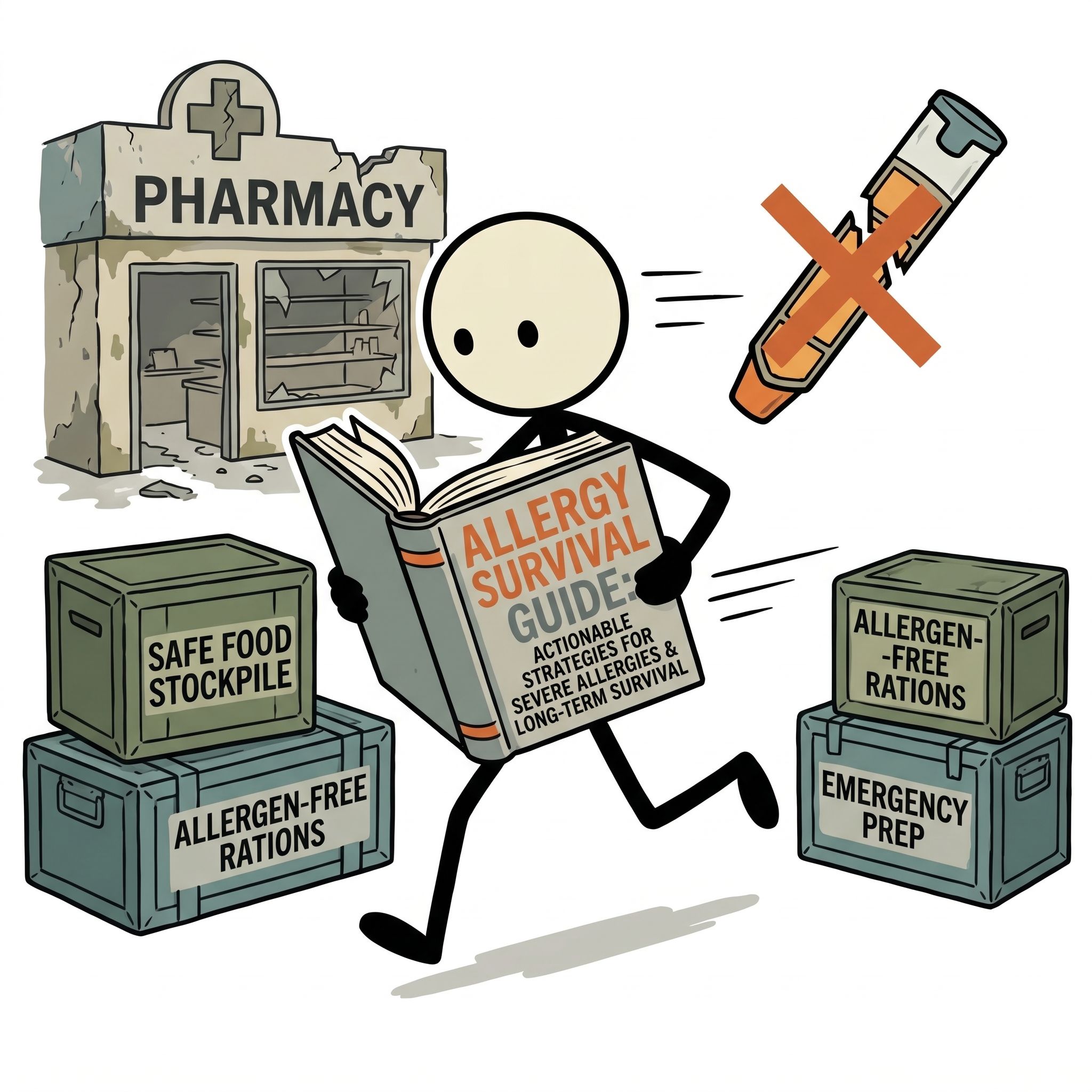
Imagine a severe grid-down scenario: a major winter storm has crippled the electrical grid, roads are impassable due to fallen trees and ice, and municipal water systems have failed. For the average household, this situation is a challenging test of endurance. But for a family managing severe, life-threatening food allergies, this scenario is an immediate, high-stakes medical emergency. In a world where emergency rooms are inaccessible, pharmacies are closed, and emergency medical services are grounded, a single bite of the wrong food can trigger a fatal systemic reaction. Traditional disaster preparedness guides often overlook this intersection of survivalism and immunology. To survive a long-term crisis, those with severe food allergies must look beyond standard advice and build a specialized, self-reliant strategy for emergency prepping with food allergies.
The Reality of Anaphylaxis in a Grid-Down Scenario
Anaphylaxis is a rapid, systemic allergic reaction that can compromise the airway, collapse the cardiovascular system, and cause death within minutes. In normal circumstances, the protocol for anaphylaxis is straightforward: administer epinephrine and call 911. However, during a long-term survival event, the second half of that protocol is non-existent. Understanding the physiological reality of managing severe reactions without immediate hospital backup is the foundation of family emergency planning for anaphylaxis.
Epinephrine Limitations and Storage Realities
Epinephrine is the only first-line treatment for anaphylaxis. It is a hormone that constricts blood vessels to track blood pressure back up, relaxes smooth muscles in the lungs to open airways, and reduces swelling. However, epinephrine is highly unstable. The manufacturer instructions for EpiPens and generic auto-injectors state they must be kept at controlled room temperature. Exposure to extreme cold can freeze the liquid, damaging the mechanism and degrading the drug, while extreme heat accelerates the breakdown of epinephrine into inactive byproducts.
In a prolonged power outage, keeping epinephrine within safe temperature parameters requires active management. Preppers should utilize vacuum-insulated flasks or specialized cooling cases (such as those used for insulin) to buffer against ambient temperature spikes. If forced to evacuate in freezing conditions, keep auto-injectors in an inner pocket close to your body heat. Conversely, in extreme heat, storing medications in a dry, underground cellar or a clay-pot-in-pot evaporative cooling system (a Zeer pot) can keep temperatures significantly lower than ambient air.
Managing Expired Auto-Injectors
A common dilemma in long term food allergy prepping is the short shelf life of epinephrine, which typically expires within 12 to 18 months of manufacture. In a multi-year grid-down scenario, you may find yourself with only expired auto-injectors. Research published in various medical journals indicates that while expired epinephrine loses potency over time, it remains significantly more effective than no treatment at all, provided the liquid is clear and colorless. If the solution has turned pinkish, brown, or contains visible precipitate, the epinephrine has oxidized and should not be used unless absolutely no other option exists.
Secondary Medical Countermeasures
When medical assistance is unavailable, a multi-tiered pharmaceutical approach is necessary. While oral antihistamines (like diphenhydramine or cetirizine) cannot stop anaphylaxis—as they do not address airway constriction or cardiovascular collapse—they are critical secondary medications. Antihistamines help control localized hives, itching, and mild mucosal swelling.
Additionally, keeping a stock of oral corticosteroids, such as prednisone (acquired via prior prescription consultation with an allergist), can help prevent "biphasic anaphylaxis." This is a secondary, often more severe wave of anaphylaxis that can occur 1 to 72 hours after the initial reaction has subsided, even without re-exposure to the allergen. In a survival situation, a biphasic reaction is highly dangerous because your initial dose of epinephrine may have already been depleted.
Auditing and Selecting Allergen-Free Survival Foods
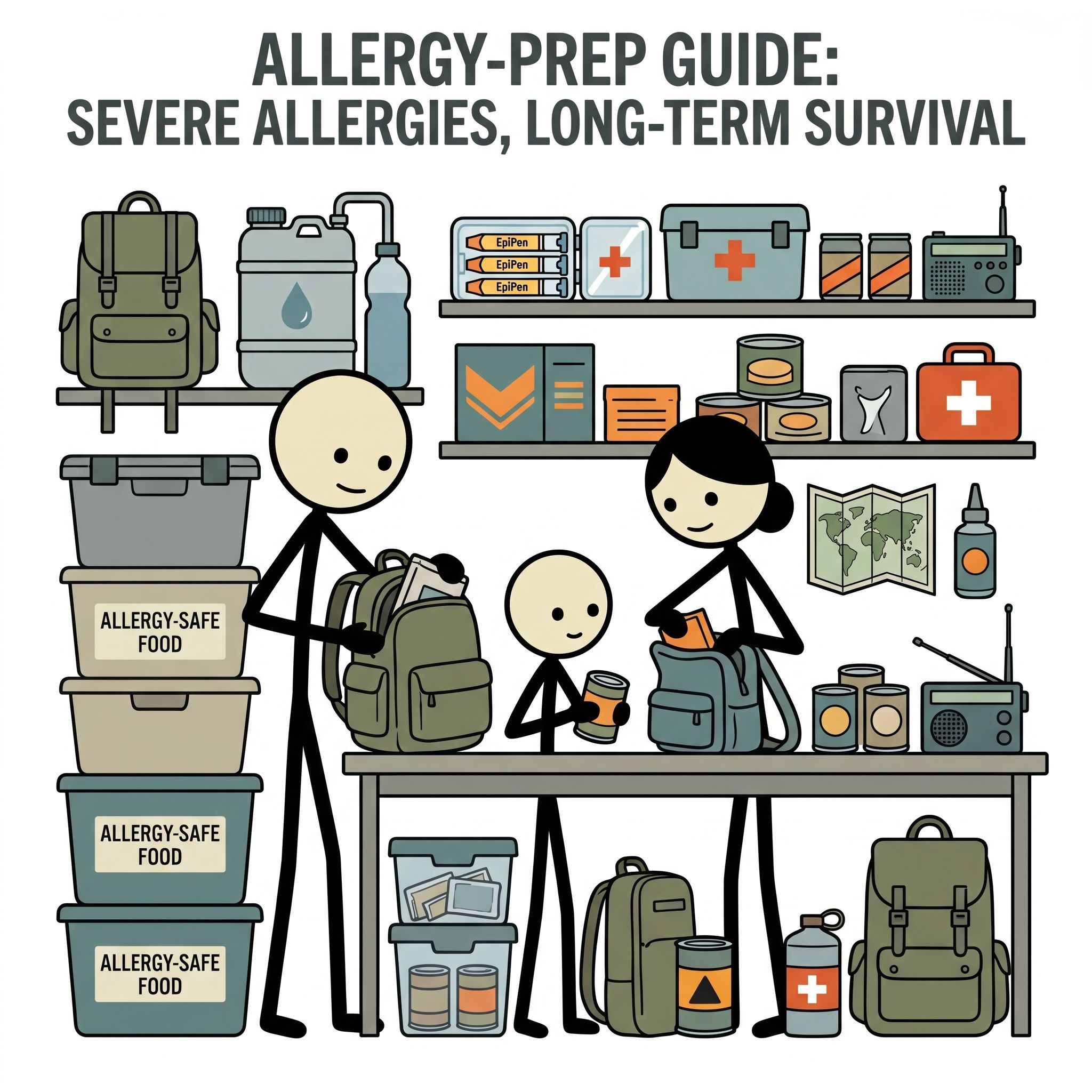
Most commercial survival food kits are designed for maximum caloric density at the lowest production cost. This means they rely heavily on inexpensive, allergen-dense commodities: non-fat dry milk, soy protein isolates, textured vegetable protein (often wheat- or soy-based), peanut flours, and whey. For someone with severe allergies, consuming a standard emergency ration can be as dangerous as the disaster itself. Successfully executing survival food allergies management means building a highly customized, safe emergency food storage guide from scratch.
The Danger of the "Big 9" in Commercial Rations
The "Big 9" allergens identified by the FDA include milk, eggs, peanuts, tree nuts, wheat, soy, fish, crustacean shellfish, and sesame. When auditing pre-packaged emergency food, you must look beyond the allergen statement. In a long-term Survival Scenarios, supply chains crumble, and manufacturers may substitute ingredients without updating packaging, or run different products on shared lines. In everyday life, cross-contamination is a risk; in a survival scenario with zero medical backup, cross-contamination can be fatal. Do not trust generic "emergency buckets" unless they are certified allergen-free and produced in dedicated, single-allergen-free facilities.
| Allergen | Common Hidden Survival Sources | Safe Survival Alternatives |
|---|---|---|
| Dairy / Milk | Powdered milk, whey protein, cheese powders, cream soups, margarine. | Coconut milk powder, oat milk powder, nutritional yeast (for cheesy flavor). |
| Wheat / Gluten | MRE crackers, pasta, flour, thickeners in stews, soy sauce. | White rice, quinoa, freeze-dried potatoes, certified gluten-free oats. |
| Soy | Vegetable oil, textured vegetable protein (TVP), lecithin (emulsifier). | Lard, tallow, olive oil, coconut oil, real freeze-dried meats. |
| Peanuts/Tree Nuts | High-calorie survival bars, trail mixes, nut butters, pestos. | Sunflower seed butter, pumpkin seeds, roasted chickpeas. |
Building a Custom, Single-Ingredient Stockpile
The safest strategy for stockpiling allergen free emergency food is to focus on single-ingredient, unprocessed foods. By purchasing pure, individual ingredients and combining them yourself, you eliminate the risk of hidden allergens and processing cross-contamination. Focus on high-calorie, shelf-stable staples that form a complete nutritional profile when combined.
- Carbohydrates: White rice, parboiled rice, quinoa, amaranth, buckwheat, and dried potato flakes. White rice is particularly valuable because it has a shelf life of 30+ years when sealed in Mylar bags with oxygen absorbers and has an incredibly low allergenic profile.
- Proteins: Dry beans (pinto, black, kidney), lentils, split peas, and canned or freeze-dried meats. If purchasing freeze-dried meats, ensure they are packed without additives, broths, or texturizers that might contain soy or wheat.
- Fats: Pure fats are essential for survival calories. Stockpile coconut oil, olive oil, ghee (if dairy-fat tolerant), or home-rendered lard and tallow. Fats are prone to rancidity, so store them in cool, dark environments and rotate them meticulously.
Long-Term Food Allergy Prepping & Storage Protocols
Storage is where many preppers unknowingly introduce allergens into their long-term supply. If you are prepping for a household where some members have allergies and others do not, cross-contamination during packaging, sealing, and storage can occur. Implementing strict packaging protocols is non-negotiable for successful long term food allergy prepping.
Preventing Cross-Contamination in Storage
When packaging bulk foods at home into Mylar bags, you must treat your packaging environment like a sterile laboratory. A single speck of wheat flour dust or dry milk powder hanging in the air can settle into an otherwise safe bag of rice, rendering it toxic to a highly sensitive individual years down the line.
Always package allergen-free foods first, preferably on a different day than any allergen-containing foods. Thoroughly clean all surfaces, tools, and your hands before starting. If possible, dedicate specific equipment—such as a specific impulse sealer, measuring scoops, and buckets—solely for allergen-free food processing. Clearly label these tools with bright, color-coded tape to prevent accidental mix-ups.
Color-Coding and Labeling Systems
In a high-stress emergency, visual clarity prevents fatal mistakes. Implement a strict, color-coded labeling system for your entire food storage pantry. For example, use bright red labels or red food-grade buckets exclusively for foods containing potential allergens, and bright green labels for 100% certified allergen-free foods.
Every bucket or Mylar bag should be labeled with:
- The exact common name of the food (e.g., "White Rice - Allergen Free").
- A full list of ingredients (even if it is a single ingredient).
- The date of packaging.
- A clear warning if it was packaged in a facility or room that handles any of the Big 9 allergens.
Pest Control and Chemical Contamination
Protecting your food from rodents and insects is critical, but traditional pest control methods can pose risks to those with allergies or chemical sensitivities. Avoid using chemical sprays or pesticide dusts near your food storage areas. Instead, rely on physical barriers. Store all Mylar bags inside thick, food-grade HDPE plastic buckets with Gamma Seal lids. Use non-toxic pest control measures like food-grade Diatomaceous Earth (DE) around the perimeter of your storage area, and utilize snap traps for rodent control, avoiding peanut butter as bait (use cotton balls soaked in vanilla extract or safe oils instead).
Strategic Sourcing and DIY Survival Rations
Standard life-boat rations (like Datrex or Mainstay emergency food bars) are highly recommended by survivalists because they are compact, ready-to-eat, and do not require water or cooking. However, nearly all of them contain wheat flour, vegetable shortening (often soy-based), and coconut. If you cannot eat these ingredients, you must manufacture your own high-calorie, shelf-stable survival rations.
How to Make Allergy-Safe Survival Bars
You can create your own nutrient-dense, allergen-free emergency bars at home using a dehydrator or a low-temperature oven. These bars can be vacuum-sealed and frozen to extend their shelf life for several years.
🛠️ DIY Hypoallergenic High-Calorie Survival Bar Recipe
This recipe avoids gluten, dairy, soy, eggs, peanuts, tree nuts, and sesame, providing a dense source of carbohydrates, healthy fats, and proteins.
- Base: 2 cups of certified gluten-free rolled oats (ground into a fine flour).
- Binder & Fat: 1/2 cup of pure sunflower seed butter (or pumpkin seed butter) and 1/4 cup of melted coconut oil (or lard if coconut is an allergen).
- Sweetener & Calories: 1/2 cup of raw honey or pure maple syrup (which also act as natural preservatives).
- Nutrient Boost: 1/4 cup of ground flaxseeds or chia seeds (for Omega-3 fatty acids) and 1/2 cup of finely chopped raisins or dried cranberries.
Instructions: Mix all ingredients thoroughly in a clean bowl until a thick, cohesive dough forms. Press the mixture firmly into a parchment-lined baking dish to a thickness of about 1 inch. Bake at 320°F (160°C) for 15-20 minutes until the edges are golden brown. Allow to cool completely, cut into individual bars, wrap tightly in parchment paper, and vacuum-seal in high-quality food bags. Store in a cool, dark place.
Sourcing Certified Bulk Ingredients
When sourcing ingredients for long-term storage, buy from suppliers that specialize in allergen-free manufacturing. Companies that cater to the celiac and food allergy communities often provide bulk sizing of grains, seeds, and freeze-dried fruits. Always request an allergen statement from the supplier to confirm that their processing lines are cleaned and tested to prevent cross-contact. It may cost more upfront, but the investment secures peace of mind when medical intervention is out of reach.
Community, Communication, and Hygiene Protocols
In a disaster, you do not survive in a vacuum. You will likely interact with neighbors, community members, or emergency shelter volunteers. Managing food allergies in a group environment requires proactive emergency communication plan and strict hygiene protocols, especially when municipal water systems are compromised.
The Critical Hygiene Misconception
One of the most dangerous mistakes made during disasters is relying on hand sanitizer to clean hands and surfaces before eating. According to the CDC and the Food Allergy Research & Education (FARE) organization, alcohol-based hand sanitizers do not remove or denature food allergens. Hand sanitizers are designed to kill bacteria and viruses, but they leave the physical proteins (such as peanut or milk proteins) completely intact on the skin.
If someone eats a safe food with hands that have only been sanitized after touching an allergen, they can easily ingest the allergen and trigger a reaction. To physically remove proteins, you must use soap and clean running water, combined with physical friction. If water is highly scarce, wet wipes containing surfactants (detergents) are significantly more effective at physically removing allergenic proteins from hands and surfaces than hand sanitizers, though soap and water remain the gold standard.
Establishing a Safe Zone in Shared Shelters
If you are forced to evacuate to a public or community shelter, you must immediately establish a "Safe Zone" for your family. This is a physical area where no outside food is permitted.
- Identify Yourself: Immediately inform the shelter manager and medical staff of your severe, life-threatening food allergies.
- Label Your Area: Use bright, highly visible signs or tape to mark your sleeping and eating area as an "Allergen-Free Zone."
- Control Your Food: Do not accept open-box donations, communal meals, or unlabeled food items from well-meaning volunteers. Stick strictly to your own pre-packaged, certified safe rations.
- Decontaminate Surfaces: Before sitting down or laying sleeping bags, thoroughly scrub all surfaces (tables, benches, cots) with soapy water or surfactant-based wipes.
Creating an Emergency Allergy Action Plan
In a high-stress survival scenario, panic can cloud your judgment. You must have a written, laminated Emergency Allergy Action Plan kept inside your primary medical kit. This document should outline step-by-step instructions on how to recognize the signs of mild vs. severe reactions, how to administer your specific epinephrine auto-injectors, and what secondary medications to give. This plan should be simple enough for a child or an untrained neighbor to read and execute if you are the one experiencing anaphylaxis and are incapacitated.
Thriving Through Preparedness
Living with severe food allergies requires constant vigilance in everyday life, but in a survival scenario, that vigilance must be backed by rigorous, proactive planning. By understanding the limitations of your medical resources, building a customized stockpile of single-ingredient foods, implementing strict storage and hygiene protocols, and preparing for community dynamics, you can eliminate the fear of the unknown. True emergency preparedness is not about fearing the worst; it is about building the systems, knowledge, and resources to navigate any crisis safely, confidently, and self-reliantly. Take control of your survival strategy today, because when the grid goes down, your preparation is your ultimate lifeline.
Frequently Asked Questions
How do I safely store epinephrine auto-injectors (EpiPens) for emergencies?
Store epinephrine at room temperature between 68°F to 77°F (20°C to 25°C). Do not refrigerate or freeze them, and protect them from direct sunlight and extreme heat, as temperature extremes can degrade the medication's efficacy.
What should I do if my emergency food supply contains allergens due to cross-contamination?
Only stock certified allergen-free survival foods, clearly label all emergency rations, and store safe foods in separate, airtight, color-coded containers to prevent cross-contact during a chaotic disaster scenario.
How can I manage severe allergic reactions if emergency medical services (EMS) are delayed?
Administer your primary epinephrine auto-injector immediately, have a second dose ready if symptoms do not improve within 5 to 15 minutes, keep the patient lying flat with legs elevated, and closely monitor breathing.
What non-perishable, allergen-free foods are best for a survival pantry?
Focus on single-ingredient foods like canned meats, rice, beans, freeze-dried fruits and vegetables, and specialized survival bars that are certified free of the top 9 major allergens.
How do I communicate my life-threatening food allergies to emergency shelters or first responders?
Wear a medical alert bracelet at all times, keep a printed copy of your Food Allergy & Anaphylaxis Emergency Care Plan in your go-bag, and verbally notify shelter staff immediately upon arrival.