⚡ Key Facts
- Disproportionate Impact: FEMA reports that while older adults (65+) represent roughly 15% of the U.S. population, they consistently account for a disproportionate number of casualties during extreme weather events due to mobility and health challenges.
- Medication Dependency: According to the Centers for Disease Control and Prevention (CDC), nearly 90% of older adults take at least one prescription medication daily, and over 35% take five or more, making medication continuity a critical survival factor.
- Power Vulnerability: The Department of Energy notes that power outages from extreme weather have doubled over the past two decades, threatening the lives of individuals reliant on power-dependent medical devices.
- Low Preparedness Rates: American Red Cross surveys indicate that fewer than 30% of households with older adults have a comprehensive, practiced emergency plan that accounts for functional and cognitive needs.
- Escalating Weather Risks: NOAA data reveals that the United States experienced a record-breaking 28 separate billion-dollar weather and climate disasters in 2023, underscoring the urgency of proactive planning.
When extreme weather or a sudden natural disaster strikes, the difference between safety and crisis often comes down to minutes. For older adults, these minutes are shaped by unique variables: the availability of backup power for oxygen concentrators, the accessibility of prescription medications, and the physical capacity to navigate debris-filled evacuation routes. True resilience is not about fearing the unexpected; it is about systematically eliminating vulnerabilities. This guide provides a definitive, actionable blueprint for emergency preparedness for seniors, designed to preserve independence, protect health, and ensure safety during any Survival Scenarios.
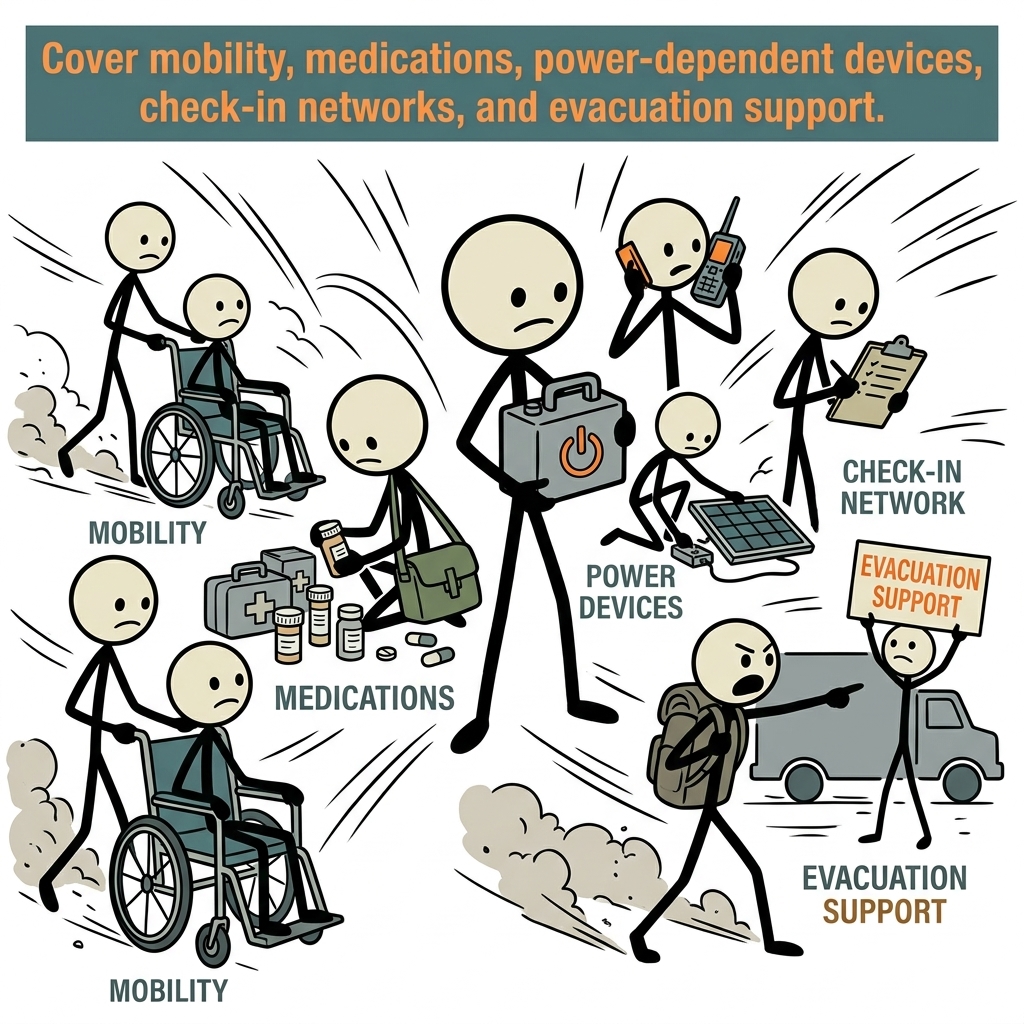
The Landscape of Senior Resilience: Why Custom Planning Matters
Emergency management agencies have historically designed broad-spectrum disaster plans tailored to the average, able-bodied citizen. However, when discussing emergency preparedness for seniors, emergency preparedness must be approached through a lens of tailored self-reliance. Aging brings changes in mobility, sensory perception, and cognitive processing that require specific, adaptive strategies. A standard, off-the-shelf disaster kit simply does not address these nuanced realities.
According to the Administration for Community Living, millions of older adults live independently in suburban and rural communities. During a widespread grid failure or evacuation order, these individuals are often isolated from traditional real-world emergency scenarios guide networks. By understanding specific vulnerabilities and building redundant safety systems, older adults can navigate emergencies with confidence and autonomy. The goal of this guide is to transform anxiety into structured action, ensuring that you or your loved ones are never left unprepared.
1. Medication Management and Medical Supply Preservation
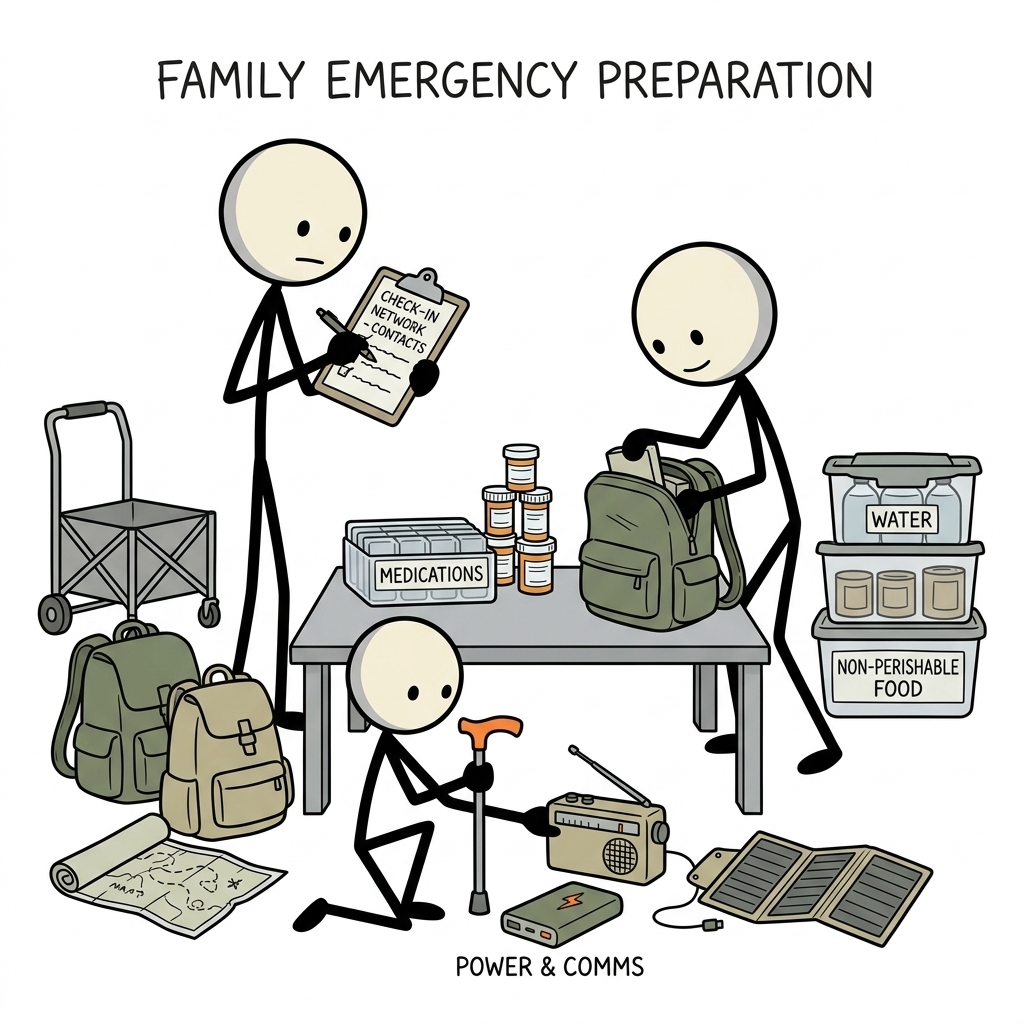
Maintaining a continuous supply of life-sustaining medications is the most critical component of emergency preparedness for seniors. During a disaster, local pharmacies may close, supply chains may fracture, and delivery services may halt. A disruption of even 48 hours can result in severe medical complications for chronic conditions like diabetes, cardiovascular disease, or pulmonary disorders.
Securing an Emergency Supply
The standard recommendation by the Red Cross is to maintain at least a 7-to-14-day supply of all prescription medications. Achieving this requires proactive coordination with your healthcare providers and insurance carriers:
- Request Emergency Overrides: Ask your physician for a "vacation refill" or "emergency override" prescription, which allows you to obtain an extra 30-day supply of critical medications to keep in reserve.
- Leverage the Emergency Prescription Assistance Program (EPAP): Familiarize yourself with EPAP, a joint federal program that helps disaster victims without health insurance access prescription drugs, vaccines, and medical equipment.
- Monitor Expiration Dates: Establish a strict rotation system. Put your newest medications in your primary cabinet and move the older, unexpired reserves into your emergency kit, ensuring nothing expires on the shelf.
Cold-Chain Preservation for Temperature-Sensitive Meds
Many critical medications, such as insulin, biologics, and certain eye drops, must be kept refrigerated between 36°F and 46°F (2°C and 8°C). A prolonged power outage can rapidly compromise these drugs. To protect your cold-chain medications, implement the following protocols:
| Cooling Method | Duration of Protection | Best Used For |
|---|---|---|
| Phase-Change Cooling Wallets (e.g., Frio) | Up to 45 hours per activation | Insulin pens, vials, and small pre-filled syringes. Activated by water. |
| Hard-Sided Insulated Coolers | 24 to 72 hours (with ice/gel packs) | Bulk medications, multiple biologics. Requires sacrificial ice. |
| 12V Portable Medical Fridges | Indefinite (with backup power) | Long-term outages. Can be powered by solar generators or car batteries. |
Never place medications directly against bare ice, as freezing can destroy the molecular structure of proteins and render the medication useless. Wrap vials in bubble wrap or clean hand towels before placing them in an insulated container.
The Medical Documentation Binder
In a rapid evacuation, you may not have access to your digital health portals. Compile a physical, waterproof medical binder containing laminated copies of your medical history, insurance cards, Medicare/Medicaid documents, a complete list of current medications (including dosages and brand names), and contact information for your primary care physicians, specialists, and preferred pharmacies. Additionally, store digital scans of these documents on a secure, encrypted USB flash drive kept in your emergency "go-bag essentials guide."
2. Powering Life-Critical, Power-Dependent Devices
For seniors relying on oxygen concentrators, CPAP/BiPAP machines, nebulizers, or electric wheelchairs, a power outage is not a minor inconvenience—it is an immediate threat to life. Relying on emergency services to arrive during a widespread disaster is a high-risk strategy. You must establish localized, redundant backup power systems.
Registering with Your Utility Provider
Most major utility companies maintain a "Critical Care" or "Life Support" registry for customers who rely on electricity to power life-sustaining medical equipment. Registering with this program guarantees that you will receive priority notification of planned power shutoffs (such as Public Safety Power Shutoffs during high wildfire danger) and priority restoration services during widespread outages. Note that registration does not guarantee continuous power; it is simply an administrative notification tool. You must still have a physical backup plan.
Calculating Your Power Requirements
To choose the correct backup power source, you must understand the power consumption of your devices. Look at the silver manufacturer's label on the back or bottom of your medical device to find the wattage (W). If only voltage (V) and amperage (A) are listed, calculate wattage using the formula: Watts = Volts x Amps.
For example, if a CPAP machine runs at 120V and draws 1.5A, it consumes 180 Watts. To run this device for 8 hours of sleep, you will need a power source with a capacity of at least 1,440 Watt-hours (Wh) (180W x 8 hours), accounting for a 15-20% efficiency loss inherent in power inverters.
Choosing the Right Backup Power Source
- Portable Power Stations (LiFePO4 Battery Generators): These are the gold standard for indoor use. Unlike gas-powered generators, they produce no carbon monoxide, run completely silently, and can be safely kept in a bedroom. Choose a unit with Lithium Iron Phosphate (LiFePO4) chemistry, as they offer over 3,000 charge cycles and can sit on standby for months without degrading.
- Dual-Fuel Traditional Generators: If you must run high-draw appliances like medical refrigerators or air conditioning units (critical for seniors with thermoregulation issues), a dual-fuel generator running on propane or gasoline is necessary. Keep these generators at least 20 feet away from any window or door to prevent deadly carbon monoxide poisoning.
- Uninterruptible Power Supplies (UPS): A UPS acts as an instantaneous bridge. Plug your critical device directly into the UPS, and plug the UPS into the wall. If the grid fails, the UPS instantly switches to battery power without interrupting the operation of your machine, giving you time to transition to a larger power station.
3. Navigating Mobility Challenges and Custom Evacuation Support
Physical mobility limitations can severely restrict an older adult's ability to evacuate a structure quickly. Debris, broken glass, dark stairwells, and flooded streets pose significant hazards. Developing a mobility-specific family emergency plan is a core element of any emergency preparedness for seniors checklist.
Hardening Your Physical Environment
Prepare your living space to facilitate a rapid, safe exit under low-light conditions. Install battery-operated, motion-activated LED lights along hallways and stairwells. Keep pathways completely clear of throw rugs, electrical cords, and decorative furniture that could snag a cane, walker, or wheelchair during a hasty evacuation.
If you use a wheelchair or walker, ensure that your primary and secondary exit routes have accessible ramps. If you live in a multi-story building, identify "areas of refuge"—typically reinforced stairwells designed to resist fire and smoke—where you can safely wait for emergency personnel if elevators are deactivated.
Securing Mobility Devices and Spares
Your mobility aids are an extension of your body. Treat them as high-priority items in your evacuation planning:
- Manual Wheelchair Backup: If you use an electric wheelchair, keep a manual wheelchair accessible as a backup. Power chairs are heavy, difficult to transport in standard vehicles, and useless if the battery dies and cannot be recharged.
- Tire Repair and Tools: Keep a heavy-duty tire repair kit, a manual air pump, and basic wrenches attached directly to your wheelchair or walker in a small pouch.
- Heavy-Duty Gloves: Manual wheelchair users should pack a pair of thick, leather-palmed work gloves in their Go-Bag to protect their hands from debris, glass, and rough terrain during an evacuation.
Navigating the Legal Landscape: Service Animals vs. Pets
Under the Americans with Disabilities Act (ADA), emergency shelters are legally required to accommodate service animals (defined as dogs or miniature horses trained to perform specific tasks for individuals with disabilities). This right applies even if the shelter has a strict "no pets" policy. However, emotional support animals (ESAs) do not share these same legal protections. Clearly understand the distinction, and ensure you have physical documentation of your service animal’s status, along with a dedicated evacuation kit for your animal (food, water, boots to protect paws from hot asphalt or glass, and medication).
4. Establishing Robust Check-In Networks and Communication Protocols
Isolation is one of the greatest hazards facing older adults during a disaster. If emergency communication plans fail and physical access is blocked, a senior may be unable to call for help. Establishing a redundant, multi-tiered communication and check-in network is vital.
Building Your Personal Support Network (The Circle of Five)
Do not rely solely on professional emergency responders. Build a personal support network consisting of at least five trusted individuals. This network should include neighbors, local relatives, and at least one out-of-area contact. Assign specific roles to each member of your network:
- The Proximity Responders: At least three people who live within walking distance of your home. They must have a key to your residence, know exactly where your emergency supplies are stored, and understand how to operate your medical equipment.
- The Out-of-Area Coordinator: One contact living at least 100 miles away. During a regional disaster, local telephone lines are often congested, but long-distance routing may still function. All local network members should check in with this out-of-area coordinator to report your status.
- The Digital Custodian: A tech-savvy family member who has remote access to your medical portals, insurance accounts, and utility login credentials to assist with logistics from afar.
Utilizing Redundant Communication Technologies
Standard cellular networks are highly vulnerable to physical damage and traffic spikes during an emergency. Incorporate redundant communication tools into your plan:
SMS Texting Over Voice: Teach all network members that text messages are far more likely to go through than voice calls during a crisis. Text messages use a fraction of the bandwidth and will continue to attempt delivery even when voice channels are completely jammed.
NOAA Weather Radios: Keep a high-quality, battery-operated or hand-crank NOAA Public Alert weather radio in your home. These radios receive continuous, real-time broadcasts directly from the National Weather Service, bypassing cellular networks entirely.
Personal Locator Beacons (PLBs) and Satellite Communicators: For seniors living in remote or rural areas, devices like the Garmin inReach or a dedicated PLB are excellent investments. These devices communicate directly with global satellite networks, allowing you to send SOS messages and GPS coordinates even if cell towers are completely down.
5. The Ultimate Emergency Preparedness for Seniors Checklist
To ensure absolute readiness, use this comprehensive, step-by-step emergency preparedness for seniors checklist to build and verify your emergency kits. Divide your supplies into a mobile "Go-Bag" (for immediate evacuation) and a "Stay-at-Home Kit" (for sheltering in place for up to two weeks).
The Mobile "Go-Bag" (Under 20 lbs, wheeled backpack preferred)
The "Stay-at-Home" Shelter-in-Place Kit (2-Week Supply)
- Water: One gallon of Water Calculator per day for drinking and sanitation (minimum 14 gallons per person). Store in a cool, dark place in food-grade, BPA-free containers.
- Non-Perishable Food: A 14-day supply of shelf-stable food that requires no cooking, refrigeration, or water to prepare. Focus on low-sodium options to prevent dehydration and blood pressure spikes.
- Sanitation Supplies: Heavy-duty garbage bags, plastic ties, and a five-gallon bucket lined with a toilet seat for emergency waste management if municipal water systems fail.
- Manual Can Opener: An absolute necessity. Do not rely on electric can openers during a power outage.
- Cash: At least $200 to $500 in small denominations ($1, $5, $10, and $20 bills). During a power outage, credit card terminals and ATMs will be offline, and local merchants will accept cash only.
6. Cognitive and Sensory Considerations in Disaster Planning
Disaster situations are chaotic, loud, and disorienting. For older adults experiencing cognitive decline, dementia, or sensory impairments, this high-stress environment can trigger severe anxiety, confusion, and agitation. Incorporating cognitive and sensory support into your emergency preparedness plan is essential for maintaining emotional stability and physical safety.
Supporting Individuals with Dementia or Alzheimer's
If you are a caregiver for an older adult with cognitive impairment, take steps to minimize disorientation during an evacuation:
- Comfort Items: Pack a "Comfort Kit" within their Go-Bag containing familiar items, such as a favorite family photo album, a soft blanket, or a simple, repetitive activity (like a deck of cards or a coloring book). These items can help ground them in a chaotic shelter environment.
- Identification Jewelry: Ensure the individual wears a durable, waterproof medical alert bracelet or necklace that clearly states their name, diagnosis, and your contact information. In the confusion of an evacuation, separation can occur rapidly.
- Quiet Environments: If forced to stay in a public shelter, request a cot located in a corner or away from high-traffic areas (such as restrooms or food lines) to reduce sensory overload and wandering behaviors.
Sensory Adjustments for Hearing and Vision Loss
For seniors with visual or hearing impairments, standard emergency alerts may be ineffective. Adapt your communication tools accordingly:
Visual Impairment: Ensure all emergency instructions and labels on medication containers in your kit are written in high-contrast, large-print fonts, or utilize Braille labels. Keep a magnifying glass attached to your medical binder.
Hearing Impairment: Register for local emergency alert systems that offer text-based or visual alerts (such as strobe-light alarms). Keep a notepad and waterproof pen in your Go-Bag to facilitate communication with emergency responders if you cannot hear them or if your hearing aids are lost or damaged.
Securing Your Peace of Mind
True emergency preparedness is not about predicting the future; it is about building a framework of self-reliance that protects your health, dignity, and independence. By systematically addressing your medication needs, securing backup power for critical medical devices, reinforcing your physical mobility, and establishing a trusted check-in network, you remove the element of panic from emergency situations. Do not wait for the next storm warning to begin this process. Take one actionable step from this guide today—whether it is calling your utility provider to register for their critical care list, organizing your medical documents, or assembling your Go-Bag. Armed with a clear plan and the right resources, you can face any crisis with confidence, resilience, and complete peace of mind.
Frequently Asked Questions
What should a emergency preparedness for seniors plan include?
Start with the immediate safety steps, the supplies and records your household needs, a communication plan, and a regular review schedule. Follow local official guidance during an active emergency.
How often should I review emergency preparedness for seniors preparations?
Review them at least twice a year and whenever your household, medication, location, or local risks change. Replace expired supplies and practice key steps.
Where can I find reliable emergency guidance?
Use local emergency management alerts and established public-health or emergency-management agencies. A blog guide should support, not replace, official real-time instructions.