⚡ Key Facts
- Microscopic Danger: Wildfire smoke contains fine particulate matter (PM2.5) that is 30 times smaller than a human hair, allowing it to bypass the respiratory system's natural defenses and enter the bloodstream directly, according to the Environmental Protection Agency (EPA).
- Continental Reach: Smoke does not respect state lines. The National Oceanic and Atmospheric Administration (NOAA) reports that during severe wildfire seasons, smoke plumes can travel thousands of miles, triggering air quality alerts on the opposite side of the continent.
- Filtration Necessity: Indoor air can become completely compromised within hours during a severe smoke event. The Federal Emergency Management Agency (FEMA) strongly advises the use of active filtration, such as HEPA purifiers or MERV 13 HVAC filters, to maintain breathable indoor spaces.
- Proper Protection: Cloth and standard surgical masks offer almost zero protection against wildfire smoke. The Centers for Disease Control and Prevention (CDC) states that only properly fitted N95, KN95, or P100 respirators can filter out at least 95% of hazardous airborne particles.
- Elevated Risk: Vulnerable populations, including children, pregnant individuals, and adults over 65, face a significantly higher risk of cardiovascular and respiratory emergencies during prolonged smoke exposure, according to the American Red Cross.
When the skies turn an eerie shade of orange and the smell of a distant campfire permeates your living room, the threat of wildfire smoke has arrived at your doorstep. In recent years, we have witnessed unprecedented shifts in climate patterns that have transformed seasonal wildfires into continent-spanning air quality emergencies. You do not need to live near a forest to be impacted; smoke plumes from the Pacific Northwest or the Canadian boreal forests routinely blanket urban centers thousands of miles away, turning routine commutes into health hazards. However, you do not have to be a passive victim of poor air quality. With the right knowledge and proactive strategies, you can take control of the air you breathe. Learn more in the go-bag essentials guide.
For nuclear emergencies specifically, see our nuclear fallout first 24 hours guide - the actions you take in the first hour are critical.
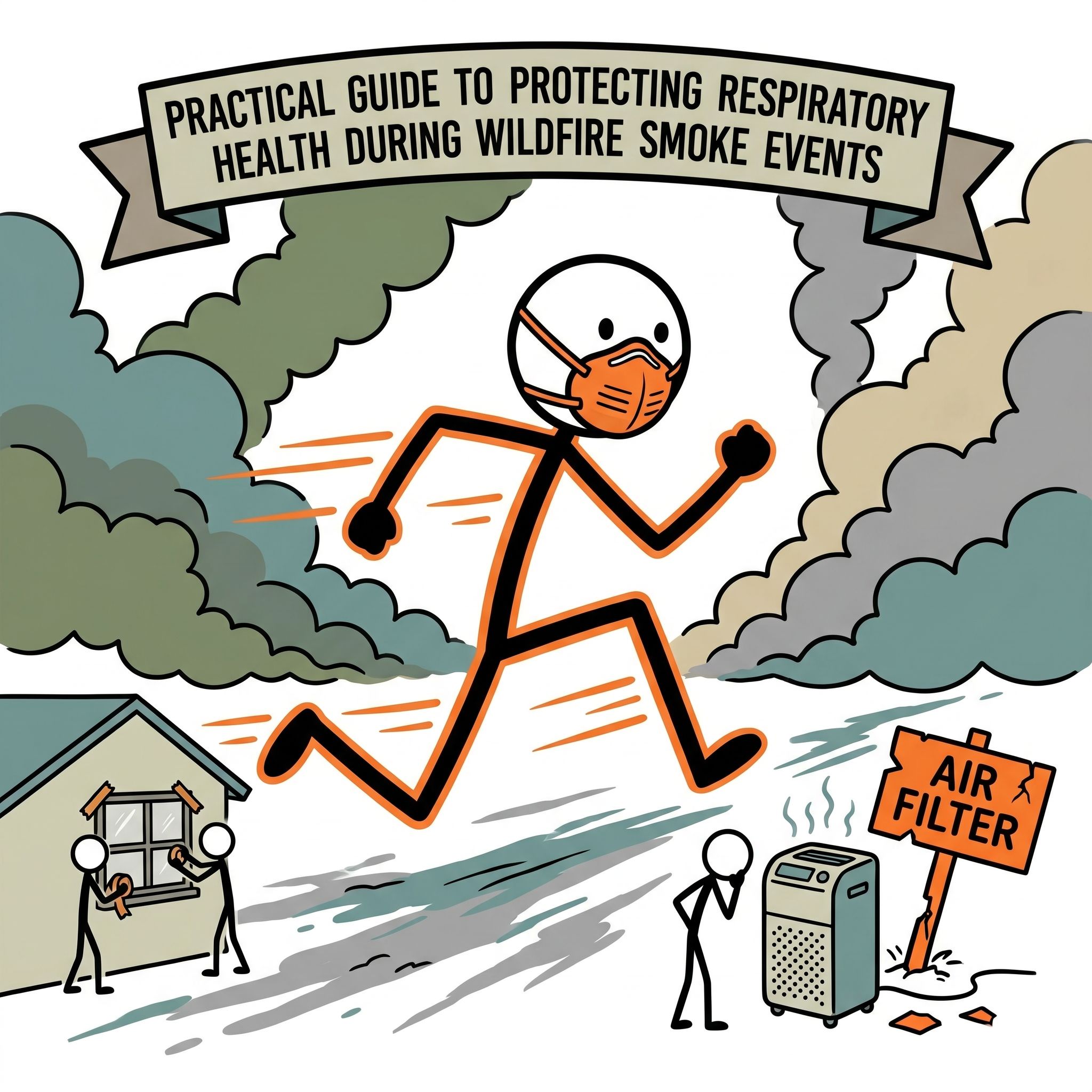
Effective wildfire smoke preparedness is about creating layers of defense. It involves understanding the invisible threats in the air, utilizing technology to monitor environmental changes, fortifying your living spaces, and knowing exactly when to utilize personal protective equipment or evacuate. A well-prepared household can weather an air quality crisis with minimal health impacts, turning a potentially dangerous scenario into a manageable inconvenience. This comprehensive guide will walk you through the science of smoke inhalation protection, actionable steps to secure your home, and the critical decisions necessary to keep your family safe when the air outside becomes unbreathable. Learn more in the supply calculator.
The Invisible Threat: Decoding Wildfire Smoke
To effectively defend against wildfire smoke, you must first understand what you are fighting. Wildfire smoke is not a single substance; it is a complex, highly toxic mixture of gases and fine particles produced when wood, vegetation, plastics, and building materials burn. When modern wildfires consume entire neighborhoods, the resulting smoke contains dangerous chemical compounds from burning vehicles, electronics, and household chemicals, making it significantly more hazardous than a simple campfire. Learn more in the water calculator.
The Danger of PM2.5
The primary health threat in wildfire smoke is fine particulate matter, commonly referred to as PM2.5. These particles are 2.5 micrometers in diameter or smaller. Because they are microscopic, they easily bypass the body's natural filtration systems—like the mucus and cilia in your nose and throat. When inhaled, PM2.5 travels deep into the lungs, settling in the alveoli. From there, these toxic particles can cross directly into your bloodstream. Learn more in the survival scenarios library.
The CDC and the EPA warn that short-term exposure to high levels of PM2.5 can cause immediate physical distress. Symptoms include severe coughing, wheezing, shortness of breath, stinging eyes, and an elevated heart rate. However, the long-term effects of smoke inhalation are even more concerning. Prolonged exposure forces the cardiovascular and respiratory systems to work in overdrive, significantly increasing the risk of asthma attacks, heart attacks, strokes, and long-term lung function impairment. Learn more in the family emergency plan.
Recognizing the Symptoms of Smoke Exposure
During an air quality emergency prep phase, it is vital to know the physical signs of smoke exposure. Early recognition allows you to intervene before symptoms escalate. Mild symptoms include scratchy throat, runny nose, and irritated sinuses. Moderate symptoms manifest as persistent coughing, headaches, and chest tightness. Severe symptoms—which require immediate medical attention—include difficulty breathing, palpitations, profound fatigue, and dizziness. Empowering yourself with this knowledge ensures you can act swiftly to protect your respiratory health at the first sign of distress.
Air Quality Monitoring: Your First Line of Defense
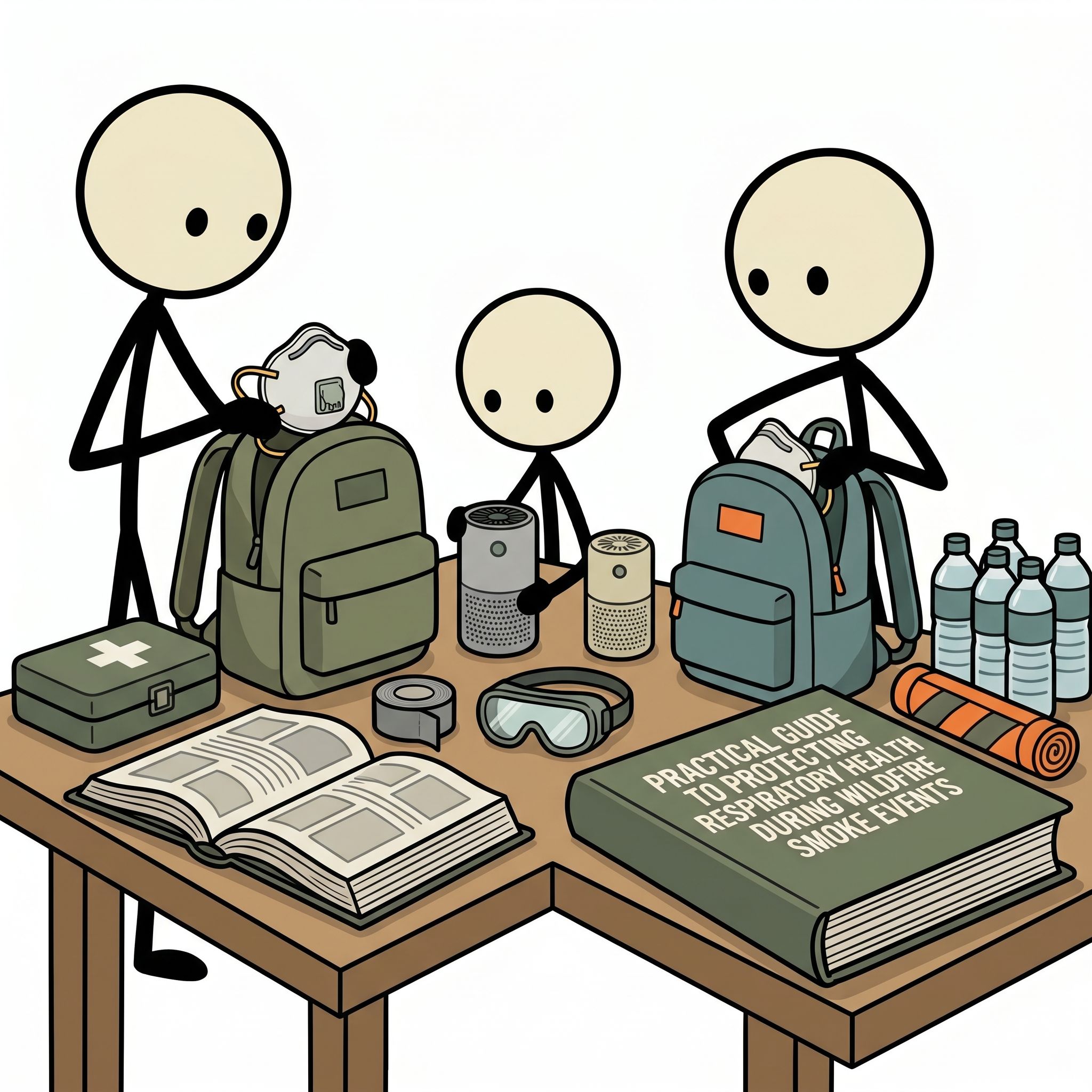
You cannot fight what you cannot measure. Accurate, real-time data is the foundation of effective wildfire smoke preparedness. Relying on visual cues—like how hazy the sky looks or how strong the smoke smells—is a dangerous game. The human eye cannot detect PM2.5, and your olfactory senses quickly suffer from "nose blindness" after prolonged exposure to smoke. To make informed decisions, you must rely on objective air quality data.
Understanding the Air Quality Index (AQI)
The EPA’s Air Quality Index (AQI) is the gold standard for communicating health risks associated with polluted air. The AQI operates on a scale from 0 to 500, divided into six color-coded categories. Understanding these tiers is critical for dictating your daily actions during a smoke event:
- 0-50 (Good / Green): Air quality is satisfactory, and air pollution poses little or no risk.
- 51-100 (Moderate / Yellow): Air quality is acceptable. However, there may be a risk for some people, particularly those who are unusually sensitive to air pollution.
- 101-150 (Unhealthy for Sensitive Groups / Orange): Members of sensitive groups (children, elderly, asthmatics) may experience health effects. The general public is less likely to be affected.
- 151-200 (Unhealthy / Red): Everyone may begin to experience health effects. Members of sensitive groups may experience more serious health effects. Outdoor exertion should be limited.
- 201-300 (Very Unhealthy / Purple): Health alert: The risk of health effects is increased for everyone. All outdoor physical activities should be avoided.
- 301-500+ (Hazardous / Maroon): Health warning of emergency conditions. Everyone is more likely to be affected. Immediate steps must be taken to shelter in clean air or evacuate.
Tools for Real-Time Monitoring
To stay updated on the AQI, utilize reliable digital tools. The EPA’s AirNow.gov website and mobile app provide regulatory-grade data sourced from official government monitors. This data is highly accurate but can sometimes be delayed by an hour or two. For hyper-local, real-time data, networks of low-cost sensors like PurpleAir are invaluable. PurpleAir utilizes crowdsourced monitors placed on homes and businesses. However, because these sensors use lasers to count particles, they can overestimate PM2.5 levels during wood smoke events. When using PurpleAir during a wildfire, always apply the "EPA PM2.5" conversion filter available on their map settings to get the most accurate reading.
Fortifying Your Fortress: Wildfire Air Quality Home Defense
When the outdoor AQI climbs into the dangerous tiers, your home must become a sanctuary of clean air. However, houses are not naturally airtight. Without active intervention, outdoor smoke will inevitably seep indoors, eventually matching the hazardous levels outside. Mastering wildfire air quality home defense requires a combination of sealing your perimeter and actively scrubbing the air.
Sealing the Envelope
The first step in indoor air defense is preventing smoke from entering. Keep all windows and doors firmly closed. Inspect your home for drafts, particularly around window frames, under doors, and near utility intakes. Use weather stripping, caulking, or even tightly rolled damp towels to block gaps at the base of exterior doors. If you have window-mounted air conditioning units, ensure the gaps around the accordion panels are heavily sealed with duct tape or specialized foam, and set the unit to "recirculate" so it does not pull in outdoor air.
Optimizing HVAC Systems
If your home has a central Heating, Ventilation, and Air Conditioning (HVAC) system, it is one of your most powerful tools for smoke inhalation protection. However, a standard fiberglass filter will do absolutely nothing to stop PM2.5. You must upgrade your system's filter to one with a Minimum Efficiency Reporting Value (MERV) rating of 13 or higher. MERV 13 filters are specifically designed to trap microscopic smoke particles.
When the smoke rolls in, install the MERV 13 filter and set your thermostat fan setting to "ON" rather than "AUTO." This ensures the fan runs continuously, constantly pulling indoor air through the filter and scrubbing it of particulate matter. Ensure your system's fresh air intake (if applicable) is closed or set to recirculate indoor air exclusively.
Portable HEPA Purifiers and the Clean Room Strategy
For homes without central HVAC, or to supplement a central system, High-Efficiency Particulate Air (HEPA) purifiers are essential. True HEPA filters capture 99.97% of particles down to 0.3 microns, making them highly effective against wildfire smoke. When purchasing a purifier, check its Clean Air Delivery Rate (CADR) for smoke. The CADR must match the square footage of the room where it will be used. Avoid purifiers that generate ozone or use ionizers, as ozone is a lung irritant that will only compound respiratory distress.
During severe events, FEMA recommends establishing a "Clean Room." Choose a room with few windows and doors (often a primary bedroom). Keep this room sealed off from the rest of the house, run a properly sized HEPA purifier on its highest setting continuously, and keep pets and family members inside this sanctuary as much as possible.
The DIY Corsi-Rosenthal Box
If commercial HEPA purifiers are sold out—a common occurrence during a crisis—you can build a highly effective, science-backed DIY air purifier known as a Corsi-Rosenthal Box. You will need a standard 20-inch box fan, four 20x20-inch MERV 13 furnace filters, cardboard, and duct tape. By taping the filters together to form a cube, sealing the bottom with cardboard, and placing the fan on top (blowing air upward), you create a high-volume air scrubber that rivals expensive commercial units at a fraction of the cost.
Finally, avoid creating indoor pollution. During a smoke event, do not burn candles, use gas stoves, fry meat, spray aerosols, or use vacuum cleaners (unless they are equipped with HEPA filters), as these activities introduce additional particulate matter into your already stressed indoor environment.
Personal Protective Equipment: The N95 Smoke Emergency Guide
There will be times when you must leave your clean air sanctuary. Whether you need to commute to work, gather emergency supplies, or evacuate, exposing your lungs to hazardous AQI levels without protection is a critical mistake. Understanding how to properly utilize personal protective equipment is a non-negotiable aspect of an N95 smoke family emergency plan.
The Failure of Standard Masks
It is vital to understand that the cloth masks, bandanas, and surgical masks popularized during viral outbreaks offer zero protection against wildfire smoke. These masks are designed to catch large respiratory droplets expelled by the wearer; they are not designed to filter microscopic PM2.5 out of the air you inhale. Breathing through a bandana during a wildfire is the equivalent of trying to stop sand with a chain-link fence.
Choosing the Right Respirator
To achieve genuine smoke inhalation protection, you must use a particulate respirator approved by the National Institute for Occupational Safety and Health (NIOSH). Look for masks designated as N95, N99, N100, R95, or P100. The "N95" designation means the mask filters out at least 95% of airborne particles when used correctly. International equivalents, such as KN95 (China) or KF94 (South Korea), are also highly effective, provided they are purchased from reputable vendors to avoid counterfeits.
Respirators with exhalation valves are actually beneficial during a wildfire smoke event. While valved masks were discouraged during the pandemic (because they do not filter the wearer's exhaled breath), the valve makes breathing easier and reduces heat and moisture buildup inside the mask, making it much more comfortable to wear for extended periods outdoors.
The Importance of a Proper Fit
A respirator is only as good as its seal against your face. If air can leak around the edges of the mask, the PM2.5 will take the path of least resistance, bypassing the filter entirely. To achieve a proper seal, place the mask over your nose and under your chin. If using an N95, ensure both elastic bands are utilized—one resting high on the back of the head, the other around the neck. Pinch the metal nose clip tightly to mold it to the bridge of your nose.
Perform a seal check by placing your hands over the mask and exhaling sharply. If you feel air escaping around the edges, adjust the straps and nose clip until the leak is stopped. Crucial note: N95 masks cannot form a seal over facial hair. Even a few days of stubble will compromise the fit. If you live in a wildfire-prone area, shaving during an air quality emergency is a necessary step for your respiratory safety.
Safeguarding Vulnerable Populations
While healthy adults can suffer severe consequences from smoke exposure, certain demographic groups are at a drastically elevated risk. Protecting vulnerable populations requires advanced planning, heightened vigilance, and tailored strategies. The American Red Cross emphasizes that a family's emergency plan must account for the weakest lungs in the household.
Children and Infants
Children are disproportionately affected by poor air quality for several physiological reasons. Their lungs are still developing, and they breathe at a faster rate than adults, meaning they inhale more air—and therefore more toxic particulate matter—per pound of body weight. Furthermore, children are naturally more active, which increases their respiration rate. During smoke events, all outdoor play must be strictly prohibited. Keep children engaged with indoor, low-energy activities within your designated clean room. Note that N95 masks are rarely manufactured to fit infants and toddlers properly, making indoor sheltering their only reliable defense.
The Elderly and Pregnant Individuals
Adults over the age of 65 often have a natural decline in lung capacity and are more likely to have underlying cardiovascular issues. Smoke exposure can rapidly trigger arrhythmias or heart attacks in this demographic. Similarly, pregnant individuals face severe risks. PM2.5 can cross the placental barrier, and the reduced oxygen intake experienced by the mother directly impacts fetal development, potentially leading to lower birth weights or premature labor. Both groups should strictly adhere to indoor sheltering and utilize HEPA filtration at all times when the AQI exceeds 100.
Individuals with Pre-existing Conditions
For individuals with asthma, Chronic Obstructive Pulmonary Disease (COPD), or other chronic respiratory and cardiovascular conditions, wildfire smoke is a life-threatening emergency. If you or a family member falls into this category, you must have a written "Asthma Action Plan" or equivalent medical strategy developed with your physician. Ensure you have a minimum 30-day stockpile of all necessary medications, including rescue inhalers and nebulizer solutions. Monitor symptoms obsessively, and do not hesitate to seek emergency medical care if rescue medications fail to alleviate respiratory distress.
The Tipping Point: Evacuation Decisions Based on AQI
Sheltering in place is the primary strategy for dealing with smoke, but it is not a foolproof, indefinite solution. There comes a tipping point where your home defense systems are overwhelmed, or the environmental conditions become too hazardous to endure. Knowing when to abandon your shelter and evacuate is the most critical decision in your air quality emergency prep.
When to Leave
Evacuation decisions should be driven by data, infrastructure stability, and personal health. You should strongly consider evacuating if:
- The AQI Remains Hazardous (300+): If the outdoor AQI is sustained at Hazardous levels for multiple days and your indoor filtration systems cannot keep the indoor air clean, the cumulative exposure becomes too dangerous.
- Power is Lost: Wildfires frequently cause power grid failures. Without electricity, your HVAC system and HEPA purifiers are useless. If you lose power during a severe smoke event and do not have a robust backup generator, you must relocate to a clean air environment.
- Health Symptoms Escalate: If anyone in your household, particularly vulnerable members, begins experiencing severe symptoms (uncontrollable coughing, dizziness, chest pain) despite your best mitigation efforts, evacuate immediately to a hospital or a region with clean air.
Where to Go
Do not wait until the smoke is blinding to figure out your destination. Monitor regional weather and smoke forecast maps (via NOAA or AirNow) to identify areas outside the smoke plume. Many municipalities set up "Clean Air Shelters" in large public buildings (like libraries or gymnasiums) equipped with commercial-grade HVAC filtration. Identify these locations in advance. Alternatively, plan to stay with friends or family who live well outside the affected region.
Safe Vehicle Evacuation
Driving through dense wildfire smoke is hazardous both for visibility and respiratory health. Before leaving, ensure your vehicle's cabin air filter has been recently replaced (preferably with a HEPA-rated cabin filter if available for your make and model). As soon as you start the car, turn the air conditioning on and immediately press the "recirculate" button. This prevents the vehicle from pulling toxic outdoor smoke into the cabin.
Keep your windows rolled up tightly. Wear your properly fitted N95 respirator while driving through the smoke plume, as vehicle cabins are rarely perfectly sealed. Drive with your headlights and fog lights on, reduce your speed significantly, and maintain a large following distance, as heavy smoke can reduce visibility to near zero, mimicking dense fog.
Ensure your emergency "go-bag essentials guide" is packed and ready. Alongside standard emergency supplies (water, first aid, documents), your smoke-specific kit should include a surplus of N95 masks, extra HEPA filters for your portable purifiers, eye drops to soothe irritated eyes, and all necessary respiratory medications.
Empowerment Through Preparation
Facing a sky choked with wildfire smoke can feel overwhelming, but respiratory health protection is entirely within your control. The modern era of mega-fires requires us to adapt our survival strategies, shifting from reactive panic to proactive defense. By understanding the microscopic nature of PM2.5, monitoring the AQI with precision, fortifying your home's air systems, and mastering the use of N95 respirators, you create an impenetrable barrier between your family and the toxic air.
Preparedness is the ultimate antidote to fear. Do not wait for the scent of smoke to reach your neighborhood. Purchase your HEPA filters, stock up on NIOSH-approved respirators, and outline your evacuation thresholds today. By taking these decisive, practical steps, you ensure that no matter what the winds blow in, you and your loved ones will continue to breathe easy, safe, and secure.
Frequently Asked Questions
How do I monitor air quality for wildfire smoke?
AirNow.gov provides real-time Air Quality Index (AQI) for your location. An AQI above 100 is unhealthy for sensitive groups; above 150, unhealthy for all; above 200, very unhealthy. Set automatic alerts on the IQAir or AirVisual apps.
What type of mask protects against wildfire smoke?
N95 and P100 respirators filter 95% and 100% of fine particles (PM2.5) when fitted properly. Cloth masks and surgical masks provide minimal protection against fine smoke particles. For extended outdoor exposure in heavy smoke, a P100 half-mask respirator provides better protection and comfort.
How do I improve indoor air quality during a smoke event?
Run a portable HEPA air purifier rated for your room size. Change HVAC filters to MERV-13 or higher and run on recirculation (not fresh air intake). Seal window gaps with foam tape. The DIY Corsi-Rosenthal box (box fan + MERV-13 filters) is an effective $50 alternative to expensive purifiers.
Learn natural disaster survival for wildfires. Check tornado shelter planning strategies. Review emergency preparedness basics. Use our supply calculator and check our courses.
Sources & Further Reading
- EPA AirNow Wildfire Guide
- CDC Wildfire Smoke and Health
- USFS Air Quality Smoke Monitoring
- California Air Resources Board