Tornado Shelter Guide: Types, Costs, and What You Need Inside
In the face of nature's most violent storms, a reliable tornado shelter isn't just a convenience- it's a critical investment in your family's safety. For those living in tornado-prone regions, the sudden roar of an approaching twister leaves precious little time for preparation. Having a designated, reinforced safe haven can mean the difference between life and catastrophic injury. At Protocol Survival, we understand that true preparedness extends beyond supplies to include robust structural protection. This comprehensive guide will walk you through everything you need to know about tornado shelters- from the different types available and their associated costs, to the essential supplies you must stock inside.
For nuclear emergencies specifically, see our nuclear fallout first 24 hours guide - the actions you take in the first hour are critical.
Why a Tornado Shelter is Non-Negotiable for Comprehensive Preparedness
Tornados are among the most destructive natural phenomena, capable of leveling homes and turning everyday objects into deadly projectiles in mere seconds. Their unpredictable nature and rapid formation often leave communities with only minutes, or even seconds, to react. Relying on an interior room or a basement not specifically engineered for tornado forces can offer a false sense of security, especially against direct hits from strong EF3, EF4, or EF5 tornados.
A certified tornado shelter provides a secure, impact-resistant enclosure designed to withstand the extreme winds, flying debris, and pressure changes associated with these violent storms. It's not just about surviving the initial impact; it's about emerging from the storm unharmed, ready to face the aftermath. The peace of mind that comes with knowing you have a safe place for your loved ones during a tornado warning is immeasurable. This crucial piece of infrastructure forms a cornerstone of any robust tornado preparedness guide, working in tandem with your other readiness efforts. For a broader understanding of how shelters fit into your overall safety strategy, consult our natural disaster survival guide.
Understanding Tornado Shelter Types: Finding Your Fortress
When considering a tornado shelter, you'll encounter a few primary types, each with its own advantages, disadvantages, and suitability for different situations. Your choice will largely depend on your property, budget, family needs, and local geological conditions.
Underground Tornado Shelters
Underground tornado shelters are often considered the gold standard for protection against tornados. Their primary advantage lies in their subterranean placement, which provides an unparalleled level of protection from wind, flying debris, and pressure changes. Being below ground, they are naturally shielded by the earth itself, offering a stable and inherently stronger defense against the most powerful tornados.
- Description and Advantages: These shelters are typically constructed from reinforced concrete or steel, buried either partially or fully beneath the ground. They can be installed in a garage, beneath a patio, or as a standalone unit in the yard. Their robust construction and earth-buffering capability make them exceptionally resistant to direct hits and provide excellent insulation against noise and temperature fluctuations.
- Disadvantages: Accessibility can be a concern, especially for individuals with mobility issues or during a flash flood scenario where entrances might become submerged. Cost can also be higher due to excavation and installation requirements. Ventilation must be carefully considered to prevent stuffiness.
- Common Types:
- In-Ground Shelters (Garage or Patio): These are installed under an existing concrete slab, often in a garage, allowing for discrete placement and convenient access from the home. They typically feature a flat, flush-mount lid that can be driven or walked over.
- Storm Cellars: The traditional storm cellar is a separate, dedicated structure, usually accessed via a sloped stairway from outside the home. These often provide more space and head-room but require a larger footprint on your property.
- Construction Materials: The most common materials are precast concrete, poured-in-place concrete, or heavy-gauge steel. Concrete shelters offer superior mass and thermal stability, while steel units can be quicker to install and offer lighter weight options for certain soil conditions.
Above-Ground Tornado Safe Rooms
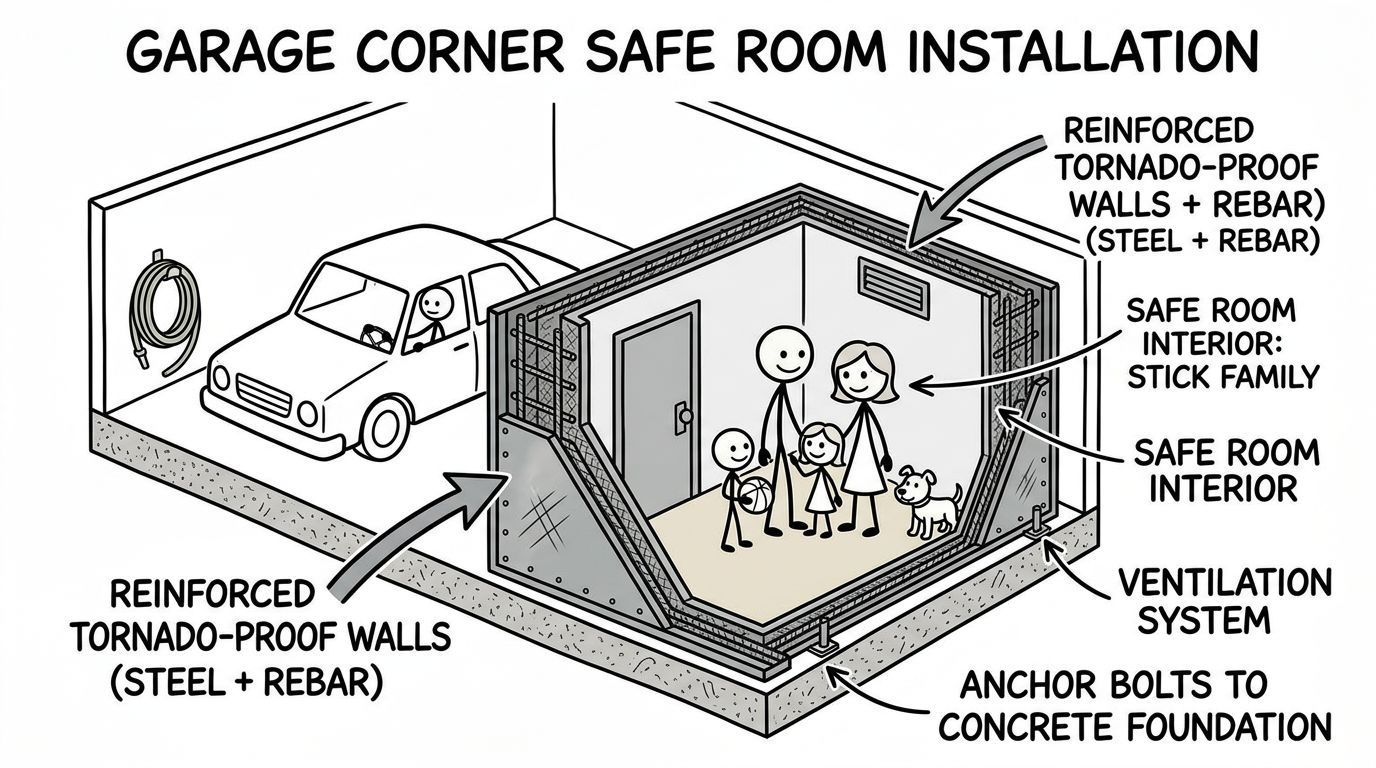
For those who prefer not to go underground, or whose property doesn't allow for subterranean installation, an above ground tornado shelter, often referred to as a "safe room," presents an excellent alternative. These units are designed to be installed inside an existing structure- typically a garage, an interior room, or even within a closet- or as a freestanding unit directly adjacent to the home.
- Description and Advantages: An above ground tornado shelter is a specially engineered, reinforced room or enclosure designed to withstand tornado-force winds and debris impacts. Their primary advantage is accessibility; they can be entered quickly, making them ideal for individuals with mobility challenges or those who prefer not to deal with stairs. They are also immune to flooding from heavy rains, a common concern with underground shelters. Installation can often be quicker and less disruptive than excavation for underground units.
- Disadvantages: While highly protective, an above ground tornado shelter must be built to exacting standards to mitigate the increased exposure to debris and wind forces. They may require robust anchoring to a concrete slab and are often constructed with thick steel plates or heavily reinforced concrete walls. The visual impact within a living space might also be a consideration for some homeowners.
- Construction Standards: To be truly effective, an above ground tornado shelter must meet stringent safety standards. The most widely recognized standards are FEMA P-361 (Safe Room Criteria) and ICC 500 (Standard for the Design and Construction of Storm Shelters). These guidelines specify requirements for wall and roof construction, door strength, anchoring systems, and ventilation to ensure the shelter can withstand extreme loads and missile impacts (e.g., a 15-lb 2x4 lumber projectile traveling at 100 mph).
- Materials: Typical construction involves heavy-gauge steel plates (often 1/4" or thicker), robust steel doors with multiple locking points, and sometimes precast or poured-in-place reinforced concrete. These materials are chosen for their high tensile strength and ability to resist penetration.
- Placement: An above ground tornado shelter is usually anchored to an existing concrete slab-on-grade foundation, often within a garage, making it convenient for homeowners to access directly from their vehicles or homes. They can also be custom-built into existing interior spaces, becoming an integral part of the home's structure.
Community Tornado Shelters
For those living in apartment complexes, mobile home parks, or areas where individual shelters aren't feasible, community tornado shelters offer a valuable resource. These are large-capacity facilities designed to protect multiple families.
- Description and Advantages: Community shelters are typically large, robustly constructed buildings or designated sections of existing public buildings (like schools or community centers) that meet federal or state tornado shelter standards. They offer protection for a significant number of people, often serving as a cost-effective solution for larger populations.
- Disadvantages: The main drawbacks include the travel time required to reach them, potential overcrowding, and the inability to bring extensive personal supplies. Access might also be limited during peak demand, and privacy is non-existent.
- When They Are a Viable Option: Community shelters are an excellent option for individuals without the means or space for a personal shelter, or for those in highly transient living situations. However, always have a secondary plan and familiarize yourself with your local community shelter's rules, capacity, and accessibility routes well in advance of a storm.
Building Codes, Permits, and Safety Standards: The Foundation of Security
Installing a tornado shelter isn't merely a matter of buying a unit and bolting it down; it involves adhering to strict safety standards and local regulations. Skipping these crucial steps can compromise your shelter's effectiveness and lead to legal or financial repercussions.
The Importance of Compliance
Local building codes and permits are in place to ensure that any new construction or significant structural modification meets minimum safety requirements. For a tornado shelter, this is paramount. A permit ensures that your installation will be inspected by qualified officials, verifying that it meets structural integrity standards for your specific region. Non-compliance can result in fines, the forced removal of your shelter, or significantly complicate future property sales. More importantly, it jeopardizes the safety of those who rely on the shelter during a storm.
Always check with your local municipal planning or building department before purchasing or installing a tornado shelter. Requirements can vary significantly from city to city and county to county, covering everything from setback requirements to specific anchoring methods.
Key Standards to Know
To ensure your tornado shelter provides the intended level of protection, it must be designed and constructed according to established engineering standards. The most important standards include:
- FEMA P-361 (Safe Room Criteria): This publication, developed by the Federal Emergency Management Agency, provides comprehensive design and construction guidelines for residential and community safe rooms. It details specific requirements for walls, roofs, doors, and connection methods to resist tornados and hurricanes. Shelters built to FEMA P-361 standards are designed to withstand winds of up to 250 mph and resist impact from 15-lb projectiles traveling at 100 mph.
- ICC 500 (Standard for the Design and Construction of Storm Shelters): Developed jointly by the International Code Council and the National Storm Shelter Association (NSSA), ICC 500 is a consensus standard adopted into many building codes across the country. It provides detailed engineering and performance criteria for both residential and community storm shelters, covering aspects like structural loading, ventilation, occupant capacity, and accessibility. It's often referenced by local jurisdictions for permitting and inspection.
When purchasing a prefabricated unit or hiring a contractor, always ask for documentation confirming that the shelter meets FEMA P-361 and/or ICC 500 standards. Look for shelters that have undergone third-party testing, such as those conducted by the Texas Tech National Wind Institute, which simulates tornado forces and debris impacts to verify performance.
Site-Specific Considerations
Beyond general building codes, several site-specific factors must be considered during planning:
- Soil Type: For underground tornado shelters, the composition of your soil is critical. Clay soils, sandy soils, or areas with high water tables can affect excavation costs, drainage, and the required foundation work. A soil analysis may be necessary.
- Drainage: Both underground and above ground tornado shelters need proper drainage to prevent water accumulation. For underground units, this means ensuring they are placed in an area that won't collect runoff, and often includes integrating sumps or drainage systems. For above-ground units, proper grading around the foundation is essential.
- Utility Lines: Before any excavation begins, it's imperative to "call before you dig" (e.g., by dialing 811 in the U.S.) to identify the location of underground utility lines (water, sewer, gas, electricity, communications). Striking a utility line can be dangerous, costly, and delay your project significantly.
DIY Tornado Shelter vs. Prefabricated Units
The decision to build your own tornado shelter or purchase a prefabricated unit is a significant one, impacting cost, installation time, and most importantly, safety. Each approach has its merits and drawbacks.
Prefabricated Tornado Shelters
Prefabricated tornado shelters are units manufactured off-site and then delivered and installed at your location. They represent the most common and often safest route for homeowners.
- Description and Advantages: These units are typically made from heavy-gauge steel or precast concrete, designed and tested to meet stringent safety standards like FEMA P-361 and ICC 500.
- Certified Safety: The primary advantage is that they come with engineering certifications, meaning they have been professionally designed and often rigorously tested (e.g., for missile impact resistance) to withstand tornado forces.
- Quicker Installation: Installation is generally faster and less disruptive than a custom build, often completed within a day or two, depending on the type and site preparation needed.
- Warranty: Most reputable manufacturers offer warranties on their products, providing peace of mind regarding material defects or installation issues.
- Reduced Risk: You mitigate the risk of improper construction or non-compliance with building codes, as the manufacturer and installer are typically well-versed in these requirements.
- Disadvantages:
- Higher Upfront Cost: The initial investment for a prefabricated unit is generally higher than the material cost of a DIY project, as it includes manufacturing, engineering, and professional installation.
- Less Customization: While there are various sizes and configurations, prefabricated units offer less design flexibility compared to a custom-built solution.
- Materials: Prefabricated above ground tornado shelter units are commonly made from thick steel plates, often 1/4 inch or greater, reinforced with internal bracing. Underground units might be steel or precast concrete sections designed for subterranean installation. Doors are typically heavy-duty steel with multiple locking points and robust hinges.
DIY Tornado Shelters
Building your own tornado shelter might seem like an attractive option, particularly for skilled individuals looking to save money. However, this path comes with significant caveats.
- Description and Advantages: A DIY tornado shelter involves sourcing materials and constructing the shelter yourself, often from scratch, or by reinforcing an existing space.
- Cost Savings: The most significant advantage is the potential for cost savings on labor and, potentially, materials if you can source them efficiently. This can dramatically impact your overall tornado shelter cost.
- Customization: You have complete control over the design, size, and features, allowing for a shelter perfectly tailored to your space and needs.
- Sense of Accomplishment: For those with the right skills, successfully completing such a project can be incredibly rewarding.
- Disadvantages:
- Requires Significant Skill and Knowledge: Building a tornado shelter is not a simple construction project. It requires advanced knowledge of structural engineering, material science (especially for impact resistance), and adherence to very specific building codes and standards (FEMA P-361, ICC 500).
- Risk of Non-Compliance: Without professional engineering oversight and proper permits/inspections, there's a high risk that your DIY shelter will not meet safety standards. An improperly built shelter could fail catastrophically during a tornado, offering a false sense of security.
- No Certification/Warranty: A DIY shelter will not come with professional certification or a warranty, which can be a concern for insurance purposes or future resale.
- Time-Consuming: It can take significantly longer to build a shelter yourself compared to a professional installation.
- When it Might Be Feasible: A DIY approach is only advisable if you are an experienced builder or contractor with a strong understanding of structural engineering principles, access to certified blueprints (e.g., from FEMA publications), and a commitment to obtaining all necessary permits and inspections. Even then, it's often more prudent to reinforce an existing basement room *to professional standards* rather than attempting to build a standalone underground or above-ground unit from scratch. For example, reinforcing a basement room involves adding heavy-gauge steel plating to walls and ceilings, installing a certified tornado door, and ensuring proper anchoring, all under the guidance of an engineer. Without this level of expertise and due diligence, the risks far outweigh the potential cost savings.
Tornado Shelter Cost Guide: What to Expect
Understanding the financial investment required for a tornado shelter is a key step in your preparedness planning. The "tornado shelter cost" can vary significantly, typically ranging from $3,000 to over $10,000, depending on numerous factors. It's crucial to consider this an investment in safety, not just an expense.
Factors Influencing Tornado Shelter Cost
Several variables contribute to the final price tag of a tornado shelter:
- Type of Shelter: Underground shelters often incur higher costs due to excavation and more complex installation. Above-ground safe rooms can be more variable, with basic steel units being less expensive than custom-built, integrated concrete rooms.
- Size and Capacity: A small 4x4 or 4x6 foot shelter designed for 2-4 people will be considerably less expensive than a 6x8 or larger unit accommodating 6-12 people.
- Materials: Heavy-gauge steel units are generally more affordable than precast or poured-in-place concrete options, though material costs fluctuate.
- Installation (DIY vs. Professional): While DIY can save on labor, professional installation guarantees adherence to standards and safety. The complexity of installation (e.g., breaking existing concrete, extensive excavation) also impacts cost.
- Location: Geographical location can affect labor rates, material delivery costs, and the availability of qualified installers.
- Permits & Inspections: These are non-negotiable costs that ensure compliance and safety, typically ranging from a few hundred dollars.
- Optional Features: Add-ons like built-in seating, enhanced ventilation systems, specialized lighting, or custom finishes will increase the overall price.
Cost Breakdown by Shelter Type
Here's a general cost breakdown, keeping in mind that these are estimates and can vary by region, manufacturer, and specific features:
- Basic Underground Shelter (Small Prefabricated):
- Range: $3,000 - $6,000
- Description: This typically includes a small, precast concrete or steel capsule-style unit, often installed under a garage slab or as a small outdoor cellar. It's designed for 2-4 occupants. The cost usually covers the unit and basic installation (excavation, placement, backfill).
- Standard Above-Ground Safe Room:
- Range: $5,000 - $9,000
- Description: A standard "above ground tornado shelter" unit, typically a 4x6 or 6x8 foot steel safe room, anchored to a concrete slab inside a garage or an interior room. This price range usually includes the fabricated steel unit, a certified tornado door, and professional installation.
- Larger/Custom Shelters:
- Range: $8,000 - $15,000+
- Description: This category includes larger capacity shelters (e.g., 8x10 feet or more), custom-designed above-ground concrete safe rooms integrated into the home's structure, or more elaborate underground units with enhanced features. Costs can climb significantly for extensive customization, additional amenities, or if complex excavation (e.g., bedrock removal) is required. Building a custom, integrated concrete safe room within a new home construction can sometimes be more cost-effective as it's part of the overall build.
- Installation Costs:
- For both underground and above-ground units, installation typically accounts for 20-40% of the total cost, depending on site conditions and labor rates. This includes site preparation, excavation (for underground), anchoring, and finishing.
Financing and Rebates
Investing in a tornado shelter can be a significant financial decision, but there are resources available that might help offset the cost:
- FEMA Hazard Mitigation Grants: While primarily focused on community projects, some state and local programs, often funded through FEMA's Hazard Mitigation Assistance (HMA) grants, may offer funding or rebates for residential safe room construction. These are highly competitive and often require pre-approval and specific eligibility criteria. Check with your local emergency management agency for information on any available programs.
- State and Local Programs: Some states or municipalities in tornado-prone areas offer their own incentive programs, tax credits, or low-interest loans for tornado shelter installations. For example, Oklahoma often has programs available.
- Home Improvement Loans: Many banks and credit unions offer home improvement loans that can be used to finance a tornado shelter. These are typically secured loans with competitive interest rates.
- Property Value Increase: While a shelter's primary value is safety, it can also be a selling point and potentially increase your property's value, especially in high-risk areas.
What to Stock Inside Your Tornado Shelter: The Essential Prep List
A tornado shelter is only as effective as the preparations you make for what happens inside it. Once the storm hits, you might be in there for minutes or hours, potentially awaiting rescue after significant damage to your home. Having the right supplies ensures your family's immediate needs are met and helps manage stress during a critical event. This kit should be separate from your main home emergency supplies, designed specifically for the shelter. To truly understand your needs, consider various tornado scenarios and plan accordingly. For a detailed inventory, our supply calculator can help you tailor your kit.
Water and Food
These are your most critical supplies. Assume you might be cut off from utilities for several hours to a full day.
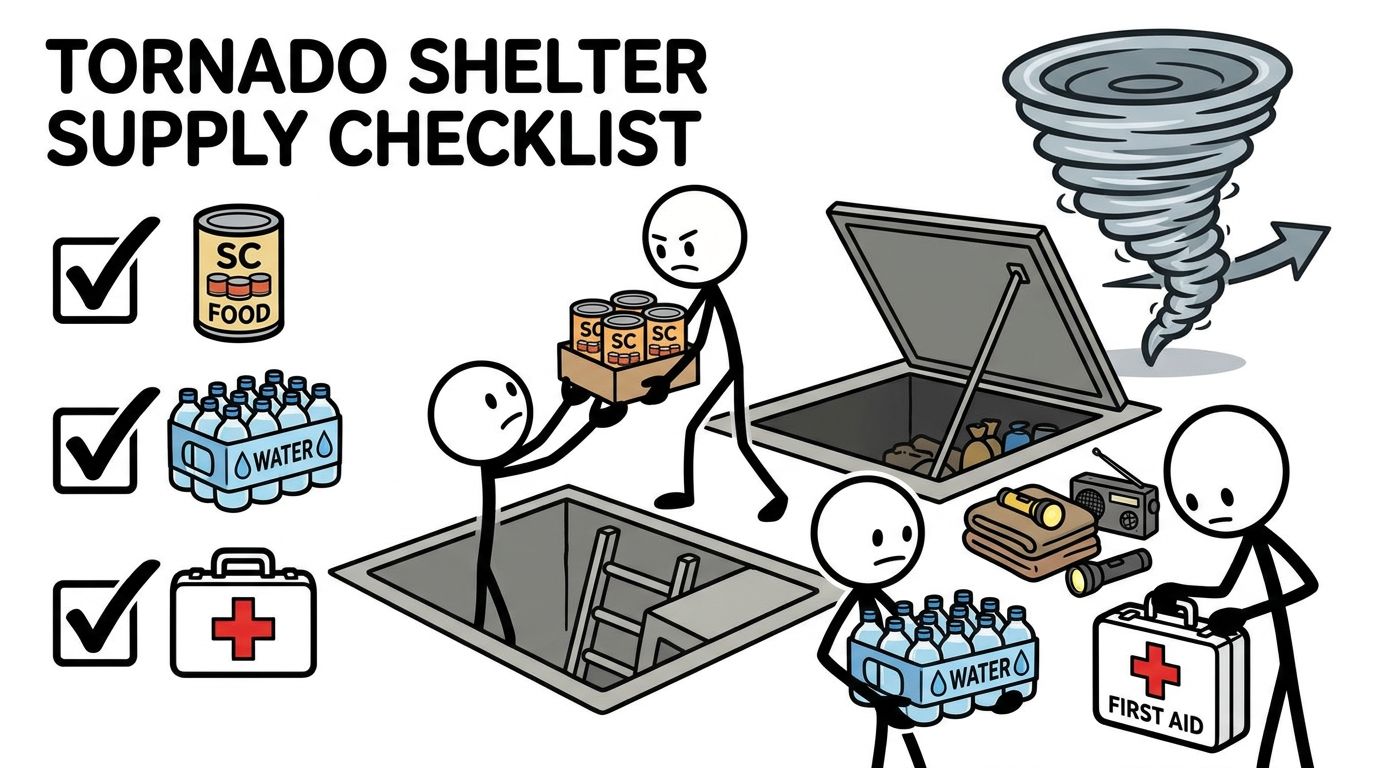
- Bottled Water: At least 1 gallon per person, per day, for at least 24 hours. Consider having a two-day supply.
- Non-Perishable, Ready-to-Eat Food: Focus on high-energy items that don't require cooking or refrigeration. Granola bars, protein bars, dried fruit, nuts, and MREs (Meals Ready-to-Eat) are excellent choices.
- Manual Can Opener: If you include any canned goods.
First Aid and Sanitation
Minor injuries are common even in shelters, and sanitation is crucial in confined spaces.
- Comprehensive First Aid Kit: Include bandages, antiseptic wipes, pain relievers, allergy medication, gauze, medical tape, and any personal prescription medications.
- Personal Hygiene Items: Wet wipes, hand sanitizer, feminine hygiene products, and toilet paper.
- Sanitation Supplies: A small bucket with a lid (for human waste, if needed), garbage bags for waste disposal, and a small amount of bleach or chemical treatment for odor control.
Communication and Lighting
Staying informed and being able to see are vital.
- NOAA Weather Radio: A hand-crank or battery-powered weather radio with alert features is essential for receiving updated weather information and emergency broadcasts.
- Flashlights or Headlamps: Multiple options with extra batteries. Headlamps are great for hands-free use.
- Whistle: For signaling rescuers if you become trapped.
- Fully Charged Power Bank: For charging cell phones. Assume cellular service might be spotty or unavailable immediately after a major event, but a charged phone is still useful for photography, light, or eventually contacting loved ones.
Comfort and Safety
These items can make a difficult situation more bearable.
- Blankets or Sleeping Bags: For warmth and comfort, especially if your shelter is unheated or you're inside for an extended period.
- Books, Small Games, or Coloring Books: Especially important for children to help pass the time and reduce anxiety.
- Work Gloves: For clearing debris if you need to exit the shelter after the storm.
- Basic Tools: An adjustable wrench for turning off utilities (if accessible from the shelter), a multi-tool, and possibly a pry bar.
- Cash: Small bills for immediate needs if electronic payment systems are down.
- Important Documents (Copies): Keep copies of identification, insurance policies, medical records, and family contacts in a waterproof bag.
Pet Supplies
Don't forget your furry family members.
- Pet Food and Water: Sufficient for at least 24-48 hours.
- Leash and Collar: For safe exit if needed.
- Pet Carrier: If your pet needs to be confined for safety or transport.
Regular Inventory Checks
Your shelter supplies aren't a "set it and forget it" item. Regularly check:
- Expiration Dates: Rotate food and water every 6-12 months.
- Battery Life: Replace batteries in flashlights and radios annually.
- Prescription Medications: Ensure these are current.
- Seasonal Needs: Adjust blankets or clothing based on the time of year.
Keep your shelter kit organized in clearly labeled, waterproof containers that are easy to grab and move within the confined space. Everyone in the family should know where the shelter is, how to access it, and where the supplies are stored.
Choosing Your Ideal Tornado Shelter
Selecting the right tornado shelter for your property involves careful consideration of several factors. Begin by assessing your budget, available space, and accessibility needs. Research the common tornado threats in your specific locale and consult with local building authorities regarding permits and codes. For most homeowners, a certified prefabricated above ground tornado shelter or underground unit from a reputable dealer will offer the best balance of safety, compliance, and convenience. Don't hesitate to consult with multiple professionals to get quotes and understand all your options.
Conclusion
A tornado shelter is much more than just a reinforced box- it's a testament to your commitment to preparedness and your family's safety. As tornados grow more frequent and intense, investing in robust protection is no longer a luxury but a fundamental component of resilient living. Whether you opt for the impenetrable security of an underground unit or the accessible convenience of an above ground tornado shelter, ensure it meets the highest safety standards. Couple this with a well-stocked emergency kit, and you transform a potential death trap into a life-saving sanctuary.
Don't wait for the next siren to start planning. Take proactive steps today to secure your family's future and provide them with the ultimate refuge against the storm.
Learn natural disaster survival for tornadoes. Compare with shelter-in-place protocols. Review emergency preparedness guide. Calculate needs with our supply calculator and explore our courses.