⚡ Key Facts
- The Two-Minute Window: According to the American Red Cross, home fires can give occupants as little as two minutes to escape safely once an alarm sounds. For the practical checklist side, use the community emergency preparedness guide.
- The Preparedness Gap: FEMA reports that while 80% of Americans live in counties that have experienced a declared disaster, nearly 60% do not have an active, practiced family disaster plan.
- Medical Vulnerability: The CDC notes that over 130 million Americans rely on daily prescription medications, making rapid medical supply retrieval a critical survival factor during sudden evacuations.
- Pet Abandonment Statistics: ASPCA studies show that during major natural disasters, up to 44% of people who choose not to evacuate do so because they do not want to leave their pets behind.
- Utility Hazards: The National Fire Protection Association (NFPA) identifies broken utility lines—specifically gas and electricity—as the leading cause of secondary fires post-disaster.
Imagine waking up at 2:00 AM to the piercing wail of a smoke detector or the sudden, urgent knock of a first responder on your front door. Outside, a fast-moving wildfire is cresting the ridge, or a flash flood is rapidly rising in your street. In these high-stress, low-time environments, your brain undergoes a profound physiological shift. Cortisol and adrenaline flood your system, narrowing your field of vision, degrading your fine motor skills, and severely limiting your working memory. Trying to decide what to save while smoke fills the hallway or floodwaters lap at your porch is a recipe for disaster. This is why having a pre-determined, highly structured priority list is not just a good organizational habit—it is a lifesaving necessity. By establishing a clear hierarchy of action, you can bypass cognitive panic and execute a swift, orderly exit that protects what is truly irreplaceable.
The Psychology of Haste: Why We Freeze Under Pressure
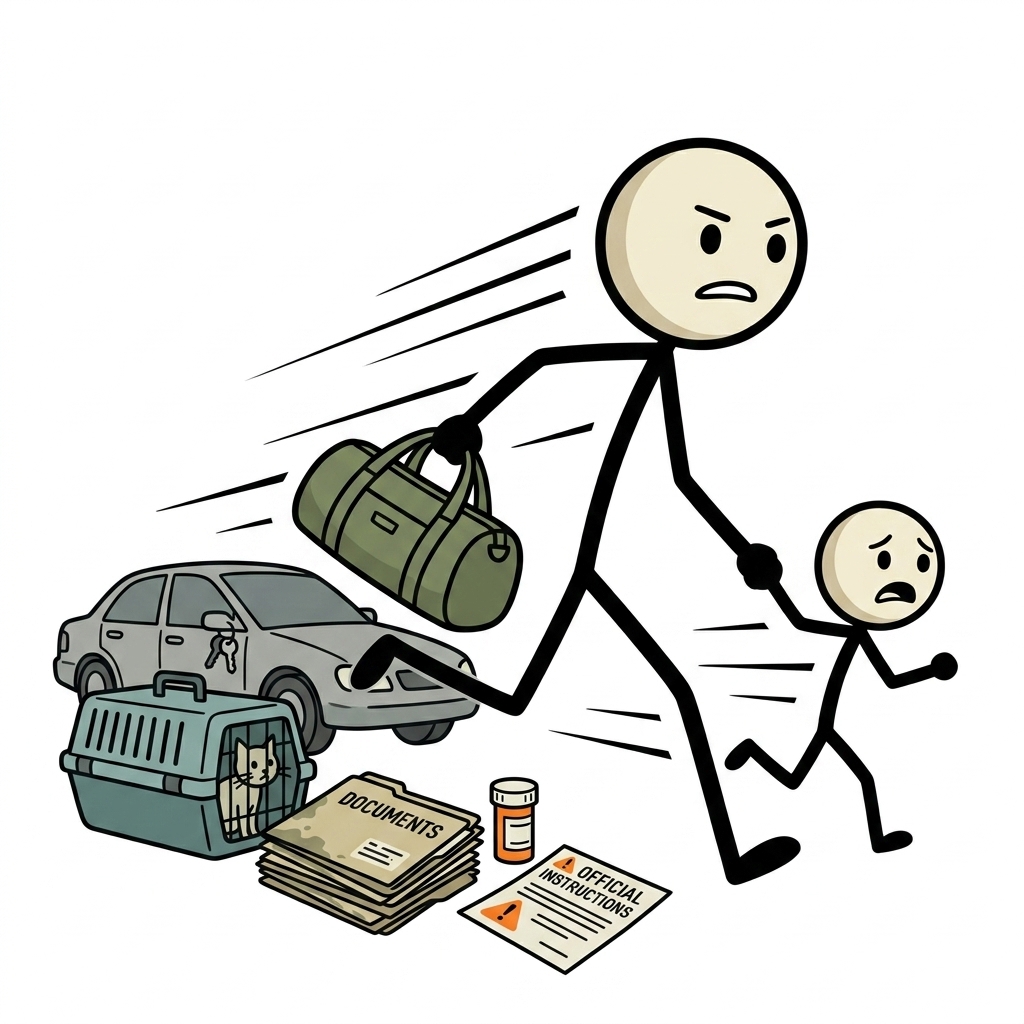
When a sudden crisis hits, our brains do not naturally perform complex risk analyses. Instead, we are prone to "normalcy bias"—the cognitive tendency to underestimate the likelihood or impact of a disaster and assume things will return to normal shortly. This bias often manifests as "milling," where individuals wander around their homes gathering low-value sentimental items, checking social media, or tidying up, rather than immediately evacuating. According to disaster psychologists, having a pre-written emergency evacuation checklist acts as an external hard drive for your brain, removing the need for decision-making when your cognitive load is maxed out.
To combat this mental paralysis, emergency management professionals utilize a tiered approach to evacuation. When time is measured in minutes, you must ruthlessly prioritize. You cannot save everything, and attempting to do so puts your life and the lives of your family members at risk. The absolute priority order must always be: people, medications, documents, utilities, pets, vehicles, and official instructions. Let us break down how to manage each of these critical categories under extreme time pressure.
Priority 1: People First (The Non-Negotiable Core)
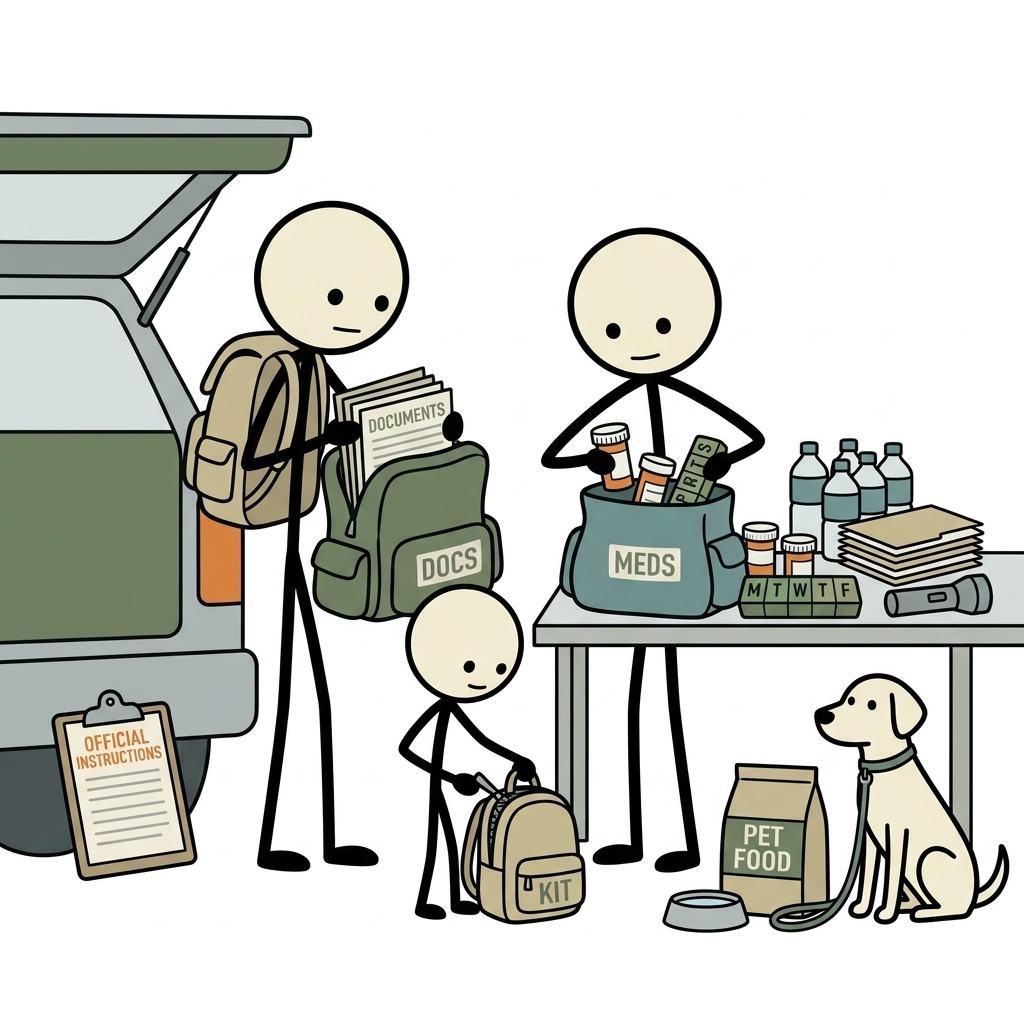
When designing your emergency evacuation checklist emergency preparedness strategy, prioritizing human life over property is the foundational rule. Property can be replaced, rebuilt, or compensated for by insurance; human lives cannot. The primary goal of any rapid evacuation is to get every member of your household to safety immediately.
Accountability and Roll Call
In a sudden emergency, you must immediately account for every person in the home. Do not assume everyone has heard the alarm or is awake. Designate a specific family member to check on children, the elderly, or those with mobility challenges.
- Assign Roles in Advance: Decide who is responsible for helping grandpa, who gathers the baby, and who grabs the emergency go-bag essentials guides.
- The "Check and Go" Rule: Confirm visual contact with every person. Do not rely on shouting through closed doors.
- Pre-Arranged Meeting Points: Establish two meeting locations: one right outside your home (for house fires) and one outside your immediate neighborhood preparedness network (in case of localized evacuations).
Vulnerable Household Members
If you have infants, elderly relatives, or individuals with special needs, their evacuation requirements must be pre-planned. Infants require specialized gear (diapers, formula, carriers), while those with mobility issues may need specialized transport. If you rely on medical equipment that requires electricity, your family emergency plan must include immediate transport to a facility with power backups, as recommended by the Department of Health and Human Services (HHS).
Priority 2: Lifesaving Medications and Medical Gear
Once your family is accounted for, your immediate physical health and survival depend on access to essential medications and medical devices. The CDC emphasizes that interruptions in daily medication regimens for chronic conditions—such as diabetes, heart disease, and asthma—are a leading cause of emergency room visits during and after natural disasters.
The "Green Bag" Concept
Keep all critical medications, medical devices, and copies of prescriptions in a single, easily accessible location. Many emergency preparedness experts recommend using a brightly colored "Green Bag" (or red pouch) stored in your medicine cabinet or pantry. In a rapid evacuation, any family member can grab this single bag, knowing it contains everything needed to sustain the household's health for at least seven days.
What to Include in Your Medical Evacuation Kit:
- Prescription Medications: At least a 7-day supply of all maintenance drugs (insulin, inhalers, blood pressure medication, etc.).
- Medical Devices: Chargers, batteries, or manual backups for devices like CPAP machines, glucose monitors, or hearing aids.
- Key Medical Documents: Paper copies of health insurance cards, doctor contact information, and a list of allergies and current dosages.
- Basic First Aid: A compact, high-quality trauma kit containing tourniquets, pressure dressings, and antiseptic wipes to treat immediate injuries sustained during the evacuation.
Priority 3: Critical Documents (The Paper Trail to Recovery)
After the physical danger has passed, your ability to recover, claim insurance, prove identity, and access financial resources will depend heavily on your documentation. Attempting to rebuild your life without identification or proof of ownership is a bureaucratic nightmare that can delay recovery by months or even years.
The Grab-and-Go Binder
You should maintain a single, waterproof, and fireproof binder containing your family's most critical documents. This binder should be stored in a secure but easily accessible location, such as a home safe near your primary exit route. To streamline your family's response, keeping a printed emergency evacuation checklist checklist on the inside of your pantry door or on top of this binder ensures you do not forget this vital step when adrenaline is high.
The Document Hierarchy: What to Save
If you have only 60 seconds to grab documents, prioritize them in the following order:
- Identification: Passports, birth certificates, driver's licenses, and Social Security cards.
- Financial Access: Credit cards, a small amount of cash (in small denominations, as ATMs and card readers may be offline), and checkbooks.
- Property and Insurance: Homeowners or renters insurance policies, vehicle titles, and property deeds.
- Legal Documents: Wills, powers of attorney, marriage certificates, and medical directives.
The Digital Backup Alternative
As a redundancy, store encrypted digital copies of all these documents on a secure cloud drive or a password-protected USB flash drive kept on your keychain. While digital copies may not always replace physical documents for official purposes, they are invaluable for initiating insurance claims and proving identity in the immediate aftermath of a disaster.
Priority 4: Utilities and Home Securing (The 60-Second Shutdown)
If you have a few extra minutes before leaving your property, securing your home's utilities can prevent catastrophic secondary damage. During earthquakes, floods, and wildfires, ruptured gas lines and shorted electrical systems are major causes of structure fires. However, you must only attempt utility shutdowns if it is safe to do so and you have the necessary tools immediately at hand.
Gas Main Shutoff
A ruptured gas line is an extreme hazard. If you smell gas, hear a hissing sound, or are ordered to evacuate due to an imminent threat like a wildfire or earthquake, shut off your gas main.
- How to Do It: Locate your outdoor gas meter. Use an emergency wrench or a crescent wrench to turn the valve a quarter-turn in either direction so the valve is perpendicular to the pipe (this indicates the "off" position).
- Crucial Safety Warning: Once you turn off your gas, *never* attempt to turn it back on yourself. This must only be done by a certified utility professional to prevent explosions when pressure is restored.
Water and Electricity
If flooding is imminent, turn off your main electrical breaker to prevent electrocution hazards and short circuits. Additionally, shutting off your main water valve can prevent internal flooding if pipes burst due to structural shifts or freezing temperatures. Keep the necessary tools, such as a water meter key, hanging near your utility shutoff points.
| Utility | When to Shut Off | Tool Required | Post-Evacuation Action |
|---|---|---|---|
| Natural Gas | Only if you smell gas, hear hissing, or face imminent wildfire/earthquake. | Non-sparking gas wrench or crescent wrench. | Must be turned back on ONLY by a professional utility technician. |
| Electricity | If flooding is imminent or if you suspect damaged wiring. | None (main breaker switch on electrical panel). | Can be turned on once the home is dry and inspected by an electrician. |
| Water | During severe freezes, flooding, or structural damage threats. | Water meter key or main gate valve handle. | Can be turned on once plumbing integrity is verified. |
Priority 5: Pets and Livestock (No One Left Behind)
For millions of families, pets are cherished members of the household. However, during a crisis, animal behavior changes drastically. Fear and smoke can cause normally docile pets to hide, flee, or bite. If you do not have a clear plan for your animals, you risk delaying your own evacuation, putting everyone in danger.
The Pet Go-Kit
Just like humans, pets need their own emergency kit. Keep this kit stored next to your pet carriers. According to the Humane Society and the FEMA guidelines, your pet kit should include:
- Leashes and Collars: Ensure collars have up-to-date ID tags with your current cell phone number.
- Food and Water: A 3-to-7-day supply of their regular food and potable water.
- Medical Records: Proof of vaccinations (especially rabies) is often required if you need to board your pet or stay at a pet-friendly emergency shelter.
- Comfort Items: A familiar blanket or toy to reduce stress, along with waste disposal bags or a small travel litter box.
Securing and Transporting Animals
At the very first sign of an impending evacuation, crate your pets. If you wait until the last minute, they may detect your panic and hide under beds or in hard-to-reach crawlspaces. Never leave pets tethered outside or abandoned inside a locked house; they have virtually no chance of survival in a fast-moving flood or fire. If you own livestock, plan your evacuation routes and trailer transport options long before wildfire or flood seasons arrive.
Priority 6: Vehicle Readiness and Navigation
Your vehicle is your primary life capsule during an evacuation. It provides transport, shelter, climate control, and a means to charge emergency communication plan devices. However, a vehicle is only useful if it is functional, fueled, and packed correctly.
Fuel and Maintenance Discipline
During a mass evacuation, gas stations quickly run out of fuel, lose power, or develop hours-long lines. To avoid getting stranded on a gridlocked highway, practice the "Half-Tank Rule": never let your vehicle's fuel gauge drop below half a tank, especially during peak storm or wildfire seasons. Keep your vehicle well-maintained, ensuring tires are properly inflated and fluids are topped off.
Strategic Packing
When packing your vehicle under time pressure, load your items in reverse order of importance. Your heaviest, non-essential gear (like sleeping bags or extra food) should go in first, while your most critical assets—your emergency evacuation checklist, medical kits, document binder, and pet carriers—should be placed last so they are immediately accessible. Ensure that driver visibility is not blocked by overpacking.
Navigational Realities
Do not rely solely on GPS or smartphone mapping apps. During a major disaster, cell towers can burn down, lose power, or become severely congested, rendering digital maps useless. Keep a physical road atlas or local paper maps in your glove box. Pre-plan at least three distinct evacuation routes out of your neighborhood, keeping in mind that low-lying roads may flood and forested roads may be blocked by fallen trees or fire.
Priority 7: Monitoring Official Instructions (Filtering the Noise)
In a fast-evolving crisis, rumors, misinformation, and panic spread faster than the disaster itself. Relying on unverified social media posts or neighborhood gossip can lead to dangerous decisions, such as evacuating directly into the path of a wildfire or taking blocked routes.
Official Communication Channels
To ensure you are receiving accurate, real-time information, rely on established official emergency communication systems:
- NOAA Weather Radio: These radios operate on dedicated frequencies and provide continuous weather and hazard broadcasts directly from the nearest National Weather Service office. Many models feature emergency alert tones that will wake you up if a warning is issued.
- Wireless Emergency Alerts (WEA): These are emergency messages sent by authorized government agencies through your mobile carrier. Ensure these alerts are enabled in your smartphone's settings.
- Emergency Alert System (EAS): Tune in to local AM/FM radio stations and television broadcasts for official instructions from local emergency managers.
- Local Emergency Management Websites: Bookmark your county or city's official emergency portal and register for their localized opt-in text and email alert systems.
When local authorities issue an evacuation order—whether voluntary or mandatory—comply immediately. Many people delay their departure waiting for "proof" of the danger, only to find themselves trapped when roads become gridlocked or impassable. Remember: if you feel unsafe, do not wait for an official order. Trust your instincts and evacuate early.
The Ultimate Rapid Evacuation Timeline
To help you visualize how to execute these priorities when every second counts, here is a breakdown of how to allocate your time if you are given a 15-minute evacuation warning:
Minutes 1 to 3: Muster and Accountability
Gather all household members and pets. Ensure everyone is wearing sturdy, protective clothing and closed-toe shoes. Assign roles for carrying gear and loading the vehicle.
Minutes 4 to 7: Grab the Essentials
Retrieve your medical "Green Bag," your fireproof document binder, and your pre-packed emergency go-bags. Place pets securely in their travel carriers and load them into the vehicle.
Minutes 8 to 11: Secure the Property
If safe to do so, shut off the main water valve and gas main (if you smell gas or are ordered to do so). Close all windows and doors to prevent draft-driven fire spread inside the home. Lock your doors.
Minutes 12 to 15: Load, Check, and Depart
Load your critical gear into the vehicle, ensuring the driver's view is unobstructed. Tune your car radio to a local emergency broadcast station, confirm your primary evacuation route, and depart immediately. Do not look back; focus entirely on the road ahead.
Empowerment Through Preparation
Facing a sudden emergency can be a terrifying prospect, but fear is a natural reaction to the unknown. By transforming that fear into structured, deliberate action, you reclaim control over your circumstances. This comprehensive guide and prioritization strategy are designed to serve as your ultimate roadmap through the chaos. When you take the time to organize your documents, build your medical kits, secure your utility tools, and practice your escape routes with your family, you are not just preparing for a disaster—you are actively choosing survival. Do not wait for the sirens to sound to decide what matters most. Embrace the peace of mind that comes with complete readiness, knowing that if the moment ever comes, you and your loved ones will step out of your door, fully prepared, resilient, and safe.
Frequently Asked Questions
What should a emergency evacuation checklist plan include?
Start with the immediate safety steps, the supplies and records your household needs, a communication plan, and a regular review schedule. Follow local official guidance during an active emergency.
How often should I review emergency evacuation checklist preparations?
Review them at least twice a year and whenever your household, medication, location, or local risks change. Replace expired supplies and practice key steps.
Where can I find reliable emergency guidance?
Use local emergency management alerts and established public-health or emergency-management agencies. A blog guide should support, not replace, official real-time instructions.