⚡ Key Facts
- Supply Chain Vulnerability: According to the FDA, over 100 critical medications, including life-saving antibiotics like amoxicillin, are routinely on the active drug shortage list due to just-in-time manufacturing models. For the practical checklist side, use the community emergency preparedness guide.
- The Veterinary Risk: "Fish antibiotics" and other veterinary medications are not subject to the strict United States Pharmacopeia (USP) purity standards, often containing harmful impurities, incorrect dosages, or degraded active ingredients. For the practical checklist side, use the neighborhood preparedness network.
- The Legitimate Telehealth Revolution: Board-certified medical protocols now legally permit the pre-prescription of emergency antibiotics for disaster preparedness through specialized, regulated clinical services. For the practical checklist side, use the emergency communication plan.
- The Science of Shelf Life: Data from the FDA and US Department of Defense (DoD) Shelf Life Extension Program (SLEP) reveals that many properly stored solid-form antibiotics retain over 90% potency long after their printed expiration dates.
Imagine a scenario where a severe weather event, grid failure, or regional emergency cuts off access to local pharmacies and hospitals for weeks. In this environment, a minor laceration from clearing debris or an untreated urinary tract infection is no longer a temporary inconvenience; it is a potentially life-threatening medical crisis. Throughout human history, infectious diseases were the leading cause of death, a reality only curbed by the mid-20th-century miracle of antimicrobial therapy. For modern emergency preparedness strategists, securing a reliable, safe, and legally compliant supply of antimicrobial agents is a foundational pillar of family resilience. However, navigating the complex intersection of federal law, pharmacology, and emergency preparedness requires a sophisticated understanding of how to acquire, store, and utilize these critical drugs safely.
The Fragile Reality of the Modern Pharmaceutical Supply Chain
Most citizens operate under the assumption that the local pharmacy is an inexhaustible reservoir of medicine. The reality, documented extensively by agencies like the Federal Emergency Management Agency (FEMA) and the Assistant Secretary for Preparedness and Response (ASPR), is far more precarious. Modern pharmaceutical distribution relies on "just-in-time" (JIT) delivery systems. Pharmacies rarely hold more than a few days’ worth of inventory for any given medication, relying on daily deliveries from centralized distributors to meet patient demand.
This hyper-efficient chain is highly vulnerable to systemic shocks. A major cyberattack on a healthcare clearinghouse, a category 5 hurricane disrupting transit corridors, or a geopolitical conflict affecting overseas manufacturing facilities can instantly freeze the distribution of critical medications. Furthermore, the Active Pharmaceutical Ingredients (APIs) for approximately 80% of the antibiotics consumed in the United States are manufactured abroad, primarily in China and India. If global trade routes are compromised, domestic supply chains cannot easily pivot to fill the void. This vulnerability underscores the necessity of stockpiling antibiotics for emergencies before a crisis occurs, ensuring that your household is insulated from systemic distribution failures.
The Danger of "Just-in-Time" Pharmacy Logistics
In a localized disaster, such as the aftermath of Hurricane Katrina or Hurricane Sandy, local pharmacies are frequently flooded, looted, or left without power, rendering their temperature-sensitive inventories useless. The Centers for Disease Control and Prevention (CDC) notes that during public health emergencies, surge capacity in local emergency rooms spikes dramatically, quickly exhausting municipal stockpiles of basic wound-care supplies and oral antibiotics. When the system is overwhelmed, having a personal, legally obtained medical reserve is often the only definitive way to guarantee access to treatment.
The Dangerous Illusion of Veterinary and Fish Antibiotics
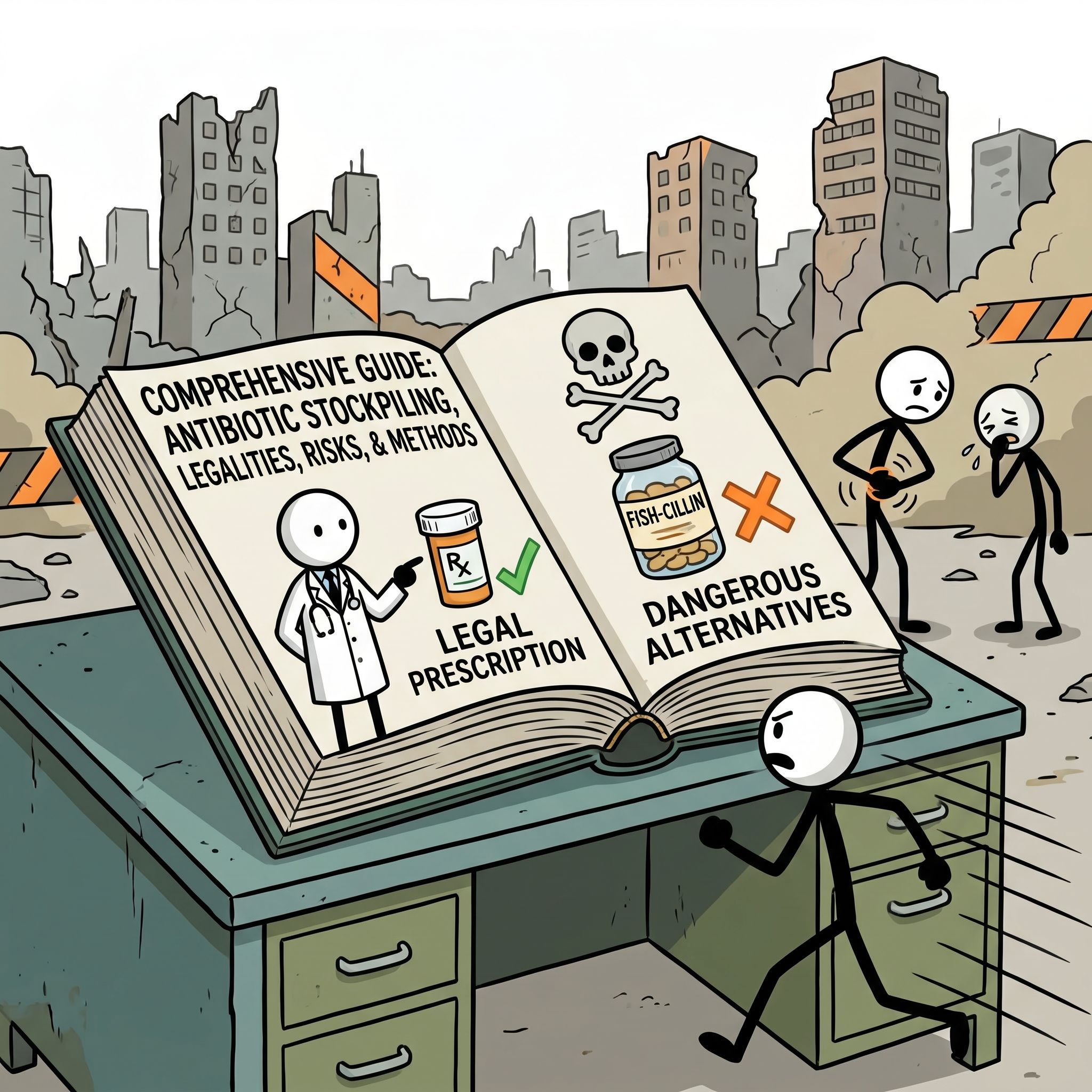
In the search for self-reliance, a highly dangerous trend has permeated the survivalist and prepper communities: the purchase and consumption of veterinary medicines, commonly referred to as fish antibiotics for prepping. Marketed under names like "Fish Mox" (amoxicillin), "Fish Flex" (cephalexin), or "Fish Flox" (ciprofloxacin), these products are sold over the counter at pet stores and online outlets without a prescription. While the temptation to bypass the medical system is understandable, relying on these products is a game of Russian roulette with your health.
The primary argument used to justify the use of veterinary drugs is that the active chemical compound is identical to the human version. While the raw chemical formula may be similar, the regulatory oversight, manufacturing standards, and quality control protocols governing veterinary drugs are vastly inferior to those mandated by the FDA for human consumption.
Regulatory Gaps and Purity Standards
Human-grade pharmaceuticals must conform to strict United States Pharmacopeia (USP) standards. These standards dictate precise limits on heavy metals, chemical impurities, binders, and degradation products. Veterinary medications, especially those intended for ornamental fish, bypass these rigorous protocols. Under federal law, these products are not intended for human use, meaning manufacturers are not legally required to ensure they are free from harmful contaminants, nor are they subjected to the sterile manufacturing environments required for human-use facilities.
The Danger of Inaccurate Dosing and Degradation
Testing of seized and analyzed veterinary antibiotics has frequently revealed significant variances in active ingredient concentration. A capsule labeled as containing 500mg of amoxicillin may contain far less, leading to sub-therapeutic dosing that fails to clear an infection while actively promoting antibiotic resistance. Conversely, it may contain a toxic megadose or be contaminated with degradation byproducts that cause acute liver or kidney damage. Furthermore, veterinary tablets often utilize low-grade binders and fillers that do not dissolve properly in the human digestive tract, preventing the active drug from reaching systemic circulation.
The CDC and FDA have issued multiple public health warnings regarding the consumption of animal drugs by humans. Side effects can range from severe allergic reactions and organ failure to death, particularly when the user has no way of verifying the purity, concentration, or exact chemical lineage of the substance they are ingesting.
Legal Antibiotic Preparedness: Navigating the Law Safely
True resilience is built on a foundation of legality, safety, and medical ethics. Attempting to acquire prescription medications through illicit online pharmacies, importing them without authorization, or using veterinary substitutes carries severe legal and physical risks. Fortunately, the landscape of legal antibiotic preparedness has evolved significantly over the last decade, offering clear, legitimate pathways for responsible citizens to secure emergency medical reserves.
Under the Federal Food, Drug, and Cosmetic Act, antibiotics are classified as prescription-only medications. This classification exists for a crucial reason: the misuse of antibiotics accelerates the development of drug-resistant "superbugs" and exposes patients to severe adverse drug events. Therefore, any legitimate path to acquiring these medications must involve a licensed medical professional who evaluates your health history, understands the intended emergency use, and issues a legal prescription.
The Telehealth Revolution and Preparedness Prescriptions
In recent years, pioneering clinical services have emerged to bridge the gap between traditional medical practice and emergency preparedness. Companies such as Jase Medical, Duration Health, and Contingency Medical operate entirely within the framework of state and federal laws to provide emergency antibiotic kits.
The process is highly regulated and clinically sound:
- Clinical Assessment: The patient completes an extensive medical intake questionnaire detailing their health history, allergies, current medications, and pre-existing conditions.
- Physician Review: A board-certified physician reviews the file to determine if the patient is a safe candidate for emergency preparedness medications.
- Prescription and Dispensing: If approved, the physician writes a prescription, which is filled by a legally licensed, US-based compounding or retail pharmacy.
- Educational Guidance: The medications are delivered in a secure kit accompanied by a comprehensive clinical guidebook detailing exact indications, dosages, contraindications, and administration protocols.
This method represents the gold standard of how to get emergency antibiotics. It ensures that the medications you receive are 100% human-grade, USP-compliant, legally prescribed to you, and clinically appropriate for your specific health profile.
Travel Medicine Consultations
Another legitimate avenue for acquiring emergency medications is through a specialized travel medicine clinic. If you are planning travel to remote, developing regions where medical infrastructure is lacking, travel physicians routinely prescribe "standby" therapies. These often include antibiotics like ciprofloxacin or azithromycin to self-treat severe traveler’s diarrhea or systemic infections when professional medical care is inaccessible. Discussing your wilderness or remote travel plans honestly with a travel medicine specialist can result in a legal, prophylactic prescription tailored to emergency scenarios.
The Survival Antibiotics Guide: The Core Five Medications
An effective survival antibiotics guide does not require stockpiling dozens of different medications. Instead, clinical preparedness focuses on a carefully selected "formulary" of broad-spectrum and targeted antibiotics that collectively cover the vast majority of common, life-threatening bacterial infections. Below is a detailed analysis of the five foundational antibiotics most commonly included in professional emergency medical kits.
| Antibiotic Class / Name | Primary Spectrum of Activity | Common Emergency Indications | Key Contraindications & Warnings |
|---|---|---|---|
| Amoxicillin-Clavulanate (Augmentin) Beta-lactam / Penicillin class |
Broad spectrum (Gram-positive and Gram-negative bacteria, including beta-lactamase producers) | Animal/human bites, severe dental infections, skin/soft tissue infections, sinusitis, community-acquired pneumonia | Severe penicillin allergy, history of cholestatic jaundice/hepatic dysfunction. Can cause severe diarrhea. |
| Doxycycline Tetracycline class |
Broad spectrum (Atypical bacteria, rickettsiae, vector-borne pathogens, some MRSA) | Lyme disease, Rocky Mountain spotted fever, anthrax exposure, malaria prophylaxis, skin infections, atypical pneumonia | Contraindicated in pregnant women and children under 8 (risk of permanent tooth discoloration). Increases severe sunburn risk (photosensitivity). |
| Ciprofloxacin Fluoroquinolone class |
Primarily Gram-negative bacteria, including Pseudomonas | Complicated urinary tract infections (UTIs), infectious diarrhea, bone/joint infections, inhalation anthrax exposure | Black Box Warning: Risk of tendon rupture, aortic aneurysm, peripheral neuropathy, and central nervous system effects. Avoid in pediatric patients unless no alternative exists. |
| Azithromycin Macrolide class |
Gram-positive, Gram-negative, and atypical bacteria | Streptococcal pharyngitis (Strep throat), traveler's diarrhea, atypical pneumonia, pertussis, chlamydia | Known QT prolongation (cardiac arrhythmia risk). Use with caution in patients with pre-existing cardiovascular disease. |
| Metronidazole Nitroimidazole class |
Anaerobic bacteria and certain protozoa/parasites | Intra-abdominal infections (in combination with other agents), dental abscesses, Giardiasis, C. difficile colitis | Absolute contraindication: Alcohol consumption (causes severe disulfiram-like reaction: violent vomiting, rapid heart rate). |
Understanding Spectrum of Activity
Bacteria are broadly categorized into Gram-positive and Gram-negative groups based on their cell wall structure, as well as aerobic (requiring oxygen) and anaerobic (living without oxygen) classifications. No single antibiotic kills every type of bacteria. Utilizing the wrong antibiotic for an infection is not only ineffective; it can be fatal by delaying correct treatment and destroying your body's beneficial microbiome, leaving you vulnerable to secondary infections like Clostridioides difficile (C. diff).
The Clinical Reality: Diagnosis and Safety in Extremis
In a true off-grid or Survival Scenarios, you will not have access to diagnostic laboratories, blood cultures, or imaging technology. Prescribing antibiotics under these conditions is known as empiric therapy—making an educated clinical decision based on the location of the infection, physical symptoms, and epidemiological likelihood.
However, practicing medicine without a license or formal training is highly dangerous. Having an emergency supply of antibiotics does not make you a physician. In any emergency, the absolute priority must always be to seek professional, licensed medical care. Emergency stockpiles are strictly intended for "last resort" scenarios where professional care is physically impossible to access due to systemic collapse or geographical isolation.
Viral vs. Bacterial: The Critical Distinction
One of the most common and dangerous mistakes made by laypersons is administering antibiotics for viral infections. Common colds, influenza, COVID-19, and the vast majority of acute bronchitis cases are viral. Antibiotics have absolutely zero effect on viruses.
Taking antibiotics for a viral infection exposes you to all the risks of the medication—such as severe allergic reactions, organ toxicity, and destruction of gut flora—with absolutely no clinical benefit. Furthermore, it depletes your limited, irreplaceable emergency supply of life-saving drugs. A true professional-grade survival protocol requires learning how to clinically differentiate between viral illnesses and secondary bacterial infections through physical examination, monitoring of fever patterns, and analyzing sputum or localized symptoms.
The Threat of Anaphylaxis
Anaphylaxis is a severe, systemic, life-threatening allergic reaction that can occur within minutes of ingesting an antibiotic, particularly beta-lactams like amoxicillin. Symptoms include hives, swelling of the face and airway, difficulty breathing, and a rapid drop in blood pressure. In an off-grid environment without epinephrine, advanced airway management, and IV fluids, anaphylaxis is almost uniformly fatal. Therefore, knowing your family's exact drug allergy history and having a non-cross-reactive alternative (such as stocking a macrolide or tetracycline if a penicillin allergy is present) is an essential component of family emergency planning.
Storage, Preservation, and the Science of Shelf-Life Extension
An antibiotic is only as good as its potency when you ingest it. If your emergency medical reserve is stored improperly, the active ingredients will degrade, leaving you with useless or potentially toxic compounds when you need them most. Understanding the chemistry of pharmaceutical storage is critical to maintaining a reliable long-term reserve.
Most commercial antibiotic packaging features an expiration date that is typically 1 to 3 years from the date of manufacture. However, these dates do not necessarily represent the point at which the medication becomes dangerous or ineffective. Instead, they represent the period during which the manufacturer guarantees 100% potency under standard storage conditions.
Lessons from the DoD Shelf Life Extension Program (SLEP)
To address the multi-billion-dollar cost of replacing expiring national stockpiles, the US Department of Defense, in partnership with the FDA, established the Shelf Life Extension Program (SLEP). This program conducts rigorous chemical testing on stockpiled medications to determine their actual rate of degradation.
The findings of the SLEP program are highly encouraging for emergency preparedness planners:
- Long-Term Potency: The vast majority of solid-dose medications (tablets and capsules), including key antibiotics like ciprofloxacin, doxycycline, and amoxicillin, retain over 90% of their therapeutic potency for several years—and in some cases, over a decade—past their printed expiration dates, provided they have been stored correctly.
- The Tetracycline Myth: Historically, there was a belief that degraded tetracycline could cause a dangerous kidney disorder known as Fanconi syndrome. Modern formulations and clinical reviews have largely debunked this, though using expired tetracyclines is still generally discouraged if alternatives are available. Liquid suspensions, however, degrade rapidly and must never be used past their expiration dates.
The Enemies of Pharmaceutical Stability
To maximize the lifespan of your emergency antibiotics, you must protect them from the four primary catalysts of chemical degradation: heat, light, oxygen, and moisture.
Implement the following strict storage protocols:
- Temperature Control: Store your emergency medical kits in a cool, stable environment, ideally between 59°F and 86°F (15°C to 30°C). Avoid areas prone to extreme temperature fluctuations, such as attics, garages, or vehicles.
- Moisture Mitigation: Keep medications in their original, sealed manufacturer packaging (such as blister packs) as long as possible. If repackaging, utilize airtight, amber-colored glass vials or food-grade Mylar bags with high-quality silica gel desiccant packs to absorb ambient moisture.
- Light Exclusion: Ultraviolet (UV) light rapidly degrades chemical bonds. Store all medications in opaque containers or inside dark, dedicated medical bags stored in a closet or secure safe.
- Liquid Reconstitution Rules: Powdered pediatric antibiotic suspensions (such as liquid amoxicillin) require reconstitution with sterile water. Once water is added, these medications have a shelf life of only 10 to 14 days and must be refrigerated. For long-term emergency stockpiles, prioritize solid tablets or capsules, which are vastly more stable than liquid formulations.
Building an Empowered and Ethical Preparedness Strategy
True emergency preparedness is not about operating in the shadows of the law or taking unnecessary medical shortcuts. It is about applying the same rigorous standards of safety, quality, and legality to your survival planning that you would to your everyday life. By rejecting dangerous alternatives like fish antibiotics and embracing legitimate, physician-led telehealth protocols, you ensure that your family’s emergency medical reserve is safe, effective, and legally protected.
As you build your household's resilience, remember that knowledge is your most valuable asset. Combine your physical stockpile of legal, high-quality antibiotics with professional-grade medical training, field manuals, and a deep understanding of sanitation, hygiene, and wound care. In a true crisis, your ability to prevent infection through clean water, sterile technique, and proper hygiene is your first line of defense—with your emergency antibiotic kit serving as the ultimate, life-saving fallback when all else fails.
Frequently Asked Questions
Is it legal to purchase antibiotics without a prescription in the United States?
No. In the U.S., antibiotics are classified as prescription-only drugs. Purchasing them without a valid prescription from a licensed healthcare provider is illegal.
How can I legally obtain antibiotics for emergency preparedness?
You can legally obtain emergency antibiotics through specialized, board-certified telemedicine services that evaluate your health history and prescribe emergency preparedness kits.
Is it safe to stockpile and use animal or fish antibiotics?
No. The FDA strongly warns against using veterinary or fish antibiotics. They are not approved for human consumption, lack human-grade quality controls, and can contain dangerous impurities.
How long do stockpiled antibiotics remain effective?
Most solid tablet antibiotics remain stable and potent for 1 to 2 years from manufacture. Liquid antibiotics degrade rapidly, usually lasting only 10 to 14 days once reconstituted.
What are the primary risks of self-administering stockpiled antibiotics?
Self-administration risks misdiagnosing viral infections (which antibiotics cannot treat), using the wrong drug class, experiencing severe side effects, and accelerating antibiotic resistance.