⚡ Key Facts
- The Gravity Problem: High-rise and mid-rise apartment buildings rely on electric booster pumps to deliver water above the 4th or 5th floor. During a power outage, water pressure vanishes almost instantly, rendering standard toilets useless. For the practical checklist side, use the community emergency preparedness guide.
- Pathogen Risk: The Centers for Disease Control and Prevention (CDC) warns that improper human waste disposal is the primary vector for waterborne diseases like cholera, dysentery, and hepatitis A during infrastructure failures. For the practical checklist side, use the neighborhood preparedness network.
- Waste Volume: The average adult produces approximately 1.5 liters of liquid waste and 200 grams of solid waste daily. For a family of three, this equates to over 26 pounds of raw biohazard waste per week. For the practical checklist side, use the emergency communication plan.
- Sewer Backups: The Environmental Protection Agency (EPA) notes that flushing toilets during a municipal sewer outage can cause catastrophic raw sewage backups into lower-level apartments through floor drains and tubs. For the practical checklist side, use the family emergency planning guide.
Imagine the power grid gridlocks during a severe winter freeze or a major seismic event. Your apartment is stocked with freeze-dried food, emergency water filters, and heavy blankets. You feel prepared. But within twelve hours, a silent crisis begins: the municipal water pressure drops to zero. You flush the toilet once, utilizing the water remaining in the tank. It does not refill. Within twenty-four hours, the shared plumbing stacks in your multi-family building begin to dry out, vent sewer gases, or worse, back up with waste from upper units. This is the reality of urban survival. For apartment dwellers, emergency sanitation is not merely a matter of comfort—it is a critical barrier against disease, structural damage, and psychological distress.
The Hidden Vulnerability of Apartment Plumbing
In a single-family home, a grid failure means you can eventually dig a trench latrine in the backyard. In an apartment complex, you are entirely boxed in by concrete, steel, and neighbors. Understanding how your building's plumbing works is the first step in formulating an effective emergency toilet apartment plan. Most modern multi-family buildings utilize a centralized plumbing stack system. Waste lines run vertically through the building, shared by units directly above and below one another.
When municipal power or water infrastructure fails, several structural compounding failures occur:
- Loss of Booster Pumps: City water mains rarely have enough natural pressure to push water higher than thirty to forty feet. Buildings rely on electric roof tanks or basement booster pumps. When the power dies, water stops flowing to upper floors instantly.
- The Dry P-Trap Hazard: Every sink, tub, and toilet has a P-trap—a curved pipe designed to hold water and block sewer gases from entering your living space. Without water to replenish these traps, they dry out, allowing toxic, combustible sewer gases (methane and hydrogen sulfide) to seep directly into your apartment.
- The "Upper-Floor Flush" Disaster: If upper-floor residents continue to use their toilets—pouring stored water down the bowls to force a flush—but the main sewer line lower down is blocked or lacks the water volume to carry waste away, that raw sewage will back up into the lowest available opening. Often, this is the bathtub or toilet of a second- or third-floor apartment.
Because of these vulnerabilities, the Federal Emergency Management Agency (FEMA) and the Red Cross recommend that apartment residents immediately cease using their standard flush toilets the moment municipal water or sewer services are compromised. Attempting to force-flush a toilet during a grid-down scenario is one of the most dangerous mistakes an urban resident can make.
The Twin-Bucket System: The Gold Standard for Apartments
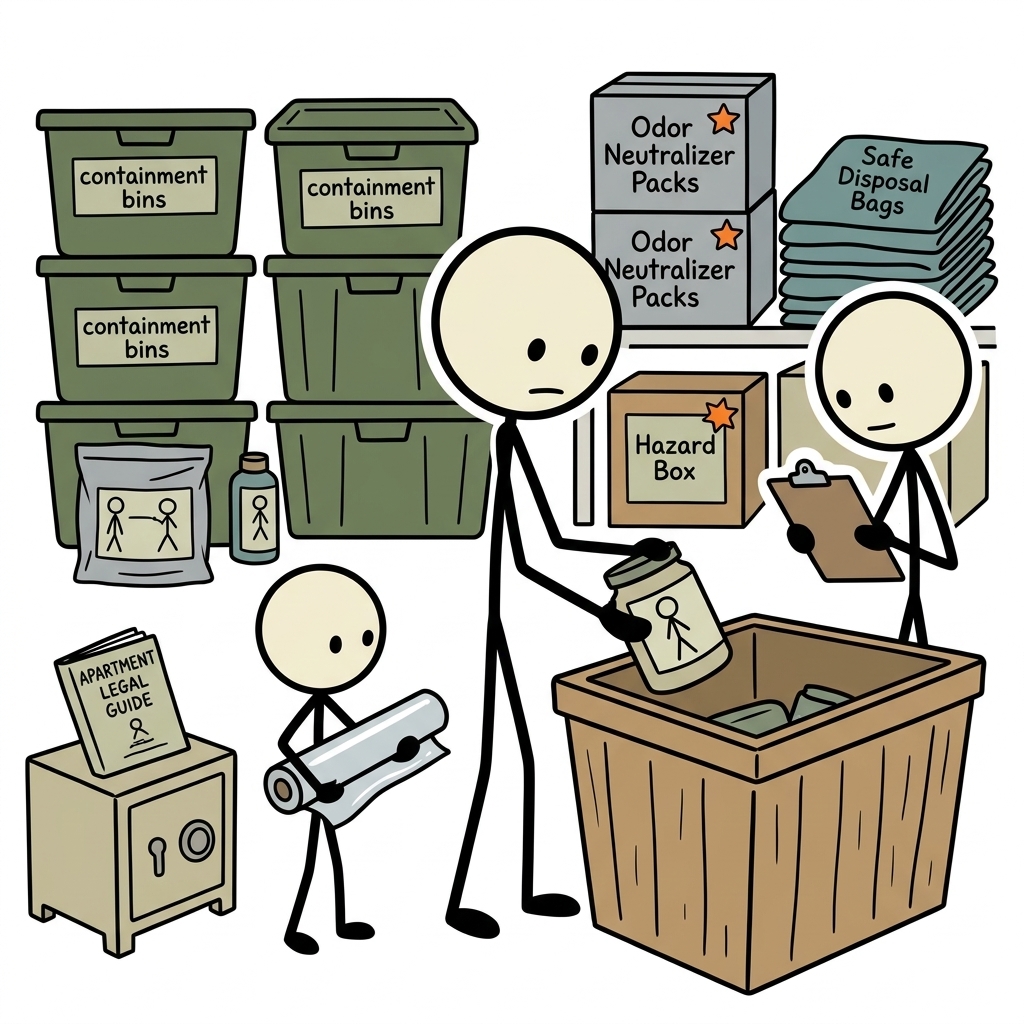
When looking to establish an emergency toilet apartment system, commercial portable toilets are an option, but they have severe limitations. Chemical "blue water" toilets hold very little volume and quickly become heavy, sloshing hazards that are incredibly difficult to empty without spilling. Instead, emergency management professionals advocate for the "Twin-Bucket System."
This system, popularized by emergency preparedness groups and disaster response agencies, separates liquid waste (urine) from solid waste (feces). It is simple, highly effective, and dramatically reduces odor and volume.
Why Separation Matters
Human waste only becomes exceptionally foul-smelling and highly hazardous when urine and feces are mixed. Feces contain millions of anaerobic bacteria. When mixed with the nitrogen and moisture of urine, these bacteria thrive, ferment, and produce volatile organic compounds (VOCs) and toxic ammonia gas.
By keeping them separate, urine remains relatively sterile and easy to manage, while feces can be dried out with carbon-rich cover materials, halting anaerobic decomposition and neutralizing odor. This separation is the cornerstone of emergency toilet apartment emergency preparedness.
Setting Up Bucket #1: Liquid Waste (Urine)
Urine accounts for roughly 90% of your daily human waste volume. Managing it separately saves massive amounts of heavy-duty plastic bags and prevents heavy, liquid-filled bags from leaking.
- The Setup: Dedicate a standard 5-gallon utility bucket solely for liquid waste. You do not need to line this bucket with plastic bags if you plan to empty it regularly, though a thin liner can make cleaning easier.
- The Cover Material: No heavy cover material is needed here. However, adding a cup of water mixed with a splash of white vinegar or a few drops of eucalyptus oil will neutralize the ammonia smell.
- Disposal: Because urine is generally pathogen-free in healthy individuals, it can be disposed of down a functioning graywater drain (if municipal lines are clear), poured onto soil away from water sources, or stored in sealed jugs for later disposal.
Setting Up Bucket #2: Solid Waste (Feces & Menstrual Waste)
This bucket is where the biological hazards reside. It must be treated with strict containment protocols.
- The Setup: Line a second 5-gallon bucket with a heavy-duty, puncture-resistant garbage bag (ideally 3 to 4 mil thick).
- The Seat: Fit the bucket with a snap-on toilet seat designed for 5-gallon buckets. Alternatively, split a pool noodle down one side and press it over the rim of the bucket to create a comfortable, padded seat.
- The Process: After every single use, the user must cover the waste with a layer of dry, carbon-rich material. The waste should be completely obscured from view. No toilet paper or wipes should be thrown into Bucket #1; all paper products must go into Bucket #2.
Odor Control Chemistry: The Dry Toilet Science
In a confined apartment, odor control is not just a matter of comfort—it is a psychological survival mechanism. High levels of sewer gas and fecal odors can induce nausea, headaches, and extreme stress. To keep your emergency toilet apartment odor-free, you must understand the chemistry of dry sanitation.
Carbon-Rich Cover Materials
The goal is to dry out the solid waste and create an aerobic environment where beneficial, non-smelly microbes can break down the organic matter. This requires carbon. The following materials are highly effective and should be stored as part of your emergency toilet apartment checklist:
| Material | Pros | Cons | Storage Footprint |
|---|---|---|---|
| Coco Coir (Coconut Pith) | Highly absorbent, excellent odor suppression, compact when dry. | Must be hydrated slightly to expand before use; can be dusty. | Very low (comes in compressed bricks). |
| Fine Wood Sawdust | Smells great (pine/cedar), highly absorbent, cheap. | Must be completely dry; bulky to store in apartments. | High. Requires large storage bins. |
| Peat Moss | Very acidic (kills pathogens quickly), excellent moisture control. | Dusty; environmentally unsustainable. | Medium. Compressed bales are available. |
| Kitty Litter (Clay-Based) | Familiar, easy to source, clumps liquid. | Extremely heavy when wet; does not aid decomposition; can create cement-like sludge in bags. | High weight-to-volume ratio. |
Chemical and Biological Additives
While natural carbon materials are best for dry twin-bucket systems, chemical additives can play a role in specific emergency toilet apartment setups:
- Superabsorbent Polymers (SAP): Often sold as "poo powder" or gelling agents. A single tablespoon can turn a quart of liquid into an odorless, solid gel within seconds. This is ideal if you are forced to use a single-bucket system where urine and feces cannot be separated.
- Powdered Lime (Calcium Hydroxide): Highly alkaline. Adding a small scoop of lime to solid waste raises the pH drastically, killing pathogens almost instantly and halting all biological activity (and thus, all odor). Caution: Lime is highly caustic; avoid inhaling the dust or getting it on your skin or eyes.
- Enzymatic Deodorizers: These do not stop decomposition but accelerate it using specialized bacteria that do not produce foul-smelling gases. They work best in moist environments but are less effective in bone-dry bucket systems.
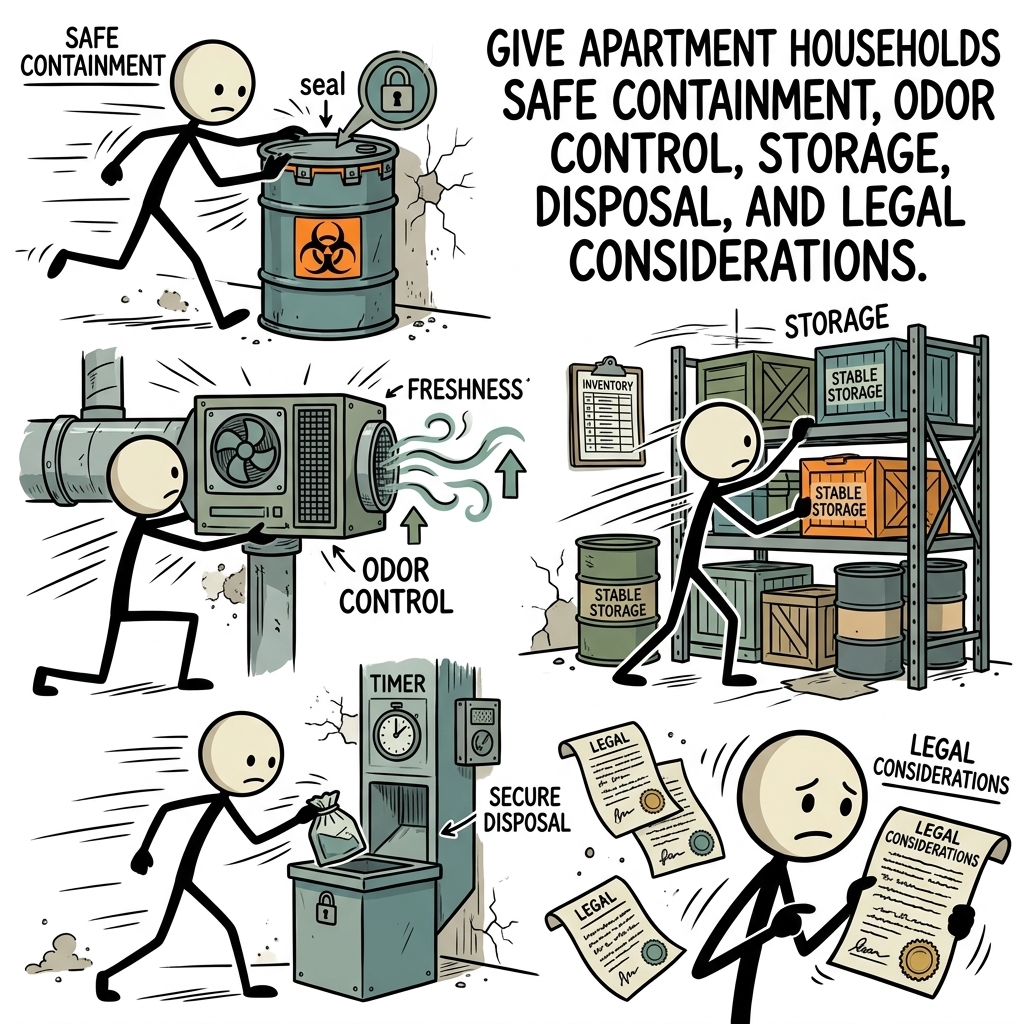
Safe Containment and Indoor Storage Protocols
Eventually, your solid waste bucket will fill up. In a high-rise apartment, you cannot simply walk down thirty flights of stairs every time someone uses the restroom. You must have a safe, hygienic, and structured storage protocol inside your living space.
Bag Selection: The Non-Negotiable Lifeline
Never use standard kitchen trash bags. They are typically thin (0.5 to 0.9 mil), stretch easily, and puncture under the weight of waste and cover material. Instead, source contractor bags that are at least 3 mil thick, or specialized biohazard bags. These bags are engineered to resist punctures from bone-dry cover materials, toilet paper rolls, or structural debris.
The "Go-Bag" Tie-Off Method
When Bucket #2 is roughly half to two-thirds full (never fill it to the brim, as it will be too heavy and difficult to seal safely):
- Put on heavy-duty nitrile gloves and a face mask.
- Gently press any excess air out of the bag, taking care not to inhale the venting air.
- Twist the top of the bag tightly into a "rope" at least six inches long.
- Fold this twisted rope over on itself to create a loop (the "gooseneck" fold).
- Secure this loop tightly with a heavy-duty zip tie or high-tensile duct tape. This creates a completely airtight, watertight seal that will not leak even if the bag is tipped over.
Securing the Storage Area
Where do you store these sealed biohazard bags in a small apartment?
- The Balcony Option: If you have a private balcony, this is the premier storage location. Store the sealed bags inside a secondary, heavy-duty plastic storage tote with a locking lid. This prevents pests (birds, rats, flies) from tearing the bags and keeps the waste out of direct sunlight, which can cause gases to expand inside the bags.
- The Utility Closet or Bathtub Option: If you do not have a balcony, dedicate your bathtub or a well-ventilated utility closet as the containment zone. Line the bathtub with heavy plastic sheeting first. Place your sealed waste bags inside hard-sided plastic bins with tight-fitting lids (such as Gamma Seal lids on 5-gallon buckets). This creates a double-containment system that protects your apartment from leaks and odors.
Disposal Protocols and Legal Considerations
What do you do with the waste when the emergency stretches from days into weeks? Understanding the legalities and logistics of emergency waste disposal is vital to avoid heavy fines, environmental contamination, and community health hazards.
The Legal Reality
Under normal operating conditions, federal, state, and municipal laws strictly regulate the disposal of human waste. Dumping raw sewage or fecal matter into public trash cans, storm drains, or open waterways is a severe biohazard violation and carries heavy criminal penalties.
However, during a declared State of Emergency, these rules are often modified by emergency management agencies. You must monitor local emergency broadcasts (via NOAA weather radio or local authorities) for specific instructions.
Emergency Disposal Pathways
When municipal services are disrupted, local governments generally authorize one of three emergency disposal pathways:
- The Double-Bag and Trash Pathway: In many urban emergencies, if the solid waste collection system is still partially functioning, authorities will instruct residents to double-bag human waste using the twin-bucket method and place it directly into municipal trash bins. Modern sanitary landfills are engineered to handle pathogens, making this far safer than having raw sewage running through city streets.
- Designated Collection Points: If garbage trucks cannot run, emergency services (such as the National Guard or FEMA) will establish localized biohazard drop-off points. These are often set up in school parking lots, parks, or transit hubs. Residents must transport their sealed, double-contained waste buckets to these locations.
- On-Site Emergency Burial (The Absolute Last Resort): If you are on the ground floor of an apartment complex with access to a courtyard, and there is absolutely no government support or waste pickup for weeks, emergency burial may become necessary.
Rules for safe burial: Dig a trench at least 2 to 3 feet deep. Ensure it is at least 200 feet away from any water source, well, or living area. Empty the bags into the trench (do not bury the plastic bags, as they will prevent decomposition and trap pathogens), cover the waste with a thick layer of soil and lime/ash, and pack it down to prevent animals from digging it up.
Never, under any circumstances, dump human waste into storm drains. Storm drains do not lead to wastewater treatment plants; they empty directly into local rivers, streams, and beaches, instantly contaminating the local Water Calculator for your entire community.
The Ultimate Emergency Toilet Apartment Checklist
To ensure your household is fully prepared for a sudden water or sewer failure, use this comprehensive emergency toilet apartment checklist. Keep these supplies stored together in a dedicated "Sanitation Kit" bin so they can be deployed in minutes.
| Category | Item Description | Target Quantity (For 2 People, 2 Weeks) | Verified |
|---|---|---|---|
| Containment | 5-Gallon Heavy-Duty Buckets (BPA-free not required, but structural strength is) | 2 Buckets (One for urine, one for feces) | [ ] |
| Containment | Snap-on toilet seat (fits standard 5-gallon buckets) | 1 Seat | [ ] |
| Containment | 3-Mil to 4-Mil Contractor Bags (55-gallon or 42-gallon size) | 20 Bags | [ ] |
| Containment | Heavy-duty Zip Ties (12-inch) or high-tensile Duct Tape | 1 Pack (50 count) | [ ] |
| Odor Control | Compressed Coco Coir Bricks or Fine Pine Sawdust | 2 Large Bricks or 1 Large Bag | [ ] |
| Odor Control | Superabsorbent Polymer (SAP) Gelling Powder | 1 Bottle (approx. 1-2 lbs) | [ ] |
| Hygiene | Nitrile Gloves (heavy-duty, 6-mil thickness) | 1 Box (50-100 count) | [ ] |
| Hygiene | Hand Sanitizer (minimum 60% alcohol content) | 3 Large Pump Bottles | [ ] |
| Hygiene | Biodegradable Wet Wipes (unscented) | 4 Packs (80 count each) | [ ] |
| Sanitization | Liquid Chlorine Bleach (unscented, regular strength) | 1 Gallon (for surface disinfection) | [ ] |
| Storage | Heavy-duty storage tote with locking lid (for sealed bag storage) | 1 Tote (27-gallon size) | [ ] |
Sanitation Maintenance and Disease Prevention Protocols
Setting up your emergency toilet apartment system is only half the battle. Maintaining strict hygiene protocols is what prevents the spread of pathogens within your household. During an infrastructure collapse, a simple stomach bug can quickly escalate into a life-threatening dehydration emergency due to the lack of clean, running water.
The "Clean Hand / Dirty Hand" Rule
When operating or servicing your emergency toilet system, assign roles or use the clean hand/dirty hand technique. One hand (usually your dominant hand) is designated as the "dirty hand" and is the only hand that touches the bucket, the waste bags, or the cover material scoop. The other hand remains the "clean hand," used only to touch clean surfaces, spray bottles, or clean toilet paper. This simple mental discipline drastically reduces cross-contamination.
Bleach Dilution for Surface Disinfection
Regularly wipe down the bucket toilet seat, the bucket rims, and the surrounding floor area with a fresh bleach solution. According to the CDC, a highly effective disinfectant solution can be made by mixing:
- 1/3 cup of regular, unscented household bleach per 1 gallon of cool water.
- Note: Bleach solutions degrade quickly. Mix a fresh batch every 24 hours to ensure full potency against highly resilient viruses and bacteria.
Managing Menstrual and Diaper Waste
Menstrual products and disposable diapers should never be mixed with urine in Bucket #1. They contain highly absorbent gel cores that will swell, ruin the bucket's capacity, and create a massive mess. Instead, drop these items directly into Bucket #2 (solid waste). Cover them immediately with a double portion of your carbon cover material or a direct sprinkle of powdered lime to lock in moisture and neutralize odors.
Empowered Urban Resilience
In a prolonged urban emergency, the difference between panic and poise often comes down to the most basic human needs. By understanding the unique mechanics of your apartment building's plumbing, implementing the scientifically proven twin-bucket waste separation system, and stocking the correct containment and odor-control tools, you transform a potentially chaotic biohazard crisis into a structured, manageable routine. You do not need a backyard to maintain your health, dignity, and safety. With the right gear and a clear, actionable plan, your apartment can remain a safe, sanitary haven, no matter what happens to the grid outside your door.
Frequently Asked Questions
What should a emergency toilet apartment plan include?
Start with the immediate safety steps, the supplies and records your household needs, a communication plan, and a regular review schedule. Follow local official guidance during an active emergency.
How often should I review emergency toilet apartment preparations?
Review them at least twice a year and whenever your household, medication, location, or local risks change. Replace expired supplies and practice key steps.
Where can I find reliable emergency guidance?
Use local emergency management alerts and established public-health or emergency-management agencies. A blog guide should support, not replace, official real-time instructions.