⚡ Key Facts
- Spike in Casualties: According to the Centers for Disease Control and Prevention (CDC), carbon monoxide poisoning cases spike dramatically during and immediately after winter storms, hurricanes, and prolonged grid failures. For the practical checklist side, use the community emergency preparedness guide.
- Lethal Output: The Consumer Product Safety Commission (CPSC) warns that a single standard portable gasoline generator can produce as much carbon monoxide as hundreds of idling cars, capable of reaching lethal concentrations in an enclosed space within minutes. For the practical checklist side, use the neighborhood preparedness network.
- The 20-Foot Rule: FEMA and the American Red Cross recommend placing portable generators at least 20 feet away from any residential structure, with the exhaust pointed directly away from windows, doors, and vents. For the practical checklist side, use the emergency communication plan.
- Silent Threat: Carbon monoxide is completely colorless, odorless, tasteless, and non-irritating, meaning victims often succumb to its effects in their sleep without ever realizing they are in danger. For the practical checklist side, use the family emergency planning guide.
- Battery Backups are Critical: Standard hardwired home carbon monoxide detectors will fail during a power outage unless they are equipped with fresh, functional backup batteries or are dedicated 10-year sealed battery units. For the practical checklist side, use the real-world emergency scenarios guide.
When a severe storm hits, a heatwave collapses the grid, or an ice storm snaps transmission lines, our immediate instinct is to restore normalcy. We reach for portable generators to keep the refrigerator running, light up our living spaces, and fire up alternative heating sources to ward off the biting cold. However, in our rush to keep our households running, we often overlook an invisible, deadly byproduct of off-grid combustion. Carbon monoxide (CO) is a quiet predator that claims hundreds of lives and hospitalizes more than 100,000 Americans every year, with a disproportionate number of these incidents occurring during emergency power outages. True resilience is not just about keeping the lights on; it is about ensuring that the air your family breathes remains safe when the grid goes dark. This guide provides actionable, step-by-step strategies for carbon monoxide poisoning prevention, ensuring your family stays safe during any emergency.
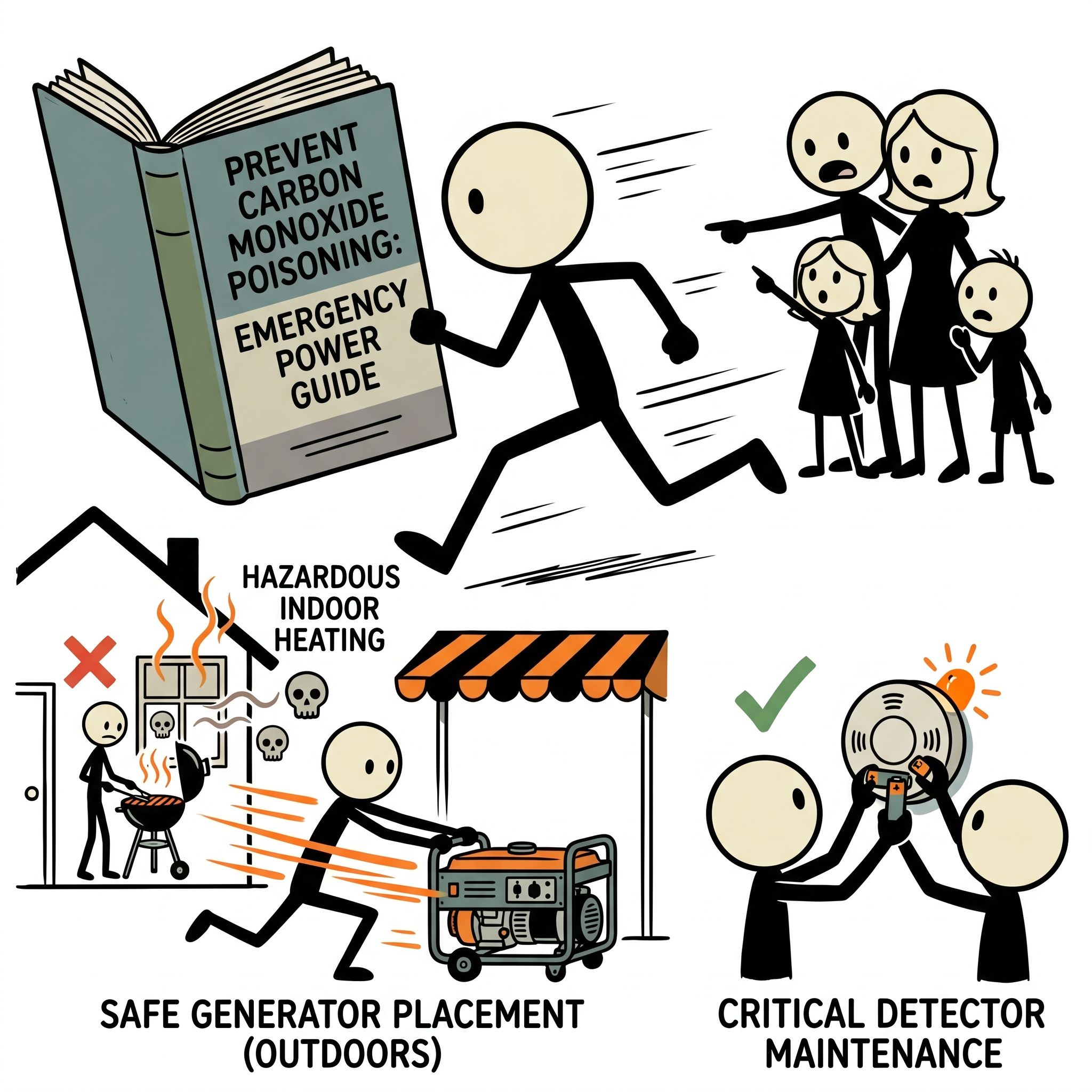
The Anatomy of a Silent Killer: Why CO is Exceptionally Dangerous
To implement effective silent killer prevention strategies, we must first understand the physiology of how carbon monoxide affects the human body. When we breathe, our lungs transfer oxygen to hemoglobin, a iron-rich protein in our red blood cells that carries oxygen to our vital organs. Carbon monoxide has an affinity for hemoglobin that is roughly 200 times greater than that of oxygen. When CO is present in the air, it quickly crowds out oxygen, binding to hemoglobin to form a compound called carboxyhemoglobin (COHb). This molecular hijacking starves the brain, heart, and nervous system of the oxygen they need to function.
The insidious nature of carbon monoxide poisoning lies in how its symptoms develop. Because the gas does not cause coughing, choking, or skin irritation, victims often mistake the early warning signs for common ailments or the general exhaustion associated with managing a power outage. The most common early symptoms include:
- Dull, throbbing headaches
- Dizziness and lightheadedness
- Nausea, vomiting, or stomach upset
- Muscle weakness and unexplained fatigue
- Confusion, disorientation, and blurred vision
As CO levels rise in the blood, these symptoms quickly progress to loss of consciousness, brain damage, and ultimately, death. When people are asleep or intoxicated, they may never experience the early warning signs, passing away quietly in their beds. This is why active prevention, continuous monitoring, and strict adherence to safety protocols are your only reliable lines of defense when utilizing alternative power and heating systems.
The Statistical Spike During Grid Failures
Data from the CDC and the National Oceanic and Atmospheric Administration (NOAA) consistently demonstrate a direct correlation between major weather events and surges in CO poisoning. For example, during the historic 2021 Texas winter freeze, hospitals across the state treated thousands of patients for carbon monoxide exposure, resulting in dozens of preventable deaths. When the electricity fails, individuals naturally turn to whatever tools they have on hand to stay warm and cook food, often without understanding the ventilation requirements of these devices. Understanding these risks is a vital component of practical power outage survival tips.
Emergency Generator Safety: The Physics of Proper Placement
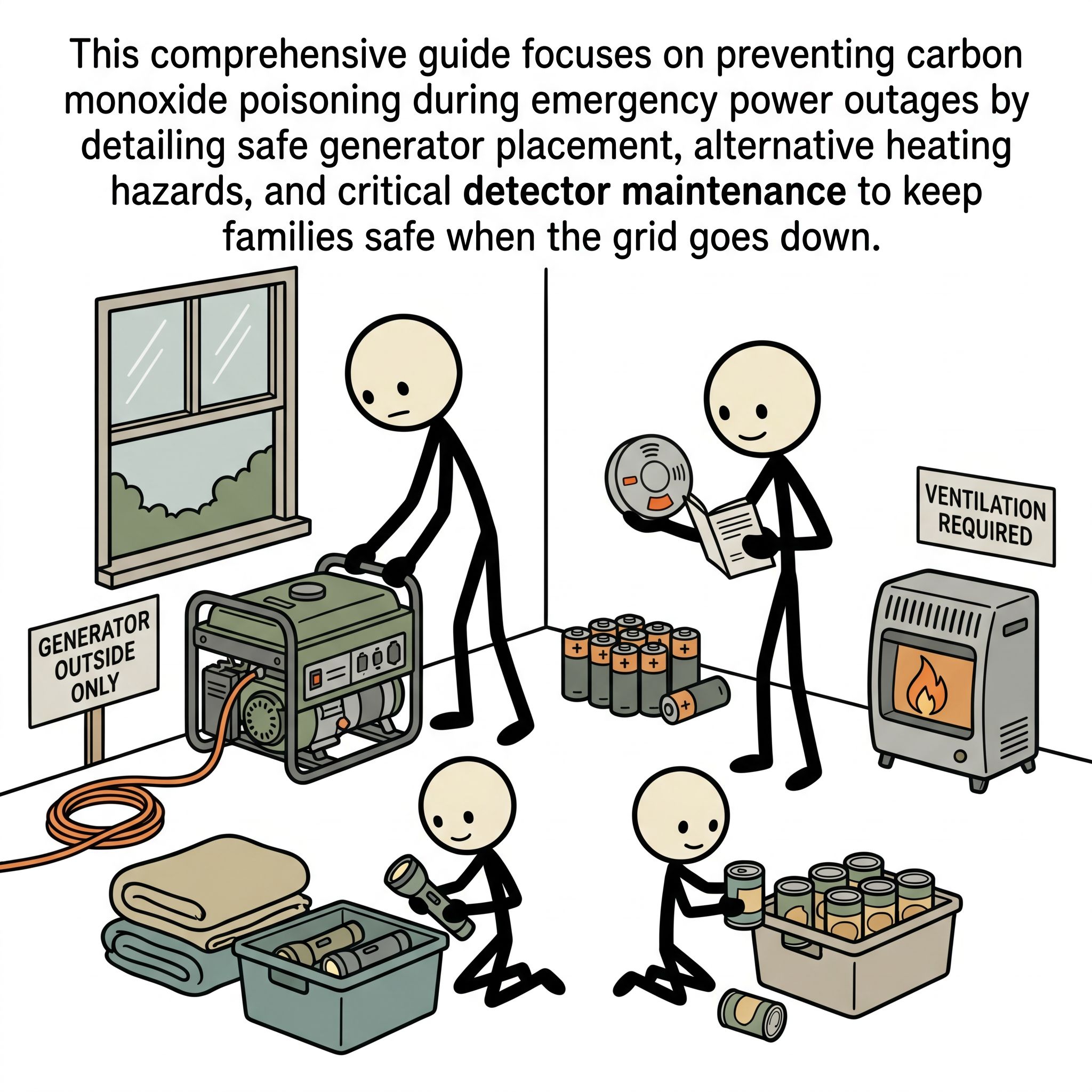
Portable gasoline, diesel, and propane generators are invaluable tools during an extended blackouts. They keep medical equipment running, preserve food supplies, and power essential water pumps. Yet, despite their utility, improper generator use is the leading cause of non-fire-related CO fatalities in the United States. To keep your family safe, you must treat your portable generator with the same safety protocols you would accord to an idling vehicle.
The Non-Negotiable 20-Foot Rule
The cornerstone of emergency generator safety is distance. You must never operate a generator closer than 20 feet to any door, window, vent, or opening of your home. Many homeowners assume that placing a generator just outside an open window or on a back deck is safe because it is "outdoors." This is a dangerous misconception.
Air currents, wind direction, and the natural thermal dynamics of a home can easily draw toxic exhaust fumes inside. Warm air rising inside a house creates a slight vacuum on the lower levels, pulling outdoor air—and any nearby generator exhaust—in through cracks around windows, doors, and foundation vents. Always position the generator at least 20 feet away, and ensure that the exhaust pipe points directly away from your home and any neighboring structures.
The Deadly Garage and Carport Illusion
One of the most common mistakes made during heavy rain or snowstorms is running a generator inside an open garage, carport, or covered porch to protect it from the elements. This practice is incredibly dangerous. Even with the garage door wide open and a fan running, a garage is an enclosed space that will rapidly trap lethal levels of carbon monoxide. The gas can easily seep through interior doors, drywall seams, and HVAC ductwork, filling the main living spaces of your home without your knowledge.
If you must protect your generator from rain, snow, or high winds, use a specialized, commercially manufactured generator tent or a freestanding, well-ventilated open-air shelter designed specifically for this purpose. These covers allow the engine to cool properly and vent exhaust freely while shielding the electrical components from wet weather.
Safe Refueling and Maintenance Protocols
Safe generator operation extends beyond placement; it also includes proper maintenance and refueling protocols. Before refueling your generator, you must always turn it off and let it cool down completely for at least 15 to 20 minutes. Gasoline spilled on a hot engine block or muffler can instantly vaporize and ignite, causing catastrophic fires and severe burn injuries.
Additionally, always use fresh, stabilized fuel. Stale gasoline can cause the engine to run inefficiently, resulting in incomplete combustion. Incomplete combustion significantly increases the volume of carbon monoxide produced by the engine. Keep your generator well-tuned, replace spark plugs regularly, and ensure the air filter is clean to keep the engine running as cleanly as possible.
| Generator Placement Zone | Safety Status | Primary Hazard / Risk Level |
|---|---|---|
| Inside Home, Basement, or Crawlspace | EXTREMELY DANGEROUS | Fatal carbon monoxide buildup within minutes. 100% risk of death. |
| Attached Garage or Carport (Door Open) | EXTREMELY DANGEROUS | Exhaust accumulates and seeps through walls and doors into living areas. |
| Covered Porch, Patio, or Balcony | HIGH RISK | Eddy currents and wind can push exhaust directly into windows and doors. |
| Outdoors, 5–15 Feet from Home | MODERATE RISK | Too close; changing wind patterns can easily drive toxic gases indoors. |
| Outdoors, 20+ Feet Away, Exhaust Pointed Away | SAFE & APPROVED | Standard safety zone. Minimizes risk of exhaust entering the home. |
Alternative Heating Hazards in Cold-Weather Outages
When winter storms knock out power, indoor temperatures can plummet rapidly. In a desperate bid to stay warm, many people turn to improvised heating methods that are never intended for indoor use. Recognizing these hazards is critical to carbon monoxide poisoning prevention during extreme cold-weather events.
The Danger of Charcoal Grills and Camp Stoves
Charcoal grills, hibachis, and portable propane camp stoves are designed strictly for outdoor cooking. Under no circumstances should they ever be used inside a home, cabin, tent, or camper, even for a brief period. Charcoal is particularly dangerous; it burns slowly and produces immense quantities of carbon monoxide through incomplete combustion. A charcoal grill smoldering in an enclosed room can create a lethal atmosphere in a matter of minutes, long after the coals have stopped glowing red.
Similarly, liquid-fueled camp stoves (such as those running on white gas, kerosene, or butane) are designed for open-air environments. Using them indoors to cook or boil water can quickly deplete the available oxygen in a room, leading to rapid, dangerous accumulation of CO gas.
The Myth of the Open Gas Oven
Another dangerous practice during winter blackouts is using a kitchen gas oven or stove burners to heat a home. Gas ovens are designed for safe, controlled combustion within a closed appliance, venting heat and minimal combustion byproducts into the kitchen over a limited timeframe. However, running an oven continuously with the door open disrupts the appliance’s airflow, causing incomplete combustion that produces high levels of carbon monoxide. Additionally, gas range burners left burning without pots or pans on them can burn inefficiently, steadily releasing toxic gases into your living space.
Safe Indoor Heating Alternatives
If you must use an alternative indoor heater during a power outage, rely only on appliances specifically rated, tested, and certified for indoor use. The most common safe option is an indoor-safe portable propane heater (such as those certified to the ANSI Z21.103 standard). These heaters feature built-in safety systems, including:
- An Oxygen Depletion Sensor (ODS) that automatically shuts off the heater if oxygen levels in the room drop below a safe threshold.
- A tip-over safety switch that cuts fuel delivery if the unit is knocked over.
Even when using an indoor-safe heater, you must follow the manufacturer’s operating instructions to the letter. This typically includes maintaining a specific clearance around the heater (usually 3 feet from flammable materials) and cracking a window open slightly (at least 3 to 4 square inches) to ensure a continuous supply of fresh outdoor oxygen. For true peace of mind, prioritize non-combustion heating methods first: layer your clothing, use high-quality thermal blankets, seal drafts around windows and doors, and gather your family in a single, well-insulated room to preserve body heat.
Carbon Monoxide Detector Placement & Maintenance
Because carbon monoxide is invisible to our natural senses, electronic detection is your family’s primary line of defense. Proper carbon monoxide detector placement and diligent maintenance are critical safety protocols that must be established long before a power outage occurs.
Where to Place Carbon Monoxide Detectors
Carbon monoxide has a molecular weight slightly lighter than air, meaning it diffuses evenly throughout a room rather than settling near the floor or rising directly to the ceiling like smoke. Therefore, proper placement is less about height and more about location relative to sleeping areas and potential sources of the gas.
For maximum protection, follow these placement guidelines recommended by the National Fire Protection Association (NFPA):
- On Every Level: Install at least one CO detector on every level of your home, including the basement and any habitable attics.
- Outside Sleeping Areas: Place a detector in the immediate hallway outside every bedroom or sleeping area. If bedrooms are located in different wings of the house, each wing requires its own detector.
- Inside Bedrooms: If you sleep with the bedroom doors closed, install a detector inside each bedroom to ensure the alarm can be heard clearly.
- Keep Distance from Fuel-Burning Appliances: To prevent false alarms, place detectors at least 15 to 20 feet away from furnaces, water heaters, stoves, and fireplaces.
- Avoid Dead Air Spaces: Do not place detectors directly next to windows, exterior doors, drafty areas, ceiling fans, or in dead air spaces behind curtains or furniture.
The Critical Importance of Battery Backups
Many modern homes feature hardwired carbon monoxide detectors that run on the household’s main electrical system. However, when a storm knocks out the power grid, these detectors will shut down completely unless they have a functional battery backup. If you rely on hardwired units, you must test and replace their backup batteries regularly.
A highly reliable alternative is to install dedicated, sealed 10-year lithium battery-powered CO detectors. These standalone units operate completely independently of your home's electrical grid, ensuring continuous, uninterrupted monitoring for a decade without requiring battery changes. Make it a habit to test every detector in your home monthly by pressing the "test" button, and vacuum them gently with a soft brush attachment to remove dust and pet dander that can clog the sensor vents.
Understanding Sensor Lifespans and Replacement Dates
Carbon monoxide detectors do not last forever. The internal electrochemical sensors that detect the gas degrade over time, losing their sensitivity. Most CO detectors have a lifespan of 5 to 10 years, depending on the manufacturer and model.
Modern detectors feature an end-of-life warning signal—typically a unique, intermittent chirp that is distinct from a low-battery warning. Do not ignore this chirp; it means the device’s sensor is no longer capable of protecting your family. Always write the installation date on the back of each detector with a permanent marker when you first install it, and replace the entire unit immediately once it reaches its expiration date.
Emergency Protocols: What to Do If the Alarm Sounds
When a carbon monoxide detector alarms, you must treat it as an immediate, life-threatening emergency. There is no time for hesitation, investigation, or second-guessing. You must act quickly and decisively to protect everyone inside the home.
Step-by-Step Evacuation Plan
If your carbon monoxide alarm sounds, or if anyone in your home begins to exhibit symptoms of CO poisoning, execute the following emergency protocol immediately:
- Do Not Look for the Source: Do not waste time trying to find where the gas is coming from, opening windows to ventilate the house, or shutting down appliances. Your priority is getting clean air.
- Evacuate Immediately: Gather all household members, including pets, and exit the building immediately. Ensure everyone stays together.
- Account for Everyone: Once outside, move to a designated meeting spot a safe distance from the house (such as the end of the driveway or a neighbor's yard) and verify that everyone is accounted for.
- Call 911: Call emergency services from your cell phone or a neighbor's house. Inform the dispatcher that your carbon monoxide alarm is sounding and report any symptoms of exposure.
- Do Not Re-Enter: Never re-enter the home for any reason until emergency responders have cleared the structure, identified the source of the leak, and declared the air safe to breathe.
Medical Triage and Treatment
If anyone has been exposed to carbon monoxide, they must be evaluated by medical professionals immediately. Even if symptoms seem mild, CO can linger in the bloodstream and cause delayed neurological complications. In emergency rooms, carbon monoxide poisoning is treated by administering high-flow, 100% pure oxygen through a tight-fitting mask. This speeds up the rate at which carbon monoxide is cleared from the hemoglobin, restoring normal oxygen delivery to vital tissues.
In severe cases of poisoning—such as when a victim is unconscious, pregnant, or showing signs of cardiac distress—doctors may recommend hyperbaric oxygen therapy (HBOT). This treatment involves placing the patient in a pressurized chamber filled with pure oxygen, which rapidly forces oxygen into the blood plasma and tissues, preventing long-term brain damage and cardiovascular complications.
Building a Culture of Off-Grid Safety
Surviving a power outage requires more than just gathering supplies; it demands a proactive mindset focused on safety and prevention. By understanding how carbon monoxide behaves, implementing safe generator placement rules, avoiding dangerous indoor heating methods, and maintaining reliable detectors, you can protect your household from this silent threat. Share these life-saving protocols with your family, neighbors, and community to ensure everyone stays safe when the grid goes down. Preparation, vigilance, and clear safety habits are your best tools for navigating any emergency with confidence.
Frequently Asked Questions
What are the primary sources of carbon monoxide during an emergency?
The primary sources are portable generators, charcoal grills, camp stoves, and gas-powered space heaters used indoors or in poorly ventilated areas during power outages.
What are the symptoms of carbon monoxide poisoning?
Common symptoms include headache, dizziness, weakness, nausea, vomiting, chest pain, and confusion. It is often described as 'flu-like' but without a fever.
How far away should a portable generator be placed from a home?
Portable generators should always be operated outdoors, at least 20 feet away from all windows, doors, and vents to prevent exhaust from entering the home.
Can I use a gas oven or stove to heat my home during a power outage?
No, you should never use a gas oven, stovetop, or grill to heat your home, as this can cause a rapid and deadly buildup of carbon monoxide gas.
What should I do if my carbon monoxide detector alarms?
Immediately move outside to fresh air, call 911 or emergency services, and do not re-enter the building until emergency responders have cleared it.