⚡ Key Facts: Long-Term Food Stability
- The 18°F Rule: According to food science research from Brigham Young University (BYU), the chemical degradation rate of stored food doubles for every 10°C (18°F) increase above optimal storage temperatures (50°F–60°F).
- The Oxygen Threshold: Freeze-dried food shelf life depends on maintaining an internal atmosphere of less than 0.5% residual oxygen; exceeding 2% oxygen accelerates lipid oxidation and renders fats rancid within 24 to 36 months.
- Moisture Critical Point: Freeze-drying reduces water content to between 1% and 4%; exposure to an ambient relative humidity above 60% through compromised packaging elevates water activity ($a_w$) above 0.60, triggering rapid microbial and enzymatic spoilage.
- FEMA & USDA Baselines: Federal emergency guidelines stipulate that emergency food caches must be stored in cool, dark, and dry locations, noting that uncontrolled heat (such as uninsulated attics or sheds) can reduce a 25-year shelf life to less than 3 years.
- Packaging Integrity: Multi-layer metallized laminates (Mylar) provide a near-zero Oxygen Transmission Rate (OTR) and Moisture Vapor Transmission Rate (MVTR), whereas standard high-density polyethylene (HDPE) buckets alone permit gradual gas migration.
When catastrophic floods inundated parts of the American Southeast following historic atmospheric river events documented by NOAA, emergency management teams and self-reliant homeowners faced a quiet, secondary disaster: compromised emergency provisions. Families who had invested thousands of dollars in high-grade freeze-dried meals opened decade-old sealed containers only to discover brown, foul-smelling, unpalatable rations. The tins were intact and the factory seals unbroken, yet the food inside was thoroughly degraded. The culprit was neither manufacturer error nor an expired calendar date; it was an invisible, multi-year exposure to shifting thermal bands, elevated vapor pressure, and trace atmospheric gas transfer. Understanding how heat, humidity, oxygen, and ultraviolet radiation interact with packaging materials is the single most critical factor in guaranteeing that your nutritional survival cache functions when civil infrastructure fails. For the practical checklist side, use the community emergency preparedness guide.
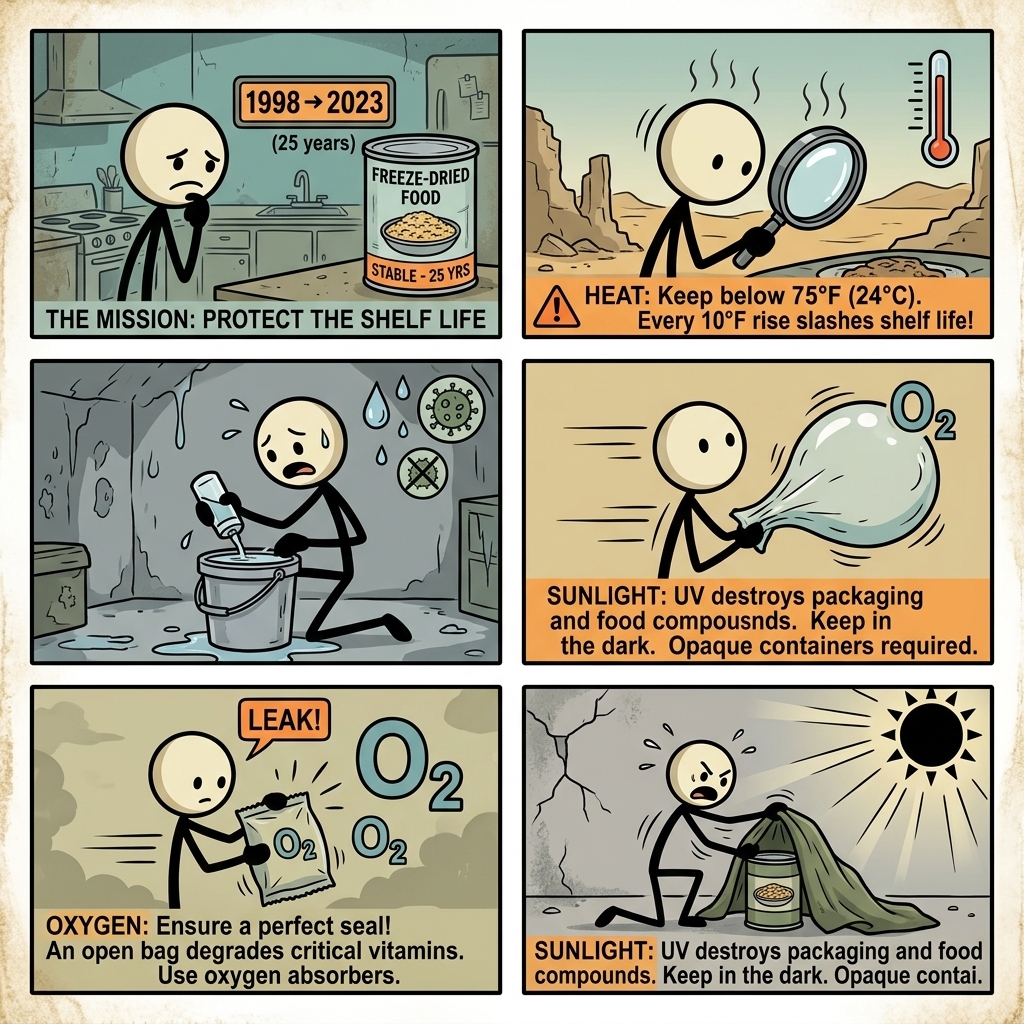
The Science Behind the 25-Year Guarantee: Baseline Assumptions vs. Reality
The commercial promise of a 25-to-30-year freeze-dried food expiration date is not a marketing fabrication, but it is contingent upon strict laboratory parameters. Manufacturers calculate these timelines using accelerated shelf-life testing (ASLT) based on the Arrhenius equation, which models chemical reaction rates under elevated temperatures to project long-term stability. Under baseline laboratory conditions—a constant 50°F to 60°F (10°C to 15.5°C), zero ultraviolet radiation, an oxygen-depleted internal atmosphere below 0.1%, and relative humidity below 30%—the biochemical deterioration of cellular structures essentially freezes. For the practical checklist side, use the neighborhood preparedness network.
Freeze-drying, or lyophilization, works through sublimation: raw or cooked food is frozen to between -30°F and -50°F, placed within a vacuum chamber, and subjected to subtle heat. The ice transitions directly from solid to gas, evacuating 96% to 99% of total moisture without destroying the structural, enzymatic, or nutritional matrix of the ingredients. Unlike traditional dehydration, which applies sustained heat that alters cellular walls and leaves roughly 10% to 15% residual moisture, freeze-drying creates an ultra-light, rigid, porous sponge. This open-pore architecture gives freeze-dried food its rapid reconstitution capability, but it also creates an exceptionally vulnerable surface area for environmental degradation. For the practical checklist side, use the emergency communication plan.
When real-world conditions diverge from pristine laboratory assumptions, the clock speeds up dramatically. Storing freeze-dried food in an environment subject to seasonal swings, ambient vapor pressure, and subtle atmospheric infiltration transforms your emergency supplies into an unstable biochemical system. To preserve life-saving calories for the long haul, you must understand and mitigate the four primary vectors of degradation: thermal stress, moisture migration, oxidative breakdown, and photolytic decay. For the practical checklist side, use the family emergency planning guide.
Thermal Degradation: Why Heat Is the Ultimate Shelf-Life Destroyer
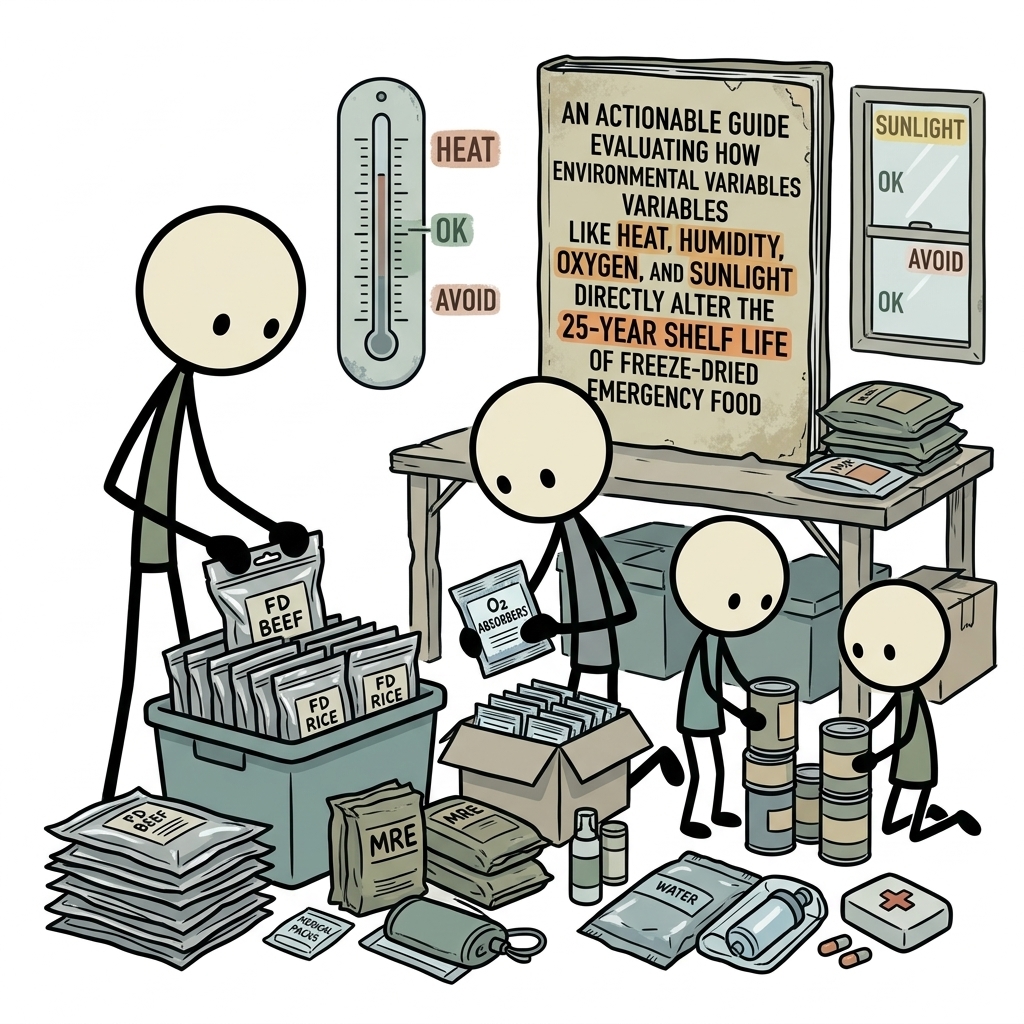
Heat is the primary driver of chemical degradation in stored nutrients. In thermodynamics, thermal energy increases molecular movement, accelerating kinetic reactions between trace compounds remaining within the food packaging. Long-term food preservation research conducted by the Department of Nutrition, Dietetics, and Food Science at BYU confirms that temperature is the most critical variable dictating freeze-dried food shelf life. Storing food at sustained temperatures of 80°F to 90°F (26.6°C to 32.2°C) reduces its shelf life by 50% to 75% compared to baseline projections.
The Arrhenius Equation in Practical Emergency Storage
The Arrhenius reaction rate principle dictates that for every 10°C (18°F) rise in ambient storage temperature, the rate of chemical breakdown roughly doubles. If a manufacturer rates a pouch of beef stroganoff for 25 years at a constant 60°F (15.5°C), sustained storage at 78°F (25.5°C) cuts that viability to roughly 12.5 years. If that same pouch sits in a poorly ventilated garage or attic during summer heatwaves, where temperatures routinely hit 96°F (35.5°C) to 114°F (45.5°C), the rate of reaction quadruples or octuples. In practical terms, three summers in an uninsulated attic can degrade freeze-dried rations to the same extent as two decades in a climate-controlled root cellar.
The Non-Enzymatic Maillard Reaction and Nutrient Loss
Sustained thermal exposure accelerates non-enzymatic browning, commonly known as the Maillard reaction. While this process is desirable during cooking for flavor development, it is destructive inside long-term packaging. In an enclosed pouch over months or years, the reaction between reducing sugars and amino acids degrades usable protein quality, locks away essential amino acids like lysine, produces unpalatable off-flavors, and turns pale foods into a dark, leathery mass.
Micronutrients suffer even faster under thermal stress:
- Vitamin C (Ascorbic Acid): Highly sensitive to heat; decays rapidly above 75°F, losing up to 80% of biological activity within 24 months under warm conditions.
- Thiamine (Vitamin B1): Thermally unstable; heat breaks its methylene bridge, neutralizing its capacity to prevent metabolic disorders and fatigue during a survival scenario.
- Fat-Soluble Vitamins (A and E): Prone to thermal isomerization, reducing their biological bioavailability even before noticeable rancidity develops.
Humidity and Water Activity: Breaking the Sublimation Shield
Moisture is the universal catalyst for biological decay. The Federal Emergency Management Agency (FEMA) and the Centers for Disease Control and Prevention (CDC) consistently warn that floodwaters and ambient moisture represent immediate threats to survival rations. In freeze-dried food, stability is governed by "water activity" (denoted mathematically as $a_w$), which measures the vapor pressure of water in a substance divided by the vapor pressure of pure water at the same temperature.
Water Activity ($a_w$) Thresholds in Food Preservation
Freeze-dried food leaves the vacuum chamber with an $a_w$ rating between 0.10 and 0.20. At this desiccated level, biological and biochemical activity ceases. Microorganisms cannot extract the free moisture required to facilitate metabolic processes, cell division, or spore germination. However, moisture transmission through compromised barriers shifts these values toward dangerous thresholds:
| Water Activity ($a_w$) | Biochemical / Biological Impact | Direct Consequence on Stored Rations |
|---|---|---|
| 0.10 – 0.25 | Absolute dormant state; zero microbial activity; lipid oxidation occurs at baseline minimums. | True 25-to-30-year shelf life stability maintained. |
| 0.30 – 0.50 | Accelerated non-enzymatic browning (Maillard reaction); loss of structural crispness; caking of powdered items. | Decline in vitamin potency; structural collapse of rehydrated textures; development of stale off-notes. |
| 0.60 | Critical microbiological threshold; xerophilic molds and osmophilic yeasts can begin proliferation. | Visual mold development; irreversible spoilage; loss of shelf stability within weeks. |
| 0.80 – 0.85 | Pathogenic bacteria threshold; proliferation of Staphylococcus aureus and enteric pathogens. | Severe biological contamination; production of heat-stable enterotoxins; food poisoning hazard. |
| 0.91 – 0.95 | Spore germination threshold for anaerobic pathogens, including Clostridium botulinum. | Lethal toxicity hazard; absolute failure of emergency food cache. |
Moisture Vapor Transmission Rate (MVTR) and Barrier Failures
Water vapor behaves according to Dalton’s Law of Partial Pressures: it travels from areas of high vapor pressure (a humid basement or garage) to areas of low vapor pressure (the bone-dry interior of a freeze-dried pouch). The only defense is the Moisture Vapor Transmission Rate (MVTR) of the storage container. Standard clear plastics, including food-grade polyethylene, polypropylene, and ordinary PET jars, are semi-permeable membranes at the molecular level. Over a 5-year timeline, ambient water vapor steadily penetrates these plastics.
True long-term food preservation requires a barrier with an MVTR approaching absolute zero (
lt; 0.001\text{ g/m}^2/\text{day}$). This is achieved exclusively through thick, aluminum foil-laminated barrier films (genuine Mylar) or hermetically sealed metal cans (such as #10 enamel-lined steel tins). When seal integrity fails or non-barrier materials are used, the porous freeze-dried food acts as a chemical desiccant, drawing moisture directly out of the ambient air until textural collapse, enzymatic reactivation, and mold colonization run their course.Oxygen Infiltration: The Chemical Mechanics of Lipid Rancidity
Atmospheric air is roughly 20.9% oxygen ($O_2$), an aggressive, electron-hungry molecule that drives oxidation. When oxygen contacts unprotected food compounds, it systematically dismantles the chemical integrity of fats, pigments, and vitamins. In freeze-dried food, where the extensive surface area is exposed to internal headspace gases, uncontrolled oxygen levels are the leading cause of premature freeze-dried food expiration.
Lipid Peroxidation: How Emergency Fats Turn Toxic
Fat is the most calorie-dense macro-element in a survival diet, offering 9 calories per gram compared to 4 calories per gram from carbohydrates and proteins. However, unsaturated and polyunsaturated lipids contain weak carbon-carbon double bonds susceptible to free-radical attack. This autoxidation process follows three distinct stages:
- Initiation: Trace heat, ambient light, or metal catalysts generate free radicals from unsaturated fatty acids.
- Propagation: These radicals bind instantly with molecular oxygen, creating peroxyl radicals that strip hydrogen from adjacent fatty acids, triggering an exponential chain reaction.
- Termination: Peroxides degrade into volatile secondary compounds: hexanals, ketones, aldehydes, and short-chain carboxylic acids.
The result is oxidative rancidity. Food takes on an acrid, varnish-like odor, a sour or metallic flavor, and an unpalatable, soapy texture. Consuming oxidized fats causes gastrointestinal inflammation and cellular oxidative stress—a dangerous physiological liability when medical infrastructure is offline. Freeze-dried meats, eggs, dairy, and oily vegetables like avocados or nuts are vulnerable to rapid spoilage if residual oxygen remains within the packaging.
The Critical Role of Oxygen Absorbers
Achieving the required long-term threshold of less than 0.5% (ideally under 0.1%) oxygen requires iron-based oxygen scavengers. These packets contain finely divided iron powder, sodium chloride, activated carbon, and a trace moisture carrier. When sealed inside a container with low-permeability walls, the iron oxidizes into iron oxide ($Fe_2O_3$), locking gaseous $O_2$ into a harmless solid compound.
A common failure in DIY emergency food storage guide is under-sizing the oxygen absorber capacity. A container's total volume does not equal its air volume; freeze-dried food contains substantial interstitial air within its porous core. An improperly sized absorber leaves excess atmospheric oxygen in the pouch, allowing lipid autoxidation to continue unchecked over years of storage.
Sunlight and UV Radiation: Photolytic Breakdown of Emergency Rations
Solar radiation, particularly within the ultraviolet (UV-A and UV-B) spectrum (290 to 400 nm), drives direct photolytic decomposition. Photons interact with sensitive chemical bonds, exciting electrons and generating aggressive free radicals independently of temperature. When storing freeze-dried food in clear Mason jars or transparent PET containers, light exposure significantly shortens shelf life.
Riboflavin, Pigments, and Photo-Oxidation
Riboflavin (Vitamin B2) serves as an internal photosensitizer in food. When exposed to light, it absorbs photon energy and transfers it directly to oxygen molecules, generating singlet oxygen ($^1O_2$)—a high-energy state of oxygen that oxidizes proteins and lipids up to 1,500 times faster than ground-state oxygen. UV radiation also breaks down natural pigments, such as carotenoids (beta-carotene, lycopene) and chlorophyll. Carrots, sweet potatoes, and green vegetables turn a pale, washed-out greyish-yellow, signaling the breakdown of antioxidants, provitamin compounds, and basic nutritional value.
Packaging must provide an absolute optical barrier. Clear food-grade buckets, standard plastic totes, and transparent vacuum bags fail this requirement. Clear containers can serve as secondary holding vessels only when placed within a light-locked environment, or if the food is sealed within opaque, aluminum-lined laminates.
Household Storage Environments: A Comparative Risk Assessment
The primary reason survival caches fail prematurely is improper placement. Homeowners often place emergency rations in unconditioned spaces to keep them out of everyday living areas. To maintain optimal emergency food storage conditions, evaluate how common domestic microclimates impact the four environmental stressors.
| Storage Location | Temperature Range | Relative Humidity | Expected 25-Year Viability Retention | Primary Vulnerability Factor |
|---|---|---|---|---|
| Unconditioned Attic | 30°F to 130°F (-1°C to 54°C) | 20% to 90% (Wild Fluctuations) | 10% to 20% (Fails within 2–5 years) | Catastrophic heat; severe thermal degradation of vitamins and fats. |
| Attached Garage / Tool Shed | 20°F to 110°F (-6°C to 43°C) | 30% to 85% (High Variability) | 25% to 40% (Fails within 5–8 years) | Thermal spikes, exhaust fumes, volatile organic compounds (VOCs). |
| Unfinished Basement | 50°F to 75°F (10°C to 24°C) | 60% to 90% (Consistently High) | 60% to 75% (Fails within 12–15 years) | Moisture vapor transmission, pinhole rust on tins, mold proliferation. |
| Finished Sub-Grade / Safe Room | 60°F to 68°F (15°C to 20°C) | 40% to 50% (Mechanically Controlled) | 90% to 100% (Achieves full 25–30 years) | None; ideal baseline for long-term food preservation. |
| Interior Climate-Controlled Closet | 68°F to 72°F (20°C to 22°C) | 35% to 50% (Stable Air) | 80% to 90% (Achieves 20–25 years) | Slightly higher than ideal temperature, but stable and safe. |
As the data indicates, temperature stability is essential. A cool, unfinished basement protects against thermal stress, but high relative humidity creates a distinct vector of failure. Moisture can corrode the seams of metal #10 cans, allowing microscopic air leaks, and degrade the outer nylon layers of Mylar pouches. Conversely, garages expose packaging to thermal extremes that accelerate chemical breakdown. The safest domestic storage locations are finished, interior spaces: climate-controlled sub-grades, centralized closets, or space under primary-floor beds.
Packaging Material Science: Building a Multi-Tiered Environmental Defense
To resist ambient heat, humidity, oxygen, and light, survivalists employ multi-tiered packaging strategies. No single layer of material solves every environmental risk; a multi-barrier defense uses complementary materials to counter specific physical threats.
Mylar (BoPET/Al/PE Laminates)
True survival-grade Mylar is not a single film; it is a multi-layer composite. The outer layer is typically biaxially-oriented polyethylene terephthalate (BoPET) for puncture resistance and tensile strength. The center is a micro-thin layer of rolled aluminum foil (Al), which provides an absolute gas, moisture, and light barrier. The inner layer is a food-grade linear low-density polyethylene (LLDPE) designed to melt under high heat (375°F to 425°F) to create a clean, hermetic seal.
When selecting Mylar for storing freeze-dried food, material thickness is critical:
- 3.5 to 4.5 Mil Thickness: Standard commercial grade. Adequate for short-term preservation (3 to 7 years), but prone to flex-cracking and pinhole development during movement or packing.
- 7 to 7.5 Mil Thickness: The gold standard for survival caches. Provides structural stiffness, extreme puncture resistance against sharp, freeze-dried pasta edges, and reliable protection against gas diffusion over decades.
Secondary Defense: Food-Grade HDPE Buckets
While 7 mil Mylar excels as a barrier against gases and light, it remains vulnerable to physical punctures, blunt impacts, floodwaters, and rodent attacks. Mice, rats, and insects can chew through multi-layer foil laminates if food odors are present on the exterior seal. Storing sealed Mylar pouches inside 5- or 6-gallon high-density polyethylene (HDPE) buckets provides the necessary mechanical protection.
For added protection in flood-prone areas, use buckets equipped with rubber-gasketed lids, such as Gamma Seal lids. These create a watertight barrier that keeps high-humidity air and ground moisture away from the interior pouches. Keep buckets elevated at least two to four inches off bare concrete floors using wooden pallets or composite skids; concrete slabs wick ground moisture and transfer ground-chill, causing localized condensation beneath bottom containers.
Actionable Protocols: Verifying and Maintaining Cache Integrity
A set-it-and-forget-it mindset is the primary operational flaw in civilian survival preparedness. Packaging materials can suffer manufacturing defects, environmental shifts can alter basement humidity, and rodents can compromise secondary containment. Maintain cache stability through an annual, actionable maintenance schedule.
1. Deploy Digital Temperature and Humidity Loggers
Do not guess your storage environment's conditions. Place a digital hygrometer/thermometer with data-logging capabilities inside your food storage space. Many modern units connect via Bluetooth or low-power wireless, logging 365 days of ambient metrics. Set your alert thresholds to flag temperatures exceeding 75°F (24°C) or relative humidity climbing past 60%. If the loggers reveal seasonal spikes, take immediate steps to remediate the space with portable dehumidifiers or by moving your cache.
2. The Tactile Pouch Inspection ("Pillow vs. Brick" Test)
During your annual inspection, examine individual Mylar pouches using tactile assessment:
- The Vacuum Fallacy: Many commercial freeze-dried meals are not vacuum-sealed; they are flushed with inert nitrogen gas before an oxygen absorber is added. A loose pouch is not necessarily compromised. However, it should look slightly drawn down—similar to an item packed at a higher altitude—due to the absorption of the 20.9% atmospheric oxygen volume by the scavenger packet.
- The Warning Sign: If a pouch is taut and swollen like an over-inflated balloon, remove it from the cache immediately. This swelling indicates gas production caused by active microbial fermentation or advanced chemical decomposition. Do not consume food from a bloated pouch.
- Pinhole Verification: In a dark room, hold an empty secondary inspection light behind the seals and folds of your pouches. If points of light shine through the aluminum foil layer, the barrier has broken down, leaving the inner polyethylene vulnerable to slow gas diffusion.
3. Physical #10 Can Seal and Seam Inspections
Metal #10 cans offer strong structural protection, but high humidity can cause serious points of failure. Inspect the double-seamed rims along the top and bottom of each can for micro-pitting or surface rust. Condensation settling into the lip can slowly corrode the tinplate, creating microscopic pathways for oxygen to enter. Wipe down rusted surfaces, assess the depth of any oxidation, and if surface pitting approaches the internal seal, transfer the contents to a fresh 7 mil Mylar pouch with a new oxygen absorber.
4. The Organoleptic (Sensory) Testing Protocol
Include an extra "sacrificial" single-serving pouch of your baseline staples (such as freeze-dried eggs, beef crumbles, or butter powder) for regular quality checks. Every three to five years, open one sacrificial packet to perform an organoleptic assessment:
- Visual Inspection: Look for Maillard browning, irregular dark spots, or a dull, grey cast on colored foods.
- Olfactory Test: Smell the contents immediately upon opening. Any trace of wet cardboard, stale paint, or pungent vinegar indicates advanced lipid oxidation or chemical breakdown.
- Rehydration Rate: High-grade freeze-dried food absorbs cold or hot water within 8 to 12 minutes. If the porous cellular matrix has collapsed from moisture migration, the food will remain tough, gritty, and resistant to uniform rehydration.
Preserving Your Survival Investment
Achieving a reliable 25-year shelf life for freeze-dried food requires deliberate, science-based environmental management. Lycopene, thiamine, complete proteins, and clean caloric fats do not spontaneously persist for a quarter-century on luck; they survive because an unbroken chain of packaging science and environmental controls shields them from the natural laws of degradation. The cost of proper food preservation is minimal compared to the loss of your emergency sustenance during a prolonged crisis.
Take charge of your food security today. Audit your storage locations, remove your emergency rations from attics and garages, and relocate your cache to stable, dark, climate-controlled spaces. Pair heavy 7 mil foil laminates with reliable oxygen absorbers, secure them inside rugged secondary containment, and monitor your baseline conditions with accurate digital tools. By managing heat, humidity, oxygen, and light, you guarantee that your emergency provisions will be just as nutritious, calorie-dense, and life-sustaining in twenty-five years as they were the day they left the vacuum chamber.
Frequently Asked Questions
What is the typical shelf life of freeze-dried food under optimal conditions?
When packaged in hermetically sealed #10 cans or 7-mil Mylar pouches with oxygen absorbers, freeze-dried food typically maintains its nutritional value and taste for 25 to 30 years.
What is the ideal temperature range for storing freeze-dried food?
The ideal storage temperature is between 55°F and 70°F (13°C to 21°C). Sustained temperatures above 75°F accelerate nutritional degradation and can cut the expected shelf life in half.
How does moisture impact freeze-dried food stability?
Freeze-dried foods are hygroscopic and maintain a moisture content below 2%. Any breach allowing humidity into the container will trigger rapid bacterial growth, clumping, and mold.
Why are oxygen absorbers necessary for long-term freeze-dried storage?
Oxygen causes lipid oxidation, rancidity, and breakdown of vitamins A, C, and E. Oxygen absorbers reduce ambient oxygen levels below 0.1%, preventing aerobic degradation.
How long does freeze-dried food last once the packaging is opened?
Once unsealed and exposed to ambient air and humidity, freeze-dried food should generally be consumed within one to two weeks unless resealed in an airtight container with fresh desiccants.
Sources & Further Reading
- Ready.gov - Food Storage and Emergency Supplies
- USDA Food Safety and Inspection Service - Shelf-Stable Food Safety
- Utah State University Extension - Food Storage Research and Principles
- Centers for Disease Control and Prevention - Food Safety in Emergencies
- Federal Emergency Management Agency - Food and Water in an Emergency Guide