⚡ Key Facts
- Grid Vulnerability: According to FEMA, up to 90% of cellular infrastructure can fail within the first 24 hours of a major disaster due to power grid collapse and physical damage. For the practical checklist side, use the community emergency preparedness guide.
- Regulatory Low Cost: The FCC charges a $35 administrative fee for a 10-year amateur radio license, making it one of the most cost-effective emergency investments available. For the practical checklist side, use the family emergency planning guide.
- Power and Range: While FRS is limited to 2 watts and GMRS to 50 watts on specific channels, a licensed Technician can transmit up to 1,500 watts PEP on designated VHF/UHF bands.
- The Exam Structure: The Technician exam (Element 2) consists of 35 multiple-choice questions. A passing score requires 26 correct answers (74%), pulled from a publicly available pool of roughly 400 questions.
- Official Agency Integration: The American Red Cross, FEMA, and local Emergency Management Agencies (EMAs) maintain formal, active Memorandums of Understanding (MOUs) relying on amateur radio operators for backup emergency communication plans.
In the autumn of 2024, Hurricane Helene tore through Western North Carolina, knocking out power, fiber-optic lines, and cell towers across thousands of square miles. Over 1.1 million residents suddenly found themselves in a total communications blackout, unable to call 911, locate family members, or coordinate rescue efforts. In the midst of this isolation, it was amateur radio operators who stepped into the void. Working alongside local emergency management, these licensed volunteers relayed medical emergencies, coordinated supply drops, and reconnected families when conventional technology lay ruined. This real-world crisis demonstrated a stark truth: when the modern grid fails, ham radio is not an archaic hobby—it is a lifeline. Investing in a ham radio license emergency prep plan is the single most effective step you can take to ensure your family is never left in silence.
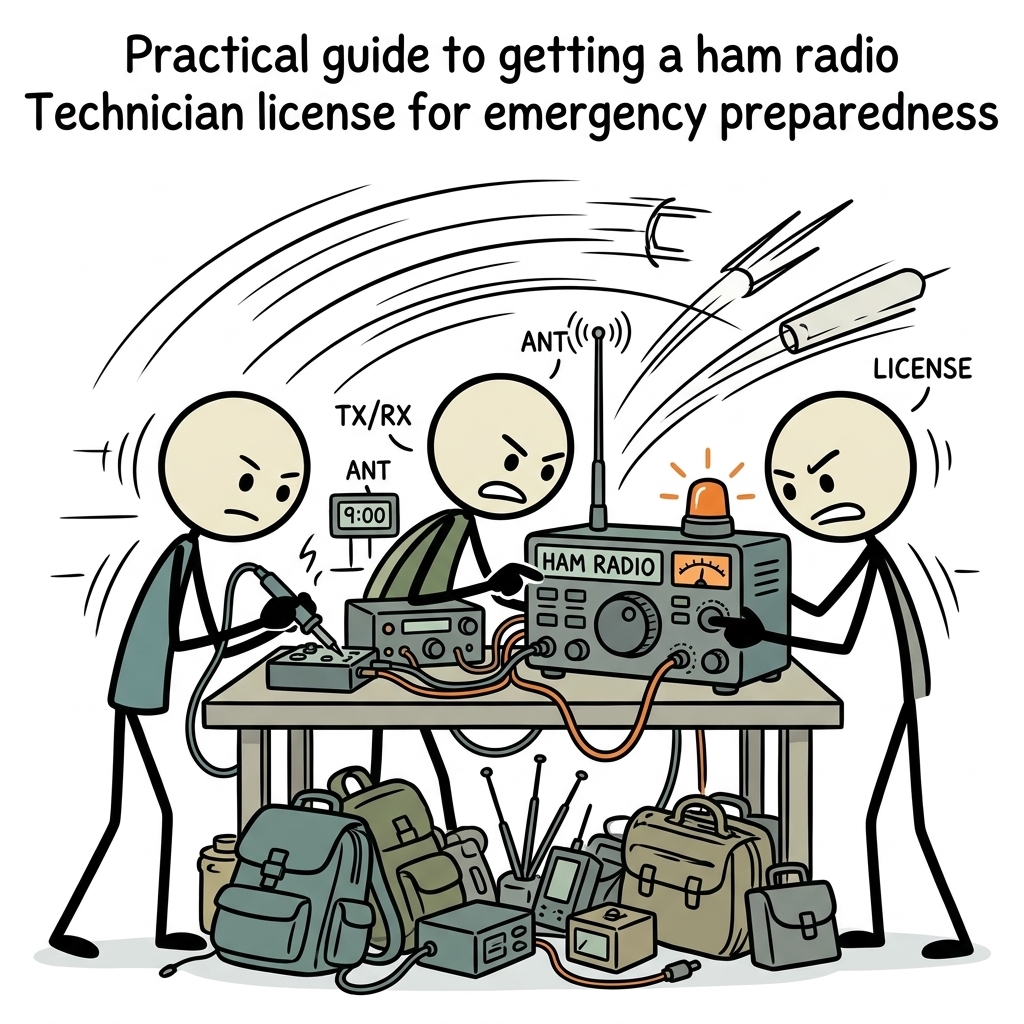
Why Ham Radio Matters Beyond GMRS and FRS
For those new to radio communications, the landscape of licensing, bands, and equipment can feel overwhelming. Many beginners naturally gravitate toward Family Radio Service (FRS) or General Mobile Radio Service (GMRS) because of their low barriers to entry. While these services have an important place in a family emergency plan, they cannot match the sheer capability, range, and flexibility of amateur radio.
The Limits of FRS and GMRS
FRS radios are the standard "walkie-talkies" sold in blister packs at sporting goods stores. They require no license, but they are legally limited to a maximum of 2 watts of power (and only 0.5 watts on certain channels). Furthermore, they must have fixed, non-removable antennas. This severely limits their practical range to less than a mile in wooded or suburban terrain, and often just a few blocks in urban environments.
GMRS is a significant step up. It requires a license, but there is no exam; you simply pay a fee to the FCC, and your license covers your entire immediate family. GMRS allows for up to 50 watts of power on specific channels and permits the use of external, high-gain antennas and repeaters. For localized family communication—such as coordinating between a base station at home and a mobile unit in a vehicle within a 5-to-10-mile radius—GMRS is an excellent tool.
The Ham Radio Advantage
While GMRS is useful, it operates on a very narrow sliver of the UHF spectrum. An amateur radio license, starting with the entry-level Technician class, unlocks vast swathes of the electromagnetic spectrum. The technical advantages of ham radio for preppers include:
- Vast Frequency Access: Technicians have full operating privileges on all amateur bands above 30 MHz, which includes the highly versatile 2-meter (VHF) and 70-centimeter (UHF) bands, as well as limited privileges on the High Frequency (HF) bands (10 meters, and Morse code on 15, 40, and 80 meters).
- Unmatched Power Limits: While GMRS tops out at 50 watts, a Technician licensee can transmit with up to 1,500 watts of Peak Envelope Power (PEP) on VHF and UHF. While you rarely need this much power, the ability to run 50 to 100 watts from a mobile or base station ensures your signal can penetrate terrain and weather that would swallow a GMRS signal.
- Antenna Customization: Ham radio operators are legally permitted—and highly encouraged—to build, modify, and experiment with their own antennas. In an emergency, being able to fashion a highly directional Yagi antenna out of tape measures or wire can mean the difference between getting a signal out or remaining isolated.
- Advanced Digital Modes: Ham radio is not limited to voice. With a Technician license, you can utilize digital packet radio, Automatic Packet Reporting System (APRS) to send GPS coordinates without internet, and Winlink—a global system that allows you to send standard emails with attachments over radio waves.
The Power of Repeaters and Linked Systems
Under normal circumstances, VHF and UHF signals are limited to "line-of-sight" propagation, meaning they travel in a straight line and are blocked by the curvature of the earth, hills, and buildings. To overcome this, ham radio operators construct and maintain repeaters on mountaintops, tall buildings, and radio towers.
A repeater listens for a signal on one frequency and simultaneously retransmits it on another frequency with high power from an elevated vantage point. This instantly extends the range of a 5-watt handheld radio from 2 miles to 50 miles or more. Furthermore, many ham repeaters are linked together via internet protocols (such as EchoLink or IRLP) or RF links, allowing a operator with a handheld radio in Ohio to speak clearly with an operator in Florida, even when local infrastructure is down.
The Amateur Radio Technician Exam Demystified
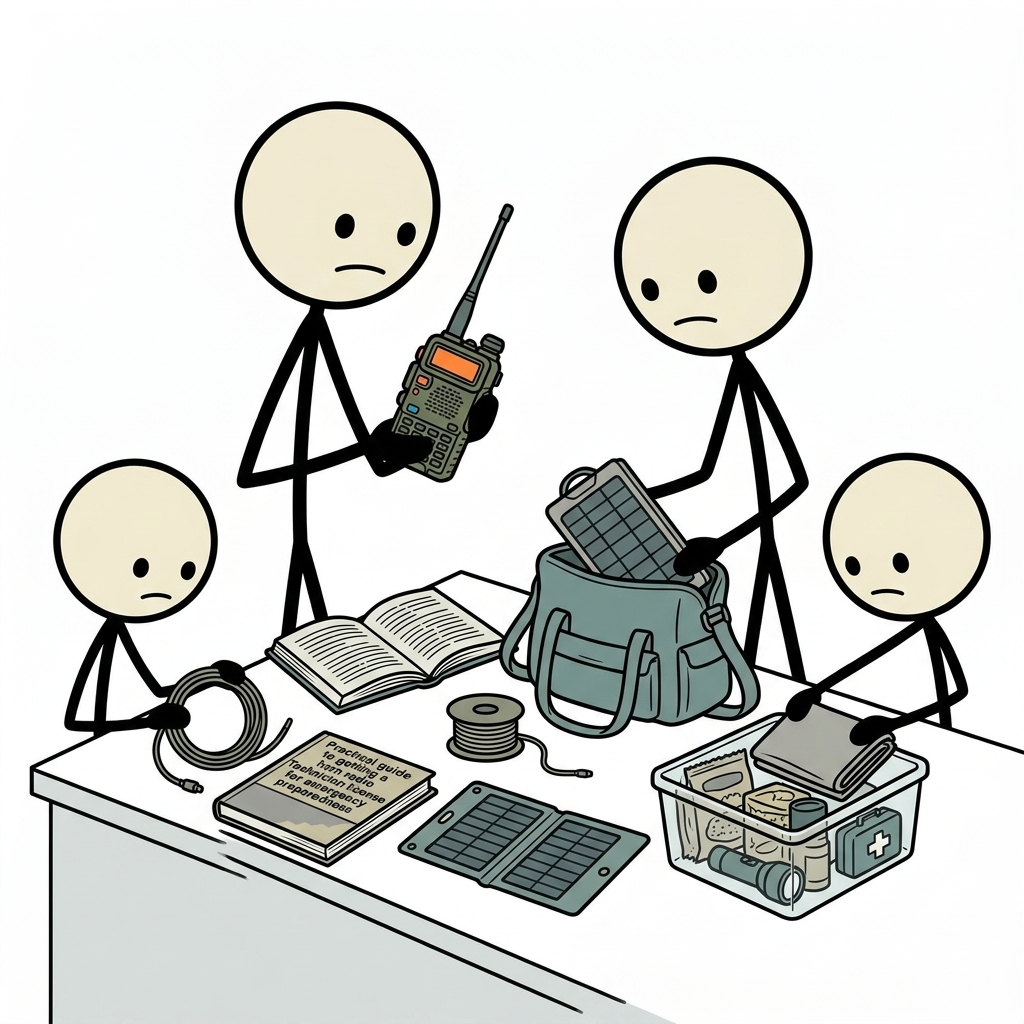
To access these capabilities, the FCC requires you to pass the amateur radio technician exam. The licensing process is designed to ensure that operators understand basic electrical safety, radio wave propagation, FCC regulations, and proper operating procedures so they do not interfere with critical public safety communications.
Exam Structure and Content
The Technician exam, known as Element 2, consists of 35 multiple-choice questions. The questions are pulled directly from a public pool of approximately 400 questions, which is updated every four years by the National Conference of Volunteer Examiner Coordinators (NCVEC). To pass, you must answer at least 26 questions correctly (74%). There is no Morse code requirement; the FCC eliminated all code tests for amateur licensing in 2007.
The exam covers ten subelements, which include:
- Commission’s Rules (Subpart A): FCC Part 97 regulations, license privileges, and authorized frequency bands.
- Operating Procedures (Subpart B): How to make a call, emergency communications protocol, and repeater operation.
- Radio Wave Characteristics (Subpart C): How VHF, UHF, and HF signals propagate through the atmosphere and interact with obstacles.
- Amateur Radio Practices (Subpart D): Station setup, tuning, and troubleshooting common interference issues.
- Electrical Principles (Subpart E): Basic concepts of AC/DC current, voltage, resistance, Ohm's Law, and power calculations.
- Station Equipment (Subpart F): Understanding transmitters, receivers, coax cables, and power supplies.
- Signals and Emissions (Subpart G): Understanding different modulation types like FM, AM, Single Sideband (SSB), and digital modes.
- Antennas and Feedlines (Subpart H): Dipoles, vertical antennas, SWR (Standing Wave Ratio), and line losses.
- Electrical and RF Safety (Subpart I): Protecting yourself from high voltage, proper grounding, and understanding RF radiation exposure limits.
How to Study Efficiently
Preparing for the exam does not require a college degree in electrical engineering. Most candidates can successfully prepare with 10 to 15 hours of focused study over two weeks. Here is a highly effective ham radio beginners guide to studying:
- Use Adaptive Study Tools: Platforms like HamStudy.org (which is free) use spaced-repetition algorithms to track your progress. It shows you questions, explains the logic behind the correct answers, and focuses on your weak areas until you have mastered the entire pool.
- Read a Comprehensive Manual: If you prefer structured reading, the ARRL Ham Radio License Manual or Gordon West’s Technician Class book are the gold standards. They explain the physics and regulations behind the questions in an accessible, conversational tone.
- Take Practice Exams: Once your study progress on HamStudy.org or similar apps consistently hits 85% or higher, you are ready to take the real test.
Registering and Taking the Exam
Before you can sit for an exam, you must obtain a Federal Registration Number (FRN) from the FCC. This is a free, simple process completed on the FCC’s Commission Registration System (CORES) website. Your FRN is a unique identifier that protects your Social Security Number from being exposed on public licensing databases.
You have two options for taking the exam:
In-Person Testing: Local amateur radio clubs regularly host exam sessions led by Volunteer Examiners (VEs). These sessions are typically held in community centers, libraries, or churches. You can find local test sites through the ARRL website's exam finder.
Online Remote Testing: Since 2020, many VE teams offer fully remote, online exams via video conferencing platforms like Zoom. You will need a computer with a webcam, a stable internet connection, and a quiet room where you can be monitored to ensure exam integrity.
The exam fee itself is typically $15 (which goes to the VE team to cover administrative costs, though some groups like the Laurel VEC offer testing for free). Once you pass, the VEs will submit your paperwork to the FCC. The FCC will then email you a link to pay the $35 regulatory fee. Once paid, your callsign is usually issued within 24 to 48 hours, appearing in the FCC Universal Licensing System (ULS) database.
Affordable Starter Equipment for Preppers
One of the biggest mistakes beginners make is buying expensive, overly complex equipment before they understand how to use it, or conversely, buying the cheapest possible radio and expecting it to perform flawlessly in a crisis. When building your emergency communications kit, prioritize reliability, ease of use, and battery efficiency.
The Handheld Transceiver (HT) Dilemma
Most newly licensed hams buy a Handheld Transceiver (HT) as their first radio. The Baofeng UV-5R is the most famous of these, often retailing for under $25. While the Baofeng is incredibly cheap and can serve as a disposable "backup to a backup," it has significant limitations for emergency use. Its receiver is easily overloaded (desensitized) by strong nearby signals, its programming interface is notoriously counter-intuitive, and its stock antenna is highly inefficient.
For a reliable emergency HT, consider investing slightly more in a rugged, name-brand radio from manufacturers like Yaesu, Icom, or Alinco. The Yaesu FT-65R (approx. $85) or the Yaesu FT-4XR (approx. $75) are excellent entry-level choices. They offer commercial-grade build quality, water resistance, superior receiver selectivity, and intuitive menus that are easy to navigate during a high-stress event.
The Highest ROI Upgrades
If you are using a handheld radio, your range will be severely limited by the physical constraints of the radio's small, flexible antenna. To maximize your reach, prioritize these three upgrades:
- A High-Quality Whip Antenna: Replace the stock rubber antenna with a dual-band whip antenna like the Signal Stuff Signal Stick or a Nagoya NA-771. These antennas are tuned specifically to maximize radiation efficiency on 2m and 70cm bands, instantly doubling your practical range.
- A Roll-Up Slim Jim Antenna: Made from dual-lead television twin-lead or copper J-poles, roll-up antennas (like those made by Ed Fong) can be rolled up into a pocket. In an emergency, you can attach a length of paracord to the antenna, throw it over a high tree branch, and connect it to your HT via a coaxial cable. Elevating your antenna just 20 to 30 feet off the ground will exponentially increase your coverage area.
- Power Alternatives: Handheld radios rely on lithium-ion battery packs that will eventually drain during an extended power outage. Ensure your kit includes a battery clam-shell adapter (which allows you to power the radio using standard AA alkaline batteries), a 12V DC car charging cable, or a small solar setup capable of charging USB-compatible battery cradles.
Transitioning to a Mobile/Base Station
While an HT is highly portable, its 5-watt output limit is a bottleneck. For true emergency preparedness, a 50-watt mobile transceiver mounted in your vehicle or set up as a "shack-in-a-box" at home is the gold standard.
Radios like the Yaesu FTM-6000R or the Icom IC-2730A provide 50 watts of output power and can be powered by a standard 12-volt vehicle battery or a dedicated LiFePO4 (Lithium Iron Phosphate) battery, such as those made by Bioenno Power. Paired with an external antenna mounted on your roof or a mast, a mobile rig can easily access repeaters 50 to 80 miles away, or communicate directly via simplex (radio-to-radio) over 10 to 15 miles of flat terrain.
ARES, RACES, and CERT Integration
Owning a high-end radio is meaningless if you do not know who to talk to, what frequencies to monitor, or how to pass information structured for emergency services. To be truly effective, you must integrate into the existing local emergency management ecosystem. This is where an ARES emergency radio license truly shows its value.
Understanding the Key Organizations
There are three primary volunteer emergency communications organizations in the United States that interface directly with local, state, and federal agencies:
| Organization | Sponsor / Oversight | Primary Mission | Activation Protocol |
|---|---|---|---|
| ARES (Amateur Radio Emergency Service) | ARRL (American Radio Relay League) | Provides backup communications to non-government agencies (Red Cross, hospitals, salvation army) and local governments. | Voluntary activation by local ARES leadership during any communications emergency. |
| RACES (Radio Amateur Civil Emergency Service) | FEMA / Local Civil Defense | Official government-sponsored backup communication service designed to operate during war, national emergencies, or complete grid collapse. | Strictly activated by a public official (e.g., Emergency Management Director) under FCC Part 97.407 rules. |
| CERT (Community Emergency Response Team) | FEMA / Local Fire & Police | Localized disaster response, search and rescue, medical triage, and damage assessment. | Activated by local emergency services to support neighborhood-level response. |
The Role of ARES in Local Emergencies
ARES is open to any licensed amateur radio operator who has an interest in emergency communications. Local ARES groups conduct regular training nets, practice message handling using standardized formats (like the ARRL Radiogram or FEMA ICS forms), and participate in annual disaster simulations like the ARRL Simulated Emergency Test (SET).
During a major storm or wildfire, ARES operators are deployed to Red Cross shelters, county Emergency Operations Centers (EOCs), and local hospitals. If the phone lines and internet go down, hams use their stations to transmit resource requests, shelter occupancy numbers, and medical needs. By joining ARES, you learn the precise protocols required to communicate professionally with emergency managers, ensuring your transmissions are clear, concise, and actionable.
How CERT Teams Utilize Amateur Radio
While CERT training focuses primarily on basic disaster response skills like light search and rescue, utility control, and first aid, communication is the glue that holds a CERT operation together. In a disaster, a CERT team is deployed into neighborhood preparedness networks to conduct rapid damage assessments.
Because GMRS and FRS are often congested with civilian traffic during a disaster, CERT teams rely heavily on licensed ham radio operators within their ranks to act as "Comms Officers." These operators transmit critical, prioritized damage reports from the field directly back to the CERT command post or the local EOC, ensuring that search and rescue assets are directed where they are needed most.
Practical First Steps After Getting Licensed
Congratulations! Your callsign has appeared in the FCC database, and you are officially a licensed radio operator. However, passing the exam is simply your ticket to learn. To build the muscle memory required to operate effectively under the stress of a real emergency, you must actively practice.
Step 1: Program Your Radio via Software
Do not attempt to program dozens of repeater frequencies into your radio manually using the keypad. It is tedious, prone to error, and frustrating. Instead, download CHIRP, a free, open-source software tool compatible with almost every major radio on the market.
Purchase a high-quality programming cable (ensure it uses an authentic FTDI chip to avoid driver compatibility issues). Using CHIRP, you can import local repeater directories directly from databases like RepeaterBook.com based on your county or zip code. Program these into your radio, making sure to include the correct offset frequencies and PL (Private Line) tones required to open the repeaters.
Step 2: Master the Art of Listening
Before you press the Push-To-Talk (PTT) button, spend several days simply listening. Every local amateur radio community has its own culture, slang, and pacing. Pay attention to how operators check into nets, how they use callsigns to identify themselves (as required by the FCC every 10 minutes and at the end of a transmission), and how they pass control of the frequency back and forth.
Locate the weekly "Information Net" or "ARES Net" in your area. These nets are usually held on a specific repeater at a designated time (e.g., Tuesday nights at 8:00 PM). They are designed to test equipment, share club news, and practice structured check-ins.
Step 3: Overcome "Mic Fright" and Make Your First Contact
It is entirely normal to feel nervous before making your first transmission. The best way to break the ice is to participate in a weekly local net. When the Net Control station calls for "visitor check-ins" or "newly licensed stations," key your mic, state your callsign slowly using the ITU phonetic alphabet (e.g., "Whiskey-Four-Alpha-Bravo-Charlie"), and release the button.
Net Control will acknowledge you and ask for your name and location. Simply reply: "This is [Your Callsign], my name is [Your Name], operating portable from [Your City]. This is my very first contact after getting licensed, and I wanted to check in to the net. Back to Net Control." You will instantly be welcomed with warm congratulations and encouragement from the local community.
Step 4: Build a Portable Emergency "Go-Kit"
Once you are comfortable operating from the comfort of your home, it is time to package your gear so it can deploy at a moment's notice. An emergency radio go-kit should be modular, weather-resistant, and self-contained.
- The Container: Use a rugged, waterproof hard case (such as a Pelican or Apache case). Line the interior with customizable foam to protect your radios, batteries, and accessories from shock and water damage.
- The Core Gear: Pack your primary HT, a backup HT (like a Baofeng), a high-gain whip antenna, a roll-up Slim Jim antenna, and at least 25 feet of low-loss coaxial cable (like RG-58 or LMR-240) with the correct adapters to connect your antennas to your radios.
- Power and Charging: Include spare lithium-ion battery packs, an alkaline battery tray, a 12V DC charger, a small portable solar panel with a USB regulator, and a dedicated 12V LiFePO4 battery pack if you are running a mobile rig.
- Documentation: Keep a physical, laminated "cheat sheet" in your kit. This should list local repeater frequencies (including offsets and tones), simplex
Frequently Asked Questions
Why get a ham radio license when I can just use GMRS?
Ham radio Technician license opens VHF/UHF frequencies (2m, 70cm) with access to community repeaters that extend range to 50-150+ miles on a handheld radio. It also allows HF operation (with General license) for national and international communication. ARES (Amateur Radio Emergency Service) and CERT programs use ham radio exclusively for disaster response coordination.
How hard is the Technician exam?
The Technician exam is 35 multiple-choice questions from a publicly available question pool — nothing is secret. Most people pass with 2-4 weeks of study using free resources (HamStudy.org or ARRL study guides). The passing score is 74% (26 of 35 correct). The exam fee is $15 at most sessions. You do NOT need to know Morse code for the Technician license.
What is the best starter ham radio for emergency preparedness?
Baofeng UV-5R ($25-30): the most popular entry-level dual-band (2m/70cm) handheld. Great for learning and local repeater use. Quality concerns exist but adequate for getting started. BaoFeng UV-82: slightly better quality at $40. For a serious emergency preparedness radio: Yaesu FT-60R (~$130) or Kenwood TH-D74A ($500+) for APRS tracking capability.
What is ARES and how do I get involved?
ARES (Amateur Radio Emergency Service) is the ARRL's volunteer emergency communication organization. After getting licensed, contact your local ARES group (ARRL.org/ARES) to join. ARES volunteers provide communication support for local emergency management during disasters. This connects you to real emergency infrastructure and provides training in practical emergency communication.
What can I actually do with a Technician license during an emergency?
Access local repeaters that cover 50-150 mile radius. Communicate directly with emergency management nets. Use APRS (Automatic Packet Reporting System) to track your location via GPS. Listen to emergency traffic on hospital and public safety frequencies. Coordinate with CERT and ARES responders. Contact the International Space Station (yes, really — NASA astronauts hold ham licenses).