⚡ Key Facts
- The Silent Killer: According to the National Oceanic and Atmospheric Administration (NOAA), extreme heat is the leading cause of weather-related deaths in the United States, outstripping hurricanes, tornadoes, and floods combined.
- Sweat Limitations: The Centers for Disease Control and Prevention (CDC) warns that when relative humidity reaches 60% or higher, the body’s natural sweat evaporation process slows significantly, drastically reducing its ability to self-cool.
- Power Grid Fragility: During peak summer heat events, municipal power grids face unprecedented electrical loads, raising the statistical probability of localized brownouts or sweeping blackouts by up to 40% in high-risk regions.
- Thermal Degradation: Life-saving medications, including insulin, thyroid hormones, and epinephrine, can lose potency or become toxic when exposed to temperatures exceeding 86°F (30°C) for even short durations.
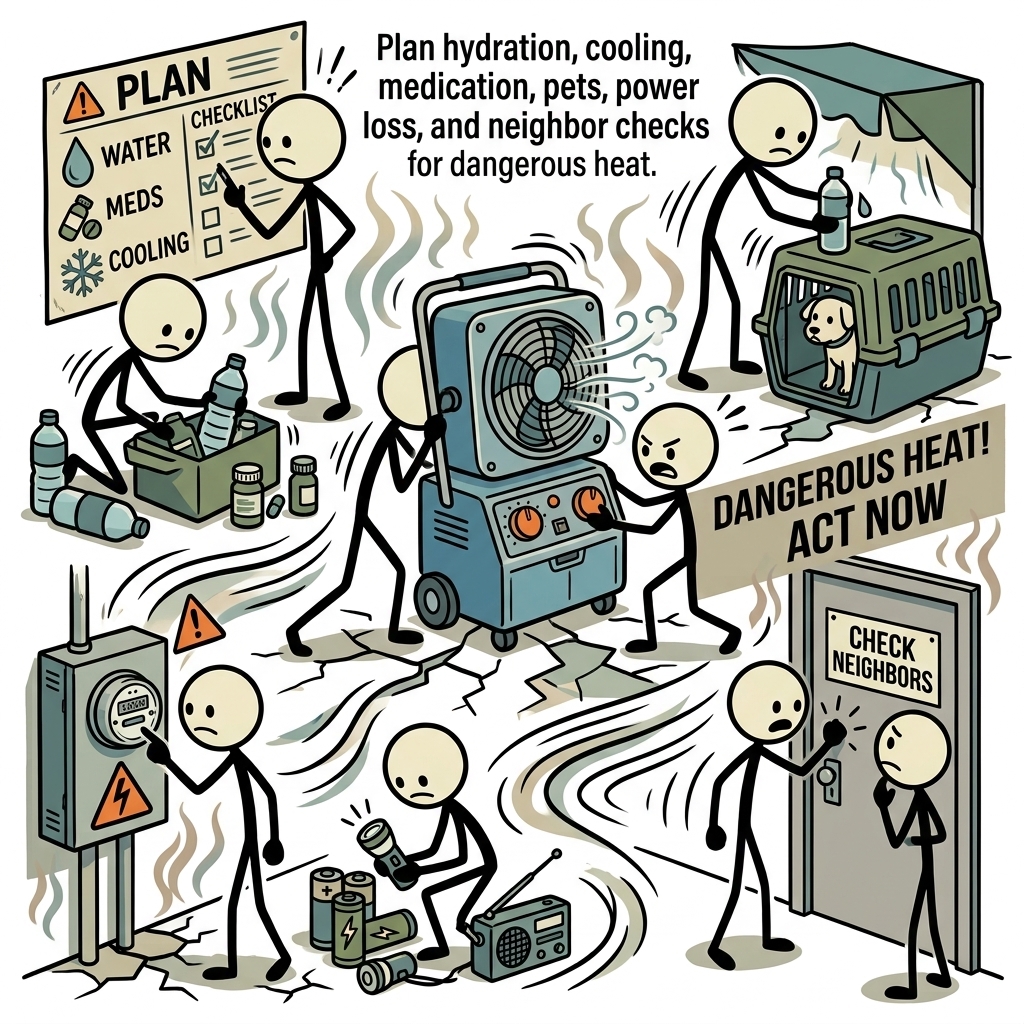
It is mid-July, and an atmospheric high-pressure system has stalled over your region, creating a classic "heat dome." The ambient temperature climbs past 104°F (40°C), but the real crisis begins when a low-humming transformer down the street blows, plunging your entire neighborhood preparedness network into absolute silence and cutting off all air conditioning. Within hours, your home transitions from a sanctuary into a dangerous thermal trap. Extreme heat is not merely an uncomfortable seasonal inconvenience; it is a complex, multi-system emergency that tests the physical limits of our infrastructure, our bodies, and our communities. By implementing a rigorous system of proactive planning, you can transform a highly dangerous meteorological event into a manageable, survivable situation for your household, your pets, and your neighbors.
The Physiology of Extreme Heat: Why Preparation Saves Lives
To survive extreme heat, you must first understand how it attacks the human body. Under normal conditions, your brain's hypothalamus acts as a thermostat, regulating your internal temperature to around 98.6°F (37°C). When ambient temperatures rise, the body sheds heat primarily through two mechanisms: radiating heat from dilated blood vessels in the skin and evaporating moisture via sweat. However, when environmental temperatures match or exceed your skin temperature, radiation ceases to work, leaving sweat evaporation as your sole defense.
This is where the concept of "wet-bulb temperature" becomes critical. Measured by a thermometer wrapped in a wet cloth, wet-bulb temperature accounts for both heat and humidity. When the wet-bulb temperature reaches 95°F (35°C) at 100% humidity, even a healthy person sitting in the shade with unlimited water will eventually succumb to hyperthermia because sweat can no longer evaporate. This physiological ceiling makes comprehensive heat wave preparedness a matter of biological necessity rather than optional comfort.
Recognizing Heat-Related Illnesses
The transition from mild discomfort to a life-threatening medical emergency can occur in minutes. The Federal Emergency Management Agency (FEMA) and the CDC categorize heat illnesses into distinct stages, each requiring specific, immediate interventions:
| Condition | Key Symptoms | Immediate Action Required |
|---|---|---|
| Heat Cramps | Severe muscle spasms, heavy sweating, mild fatigue. | Stop physical activity. Drink water with electrolytes. Move to a cool, shaded area. |
| Heat Exhaustion | Heavy sweating, rapid pulse, dizziness, nausea, headache, cool and clammy skin. | Move to AC. Loosen clothing. Apply cool, wet cloths to the body. Sip cool water slowly. Seek medical care if symptoms worsen or last over an hour. |
| Heat Stroke | Internal temperature >103°F, altered mental state (confusion, slurred speech), hot/dry or sweating skin, rapid heart rate, loss of consciousness. | Call 911 immediately. This is a medical emergency. Move the victim to a cool area. Cool them rapidly using ice baths, cold packs, or wet sheets. Do not give them anything to drink. |
Understanding these physiological boundaries highlights why waiting for a heat wave to arrive before planning is a dangerous mistake. True safety lies in establishing robust protocols long before the mercury begins its upward climb.
Hydration Science: Designing an Effective Fluid Plan
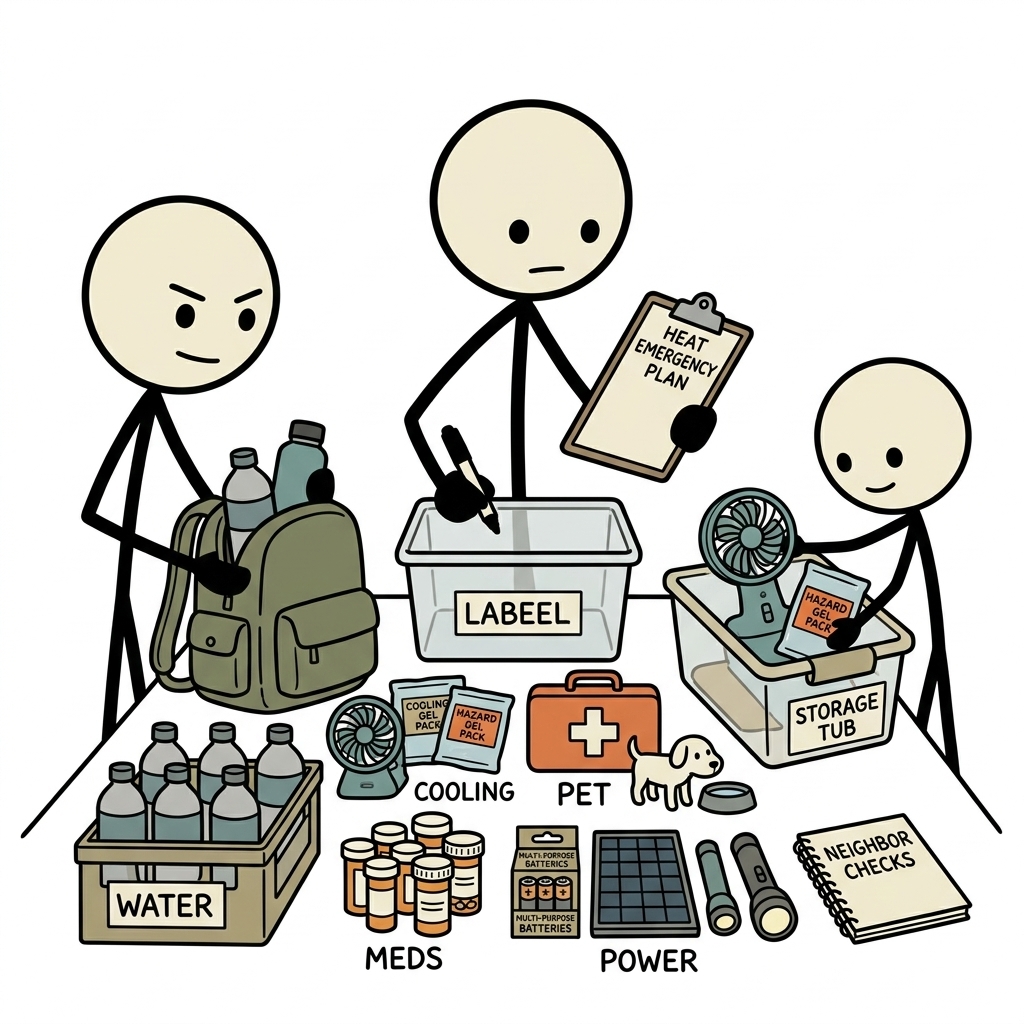
During a heat wave, your body can lose up to 1.5 liters of sweat every hour. Simply drinking tap water when you feel thirsty is an insufficient defense against dehydration. Thirst is a late-stage indicator; by the time your brain registers the sensation, you are already mildly dehydrated. A truly resilient heat wave preparedness emergency preparedness plan treats hydration as a scheduled, scientific protocol.
FEMA recommends storing at least one gallon of water per person per day for normal conditions. During a severe heat event, this baseline must double. You should budget at least two gallons of water per person, per day, to account for increased consumption, sanitation, and active cooling needs. If your home relies on an electric well pump, a power outage will instantly cut off your Water Calculator, making stored water your primary lifeline.
The Electrolyte Balance
Sweat is not just water; it is a complex solution of essential minerals, primarily sodium, potassium, magnesium, and calcium. Drinking massive quantities of plain water during prolonged heat exposure can dilute the sodium levels in your blood, leading to a dangerous condition known as hyponatremia. Symptoms of hyponatremia mimic heat exhaustion—confusion, headache, and nausea—but treating it with more plain water can lead to seizures or coma.
- Formulate a 50/50 Rule: For every liter of plain water you consume, balance it with a half-liter of an electrolyte-rich beverage or an oral rehydration solution (ORS).
- Keep ORS Packets in Your Kit: Commercially available oral rehydration salts, or a simple DIY recipe (6 teaspoons of sugar, 0.5 teaspoon of salt, dissolved in 1 liter of clean water), can rapidly restore osmotic balance.
- Avoid Diuretics: Eliminate alcohol, energy drinks, and heavily caffeinated beverages from your intake. These substances act as diuretics, forcing your kidneys to excrete fluids and accelerating dehydration.
Ensure your fluids are kept cool but not ice-cold. Consuming extremely cold beverages can trigger stomach cramps and cause blood vessels in the digestive tract to constrict rapidly, slightly slowing the rate of fluid absorption.
Passive and Active Cooling: Keeping Your Home Liveable
If your air conditioning is functioning, your primary goal is to optimize its efficiency and protect it from failure. Clean your filters, clear debris from the outdoor condenser unit, and set your thermostat to 78°F (26°C) to prevent overloading the local grid. However, if your AC fails or you do not have climate control, you must transition to advanced passive and active cooling strategies.
Thermal Barrier Management
Your home acts as a thermal battery, absorbing solar radiation throughout the day and releasing it slowly. To keep your living space cool, you must prevent this heat from entering your home in the first place. This is where strategic insulation and shading become vital.
Keep windows closed and covered during the hottest parts of the day. Standard glass windows allow solar energy to pass through, heating up interior surfaces via the greenhouse effect. Use heavy, light-colored thermal curtains or reflective window films to bounce radiant energy back outside. If you do not have specialized curtains, cardboard wrapped in aluminum foil and taped to the inside of your window frames acts as a highly effective, low-cost radiant barrier.
The Physics of Ventilation
Ventilation can be a double-edged sword. If the outdoor temperature is higher than the indoor temperature, opening your windows will only invite hot air inside, accelerating the heating of your home. Only open your windows when the outdoor temperature drops below your indoor temperature, which typically occurs during the late evening and early morning hours.
To maximize this cooling window, establish a cross-ventilation system. Place a box fan in a window on the shaded side of your home, blowing cool air inward. On the opposite side of the house, place another fan in an open window, blowing warm air outward. This creates a high-velocity thermal draft that rapidly flushes hot air out of your living space.
Note that the CDC warns that portable fans should not be relied upon as your primary cooling tool when indoor temperatures exceed 90°F (32°C). At this threshold, fans do not cool the ambient air; they merely blow hot air across your skin, which can accelerate dehydration and heat stress if you are not sweating adequately.
DIY Evaporative Cooling (The "Zeer" Pot Principle)
In arid environments with low relative humidity (under 40%), you can harness the power of evaporative cooling. By placing a damp towel or sheet over an open window or in front of a fan, you can drop the incoming air temperature by several degrees.
For emergency food storage guide preservation without power, you can construct a simple "pot-in-pot" refrigerator (a Zeer pot). Place a smaller clay pot inside a larger one, fill the gap between them with wet sand, and cover the top with a damp cloth. As the water evaporates from the sand through the porous outer pot, it pulls heat away from the inner chamber, keeping perishable items or medications significantly cooler than the ambient air.
Medication Safety: Protecting Your Vital Prescriptions
A critical, yet frequently overlooked, aspect of heat wave preparedness is the preservation of temperature-sensitive medications. Many life-saving drugs are organic compounds that degrade rapidly when exposed to temperatures outside their recommended storage zones, which is typically between 68°F and 77°F (20°C to 25°C).
Insulin, for example, is a protein hormone. If exposed to temperatures above 86°F (30°C), it begins to break down, losing its potency and leaving diabetic patients vulnerable to hyperglycemia and diabetic ketoacidosis. Similarly, thyroid medications, liquid antibiotics, and epinephrine auto-injectors (like EpiPens) can become completely ineffective if exposed to extreme heat.
Biological Vulnerabilities Induced by Medications
It is not just the medications themselves that are vulnerable; many common prescriptions alter your body's physiological response to heat. If you or a family member take any of the following medications, you must exercise extreme caution during a heat wave:
- Diuretics (Water Pills): Often prescribed for high blood pressure, these drugs actively encourage fluid loss, greatly accelerating the onset of dehydration.
- Beta-Blockers: These medications lower blood pressure by slowing your heart rate, which can limit your heart's ability to pump warm blood to the skin for cooling.
- Antihistamines and Anticholinergics: These drugs can suppress your body's sweat glands, rendering your primary cooling mechanism inactive.
- Antidepressants and Antipsychotics: Certain psychiatric medications can directly interfere with the hypothalamus, impairing your brain's ability to regulate internal body temperature.
If you take these medications, consult your physician or pharmacist well before summer to understand how your body reacts to heat. Never discontinue prescribed medications without medical supervision; instead, step up your active cooling and hydration protocols.
Emergency Medication Storage Protocol
To protect your medications during a prolonged power outage, establish a dedicated cooling system. Keep a small, insulated cooler bag paired with reusable ice packs specifically for your prescriptions.
When using ice packs, never let your medications come into direct contact with the ice, as freezing can destroy the active compounds just as quickly as heat. Wrap the medication in a small hand towel before placing it in the cooler. Additionally, invest in a digital pocket thermometer to monitor the internal temperature of your storage container, ensuring it remains within a safe operating range.
Pet and Livestock Protection: Caring for Your Animals
Animals do not regulate heat the same way humans do. Dogs and cats do not sweat through their skin; they rely almost entirely on panting and heat exchange through the pads of their paws to cool themselves. Because of this, they are incredibly susceptible to rapid heat stroke, particularly brachycephalic (short-nosed) breeds like bulldogs, pugs, and Persian cats, whose compromised airways make panting highly inefficient.
The Five-Second Asphalt Rule
Before taking your dog outside for a bathroom break, perform the five-second rule: press the back of your bare hand firmly against the pavement or asphalt. If you cannot comfortably hold it there for five seconds, the ground is hot enough to cause severe, third-degree thermal burns to your pet's paw pads. During peak daylight hours, asphalt can easily reach temperatures of 140°F (60°C), which is hot enough to destroy skin tissue instantly. Keep outdoor walks to the absolute bare minimum, focusing on shaded, grassy areas during the early morning or late evening.
Signs of Heatstroke in Animals
Monitor your pets closely for any behavioral changes. The signs of canine and feline heatstroke require immediate emergency intervention:
- Hyperventilation or extremely heavy, frantic panting
- Bright red, purple, or pale, sticky gums
- Excessive, thick drooling
- Lethargy, weakness, or stumbling (ataxia)
- Vomiting or diarrhea
If you suspect your pet is overheating, do not submerge them in ice water. This causes their peripheral blood vessels to constrict, trapping heat in their core organs and worsening the condition. Instead, drape them in lukewarm, wet towels, apply cool water to their paws and groin, and place them in front of a fan. Offer them cool—but not iced—water to drink, and transport them to an emergency veterinarian immediately.
Managing Power Loss: The Intersection of Grid Failure and Heat
When extreme heat collides with an electrical grid failure, the danger increases exponentially. Without mechanical cooling, indoor environments can quickly become hotter than the outdoors due to solar heat gain. To survive this scenario, you must have a clear, actionable plan to manage your home's microclimate and secure alternative power sources.
Creating a "Cool Room"
If the power goes out, identify the coolest room in your home to serve as your family's designated survival shelter. This is typically a basement or a ground-floor room on the shaded side of the house with minimal window exposure.
Isolate this room by closing the doors to unused areas of the house, effectively reducing the volume of air you need to manage. Move your mattresses, emergency water supply, and battery-powered fans into this space. By concentrating your cooling resources in one highly insulated room, you can maintain a liveable environment for several days.
Safe Backup Power Protocols
If you plan to run a portable generator to power a window air conditioner or refrigerator, safety must remain your top priority. Portable generators emit carbon monoxide (CO), an odorless, colorless gas that can be fatal within minutes in enclosed spaces.
Never run a generator inside your home, garage, basement, or near open windows or doors. Always position the generator at least 20 feet away from your home, with the exhaust pointed directly away from any structures. Ensure you have working, battery-operated carbon monoxide detectors installed on every level of your home to alert you to any dangerous gas build-up.
For a quieter, indoor-safe alternative, consider investing in a portable solar generator (a lithium battery bank paired with solar panels). While these systems may not have the capacity to run a whole-house air conditioner, they can easily power portable fans, charge emergency communication plan devices, and run medical equipment or small 12-volt refrigerators for days on end.
Mutual Aid: Setting Up a Neighbor Check Protocol
The 1995 Chicago heat wave, which claimed over 700 lives, proved that social isolation is one of the single greatest risk factors during an extreme weather event. The majority of those who perished were elderly individuals living alone, who lacked the physical mobility to seek help or the social connections to be missed. True disaster resilience is built on a foundation of community emergency preparedness guide and community connection.
The "Rule of Two" Check-In System
Before a heat wave arrives, establish a formal check-in network with your neighbors, focusing specifically on vulnerable individuals such as the elderly, those living alone, families with infants, and individuals with chronic medical conditions. Implement a simple "Rule of Two" protocol:
- The Morning Check (9:00 AM): A quick face-to-face visit or phone call to ensure their home has not overheated overnight, their cooling systems are functional, and they have adequate water.
- The Evening Check (6:00 PM): A second verification during the hottest part of the day to assess their cognitive state, monitor for signs of heat exhaustion, and confirm they have taken their medications safely.
When checking on neighbors, look for subtle signs of cognitive decline or confusion, which are early indicators of heat-related illness. If they seem unusually lethargic, disoriented, or are slurring their words, take immediate action to cool them down and seek medical attention.
Identifying Local Resources
Familiarize yourself with your municipality's emergency heat plans. Most cities will open designated "cooling centers"—air-conditioned public spaces like libraries, community centers, or schools—during extended heat waves.
Map out the locations of these centers ahead of time, and establish a transportation plan for your vulnerable neighbors. If public transit is disrupted or they do not drive, coordinate who in your neighborhood network has a vehicle and can transport individuals to safety if their home environment becomes unlivable.
The Ultimate Heat Wave Preparedness Checklist
To streamline your planning, integrate this comprehensive heat wave preparedness checklist into your household's family emergency plan. This checklist is divided into sequential phases, ensuring you are prepared before the heat arrives, resilient during the worst of the event, and safe in the aftermath.
Phase 1: Pre-Season Preparation (Spring)
- [ ] Inspect and service your home’s HVAC system, including replacing air filters and clearing the outdoor condenser.
- [ ] Apply reflective window films or purchase heavy, light-colored thermal curtains for south- and west-facing windows.
- [ ] Store a minimum of 2 gallons of water per person, per day, for at least 7 days, along with a robust supply of oral rehydration salts.
- [ ] Test all battery-powered fans, portable power stations, and backup generators to ensure they are fully operational.
- [ ] Consult with your pharmacist regarding how your medications affect your body's ability to tolerate heat, and establish a safe storage plan.
- [ ] Update your emergency contact list and establish a neighbor check-in protocol with your local community.
Phase 2: Immediate Pre-Event (1-2 Days Before Heat Wave)
- [ ] Monitor local weather alerts from NOAA and the National Weather Service, tracking both temperature and humidity forecasts.
- [ ] Pre-freeze large plastic containers filled with water. These act as thermal blocks to keep your freezer cold longer during a power outage, or can be wrapped in towels for active body cooling.
- [ ] Pre-hydrate by increasing water and electrolyte intake 24 to 48 hours before the extreme temperatures arrive.
- [ ] Check on your vulnerable neighbors to confirm their cooling systems are working and review their emergency plans.
- [ ] Clean and fill all pet water bowls, and ensure you have a shaded, safe area for your animals to rest.
Phase 3: During the Heat Wave (Active Survival)
- [ ] Cover all windows with thermal drapes or DIY radiant barriers during peak daylight hours.
- [ ] Drink fluids on a set schedule—do not wait for thirst to guide you. Balance water with electrolyte solutions.
- [ ] Never leave children, pets, or vulnerable adults in a parked vehicle, even for a single minute. Interior car temperatures can reach lethal levels in under ten minutes.
- [ ] Keep physical activity to an absolute minimum, confining necessary tasks to the coolest early morning hours.
- [ ] Execute the "Rule of Two" check-in protocol with your neighborhood mutual aid network twice daily.
- [ ] Monitor your home's indoor temperature. If it exceeds 95°F (35°C) and you have no AC, relocate immediately to a municipal cooling center or a cooler location.
Phase 4: Post-Event Recovery
- [ ] Continue monitoring your hydration and electrolyte intake for 24 to 48 hours after temperatures drop, as the body remains vulnerable to heat stress during recovery.
- [ ] Inspect your home's cooling systems for any signs of strain or damage, and schedule maintenance if necessary.
- [ ] Restock your emergency water supply, oral rehydration packets, and battery reserves to ensure you are ready for the next heat event.
- [ ] Conduct a debrief with your family and neighbors to identify what worked well and where your emergency protocols can be improved.
Empowered Resilience: Taking Control of the Heat
Extreme heat is a formidable force of nature, but it is not an insurmountable threat. By understanding the physiological limits of the human body, securing your water and electrolyte supplies, optimizing your home's thermal defense, protecting your medications, and building a strong, connected neighborhood support network, you transform a potential crisis into a manageable event. Preparedness is not about living in fear of the summer forecast; it is about equipping yourself with the knowledge, tools, and plans required to protect your family and community. Take these steps today, build your resilience, and face the coming heat with absolute confidence.
Frequently Asked Questions
What should a heat wave preparedness plan include?
Start with the immediate safety steps, the supplies and records your household needs, a communication plan, and a regular review schedule. Follow local official guidance during an active emergency.
How often should I review heat wave preparedness preparations?
Review them at least twice a year and whenever your household, medication, location, or local risks change. Replace expired supplies and practice key steps.
Where can I find reliable emergency guidance?
Use local emergency management alerts and established public-health or emergency-management agencies. A blog guide should support, not replace, official real-time instructions.