⚡ Key Facts
- High Incident Prevalence: National Park Service (NPS) Search and Rescue data reveals over 3,400 wilderness SAR missions annually, with lower-extremity trauma, fractures, and soft-tissue wounds comprising more than 40% of all reported physical injuries.
- Prolonged Evacuation Windows: While urban Emergency Medical Services (EMS) respond within an average of 8 to 12 minutes, the Wilderness Medical Society (WMS) notes backcountry rescue extraction times routinely range from 4 to 24 hours.
- Environmental Fatality Drivers: National Oceanic and Atmospheric Administration (NOAA) statistics emphasize that non-freezing cold exposure (temperatures between 35°F and 50°F paired with precipitation) is the leading environmental catalyst for life-threatening hypothermia among recreational hikers.
- Commercial Kit Deficiencies: Over 85% of consumer-grade, store-bought first aid kits contain a disproportionate volume of minor adhesive bandages while completely lacking critical tools for high-energy trauma, orthopedic stabilization, and prolonged wound management.
- Pathogen and Vector Risks: The Centers for Disease Control and Prevention (CDC) estimates that tick-borne and waterborne pathogen exposures in remote areas have expanded geographically, requiring tailored pharmacological and topical prevention protocols in every regional kit.
A generic, plastic-wrapped first aid kit bought off a big-box retail shelf offers a dangerous illusion of security. When an ankle fractures on a remote talus slope 12 miles from the nearest trailhead, or hypothermia accelerates in a cold rainstorm along an exposed ridgeline, a packet of miniature adhesive bandages and four low-potency ibuprofen tablets will not stabilize the patient. True backcountry medical preparedness requires an engineered approach: building a modular system tailored to your route, terrain profile, expected atmospheric stress, duration away from definitive clinical care, and the specific physiological vulnerabilities of your party. For the practical checklist side, use the community emergency preparedness guide.
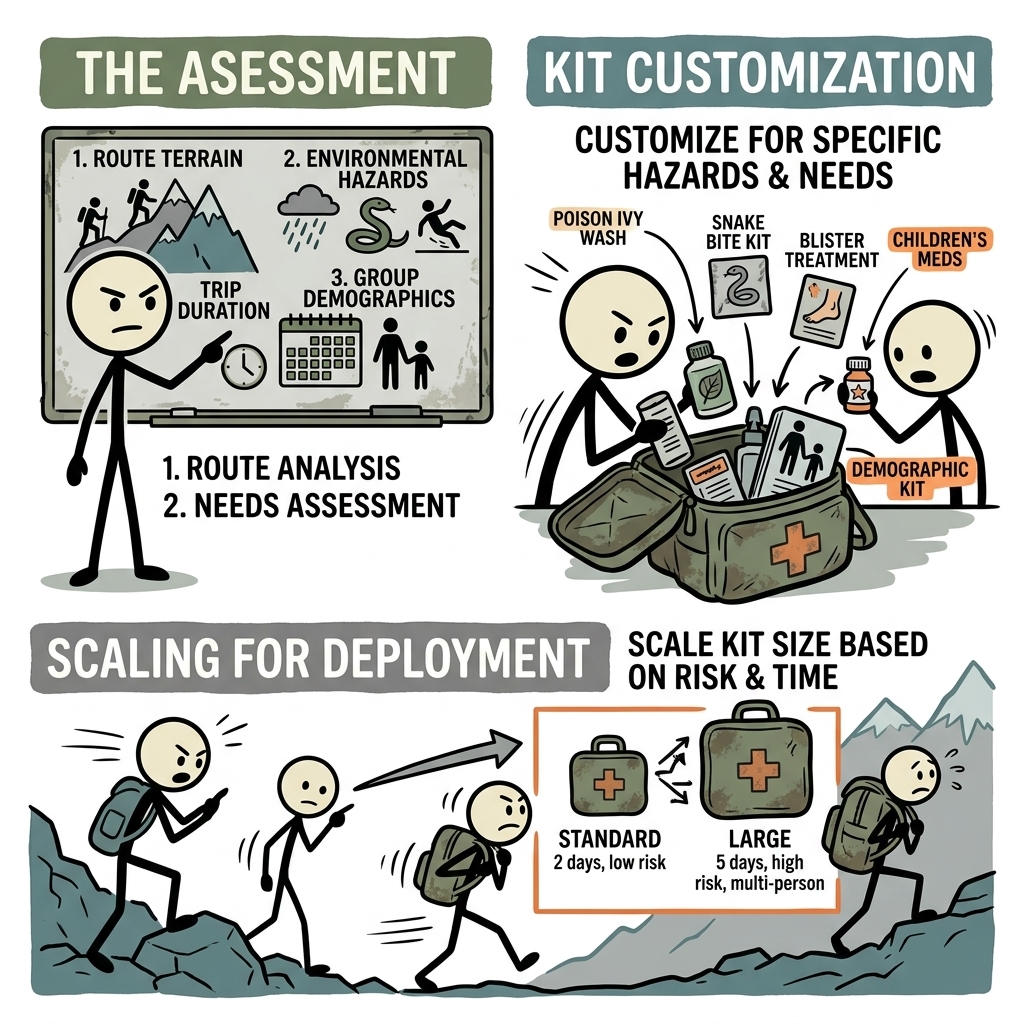
The Modular Core: Anatomy of an Adaptable Backpacking Medical Kit
Every dependable medical kit begins with a baseline modular architecture. Rather than dumping loose components into a single zippered compartment where you must search through them under stress, an efficient system divides supplies into sealed, transparent, or color-coded modules. This compartmentalization prevents moisture damage and accelerates high-stress triage when seconds dictate shock outcomes. For the practical checklist side, use the neighborhood preparedness network.
Your baseline loadout addresses immediate life threats, common wilderness micro-traumas, systemic medical distress, and essential sanitation. Regardless of trail length, this foundational setup serves as the platform you will scale up or strip down based on environmental assessments. For the practical checklist side, use the emergency communication plan.
Module 1: Massive Hemorrhage and High-Energy Trauma
Catastrophic bleeding in backcountry environments can turn fatal in under three minutes. While severe trauma is statistically less frequent than a blister or an inversion sprain, its lethality requires dedicated, accessible gear at the very top of your pack. For the practical checklist side, use the family emergency planning guide.
- Windlass Tourniquet: A genuine, Committee on Tactical Combat Casualty Care (CoTCCC)-approved tourniquet (such as a CAT Gen 7 or SOFTT-W). Never rely on counterfeit designs or makeshift bandanas when arterial bleed rates demand absolute mechanical occlusion.
- Hemostatic Gauze: QuikClot Combat Gauze or Celox z-fold gauze impregnated with kaolin or chitosan to rapidly promote clotting inside deep puncture wounds or lacerations where tourniquet application is structurally impossible.
- Pressure Dressing: A compact 4-inch Israeli bandage or trauma dressing engineered to maintain 360-degree circumferential pressure over packed wounds.
- Vented Chest Seals: A twin-pack of occlusive vented chest seals designed to manage penetrating thoracic injuries from broken trekking poles, sharp branch impalements, or rockfalls.
Module 2: Wound Cleansing, Closure, and Blister Defense
Infection is the quiet, progressive threat of multi-day wilderness trekking. Data from the CDC confirms that unchecked skin breakdown in backcountry environments rapidly escalates into cellulitis or systemic sepsis without prompt debridement and sterile protection. For the practical checklist side, use the real-world emergency scenarios guide.
- Irrigation Syringe: An 18-gauge catheter tip or 20–30 mL irrigation syringe capable of generating 8 to 12 PSI of fluid pressure using disinfected drinking water to blast debris out of lacerations.
- Wound Closure Strips: Steri-Strips or reinforced skin closures accompanied by a single-use vial of tincture of benzoin compound to ensure adhesive bonding against sweat and humidity.
- Friction and Blister Mitigation: Pre-cut strips of rigid zinc-oxide medical tape (such as Leukotape P), hydrocolloid dressings, and protective moleskin to halt hot spots before friction creates an open, weeping dermal wound.
- Topical Antimicrobials: Single-dose packets of mupirocin or bacitracin ointment to preserve sterile wound beds without carrying the weight of full metal tubes.
Module 3: Orthopedic and Musculoskeletal Stabilization
NPS search and rescue teams consistently report that musculoskeletal injuries—specifically ankle inversions, fibular fractures, and shoulder subluxations—are the single most common reason recreational hikers become non-ambulatory. A high-grade hiking first aid kit must carry materials capable of rigid immobilization.
- Pliable Aluminum Splint: A 36-inch SAM Splint folded flat against the back panel of your medical pouch, capable of forming structural C-curves to immobilize ankles, forearms, and cervical spines.
- Elastic Cohesive Wrap: Self-adhering compression bandages (Coban or Vet Wrap) that stick to themselves without clips, retaining tension even when exposed to water or mud.
- Triangular Bandages (Cravats): Heavy-duty woven muslin cravats that serve as arm slings, splint binders, or secure anchors for improvised traction splints.
Module 4: Wilderness Pharmacology
Systemic medications for remote tracking must treat pain, acute gastrointestinal distress, allergic reactions, and localized infections. Keep all pills stored in clearly labeled, waterproof blister packaging accompanied by clinical dosing cards.
- Analgesics and Antipyretics: Acetaminophen (1,000 mg doses) combined with an NSAID like Ibuprofen (600–800 mg doses) for multimodal pain relief that minimizes inflammation without depressing central nervous system respiration.
- Antihistamines: Diphenhydramine (Benadryl) for mild-to-moderate histamine events, alongside second-generation non-drowsy alternatives (Cetirizine) for continuous daytime allergy control.
- Antidiarrheal and Rehydration Agents: Loperamide to halt fluid loss caused by sudden backcountry enteric pathogens, paired with World Health Organization (WHO) formulation oral rehydration salts (ORS).
- Antiemetic Agents: Sublingual Ondansetron (Zofran, prescription required) or meclizine to stop severe nausea, allowing incapacitated hikers to retain critical oral fluids.
Dimension 1: Route Terrain and Geologic Hazard Scaling
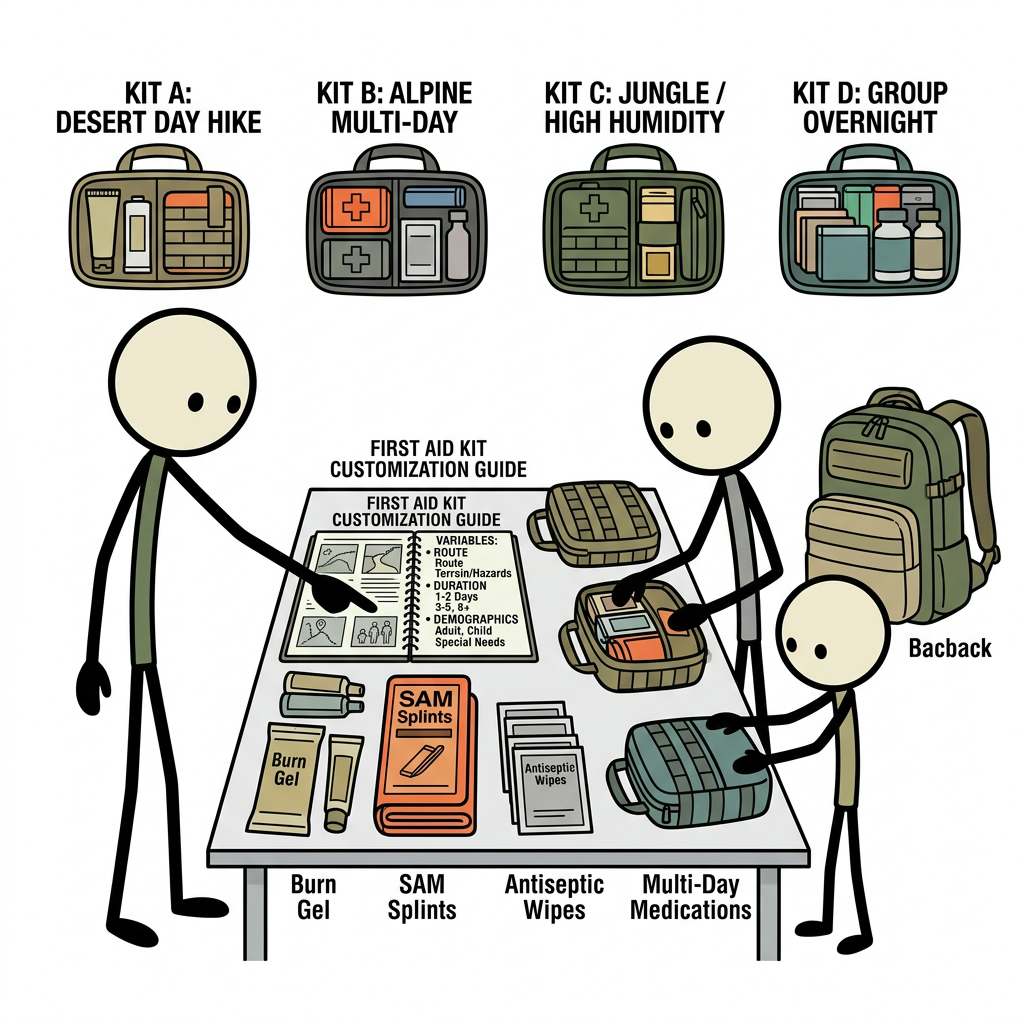
Flat, maintained single-track trails stress the body differently than Class 3 scrambles or jagged volcanic boulder fields. Tailoring your wilderness first aid supplies requires analyzing the primary mechanical forces and fall potentials dictated by the local geology.
Granite Scree, Talus, and Scrambling Routes
High-angle mountain terrain introduces sudden gravitational trauma, deep abrasions, and blunt force impacts. Sharp granite breaks skin, damages ligaments, and tears standard medical tape off the body quickly.
- Trauma Shears: Upgrade from lightweight plastic mini-shears to 7.25-inch tactical shears capable of slicing through 500-denier Cordura gaiters, thick leather hiking boots, and heavy climbing pants.
- Expanded Gauze and Wrap Volumes: Add two extra rolls of compressed sterile gauze and an additional elastic bandage to manage the heavy, multi-surface abrasions typical of scree-induced slides.
- Rigid Finger and Joint Splints: Pack small aluminum-foam finger splints to manage hyperextended or fractured digits sustained during sudden handhold failures on rock scrambles.
Dense Montane Forest, Brush, and Thickets
Travel through tight blowdowns, slide alder, and dense brush exposes hikers to continuous puncture trauma, low-hanging branch strikes, and corneal injuries that can completely blind an outdoorsman on the trail.
- Ophthalmic Care: Include a plastic eye shield, sterile saline eye wash ampoules (15–30 mL), and erythromycin ophthalmic ointment to flush and treat corneal abrasions caused by branch rebounds.
- Fine-Point Splinter Extraction: Medical-grade precision tweezers (such as splinter forceps) to retrieve deep wood fragments and thorns that carry bacterial and fungal spores into deep dermis layers.
Glacial, Alpine, and Karst Environments
Alpine regions and exposed limestone karst fields bring intense ultraviolet exposure, sharp rock edges, and the threat of catastrophic crevasses or sinkhole drops. In these remote areas, medical issues are amplified by high altitude and extreme isolation.
- Dedicated Hypothermia Vapor Barriers: Standard space blankets tear easily in high winds; replace them with an impermeable reflective survival bivvy or an insulated hypothermia wrap (such as a Blizzard Survival Blanket).
- Snow Blindness Protection: Pack emergency UV-blocking eye shields or spare category 4 sunglasses to protect hikers experiencing severe photokeratitis from alpine snow glare.
Dimension 2: Environmental Hazards, Weather Systems, and Regional Hazards
Weather and environmental biology dictate your physiological margins. The Federal Emergency Management Agency (FEMA) and NOAA consistently identify rapidly shifting weather systems as a primary cause of backcountry disorientation and physiological failure. Your custom hiking first aid kit must adapt to these atmospheric stresses.
Arid Deserts and Extreme Heat Profiles
In desert corridors, hyperthermia, heat stroke, and acute dehydration develop quickly. The primary goal of desert medical kits is fluid equilibrium, biological protection, and rapid thermodynamic cooling.
- High-Dose Electrolyte and ORS Reserves: Multiply baseline Oral Rehydration Salts by three. Formulations must align with WHO guidelines, containing precise sodium and glucose balances to drive fluid absorption across the intestinal wall.
- Cooling Infrastructure: Compressed evaporative field towels that drop ambient surface temperatures when moistened, paired with an emergency rectal thermometer for identifying heat stroke (internal temperature exceeding 104°F) versus simple heat exhaustion.
- Venomous Fauna Protocol: Avoid suction-based venom extractors; clinical studies have proven them completely ineffective and harmful to tissue. Instead, prioritize a wide, rigid crepe bandage (4–6 inches) to perform lymph-constrictive pressure immobilization for neurotoxic elapid bites, and secure a satellite communicator to initiate immediate antivenom medevac.
Sub-Freezing, Snowpack, and High-Latitude Zones
Cold environments cause liquid medications to freeze, reduce battery life in medical devices, and turn mild soft-tissue injuries into severe hypothermia events within minutes.
- Freezing-Point Drug Mitigation: Store all liquid items, injectable epinephrine, and antibiotic ointments in an insulated, body-contact pouch worn inside your base layer to prevent freezing and crystallization.
- Active Warming Sources: Chemical, air-activated heat packs designed for trauma (such as Ready-Heat panels) that sustain high therapeutic temperatures without burning frozen, desensitized skin.
- Hydrogel Frostbite Dressings: Non-adherent sterile dressings designed to cover clear or hemorrhagic frostbite blisters without mechanical friction during prolonged extraction down the mountain.
High-Altitude Climates (Above 8,000 Feet)
Rapid ascents into high-altitude territory without physiological acclimatization can quickly cause Acute Mountain Sickness (AMS), High-Altitude Pulmonary Edema (HAPE), and High-Altitude Cerebral Edema (HACE). Your backpacking medical kit needs clinical tools to detect and manage oxygen desaturation.
- Compact Pulse Oximeter: A field-tested finger pulse oximeter (kept warm against your core) to monitor blood oxygen levels and identify sudden hypoxemia before visible cyanosis appears.
- Targeted High-Altitude Pharmaceuticals: Obtain travel prescriptions for Acetazolamide (Diamox) to speed up acclimatization, Dexamethasone for HACE emergencies, and Nifedipine to manage severe HAPE symptoms while descending immediately.
Wet, Riparian, and Tropical Environments
Constant exposure to river crossings, rain, and thick mud softens the skin's outer layer, allowing trench foot, fungal infections, and waterborne pathogens to develop rapidly.
- Dermal Drying and Antifungal Compounds: Pack zinc-oxide foot powder and clotrimazole or miconazole creams to keep skin dry and treat fungal flare-ups before they stop you from walking.
- Rigid Waterproof Barrier Pouches: Seal every individual module inside 200D polyurethane-coated ripstop dry sacks with welded seams to survive prolonged water submersions.
Dimension 3: Trip Duration and Distance from Definitive Care
The total time and distance from professional medical care determines the volume of supplies you need. On a brief day hike, your kit focuses on quick stabilization to reach the trailhead. On remote multi-week expeditions, your medical gear must support sustained patient management and wound care through extended storms or delayed rescues.
| Parameter | Day Trip (< 4 Hours to EMS) | Weekend (1–2 Days, Isolated) | Expedition / Thru-Hike (3+ Days Remote) |
|---|---|---|---|
| Medical Focus | Rapid stabilization & self-evacuation | Extended splinting & infection mitigation | Sustained wound care & complex recovery |
| Dressings & Bandages | Minimal (1–2 changes) | Moderate (3–5 changes, multi-size) | Deep stock (daily changes, bulky rolls) |
| Trauma Capability | Tourniquet + standard compression | Tourniquet + hemostatics + SAM Splint | Full trauma suite + rigid immobilization spares |
| Medication Depth | Single-day relief doses | 48-hour continuous therapeutic doses | Full multi-day courses + wide-spectrum antibiotics |
| Diagnostic Tools | Visual observation | Digital thermometer, small penlight | Pulse oximeter, stethoscope head, diagnostic log |
When packing for remote routes where emergency help is days away, you must shift from a temporary "patch-up" mentality to a sustained patient stabilization approach. Wounds must be repeatedly cleaned, disinfected, and wrapped with fresh dressings every twenty-four hours to prevent sepsis. Ensure you carry ample wound supplies, specialized tape, and medical shears to care for injured hikers over multiple days.
Dimension 4: Group Size, Demographics, and Individual Vulnerabilities
A solo trekker carries a very different medical loadout than a guide leading eight backpackers through the backcountry. Similarly, groups with children, older adults, or working dogs require specific supplies tailored to their needs.
Solo Trekking: The Principle of Self-Application
If you hike alone, you must be able to use every single tool in your kit on yourself using only one hand. A two-handed tourniquet, complicated traction splints, or bandages that require two people to wrap are useless if your dominant wrist or collarbone is broken.
- Position your tourniquet in an exterior, ambidextrous pocket for instant access with either hand.
- Carry pre-cut strips of medical tape and cohesive wrap that can be separated without using scissors.
- Rely on satellite communications (like a Garmin inReach or ZOLEO) with a dedicated SOS trigger as a core component of your primary medical gear.
Scaling for Multi-Person Groups
When hiking with multiple people, do not try to fit an entire hospital into one person's pack. Instead, designate a comprehensive "Group Base Medical Kit" for shared camp use, while requiring every hiker to carry their own personal blister and trauma kit.
- Universalize Common Supplies: The shared base kit should hold larger collective tools: the SAM Splint, irrigation syringes, trauma shears, broad-spectrum antibiotics, and diagnostic gear.
- Group Triage Capacity: Double your supplies for sprains and fractures. A single group slip on steep rock can easily cause two twisted ankles at the same time.
- Standardized Medical Profiles: Keep sealed index cards for every hiker detailing their known allergies, blood types, emergency contacts, and personal medical histories inside the main kit flap.
Pediatric Considerations
Children cannot simply take smaller pieces of adult medications. Their bodies are much more sensitive to dehydration, temperature extremes, and rapid blood loss.
- Weight-Based Liquid Medications: Pack pediatric concentrations of ibuprofen and acetaminophen, along with an oral syringe marked in milliliters for exact dosing.
- Sized Splinting Gear: Adult SAM Splints must be cut down to fit smaller limbs safely, or you will need pediatric-sized splints to stabilize forearm or ankle fractures without cutting off circulation.
- Thermoregulation Backups: Pack extra high-efficiency thermal bivvies; children have a higher surface-area-to-mass ratio and develop severe hypothermia much faster than adults.
Older Hikers and Pre-Existing Medical Conditions
Older hikers require thoughtful planning for heart health, fragile skin, and daily prescription routines.
- Cardiovascular First Response: Add a chewable adult aspirin (325 mg) protocol for acute coronary syndromes, alongside the hiker's prescribed sublingual nitroglycerin if they have a history of heart issues.
- Gentle Skin Adhesives: Thin, aging skin tears easily under heavy zinc-oxide tape; pack silicone-based medical tapes or soft foam wraps for wound care without tearing the surrounding tissue.
- Prescription Buffer: Carry a full 72-hour backup supply of all vital daily medications (such as blood pressure, endocrine, or cardiac prescriptions) beyond the planned trip length to protect against unexpected trail delays.
Canine Companions: Working K9 Protocols
Dogs on backcountry trails face torn paw pads, snakebites, and heat exhaustion. Human medical supplies work for many canine injuries, but dogs also require specialized gear and safety considerations.
- Paw Protection and Laceration Care: Pack heavy-duty protective dog booties, sterile wound wash, and non-stick dressings to manage pad injuries and get your dog walking comfortably again.
- Canine Muzzle: Even the gentlest family dog may bite out of sheer pain when you treat a broken bone or deep cut. Carry a lightweight nylon muzzle to protect everyone while stabilizing an injured animal.
- Veterinary-Safe Medications: Confirm dog-safe medications with your veterinarian before heading out. Never give dogs human NSAIDs like ibuprofen or naproxen, as they can trigger fatal kidney failure and stomach ulcers.
The Tactical Pack-Out: Trail First Aid Checklist and Field Matrix
Use this functional trail first aid checklist to quickly assemble, pack, and organize your medical gear into dedicated modules before heading into the backcountry.
Core Trauma Module (Top Pack Pocket / Immediate Access)
- [ ] 1x CoTCCC-Approved Windlass Tourniquet (CAT or SOFTT-W)
- [ ] 1x QuikClot Combat Gauze (Z-fold hemostatic)
- [ ] 1x 4-Inch Israeli Emergency Bandage or Trauma Dressing
- [ ] 1x Pair Vented Chest Seals (Compact Twin-Pack)
- [ ] 2x Pairs Nitrile Examination Gloves (Heavy-Duty Black or Blue)
Wound & Blister Module (Dry Pouch / Secondary Access)
- [ ] 1x 20 mL Irrigation Syringe with 18-gauge catheter cap
- [ ] 1x Roll Leukotape P (wrapped around a plastic card to save space)
- [ ] 4x Hydrocolloid Blister Gel Pads (various sizes)
- [ ] 10x Steri-Strips / Reinforced Wound Closure Strips
- [ ] 1x Ampoule Tincture of Benzoin Compound
- [ ] 4x Sterile Non-Stick Gauze Pads (3" x 4")
- [ ] 6x Povidone-Iodine or Chlorhexidine Antiseptic Prep Wipes
- [ ] 4x Antibiotic Ointment Packets (Single-Use Bacitracin/Polysporin)
Orthopedic & Splint Module (Backpack Frame Channel)
- [ ] 1x 36-Inch SAM Splint (Folded flat)
- [ ] 2x Rolls Cohesive Self-Adhesive Bandage (3" x 5 yds)
- [ ] 2x Triangular Muslin Bandages (Cravats with safety pins)
- [ ] 1x 7.25-Inch Titanium Medical Trauma Shears
Medication & Environmental Module (Insulated / Sealed Core)
- [ ] 8x Ibuprofen Tablets (200 mg each)
- [ ] 8x Acetaminophen Tablets (500 mg each)
- [ ] 4x Diphenhydramine Tablets (25 mg each)
- [ ] 6x Loperamide Tablets (2 mg each)
- [ ] 4x WHO-Formulation Oral Rehydration Salt Packets
- [ ] 1x Blizzard Survival Blanket or Heavy-Duty Heat-Reflective Bivvy
- [ ] 1x Fine-Point Splinter Forceps
- [ ] 1x Mini Digital Medical Thermometer
Kit Maintenance, Expiration Audits, and Field Proficiency
Building a top-tier medical kit is completely useless if the adhesive tape inside has melted into sticky goo, the diagnostic batteries are dead, or you do not know how to apply your tools under extreme stress. Consistent gear maintenance and hands-on practice are what turn basic supplies into genuine life-saving skills.
Inspect your entire medical loadout at the beginning of spring and the end of autumn. Check the expiration dates on all oral medications and swap out heat-sensitive ointments that spent hot summer months baking inside your backpack. Check the integrity of vacuum-sealed sterile dressings; if a protective pouch has lost its seal from trail friction, replace it immediately to avoid packing bacteria into future open wounds.
Most importantly, dedicate time to real-world medical training. Sign up for a reputable Wilderness First Aid (WFA) or Wilderness First Responder (WFR) certification course through established organizations like the Wilderness Medical Society, NOLS Wilderness Medicine, or the American Red Cross. When emergencies strike on remote trails, you will not magically rise to the occasion—you will fall back on your real training, your muscle memory, and the gear you thoughtfully prepared.
True safety in the backcountry comes from moving past standard, one-size-fits-all medical kits and taking ownership of your wilderness health. By analyzing your route, preparing for rough terrain, watching the weather, and packing for the exact needs of your group, you turn unexpected trail emergencies into manageable backcountry problems. Take the time to audit your gear, master your tools, and step onto the trail knowing you are fully prepared to keep yourself and your hiking partners safe.
Frequently Asked Questions
What core supplies should every basic hiking first aid kit include?
Every kit needs blister treatment (moleskin or hydrocolloid bandages), adhesive bandages, sterile gauze pads, medical tape, antiseptic wipes, tweezers, trauma shears, an elastic support bandage, and basic over-the-counter medications like ibuprofen and antihistamines.
How should route terrain and distance alter your first aid kit contents?
Longer, remote, or technical routes require trauma and stabilization tools—such as a SAM splint, hemostatic gauze, a tourniquet, an emergency hypothermia blanket, and satellite communication—whereas well-trafficked day hikes require primarily minor wound and blister care.
How do you scale first aid supplies for larger hiking groups?
Multiply consumable supplies such as bandages, blister pads, antiseptic wipes, and medications by the number of participants, while designating shared durable equipment like shears, splints, and irrigation syringes to avoid unnecessary pack weight.
Should personal prescription medications be stored in the group first aid kit?
Hikers should carry their own essential prescriptions, such as asthma rescue inhalers and epinephrine auto-injectors, but inform group leaders and trail partners of where those medications are packed in case of incapacitation.
How frequently should you audit and maintain a hiking first aid kit?
Inspect your kit at least twice a year and before any multi-day trek to replenish consumed items, replace expired medications, and check that sterile seals and adhesive tapes have not degraded from moisture or heat.