⚡ Key Facts
- Indefinite Shelf Life: Archaeologists excavating 3,000-year-old Egyptian tombs and 4,300-year-old Georgian burial sites consistently unearth honey that remains chemically stable, unspoiled, and completely edible.
- Biological Hostility: Honey naturally maintains a sub-0.60 water activity level ($a_w$) and an acidic pH between 3.2 and 4.5, creating a hypertonic environment that desiccates and destroys bacteria, yeasts, and pathogenic fungi.
- Caloric Efficiency: Offering roughly 64 calories and 17 grams of pure carbohydrates per level tablespoon, raw honey delivers instantly bioavailable fuel without requiring digestive enzymatic breakdown in high-stress survival scenarios.
- Medical Utility: Beyond nutrition, clinical studies compiled by the National Institutes of Health (NIH) confirm honey's efficacy as a broad-spectrum topical antimicrobial, autolytic debriding agent, and burn dressing when standard medical logistics collapse.
- The Only Real Threat: Honey does not expire due to age; it fails exclusively through human mishandling—primarily atmospheric moisture absorption (hygroscopy) leading to yeast fermentation.
When modern supply chains shudder under systemic strain, the survivalist's pantry faces an unyielding biological enemy: progressive nutritional decay. Grains oxidize, cooking oils turn rancid, canned goods succumb to acidic container corrosion, and freeze-dried pouches inevitably degrade once their micro-perforated seals fail. Amid this slow-motion nutritional attrition stands a single, immutable exception. Raw honey is not merely an alternative sweetener; it is a bio-chemically weaponized survival asset that defies biological time. Whether secured for off-grid caloric endurance, primitive field medicine, or barter currency, understanding how to source, store, and deploy raw honey converts an everyday kitchen staple into one of the most resilient force multipliers in your emergency stockpile. For the practical checklist side, use the community emergency preparedness guide.
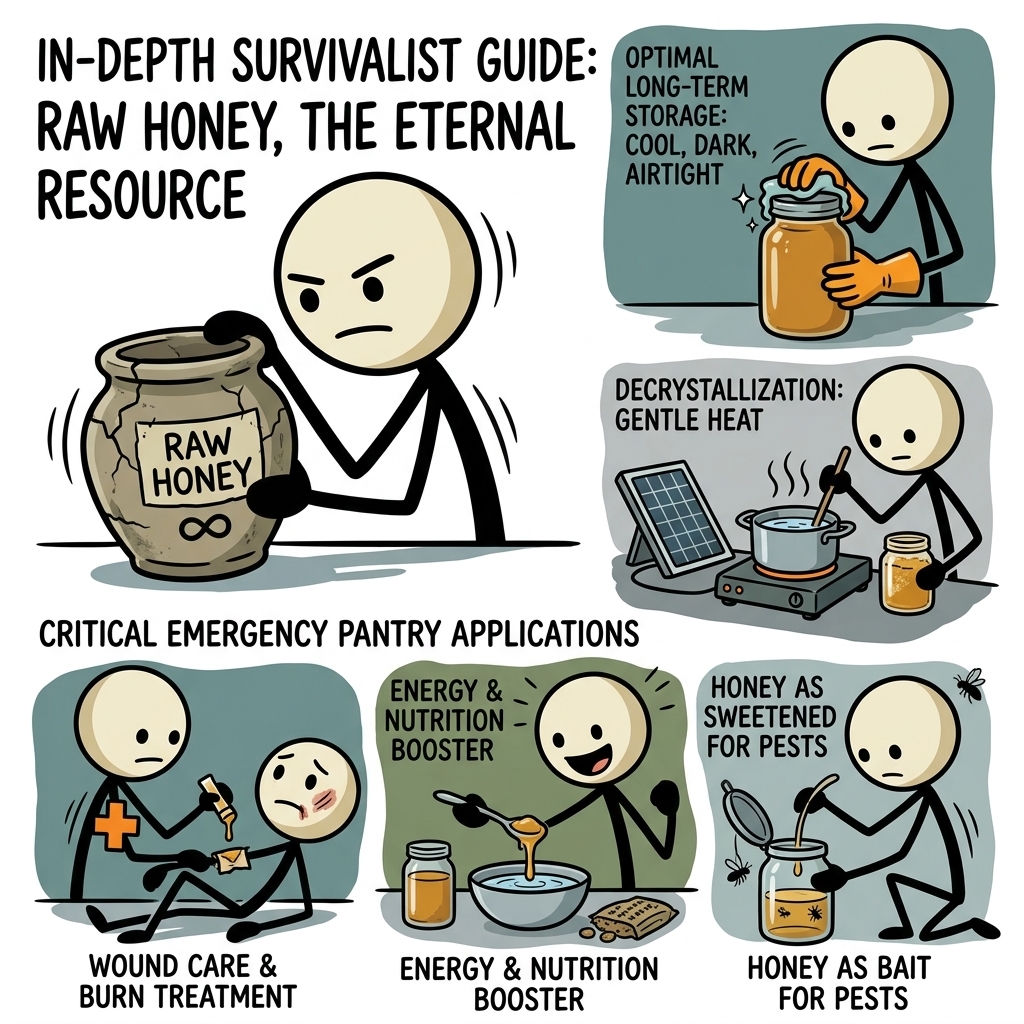
The Immortal Calorie: The Science Behind Honey Shelf Life
To successfully safeguard honey across multi-decade timelines, one must first grasp why it refuses to decay. The phrase honey shelf life is, chemically speaking, a misnomer; properly secured honey possesses no biological expiration date. Its permanence is not an accident of nature but the calculated result of apian biochemistry refined over millions of years of evolutionary pressure. The honeybee transforms simple floral nectar into an unyielding, shelf-stable carbohydrate reserve through three distinct, synergistic biochemical mechanisms. For the practical checklist side, use the neighborhood preparedness network.
1. Extreme Osmotic Pressure and Low Moisture Content
In its mature, harvest-ready state, honey contains between 14% and 18% water by weight. In microbiological terms, the crucial metric is water activity ($a_w$), which measures the unbound water available for microbial proliferation. Most pathogenic bacteria require a minimum water activity of 0.91 to multiply, while common foodborne molds cease reproduction below 0.70. Raw honey averages a water activity of approximately 0.55 to 0.60. For the practical checklist side, use the emergency communication plan.
This creates an intense osmotic pressure gradient. When a bacterium, fungal spore, or environmental microbe comes into direct contact with honey, the hypertonic environment rapidly extracts water out of the foreign cell through its semi-permeable membrane. The invading cell literally collapses, shrivels, and dies of intracellular dehydration before it can metabolize or reproduce. As long as ambient humidity is barred from the container, raw honey functions as a microbial graveyard. For the practical checklist side, use the family emergency planning guide.
2. Low pH and Gluconic Acid Synthesis
The second pillar of honey's preservation engine is profound chemical acidity. Raw honey typically registers a pH between 3.2 and 4.5, placing it on par with diluted vinegar, tomato juice, or orange juice. This acidic profile is predominantly driven by gluconic acid, a compound produced during the conversion of nectar sugars.
Most human pathogens—including Escherichia coli, Salmonella enterica, and Staphylococcus aureus—require a neutral or near-neutral pH (6.5 to 7.5) to maintain cellular homeostasis. The hostile, proton-dense matrix of honey permanently inhibits their enzymatic machinery. Even if a pathogen manages to survive the osmotic desiccation of the low water content, the chemical burn of the organic acids neutralizes its viability.
3. The Enzymatic Engine: Glucose Oxidase and Hydrogen Peroxide
The definitive factor separating raw, unadulterated honey from processed corn syrups and artificial shelf-stable sweeteners is the presence of bee-derived enzymes, specifically glucose oxidase. When worker bees process nectar inside the hive, their hypopharyngeal glands secrete this specialized catalyst directly into the slurry.
In fully cured, undiluted honey, glucose oxidase sits dormant due to the lack of free water. However, when honey experiences slight dilution—such as upon contact with human bodily fluids, wound exudate, or cellular tissue—the enzyme activates instantly. It systematically breaks down free glucose molecules into gluconic acid and releases trace, sustained amounts of medical-grade hydrogen peroxide ($H_2O_2$). This continuous micro-dosage of reactive oxygen species provides powerful antiseptic action without causing the surrounding tissue destruction associated with store-bought 3% topical hydrogen peroxide bottles.
Does Honey Expire? Debunking Myths and Identifying True Spoilage Vectors
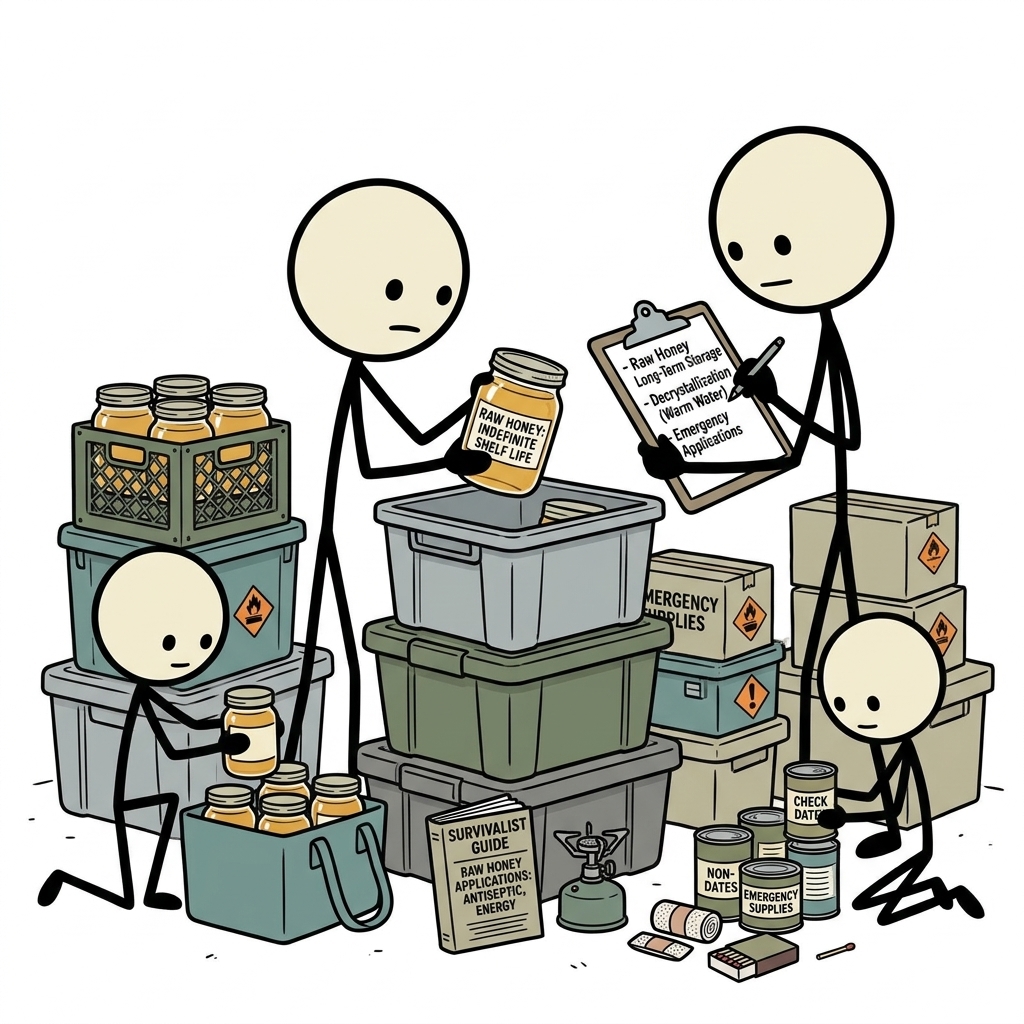
Preppers and pantry managers frequently ask: does honey expire when subjected to less-than-ideal conditions? The unvarnished answer is clear: pure honey does not spoil on its own, but it can be ruined by human error, environmental exposure, and container degradation. Understanding these specific failure points prevents the heartbreaking loss of hundreds of pounds of critical reserves.
The Hygroscopic Vulnerability
Honey's greatest chemical strength is also its ultimate operational vulnerability. Honey is profoundly hygroscopic—it eagerly pulls water vapor out of the surrounding atmosphere. If raw honey is stored in unsealed containers, low-density plastics, or environments with relative humidity exceeding 60%, the surface layer of the honey will steadily absorb moisture.
Once the local moisture content of that top layer crosses the critical threshold of 19% to 20%, the dormant osmo-tolerant wild yeasts (primarily from the genus Zygosaccharomyces) naturally present in raw honey wake up. These yeasts begin metabolizing fructose and glucose, generating carbon dioxide, ethyl alcohol, and acetic acid. While wild-fermented honey mead is historically celebrated, uncontrolled pantry fermentation leads to swollen containers, blown lids, sour vinegar smells, and ruinous pantry cleanups.
The Infant Botulism Factor
The Centers for Disease Control and Prevention (CDC) and the U.S. Food and Drug Administration (FDA) consistently warn that raw honey must never be administered to infants under 12 months of age. The issue is not that honey spoils, but that it can harbor dormant endospores of Clostridium botulinum. These environmental spores are ubiquitous in soil, air, and bee habitats.
In the fully developed gastrointestinal tract of adults and older children, competitive microflora and robust stomach acid prevent these spores from germinating. In an infant's immature digestive tract, however, the spores can vegetative, colonize the intestine, and release deadly botulinum neurotoxins. In an austere grid-down survival situation, keeping honey strictly allocated to children older than one year and adults is an immutable rule of pediatric safety.
Adulteration: The "Funny Honey" Threat
A staggering percentage of commercial honey sold on domestic supermarket shelves is counterfeit. Global emergency food storage guide investigations routinely reveal that commercial suppliers blend real honey with high-fructose corn syrup, rice syrup, or beet sugar, subsequently stripping away pollen grains through ultra-filtration to obscure the product's true geographic origin.
This adulterated, ultra-filtered syrup lacks the enzymatic machinery, antimicrobial density, and precise water-activity limits of true honey. For emergency pantry reliability, adulterated product is unacceptable; it crystallizes unpredictably, thins out, and exhibits vastly elevated spoilage rates. You must stock genuine, verifiable, unpasteurized raw honey directly from trusted regional apiaries or transparent bulk packagers.
Storing Honey Long Term: The Prepper’s Engineering Blueprint
Achieving absolute food security requires moving past temporary solutions toward true logistical reliability. Storing honey long term demands careful container selection, precise temperature management, and strict isolation from chemical and environmental degradation factors.
Container Selection: Glass vs. Food-Grade Plastics
Selecting your storage medium directly dictates whether your honey will last 5 years or 500 years. Each material presents clear operational parameters:
- Borosilicate and Soda-Lime Glass (Mason Jars): Glass remains the uncontested gold standard for multi-decade survival storage. Glass is an absolute gas barrier, 100% impermeable to oxygen, carbon dioxide, and atmospheric moisture. It contains no volatile plasticizers to leach into your supply over decades of storage. Protect it from physical shock and ambient light, and glass will preserve raw honey indefinitely. Wide-mouth Mason jars are strongly preferred, as they allow direct access when the honey eventually solidifies.
- High-Density Polyethylene (HDPE #2): For larger bulk caches where weight and impact resistance matter—such as tactical vehicle transport or high-earthquake zones—food-grade HDPE #2 buckets (particularly 1-gallon to 5-gallon sizes) are effective. Ensure they feature airtight rubber gaskets or Gamma Seal lids. Note that all plastics possess minor micro-gas permeability over extended decades; rotate or inspect HDPE-stored honey every 7 to 10 years.
- PETE (PET #1) Containers: Suitable for medium-term storage (2 to 5 years), but unsuited for generational caching. Avoid standard thin-wall commercial squeeze bottles for permanent survival caches, as they turn brittle and crack over long periods.
- Metals to Absolutely Avoid: Never store raw honey in unlined metal containers, galvanized tin, carbon steel, or aluminum. The natural organic acids in honey steadily corrode base metals, leaching toxic metallic salts, zinc, and iron into the honey, rendering it unsafe for human consumption. Heavy-gauge, 304 or 316 food-grade stainless steel is the only metal container suited for direct honey contact.
The Oxygen Absorber Fallacy
A common error made by novice emergency preppers is tossing an iron-based oxygen absorber (O2 absorber) into jars of honey before sealing them. Do not do this.
Oxygen absorbers require ambient moisture to trigger their internal chemical oxidation process. When placed inside a jar of honey, the hygroscopic sugars strip moisture away from the packet, frequently causing it to fail. More critically, honey does not spoil via oxidative rancidity because it contains virtually zero lipids. Adding an oxygen absorber introduces an unnecessary foreign chemical pouch directly into your food supply while creating an artificial zero-oxygen environment inside a moist, high-density matrix—raising unnecessary theoretical risks regarding anaerobic spore behavior. Keep your honey containers completely plain: clean vessel, raw honey, airtight lid, nothing else.
Environmental Temperature Control
The Federal Emergency Management Agency (FEMA) and the Red Cross emphasize climate stability for critical emergency rations. Honey responds dramatically to its thermal environment:
| Temperature Zone | Physical State | Chemical Impact / Shelf Stability |
|---|---|---|
| Below 32°F (0°C) | Suspended glassy state | Crystallization ceases entirely; enzymes remain indefinitely preserved; zero structural degradation. |
| 50°F to 60°F (10°C–15°C) | Maximum crystallization zone | Accelerates glucose lattice formation. Honey solidifies rapidly, but chemical integrity remains pristine. |
| 65°F to 75°F (18°C–24°C) | Optimal pantry zone | Ideal operational target. Slows crystallization, maintains flow characteristics, zero thermal degradation of enzymes. |
| Above 95°F (35°C+) | Degradation risk zone | Destroys delicate enzymes (invertase, glucose oxidase); elevates Hydroxymethylfurfural (HMF); darkens color; impairs medicinal utility. |
Honey Crystallization: Prepper Management and Gentle Decrystallization
Few events trigger more false alarms in the prep community than discovering a cache of golden liquid has transformed into a pale, chalky, semi-solid mass. Mastering the dynamics of the honey crystallization prepper dynamic transforms this perceived disaster into a clear sign of product authenticity.
The Physics of the Crystal Matrix
Raw honey is a naturally supersaturated solution containing two dominant monosaccharides: fructose (typically 38%) and glucose (typically 31%). While fructose remains happily dissolved in minimal water, glucose has low solubility and naturally seeks to shed excess water and return to its stable, solid crystalline state.
Over time, free glucose molecules precipitate out of the liquid suspension, attaching to microscopic nucleation seeds naturally suspended in raw, unfiltered honey. These seeds include trace pollen grains, propolis particles, microscopic wax fragments, and small air bubbles. This physical transformation is absolute proof that your honey has not been boiled, micro-filtered, or adulterated with artificial thinners. Solid, crystallized honey provides precisely the same caloric density and nutritional value as liquid honey.
Why Crystallized Honey is a Tactical Advantage
Many seasoned survivalists intentionally prompt their reserves to crystallize. Solidified honey cannot splash, pour uncontrollably, or run down the sides of containers. If an accidental puncture occurs in an HDPE bucket during an evacuation, crystallized honey will not leak across your supply cache like liquid syrup. Furthermore, semi-solid honey can be sliced, spread like butter on hardtack, or applied directly to open wounds as a stable ointment without running off the affected site.
Step-by-Step Field Decrystallization Protocol
If fluid dynamic utility is required—such as for blending oral rehydration solutions or measuring precise emergency culinary batches—you must decrystallize the honey without burning the sugars or destroying its fragile medicinal enzymes.
- Never Microwave or Boil Directly: Exposing raw honey to direct microwave radiation or rolling boiling water creates massive internal hotspots. Temperatures exceeding 115°F (46°C) immediately denature the therapeutic enzyme glucose oxidase, rendering its wound-healing peroxide generation permanently inert, while scorching the fructose and creating bitter off-flavors.
- The Controlled Water Bath Method: Place your sealed, glass Mason jar inside a deep pot filled with water brought up to the jar's shoulder level. Heat the water slowly using a monitored stove, hot plate, or rocket stove until it reaches 100°F to 105°F (37°C–40°C). Maintain this steady warmth for several hours, gently swirling the jar periodically until the glucose crystals dissolve back into clear solution.
- Passive Off-Grid Solar Decrystallization: In a sustained grid-down scenario with zero cooking fuel to spare, utilize a solar oven or construct an improvised thermal heating box. Place the crystallized jar inside a dark metal ammo can or insulated cooler lined with black trash bags, placed in indirect, bright sunlight. Monitor ambient interior temps with a standard meat thermometer to ensure temperatures do not spike past 110°F.
Critical Emergency Pantry Honey Applications: Beyond the Teaspoon
Most civilian stockpilers view honey exclusively as a comfort food or a sweetener for morning coffee. A rigorous survivalist looks at emergency pantry honey through the lens of multi-utility. It is simultaneously an immediate bio-energetic fuel, a premier tactical surgical tool, an effective food preservation vector, and a respiratory defense medicine.
1. Immediate High-Output Metabolic Fuel
In physical survival situations—chopping winter firewood, performing field manual labor, navigating mountain terrain on foot, or fighting cold-weather hypothermia—your muscular system requires rapidly accessible glycogen. Complex starches (like brown rice or dry beans) require significant metabolic energy, hydration, and prolonged cooking time to break down into usable sugars.
Honey requires virtually no secondary digestion. Its monosaccharides (fructose and glucose) are absorbed directly through the mucosal linings of the stomach and upper small intestine into the bloodstream. This provides an almost immediate insulin and blood-glucose spike to power working muscles, support brain cognition under sleep-deprived conditions, and break the metabolic cycle of exhaustion-induced shock.
2. Field Trauma and Tactical Wound Dressing
When professional emergency rooms are inaccessible and civilian pharmaceutical antibiotics are exhausted, honey shifts from the pantry shelf to the tactical trauma kit. Medical literature—including historical combat casualty practices and modern clinical burn unit evaluations—documents honey's potent antimicrobial efficacy across extensive tissue injuries:
- Continuous Autolytic Debridement: When placed directly into a dirty, jagged wound, honey's osmotic action draws lymph fluid upward through the damaged tissue layers. This gentle outward wash continually floats dead cellular debris, dirt, and necrotic tissue out of the wound bed, painlessly cleansing areas that would otherwise require aggressive, painful mechanical scrubbing in the field.
- Non-Stick Dressing Interface: Honey prevents standard cotton gauze or trauma pads from adhering directly to fresh granulation tissue. Dressings can be changed rapidly and cleanly without tearing away delicate, newly healed epithelial tissue, significantly accelerating recovery times in burn and shrapnel victims.
- Broad-Spectrum Pathogen Suppression: Honey is clinically proven to suppress antibiotic-resistant strains, including Methicillin-resistant Staphylococcus aureus (MRSA) and Pseudomonas aeruginosa, primarily through the sustained, low-level generation of hydrogen peroxide paired with its dehydrating hypertonicity.
- Application Protocol: Wash the wound margins with boiled, cooled water. Smear a generous, thick layer of raw honey directly onto sterile gauze—not directly into the wound cavity, to minimize mess—then secure the honey-soaked gauze firmly over the trauma site. Change the dressing every 24 to 48 hours. If the honey thins out drastically from absorbing excessive wound exudate, clean and apply a fresh dressing immediately.
3. Cough Suppression and Pediatric Respiratory Support
The World Health Organization (WHO) and the American Academy of Pediatrics officially endorse honey as a proven, safe demulcent and cough suppressant for individuals over one year old. In clinical trials, a single 10-gram dose (roughly two teaspoons) of raw honey before sleep was found to be as effective—and frequently superior—to standard over-the-counter doses of dextromethorphan or diphenhydramine at reducing nocturnal coughing spasms and improving sleep quality in upper respiratory tract infections.
Its heavy, viscous nature coats the inflamed pharyngeal mucosa, blunting mechanical nerve irritation in the throat, while its systemic anti-inflammatory flavonoids soothe bronchial hyperactivity. Combine it with raw garlic, steep it with cayenne pepper, or mix it into hot pine-needle tea to form a formidable wild-crafted expectorant.
4. Emergency Oral Rehydration Salts (ORS)
Severe gastrointestinal illnesses—such as dysentery, cholera, or rotavirus resulting from contaminated post-disaster municipal water supplies—kill through acute dehydration and systemic electrolyte depletion. The CDC and WHO recommend oral rehydration therapy as the primary treatment for these fluid-loss crises.
If commercial ORS packets are unavailable, you can manufacture life-saving physiological rehydration fluid using your pantry supplies. The glucose in honey activates the sodium-glucose cotransport mechanism in the epithelial cells of the human small intestine, pulling sodium and critical hydration directly into the vascular system even during severe diarrhea:
Survival Oral Rehydration Solution (ORS) Formula
Mix the following components thoroughly until completely dissolved in clean, disinfected drinking water:
- 1 Liter (approx. 4.2 cups) of boiled or micro-filtered safe drinking water
- 2 Tablespoons of pure raw honey (providing the exact glucose transport trigger)
- 1/2 Teaspoon of pure non-iodized sodium chloride (fine sea salt or table salt)
- Optional: 1/2 cup of fresh citrus juice (lemon or orange) to supply essential potassium
Administer continuously in small, frequent sips to prevent vomiting and reverse hypovolemia.
5. Natural Food Preservation and Fat Stabilization
Historically, long-distance travelers, mountain men, and indigenous hunters used raw honey as an active preserving medium for high-value perishable proteins. When manufacturing primitive pemmican—a calorie-dense survival superfood blending rendered tallow and dried lean meat powder—adding raw honey provides two massive operational advantages: it acts as an adhesive, palatable carbohydrate binder, and its native polyphenols and flavonoids act as natural antioxidants, slowing the oxidative rancidity of the animal fats over prolonged warm storage.
Furthermore, honey can be used directly for room-temperature cold-storage infusions. Whole, raw, peeled garlic cloves submerged completely beneath a layer of raw honey undergo a slow, non-pathogenic lacto-fermentation process. The resulting "garlic honey" preserves the antimicrobial allicin of the garlic while infusing the honey with immune-boosting compounds, producing a stable, multi-year medical preparation suitable for off-grid winter pantry defense.
Calculating Your Emergency Pantry Honey Reserves
Determining precisely how much honey your household needs requires calculating both nutritional requirements and operational medical scenarios. A robust, balanced survival storage plan separates allocations into discrete, functional categories:
- Baseline Caloric Allocation: Plan on 12 to 24 pounds of raw honey per adult per year. This allotment provides roughly 1 to 2 tablespoons per day, functioning primarily as a stable cooking base, tea sweetener, mental morale booster, and clean baking carbohydrate that safeguards your granulated white sugar supplies.
- Tactical Medical Reserves: Set aside an additional 5 to 10 pounds of medical-grade raw honey (such as high-potency raw buckwheat honey, known for exceptional antioxidant levels, or authentic Manuka honey with an independently certified UMF rating of 15+) strictly isolated in your primary trauma cache. Keep this supply sealed in small, 8-ounce or 12-ounce wide-mouth glass jars to limit environmental contamination during emergencies.
- Barter Stockpile: In long-term grid-down settings, honey is premier trade currency. Unlike paper paper money, unpasteurized honey never depreciates, rots, or loses functional utility. Storing an additional crate of twelve 1-pound glass jars gives you high-leverage trade collateral capable of acquiring tools, fuel, manual labor, or localized intelligence from neighboring homesteads.
When purchasing your reserves, seek out regional beekeepers through state beekeeping associations or local agricultural extensions. Inquire explicitly if their extraction process exceeds 104°F (confirming it is truly raw) and ensure the honey has merely been strained of coarse hive debris rather than forced through pressurized micro-filters that remove the vital, microscopic propolis and medicinal pollen particulates.
The Undefeated Survival Staple
Modern emergency preparedness often overcomplicates survival logistics. We purchase complex chemical water purifiers, stockpile delicate electronics wrapped in Faraday enclosures, and assemble precarious arrays of high-tech outdoor gear. Yet when human society faces prolonged disruption, the fundamental laws of human biology remain entirely ancient: our bodies require clean hydration, uncorrupted calories to drive muscular labor, and dependable antimicrobial shields to survive physical trauma and systemic disease. Raw honey meets every single one of these non-negotiable requirements using an elegant biochemical system that human industrial factories have never managed to duplicate. By investing in clean, unadulterated raw honey, securing it within impermeable glass containers, and respecting its basic physical vulnerabilities, you anchor your survival pantry to a permanent biological asset—an unyielding source of energy, medicine, and self-reliance that will outlast the crisis, your generational pantry, and the passage of time itself.
Frequently Asked Questions
Does honey ever expire or spoil in long-term storage?
Pure honey stored in an airtight container has an indefinite shelf life due to its low moisture content, high acidity, and natural presence of hydrogen peroxide, which together prevent microbial growth.
What causes honey to crystallize, and is it still safe to eat?
Crystallization is a harmless, natural process where glucose separates from water into crystals over time; crystallized honey remains entirely safe, edible, and nutritionally intact.
How do you decrystallize honey without destroying its beneficial enzymes?
Place the sealed honey container into a warm water bath heated between 95°F and 110°F (35°C to 43°C) and stir periodically until the crystals dissolve, avoiding boiling water or high microwave heat.
Why is honey considered an essential survival pantry staple?
Honey is an energy-dense, non-perishable source of simple carbohydrates that also doubles as a mild topical antibacterial dressing for minor wounds and a natural throat demulcent in emergency medical scenarios.
What environmental conditions can ruin honey stored in an emergency stockpile?
High humidity and unsealed containers allow honey to absorb moisture from the air; if the moisture content exceeds 18%, wild osmophilic yeasts can activate and cause the honey to ferment.