⚡ Key Facts
- Pathogen Elimination: According to the Centers for Disease Control and Prevention (CDC), bringing water to a rolling boil for at least 1 minute (or 3 minutes at elevations above 6,500 feet) is the single most effective method for killing pathogenic bacteria, viruses, and protozoa. For the practical checklist side, use the community emergency preparedness guide.
- Carbon Monoxide Risk: The Consumer Product Safety Commission (CPSC) warns that burning fuel indoors without proper ventilation can lead to fatal carbon monoxide (CO) buildup; over 400 Americans die annually from unintentional CO poisoning, often during post-disaster power outages. For the practical checklist side, use the neighborhood preparedness network.
- Energy Requirements: To raise one gallon of water (8.34 lbs) from 50°F to boiling (212°F) requires approximately 1,351 British Thermal Units (BTUs) of absorbed heat energy. Considering average stove burner inefficiencies, a heating source must output 3,000 to 4,500 BTUs to boil a gallon of water in a reasonable timeframe. For the practical checklist side, use the emergency communication plan.
- Solar Efficiency: Passive solar water heaters can raise water temperatures to over 120°F even in ambient temperatures as low as 40°F, provided there is direct, unobstructed sunlight.
- FEMA Guidelines: The Federal Emergency Management Agency (FEMA) recommends storing at least one gallon of water per person per day for drinking and sanitation, but notes that during prolonged outages, the ability to heat water is critical for preventing hypothermia and maintaining basic hygiene.
When a severe winter storm, cyberattack, or natural disaster cripples the electrical grid, the modern luxuries we take for granted instantly vanish. Among these, access to hot water is often the first major loss felt by households. While we instinctively focus on stockpiling drinking water, we frequently overlook the physiological and sanitary necessity of heat. Hot water is not merely a comfort; it is a primary line of defense against disease, hypothermia, and infection. Whether you need to sterilize medical equipment, rehydrate freeze-dried survival rations, wash pathogens from your skin, or maintain core body temperature in a freezing home, knowing how to heat water without electricity is a foundational survival skill. This guide explores safe, practical, and diverse methods to secure emergency hot water when the grid goes dark.
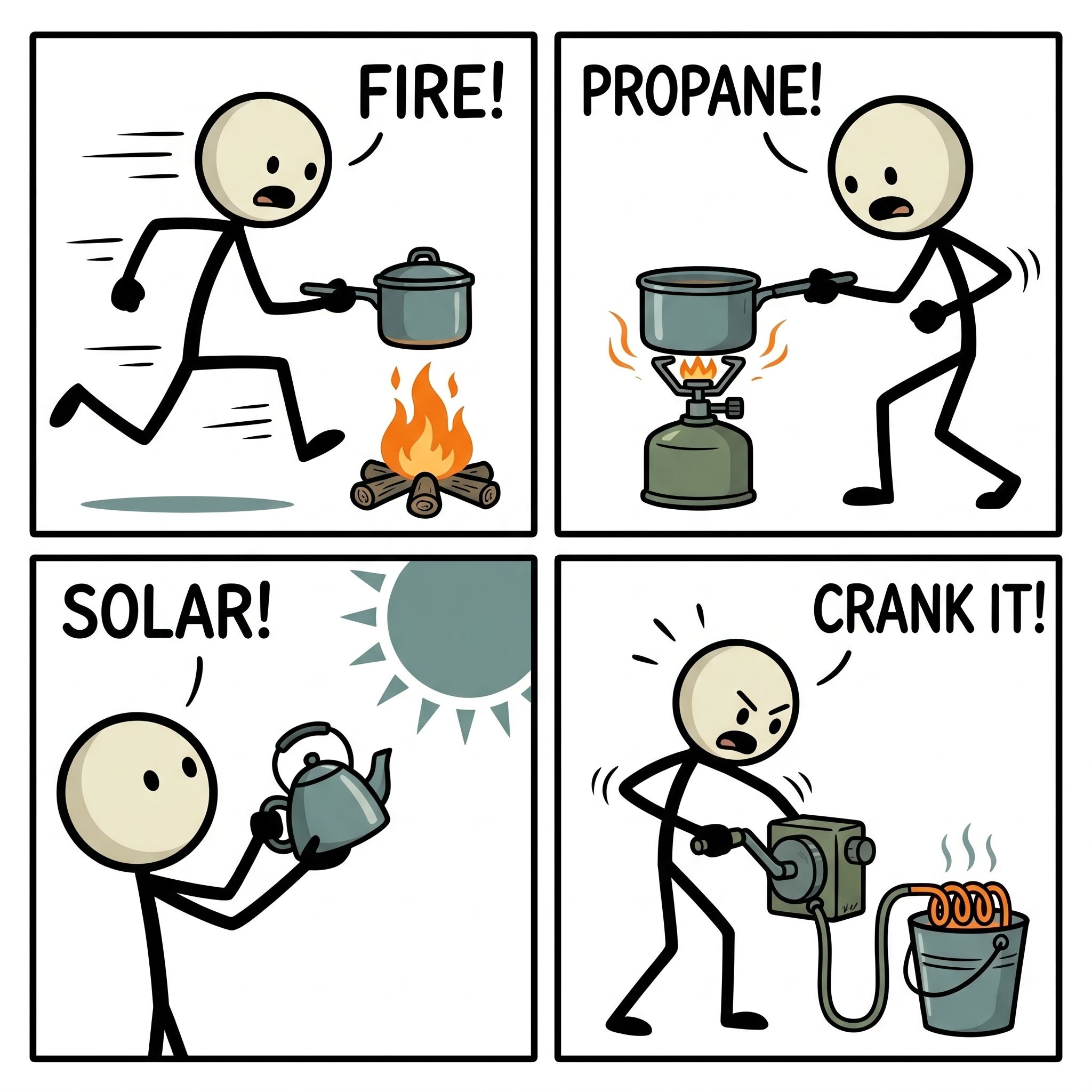
Why Hot Water is a Survival Necessity
In a prolonged grid-down scenario, sanitation standards rapidly decay. Municipal water treatment facilities rely on electrical grids to pump and purify water. When these systems fail, water pressure drops, and backflow can introduce biological contaminants into municipal pipes, triggering widespread boil-water advisories. According to the U.S. Geological Survey (USGS), waterborne pathogens like Giardia lamblia, Cryptosporidium, and Escherichia coli can survive for days or even weeks in untreated water. Heating water to its boiling point is the most reliable way to neutralize these biological threats, far surpassing chemical treatments like chlorine or iodine in terms of broad-spectrum efficacy.
Beyond purification, hot water plays a critical role in thermal regulation. During winter power outages, such as the catastrophic 2021 Texas grid failure documented by the National Oceanic and Atmospheric Administration (NOAA), hypothermia becomes a silent killer indoors. Consuming warm liquids and using hot water bottles wrapped in fabric can raise a person's core body temperature far more efficiently than dry blankets alone. Furthermore, basic hygiene—which requires warm water to effectively dissolve oils and activate soaps—prevents the spread of gastrointestinal illnesses and skin infections that historically devastate populations during long-term emergencies.
The Physics of Heating Water
To understand survival water heating, one must understand the energy dynamics involved. Water has an incredibly high specific heat capacity, meaning it requires a significant amount of thermal energy to raise its temperature. One BTU is defined as the amount of heat required to raise the temperature of one pound of liquid water by one degree Fahrenheit. Because a gallon of water weighs approximately 8.34 pounds, heating a single gallon of water from a chilly tap temperature of 50°F to a safe boiling point of 212°F requires 1,351 BTUs of energy. If your heating appliance is only 40% efficient (common for open campfires or unshielded camp stoves), you will need to burn enough fuel to generate nearly 3,400 BTUs of raw heat. Consequently, fuel conservation and thermal efficiency are paramount in any off-grid scenario.
Indoor-Safe Water Heating Methods
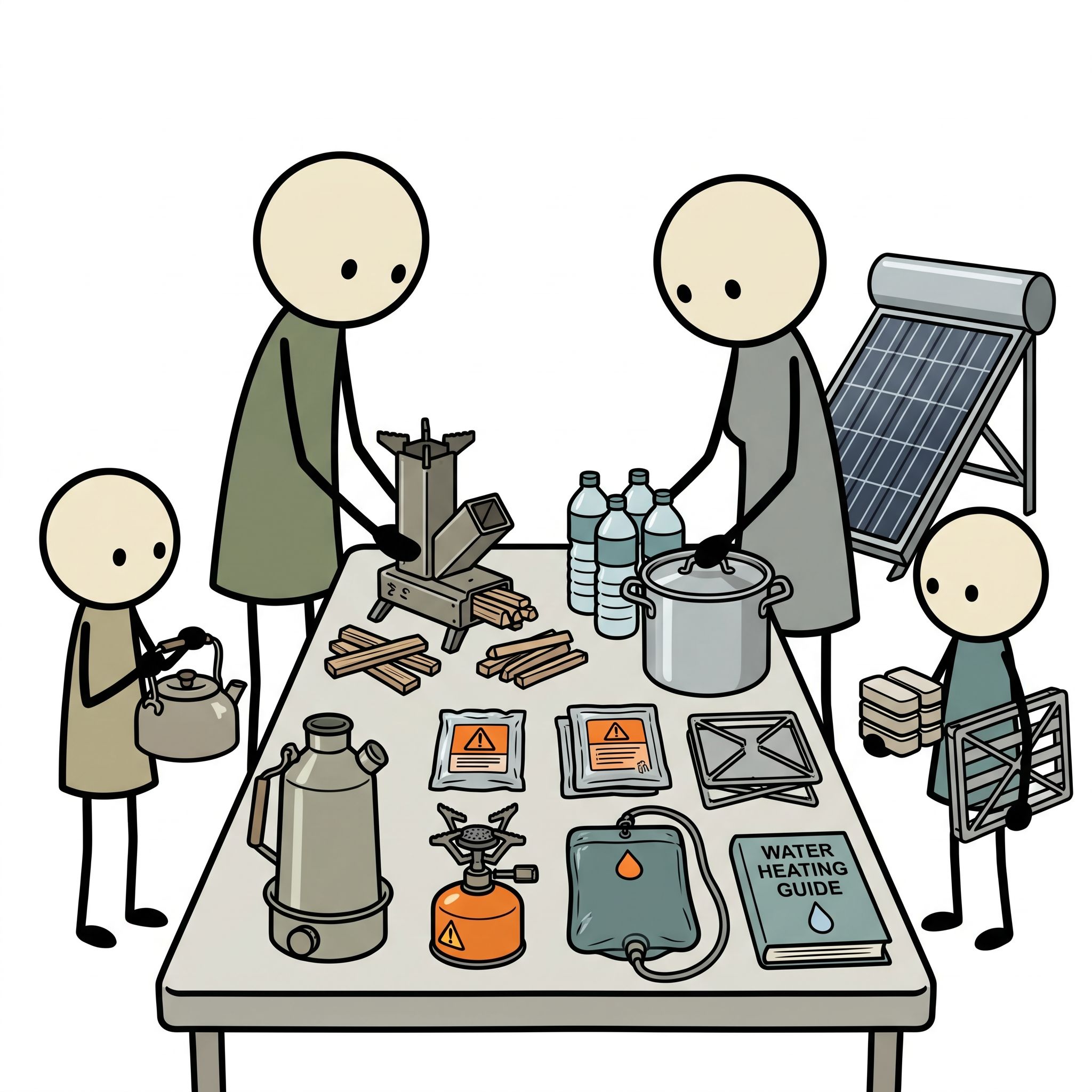
When weather conditions or security threats prevent you from going outside, you must rely on indoor-safe heating methods. The primary hazard of indoor fuel combustion is Carbon Monoxide (CO)—an odorless, colorless, and tasteless gas that displaces oxygen in the bloodstream, leading to rapid asphyxiation. Never use outdoor-only gear, such as charcoal grills or standard propane camp stoves, inside your home. The following methods are engineered or adapted for safe indoor use, provided basic ventilation protocols are followed.
1. Canned Heat (Sterno and Chafing Fuel)
Canned heat, typically containing pressurized gelled ethanol or diethylene glycol, is one of the safest and most stable indoor fuel sources available. Commonly used in the catering industry, these canisters burn cleanly with virtually no carbon monoxide emissions.
- How it works: You simply pry off the lid of the canister and ignite the gel with a match or lighter. The fuel burns within its own container, providing a controlled, low-intensity flame.
- Boiling capability: Because canned heat has a relatively low BTU output (typically around 1,000 to 1,500 BTUs per hour), boiling large quantities of water is difficult. However, it is highly effective for heating small quantities of water (12 to 24 ounces) for drinking, freeze-dried meals, or sponge baths.
- Safety Tip: Use a dedicated folding stove stand to suspend your metal cup or small pot approximately two inches above the flame. Keep a lid on the pot to trap heat and maximize efficiency.
2. Indoor-Rated Butane and Propane Stoves
Single-burner butane stoves, often used for tableside cooking in restaurants, are excellent tools for emergency water heating. Many of these stoves feature automatic safety shut-offs that trigger if the fuel canister overheats or if gas pressure spikes.
Additionally, certain indoor-safe radiant heaters, such as the popular Mr. Heater "Buddy" series, can be adapted to heat water. While primarily designed for space heating, some survivalists utilize the flat top grate of these heaters to warm small metal containers of water. However, this must be done with extreme caution to avoid tipping or blocking the unit's oxygen depletion sensor (ODS).
When using any indoor gas stove, ensure you have a battery-operated carbon monoxide detector nearby. Keep a window cracked open at least one inch to facilitate fresh air exchange, in accordance with safety guidelines from the Federal Emergency Management Agency (FEMA).
3. Alcohol Stoves (Marine and DIY)
Denatured alcohol, isopropyl alcohol (rubbing alcohol), and high-proof ethanol (such as Everclear) can be burned indoors using specialized stoves. Marine alcohol stoves, which have been used on boats for decades, are highly stable and designed specifically to minimize fire hazards in enclosed spaces.
- DIY Soda Can Stoves: In a pinch, you can construct a pressurized alcohol stove using two aluminum soda cans, a thumbtack, and some fiberglass insulation. While highly efficient, DIY stoves lack safety valves and present a tipping hazard; they should only be used on non-flammable surfaces like concrete or baking sheets.
- Fuel Selection: Always use denatured alcohol or 91%+ isopropyl alcohol. Lower concentrations of isopropyl alcohol contain too much water, resulting in incomplete combustion, excessive soot, and low heat output.
4. Candle Stoves and Tealight Heaters
While a single candle cannot boil water, an array of candles can generate surprising amounts of thermal energy when concentrated. A classic survival setup involves placing several tealight candles under a raised metal grate, with a small pot of water positioned above. To trap and radiate the heat, some place a terracotta flower pot upside down over the candles, creating a crude convection heater. This method is slow and should only be relied upon for warming small volumes of water or preventing water from freezing inside a cold room.
Outdoor and High-Output Heating Methods
When you need to heat large volumes of water—such as five to ten gallons for family hygiene, laundry, or extensive cooking—indoor methods are inadequate. Outdoor heating allows you to utilize high-output, high-BTU fuels without the catastrophic risk of carbon monoxide poisoning.
1. Standard Propane Camp Stoves
The dual-burner propane camp stove is a staple of emergency preparedness. Utilizing standard 16.4-ounce green propane cylinders or adapted to run off 20-pound BBQ tanks, these stoves can output anywhere from 10,000 to 22,000 BTUs per burner.
With this level of thermal output, you can easily bring a large stockpot of water to a rolling boil in under fifteen minutes. Always operate these stoves on a stable, level, non-combustible surface outdoors, such as a concrete patio or dirt ground, away from dry brush or overhanging trees.
2. Rocket Stoves
A rocket stove is an incredibly efficient, high-temperature wood-burning stove that utilizes small-diameter wood fuel (such as twigs, dry branches, and pinecones). Its design features a vertical combustion chamber with an insulated chimney, which creates a strong draft that draws air into the fire from below. This results in nearly complete combustion of the fuel, producing intense heat with very little smoke or soot.
- Efficiency: Rocket stoves require up to 50% less wood than an open campfire to heat the same volume of water. This makes them premier tools for long-term survival water heating when commercial fuels like propane are depleted.
- Portability: Many commercial models are made of durable steel and are highly portable, while emergency rocket stoves can be quickly constructed on-site using concrete cinder blocks or large tin cans.
3. Charcoal Grills and Dutch Ovens
If you have a standard charcoal kettle grill, you possess a highly effective outdoor water heater. Charcoal burns hot and steady, making it perfect for heating heavy cast-iron Dutch ovens filled with water.
To maximize efficiency, place the Dutch oven directly onto the charcoal embers rather than the cooking grate. This minimizes heat loss to the surrounding air. Remember: never burn charcoal indoors, in a garage, or in a covered carport. The charcoal combustion process produces massive quantities of carbon monoxide that can quickly prove fatal.
4. Open Campfires and Tripods
The traditional open campfire is the oldest method of water heating known to humanity. However, it is also the least thermally efficient. To heat water effectively over an open fire, you should use a metal tripod to suspend your pot directly over the hottest part of the flames, or construct a "crane" system using green wood branches.
Alternatively, you can place flat rocks around the perimeter of your fire pit, heat them in the coals, and then use metal tongs to transfer the hot rocks directly into a container of water. This ancient technique, known as "stone boiling," is highly effective if your container is made of wood, clay, or hide and cannot be placed directly over a fire.
Off-Grid and Passive Solar Water Heaters
When fuel supplies are scarce or must be conserved for winter heating, passive solar technology offers a clean, infinite, and silent alternative. By harnessing the radiant energy of the sun, you can heat water to surprisingly high temperatures without burning a single ounce of fuel.
1. Solar Camp Showers
A solar camp shower consists of a heavy-duty, flexible PVC bag that is black on one side and clear on the other, equipped with a short hose and a showerhead.
- The Science: You fill the bag with water and lay it flat in direct sunlight with the black side facing down and the clear side facing up. The clear plastic allows solar radiation to penetrate, while the black backing absorbs the heat and transfers it to the water via conduction.
- Performance: On a sunny day with ambient temperatures of 70°F, a solar shower bag can heat water to over 120°F in approximately three hours. This is hot enough to require caution to prevent scalding. Even in cooler weather, as long as there is direct sunlight, these bags can significantly take the chill off raw water.
2. DIY Coiled Hose Systems
For a semi-permanent off grid water heater, you can construct a highly effective thermal collector using black HDPE (High-Density Polyethylene) or PEX tubing.
Coil 50 to 100 feet of black tubing flat inside a shallow wooden box. Paint the inside of the box black, and seal the top with a sheet of clear acrylic, glass, or heavy plastic sheeting to create a greenhouse effect. Connect one end of the tubing to a elevated water reservoir (such as a 55-gallon drum) and the other end to a discharge valve. As the sun beats down on the box, the water inside the coiled tubing heats rapidly. Using gravity or a simple hand pump, you can cycle hot water out of the coil and cold water in.
3. Parabolic Solar Cookers
Parabolic solar cookers use reflective, curved surfaces (often made of polished aluminum or reflective mylar) to concentrate sunlight onto a single focal point. When a dark-colored metal pot filled with water is placed at this focal point, the concentrated solar energy can bring the water to a boil in minutes, rivaling the speed of a gas stove. While highly effective, parabolic cookers require active monitoring, as they must be manually realigned with the sun every 15 to 30 minutes to maintain peak efficiency.
Advanced Off-Grid Water Heating Appliances
For those preparing for long-term, multi-month grid failures or transitioning to permanent off-grid living, specialized appliances provide a level of convenience and volume that matches standard utility service.
1. Portable Propane Tankless Water Heaters
Often utilized by overlanders, cabins, and tiny-house dwellers, portable tankless water heaters (such as those manufactured by Eccotemp or Camplux) are game-changers during prolonged outages. These compact units are mounted to an exterior wall or stand and connected to a standard 20-pound propane tank and a pressurized water source (such as a gravity-fed tank or a 12V RV pump powered by a small solar generator).
When water flows through the unit, a liquid propane burner ignites automatically via battery-powered D-cell ignition. The water is heated instantly as it passes through a copper heat exchanger, delivering a continuous stream of hot water at up to 140°F. This setup provides a near-normal showering and cleaning experience, boosting morale and hygiene during extended Survival Scenarioss.
2. Thermo-Siphon Wood Stove Jackets
If your home or survival shelter is equipped with a wood-burning stove for winter heating, you can harness its waste heat to run a highly efficient off grid water heater. This is accomplished by installing a copper coil or a steel water jacket around the stove's exterior or wrapping it tightly around the single-wall flue pipe.
Using the principle of thermosiphoning, you connect this coil to an adjacent, elevated Water Calculator tank. As the water inside the coil is heated by the wood stove, it becomes less dense and naturally rises, flowing upward into the top of the storage tank. This draws cooler, denser water from the bottom of the tank into the coil to be heated. This continuous, passive loop requires no electrical pumps or moving parts, providing a constant supply of hot water as long as the wood stove is burning.
| Heating Method | Primary Fuel Source | Indoor Safe? | Best For... | Approx. Time to Boil 1 Gal. |
|---|---|---|---|---|
| Canned Heat (Sterno) | Gelled Ethanol/Glycol | Yes (Excellent) | Small meals, tea, minor sanitation | 30+ mins (Difficult to boil) |
| Butane Burner | Butane Canister | Yes (With Ventilation) | Cooking, quick boiling, medical prep | 12–15 minutes |
| Rocket Stove | Twigs, Wood Biomass | No (Outdoor Only) | High-efficiency outdoor cooking | 8–10 minutes |
| Propane Camp Stove | Propane (16.4 oz / 20 lb) | No (Outdoor Only) | Large volume boiling, group meals | 7–10 minutes |
| Solar Camp Shower | Solar Radiation | Outdoor (Use) | Hygiene, warm washing water | N/A (Max temp ~125°F) |
| Tankless Propane Heater | Propane & 12V/D-Cell | No (Outdoor Only) | Continuous hot showers, laundry | Instantaneous (On-Demand) |
Crucial Safety Protocols and Heat Conservation
No matter which method you choose, safety must remain your highest priority. The stress and chaos of a survival scenario increase the likelihood of accidents, and a severe burn or house fire during a power outage can quickly turn into a life-threatening emergency when emergency services are delayed or unavailable.
1. Carbon Monoxide Mitigation
If you are burning any fuel indoors, you must actively monitor air quality. Keep a battery-operated carbon monoxide detector in the room where you are cooking. Unlike plug-in models, battery-powered units will continue to function during a grid collapse. Familiarize yourself with the symptoms of CO poisoning: headache, dizziness, weakness, nausea, confusion, and chest pain. If your detector sounds or if anyone exhibits these symptoms, immediately extinguish all flames and evacuate to fresh air.
2. Fire Prevention and Extinguishing Equipment
Always maintain a clear, three-foot safety zone around any heating appliance. Keep flammable materials, such as paper towels, curtains, and synthetic clothing, far away from open flames. Keep a class ABC fire extinguisher rated for grease and electrical fires within arm's reach of your cooking station. Alternatively, keep a large box of baking soda or a fire blanket nearby to smother unexpected grease fires; never throw water on a grease fire, as it will cause the burning oil to splutter and spread the fire instantly.
3. Thermal Insulation and Heat Conservation
Because fuel is a finite and precious resource during a crisis, conserving the heat you generate is just as important as producing it. Once you have heated water, transfer it immediately to insulated containers to prevent heat loss.
- Vacuum Thermoses: High-quality stainless steel vacuum-insulated thermoses can keep water near boiling temperatures for up to 24 hours.
- The Cooler Incubator Trick: If you don't have a thermos, you can place your hot pot of water inside a standard plastic cooler. Wrap the pot in dry towels to prevent it from melting the cooler's plastic lining, and close the lid. The thick polyurethane foam insulation of the cooler will preserve the water's heat for several hours.
- Sponge Baths vs. Showers: To conserve hot water, prioritize sponge baths over full showers. A highly effective sponge bath requires less than a gallon of warm water, whereas even an efficient camp shower will consume three to five gallons.
Securing Your Off-Grid Water Heating Strategy
True emergency preparedness is not about relying on a single piece of gear; it is about building redundancy into your survival plan. Relying solely on a modern electric water heater leaves your household vulnerable to the unpredictable nature of natural disasters and infrastructure failures. By stocking a diverse array of water heating tools—ranging from indoor-safe butane burners and highly efficient outdoor rocket stoves to passive solar collectors—you ensure that your family remains warm, clean, and safe regardless of external conditions. Do not wait for the next major storm or grid collapse to test these methods. Acquire your tools, stock up on clean-burning fuels, and practice heating water off the grid today. In doing so, you transform a potentially chaotic survival situation into a manageable, comfortable, and safe experience.
Frequently Asked Questions
Can I use a camp stove indoors to heat water during a power outage?
No. Never use outdoor gas, propane, or charcoal stoves indoors due to the extreme risk of carbon monoxide poisoning. Only use them in well-ventilated outdoor spaces.
How can I safely heat water indoors without electricity?
You can use a wood-burning stove, a fireplace, or indoor-safe emergency heat sources like canned gel fuel (Sterno) under close supervision.
Can I drain hot water directly from my home's water heater tank?
Yes. If you turn off the power or gas to the unit first, you can safely drain several gallons of clean, pre-heated water directly from the drain valve at the bottom of the tank.
How long does a solar shower bag take to heat water?
In direct, bright sunlight, a black solar shower bag can heat water to over 110°F (43°C) in approximately two to three hours.
Does heating water to a boil make it safe to drink?
Yes. Bringing water to a rolling boil for at least one minute (or three minutes at altitudes above 6,500 feet) kills harmful bacteria, viruses, and protozoa.